


Report Overview
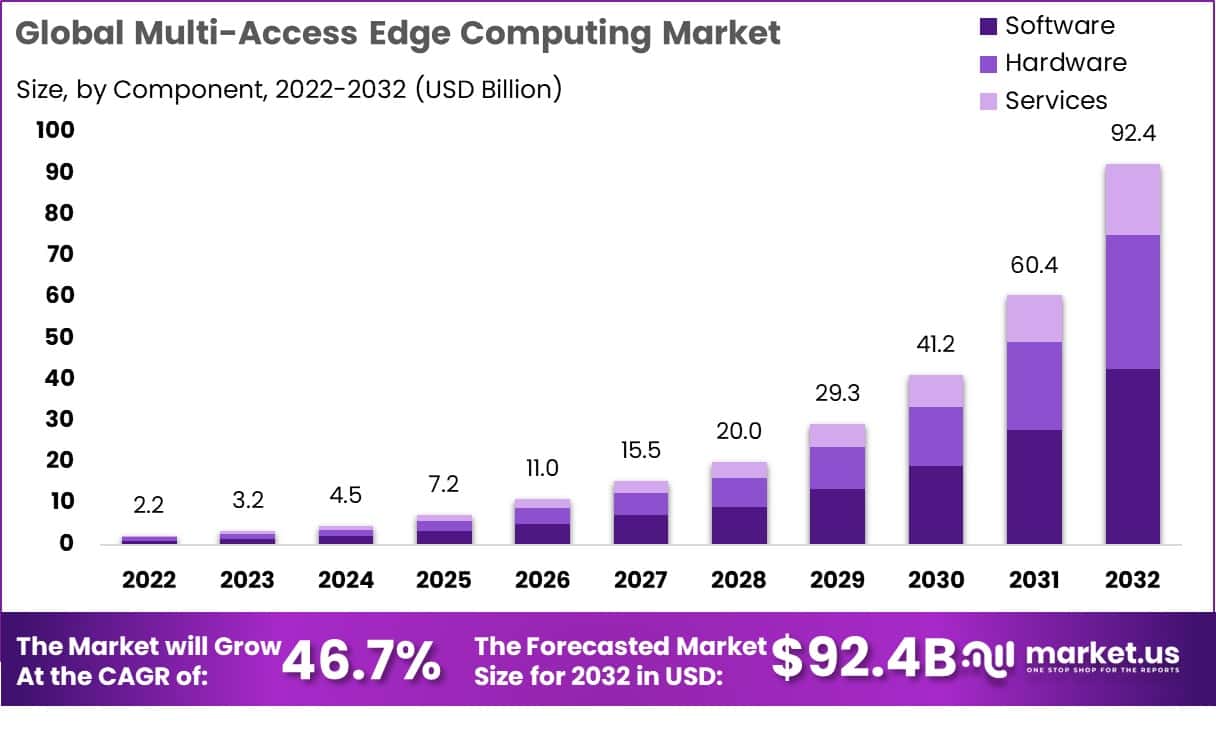
The Global Multi-Access Edge Computing Market in terms of revenue was estimated to be worth USD 3.2 Bn in 2023 and is poised to reach USD 92.4 Bn by 2032, growing at a CAGR of 46.7% from 2023 to 2032.
Multi-access edge computing (MEC) is a revolutionary concept in telecommunications and computing. It involves strategically placing computational resources like processing power and storage at the network’s edge, close to users and devices. The goal is to overcome the limitations of centralized data processing by bringing computation closer to where data is generated and used. MEC’s main objective is to reduce latency, the delay between initiating an action and getting a response. By minimizing latency, MEC improves the responsiveness of applications and services, making it ideal for time-sensitive tasks like virtual reality, online gaming, and autonomous vehicles.
Note: Actual Numbers Might Vary In The Final Report
This approach represents a shift from traditional methods, enabling faster interactions and real-time engagement. MEC aims to create a more seamless and instantaneous user experience on tasks requiring quick responses. Whether in entertainment or critical industries like industrial automation, MEC’s architecture can significantly enhance the efficiency and effectiveness of various applications, promising a new era of computing capabilities at the edge of networks.
Key Takeaways
- Market Growth: The Multi-Access Edge Computing Market is projected to reach USD 92.4 billion by 2032, with a notable CAGR of 46.7%, reflecting its increasing importance in various industries.
- MEC Concept: MEC involves placing computational resources at the network’s edge, minimizing latency, and enhancing user experiences in time-sensitive applications like VR and autonomous vehicles.
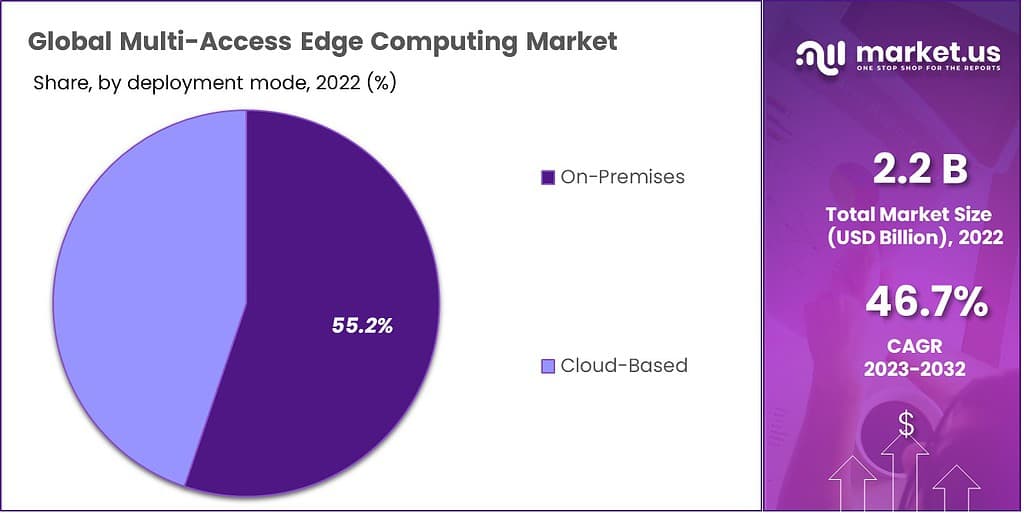
- By Deployment Mode Analysis: The on-premises deployment mode holds a dominant position with a market share of 55.2%, driven by the need for data security and control, particularly in industries such as manufacturing and healthcare.
- By Component Analysis: The software segment dominates the market with a significant revenue share of 46.2%, enabling network function virtualization on edge servers and supporting low-latency applications like AR, VR, and gaming.
- By Application Analysis: The smart cities segment holds a substantial market share due to the need for constant data flow and stable data streaming, with a significant impact on operations such as traffic control and air quality monitoring.
- By Industry Vertical Analysis: The IT & telecom sector dominates the market with a significant revenue share of 28.3%, leveraging MEC to deliver low-latency, high-bandwidth services and aiding the deployment of edge applications for IoT devices.
- Drivers and Challenges: The demand for low latency drives MEC adoption, while infrastructure costs pose a significant challenge for widespread implementation.
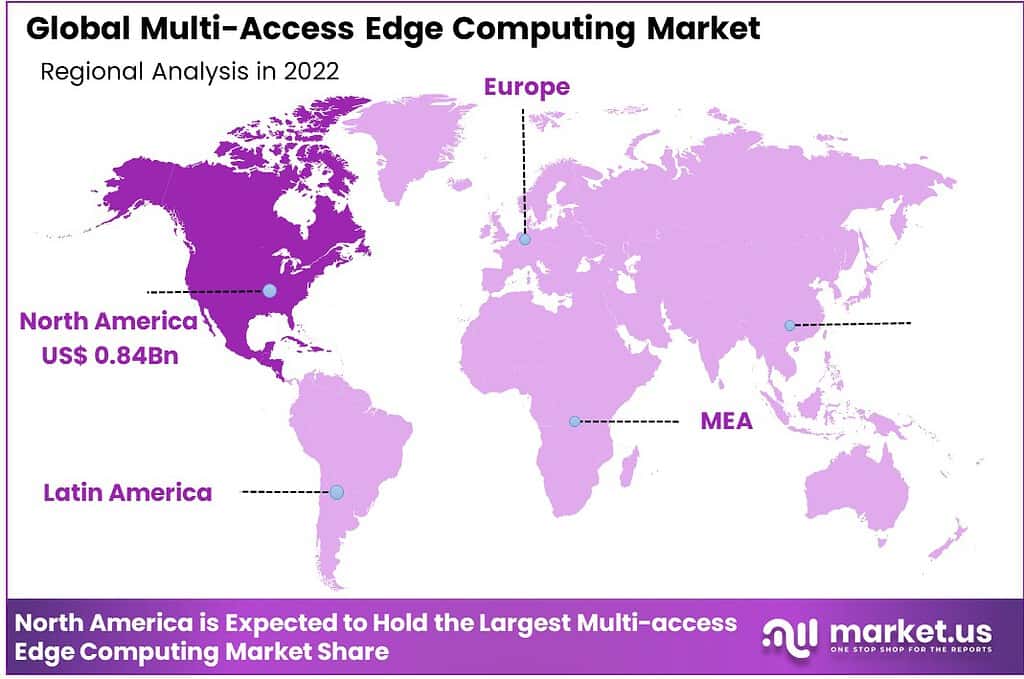
- Regional Analysis: North America leads the market with a significant market share of 38.2%, with Asia Pacific showing rapid growth potential, projected to grow at a CAGR of nearly 55%.
- Key Players: Huawei, ADLINK Technology, Hewlett Packard Enterprise, and others are key players in driving MEC innovation.
- Emerging Trends: Integration of 5G with MEC is driving transformative changes, leading to new business models and personalized experiences.
- Opportunities: MEC integration in Industry 4.0 and the increasing deployment of 5G present significant growth opportunities.
Driving Factors
Low Latency Demands to Drive the Market Growth
The importance of minimal latency is accentuated by the requirements of real-time applications like augmented reality (AR), virtual reality (VR), and autonomous vehicles. This demand stimulates the adoption of multi-access edge computing (MEC), which facilitates swift data processing at the network edge. Through the strategic placement of processing capabilities at the edge, MEC addresses the need for immediate response times, enhancing user experiences in these applications. This synergistic correlation between low latency needs and MEC emerges as a pivotal aspect of fluid and rapid data processing, seamlessly integrated into the realm of modern technological progress.
Restraining Factors
Infrastructure Investment
The substantial initial financial outlay essential for establishing Multi-access Edge Computing (MEC) infrastructure, encompassing both edge servers and data centers, can potentially impede certain organizations’ enthusiastic adoption of this technology. The financial commitment involved in procuring, setting up, and maintaining these foundational components can create a notable deterrent for some entities, influencing their decision-making when it comes to fully embracing the promising potential of MEC.
By Deployment Mode Analysis
The On-Premises Segment is Dominant in the Market.
The on-premises deployment mode holds a dominant position in 2022 with a 55.2% market share due to factors such as data security and control. Organizations, particularly those with sensitive data or regulatory requirements, prefer on-premises deployment to manage and secure their data within their network environment. This mode is particularly beneficial for industries like manufacturing and healthcare, where low-latency processing is crucial for real-time analytics and decision-making while maintaining data privacy and security.
Note: Actual Numbers Might Vary In The Final Report
By Component Analysis
Software Segment Dominated in the Market in 2022.
In 2022, the software segment held a large revenue share of 46.2% in the market. This software facilitates network function virtualization on edge servers, allowing operators to deploy and manage virtualized network functions (VNFs) like firewalls and load balancers. Offering flexibility and scalability over hardware-based solutions, it enables easy deployment and management of VNFs according to dynamic needs. This software also serves as a platform for low-latency applications like AR, VR, and gaming. Moreover, it supports analytics and real-time processing for IoT-generated data, portraying its versatile role in enhancing edge computing capabilities.
By Application Analysis
The Smart Cities Segment Held a Major Market Share in 2022.
In terms of application, the market is categorized into smart cities, industrial IoT, remote monitoring, content delivery, augmented reality, virtual reality, and other applications. The Smart Cities segment holds a significant market share due to the need for constant data flow in Smart City operations, which can strain cloud data centers and lead to network congestion. IoT sensor networks offer stable data streaming, facilitating asset and service management like traffic control and air quality monitoring. This enhances connectivity while addressing power efficiency and cost concerns, driving the growth of the Market.
By Industry Vertical Analysis
The IT & telecom Segment Held a Major Market Share in 2022
In 2022, the IT & telecom sector dominated the market, commanding a significant 28.3% revenue share, and this trend is expected to continue with strong growth ahead. The telecom industry benefits from Multi-access Edge Computing (MEC) to deliver low-latency, high-bandwidth services by moving computation closer to users. MEC also aids the IT sector in deploying edge applications, speeding up data processing for IoT devices. Real-time analytics offered by MEC enhance service quality for both sectors. The rise in mobile content consumption drives mobile networks to generate user data for better personalization. The increasing mobile device count pushes network infrastructure improvement, with mobile edge computing addressing challenges in data transfer efficiency and network performance enhancement.
Key Market Segments
Based on Deployment Mode
- On-Premises
- Cloud-Based
Based on Component
- Hardware
- Software
- Services
Based on Application
- Smart Cities
- Industrial Internet of Things
- Augmented Reality and Virtual Reality
- Content Delivery
- Other Applications
Industry Vertical
- IT & Telecom
- Retail and Consumer Goods
- Energy and Utilities
- Manufacturing
- Other Industry Verticals
Growth Opportunities
Rising Industry 4.0
In the context of Industry 4.0, the manufacturing and industrial sectors can leverage multi-access edge computing (MEC) to process real-time data from sensors and machines. These sectors can optimize production processes and implement predictive maintenance strategies by deploying edge infrastructure. This integration enables rapid data analysis at the network edge, enhancing operational efficiency and productivity within the framework of intelligent manufacturing.
Latest Trends
Rising 5G Deployment
The integration of 5G deployment and the global Multi-access Edge Computing (MEC) market has led to transformative changes. 5G’s high speed and low latency, combined with MEC’s localized processing capabilities, enable efficient real-time applications like AR, VR, autonomous vehicles, and IoT. This trend drives MEC adoption as businesses strategically position infrastructure for optimal performance, fostering innovation in applications and services. This synergy also creates new business models, catering to low-latency services and personalized experiences. Overall, the merger of 5G and MEC reshapes industries, enhances user experiences, and ushers in an era of connectivity-driven innovation.
Regional Analysis
North America is the Dominant Region in the Global Multi-access Edge Computing Market
In 2022, North America will hold the top position in the market, with a significant market share of 38.2%, due to its early adoption of 5G and the expected rise in IoT device usage. The US, a key player, benefited from major stakeholders in various industries. The telecom sector drove growth by catering to technology needs, while healthcare leveraged technology for quicker and more accurate medical analysis. Manufacturing embraced MEC technology for efficiency.
Asia Pacific also secured a substantial 2022 market share, projected to grow at a CAGR of nearly 55%. Cloud-edge integration for commercial services thrived, as exemplified by Bridge Mobile’s MEC demonstration for cloud gaming involving SK Telecom and Singtel. These trends highlight North America’s tech leadership and Asia Pacific’s innovative growth.
Note: Actual Numbers Might Vary In The Final Report
Key Regions and Countries Covered in this Report:
North America
- The US
- Canada
Europe
- Germany
- France
- The UK
- Spain
- Italy
- Russia
- Netherland
- Rest of Europe
APAC
- China
- Japan
- South Korea
- India
- Australia
- New Zealand
- Singapore
- Thailand
- Vietnam
- Rest of APAC
Latin America
- Brazil
- Mexico
- Rest of Latin America
Middle East and Africa
- South Africa
- Saudi Arabia
- UAE
- Rest of MEA
Market Share and Key Players Analysis
The global multi-access edge computing (MEC) market is fiercely competitive, with key players spanning telecommunications, technology conglomerates, and networking. Leading participants include Cisco, Nokia, and HPE, offering integrated solutions for latency-sensitive applications. Intel provides essential hardware for edge computing, while Ericsson focuses on 5G-integrated MEC solutions. Huawei optimizes content delivery and user experiences. These players collectively drive MEC innovation and technological advancement, shaping the market’s trajectory in optimizing network performance and supporting real-time applications.
Market Key Players:
- Huawei Technologies Co., Ltd.
- ADLINK Technology Inc
- Hewlett Packard Enterprise Development LP
- AT&T Inc
- IBM Corporation
- Intel Corporation,
- Nokia Corporation
- Dell Technologies Inc
- Cisco Systems, Inc
- Vapor IO
- Verizon Communications Inc
- Ericsson AB
- Other Key Players.
Recent Developments
- In July 2023, ADLINK Technology Inc. revealed the ROScube RQX-59 Series, a product line aimed at strengthening robotics, Autonomous Mobile Robots (AMR), and self-driving technology. This marks a notable step forward in intelligent automation, showcasing the escalating role of edge computing and AI-driven solutions in the realms of autonomous driving and robotics.
- In June 2023, Hewlett Packard Enterprise (HPE) launched an AI-focused cloud platform designed for complex language models. Named HPE GreenLake for LLMs, this offering empowers businesses to conduct confidential training and implementation of large AI models, harnessing HPE’s state-of-the-art software and supercomputing prowess. This development plays a role in shaping the ongoing advancements within the multi-access edge computing sector.









