


Report Overview
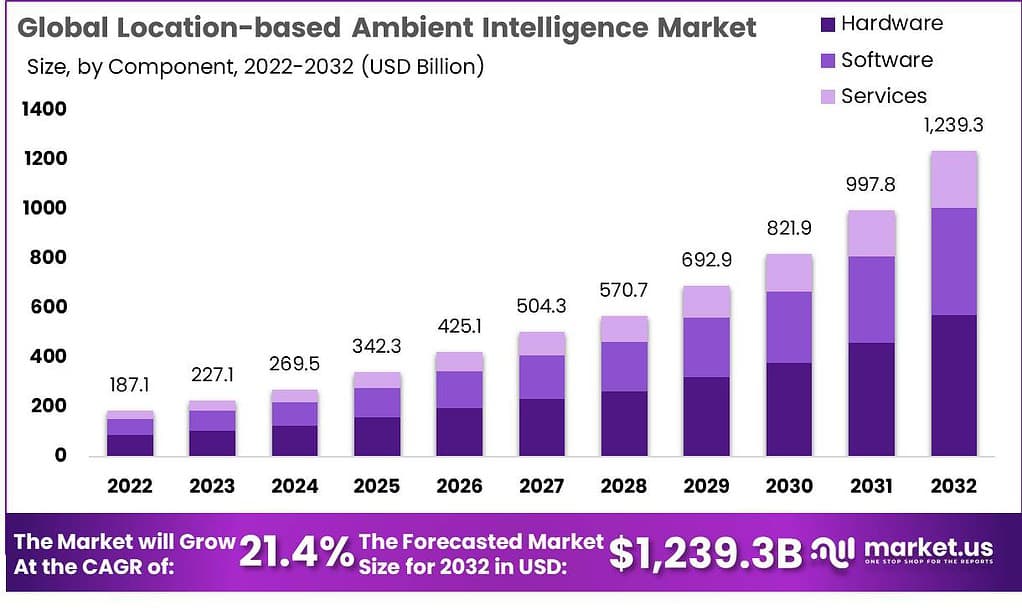
The Global Location-based Ambient Intelligence Market is poised for significant growth, with the global market size projected to reach USD 227.1 Billion by 2023. The Location-based Ambient Intelligence demand will witness a robust CAGR of 21.4% from 2023 to 2032. By 2032, the market size is anticipated to reach a valuation of USD 1,239.3 billion.
Location-based Ambient Intelligence refers to integrating smart technologies and services within a physical environment to create context-awareness. These adaptive systems respond to individuals’ specific needs or actions based on their geographic location. It combines location-based services, such as GPS and other tracking systems, with artificial intelligence and sensor technologies to offer intelligent solutions tailored to the location-specific context.
This could range from smart lighting that adapts to the time of day and the number of people in a room to complex, dynamic systems like an intelligent transportation service that reroutes vehicles based on real-time traffic conditions. These systems aim to improve efficiency, convenience, and quality of life by reducing the need for human intervention in controlling the environment, thereby making it “ambient” or integrated seamlessly into the background of our lives.
Note: Actual Numbers Might Vary In Final Report
The market for Location-based Ambient Intelligence is vast and continuously growing, driven by advancements in IoT (Internet of Things), AI, big data analytics, and ubiquitous connectivity. Industries such as healthcare, transportation, retail, and manufacturing are showing increased interest in adopting these technologies for various applications. For example, Location-based Ambient Intelligence could be used in healthcare to automatically adjust the settings of medical devices in an ICU depending on the patient’s current condition and location within the hospital.
In retail, it could mean personalized promotions or navigation assistance delivered to a shopper’s smartphone as they move through a store. The adoption of such systems often results in increased operational efficiency, reduced costs, and enhanced user experience, making it attractive for both public and private sectors. Market challenges include concerns over data privacy, the need for interoperable standards, and the initial cost of implementation. However, as technology advances and the tangible benefits become increasingly evident, Location-based Ambient Intelligence will likely become an integral part of our daily lives, transforming how we interact with both spaces and services.
Key Takeaways
- In 2022, the Global Location-based Ambient Intelligence Market was valued at US$187.1 Billion.
- The Market is estimated to register the highest CAGR of 21.4% between 2023 and 2032.
- The proliferation of Smart Devices is propelling the growth of the market.
- Privacy and Security Concerns are expected to have a negative impact on the market.
- Based on component, the software segment dominates the market with a massive revenue share of 5%.
- Based on Technology, the affective computing segment dominated technology in 2022.
- Based on end-user, the Healthcare segment leads the market with a major revenue share of2%.
- Rising smart city development is expected to create many lucrative opportunities over the forecast period.
- Rising demand for indoor location-based services Geofencing and Location-Based Marketing are the latest trends in the market.
- Based on Region, North America dominates the market with a major revenue share of 42.5%.
- Some of the key players in the market are Schneider Electric S.E., Google, LLC, Samsung Electronics, Microsoft Corporation, Siemens AG., and others.
Driving Factor
Proliferation of Smart Devices
The prevalence of smart devices, encompassing smartphones, tablets, wearables, and many interconnected gadgets, has instigated a profound evolution within the technological realm. These devices, endowed with various sensors, notably GPS, can facilitate advanced data collection and analysis rooted in location-based attributes. This surge in interconnected devices has, in turn, cultivated an expansive domain dedicated to location-centric services. This has reconfigured our interactions with both our physical surroundings and the digital realm. From the provision of tailor-made location-linked recommendations to real-time navigational aids, these devices have seamlessly woven location data into the fabric of our daily routines.
Consequently, this phenomenon has not only underscored the escalating significance of location-related services but has also produced vital data privacy and security inquiries. The voluminous data amassed by these devices proffers manifold possibilities and predicaments for individuals and society.
Restraining Factor
Privacy and Security Concerns Hinder the Market Growth in 2022.
Privacy and security concerns are substantial barriers to adopting location-based ambient intelligence. Many users hesitate to share their location data due to the ever-present risks of data breaches, misuse, or surveillance. This reluctance stems from valid fears regarding potentially misusing sensitive information, ranging from personal habits and preferences to real-time location tracking.
The apprehension is well-founded in a world where data breaches have become all too common, raising legitimate doubts about the safety of such data. These anxieties can stifle the growth of location-based ambient intelligence by impeding user trust and willingness to engage fully with these technologies. Addressing these privacy and security concerns must be a top priority to create a conducive environment for developing and accepting location-based ambient intelligence solutions.
Growth Opportunity
Rising Smart Cities Development Expected to Create Many Lucrative Opportunities over the Forecast Period.
The evolution of smart cities represents an extensive growth potential within location-based ambient intelligence. Municipal administrations and urban strategists are progressively embracing these innovations to enhance the quality of life, streamline transportation systems, and optimize resource allocation within urban landscapes. This transformative technology framework integrates an intricate network of interlinked sensors, data analysis tools, and Internet of Things (IoT) devices, bringing about a profound reimagining of urban ecosystems. By harnessing the power of data-driven insights, cities can optimize traffic flow, curtail energy consumption, and bolster public safety measures. This holistic approach uplifts the well-being of urban inhabitants and simultaneously fosters sustainability across metropolitan regions.
Latest Trends
Rising demand for indoor location-based services
The rising demand for indoor location-based services, driven by smartphone adoption and the need for precise indoor navigation, is reshaping how businesses enhance customer experiences in malls, airports, stadiums, and retail stores. These services offer real-time location information and personalized content, creating more engaging and tailored indoor experiences for consumers.
Geofencing has become a potent tool for marketers. It involves creating virtual boundaries around physical locations to trigger notifications when users enter or exit these zones. This technology enables targeted marketing and enhances customer engagement, making advertising campaigns more effective.
By Component Analysis
Software Segment Dominates the Market with Massive Revenue Share of 41.5%.
In 2021, the software sector established its dominance in the market, claiming an impressive 41.5% share. This substantial presence can be attributed to meticulous efforts in enhancing data storage capacity, harnessing formidable computing power, and advancing parallel processing capabilities to deliver top-notch services. Notably, the software segment’s remarkable prowess lies in its capacity to efficiently extract data, furnish real-time insights, and bolster decision-making processes. It is this proficiency that propelled it to secure the largest share of the market.
By Technology Analysis
The affective computing segment dominated the technology in 2022.
In 2022, the Location-based Ambient Intelligence Market was segmented by technology, including Bluetooth Low Energy, RFID, various sensors, software agents, Affective computing, Nanotechnology, Biometrics, and others. Affective computing dominated this market due to advancements in CPUs, sensors, and machine learning, enabling precise recognition and interpretation of human emotions. This has led to integrating emotional computing into ambient intelligence, gaining significance in healthcare, education, and customer service.
By End-User Analysis
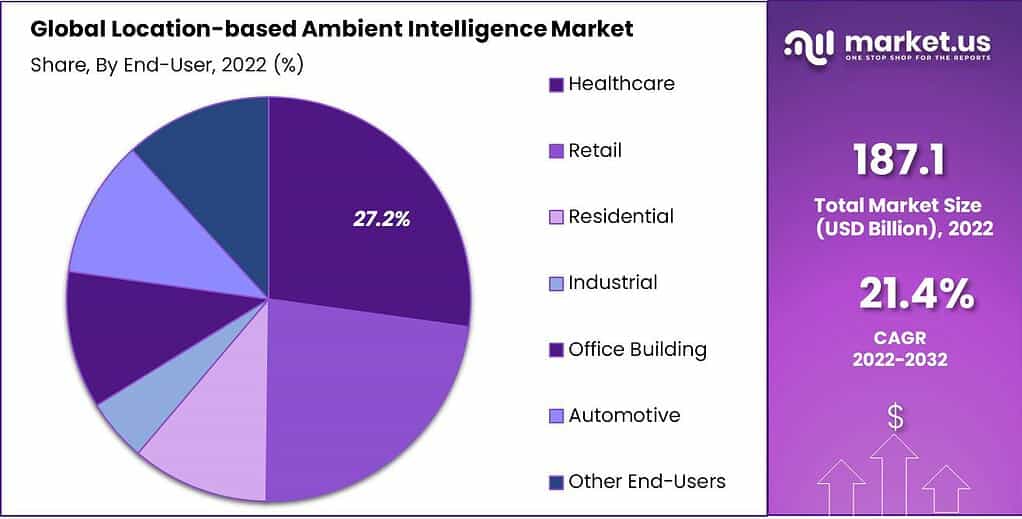
The Healthcare Segment Leads the Market with a Major Revenue Share of 27.2%.
The Location-based Ambient Intelligence Market exhibits diverse end-users, encompassing residential, retail, healthcare, industrial, office buildings, automotive, and other sectors. Notably, in 2022, the healthcare domain emerged as the frontrunner, commanding a substantial market share of 27.2%. This ascendancy can be attributed to the global surge in the adoption of sensors, ambient assisted living (AAL) systems, and remote patient monitoring (RPM).
The pervasive embrace of healthcare-related solutions, including electronic medical records and mobile health applications, has driven this remarkable growth trajectory. As the world increasingly recognizes the potential of location-based ambient intelligence in enhancing healthcare outcomes, this sector is poised to remain a pivotal player in the market landscape.
Note: Actual Numbers Might Vary In Final Report
Market Segmentation
Based on Component
- Hardware
- Software
- Services
Based on Technology
- Bluetooth Low Energy
- RFID
- Sensors Ambient Light Sensor
- Software Agents
- Affective Computing
- Nanotechnology
- Biometrics
- Other Technologies
Based on End-User
- Residential
- Retail
- Healthcare
- Industrial
- Office Building
- Automotive
- Other End-Users
Geopolitics and Recession Impact Analysis
- Regulatory Environment: Navigating the location-based ambient intelligence market requires a keen awareness of the dynamic regulatory landscape. Geopolitical tensions and shifting government policies can exert significant influence. Varied data privacy and sharing regulations and diverse AI technology guidelines across countries necessitate careful strategic planning. Firms in this sector must adeptly manage these complexities to succeed in a rapidly evolving environment.
- Data Localization Laws: Data localization laws force companies to store data within specific countries, creating operational and cost challenges for location-based ambient intelligence providers reliant on cross-border data sharing and cloud-based solutions. Compliance necessitates infrastructure changes, raising expenses and complexity while inhibiting global collaboration and innovation. Balancing legal requirements with technological progress is a significant challenge for these providers.
- Reduced Investment: Economic recessions lead to reduced spending, causing a slowdown in investments in location-based ambient intelligence technologies. Companies in this sector face longer sales cycles, requiring strategic resilience for long-term success.
- Cost Pressures: During economic recessions, companies may struggle to invest in research and development (R&D), especially in fields like location-based ambient intelligence solutions. This limitation can hinder innovation and technology advancement, affecting competitiveness. To overcome this, strategic financial planning and R&D prioritization are essential to sustain innovation during economic downturns.
Regional Analysis
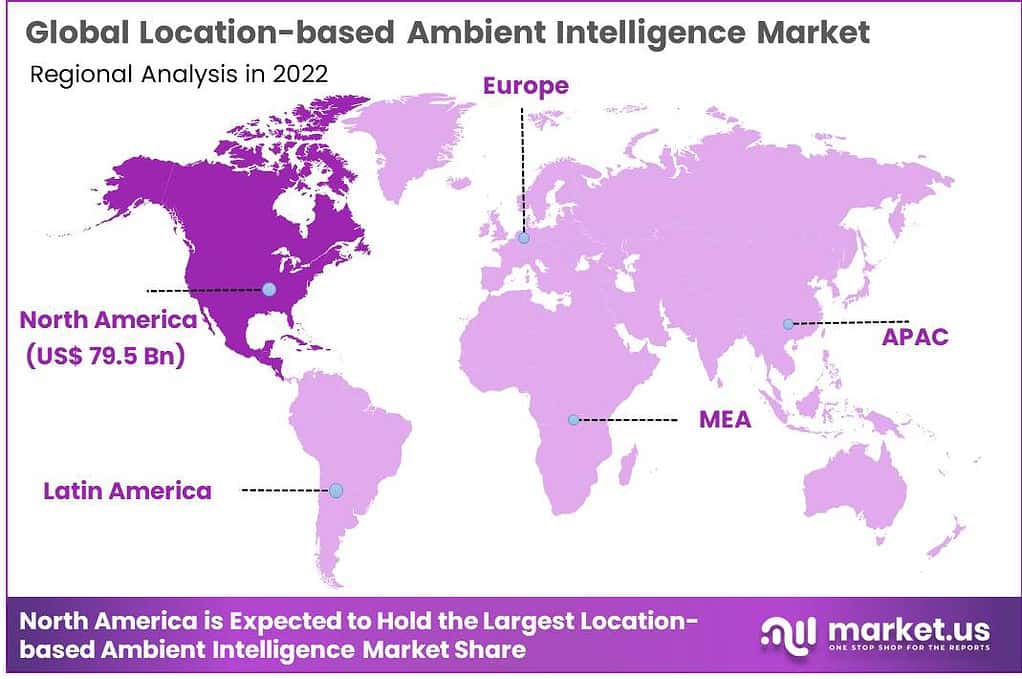
North America Dominates the Market with a Major Revenue Share of 42.5%.
The North America region leads the market by holding a major revenue share of 42.5%. North America has consistently held a dominant position in the Location-based Ambient Intelligence market. This supremacy can be attributed to several key factors that have propelled the region to the forefront of this industry. One crucial element is the presence of renowned tech hubs, such as Silicon Valley, which have served as breeding grounds for innovation and technological advancements. Additionally, the region boasts a robust ecosystem for research and development in artificial intelligence, attracting top talent and significant investments.
After North America, Europe, including the United Kingdom, Germany, and France, has become a significant player in Location-based Ambient Intelligence. These countries boast strong tech ecosystems and a growing interest in AI solutions. European Union regulations, especially GDPR, have influenced how location data is utilized, affecting market dynamics.
Note: Actual Numbers Might Vary In Final Report
Key Regions and Countries Covered in this Report
- North America
- The US
- Canada
- Europe
- Germany
- France
- The UK
- Spain
- Italy
- Russia
- Netherland
- Rest of Europe
- APAC
- China
- Japan
- South Korea
- India
- Australia
- New Zealand
- Singapore
- Thailand
- Vietnam
- Rest of APAC
- Latin America
- Brazil
- Mexico
- Rest of Latin America
- Middle East & Africa
- South Africa
- Saudi Arabia
- UAE
- Rest of MEA
Key Player Analysis
The worldwide location-based ambient intelligence market has experienced substantial growth due to the fusion of location-related services and ambient intelligence technologies. Major industry players encompass Google, Microsoft, IBM, ABB Group, Siemens AG, and Samsung Electronics. These companies provide diverse solutions and services that harness location information for individualized experiences. The market is characterized by intense rivalry, marked by ongoing innovation and the emergence of startup ventures. With the increasing appetite for context-aware services, the market is poised to sustain its upward trajectory.
Market Key Players
- Schneider Electric S.E.
- Koninklijke Philips N.V.
- Google, LLC
- Samsung Electronics
- Microsoft Corporation
- Honeywell International, Inc..
- Huawei Technologies
- Siemens AG.
- IBM Corporation
- ABB Group.
- Nokia
- Other Key Players
Recent Developments
- In 2022, Nuance Communications Inc. announced the enhancement of its diagnostic imaging ambient A.I. capabilities. The company introduced upgraded AI-powered reporting features within the Nuance Power Scribe platform. These improved capabilities empower radiologists to generate precise reports efficiently, incorporating clinical data, thus reducing the time required for report creation.
- In February 2023, AI-driven Ambient Clinical Intelligence alleviated administrative burdens for healthcare professionals, enhanced patient care, and streamlined processes. The Nuance Dragon Ambient experience is an AI-powered, voice-enabled solution that efficiently and accurately documents patient encounters, marking a significant advancement in healthcare technology.









