


Report Overview
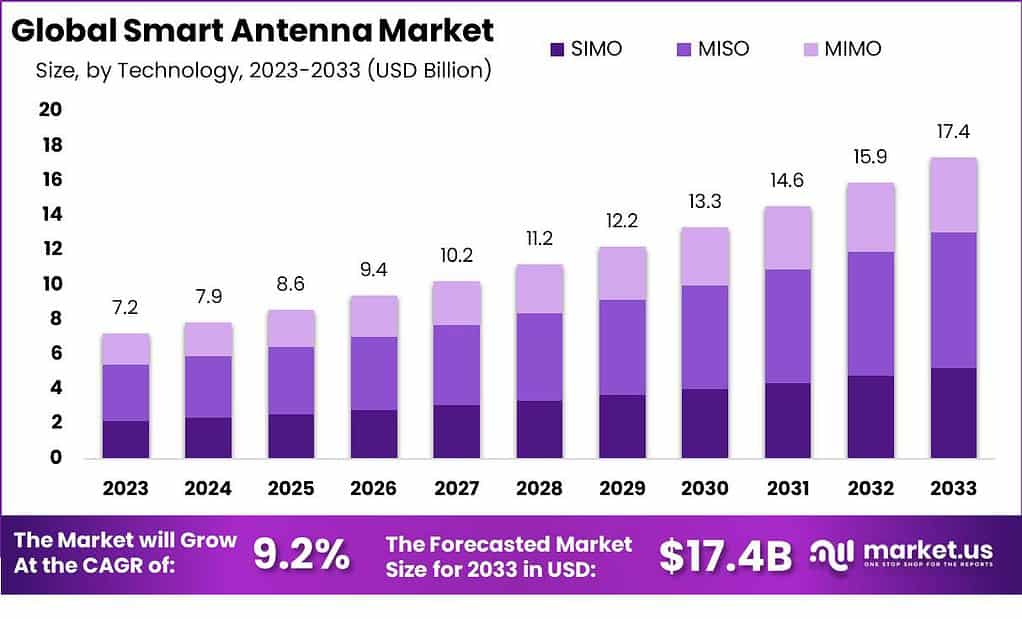
The global Smart Antenna market is anticipated to be USD 17.4 billion by 2033. It is estimated to record a steady CAGR of 9.2% in the Forecast period 2024 to 2033. It is likely to total USD 7.2 billion in 2023.
A smart antenna is a cool wireless technology that can automatically adjust its transmission and reception pattern. It’s like having a customizable antenna that can change its shape and direction to optimize signal performance. Whereas regular antennas just transmit and receive signals in all directions, smart antennas can learn from their environment and adapt their beam pattern to improve things like signal gain and interference reduction.
By directing the signal to certain directions, these antennas are able to enhance the range of transmission and boost the overall capacity that the network can offer. This allows greater number of users to connect at once without performance loss.
Note: Actual Numbers Might Vary In Final Report
Smart antennas are able to reduce the effect of interference from nearby transmitters, and also reduce multipath fading. It occurs in the case of radio waves bounced off a variety of surfaces before they reach the receiver. This enhances the overall reliability and quality of the wireless connection.
Key Takeaways
- Market Projection: The worldwide smart Antenna market is anticipated to be worth USD 17.4 billion in 2032, and an Compound Annual Growth rate (CAGR) in the range of 9.2% forecast for 2024 until 2033. By 2023 the market is projected to be valued at US$ 7.2 billion.
- Smart Antenna Functionality: Smart antennas are an innovative wireless technology that is able to instantly adjust their reception and transmission patterns improving signal performance. Unlike regular antennas, they can adapt to their environment, improving signal gain and reducing interference.
- Coexisting Technologies: While MIMO dominates, Single Input Multiple Output (SIMO) and Multiple Input Single Output (MISO) technologies continue to play important roles, catering to specific use cases and preferences in the market.
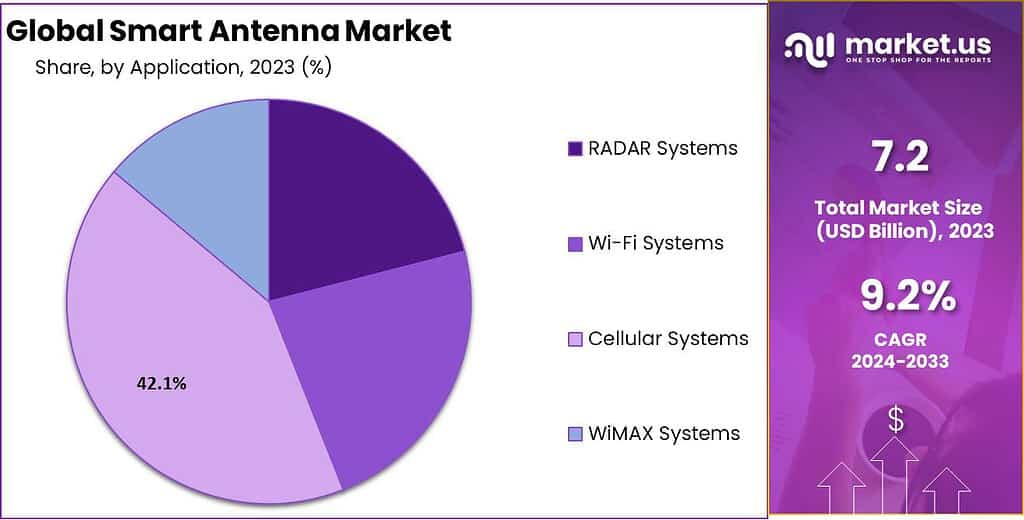
- Application Insights: In 2023, Cellular Systems held a substantial market share of over 42.1%, driven by the growing demand for enhanced mobile connectivity and the expansion of cellular networks. Wi-Fi Systems also saw growth due to the demand for high-speed internet in various settings.
- RADAR Systems Importance: RADAR Systems remained vital for defense and surveillance applications, ensuring a steady presence in the market.
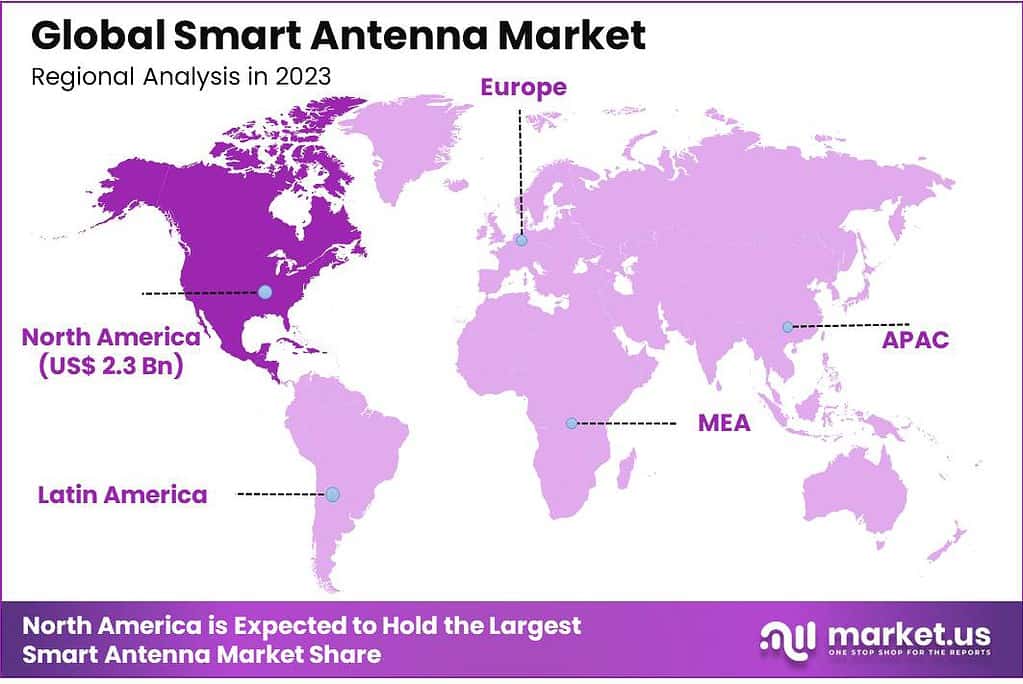
- Regional Dominance: North America dominated the Smart Antenna market in 2023, holding a market share of more than 33%. Europe also exhibited a strong presence, driven by innovation and digital transformation efforts. The Asia-Pacific region displayed significant growth potential due to population density and rapid digitization.
- Global Market Dynamics: The Smart Antenna market is characterized by diverse regional dynamics, with Europe, Asia-Pacific, Latin America, and the Middle East & Africa contributing to global growth in a cautiously optimistic manner.
- Key Players: Prominent market players focus on mergers, acquisitions, partnerships, and continuous research and development to maintain competitiveness. The demand for small smart antennas is rising, driven by the popularity of smartphones.
Technology Analysis
In 2023, within the Smart Antenna market, the Multiple Input Multiple Output (MIMO) segment emerged as the frontrunner, securing a commanding market share of over 45%. This segment’s prominence can be attributed to its innovative technology, which has rapidly gained traction among both consumers and industry players alike.
MIMO technology, short for Multiple Input Multiple Output, is a cutting-edge approach in the world of wireless communications. It stands out due to the use of multiple antennas for transmission and reception. This allows simultaneous data transmission and reception which greatly improves the performance of networks.
One of the major reasons for MIMO’s rise is its capability to provide better speeds for data transmission and coverage. By leveraging multiple antennas, MIMO can effectively mitigate signal interference and improve the overall network’s reliability. This results in quicker and more reliable connections for the end-users which is becoming increasingly important in today’s increasingly data-driven society.
Furthermore, MIMO’s ability to adapt to different applications across a variety of sectors further strengthens its position in the market. In the telecoms industry, the automobile industry and IoT gadgets, MIMO technology has found many applications that make it an appealing option for a variety of stakeholder.
As we delve deeper into the Smart Antenna market, it’s essential to note that while MIMO has claimed a significant share, other technologies like Single Input Multiple Output (SIMO) and Multiple Input Single Output (MISO) continue to play important roles. These technologies cater to specific use cases and preferences, ensuring a diverse range of options for consumers and industries alike.
In summary, the dominance of the MIMO segment in the Smart Antenna market in 2023 reflects its exceptional performance, adaptability, and ability to meet the increasing demands for high-speed, reliable wireless connectivity across various sectors. While MIMO leads the way, SIMO and MISO technologies also contribute significantly, collectively driving the growth of the Smart Antenna market in a cautiously optimistic direction.
Application Analysis
In 2023, the Smart Antenna market witnessed a notable trend where the Cellular Systems segment asserted its dominance, securing a substantial market share of more than 42.1%. This commanding position can be attributed to the ever-increasing demand for enhanced mobile connectivity and the rapid expansion of cellular networks. Cellular networks, along with their capacity to boost signal strength and coverage are now essential in the connected world. With the increasing popularity of mobile phones, IoT gadgets, as well as the imminent rollout of 5G networks, importance of smart antennas within cell phones cannot be overemphasized.
In addition the Wi-Fi Systems sector also showed strong growth due to the widespread demand for high-speed internet in offices, homes and public areas. The convenience of wireless connectivity has fueled the adoption of Wi-Fi systems equipped with smart antennas, contributing significantly to the overall market landscape.
Furthermore, RADAR Systems, crucial for defense and surveillance applications, continued to hold a notable position in the market. The demand for precision and accuracy in radar technology ensures a steady market presence for smart antennas in this segment.
Lastly, the WiMAX Systems segment, although facing competition from other wireless technologies, remains a viable option in specific niche markets, contributing to the overall diversity of applications for smart antennas.
Note: Actual Numbers Might Vary In Final Report
Drivers:
- Increasing Demand for Better Wireless Connections: More and more people and businesses want faster and more dependable wireless connections. This is a big reason why the Smart Antenna market is growing.
- Rise of 5G Technology: The expansion of 5G technology is a driving force for Smart Antennas. 5G networks need advanced antennas to deliver super-fast and responsive services.
- Better Signal Quality: Smart Antennas can automatically adjust the way they transmit and receive signals in order to make them function more effectively. This is a great benefit anyone looking for greater reliability and a more powerful signal.
Restraints
- Expensive Development and Setup: Making and using Smart Antennas can be costly. This high cost can make it hard for some companies to adopt this technology.
- Lots of Competition: Many companies are now in the Smart Antenna business. It can be difficult for those companies who started out first, since they have to put in the effort to retain their customers.
Opportunities
- 5G Expansion: 5G network get more widespread and widely used, there’s an potential to use Smart Antennas to make these networks more efficient.
- Research and Innovation: Smart Antennas can become more affordable and efficient through more research and fresh concepts. This could result in increasing the number of people who use these antennas.
Challenges
- Signal Problems: Smart Antennas need to address issues such as signaling from devices in the vicinity as well as signals that bounce around before reaching you. The solution to these issues is crucial to ensure better wireless connectivity.
Trends
- Smart Antennas in Smartphones: Smart Antennas are becoming integrated into smartphones. This means that your phone will receive a higher signal which is a great way to stay connected.
- Smart Antennas in Self-Driving Cars: Self-Driving Cars Autonomous vehicles are beginning to utilize Smart Antennas to communicate better. This makes driving safer.
- Making Smart Antennas Affordable: The market is to find ways to create Smart Antennas cheaper and easier to obtain. This means that more individuals and companies can profit from them.
Key Market Segments
By Technology
- SIMO
- MISO
- MIMO
By Application
- RADAR Systems
- Wi-Fi Systems
- Cellular Systems
- WiMAX Systems
Regional Analysis
In the year 2023, North America asserted its dominance in the Smart Antenna market, securing a substantial market share of more than 33%. The demand for Smart Antenna in North America was valued at USD 2.3 billion in 2023 and is anticipated to grow significantly in the forecast period. This prominent position can be attributed to the region’s robust technological infrastructure, extensive adoption of advanced wireless communication systems, and the ongoing rollout of 5G networks. North America’s commitment to staying at the forefront of telecommunications technology has fueled the demand for smart antennas, which play a pivotal role in enhancing wireless connectivity.
Meanwhile, Europe also exhibited a noteworthy presence in the market, driven by the region’s commitment to innovation and digital transformation. European nations have been investing in the upgrade of their wireless communications networks, which has contributed to the development of the Smart Antenna market in the region.
The Asia-Pacific (APAC) area The market demonstrated incredible potential for growth due to the amount of people living there and the rapid digitization of economies. The need for improved network coverage and faster data speeds in densely populated urban areas has driven the adoption of smart antennas, positioning APAC as a key growth market.
Latin America, while showing promise, faced unique challenges tied to economic fluctuations and infrastructure development. However, the gradual adoption of advanced communication technologies in the region continues to provide opportunities for Smart Antenna market growth.
Lastly, the Middle East & Africa region also displayed gradual progress, driven by the increasing demand for smart antennas in telecommunications and defense applications.
Note: Actual Numbers Might Vary In Final Report
In conclusion, the dominance of North America in 2023 underscores the region’s commitment to cutting-edge communication technologies. However, the market’s landscape is characterized by diverse regional dynamics, with Europe, APAC, Latin America, and the Middle East & Africa all contributing to the global growth of the Smart Antenna market in a cautiously optimistic manner.
Key Regions and Countries Covered in this Report
- North America
- The US
- Canada
- Europe
- Germany
- France
- The UK
- Spain
- Italy
- Russia
- Netherland
- Rest of Europe
- APAC
- China
- Japan
- South Korea
- India
- Australia
- New Zealand
- Singapore
- Thailand
- Vietnam
- Rest of APAC
- Latin America
- Brazil
- Mexico
- Rest of Latin America
- Middle East & Africa
- South Africa
- Saudi Arabia
- UAE
- Rest of MEA
Key Players Analysis
Prominent market players in the smart antenna market conduct mergers & acquisitions as well as partnerships to strengthen their market position and remain competitive in an ever-growing market. Market players are constantly developing new technologies and products to meet the demand. In order to be ahead of their competition, companies invest heavily in research and development. They also form temporary strategic partnerships. With technology products becoming smaller, so is the demand for small smart antennas.
This is to ensure that they are compatible and connected for communication. Smart antenna demand will rise as smartphones become more popular. Smartphones are the ideal platform for smart antenna capabilities.
Top Kеу Рlауеrѕ
- Alcatel-Lucent International Holdings Inc.
- ArrayComm
- Broadcom Corporation
- California Amplifier Inc.
- Cobham Antenna Systems
- Intel Corporation
- Motorola Solutions Inc.
- Samsung Electronics Co Ltd.
- Sierra Wireless Inc.
- Airgain Inc.
- Linx Technologies Inc.
- Other Key Players
Recent Development
- On August 2022, Geneq Inc. has recently launched SXblue SMART. SXblue SMART in an effort to continually improve their geomatics and surveys line in order to meet the demands of professionals looking for agility and precision for field-based operations.
- On April 2023, Ignion which is Barcelona’s pioneer of IoT antenna technologies, has announced an alliance in partnership with Geocene, a renown engineering and technology design company located in California. This partnership will offer a robust and reliable support to the development and design of innovative IoT devices that rely on the company’s Virtual Antenna technology and the cloud-based Antenna Intelligence Cloud.
- March 2023, Rohde & Schwarz unveiled their newest innovation called the TSEMF-B2E, an isotropic antenna, specifically designed to work with the TSEMF measuring device.









