


Report Overview
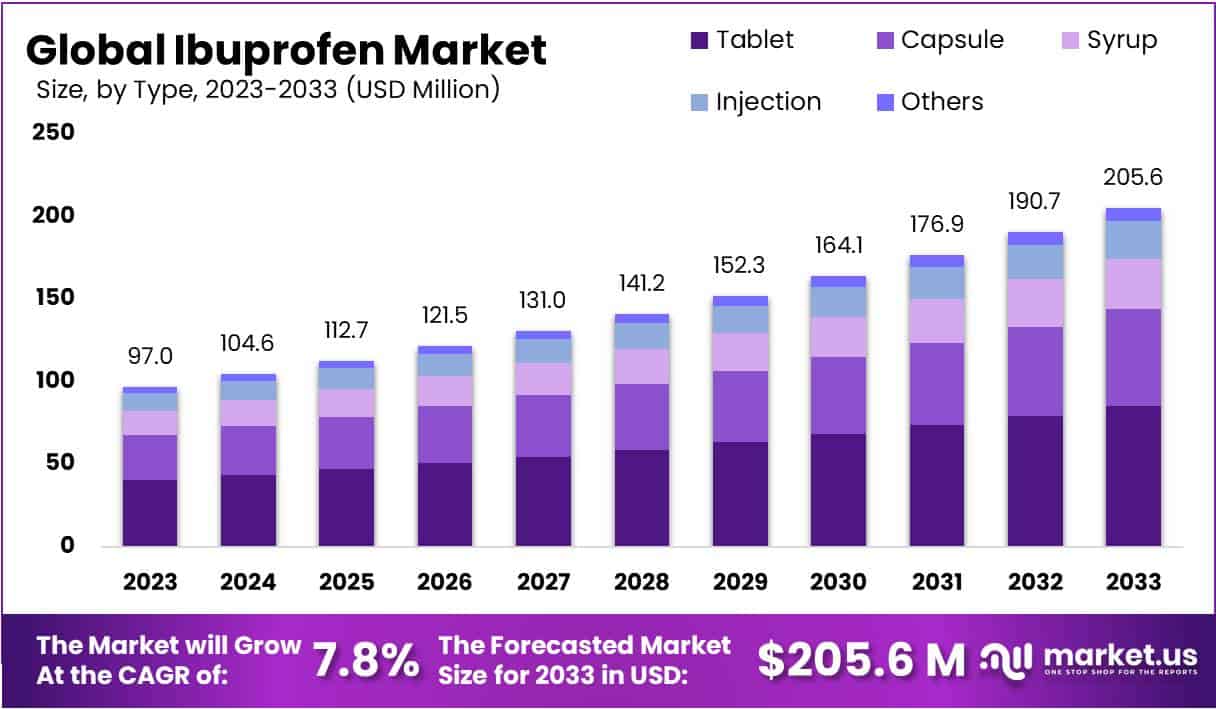
The Ibuprofen Market Size is anticipated to reach approximately USD 205.6 million by the year 2033, showing significant growth from its 2023 valuation of USD 97 million. This growth is expected to occur at a Compound Annual Growth Rate (CAGR) of 7.8% during the forecast period spanning from 2024 to 2033.
*Note: Actual Numbers Might Vary In The Final Report
Ibuprofen, a nonsteroidal anti-inflammatory drug (NSAID), is widely utilized to alleviate pain, fever, and inflammation. Belonging to the NSAID class, it operates by suppressing the production of specific chemicals in the body associated with inflammation. Commonly recognized by brand names like Advil and Motrin, ibuprofen is accessible over-the-counter and prescribed in higher doses for certain medical conditions.
It effectively addresses mild to moderate pain from diverse sources such as muscle aches, toothaches, and headaches, offering relief from menstrual cramps as well. Additionally, ibuprofen is instrumental in reducing fever and inflammation linked to conditions like arthritis. To ensure safe usage, it is crucial to adhere to recommended dosages and consult healthcare professionals, particularly when dealing with existing medical conditions or concurrent medications.
The Ibuprofen Market is competitive, with several pharmaceutical companies manufacturing ibuprofen products, including generic versions that contribute to market dynamics. Regulatory factors, consumer preferences, and evolving healthcare trends play pivotal roles. Challenges include concerns about NSAID side effects, while opportunities stem from innovations in drug delivery systems and expanding markets in developing regions.
Key Takeaways
- Market Growth Projection: Ibuprofen market set to reach USD 205.6 million by 2033, indicating a CAGR of 7.8% from its 2023 valuation of USD 97 million.
- Tablet Dominance: Tablets lead with 41.6% market share in 2023, driven by ease of use, while capsules and syrups also contribute significantly.
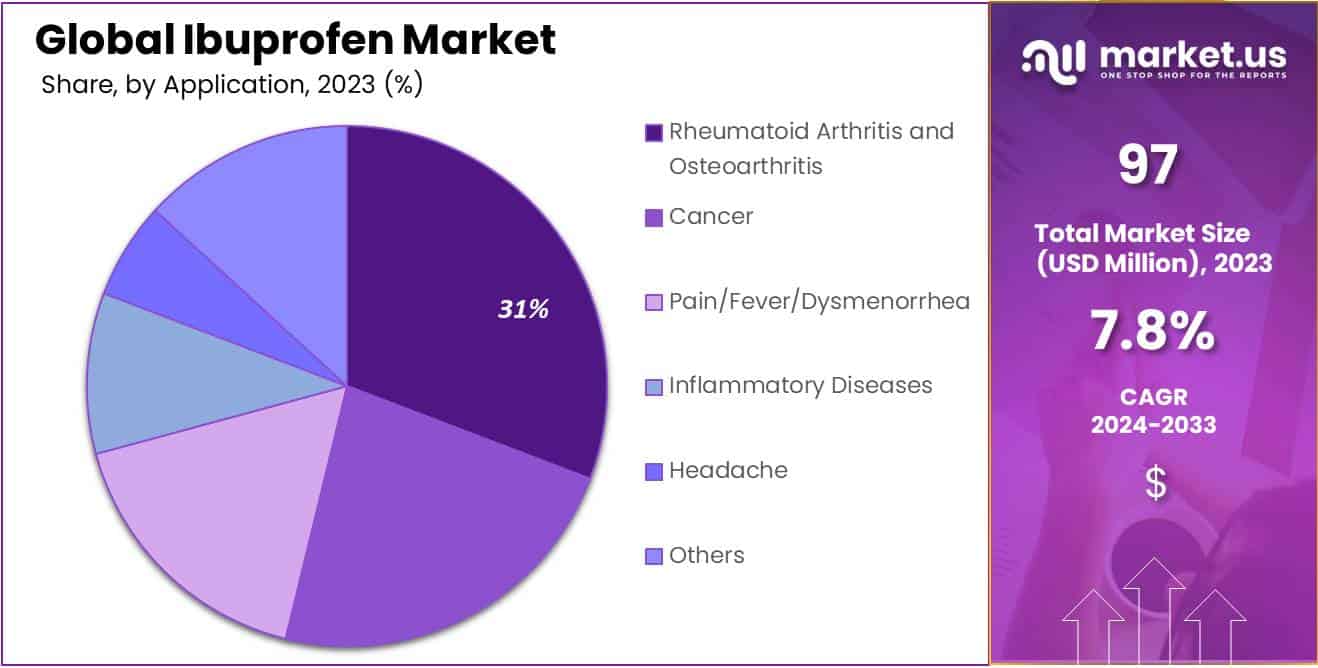
- Application Leaders: Rheumatoid Arthritis and Osteoarthritis segment commands 30.8% market share in 2023, followed by cancer-related applications and pain relief.
- Type Segmentation: Market segmented into Tablets, Capsules, Syrup, Injection, and Others, offering diverse options to meet consumer preferences.
- Key Drivers: Increasing chronic pain conditions drive demand, with Ibuprofen’s efficacy contributing to market growth, supported by a growing aging population.
- Regulatory Challenges: Regulatory scrutiny and approval processes pose challenges, potentially limiting the introduction of innovative Ibuprofen products to the market.
- Competitive Landscape: Generic competition and alternative pain management therapies impact market share, leading to price wars and reduced profit margins.
- Market Opportunities: Emerging markets present significant growth opportunities, along with innovations in drug delivery systems and the expansion of the over-the-counter (OTC) market.
- Trending Practices: Shift towards combination therapies, sustainable packaging, digital marketing, and personalized medicine approaches shape current market trends.
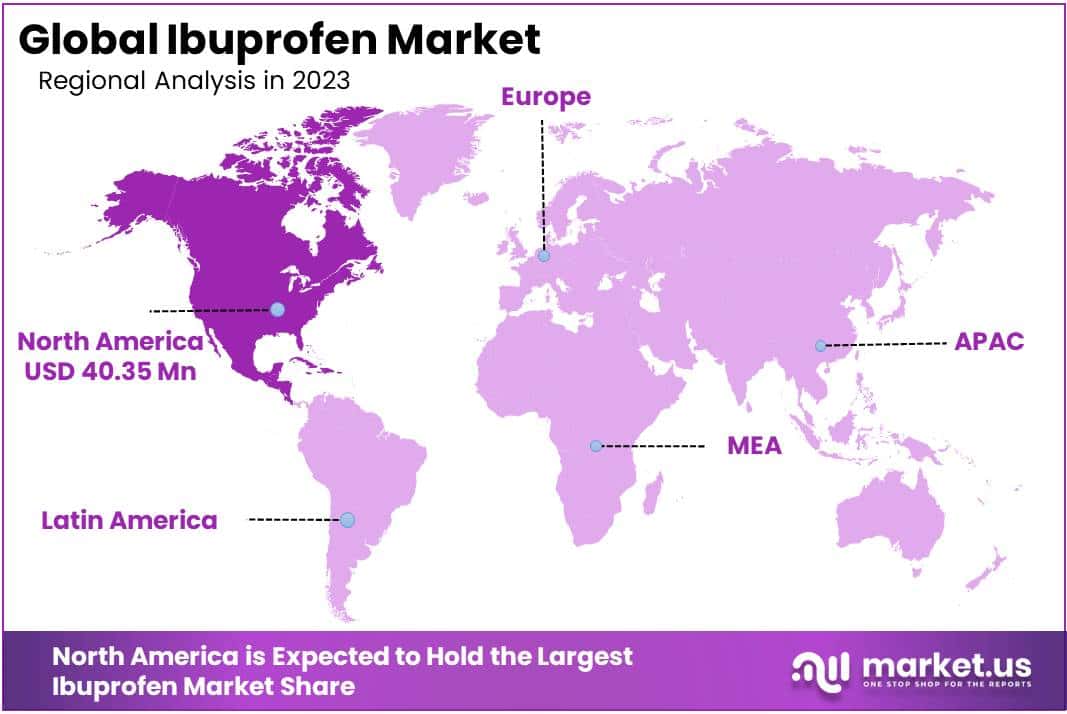
- Regional Dominance: North America leads the market with over 41.6% share in 2023, driven by a robust healthcare infrastructure, a well-established pharmaceutical industry, and a focus on pain management.
Type Analysis
In 2023, the Tablet segment holds dominating position in the Ibuprofen market, boasting a substantial market share of over 41.6%. Tablets, with their ease of consumption and widespread availability, secured a dominant position among consumers seeking relief from pain and inflammation.
Capsules, another prevalent form of Ibuprofen, also played a significant role, accounting for a considerable share in the market. The convenience of capsule consumption and its effectiveness contributed to its popularity among users looking for versatile options.
Syrups, though holding a smaller share, carved a niche for themselves by catering to individuals who prefer liquid forms of medication. The ease of administration and suitability for various age groups made Ibuprofen syrups a notable choice, particularly among pediatric and geriatric populations.
Injections, while constituting a relatively smaller segment, gained traction in healthcare settings where immediate and precise administration of Ibuprofen was essential. This segment served a specific need, addressing acute conditions and providing rapid relief to patients.
The Others category encompassed diverse formulations, such as gels, patches, and innovative delivery systems, collectively contributing to the Ibuprofen market landscape. This diverse range of options allowed consumers to choose formulations that align with their preferences and health requirements.
As the Ibuprofen market continues to evolve, understanding the dynamics of each segment becomes crucial for stakeholders. The dominance of tablets, coupled with the steady performance of capsules and the niche appeal of other formulations, underscores the diverse preferences and needs within the consumer base. This market scenario presents opportunities for innovation and strategic product positioning to cater to the varied demands of consumers seeking effective pain and inflammation management.
Application Analysis
In 2023, the Ibuprofen market showcased a notable trend with the Rheumatoid Arthritis and Osteoarthritis segment taking the lead, securing a dominant market position by capturing over 30.8% of the share. This segment’s success can be attributed to the widespread prevalence of these debilitating joint conditions, underscoring the increasing demand for Ibuprofen as a preferred choice for pain management and inflammation reduction.
Cancer-related applications also demonstrated substantial market traction, contributing significantly to the overall landscape. The versatility of Ibuprofen in addressing pain associated with cancer treatments and procedures played a pivotal role in its adoption within this segment.
Pain, fever, and dysmenorrhea emerged as another key application area, reflecting Ibuprofen’s efficacy in providing relief from everyday discomforts. Its widespread usage in addressing common ailments underscores the market’s reliance on Ibuprofen as a readily available and effective over-the-counter solution.
Inflammatory diseases constituted a noteworthy segment, with Ibuprofen being increasingly recognized for its anti-inflammatory properties. The ability to mitigate inflammation has positioned Ibuprofen as a staple in managing various inflammatory conditions, further bolstering its market presence.
Headache management also contributed significantly to the Ibuprofen market, driven by the compound’s well-established reputation for relieving headaches and migraines. Consumers continue to turn to Ibuprofen for its quick and reliable relief, consolidating its foothold in this particular application segment.
Beyond these primary sectors, Ibuprofen found application in various other areas, showcasing its versatility in addressing a wide range of health concerns. The market’s acknowledgment of Ibuprofen’s multifaceted benefits continues to drive its adoption in diverse medical scenarios, establishing it as a preferred choice among healthcare professionals and consumers alike. As the Ibuprofen market evolves, these segments are expected to undergo dynamic shifts, influenced by factors such as emerging medical research, changing consumer preferences, and advancements in healthcare practices.
*Note: Actual Numbers Might Vary In The Final Report
Key Market Segments
Type
- Tablet
- Capsule
- Syrup
- Injection
- Others
Application
- Rheumatoid Arthritis and Osteoarthritis
- Cancer
- Pain/Fever/Dysmenorrhea
- Inflammatory Diseases
- Headache
- Others
Drivers
Increasing Incidence of Chronic Pain Conditions
The increasing incidence of chronic conditions like arthritis and musculoskeletal disorders is a key factor propelling the Ibuprofen market forward. Ibuprofen, a commonly utilized nonsteroidal anti-inflammatory drug (NSAID), proves to be effective in managing pain and inflammation related to these conditions.
Growing Aging Population
The demographic shift towards an aging population contributes to the escalating demand for pain management solutions. Elderly individuals often experience joint and muscle pain, making Ibuprofen a popular choice due to its efficacy and relatively lower side effects compared to other pain medications.
Rising Awareness about Self-Medication
There is a discernible trend towards self-medication, as consumers are increasingly opting for over-the-counter remedies to address common ailments. The accessibility of ibuprofen without a prescription renders it a favored choice for individuals seeking prompt relief from pain and inflammation.
Expanding Pharmaceutical Industry
The overall growth of the pharmaceutical industry, coupled with advancements in drug delivery mechanisms, is propelling the Ibuprofen market. Continuous research and development efforts aimed at improving drug formulations and delivery methods contribute to the market’s expansion.
Restraints
Side Effects and Safety Concerns
Despite its widespread use, Ibuprofen is associated with potential side effects such as gastrointestinal issues and cardiovascular risks. Increasing awareness of these risks, especially with prolonged use, can restrain the market as consumers seek safer alternatives.
Stringent Regulatory Approval Processes
The pharmaceutical industry faces rigorous regulatory scrutiny, and the approval processes for new formulations or dosage forms can be time-consuming and expensive. This regulatory burden can limit the introduction of innovative Ibuprofen products to the market.
Competition from Alternative Pain Management Therapies
The Ibuprofen market faces competition from other pain management therapies, including prescription medications and alternative treatments such as physical therapy and acupuncture. This competition can impact market share and growth opportunities for Ibuprofen.
Generic Competition
The presence of generic versions of Ibuprofen in the market can lead to price wars, reducing profit margins for manufacturers. Generic alternatives often offer cost advantages, making it challenging for branded Ibuprofen products to maintain market dominance.
Opportunities
Emerging Markets and Untapped Regions
The untapped potential in emerging markets presents a significant growth opportunity for the Ibuprofen market. Increased healthcare awareness, rising disposable incomes, and expanding access to healthcare in these regions contribute to market growth.
Innovations in Drug Delivery Systems
Advancements in drug delivery systems, such as sustained-release formulations and novel dosage forms, create opportunities for market growth. Enhanced patient compliance and convenience can drive the adoption of these innovative Ibuprofen products.
Expansion of OTC Market
The expansion of the over-the-counter (OTC) market provides a substantial growth avenue for Ibuprofen. As consumers increasingly prefer self-medication, manufacturers can capitalize on this trend by promoting OTC Ibuprofen products.
Collaborations and Partnerships
Collaborations between pharmaceutical companies and research institutions can accelerate product development and market entry. Partnerships focusing on novel formulations, combination therapies, or addressing specific patient populations can fuel growth in the Ibuprofen market.
Trends
Shift towards Combination Therapies
There is a trend towards combining Ibuprofen with other active ingredients to enhance its efficacy or provide additional therapeutic benefits. Combination therapies cater to specific patient needs and contribute to the diversification of product offerings in the market.
Focus on Sustainable and Eco-friendly Packaging
Environmental sustainability is gaining importance across industries, including pharmaceuticals. The Ibuprofen market is witnessing a trend towards eco-friendly packaging solutions, driven by consumer preferences for sustainable products.
Digital Marketing and E-commerce
The increasing use of digital platforms for marketing and the growing prevalence of e-commerce channels are shaping the Ibuprofen market. Companies are leveraging online platforms to reach a wider audience and enhance consumer engagement.
Personalized Medicine Approaches
With advancements in genomics and personalized medicine, there is a growing interest in tailoring Ibuprofen treatments based on individual patient characteristics. This trend aligns with the broader movement towards precision medicine in healthcare.
Regional Analysis
In 2023, North America emerged as the frontrunner in the Ibuprofen market, establishing a dominant position by capturing more than a 41.6% share. The region exhibited a robust market performance, attaining a market value of USD 40.35 million for the year. Several factors contributed to North America’s prominent standing in the Ibuprofen market, showcasing a comprehensive regional analysis.
North America boasts a substantial healthcare expenditure, indicating a strong focus on health and wellness. The significant investment in healthcare infrastructure, coupled with a rising awareness of pain management, has driven the demand for Ibuprofen in the region.
North America houses a well-established pharmaceutical industry with leading manufacturers and a robust distribution network. The availability of Ibuprofen through various channels has contributed to its accessibility, further fueling market growth.
The pharmaceutical industry in North America operates within a stringent regulatory framework. Compliance with regulatory standards and frequent inspections pose challenges to market players, influencing product development timelines and market entry.
The Ibuprofen market in North America faces competition from alternative pain management therapies, including prescription medications and non-pharmacological approaches. This competitive landscape necessitates continuous innovation and differentiation strategies among market players.
North America is poised to maintain its leadership position in the Ibuprofen market, driven by sustained efforts in research and development, strategic collaborations, and a responsive healthcare system. As the region continues to address the evolving needs of an aging population and rising health consciousness, opportunities for market expansion and diversification are likely to abound. Market players should stay attuned to regulatory developments, invest in innovation, and leverage emerging technologies to secure a competitive advantage in this dynamic landscape.
*Note: Actual Numbers Might Vary In The Final Report
Key Regions
- North America
- The US
- Canada
- Mexico
- Western Europe
- Germany
- France
- The UK
- Spain
- Italy
- Portugal
- Ireland
- Austria
- Switzerland
- Benelux
- Nordic
- Rest of Western Europe
- Eastern Europe
- Russia
- Poland
- The Czech Republic
- Greece
- Rest of Eastern Europe
- APAC
- China
- Japan
- South Korea
- India
- Australia & New Zealand
- Indonesia
- Malaysia
- Philippines
- Singapore
- Thailand
- Vietnam
- Rest of APAC
- Latin America
- Brazil
- Colombia
- Chile
- Argentina
- Costa Rica
- Rest of Latin America
- Middle East & Africa
- Algeria
- Egypt
- Israel
- Kuwait
- Nigeria
- Saudi Arabia
- South Africa
- Turkey
- United Arab Emirates
- Rest of MEA
Key Players Analysis
In the dynamic landscape of the Ibuprofen Market, key players such as BASF SE, BIOCAUSE Inc., Pfizer Inc.,and other key players play pivotal roles in shaping the industry’s trajectory. These industry giants contribute significantly to the market’s growth, each bringing unique strengths and perspectives.
BASF SE, a global chemical powerhouse, leverages its extensive research capabilities to ensure the production of high-quality ibuprofen. Their commitment to innovation and sustainability positions them as a key driver in the market, influencing both product quality and environmental impact.
BIOCAUSE Inc. stands out with its focus on bio-based solutions, contributing to the increasing demand for natural and sustainable ingredients in the pharmaceutical sector. Their presence in the Ibuprofen Market underscores a growing trend towards eco-friendly practices.
Pfizer Inc., a well-known pharmaceutical giant, significantly impacts the Ibuprofen market. As a major manufacturer and distributor, Pfizer Inc.’s global reach and brand recognition contribute to market stability. Their research-driven approach and emphasis on product safety establish them as a trusted supplier in the competitive landscape.
Other key players in the Ibuprofen market also play crucial roles in shaping industry trends. These participants, with diverse strengths and specializations, collectively contribute to the market’s dynamism.
Market Key Players
- BASF SE
- BIOCAUSE Inc.
- SI Group Inc.
- Pfizer Inc.
- Abbott Laboratories Ltd.
- Solara Active Pharma Sciences Ltd.
- Ѕhаndоng Хіnhuа Рhаrmасеutісаl Со.Ltd.
- ІОL Сhеmісаlѕ and Рhаrmасеutісаl Ltd.
- Other Key Players
Recent Developments
- In August 2023, A significant milestone for Solara Active Pharma Sciences, a global leader in active pharmaceutical ingredient (API) development. The company proudly announced the inauguration of its new ibuprofen API manufacturing facility in Spain. This expansion is expected to double Solara’s ibuprofen API production, catering to the increasing demand for this widely used pain reliever.
- In July 2023, A noteworthy collaboration emerged between BASF, a German chemical company, and Recipharm, a prominent contract development and manufacturing organization (CDMO). The two entities joined forces to pioneer the development of innovative ibuprofen formulations. Leveraging BASF’s expertise in ibuprofen synthesis and Recipharm’s proficiency in drug formulation, the partnership aims to create formulations that are more effective, exhibit fewer side effects, and are easier to administer.
- In June 2023, The introduction of a noteworthy product by Glenmark Pharmaceuticals, an Indian multinational pharmaceutical company. Glenmark launched a new ibuprofen-based topical gel designed for fast and efficient relief from minor aches and pains. The over-the-counter availability of this gel without a prescription adds a convenient option for individuals seeking immediate pain relief.









