


Report Overview
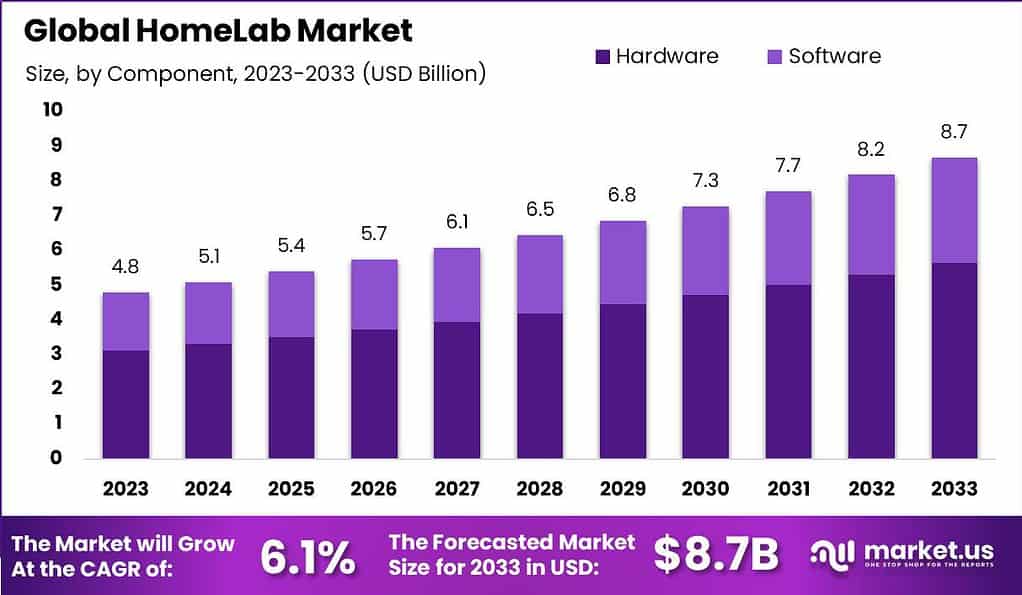
The global HomeLab market is likely to secure a valuation of USD 5.1 billion in 2024, with a CAGR of 6.1% during the forecast period. The global market is anticipated to capture a valuation of USD 8.7 Billion by 2033.
HomeLab, also referred to as a home laboratory or home testing laboratory, is a set-up or space within a residence setting where enthusiasts or individuals can conduct scientific experiments or research, as well as take part in learning activities that are hands-on. It enables people to study different scientific disciplines, like biology, chemistry and electronics as well as physics in the comfort at their homes.
A HomeLab usually consists of tools, equipment and materials that enable individuals to carry out experiments and conduct scientific research. It could include basic laboratory equipment such as beakers as well as microscopes, test tubes measuring instruments, chemicals electronic components, biological specimens as well as other essential items. HomeLabs may be set up in a spare room or basement, garage, or any space in the residential area, based on the resources available and the type of research taking place.
Note: Actual Numbers Might Vary In The Final Report
The HomeLab market refer to business sector that meets the requirements of those who are interested in setting up and setting up their own home labs. This market comprises a range of manufacturers, suppliers and retailers who offer an array of products and services designed specifically to home-based science experiments and learning. These items and services could include lab equipment including materials for teaching and books, as well as online resources, as well as guidance in establishing and carrying out experiments safely.
Key Takeaways
- Market Size and Growth: The HomeLab market is expected to reach USD 8.7 billion by 2033.
- Components of HomeLab: HomeLabs include hardware such as Consumer-Grade Servers, Professional-Grade Servers, and Custom-Built Servers.
- End-User Segmentation: HomeLab users are primarily categorized into Professionals and Home Users.
- Driving Factors: Continuous technological advancements drive the HomeLab market.
- Challenges: High initial investment is a significant barrier for individuals entering the HomeLab market.
- Growth Opportunities: Customization and personalization of HomeLab setups offer growth potential.
- Key Market Trends: Modular HomeLab solutions are gaining popularity for their flexibility.
- Regional Analysis: North America leads the HomeLab market, driven by strong technological infrastructure and a tech-savvy population.
- Key Players: Leading companies in the HomeLab market include Dell Technologies, Hewlett Packard Enterprise (HPE), Lenovo, Supermicro, and Intel Corporation.
By Component Outlook
In 2023, the Hardware segment in the HomeLab Market held a dominant position, capturing more than a 65% share. This segment’s prominence is underpinned by the growing interest in personal server deployment for various applications, from hobbyist projects to professional development. Within this segment, Consumer-Grade Servers are popular due to their affordability and suitability for basic HomeLab setups.
They offer a practical solution for individuals looking to explore server management without significant investment. Professional-Grade Servers, though more expensive, are preferred by enthusiasts seeking higher performance and reliability for more complex projects. Custom-Built Servers also have a significant share, appealing to those who require specific configurations and optimizations not available in off-the-shelf products.
The Software Solutions segment, encompassing Virtualization Platforms and Containerization, is vital in the HomeLab environment. Virtualization Platforms are key to maximizing hardware utility, allowing multiple operating systems and applications to run simultaneously on a single server. This technology not only enhances the flexibility of HomeLabs but also aids in learning and testing various IT scenarios. Containerization has gained popularity for its ability to package and deploy applications efficiently, making it a valuable tool for those experimenting with software development and microservices.
In terms of Operating Systems, Linux leads the HomeLab market. The open-source characteristics, adaptability, and strong backing from a dedicated community position it as the preferred option for HomeLab enthusiasts. Linux’s capacity to operate on diverse hardware and its impressive performance in server environments are pivotal factors fueling its widespread popularity.
Windows Server, while more common in professional environments, is also utilized in HomeLabs, particularly by those who prefer or require a Windows ecosystem or are looking to mirror enterprise-level configurations. FreeBSD, known for its stability and security features, though less popular than Linux and Windows Server, has a dedicated user base in the HomeLab community.
By End-User
In 2023, the HomeLab market showcased a notable segmentation based on end-users, primarily categorized into Professionals and Home Users. The dynamics of this market were significantly influenced by the distinctive needs and preferences of these two key segments.
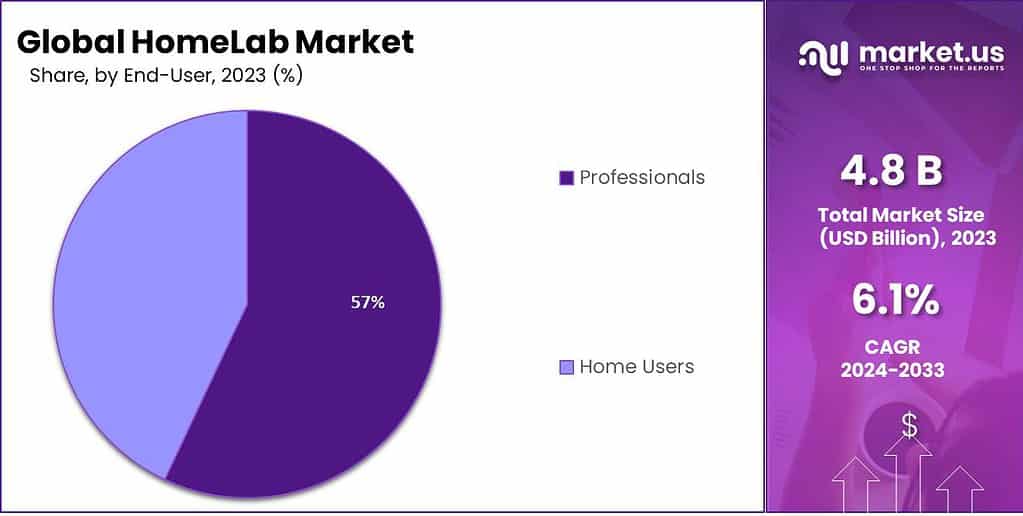
Initiating with the Professionals segment, it emerged as the dominant force within the HomeLab landscape, commanding an impressive market position with a share exceeding 57%. This robust presence can be attributed to the heightened demand among professionals for cutting-edge and advanced HomeLab solutions that cater to their specific requirements.
Professionals, including researchers, scientists, and technology enthusiasts, displayed a keen interest in sophisticated equipment and technologies that facilitate complex experiments, simulations, and research activities within the comfort of their homes. The surge in professionals adopting HomeLab setups is indicative of a growing trend where individuals seek to augment their work capabilities through personalized and efficient home-based laboratories.
On the other hand, the Home Users segment, while not as dominant as its professional counterpart, exhibited noteworthy growth and a distinctive set of characteristics. Home Users accounted for the remaining market share, reflecting a substantial portion of the consumer base. In 2023, Home Users embraced HomeLab solutions primarily for educational and recreational purposes. This segment attracted DIY enthusiasts, students, and hobbyists seeking affordable yet efficient setups for experiments, learning experiences, and personal projects.
Note: Actual Numbers Might Vary In The Final Report
Driving Factors
- Technological Advancements: The HomeLab market is driven by continuous technological innovations, offering professionals and home users access to cutting-edge equipment and sophisticated tools. The integration of advanced features, such as automation and connectivity, enhances the overall efficiency and functionality of HomeLab setups.
- Rising Demand for Remote Work Solutions: The increasing trend of remote work among professionals contributes significantly to the growth of HomeLab setups. Professionals across diverse fields seek home-based laboratories to conduct experiments, research, and simulations, aligning with the flexibility and convenience offered by remote work arrangements.
- Educational Embrace: A key driving factor is the growing adoption of HomeLabs in educational settings. Educational institutions are increasingly incorporating HomeLab solutions into their curricula, fostering hands-on learning experiences for students. This trend not only boosts the market but also expands the scope of HomeLabs beyond professional applications.
- Affordability and Accessibility: The market is positively influenced by the affordability and accessibility of HomeLab solutions. As manufacturers focus on creating cost-effective setups without compromising on quality, a broader consumer base, including hobbyists and DIY enthusiasts, can easily enter the HomeLab space, driving market expansion.
Restraining Factors
- High Initial Investment: A significant restraint in the HomeLab market is the high initial investment required for setting up a comprehensive and technologically advanced home laboratory. This financial barrier may limit the entry of certain individuals and professionals into the market, hindering overall market growth.
- Limited Awareness: The market faces challenges related to limited awareness among potential users, especially in the home user segment. Educating consumers about the benefits and applications of HomeLab setups is crucial for widespread adoption and overcoming the resistance stemming from a lack of understanding.
- Data Security Concerns: Professionals, in particular, may express reservations regarding data security and privacy when conducting experiments or research remotely. Addressing these concerns and implementing robust security measures are essential to building trust and encouraging broader adoption among professionals.
- Infrastructure Challenges: HomeLab setups may face infrastructure challenges related to power supply, ventilation, and space constraints in certain home environments. Overcoming these challenges requires innovative solutions and technologies that can adapt to diverse residential settings.
Growth Opportunities
- Customization and Personalization: The market presents growth opportunities through the customization and personalization of HomeLab setups. Offering tailor-made solutions that cater to the specific needs and preferences of users, both professionals and home users, can unlock new avenues for market expansion.
- Collaborative Platforms: The integration of collaborative platforms within HomeLab setups creates growth opportunities, especially for professionals working in teams. Facilitating seamless communication, data sharing, and collaborative experiments enhance the overall utility and attractiveness of HomeLabs.
- Expansion in Emerging Markets: Opportunities lie in expanding the market reach to emerging economies where there is a growing interest in STEM (Science, Technology, Engineering, and Mathematics) education and research. Targeting these regions can open new markets and customer segments.
- Integration with Virtual Reality (VR) and Augmented Reality (AR): The incorporation of Augmented Reality (AR) and Virtual Reality (VR) technologies into HomeLab setups presents exciting growth prospects. These technologies can enhance the immersive experience of conducting experiments and simulations, attracting a broader user base, especially in educational and professional contexts.
Challenges
- Regulatory Compliance: The HomeLab market faces challenges associated with regulatory compliance, particularly concerning safety standards and ethical considerations. Adhering to and navigating evolving regulations is crucial for manufacturers and users alike to ensure the responsible use of HomeLab setups.
- User Training and Support: Overcoming the challenge of providing adequate training and support to users, especially in the home user segment, is essential. Ensuring that users can maximize the potential of HomeLab setups without facing significant learning curves contributes to market acceptance.
- Device Interoperability: Achieving seamless interoperability among various HomeLab devices and equipment from different manufacturers is a challenge. Standardizing interfaces and communication protocols can enhance compatibility, fostering a more integrated and user-friendly experience.
- Sustainability Concerns: The production and disposal of electronic components within HomeLab setups raise sustainability concerns. Manufacturers must address these concerns by adopting eco-friendly practices, promoting recycling, and exploring sustainable materials in the design and manufacturing process.
Key Market Trends
- Rise of Modular HomeLab Solutions: A notable trend is the emergence of modular HomeLab solutions, allowing users to easily expand or upgrade their setups. This trend aligns with the demand for flexibility and scalability among both professionals and home users.
- Increasing Emphasis on User Experience: Manufacturers are placing a heightened emphasis on enhancing the overall user experience. This includes intuitive interfaces, user-friendly software, and ergonomic designs, contributing to a more enjoyable and productive HomeLab experience.
- Incorporation of Artificial Intelligence (AI): The integration of AI technologies within HomeLab setups is a prevalent trend. AI enhances automation, data analysis, and experiment planning, empowering users with intelligent and time-saving functionalities.
- Growing Community and Knowledge Sharing: A growing trend involves the establishment of online communities and platforms where HomeLab enthusiasts, professionals, and users can share knowledge, experiences, and best practices. This collaborative approach fosters a sense of community and accelerates the learning curve for new users entering the HomeLab space.
Key Market Segments
Component
- Hardware
- Consumer-Grade Servers
- Professional-Grade Servers
- Custom-Built Servers
- Software Solutions
- Virtualization Platforms
- Containerization
- Operating Systems
- Linux
- Windows Server
- FreeBSD
End-User
- Professionals
- Home Users
Regional Analysis
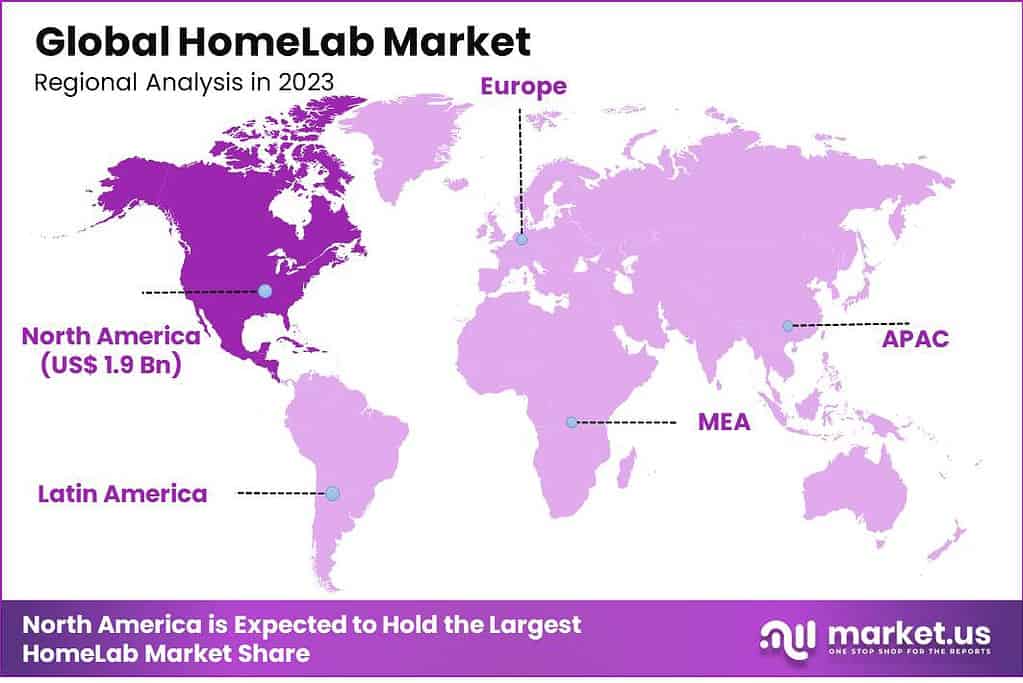
In 2023, North America held a dominant market position in the HomeLab Market, capturing more than a 40% share. This significant market presence is largely attributed to the region’s strong technological infrastructure and the high concentration of tech enthusiasts and professionals. The United States and Canada are leading contributors, driven by a culture that promotes technological experimentation and innovation.
In these countries, there is a substantial community of IT professionals and hobbyists who invest in HomeLabs for personal skill development and professional growth. Additionally, the presence of major tech companies in this region supports the market, providing easy access to the latest hardware and software solutions.
Europe follows North America closely in the HomeLab market. The region’s strong emphasis on data privacy and security, coupled with a well-established IT infrastructure, contributes to its market share. Countries like Germany, the UK, France, and the Nordic countries show a high engagement in technology-related hobbies and professional development, which fuels the demand for HomeLab setups. The European market is also supported by its educational system, where students and researchers use HomeLabs for academic purposes, further driving the region’s market growth.
The Asia-Pacific (APAC) region is experiencing significant growth in the HomeLab market. The surge in growth is driven by a rising embrace of technology and a growing fascination with IT within the population. Leading this trend are countries such as China, Japan, South Korea, and India, where an increasing number of tech professionals and students are actively participating in and contributing to this technological wave.
The growing IT sector in these countries, along with governmental initiatives to promote technological skills, are key factors driving the market. Additionally, the increasing affordability of computing hardware in APAC makes HomeLabs more accessible to a broader audience.
Latin America, while holding a smaller share of the global HomeLab market, exhibits potential for growth. The region’s growing IT industry and increasing interest in technology among the population are promising indicators. Countries like Brazil, Mexico, and Argentina are slowly emerging as markets for HomeLabs, driven by a younger demographic interested in technology and digital innovation. However, the growth in this region is somewhat hampered by the higher cost of importing technology and limited local availability of advanced hardware and software solutions.
The Middle East and Africa (MEA) region, though nascent in the HomeLab market, shows signs of emerging interest. With increasing investments in technology infrastructure and a young, tech-savvy population, the potential for growth in this market is significant. The region’s focus on educational advancement and skill development in the IT sector could further stimulate the adoption of HomeLabs. However, similar to Latin America, the growth in the MEA region is challenged by the cost and availability of technology.
Note: Actual Numbers Might Vary In The Final Report
Key Regions and Countries Covered in this Report:
- North America
- The US
- Canada
- Europe
- Germany
- France
- The UK
- Spain
- Italy
- Russia
- Netherland
- Rest of Europe
- APAC
- China
- Japan
- South Korea
- India
- Australia
- New Zealand
- Singapore
- Thailand
- Vietnam
- Rest of APAC
- Latin America
- Brazil
- Mexico
- Rest of Latin America
- Middle East & Africa
- South Africa
- Saudi Arabia
- UAE
- Rest of MEA
Key Players Analysis
Key Players Analysis for the HomeLab market involves assessing and understanding the leading companies that significantly influence the industry’s dynamics. These key players are instrumental in shaping trends, driving innovation, and contributing to market growth. In the HomeLab sector, several companies stand out as key players due to their market share, technological advancements, and strategic initiatives.
Top Key Players
- Dell Technologies
- Hewlett Packard Enterprise (HPE)
- Lenovo
- Supermicro
- Intel Corporation
- Advanced Micro Devices Inc.
- QNAP Systems Inc.
- Synology Inc.
- VMware LLC
- Proxmox
- Other Key Players
Recent Developments
- November 2023: Bio-Tech Startup Aims to Make Home Lab Equipment Affordable and Accessible.
- October 2023: Five Stocks That Tap Into the Exploding Market for At-Home Lab Testing.
- June 2023: Agronomics investee backed by Pets At Home; lab meat approvals in the US.









