


Report Overview
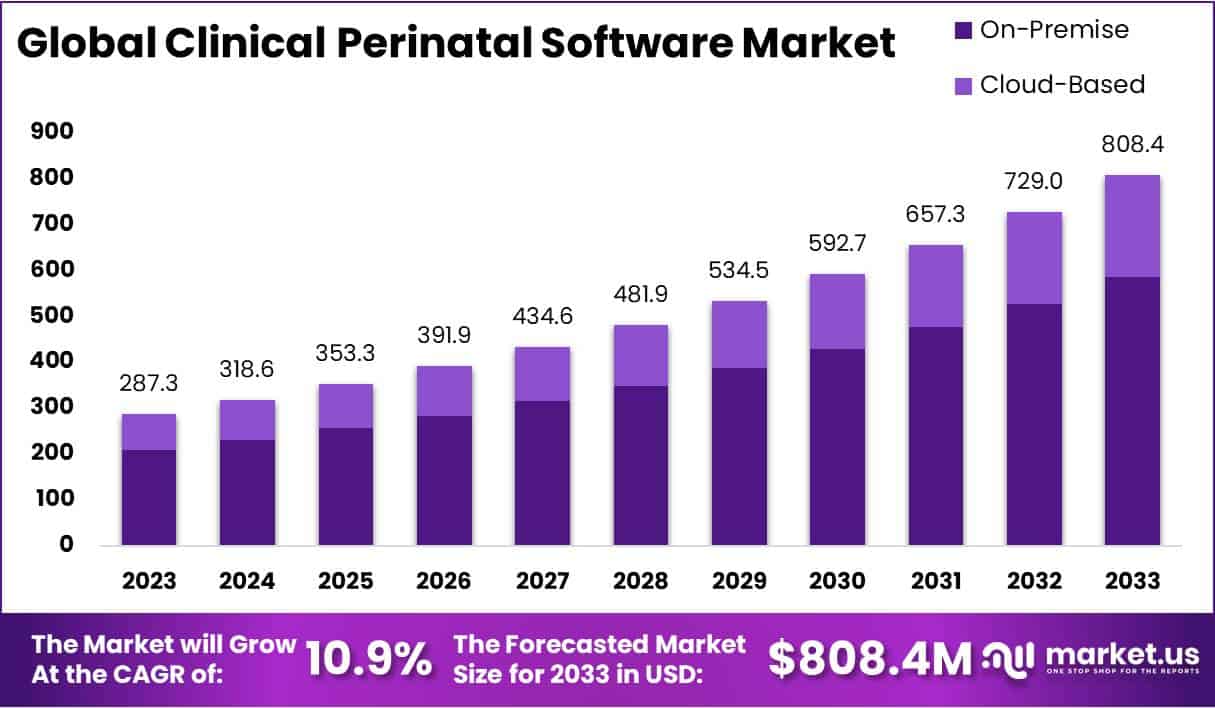
The Clinical Perinatal Software Market Size is projected to witness substantial growth, with its size anticipated to reach approximately USD 808.4 Million by the year 2033. This marks a significant increase from its valuation of USD 287.3 Million in 2023. The market is poised to experience a robust Compound Annual Growth Rate (CAGR) of 10.9% throughout the forecast period spanning from 2024 to 2033.
This data requires a clinical perinatal solution that is effective, which in turn boosts this markets potential to increase revenue. Rapid technological advancements in perinatal software solutions, as well as the increasing adoption of IT for the healthcare sector, are further complementing growth prospects. This market report provides a detailed analysis of the Clinical Perinatal Software market size, share, growth, key trends, competitive landscape, forecast analysis, market opportunities, and other key factors.
Key Takeaways
- Market Growth: Clinical Perinatal Software Market is set to reach USD 808.4 Mn by 2033 with a CAGR of 10.9% from 2024-2033, up from USD 287.3 Mn in 2023.
- Deployment Trends: ‘On-Premise’ segment, contributing over 72.5% of revenue in 2023, led by data security advantages, while ‘Cloud-Based’ anticipates the highest CAGR.
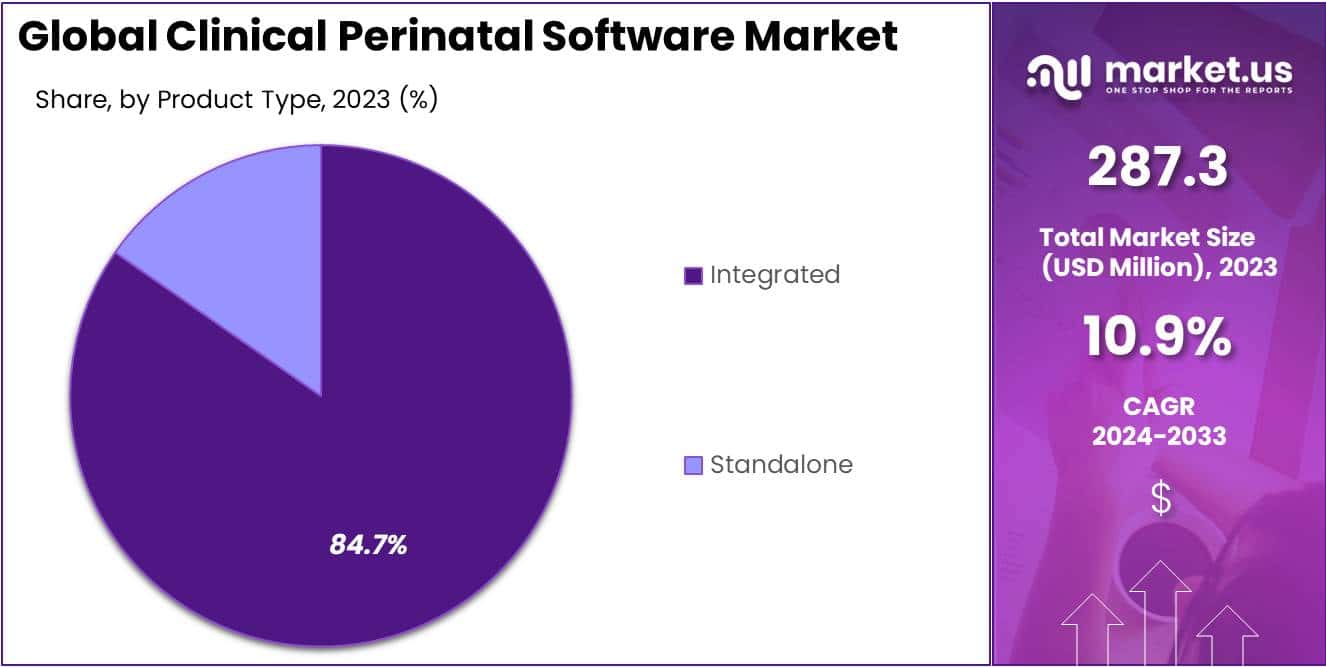
- Product Preferences: ‘Integrated’ segment dominated with 84.7% revenue in 2023, driven by demand for seamless workflow, while ‘Standalone’ faced integration challenges.
- Application Insights: ‘Fetal Monitoring Data Services claimed 55.3% of sales in 2023, focusing on precise monitoring, while ‘Workflow Management Software’ expects the fastest CAGR.
- End-Use Dynamics: ‘Hospitals/Clinics’ dominated with 63.8% market share in 2023, thriving on high foot traffic and sophisticated software.
- Market Drivers: The market fueled by advancements in medical technology, global rise in maternal age, increasing high-risk pregnancies, and supportive government initiatives.
- Market Restraints: Challenges include persistent data security concerns despite technological strides and substantial initial costs hindering adoption, particularly for smaller healthcare facilities.
- Market Opportunities: Growth opportunities lie in the integration of clinical perinatal software with telehealth services, personalized medicine, global expansion, and research and development initiatives.
- Emerging Trends: Wearable technology integration in perinatal care, a shift towards population health management, and seamless interconnectivity with Electronic Health Records (EHR) are prominent trends.
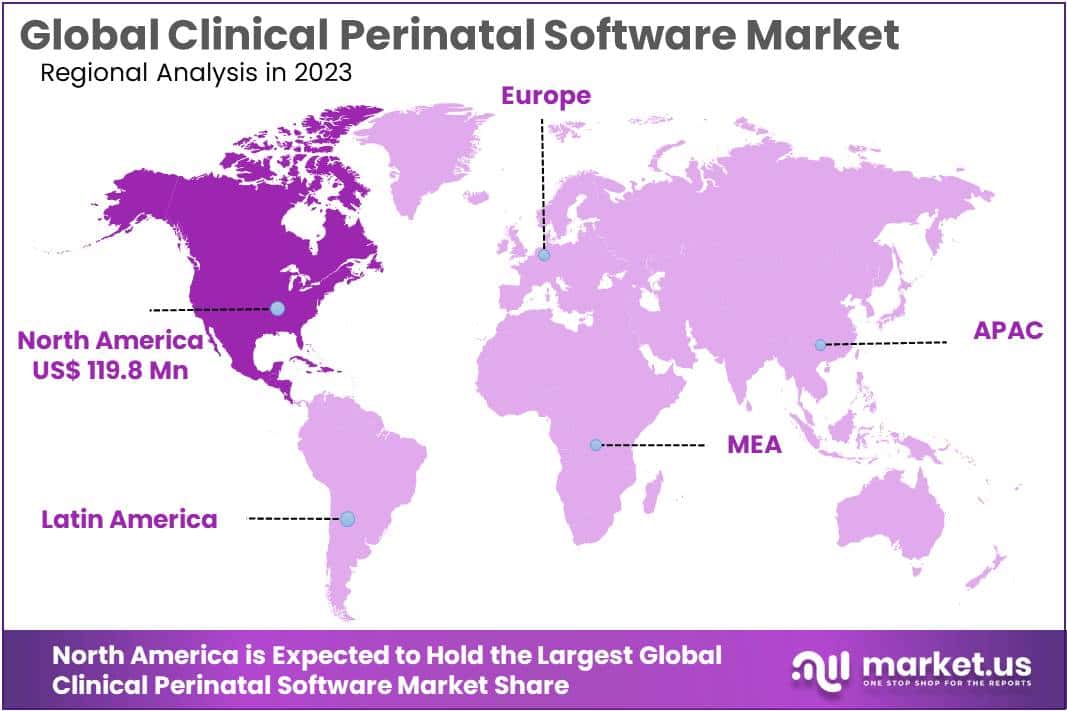
- Regional Dominance: North America led with 41.7% market share and USD 197.7M value in 2023, driven by advanced healthcare infrastructure and strategic collaborations.
Deployment Mode Analysis
In 2023, the majority of revenue in the deployment market, more than 72.5%, came from the ‘On-Premise’ segment. This was mainly because of the benefits it offers in terms of data security, retrieval, and access. The growth in this segment is expected to be fueled by its flexibility and the cost advantages it provides in terms of IT overhead.
On the other hand, the ‘Cloud-Based’ segment is predicted to experience the highest Compound Annual Growth Rate (CAGR) over the projected period. This growth can be attributed to real-time tracking and remote access, which are significant factors driving expansion. The clinical perinatal software market is expected to continue growing due to advanced features like increased flexibility, high accessibility, and straightforward data backup.
Product Type Analysis
In 2023, the majority of revenue in the clinical perinatal software market, about 84.7%, came from the ‘Integrated’ segment based on product types. This category is projected to experience rapid growth, driven by a rising demand among medical professionals for seamless workflow integration. Technological advancements and increasing adoption levels are expected to further support the growth of this segment.
During the same period, the ‘Standalone’ segment also contributed significantly to the market’s revenue. Standalone clinical perinatal software is specifically designed to address particular operations. However, the growth of this segment is expected to be constrained by its limitations, such as the inability to integrate data and the absence of add-on options.
Application Analysis
With regards to Application, the Fetal Monitoring Data Services segment accounted for more than 55.3% of sales in 2023, accounting for the highest revenue share. These services enable precise and appropriate fetal heartbeat and uterine contraction monitoring capabilities. Mobile fetal monitoring also gives patients remote access to information about an infants development, which can be a major factor in facilitating this segments augmentation.
Over the projected period, the Workflow Management Software segment is expected to index the fastest CAGR. The increase of hospitals, maternity clinics, and other healthcare institutions around the world, as well as the increasing demand for workflow management software, are elements contributing to this expansion. Additional advantages further boost revenue growth prospects include streamlined administrative processes, real-time data, and increased productivity.
End-Use Analysis
In terms of End-Use, in 2023, the Hospitals/Clinics segment dominated this industry, with a market share of more than 63.8%. Due to its high foot traffic and the availability of sophisticated software, this segment enjoys a significant market share. Many hospitals work in partnership with various insurance providers to offer quicker and more effective reimbursements, which in turn boost product uptake.
The Maternity Clinics segment is projected to register the highest CAGR. An increase in the number of maternity clinics in both developed and emerging nations, is the primary element driving this industry. Surging disposable incomes and a greater level of awareness are other elements slated to further fuel this segments growth in the coming years.
Key Market Segments
Deployment Mode
- On-Premise
- Cloud-Based
Product Type
- Integrated
- Standalone
Application
- Workflow Management
- Fetal Monitor Data Services
- Patient Documentation
End-User
- Hospital/Clinics
- Maternity Clinics
Drivers
Advancements in Medical Technology
The clinical perinatal software market is experiencing robust growth due to continuous advancements in medical technology. The integration of sophisticated software solutions enhances perinatal care, providing healthcare professionals with real-time data, improving patient outcomes, and streamlining workflows.
Increasing Maternal Age
As maternal age continues to rise globally, there is a growing demand for specialized perinatal care. Clinical perinatal software addresses the unique needs of older mothers, facilitating comprehensive monitoring, risk assessment, and personalized care plans, contributing to the market’s expansion.
Rising Incidence of High-Risk Pregnancies
The escalating incidence of high-risk pregnancies necessitates sophisticated monitoring and management tools. Clinical perinatal software offers healthcare providers advanced analytics and decision support systems, enabling early detection of complications, reducing maternal and neonatal mortality rates, and fostering market growth.
Government Initiatives and Healthcare Reforms
Supportive government initiatives and healthcare reforms worldwide are driving the adoption of clinical perinatal software. Incentives and policies promoting the implementation of digital health solutions encourage healthcare facilities to invest in advanced perinatal software, enhancing overall maternal and neonatal healthcare.
Restraints
Data Security Concerns
Despite technological advancements, data security remains a significant concern in the clinical perinatal software market. The sensitive nature of patient information requires robust security measures, and the fear of data breaches or unauthorized access impedes the rapid adoption of these software solutions.
High Initial Costs
The initial implementation cost of clinical perinatal software solutions can be substantial, acting as a barrier for smaller healthcare facilities. Budget constraints and the need for comprehensive training contribute to the reluctance of some institutions to invest in these advanced technologies.
Interoperability Challenges
The lack of standardized interoperability among different healthcare systems poses a challenge to seamless data exchange. Integration issues hinder the effective utilization of clinical perinatal software, limiting its potential impact on improving perinatal care coordination.
Resistance to Change
Traditional healthcare practices and resistance to technological change within some healthcare settings can impede the widespread adoption of clinical perinatal software. Overcoming the reluctance of certain professionals to embrace digital solutions requires targeted educational efforts and change management strategies.
Opportunities
Telehealth Integration
The integration of clinical perinatal software with telehealth services presents a significant growth opportunity. Remote monitoring, virtual consultations, and telemedicine options enhance accessibility to perinatal care, especially in underserved regions, fostering market expansion.
Personalized Medicine
The shift towards personalized medicine creates opportunities for tailored perinatal care solutions. Clinical perinatal software can leverage genetic data, patient history, and real-time monitoring to develop personalized care plans, addressing individualized health needs and preferences.
Global Expansion
The untapped potential in emerging markets offers substantial growth opportunities for clinical perinatal software providers. Collaborations with local healthcare organizations, adapting software for diverse healthcare settings, and addressing region-specific needs can lead to significant market penetration.
Research and Development Initiatives
Continued investments in research and development can unlock growth opportunities. Innovations in predictive analytics, artificial intelligence, and machine learning algorithms can enhance the capabilities of clinical perinatal software, attracting healthcare providers seeking cutting-edge solutions.
Trends
Rise of Wearable Technology
The integration of wearable technology in perinatal care is a prominent trend. Wearable devices equipped with sensors allow continuous monitoring of maternal and fetal health, providing real-time data to healthcare professionals and empowering pregnant individuals to actively participate in their care.
Focus on Population Health Management
A shift towards population health management is influencing the development of clinical perinatal software. Solutions that support population-level analytics, risk stratification, and preventive interventions align with the broader healthcare trend of emphasizing holistic health outcomes.
Interconnectivity with Electronic Health Records (EHR)
Seamless integration with electronic health records is a prevailing trend in clinical perinatal software. Enhanced data sharing between different healthcare systems improves care coordination, reduces duplication of efforts, and ensures a comprehensive view of patient history for informed decision-making.
Emphasis on User-friendly Interfaces
User-friendly interfaces and intuitive design are becoming increasingly important in the development of clinical perinatal software. Streamlined workflows and easy navigation enhance user adoption and contribute to the efficient utilization of software tools in busy healthcare environments.
Regional Analysis
The robust presence of North America in the Clinical Perinatal Software Market in 2023 is characterized by a dominant market share exceeding 41.7% and a notable market value of USD 197.7 million. This leadership is driven by the region’s advanced healthcare infrastructure, facilitating the integration of cutting-edge technologies.
Moreover, North America’s commitment to maternal and neonatal healthcare, evidenced by strategic collaborations and favorable regulatory frameworks, underscores its influence in the global market. The combination of a mature healthcare ecosystem and proactive investment strategies positions North America as a key player, shaping the trajectory of clinical perinatal software adoption globally.
Key Regions
- North America
- The US
- Canada
- Mexico
- Western Europe
- Germany
- France
- The UK
- Spain
- Italy
- Portugal
- Ireland
- Austria
- Switzerland
- Benelux
- Nordic
- Rest of Western Europe
- Eastern Europe
- Russia
- Poland
- The Czech Republic
- Greece
- Rest of Eastern Europe
- APAC
- China
- Japan
- South Korea
- India
- Australia & New Zealand
- Indonesia
- Malaysia
- Philippines
- Singapore
- Thailand
- Vietnam
- Rest of APAC
- Latin America
- Brazil
- Colombia
- Chile
- Argentina
- Costa Rica
- Rest of Latin America
- Middle East & Africa
- Algeria
- Egypt
- Israel
- Kuwait
- Nigeria
- Saudi Arabia
- South Africa
- Turkey
- United Arab Emirates
- Rest of MEA
Key Players Analysis
In the dynamic Clinical Perinatal Software Market, key influencers like Koninklijke Philips N.V., GE HealthCare Technologies Inc., Huntleigh Healthcare Limited, and PeriGen Inc. play pivotal roles. Koninklijke Philips N.V. excels in healthcare technology, consistently delivering innovative solutions through dedicated research and development efforts. GE HealthCare Technologies Inc., renowned for medical imaging and diagnostics, sets industry benchmarks with precision and reliability.
Huntleigh Healthcare Limited focuses on maternal-fetal care, contributing solutions that enhance monitoring and improve patient outcomes. PeriGen Inc. specializes in fetal surveillance, offering unique perspectives on perinatal care. Additionally, diverse players in the market collectively drive innovation, fostering competition and broadening solution options. As the market evolves, these key players collaboratively shape advancements, impacting global maternal and fetal healthcare positively.
Market Key Players
- Koninklijke Philips N.V.
- GE HealthCare Technologies Inc.
- Huntleigh Healthcare Limited
- PeriGen Inc.
- McKesson Corporation
- Clinical Computer Systems Inc.
- K2 Medical Systems Ltd.
- Sotera Health
- Harmony Healthcare IT
- Athenahealth Inc.
- Other Key Players
Recent Developments
- In October 2023, GE HealthCare Technologies strengthened its fetal and maternal health offerings by acquiring Caption Health, a prominent player in AI-driven ultrasound image analysis. With this acquisition, GE gains access to Caption Health’s cutting-edge software, capable of automatically scrutinizing fetal ultrasound images for potential abnormalities, enhancing GE’s broad ultrasound product line. The collaboration is anticipated to hasten the progress and acceptance of AI-powered solutions in perinatal care, ultimately enhancing the well-being of mothers and infants.
- In November 2023, PeriGen and Invu Health joined forces to provide advanced fetal growth monitoring. PeriGen, known for its perinatal software solutions, partnered with Invu Health, a developer of non-invasive fetal monitoring technology. This strategic alliance integrates PeriGen’s clinical decision support tools with Invu’s wearable biopatch, enabling continuous monitoring of maternal and fetal vital signs. The combined solution aims to offer healthcare providers a more holistic understanding of maternal and fetal health, facilitating early detection of potential complications and improving overall pregnancy management.
- In December 2023, McKesson Corporation introduced its Maternal and Fetal Health Intelligence Platform. Leveraging McKesson’s extensive clinical data and analytics capabilities, the platform delivers real-time insights into trends related to maternal and fetal health. This valuable information equips healthcare providers to identify high-risk pregnancies, optimize care delivery, and enhance outcomes for both mothers and infants.









