


Report Overview
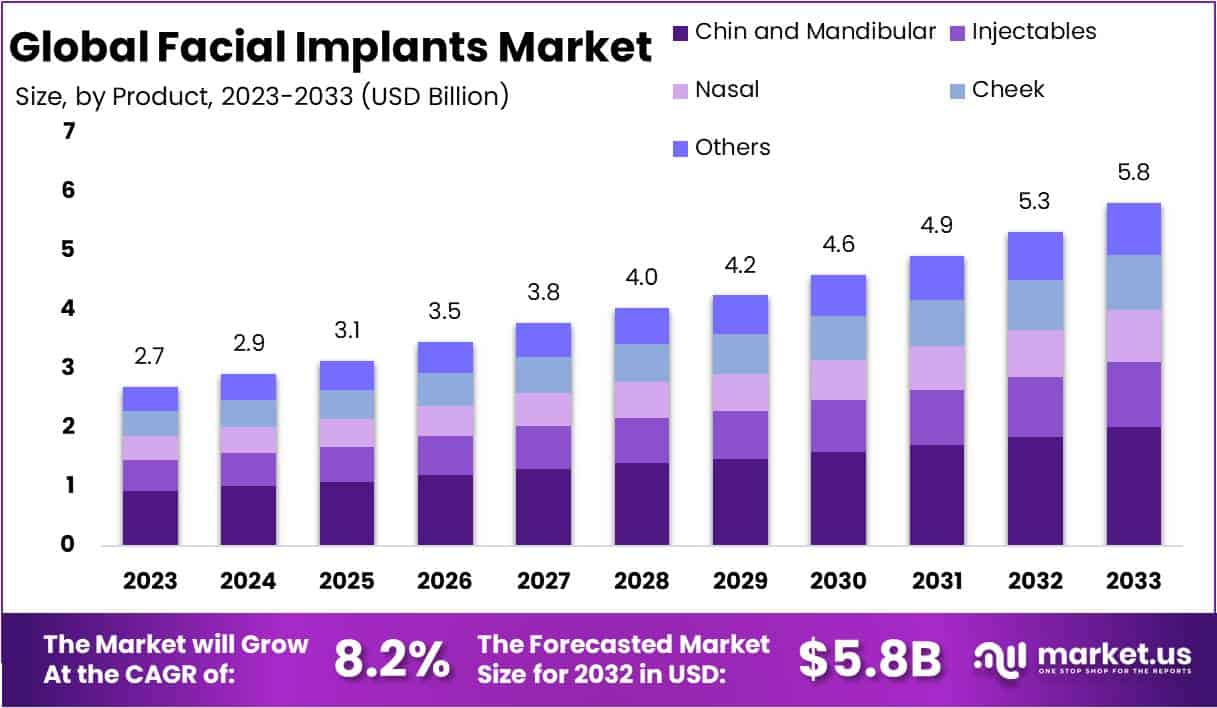
The Facial Implants Market Size is anticipated to reach approximately USD 5.8 billion by 2033, marking a substantial increase from its 2023 value of USD 2.7 billion. This growth is projected at a Compound Annual Growth Rate (CAGR) of 8.2% from 2024 to 2033.
Facial implants are solid materials strategically placed beneath the skin through surgical procedures to enhance facial features, such as the chin, cheeks, or jawline. This augmentation aims to achieve better facial balance and proportions, providing a more aesthetically pleasing appearance. Commonly used materials include silicone and polyethylene, ensuring biocompatibility with the human body.
The facial implant market encompasses the development, manufacturing, and distribution of these products. The growing demand is fueled by cosmetic and reconstructive surgeries, where individuals seek to improve their facial aesthetics or restore features. Factors contributing to market growth include evolving cosmetic surgery trends, an aging population’s interest in facial rejuvenation, technological advancements, and increased disposable income facilitating broader access to elective procedures. It’s crucial for individuals considering such surgeries to weigh the potential benefits against associated risks and consult qualified healthcare professionals for informed decisions.
Key Takeaways
- Market Growth: Facial Implants Market is expected to reach USD 5.8 billion by 2033, with a robust 8.2% CAGR from 2024 to 2033.
- Product Leadership: In 2023, Chin and Mandibular implants commanded over 34.7% market share, emphasizing strong consumer demand.
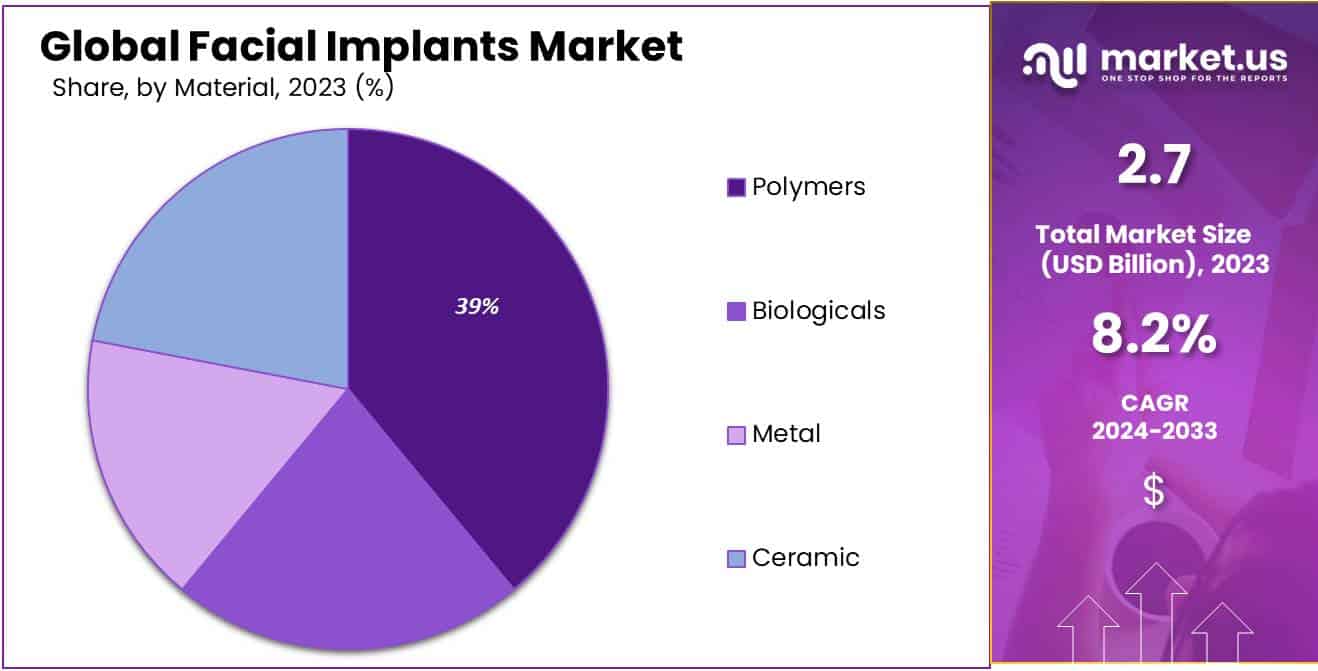
- Material Trends:Polymers dominated with a 39% market share in 2023, prized for versatility and lightweight properties.
- Procedure Preference:Eyelid Surgery led with a 41% market share in 2023, showcasing a significant consumer preference for facial enhancement.
- Market Drivers: Increasing popularity driven by beauty standards, innovations in implant materials, and the rise in demand from the aging population.
- Market Restraints: High costs, concerns about complications, limited insurance coverage, and societal stigmas pose challenges to widespread acceptance.
- Opportunities: Emerging markets offer expansion opportunities, customization trends drive innovation, and 3D printing technology enhances precision in implant production.
- Industry Trends: Non-invasive alternatives, a focus on natural-looking results, advancements in bioabsorbable implants, and a surge in male procedures shape the market.
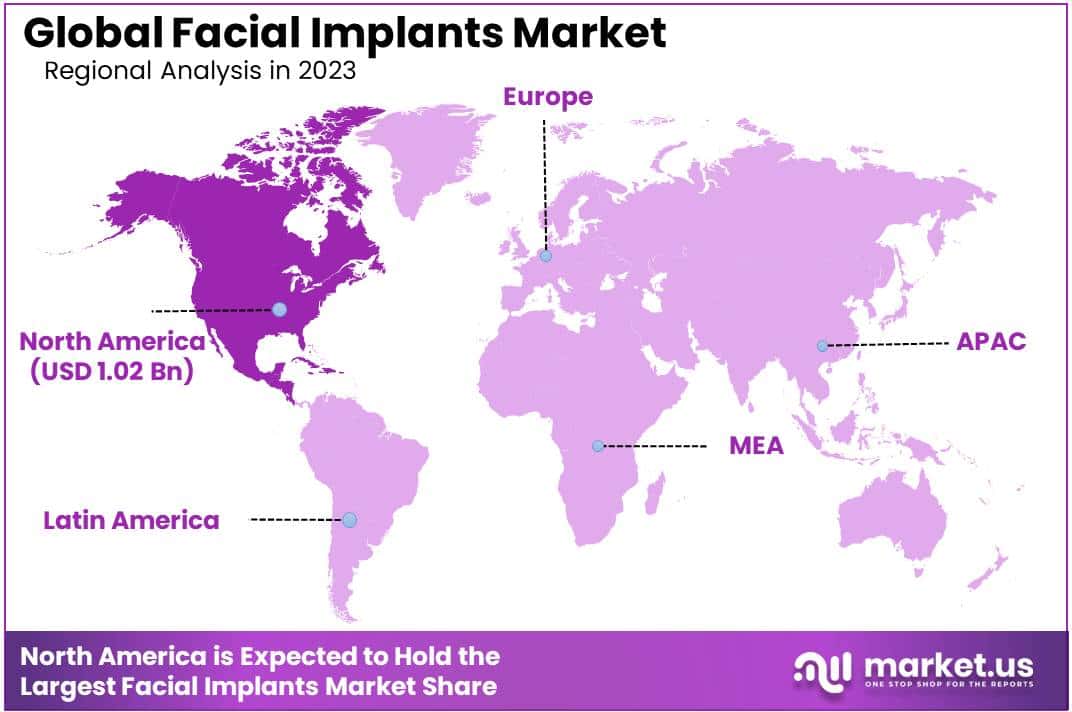
- Regional Dominance: In 2023, North America commanded 38% market share, driven by aesthetic consciousness, technological advancements, and high disposable income.
- Global Growth: Other regions like Europe and Asia-Pacific show rapid growth, reflecting evolving preferences and increasing healthcare awareness.
Product Analysis
In 2023, the Facial Implants market witnessed a notable dominance in the Chin and Mandibular segment, securing a robust market share of over 34.7%. This segment continues to stand out as a frontrunner, reflecting a strong demand for facial enhancement procedures. The popularity of chin and mandibular implants can be attributed to their effectiveness in reshaping and defining facial contours, meeting the aesthetic aspirations of a significant consumer base.
Injectables also played a pivotal role in shaping the market landscape, contributing to the overall market dynamics. With their non-invasive nature and quick results, injectables garnered substantial attention, constituting a noteworthy portion of the market. Their accessibility and versatility have made them a preferred choice for individuals seeking facial augmentation without the commitment of surgical procedures.
Nasal implants emerged as a key player in the facial implants market, catering to individuals looking for subtle yet impactful changes to their facial features. The demand for nasal implants can be attributed to the growing emphasis on facial harmony and the desire for refined nasal contours. This segment showcased promising growth, capturing the interest of both patients and practitioners alike.
Cheek implants, with their ability to enhance mid-face volume and definition, maintained a steady presence in the market. The appeal of cheek implants lies in their capacity to provide a youthful and lifted appearance, making them a sought-after option among those seeking facial rejuvenation. This segment contributed significantly to the diversified landscape of facial implants.
The market also witnessed the presence of other facial implant segments, adding to the comprehensive array of options available for consumers. These diverse offerings cater to unique preferences and specific aesthetic goals, contributing collectively to the expansion and dynamism of the facial implants market.
Material Analysis
In 2023, the Facial Implants market showcased a notable dominance of the Polymers segment, securing a commanding position with over 39% market share. Polymers, known for their versatile and lightweight nature, emerged as a preferred material for facial implants, offering a blend of durability and flexibility. This significant market presence can be attributed to the increasing demand for customizable and natural-looking facial enhancements.
Biologicals, another crucial segment in the Facial Implants market, displayed a noteworthy growth trajectory, accounting for a considerable share. The adoption of biological materials in facial implants gained traction due to their biocompatibility and ability to integrate seamlessly with the surrounding tissues, contributing to a more organic appearance. In 2023, the Biologicals segment captured the attention of a discerning consumer base seeking implants that align with their individual aesthetics.
Metal-based facial implants also made a substantial impact, constituting a substantial market share. The robustness and structural stability offered by metal materials appealed to individuals seeking long-lasting and resilient facial enhancements. With advancements in metallurgical technologies, metal implants have evolved to provide a harmonious balance between durability and aesthetic appeal, contributing to their market prominence.
Ceramic facial implants carved out a niche in the market, although their share was comparatively smaller. The appeal of ceramics lies in their ability to mimic natural bone structures, providing a visually appealing option for facial augmentation. While not as prevalent as other materials, the Ceramic segment garnered interest from those prioritizing a blend of aesthetics and material strength in their facial implant choices.
Procedure Analysis
In 2023, the Facial Implants market witnessed a notable trend with the Eyelid Surgery segment emerging as a frontrunner, securing a dominant market position by capturing more than a 41% share. This signifies a substantial preference among individuals for enhancing their facial features through eyelid surgery.
Facial rejuvenation through Eyelid Surgery has gained significant traction due to its ability to address concerns related to sagging skin, wrinkles, and puffiness around the eyes. The substantial market share reflects the growing popularity and acceptance of this procedure as a preferred choice among consumers seeking facial enhancements.
Moreover, the Facelift segment also contributed significantly to the market landscape, showcasing a substantial market presence. This segment, focused on overall facial rejuvenation, garnered considerable attention, emphasizing the widespread demand for comprehensive facial aesthetic improvements.
The Rhinoplasty segment, specializing in nose contouring and reshaping, demonstrated a noteworthy market position as well. This segment’s share underscored the increasing interest and demand for facial harmony and balance, where individuals sought to refine and enhance the appearance of their noses.
Beyond these key segments, the market also saw traction in other procedures aimed at diverse facial enhancements. These procedures catered to specific needs and preferences, illustrating the versatility and customization options available in the facial implants market.
Key Market Segments
Product
- Chin and Mandibular
- Injectables
- Nasal
- Cheek
- Others
Material
- Polymers
- Biologicals
- Metal
- Ceramic
Procedure
- Facelift
- Eyelid Surgery
- Rhinoplasty
- Others
Drivers
Increasing Popularity of Aesthetic Procedures
Growing awareness of beauty standards and societal emphasis on appearance are fueling a surge in demand for facial implants. Individuals seeking aesthetic enhancements are increasingly turning to these procedures to achieve desired facial features.
Innovations in Implant Materials
Continuous advancements in biomaterials and implant technologies, including the development of safer and more realistic materials, are propelling the facial implant market. This progress is appealing to both patients and surgeons, driving interest and adoption of these procedures.
Aging Population and Reconstructive Needs
The global increase in the aging population is driving a heightened demand for facial implants, particularly for reconstructive purposes after trauma or surgery. Older individuals are increasingly seeking facial rejuvenation solutions to address the effects of aging on their appearance.
Rising Prosperity and Medical Tourism
Globally, the rise in disposable income and the growing trend of medical tourism are significant factors boosting the facial implants market. More individuals, especially in regions with accessible high-quality healthcare at lower costs, are opting for these procedures to enhance their facial features.
Restraints
High Costs of Facial Implant Procedures
The substantial expenses linked to facial implant surgeries pose a significant obstacle, constraining market expansion. Prospective patients may be discouraged by the financial burden associated with these elective procedures, limiting their willingness to undergo such treatments.
Risks of Complications and Adverse Events
Apprehensions regarding potential complications, infections, and adverse events connected to facial implant surgeries create a sense of uncertainty for both patients and surgeons. This uncertainty influences the decision-making process, impacting the widespread acceptance of these procedures.
Limited Reimbursement Policies
The absence of comprehensive insurance coverage and restricted reimbursement policies for cosmetic and reconstructive facial implant procedures can hinder market growth. Patients may exhibit reluctance to pursue surgeries without sufficient financial support, impeding the overall adoption of these treatments.
Cultural and Societal Stigmas
Cultural norms and societal stigmas surrounding cosmetic procedures present a challenge to market growth. Some individuals may feel hesitant or embarrassed to explore facial implants due to societal judgment, potentially limiting the widespread acceptance of these procedures.
Opportunities
Expansion Opportunities in Developing Markets
Facial implant manufacturers can tap into the vast potential of untapped markets in developing countries. With increasing disposable incomes and growing awareness, there’s a rising demand for cosmetic and reconstructive surgeries. This trend opens up significant growth prospects for industry players looking to expand their footprint in these emerging regions.
Customization and Personalization Trends
A shift towards personalized and customized facial implant solutions is driving innovation and market growth. Companies now have the chance to create tailored products that cater to the unique needs of individual patients. This trend reflects a consumer-driven approach, providing a pathway for facial implant manufacturers to meet diverse preferences and requirements.
Revolutionizing Production with 3D Printing
The incorporation of 3D printing technology in facial implant production holds immense potential. This innovation enables the creation of more precise, patient-specific implants. The result is not only improved outcomes but also a reduction in associated risks. The integration of 3D printing technology stands as a key driver for growth in the facial implant industry.
Strategic Partnerships with Plastic Surgeons
Forge ahead through collaborations with plastic surgeons and aesthetic clinics. These partnerships offer manufacturers opportunities to broaden their reach and strengthen market presence. By leveraging the expertise of skilled professionals, facial implant manufacturers can enhance their understanding of market needs and refine their product offerings accordingly.
Trends
Rise of Non-Invasive Alternatives
More people are opting for non-invasive options like dermal fillers and injectables, steering the facial implants market. Patients are favoring less invasive methods for facial rejuvenation.
Focus on Natural-Looking Results
There’s a noticeable shift towards achieving natural-looking outcomes in facial enhancements. Both patients and surgeons stress the significance of subtle and realistic results, shaping the market accordingly.
Advancements in Bioabsorbable Implants
Bioabsorbable facial implants are gaining momentum, providing a temporary solution for those seeking reversible and adaptable cosmetic procedures, aligning with the trend of avoiding permanent changes.
Rapid Growth in Male Facial Implant Procedures
Men are increasingly accepting and seeking facial implant procedures. This surge is fueled by evolving societal norms and a heightened awareness of aesthetic enhancement options for men.
Regional Analysis
In 2023, North America emerged as the dominant region in the Facial Implants Market, securing a commanding market position with a share exceeding 38%. The market valuation for North America reached an impressive USD 1.02 billion during the year, underscoring the region’s significant influence and robust market presence.
The strong market foothold in North America can be attributed to several factors. Firstly, a surge in aesthetic consciousness and the growing trend of facial enhancements have fueled the demand for facial implants in the region. The increasing acceptance of cosmetic procedures, coupled with a well-established healthcare infrastructure, has contributed to the region’s prominence in the Facial Implants Market.
Furthermore, technological advancements and innovation in facial implant materials and procedures have played a pivotal role in shaping North America’s market landscape. The presence of leading market players, coupled with extensive research and development activities, has fostered a competitive market environment, driving the adoption of advanced facial implant technologies.
The economic prosperity and high disposable income levels in North America have also been instrumental in boosting the Facial Implants Market. Consumers’ willingness to invest in facial aesthetic procedures, coupled with easy accessibility to healthcare services, has propelled the demand for facial implants in the region.
While North America commands a substantial market share, it is essential to acknowledge the dynamic nature of the Facial Implants Market. Other regions, including Europe and Asia-Pacific, are witnessing rapid growth, driven by evolving consumer preferences, increasing healthcare awareness, and a rising emphasis on facial aesthetics. Market players need to remain attuned to these changing dynamics to capitalize on emerging opportunities and navigate potential challenges in the evolving global landscape of facial implant technologies.
Key Regions
- North America
- The US
- Canada
- Mexico
- Western Europe
- Germany
- France
- The UK
- Spain
- Italy
- Portugal
- Ireland
- Austria
- Switzerland
- Benelux
- Nordic
- Rest of Western Europe
- Eastern Europe
- Russia
- Poland
- The Czech Republic
- Greece
- Rest of Eastern Europe
- APAC
- China
- Japan
- South Korea
- India
- Australia & New Zealand
- Indonesia
- Malaysia
- Philippines
- Singapore
- Thailand
- Vietnam
- Rest of APAC
- Latin America
- Brazil
- Colombia
- Chile
- Argentina
- Costa Rica
- Rest of Latin America
- Middle East & Africa
- Algeria
- Egypt
- Israel
- Kuwait
- Nigeria
- Saudi Arabia
- South Africa
- Turkey
- United Arab Emirates
- Rest of MEA
Key Players Analysis
In the dynamic landscape of the Facial Implants Market, several key players stand out, each contributing uniquely to the industry’s growth and innovation. Stryker Corporation, has carved its niche with a focus on cutting-edge technologies and a diverse portfolio of facial implant solutions. Their commitment to research and development fuels advancements that cater to evolving patient needs.
Hanson Medical Inc. brings its own set of strengths to the market, emphasizing precision and quality in facial implant design and production. Their dedication to patient satisfaction has positioned them as a reliable player, ensuring optimal outcomes for individuals seeking facial enhancement procedures.
Integra LifeSciences is another noteworthy participant, recognized for its comprehensive approach to facial implants. Their offerings span a wide range, addressing various facial augmentation requirements. Integra’s strategic partnerships and global presence contribute to its impact on the market.
Zimmer Biomet, with its extensive experience and global reach, plays a pivotal role in shaping the Facial Implants Market. Their commitment to innovation and patient-centric solutions aligns with the industry’s demand for safe and effective facial implant options. Zimmer Biomet’s influence extends across borders, making them a significant player in the global landscape.
Additionally, various other key players contribute to the vibrancy of the Facial Implants Market, each with its own unique strengths and market presence. These players bring diversity to the industry, fostering healthy competition and driving innovation. Collaborations and partnerships among these key players create a dynamic ecosystem, ensuring continuous advancements and improved patient outcomes.
Market Key Players
- Stryker Corporation
- Hanson Medical Inc.
- Integra LifeSciences
- Zimmer Biomet
- Depuy Synthes
- KLS Martin Group
- Hanson Medical Inc.
- Xilloc
- Medartis AG
- OsteoMed
- Other Key Players
Recent Developments
- In November 2023, Allergan PLC made a significant move by acquiring the manufacturer of Juvederm for a substantial $2.8 billion. This strategic decision enhances Allergan’s standing in the hyaluronic acid filler market, a crucial segment within facial implants. The diverse product range and strong brand recognition of Juvederm are expected to bring a considerable boost to Allergan’s facial aesthetics portfolio.
- In October 2023, Stryker introduced a groundbreaking technology: personalized 3D-printed chin implants. This innovation allows for the creation of custom-designed implants tailored to individual facial features and preferences. This personalized approach not only promises better long-term outcomes but also aims to increase patient satisfaction.
- In September 2023, Merz Aesthetics and The BoVIE Company joined forces to establish a research and development alliance. Their collaboration is dedicated to advancing minimally invasive radiofrequency technologies for facial rejuvenation procedures. This partnership holds the potential to introduce safer and more effective alternatives to traditional facial implants.









