


Report Overview
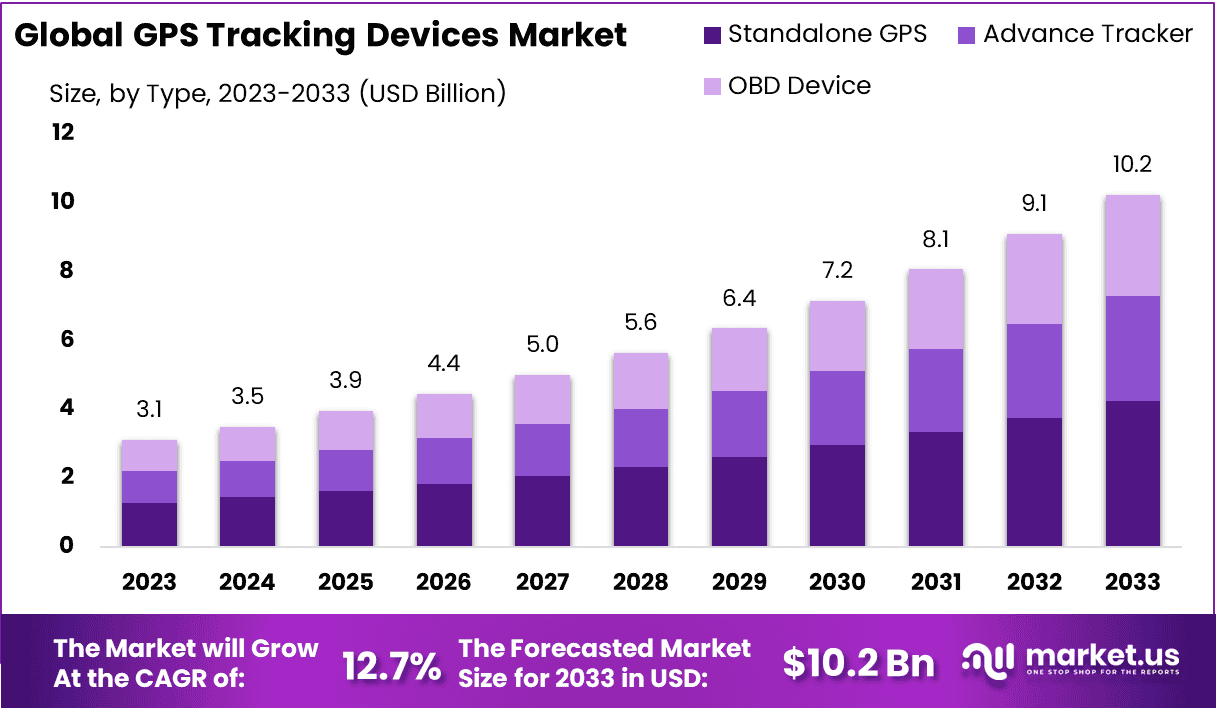
The Global GPS Tracking Devices Market size is expected to be worth around USD 10.2 Billion by 2033, From USD 3.1 Billion by 2023, growing at a CAGR of 12.70% during the forecast period from 2024 to 2033.
GPS tracking devices are electronic devices that utilize the Global Positioning System (GPS) to accurately determine and track the location of objects or individuals in real-time. These devices consist of GPS receivers that receive signals from multiple satellites to calculate precise geographic coordinates.
They are compact and can be easily attached or installed in vehicles, assets, or personal belongings and also transmit location data to a central server or user interface, allowing users to monitor and track the movement and location of the tracked objects or individuals. GPS tracking devices find applications in various industries, including fleet management, logistics, asset tracking, personal tracking, and security.
Note: Actual Numbers Might Vary In The Final Report
The GPS Tracking Devices Market refers to the industry that provides GPS tracking devices, solutions, and services to meet the increasing demand for location tracking and monitoring applications. The market has witnessed significant growth due to the rising need for real-time asset visibility, efficient fleet management, and enhanced security measures across various sectors. The market offers a wide range of GPS tracking devices, including vehicle trackers, asset trackers, personal trackers, and wearable trackers, each designed to cater to specific tracking requirements.
Key Takeaways
- Market Growth Projection: The GPS Tracking Devices Market is projected to reach a substantial value of USD 10.20 Billion by the year 2033. This impressive growth is expected to be achieved with a Compound Annual Growth Rate (CAGR) of 12.70% from 2024 to 2033.
- Definition of GPS Tracking Devices: GPS tracking devices are electronic tools that utilize the Global Positioning System (GPS) to precisely determine and monitor the real-time location of various objects or individuals. These devices are compact and can be discreetly attached or installed in vehicles, assets, or personal belongings, allowing for real-time location data transmission.
- Wide Range of Applications: GPS tracking devices find applications across diverse industries, including fleet management, logistics, asset tracking, personal tracking, and security. They are versatile tools that cater to specific tracking requirements.
- Driving Factors: The growth of the GPS Tracking Devices Market is driven by several factors. These include increasing concerns about vehicle security and efficient fleet management, which are facilitated by GPS tracking systems. Additionally, rising adoption in logistics, transportation, and e-commerce sectors for route optimization and asset tracking contributes to market expansion.
- Technological Advancements: The integration of IoT (Internet of Things) and enhanced connectivity is a key trend in the market. These advancements enable diverse applications, from personal tracking to industrial use, and contribute to market growth.
- Regulatory Mandates: Regulatory mandates related to vehicle safety play a role in propelling market expansion. Additionally, the demand for parental control and employee monitoring systems drives the importance of GPS tracking devices in various sectors.
- Rising Trends: Emerging trends in the GPS Tracking Devices Market include the integration of Artificial Intelligence (AI) and Machine Learning (ML) for predictive analytics, improved satellite connectivity with 5G technology, and the demand for wearable GPS trackers for elderly care and pet monitoring.
- Segmentation: The market is segmented based on product type, including Standalone Tracker, OBD Device, Advance Tracker, and more. Application segments include Vehicle Tracking, Fleet Management, Car Rental Services, Stolen Vehicle Recovery, Asset Tracking, and others. End-use industries encompass Transportation & Logistics, Metal & Mining, Construction & Heavy Equipment, Retail & E-commerce, Healthcare, and more.
- Regional Analysis: North America leads in market share, driven by extensive applications in fleet management and automotive security. Europe focuses on logistics and transportation solutions, while Asia-Pacific shows significant growth potential due to expanding logistics and e-commerce sectors. Latin America, the Middle East, and Africa each have their unique dynamics and trends in the global GPS tracking devices market.
- Key Market Players: Key players dominating the market include CalAmp Corp., Garmin Ltd, Trimble Inc., Orbcomm Inc., Queclink Wireless Solutions, and others. These companies offer comprehensive tracking solutions and innovative technologies, solidifying their influence in the competitive market.
Driving Factors
The GPS Tracking Devices Market thrives due to pivotal driving factors. Increasing concerns regarding vehicle security and fleet management fuel demand for GPS tracking systems, ensuring real-time location monitoring and theft prevention.
Rising usage in logistics, transportation, and e-commerce sectors fosters market growth for efficient route optimization and asset tracking. Technological advancements, such as IoT integration and enhanced connectivity, drive adoption for diverse applications, from personal tracking to industrial use.
Regulatory mandates for vehicle safety and the surge in connected car solutions further propel market expansion. Moreover, the growing demand for parental control and employee monitoring systems elevates the importance of GPS-tracking devices in various sectors.
Restraining Factors
The GPS tracking device is fitted inside the vehicle or car in such a way that it is not visible, thus providing the exact real-time location of the vehicle or asset. A global positioning system tracking device is used as a measure for theft prevention and recovery of stolen vehicles.
The vehicle and person tracking system is one of the most significant technological progress for security purposes. It enables vehicle owners to virtually keep an eye on cars or vehicles at any time and from anywhere in the globe. GPS tracking devices are smaller in size and have a longer life. They are available in many varieties, as well as at low cost. These are some of the other factors expected to bolster the target market growth.
Growth Opportunities
Rapidly increasing transportation and logistics fields is expected to drive the target market growth. Robust growth of the e-commerce sector and increasing trade activities to and from result in a heightened flow of goods. Logistics companies have a significant load when it comes to handling goods, and GPS tracking devices make it extremely easy to track the designated vehicle.
Apart from fleet management, GPS tracking devices are also helpful in determining fuel consumption, vehicle performance, driver performance, route planning, dispatching, and, most importantly theft prevention.
Trending Factors
Trending factors in the GPS Tracking Devices Market include the integration of Artificial Intelligence (AI) and Machine Learning (ML) for predictive analytics, enhancing device functionalities. Increased demand for IoT-enabled tracking devices catering to diverse industries drives market growth.
The evolution of 5G technology and improved satellite connectivity offers faster and more accurate location tracking, shaping device advancements. Moreover, the surge in demand for wearable GPS trackers for elderly care and pet monitoring marks a rising trend.
Additionally, the growing focus on green solutions promotes the development of energy-efficient and eco-friendly GPS tracking devices, shaping the evolving landscape of the market.
Application Analysis
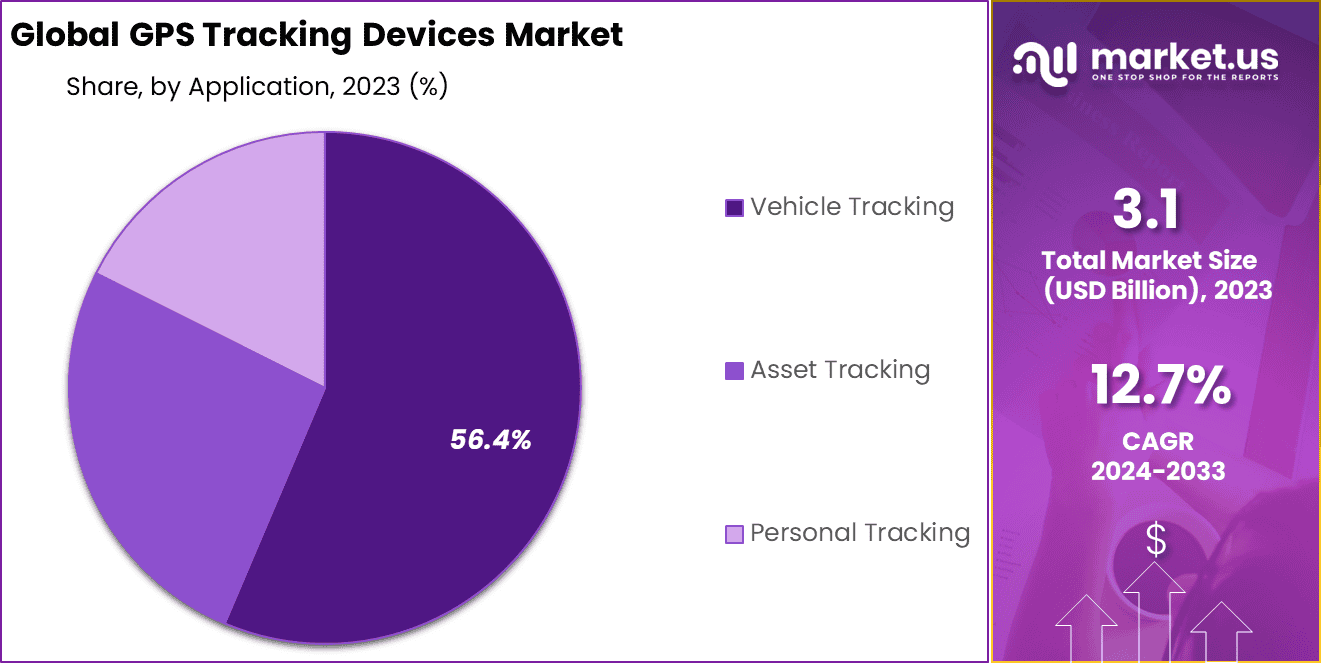
The GPS Tracking Devices Market is segmented based on product type and application. Based on product type market is segmented into Standalone Tracker, OBD Device, Advance Tracker, and Other product types. The OBD Device segment accounts for the majority share of the market. Based on the application market is segmented into Track Vehicles, Track Assets, and Other Applications. The Track Vehicles segment accounts for the majority share of the market.
GPS tracking devices find applications across various sectors. In logistics and transportation, they optimize routes, enhance fleet management, and improve delivery efficiency. In the automotive industry, these devices aid in theft prevention and vehicle recovery.
The healthcare sector utilizes them for patient monitoring and asset tracking in hospitals. They ensure safety in outdoor activities like hiking or boating. In agriculture, GPS trackers assist in precision farming and livestock monitoring. Personal use includes pet tracking and elderly care.
Furthermore, businesses leverage these devices for employee management and asset protection. The diverse applications of GPS tracking devices cater to specific needs across multiple industries, enhancing efficiency and safety.
Note: Actual Numbers Might Vary In The Final Report
Key Market Segments
By Type
- Standalone GPS
- Advance Tracker
- OBD Device
By Application
- Vehicle Tracking
- Fleet Management
- Car Rental Services
- Stolen Vehicle Recovery
- Asset Tracking
- Equipment & Machinery
- Cargo & Freight
- Personal Tracking
- Elderly & Patient Safety
- Fitness & Sports
- Pet Tracking
By End-Use Industry
- Transportation & Logistics
- Metal & Mining
- Construction & Heavy Equipment
- Retail & E-commerce
- Healthcare
- Others
Regional Analysis
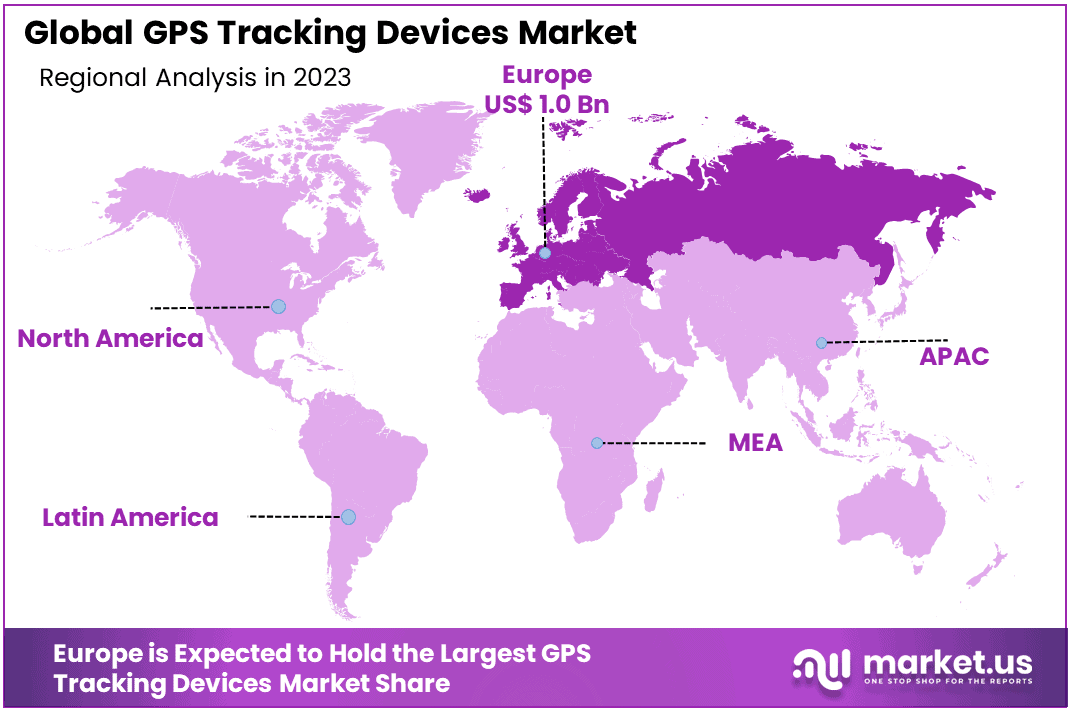
The GPS Tracking Devices Market exhibits diverse regional trends shaping demand and adoption. North America leads in market share, driven by extensive applications in fleet management and automotive security. Europe showcases high adoption rates, focusing on logistics and transportation solutions, and stringent vehicle safety regulations.
Asia-Pacific displays significant growth potential, influenced by the expanding logistics and e-commerce sectors. Latin America and the Middle East witness a rising interest in personal tracking and security applications.
Africa, with its evolving transportation infrastructure, shows increasing adoption in fleet management. Each region’s distinct industry emphasis and regulatory landscape contribute to the varied dynamics within the global GPS tracking devices market.
Note: Actual Numbers Might Vary In The Final Report
Key Regions and Countries Covered in this Report:
- North America
- The US
- Canada
- Mexico
- Europe
- Germany
- The UK
- France
- Italy
- Russia
- Spain
- Rest of Europe
- APAC
- China
- Japan
- South Korea
- India
- Rest of Asia-Pacific
- South America
- Brazil
- Argentina
- The rest of South America
- MEA
- GCC
- South Africa
- Israel
- Rest of MEA
Market Share & Key Players Analysis
In the GPS Tracking Devices Market, key players dominate the industry landscape. Companies like CalAmp Corp, offering comprehensive fleet and asset tracking solutions, hold substantial market shares globally. Garmin Ltd excels in GPS technology, providing diverse tracking devices for personal and professional use.
Trimble Inc. offers advanced telematics and asset tracking systems, catering to diverse industries. Other significant players include Orbcomm Inc. and Queclink Wireless Solutions, contributing with specialized tracking solutions.
These key players leverage technological innovations and tailored services, solidifying their influence and market shares within the competitive GPS tracking devices industry.
Key Market Players included in the report:
- CalAmp Corp.
- Orbcomm Inc.
- Sierra Wireless, Inc.
- Shenzhen Concox Information Technology Co., Ltd.
- Queclink Wireless Solutions Co., Ltd.
- TomTom International BV
- Teltonika UAB
- ATrack Technology Inc.
- Ruptela
- Sensata Technologies, Inc.









