


Market Overview
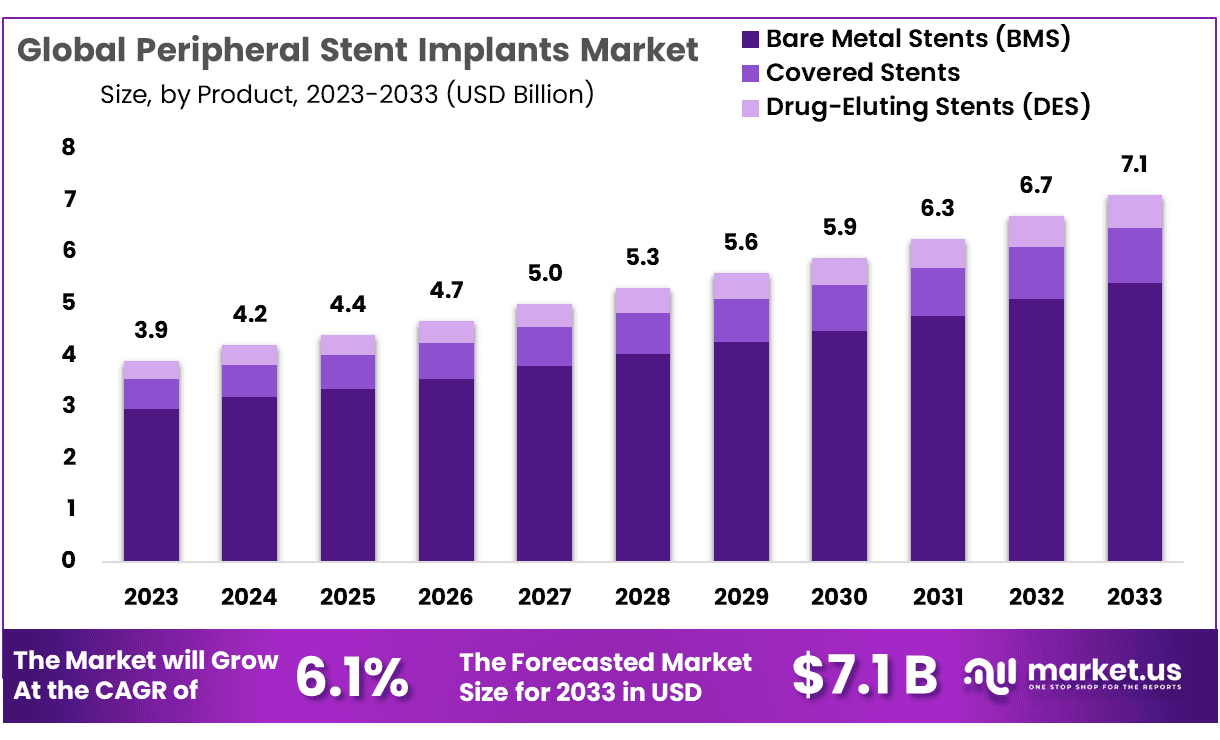
The Global Peripheral Stent Implants Market size is expected to be worth around USD 7.1 Billion by 2033 from USD 3.9 Billion in 2023, growing at a CAGR of 6.1% during the forecast period from 2024 to 2033.
Peripheral Artery Disease (PAD) is a common cardiovascular issue in which constricted arteries limit blood flow to the lower limbs (legs). When an individual has PAD, blood flow to the extremities — mainly the legs — is insufficient to meet the body’s needs. This results in symptoms, the most common of which is leg pain during walking (intermittent claudication).
Peripheral stents are small tubular metal scaffolds that can be put into peripheral vessels to relieve constriction or blockage in arteries or veins, improving blood flow. Stents are typically made of nitinol and can be plain, drug-coated, or covered in a prosthetic material. A balloon (angioplasty) is usually used first to flatten the obstruction against the vessel walls, allowing the stent to open up more easily.
Stents for the peripheral arteries are frequently used in conjunction with balloon angioplasty. Peripheral stent implants keep a blocked or clogged artery open so that blood can flow through it. The stent, which is a small lattice-shaped wire mesh tube, props open the artery and stays in place indefinitely. The stent is inserted into the peripheral artery through the catheter. Restenosis, or the narrowing of a blood vessel again, can be prevented with recent technological advancements. Drug-Eluting Stents (DES) and balloons, which are coated with medication to ensure excellent circulation in the treated channel, are now accessible. Peripheral vascular disease is a long-term disorder that is often linked to other illnesses such as coronary artery disease or diabetes.
*Actual Numbers Might Vary In The Final Report
Key Takeaways
- Market Size: Peripheral Stent Implants Market size is expected to be worth around USD 7.1 Billion by 2033 from USD 3.9 Billion in 2023.
- Market Growth: The market growing at a CAGR of 6.1% during the forecast period from 2024 to 2033.
- Product Analysis: The Bare Metal Stents (BMS) take an exceptional 76.0% market share in 2023.
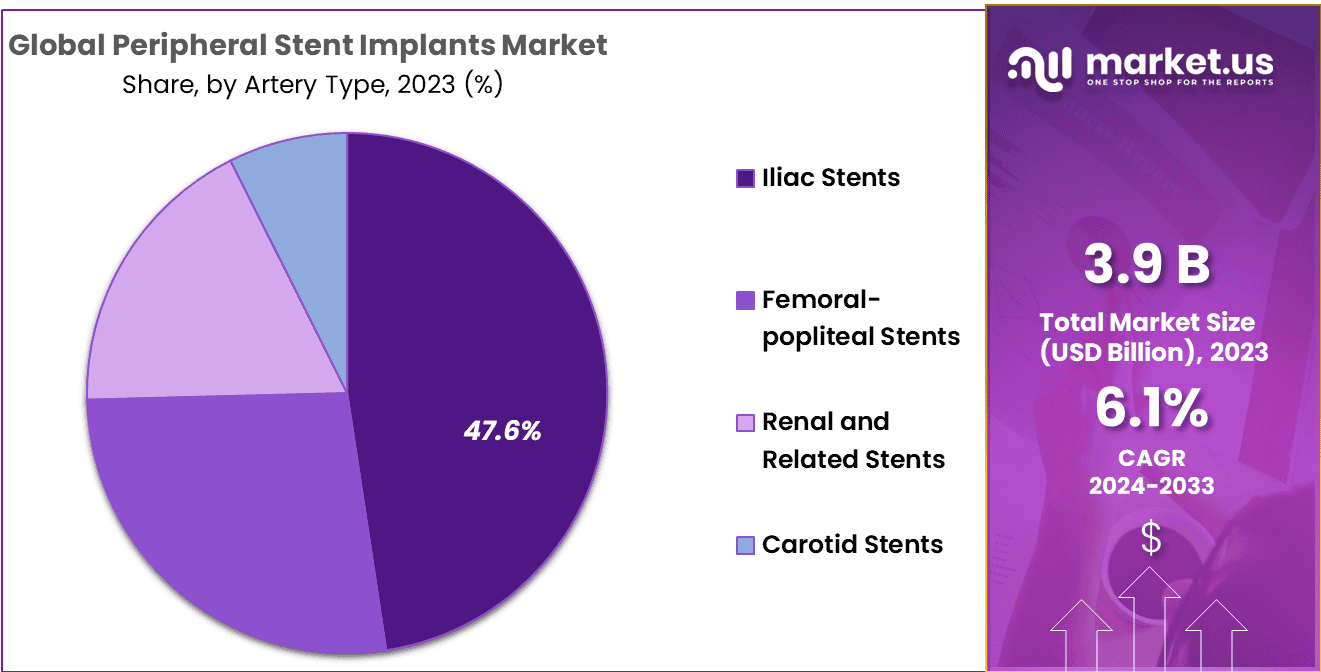
- Artery Type Analysis: By Artery Types, Iliac Stents commanding 47.6% market share.
- End-Use Analysis: Hospitals lead the market and accounting 58.1% market share in 2023.
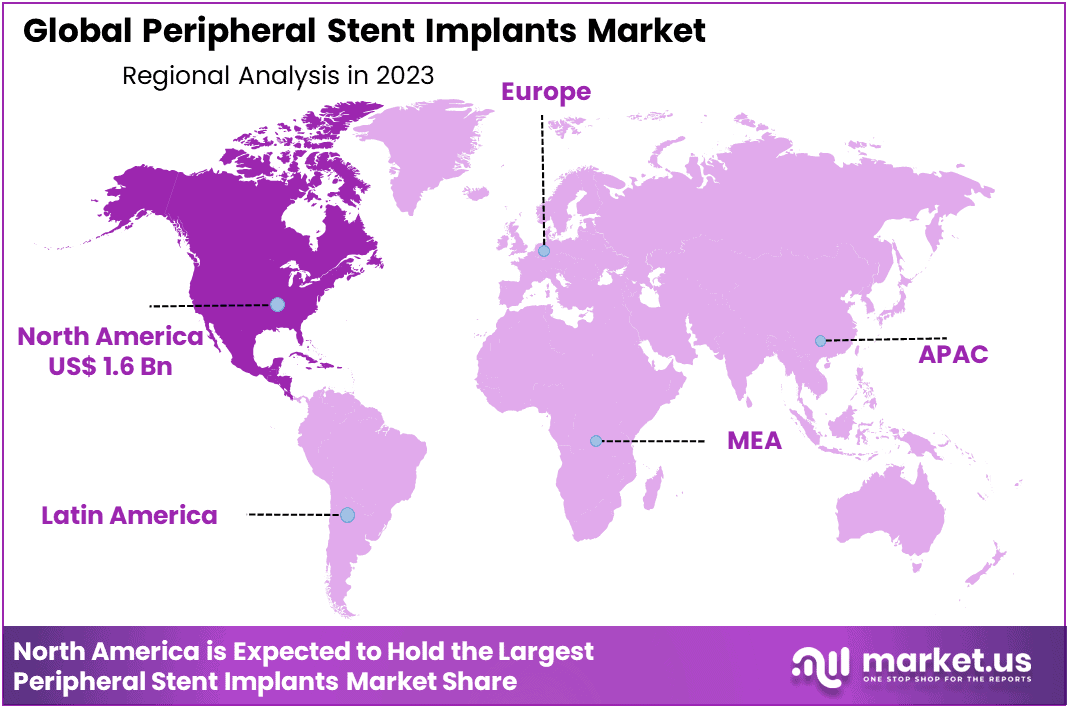
- Regional Analysis: The United States held an estimated 42.8% share and holding USD 1.6 Billion market revenue.
- Technological Advancements: Companies like Medtronic and Abbott Laboratories are continuously innovating peripheral stent implants through design, materials, and drug-eluting capabilities in order to optimize patient outcomes.
- Global Market Expansion: Many major healthcare players, such as iVascuar SLU and Cardinal Health, are expanding their market presence internationally through strategic partnerships and distributor collaborations to reach more patients worldwide. This global expansion strategy hopes to reach new patient populations.
- Innovations in Bioresorbable Stents: Biotronik has pioneered research on bioresorbable stents, which may reduce long-term complications associated with permanent stents and represents a major advancement in this area of medicine. Biotronik stands out as a pioneer in this emerging field.
Product Analysis
Peripheral Stent Implants Market is an evolving segment within healthcare, featuring three key elements: Bare Metal Stents (BMS), Covered Stents and Drug-Eluting Stents (DES). Out of these components, Bare Metal Stents (BMS) take an exceptional 76.0% market share owing to their structural integrity and robustness; BMS play an instrumental role in treating peripheral arterial diseases by maintaining vessel patency while assuring optimal blood flow.
Covered Stents, another essential category in this market, provide an innovative solution for cases requiring precise deployment and sealing of vascular structures. They’re often employed in difficult clinical scenarios where maintaining vessel integrity is critical.
Drug-Eluting Stents (DESs) complete this trio of stent technologies. Known for gradually dispensing medication, DESs provide an effective solution against restenosis – a frequent side effect following stent implantation. Their presence on the market demonstrates our ongoing pursuit of innovations that improve patient outcomes.
Artery Type Analysis
By Artery Types, Iliac Stents commanding 47.6% market share. Iliac stents were specifically created for iliac arteries which supply blood to pelvis and legs, which accounts for their strong market position. Their effectiveness at treating peripheral artery diseases in this region solidifies this leadership. Femoral-popliteal Stents, another key category in this market, address problems related to the femoral and popliteal arteries found in the thigh and lower leg. Offering effective solutions for patients with compromised blood flow in these areas.
Renal and Related Stents target arteries associated with kidneys and their immediate surroundings, to effectively manage renal artery stenosis and related conditions – leading to improved kidney function and patient wellness. These stents play a vital role in patient wellness by managing renal artery stenosis effectively, contributing to improved renal performance and well-being overall.
Carotid Stents, designed specifically to treat carotid artery disease in the neck area, play an integral part in preventing strokes caused by this condition. They represent the market’s commitment to offering customized solutions tailored specifically to various arterial locations.
End-User Analysis
End-users play an integral role in shaping the dynamic Peripheral Stent Implants Market, with hospitals being particularly influential. Hospitals lead the market share at 58.1% – no surprise given their comprehensive healthcare services offered and being equipped to perform complex stent implantation procedures, making them the go-to choice for many seeking treatment for peripheral arterial diseases.
However, Ambulatory Surgical Centers (ASCs) also make up a substantial share of this market. These specialized facilities offer more streamlined and efficient ways of implanting stents for less complex cases, providing an advantageous option for patients while simultaneously relieving hospital resources from additional burden.
Peripheral Stent Implants Market illustrates its commitment to patient-centric care and innovative healthcare solutions through the presence of hospitals and ASCs. While hospitals remain central providers of care, ASCs provide another valuable option, increasing accessibility and flexibility when treating peripheral arterial diseases. Their combined presence demonstrates this market’s dedication to personalized patient treatment solutions.
*Actual Numbers Might Vary In The Final Report
Detailed Segmentation
Product
- Bare Metal Stents (BMS)
- Covered Stents
- Drug-Eluting Stents (DES)
Artery Type
- Iliac Stents
- Femoral-popliteal Stents
- Renal and Related Stents
- Carotid Stents
End-User
- Hospitals
- Ambulatory Surgical Centers
- Others
Drivers for the Global Peripheral Stent Implants Market
The global Peripheral Stent Implants Market is poised for substantial expansion due to several key drivers. Most prominent among them is the increasing prevalence of peripheral vascular diseases worldwide; as this condition becomes more widespread, so has demand for peripheral stent implantation increased rapidly, driving economic expansion for this market. Furthermore, with increasing frequency vascular stenting procedures also supporting this market’s economic expansion trajectory; adoption rates continue to climb contributing positively towards its positive outlook.
Trends for the Global Peripheral Stent Implants Market
Key manufacturers in the Peripheral Stent Implants Market can expect to increase investments in personalized and innovative peripheral vascular stents, with an emphasis on creating tailored solutions tailored specifically to individual patient needs. Manufacturers will likely focus on cost-effective peripheral artery stents to reach more patients; reflecting industry’s dedication to offering accessible healthcare solutions that capitalize on advancements in peripheral stent technology.
Restraints in the Global Peripheral Stent Implants Market
Although the global Peripheral Stent Implants Market promises strong growth prospects, certain hurdles exist to hamper market expansion. Technological advancements in stent design and materials have caused production costs for drug-eluting stents – which tend to be more expensive than their bare-metal counterparts – to rise significantly; this presents particular difficulty for developing countries where much of the population lacks access to health insurance; furthermore, COVID-19 pandemic disruption of supply chains and labor availability have severely restricted market expansion prospects.
Opportunities in the Global Peripheral Stent Implants Market
Manufacturers in the peripheral stent implants market are seizing opportunities by prioritizing product innovation. They are introducing cutting-edge stents to strengthen their market positions and meet patient demands as competition among market participants intensifies, as technologically sophisticated stents become available that streamline interventional procedures for clinicians while offering significant growth prospects to manufacturers.
Regional Analysis
In 2023, the United States held an estimated 42.8% share and holding USD 1.6 Billion market revenue in the global PAD market due to increasing incidence rates within its borders. Multiple factors have led to this spike, such as increased smoking rates and an inactive lifestyle combined with subpar diet choices that lead to cerebral and cardiovascular diseases, diabetes and an ageing population.
By 2022, according to data provided by the Centers for Disease Control and Prevention (CDC), approximately 6.5 million adults aged 40 or above in the US will have been diagnosed with PAD. Please keep in mind that PAD symptoms can often overlap with other health conditions or arterial disorders; atherosclerosis alone cannot account for all cases of PAD.
*Actual Numbers Might Vary In The Final Report
Key Regions and Countries
North America
- The US
- Canada
- Mexico
Western Europe
- Germany
- France
- The UK
- Spain
- Italy
- Portugal
- Ireland
- Austria
- Switzerland
- Benelux
- Nordic
- Rest of Western Europe
Eastern Europe
- Russia
- Poland
- The Czech Republic
- Greece
- Rest of Eastern Europe
APAC
- China
- Japan
- South Korea
- India
- Australia & New Zealand
- Indonesia
- Malaysia
- Philippines
- Singapore
- Thailand
- Vietnam
- Rest of APAC
Latin America
- Brazil
- Colombia
- Chile
- Argentina
- Costa Rica
- Rest of Latin America
Middle East & Africa
- Algeria
- Egypt
- Israel
- Kuwait
- Nigeria
- Saudi Arabia
- South Africa
- Turkey
- United Arab Emirates
- Rest of MEA
Market Player Analysis
Some of the important peripheral stent implants companies are strengthening their sales and marketing endeavors by expanding their global business networks. These networks include direct sales forces, clinical experts, distribution channels, strategic partnerships, and alliances designed to expand marketing capabilities and sales capabilities.
On an international scale these key players are forging partnerships with distributors as a means of speeding market penetration efforts; additionally they’re investing their efforts towards product innovation by unveiling innovative developments with special benefits that offer superior solutions to challenges faced by their target markets.
Key Market Player
- Medtronic
- Abbott Laboratories
- Cook Medical
- iVascuar SLU
- Biotronik
- Cardinal Health
- Terumo Medical
Recent Developments
- Medtronic: Medtronic has made significant technological advancements in peripheral stent implants. Recently, they introduced innovative designs with improved performance and durability as well as expanding their global distribution network to reach a broader market and increase presence in key regions.
- Abbott Laboratories: Abbott Laboratories is engaged in extensive research and development efforts to create next-generation peripheral stent implants. Recent innovations from them include improved biocompatibility and drug eluting capabilities to help achieve improved patient outcomes. Abbott also emphasizes strategic collaborations with healthcare institutions for driving innovation within this industry.
- Cook Medical: Cook Medical has made great strides to expand its portfolio of peripheral stent implants, offering solutions tailored specifically for various anatomical locations and patient needs. Furthermore, they have invested in clinical trials that demonstrate their products are effective.
- iVascuar SLU: Since 2015, iVascuar SLU has been actively expanding their market share by building partnerships with distributors and healthcare facilities around the globe. Their aim is to make their peripheral stent implants more accessible to patients globally while exploring new materials and manufacturing techniques to further enhance quality and performance of their stents.









