


Market Overview
The Global Pelvic Floor Diagnostics Market size is expected to be worth around USD 375.2 Million by 2033 from USD 205.6 Million in 2023, growing at a CAGR of 6.2% during the forecast period from 2024 to 2033.
A pelvic floor is a group of muscles and ligaments that stretch from the pubic bone to the coccyx, running along the wall of the pelvis. Similar to other muscle groups, regular exercise can help keep them strong and healthy. However, if movement is limited as a consequence of an injury or medical condition such as arthritis, pressure on these muscles may build up and lead to urinary incontinence.
Pelvic floor muscles are responsible for supporting the pelvic organs and also controlling the bladder, bowel, and uterus. It is essential to maintain healthy pelvic floor muscles in order to maintain good bladder control, reduce the risk of prolapse, and avoid bowel or uterus disorders. Pelvic floor disorders, or PFDs, are common, affecting about 40% of women and more than 10% of men. Pelvic floor diagnostics help in determining or identifying any abnormalities in the pelvic muscle region that could lead to several disorders such as urinary incontinence, fecal issues, etc.

*Actual Numbers Might Vary In The Final Report
Key Takeaways
- Market Size: Pelvic Floor Diagnostics Market size is expected to be worth around USD 375.2 Million by 2033 from USD 205.6 Million in 2023.
- Market Growth: The market growing at a CAGR of 6.2% during the forecast period from 2024 to 2033.
- Diagnostic Tests Analysis: Ultrasound Systems currently hold the majority market share with 38.1%.
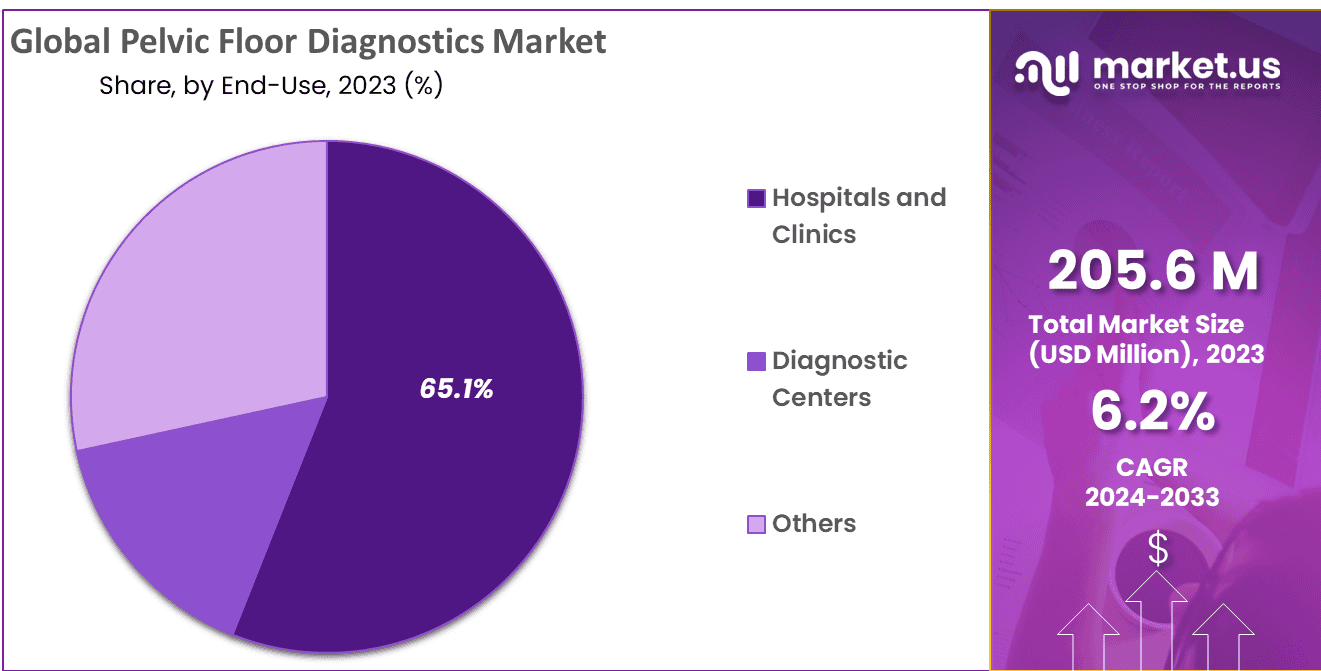
- End-Use Analysis: Hospitals and Clinics dominate the Pelvic Floor Diagnostics Market with 65.1% market share.
- Indication Analysis: Faecal Incontinence stands out as a key trend within the Pelvic Floor Diagnostics Market, accounting for 44.1% market share.
- Product Type Analysis: Instruments and Equipment dominate the Pelvic Floor Diagnostics Market with 52.6% market share.
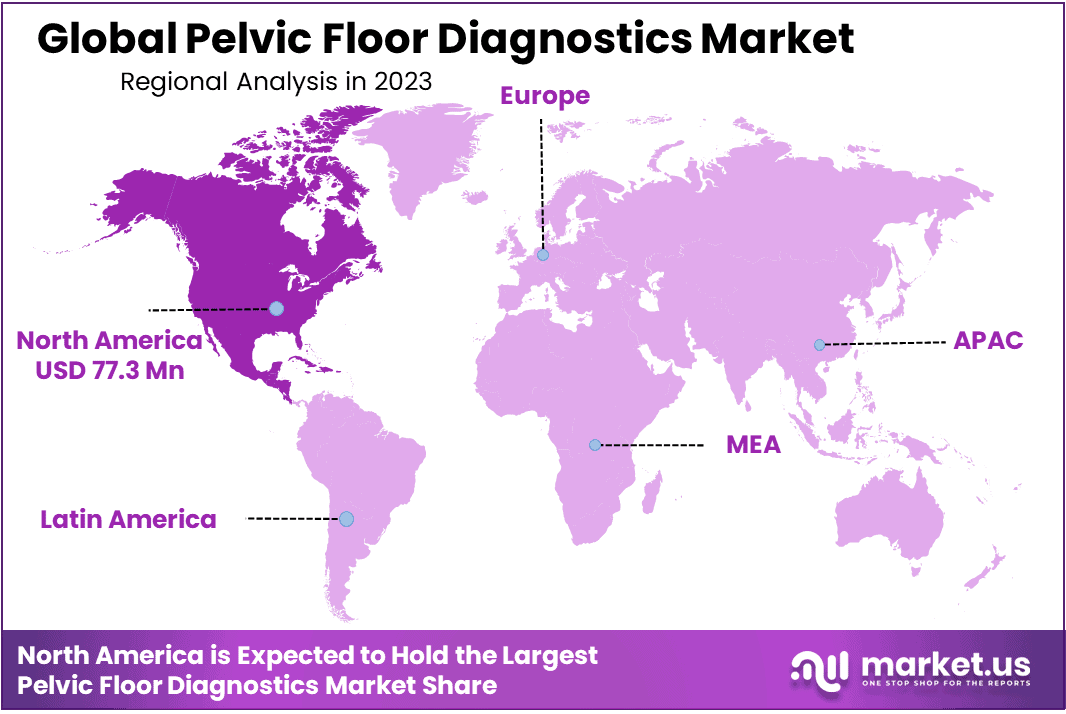
- Regional Analysis: The United States is projected to command an impressive market share and holding USD 77.3 Million market revenue.
Diagnostic Tests Analysis
The Pelvic Floor Diagnostics Market encompasses various diagnostic tests and devices geared at identifying pelvic floor disorders. Ultrasound Systems currently hold the majority market share with 38.1%. They offer noninvasive imaging of the pelvic floor for real time diagnosis of conditions like pelvic organ prolapse or urinary incontinence, making these systems essential tools.
Urodynamics systems play a pivotal role in assessing the function of the lower urinary tract. By providing accurate assessments on bladder and urethral functions, Urodynamics Systems aid in both diagnosing and treating various urinary conditions. Uroflowmetry Devices help physicians pinpoint urinary flow rate and patterns to assist in diagnosing issues related to voiding dysfunction, while Anal Manometry Systems enable assessments of anal sphincter function – providing crucial clues when diagnosing conditions like Fecal Incontinence.
Cystoscopes allow direct visualization of the bladder for diagnosis of urinary tract issues such as tumors or infections. Cart/Trolley Based and Portable Bladder Ultrasound Systems offer mobility and convenience when it comes to measuring bladder volume or post void residuals.
End-Use Analysis
Hospitals and Clinics dominate the Pelvic Floor Diagnostics Market with 65.1% market share. Hospitals and Clinics act as crucial hubs for diagnosing and treating pelvic floor disorders, providing access to vital resources. Hospitals equipped with cutting-edge diagnostic technology and an experienced medical team play an essential part in providing comprehensive assessment for those dealing with pelvic floor disorders. Offering services ranging from ultrasound and urodynamics to cystoscopy and EMG testing, hospitals provide holistic evaluations as well as tailored treatment plans.
Clinics provide accessible and specialized care for individuals seeking diagnosis and management of pelvic floor disorders. They often serve as the main point of contact for their patients, providing initial evaluations, referrals, and ongoing treatment plans.
Diagnostic Centers play an essential part in meeting patient diagnostic needs and helping promote overall market expansion. By offering services and equipment specific to pelvic floor examination, diagnostic centers contribute significantly to market development.
Indication Analysis
Faecal Incontinence stands out as a key trend within the Pelvic Floor Diagnostics Market, accounting for 44.1% market share. Characterized by involuntary loss of stool, Faecal Incontinence affects individuals of various age groups, making diagnosis tools and procedures to assess its causes essential to growth of this segment of market.
However, this market doesn’t stop there: It also offers diagnostic assessments for other pelvic floor disorders, including Constipation, Rectocele and Enterocele. Constipation affects millions worldwide and requires precise diagnostic assessments in order to understand its root causes and provide effective treatment plans; Rectocele involves protrusion of the rectum into vaginal wall spaces while Enterocele involves herniation of small intestine into vaginal space spaces requiring accurate assessments for successful clinical management.
Faecal Incontinence’s dominance in the market reflects its urgent necessity, but also showcases how comprehensive care for various pelvic floor disorders is provided through diagnostic tools available on the market.
Product Type Analysis
Instruments and Equipment dominate the Pelvic Floor Diagnostics Market with 52.6% market share, accounting for its most prominent segment. Instruments and Equipment play an indispensable role in diagnosing various pelvic floor disorders ranging from ultrasound machines, urodynamic systems, anal manometry devices and cystoscopes – providing healthcare providers with accurate data for comprehensive patient evaluation.
Consumables make up an integral component of the market but account for only a portion of total spending. They include disposable items such as catheters, sensors, and catheterization kits which help maintain hygiene while providing accurate diagnostics during procedures.
Additionally, the market offers software solutions designed to streamline diagnostic processes, manage patient data effectively and interpret test results accurately – helping healthcare professionals make more informed decisions regarding treatment and care plans.
*Actual Numbers Might Vary In The Final Report
Key Market Segments
Type of Diagnostic Tests
- Urodynamics Systems
- Uroflowmetry Devices
- Anal Manometry Systems
- Cystoscopes
- Ultrasound Systems
- Cart/Trolley Based
- Portable Bladder Ultrasound Systems
EMG
End-Use
- Hospitals and Clinics
- Diagnostic Centers
- Others
Indication
- Faecal Incontinence
- Constipation
- Rectocele
- Enterocele
- Others
Product Type
- Instruments and Equipment
- Consumables
- Software
Driver
Rising Awareness
A key driver for the Pelvic Floor Diagnostics Market is growing awareness among both healthcare providers and patients regarding pelvic floor disorders. This increased knowledge has resulted in early diagnoses of these disorders and spurred demand for diagnostic solutions in this market.
Increasing levels of awareness concerning disorders related to the pelvic floor, coupled with strong support and investments by respective governments to organize awareness camps and free check-up centers, in both developed and developing countries, are factors expected to bolster the revenue growth of the pelvic floor diagnostics market.
Aging Population
global demographic shift towards an aging population, the incidence of pelvic floor disorders such as urinary incontinence and prolapse have seen an upsurge. Elderly individuals typically require more frequent diagnostics and treatments; hence their demographic trend could prove an important driver for the market.
Additionally, booming geriatric populations, tend to be more susceptible to developing pelvic disorders with each passing year, particularly male populations, who develop prostate as well as other related disorders/diseases. These factors in conjunction with changes in lifestyles are expected to increase the need for diagnostics, boosting revenue growth of this target market in the process.
Trends
Technological Advancements in Diagnostics
Market trends indicate an increasing emphasis on developing technologically advanced diagnostic tools, including 3D/4D ultrasound and MRI technology, to better assess pelvic floor conditions and make more informed decisions for healthcare providers. These advanced tools, which offer superior imaging quality and assessments of pelvic floor disorders more accurately than standard methods do.
Telemedicine and Remote Monitoring
Telemedicine and remote monitoring solutions have become a prevalent trend in pelvic floor diagnostics, enabling real-time data collection, remote consultations and continuous patient monitoring – increasing both efficiency and convenience of diagnostic procedures.
Restraint
Reimbursement Challenges and High Costs
One major constraint on the Pelvic Floor Diagnostics Market is limited reimbursement policies for diagnostic procedures related to pelvic floor disorders. This can create financial strain for both patients and healthcare facilities, potentially decreasing adoption of advanced diagnostics solutions.
Costly Equipment and Procedures
Costly diagnostic equipment and procedures can act as an impediment to market expansion. Smaller healthcare facilities may find it challenging to invest in such advanced technology, limiting access to cutting-edge pelvic floor diagnostics in some regions.
Opportunity
Emerging Markets and Natural Products Trend
The Pelvic Floor Diagnostics Market boasts significant growth potential in emerging markets where awareness of pelvic floor disorders is on the rise, creating opportunities for market expansion through strategic partnerships and tailored marketing approaches.
Natural Products and Conservative Management
There has been an increase in conservative treatment of pelvic floor disorders, including physical therapy and natural products. This trend provides opportunities to develop diagnostic solutions that complement noninvasive therapies for an holistic approach to patient care.
Regional Analysis
The United States exerts significant dominance in the pelvic floor diagnostics market and anticipates a consistent growth trajectory throughout the forecast period. The analysis suggests that in 2023, the United States is projected to command an impressive market share and holding USD 77.3 Million market revenue in the North American region. This growth within the pelvic floor diagnostics sector in the nation is underpinned by the escalating prevalence of pelvic floor disorders among expectant mothers and the consequent upswing in healthcare expenditure.
*Actual Numbers Might Vary In The Final Report
Key Regions and Countries
North America
- The US
- Canada
- Mexico
Western Europe
- Germany
- France
- The UK
- Spain
- Italy
- Portugal
- Ireland
- Austria
- Switzerland
- Benelux
- Nordic
- Rest of Western Europe
Eastern Europe
- Russia
- Poland
- The Czech Republic
- Greece
- Rest of Eastern Europe
APAC
- China
- Japan
- South Korea
- India
- Australia & New Zealand
- Indonesia
- Malaysia
- Philippines
- Singapore
- Thailand
- Vietnam
- Rest of APAC
Latin America
- Brazil
- Colombia
- Chile
- Argentina
- Costa Rica
- Rest of Latin America
Middle East & Africa
- Algeria
- Egypt
- Israel
- Kuwait
- Nigeria
- Saudi Arabia
- South Africa
- Turkey
- United Arab Emirates
- Rest of MEA
Market Player Analysis
However, increasing investments by industry players towards R&D activities aimed at developing new and more advanced diagnostic product delivery results with almost no error. Companies are focusing on strategic partnerships and mergers/acquisitions to increase their product portfolios and respective geographic presence. These factors are expected to create lucrative opportunities for players in this market boosting target market revenue generation in the years to come.
Market Key Players
- Laborie, Inc.
- Medtronic Plc
- Medspira
- The Prometheus
- Group
- Diversatek, Inc.
- Alacer Biomédica
- Mui Scientific
- Stericom
- MEDICASPA









