


Market Overview
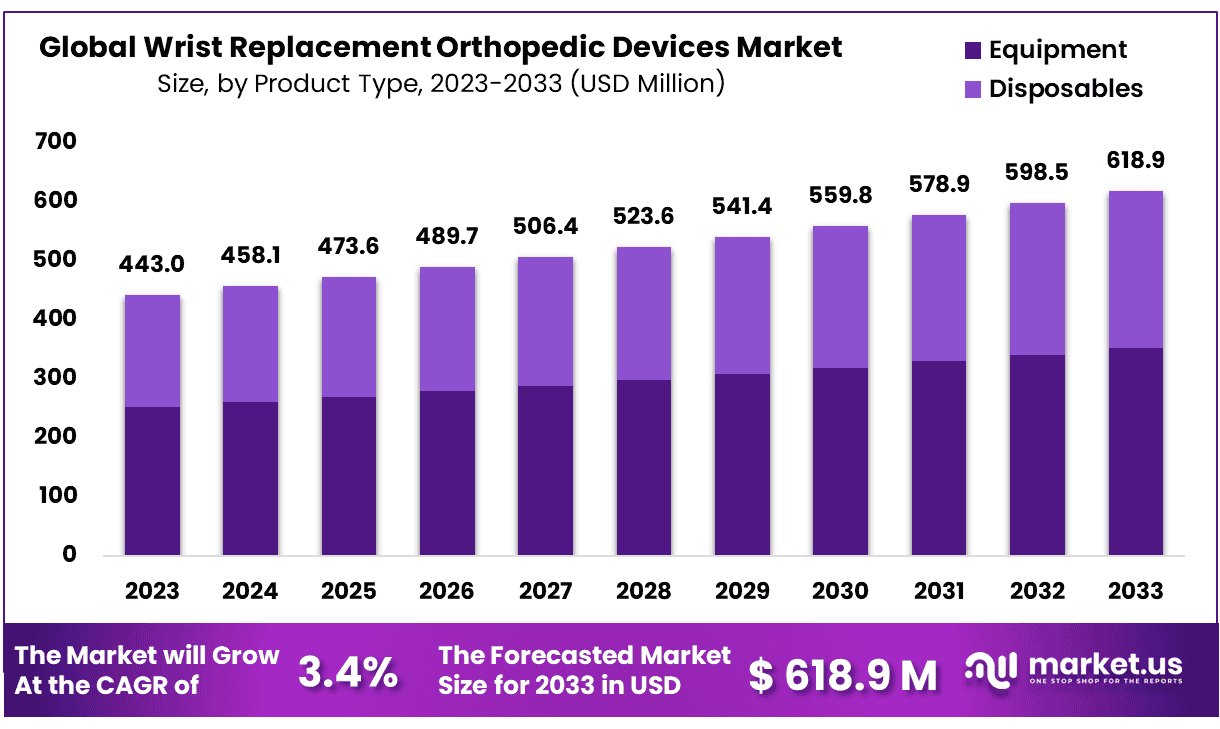
The Global Wrist Replacement Orthopedic Devices Market size is expected to be worth around USD 618.9 Million by 2033 from USD 443.0 Million in 2023, growing at a CAGR of 3.4% during the forecast period from 2024 to 2033.
Wrist Replacement Orthopedic Devices are medical implants designed to replace damaged or dysfunctional wrist joints, typically due to conditions such as arthritis or severe fractures. These devices aim to restore wrist function, reduce pain, and improve overall mobility.
The Wrist Replacement Orthopedic Devices market has exhibited notable growth and continues to hold promise within the orthopedic medical device industry. This steady expansion is primarily attributed to an aging population, increasing cases of wrist-related disorders, and advancements in medical technology.
One key driver of growth is the rising incidence of wrist arthritis, particularly in the elderly population. This demographic trend, coupled with an increasing awareness of treatment options, is expected to bolster the demand for wrist replacement orthopedic devices. Additionally, the expansion of minimally invasive surgical techniques has further enhanced patient outcomes and recovery times, driving adoption rates.
The growth of the total wrist replacement market is propelled by several key factors, including the expanding aging population, the rising prevalence of rheumatoid and osteoarthritis, and an uptick in fracture and accident cases. For instance, a September 2022 NCBI article reported that the incidence of rheumatoid arthritis stood at 24 and 36 cases per 100,000 people in Northern Europe and Northern America, respectively. Similarly, in a 2021 NCBI article, it was noted that the global prevalence of osteoarthritis witnessed a significant increase of 8.5%-9.3% in 2021. The article further highlighted regional variations, with osteoarthritis prevalence rates at 22.5% in North America, 7.2% in Western Europe, 8.4% in Central Asia, and 12.8% in North Africa and the Middle East in 2021.
Key Takeaways
- Market Size: Wrist Replacement Orthopedic Devices Market size is expected to be worth around USD 618.9 Million by 2033 from USD 443.0 Million in 2023.
- Market Growth: The market growing at a CAGR of 3.4% during the forecast period from 2024 to 2033.
- Product Type Analysis: Equipment currently dominates the market, commanding a significant 57% market share.
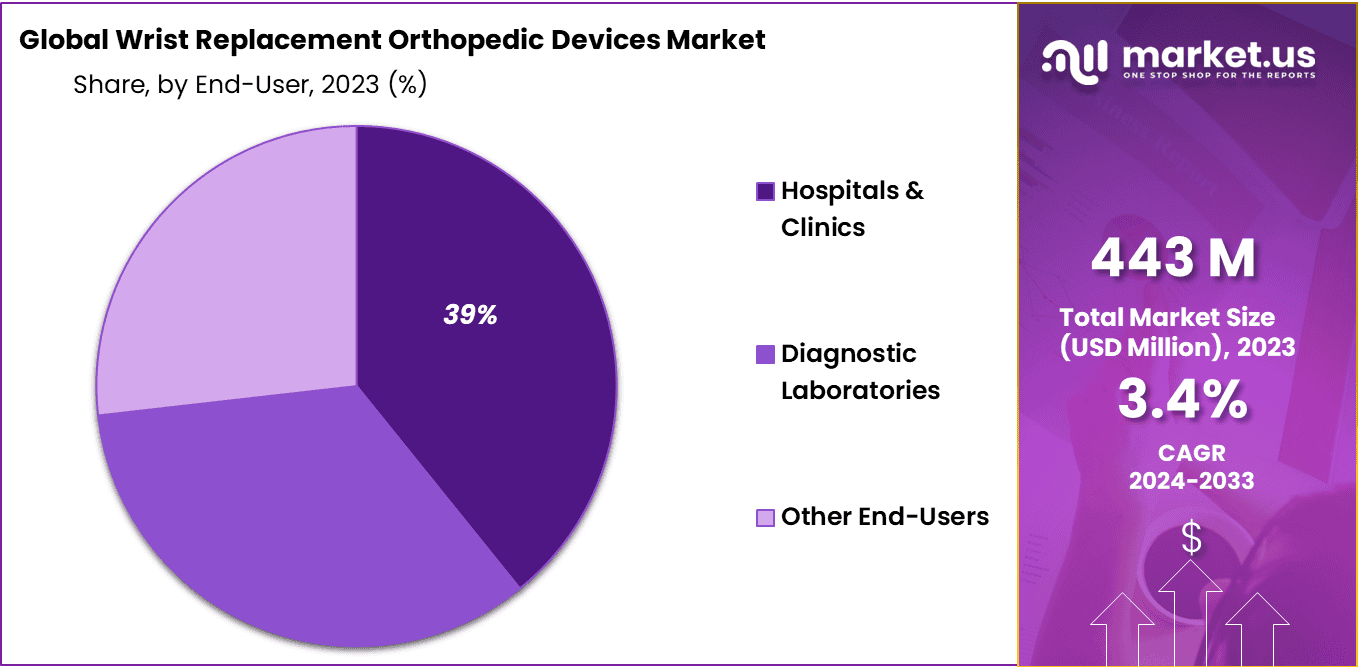
- End-User Analysis: Hospitals & Clinics dominating, accounting for a substantial 39% market share.
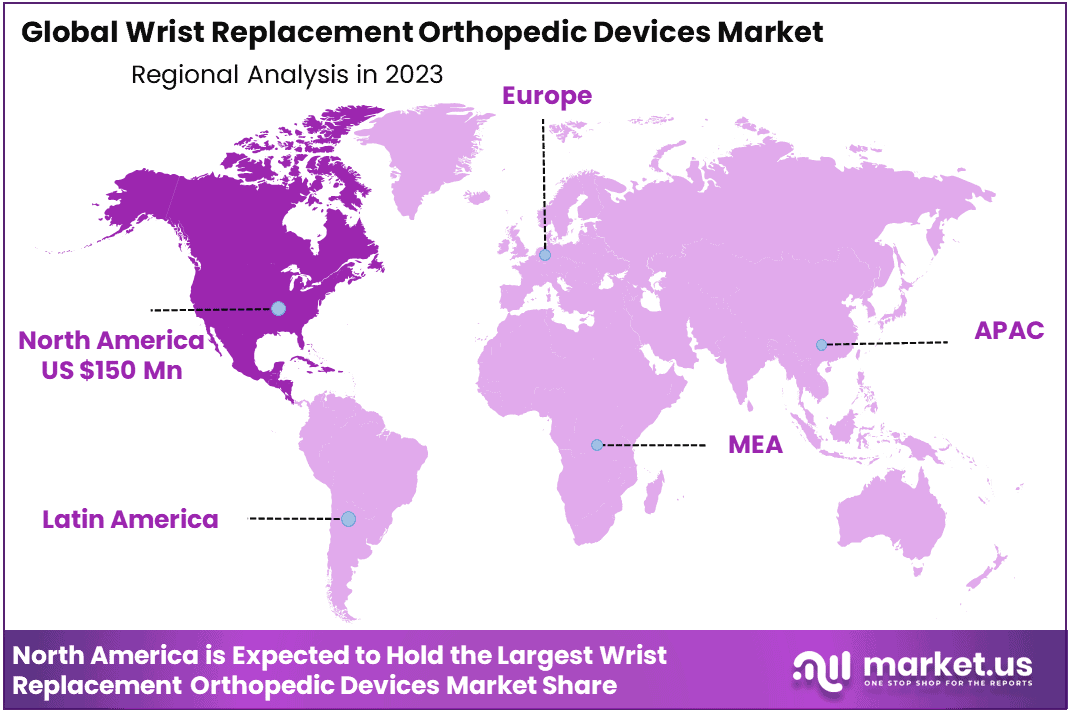
- Regional Analysis: North America holds a prominent position with 34% market share and holding USD 150 Million in 2023.
- Technological Advancements: Advances in orthopedic technology have led to the development of more durable and efficient wrist replacement devices. This has improved patient outcomes and reduced the need for revision surgeries.
- Increasing Demand: The demand for wrist replacement devices is on the rise due to a higher incidence of conditions like arthritis and fractures. This trend is expected to continue, driving market growth.
- Regulatory Compliance: Stringent regulations and standards govern the production and distribution of these devices, ensuring patient safety and product quality.
- Cost Considerations: Cost-effectiveness and reimbursement policies play a crucial role in the adoption of wrist replacement devices. Patients and healthcare providers weigh the benefits against the cost of the procedure.
Product Type Analysis
The Wrist Replacement Orthopedic Devices Market comprises various product types, with equipment and disposables being prominent segments. Equipment currently dominates the market, commanding a significant 57% market share.
In the realm of wrist replacement orthopedic devices, equipment plays a pivotal role in surgical procedures and patient care. This category encompasses a range of devices, including prostheses, surgical instruments, and diagnostic tools designed to facilitate wrist joint replacement surgeries. These technologically advanced and durable equipment options are essential for orthopedic surgeons to achieve successful outcomes in restoring wrist function and alleviating pain in patients with conditions such as arthritis or severe fractures.
The dominance of equipment in the market is indicative of the critical role it plays in delivering effective healthcare solutions. However, it’s worth noting that disposables also hold a substantial portion of the market share. Disposables, including items like sterilized gloves, surgical drapes, and wound dressings, are essential for maintaining aseptic conditions during surgery and post-operative care.
End-User Analysis
In the dynamic landscape of the Wrist Replacement Orthopedic Devices Market, the distribution of market share is notably influenced by the presence of key stakeholders, with Hospitals & Clinics dominating, accounting for a substantial 39% market share.
Hospitals and clinics serve as pivotal hubs for orthopedic procedures, including wrist replacement surgeries. These healthcare facilities house skilled orthopedic surgeons, cutting-edge medical equipment, and a comprehensive infrastructure necessary for diagnosing, treating, and rehabilitating patients with wrist-related issues. Their prominence in the market underscores their critical role in providing specialized care and surgical interventions, particularly for conditions like arthritis and fractures necessitating wrist replacement orthopedic devices.
Moreover, the market dynamics also feature the participation of Diagnostic Laboratories, albeit with a smaller share. Diagnostic laboratories contribute significantly to the overall ecosystem by providing essential diagnostic tests and services that aid in the accurate assessment of patients’ wrist conditions. Their role in preoperative evaluations and post-operative follow-up ensures the success and safety of wrist replacement procedures.
Key Market Segmentation
Product Type
- Equipment
- Disposables
End-User
- Hospitals & Clinics
- Diagnostic Laboratories
- Other End-Users
Driver
Aging Population and Musculoskeletal Issues
One of the primary drivers of the Wrist Replacement Orthopedic Devices Market is the aging global population. As individuals age, they become more susceptible to musculoskeletal problems, including wrist-related conditions like arthritis and fractures. The increasing elderly population worldwide is driving up the demand for wrist replacement procedures, thus bolstering the market. Moreover, this demographic trend is expected to continue in the coming years, ensuring a steady stream of patients in need of wrist replacement orthopedic devices.
Technological Advancements
Continuous advancements in medical technology and orthopedic device design are another significant driver of this market. Innovations in materials, implant designs, and surgical techniques have led to improved patient outcomes, reduced recovery times, and increased durability of wrist replacement devices. Surgeons can now offer minimally invasive procedures with smaller incisions, resulting in less tissue damage and faster rehabilitation. These technological advancements not only enhance the effectiveness of wrist replacement surgeries but also attract patients seeking less invasive and more efficient solutions, further fueling market growth.
Trend
Biocompatible and Natural Materials
A notable trend in the wrist replacement orthopedic devices market is the increasing focus on biocompatible and natural materials. Patients and healthcare providers alike are showing a preference for implants made from materials that closely mimic the natural properties of bone and joint tissues. This trend aligns with the broader healthcare industry’s shift towards patient-friendly and sustainable solutions. As a result, manufacturers are investing in research and development to create wrist replacement devices that integrate seamlessly with the patient’s anatomy, reduce the risk of complications, and offer long-term durability. This trend not only enhances the safety and efficacy of wrist replacement procedures but also caters to the growing demand for natural and biocompatible products.
Rise in Ambulatory Surgical Centers
Another noteworthy trend is the increasing prevalence of wrist replacement procedures being performed in ambulatory surgical centers (ASCs). ASCs offer several advantages, including cost-effectiveness, shorter waiting times, and reduced hospital stays. Patients are increasingly opting for these facilities for their wrist replacement surgeries, and this trend is likely to continue as ASCs improve their capabilities and infrastructure. This shift in the healthcare delivery model is reshaping the market landscape by expanding the availability of wrist replacement surgeries to a broader patient base.
Restraint
Regulatory Hurdles
Regulatory challenges and stringent approval processes can act as a significant restraint on the wrist replacement orthopedic devices market. Developing and bringing new devices to market often requires extensive clinical trials and regulatory clearances, which can be time-consuming and costly. Any delays or setbacks in obtaining regulatory approvals can impede market growth and hinder manufacturers’ ability to introduce innovative products.
Limited Healthcare Infrastructure
In some regions, particularly in developing countries, limited healthcare infrastructure and resources can pose a restraint on market growth. The availability of specialized orthopedic surgeons, well-equipped hospitals, and advanced diagnostic facilities may be limited in certain areas. This can lead to unequal access to wrist replacement procedures and devices, impacting market expansion in those regions.
Opportunity
Rising Awareness and Education
There is a significant opportunity for market growth through increased awareness and education about wrist-related conditions and treatment options. Educational initiatives aimed at both healthcare professionals and patients can help in early diagnosis, better understanding of treatment choices, and the benefits of wrist replacement procedures. Such awareness campaigns can drive patient demand and expand the market.
Emerging Markets
The wrist replacement orthopedic devices market has substantial growth potential in emerging markets where healthcare infrastructure is improving, and the middle-class population is expanding. As these regions experience economic development and an increase in healthcare spending, the demand for advanced orthopedic solutions, including wrist replacements, is expected to rise significantly. Manufacturers can tap into these emerging markets by providing cost-effective and accessible wrist replacement options. This presents a lucrative opportunity for market expansion in the coming years.
Market Dynamics
The introduction of minimally invasive technologies, related technological advancements, direct-to-consumer marketing techniques, the increased risk of osteoporosis and osteoarthritis, booming geriatric populations that are more susceptible, as well as an increase in the number of road accidents are among certain major factors driving the wrist replacement orthopedic devices market.
Furthermore, an increase in research & development activities, as well as an increase in demand from emerging economies are anticipated to create new opportunities for the wrist replacement orthopedic devices market over the forecast period.
However, an increase in the cost of implants, a greater number of future threats from alternative treatments, and stringent government policies for orthopedic implant approvals are major factors that could potentially restrain the market growth, of the wrist replacement orthopedic devices industry.
Regional Analysis
North America holds a prominent position with 34% market share and holding USD 150 Million in the wrist replacement orthopedic devices market, primarily driven by its well-established healthcare infrastructure, the presence of industry leaders, comprehensive reimbursement coverage, and continuous advancements in minimally invasive technologies. The region benefits from significant technological progress in this field.
On the other hand, Asia-Pacific is poised to emerge as a key growth region in the wrist replacement orthopedic devices market. This growth is attributed to the adoption of direct-to-consumer marketing strategies, the increasing aging population, and a rising incidence of road accidents in the region. These factors collectively contribute to the expansion of the wrist replacement orthopedic devices market in the Asia-Pacific region.
Key Regions and Countries
North America
- The US
- Canada
- Mexico
Western Europe
- Germany
- France
- The UK
- Spain
- Italy
- Portugal
- Ireland
- Austria
- Switzerland
- Benelux
- Nordic
- Rest of Western Europe
Eastern Europe
- Russia
- Poland
- The Czech Republic
- Greece
- Rest of Eastern Europe
APAC
- China
- Japan
- South Korea
- India
- Australia & New Zealand
- Indonesia
- Malaysia
- Philippines
- Singapore
- Thailand
- Vietnam
- Rest of APAC
Latin America
- Brazil
- Colombia
- Chile
- Argentina
- Costa Rica
- Rest of Latin America
Middle East & Africa
- Algeria
- Egypt
- Israel
- Kuwait
- Nigeria
- Saudi Arabia
- South Africa
- Turkey
- United Arab Emirates
- Rest of MEA
Key Players Analysis
The wrist replacement orthopedic devices market’s competitive landscape provides in-depth insights into each competing company. This data includes a company’s profile, financial performance, revenue generation, investments in research and development, ventures into new markets, global presence, production facilities and capacities, strengths and weaknesses, product introductions, product range, and dominance in specific applications. It is crucial to emphasize that these data points are solely focused on the activities of these companies within the wrist replacement orthopedic devices market.
Market Key Players
- Stryker Corporation
- Johnson & Johnson
- Zimmer Biomet
- Smith & Nephew
- Nuvasive Inc.
- Aesculap Implant Systems LLC
- CONMED Corporation
- DJO Global Inc.
- Lifesciences, Inc.
- Other Key Players
Recent Developments
- Innovative Materials: Several companies in the wrist replacement orthopedic devices market have been investing in research to develop innovative materials that enhance the durability and longevity of wrist implants. This includes the use of advanced biomaterials and coatings to reduce wear and tear.
- 3D Printing Technology: Some manufacturers have embraced 3D printing technology to create customized wrist replacement implants tailored to individual patients. This innovation allows for a more precise fit and improved functionality.
- Strategic Acquisition: In a notable acquisition, a leading orthopedic device manufacturer acquired a smaller specialized company known for its expertise in wrist replacement devices. This move aimed to consolidate market share and leverage the acquired company’s technological capabilities.
- Research Collaborations: Several academic institutions have entered into partnerships with industry players to conduct research on wrist joint biomechanics, leading to potential advancements in implant design and surgical techniques.
- Market Expansion: Key players in the wrist replacement orthopedic devices market have expanded their distribution networks to reach new geographical markets. This expansion strategy includes agreements with distributors and healthcare facilities.
- Clinical Agreements: Medical institutions have entered into agreements with orthopedic device manufacturers to conduct clinical trials and gather real-world data on the performance of wrist replacement devices. This data informs further product enhancements.









