


Market Overview
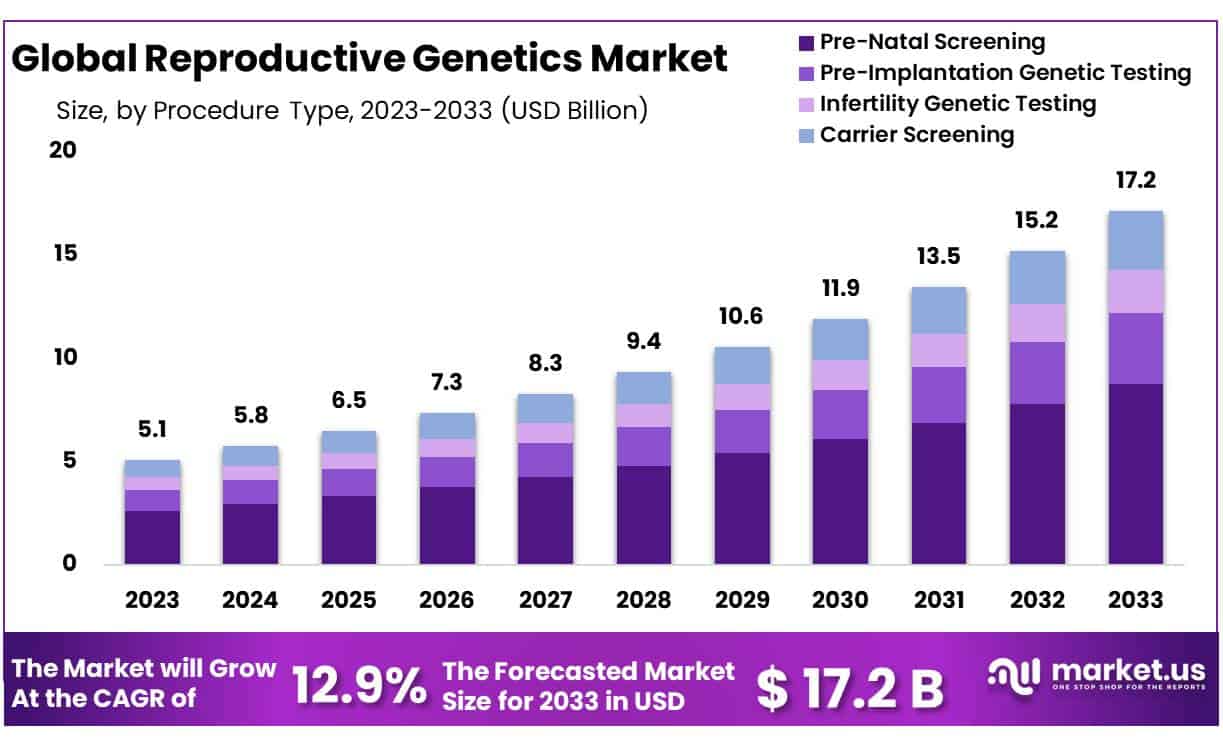
The Global Reproductive Genetics Market size is expected to be worth around USD 17.2 Billion by 2033 from USD 5.1 Billion in 2023, growing at a CAGR of 12.9% during the forecast period from 2024 to 2033.
Reproductive genetics is the study of genes that affect reproduction. This includes the genes that control how often a person reproduces, the number of children they have, and the sex of their children. Reproductive genetics also includes the study of genes that can cause birth defects. In reproductive genetics, several tests can be performed on an embryo to determine if it is healthy and has the potential to result in a successful pregnancy. Pre-Implantation Genetic Diagnosis (PGD) is one such test. This test is typically used when a couple is at risk of passing on a genetic disorder to their child. The field of reproductive genetics is relatively new but rapidly growing. This area of study focuses on the genetic aspects of reproduction.
Reproductive genetics can be used to help couples who are struggling to conceive a child. It can also screen embryos for genetic disorders before they are implanted in the womb. It covers the study of both the male and female gametes and the embryo. Reproductive genetics diagnose and treat disorders that may affect fertility or embryo development.
In reproductive genetics, scientists are constantly working on new ways to improve fertility and prevent genetic disorders. In recent years, they have made great strides in developing treatments for infertility and screening tests for genetic abnormalities. One of the most exciting developments in this field is in-vitro fertilization (IVF), which has helped many couples conceive children who would not have been able to otherwise.
Various regulatory organizations worldwide have placed restrictions on the use of reproductive genetics tests, fearing that the increased usage of Pre-Natal testing will increase the number of abortions. As a result, professional organizations such as the American College of Obstetricians and Gynecologists (ACOG), the International Society for Pre-Natal Diagnosis, the United States National Society of Genetic Counselors (NSGC), and the Japan Society of Obstetrics and Gynecology have established a few guidelines to limit the use of non-invasive prenatal testing to pregnant women at high risk of chromosomal aneuploidies, which in turn is expected to hinder the overall revenue growth of this market.
Key Takeaways
- Market Size: Reproductive Genetics Market size is expected to be worth around USD 17.2 Billion by 2033 from USD 5.1 Billion in 2023.
- Market Growth: The market growing at a CAGR of 12.9% during the forecast period from 2024 to 2033.
- Procedure Type Analysis: Pre-Natal Screening takes the lead, commanding an impressive 51.2% market share.
- Product Type Analysis: The Kits stand out as the frontrunner, holding a significant 38.7% market share.
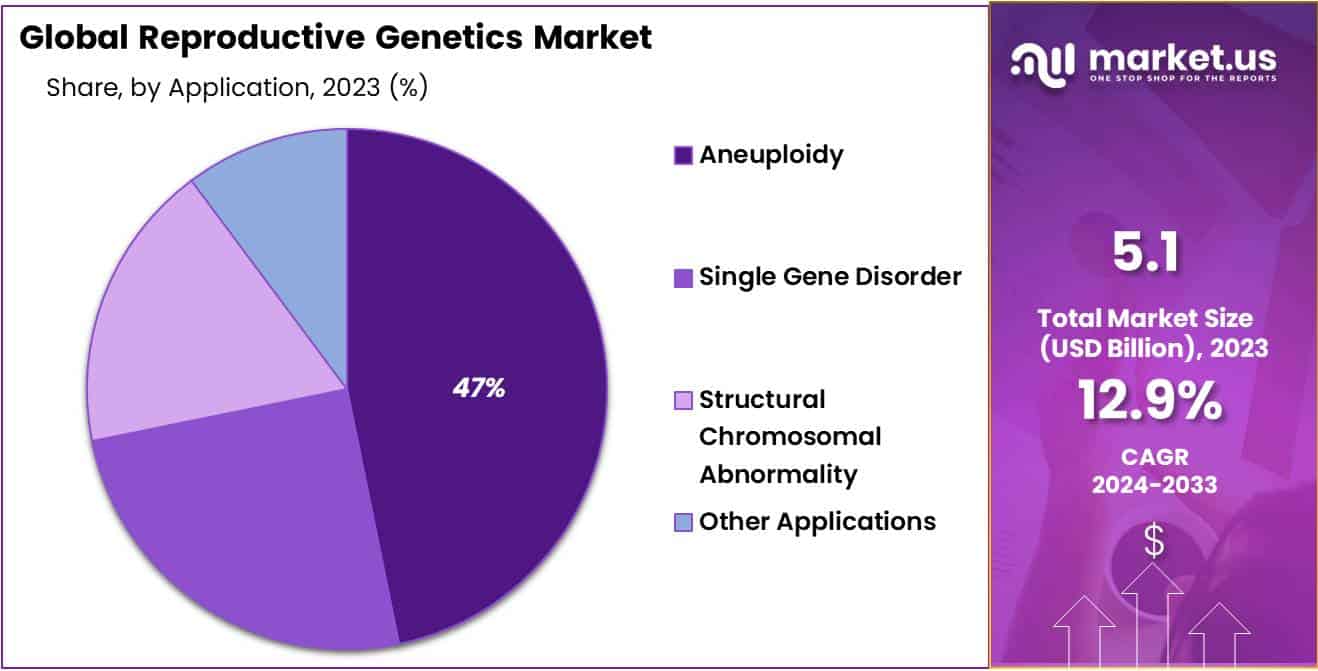
- Application Analysis: Aneuploidy emerges as the dominant force in this arena, commanding an impressive 46.8% market share.
- Technology Analysis: PCR (Polymerase Chain Reaction) stands tall as the frontrunner, commanding a substantial 40.9% market share.
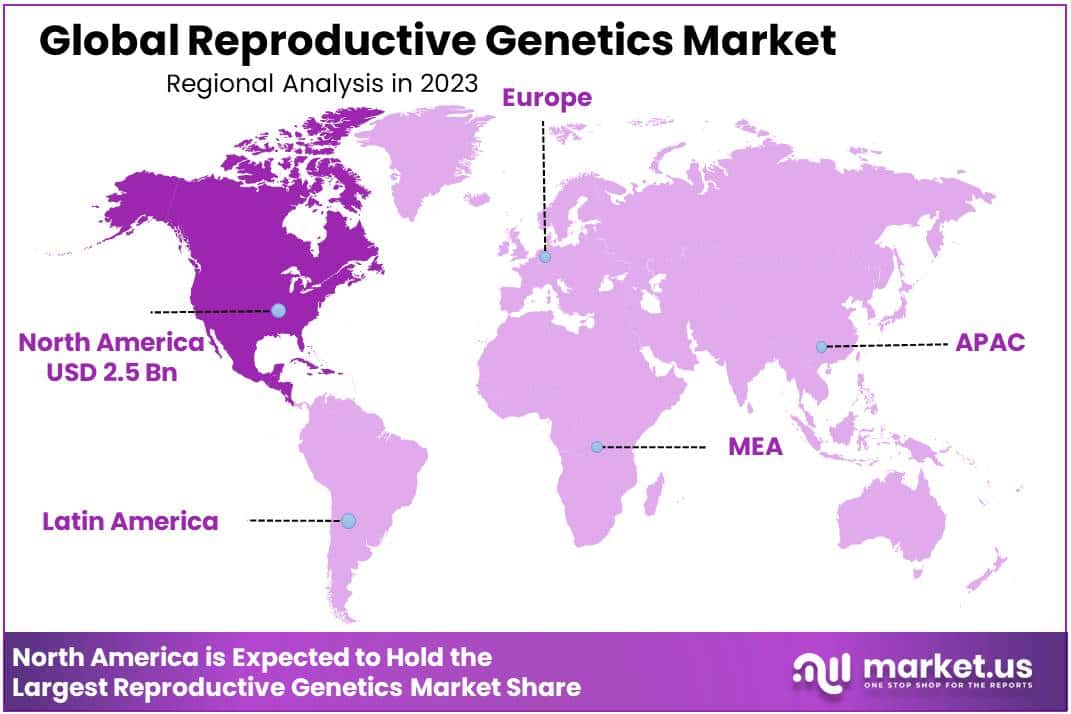
- Regional Analysis: North America holds the dominant position as the largest shareholder, commanding a substantial 42.5% share of the market, with a market revenue of USD 2.5 billion.
Procedure Type Analysis
In the procedure type, Pre-Natal Screening takes the lead, commanding an impressive 51.2% market share. This dominance reflects the growing importance of prenatal genetic testing in ensuring the health and well-being of both the unborn child and the expectant parents. With advancements in medical technology, Pre-Natal Screening offers comprehensive insights into fetal health, allowing parents and healthcare providers to make informed decisions.
Pre-Implantation Genetic Testing and Infertility Genetic Testing also hold significant market presence. Pre-Implantation Genetic Testing enables couples undergoing in vitro fertilization (IVF) to select embryos with desired genetic characteristics, enhancing the chances of a successful pregnancy. Meanwhile, Infertility Genetic Testing plays a crucial role in diagnosing the underlying genetic factors contributing to infertility, offering personalized treatment options.
Carrier Screening, another essential component of reproductive genetics, provides insights into the risk of passing on genetic disorders to offspring. This market segment continues to grow as awareness about genetic risks and family planning increases.
Product Type Analysis
In the dynamic landscape of the Reproductive Genetics Market, various product types play a crucial role in shaping its trajectory. Among these, Kits stand out as the frontrunner, holding a significant 38.7% market share. These ready-to-use kits empower healthcare providers and laboratories with efficient tools for genetic testing in the realm of reproductive health. They offer convenience, accuracy, and standardized procedures, making them an essential component of the industry.
Laboratory Developed Tests (LDTs) represent another substantial segment of the market. LDTs are customized tests developed and validated by individual laboratories to meet specific diagnostic needs. They cater to the demand for highly specialized genetic analyses, contributing to the diversification of reproductive genetics services.
Reagents and Consumables are the backbone of genetic testing, ensuring the reliability and precision of results. While they may not dominate in terms of market share, their importance cannot be overstated. These products enable laboratories to perform tests accurately and efficiently, making them indispensable components of the Reproductive Genetics Market.
Application Analysis
Within the expansive landscape of the Reproductive Genetics Market, different applications offer specialized insights and solutions to individuals and healthcare providers. Aneuploidy, a condition characterized by an abnormal number of chromosomes, emerges as the dominant force in this arena, commanding an impressive 46.8% market share. Aneuploidy testing is pivotal in assessing the chromosomal health of embryos and plays a central role in in vitro fertilization (IVF) procedures.
Single Gene Disorder diagnostics hold their own significant place in the market. These tests focus on identifying genetic mutations associated with specific hereditary conditions, enabling prospective parents to make informed family planning decisions and aiding in early intervention and treatment.
Structural Chromosomal Abnormality analysis is another vital application within the Reproductive Genetics Market. It involves the detection of structural abnormalities in chromosomes, providing essential insights into genetic disorders that may affect fertility and pregnancy outcomes.
Technology Analysis
In the ever-evolving landscape of the Reproductive Genetics Market, the choice of technology plays a pivotal role in shaping the industry’s trajectory. PCR (Polymerase Chain Reaction) stands tall as the frontrunner, commanding a substantial 40.9% market share. PCR is a versatile and widely adopted technology, offering accurate and efficient genetic testing solutions in the realm of reproductive health. Its ability to amplify and detect specific DNA sequences makes it indispensable in various applications, such as prenatal screening and carrier testing.
Next-Generation Sequencing (NGS) represents another formidable technology in this market. NGS offers a high-throughput approach, allowing for comprehensive genomic analysis, which is particularly valuable in identifying complex genetic variations associated with reproductive disorders.
In-Situ Hybridization (ISH) technology, while holding a smaller market share, plays a critical role in detecting chromosomal abnormalities at the cellular level, aiding in the diagnosis of genetic disorders that impact reproductive health.
Market Segmentation
Procedure Type
- Pre-Natal Screening
- Pre-Implantation Genetic Testing
- Infertility Genetic Testing
- Carrier Screening
Product Type
- Kits
- Laboratory Developed Tests (LDT)
- Reagents and Consumables
Application
- Aneuploidy
- Single Gene Disorder
- Structural Chromosomal Abnormality
- Other Applications
Technology
- PCR
- Next-Generation Sequencing
- In-Situ Hybridization (ISH)
- Microarray
Driver
Increasing Awareness and Acceptance of Genetic Testing
The Reproductive Genetics Market is driven by a growing awareness among couples about the benefits of genetic testing. As individuals become more informed about the potential risks of hereditary diseases and the impact on offspring, they are increasingly opting for genetic screening before conception. This demand for preconception genetic testing has significantly boosted the market.
Advancements in Genetic Technologies
Recent advancements in genetic testing techniques and technologies have revolutionized the field of reproductive genetics. Techniques such as Next-Generation Sequencing (NGS) and Non-Invasive Prenatal Testing (NIPT) have become more accurate, affordable, and accessible. These innovations not only enhance the precision of genetic testing but also contribute to the market’s growth by attracting more patients and healthcare providers.
Trend
Rise in Demand for Personalized Medicine
One prominent trend in the Reproductive Genetics Market is the shift towards personalized medicine. Genetic testing now allows for tailored approaches to fertility treatment and prenatal care. By analyzing the specific genetic makeup of individuals and embryos, healthcare providers can offer personalized recommendations and treatments, increasing the chances of successful pregnancies.
Integration of Artificial Intelligence (AI) and Big Data
The market is witnessing a trend towards the integration of AI and Big Data analytics in reproductive genetics. AI algorithms are being used to interpret vast datasets generated from genetic tests. This not only speeds up the analysis process but also improves the accuracy of identifying genetic anomalies and predicting potential risks. This trend is expected to continue, enhancing the market’s capabilities and outcomes.
Restraint
Ethical and Legal Concerns
Despite the promising advancements in reproductive genetics, ethical and legal concerns continue to act as a restraint. The potential for misuse of genetic information, concerns about privacy, and debates surrounding genetic modification of embryos raise complex ethical questions. Stringent regulations and the need for ethical guidelines can slow down the market’s progress.
High Cost of Genetic Testing
The cost of advanced genetic testing methods can be a significant barrier for some individuals and couples. Even though the prices have decreased over the years, comprehensive genetic testing can still be expensive. This limits access to reproductive genetics services for some, especially in regions with limited healthcare resources.
Opportunity
Expanding Global Market
The Reproductive Genetics Market presents a substantial opportunity for expansion, especially in emerging markets. As healthcare infrastructure improves and awareness of genetic testing grows in regions like Asia-Pacific and Latin America, there is a vast untapped market. Companies that can establish a presence in these areas have the potential for significant growth.
Development of Non-Invasive Technologies
The opportunity lies in the continued development of non-invasive prenatal testing and other less invasive genetic screening methods. As these technologies become more sophisticated and widely adopted, they can open up new markets and increase the acceptance of genetic testing among a broader range of prospective parents.
Regional Analysis
North America holds the dominant position as the largest shareholder, commanding a substantial 42.5% share of the market, with a market revenue of USD 2.5 billion. The presence of well-established operational units of conglomerate companies in this region has played a pivotal role in fostering the emergence of numerous startup ventures. These startups are making significant contributions to technological advancements within the global market.
In contrast, the Asia-Pacific market is poised for robust growth in the coming years. Several countries in the Asia-Pacific region, including Australia, China, India, Japan, and Singapore, are proactively working to promote the adoption of genetic testing in the near future. Notably, the Asia-Pacific region has witnessed remarkable progress in the field of molecular diagnostic technology, accompanied by several initiatives aimed at fostering research and development.
Key Regions and Countries
North America
- The US
- Canada
- Mexico
Western Europe
- Germany
- France
- The UK
- Spain
- Italy
- Portugal
- Ireland
- Austria
- Switzerland
- Benelux
- Nordic
- Rest of Western Europe
Eastern Europe
- Russia
- Poland
- The Czech Republic
- Greece
- Rest of Eastern Europe
APAC
- China
- Japan
- South Korea
- India
- Australia & New Zealand
- Indonesia
- Malaysia
- Philippines
- Singapore
- Thailand
- Vietnam
- Rest of APAC
Latin America
- Brazil
- Colombia
- Chile
- Argentina
- Costa Rica
- Rest of Latin America
Middle East & Africa
- Algeria
- Egypt
- Israel
- Kuwait
- Nigeria
- Saudi Arabia
- South Africa
- Turkey
- United Arab Emirates
- Rest of MEA
Market Player Analysis
The global reproductive genetics market encompasses a wide array of both large-scale and small-scale manufacturers and service providers. Currently, driven by the rapid pace of molecular advancements and the growing adoption of genetic testing, the reproductive genetics market is experiencing a surge in opportunities. Key players in the market are pursuing various strategies to capitalize on this trend, including introducing new products, obtaining product approvals, forming partnerships and alliances, engaging in mergers and acquisitions, and expanding their business operations.
Market Key Players
- Invitae Corporation
- Laboratory Corporation of America Holdings
- PerkinElmer, Inc.
- Myriad Genetics, Inc.
- OPKO Health, Inc.
- Quest Diagnostics
- QIAGEN N.V.
- Thermo Fisher Scientific Inc.
- Agilent Technologies, Inc.
- BGI
- CENTOGENE AG
- Fulgent Genetics, Inc.
- F. Hoffmann-La Roche Ltd
- Igenomix, Illumina, Inc.
Recent Developments
- OPKO Health, Inc.: In June 2023, OPKO launched a new non-invasive prenatal test (NIPT) called NIPT Harmony® Plus, which offers additional information about fetal health beyond chromosomal abnormalities. This launch reflects the growing demand for advanced NIPT options.
- Myriad Genetics, Inc.: In July 2023, Myriad received FDA approval for its Prequel® prenatal test, which can detect a broader range of genetic conditions compared to traditional karyotyping. This approval expands their prenatal testing options.
- PerkinElmer, Inc.: In August 2023, PerkinElmer acquired NGS Diagnostics, a company specializing in next-generation sequencing (NGS) solutions for prenatal testing. This acquisition strengthens their position in the NGS market, a key technology for reproductive genetics.
- Invitae Corporation: In October 2023, Invitae partnered with Personalis, Inc. to develop and offer a new liquid biopsy test for early cancer detection. This could potentially expand their offerings into prenatal screening for cancer risks.









