


Market Overview
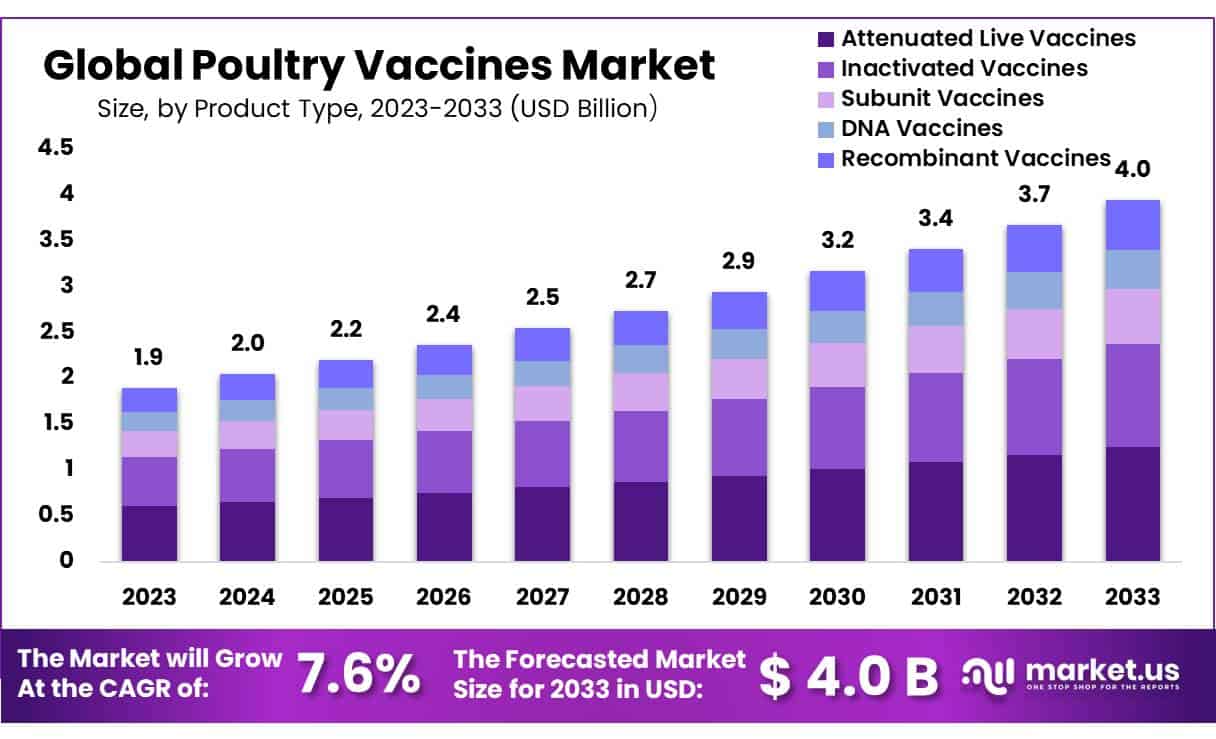
The Global Poultry Vaccines Market size is expected to be worth around USD 4.0 Billion by 2033 from USD 1.9 Billion in 2023, growing at a CAGR of 7.6% during the forecast period from 2024 to 2033.
Poultry vaccines are biological products specifically developed to safeguard domestic birds such as chickens, ducks and turkeys against infectious diseases. Formulated to induce an immune response in birds, bird vaccination can provide them with immunity against specific pathogens like viruses and bacteria. Administration methods vary and include injection, aerosol or even in the drinking water of your birds.
Vaccination programs tailored specifically to regional disease risks form a vital part of biosecurity measures on poultry farms. Farmers can effectively prevent disease outbreaks and ensure sustainable and safe production by employing appropriate poultry vaccines. Today, poultry vaccines play a vital role in upholding population health and welfare.
The rising number of avian illnesses and the expanding poultry population will drive demand for poultry vaccinations. Consuming infected poultry meat poses a threat to human health. Birds must be vaccinated. Poultry farms have to contend with the rapid spread of disease and a lack of treatment options. Vaccination becomes mandatory in order to avoid these situations. According to OIE WAHIS databases, there were 22 new cases of bird flu in the world. This rose to 836 new cases in 2020. The total number of cases is 2.79 million. Market drivers include the growing incidence of disease outbreaks among avian birds. Low pathogenic and highly pathogenic influenza were reported in Italy in recent weeks. They were also reported in Russia in October 2021.
Key Takeaways
- Market Size: Poultry Vaccines Market size is expected to be worth around USD 4.0 Billion by 2033 from USD 1.9 Billion in 2023.
- Market Growth: The market growing at a CAGR of 7.6% during the forecast period from 2024 to 2033.
- Product Type Analysis: Attenuated Live Vaccines have quickly established themselves as one of the mainstays in the Poultry Vaccines Market, accounting for 31.8% market share.
- Dosage Form Analysis: growing at a CAGR of 7.6% during the forecast period from 2024 to 2033.
- Disease Type Analysis: Newcastle Disease dominates the Poultry Vaccines Market with 20.8% market share.
- Application analysis: Liquid vaccines tailored for breeder applications represent 36.2% of the Poultry Vaccines Market.
- End-User Analysis: Poultry firms hold an enviable 64% market share in the global Poultry Vaccines Market.
- Regional Analysis: North America being the leader with 38.7% market share within this niche industry.
Product Type Analysis
Attenuated Live Vaccines have quickly established themselves as one of the mainstays in the Poultry Vaccines Market, accounting for 31.8% market share. Renowned for their effectiveness and cost-efficiency, these vaccines play an indispensable role in protecting poultry populations against various diseases by using weakened forms of pathogens to elicit robust immune responses that provide long-term protection.
Inactivated vaccines, one of the cornerstones of poultry immunization, offer an appealing alternative. By containing killed pathogens instead of risky replication mechanisms, inactivated vaccination offers safe and reliable disease prevention without risk. Subunit vaccines on the other hand use specific antigens to induce specific immune responses to produce targeted solutions for poultry health management.
DNA and Recombinant Vaccines have emerged as powerful biotechnology innovations, revolutionizing poultry immunization with precise antigen delivery utilizing genetic engineering techniques for maximum efficacy while minimizing adverse side effects.
Dosage Form Analysis
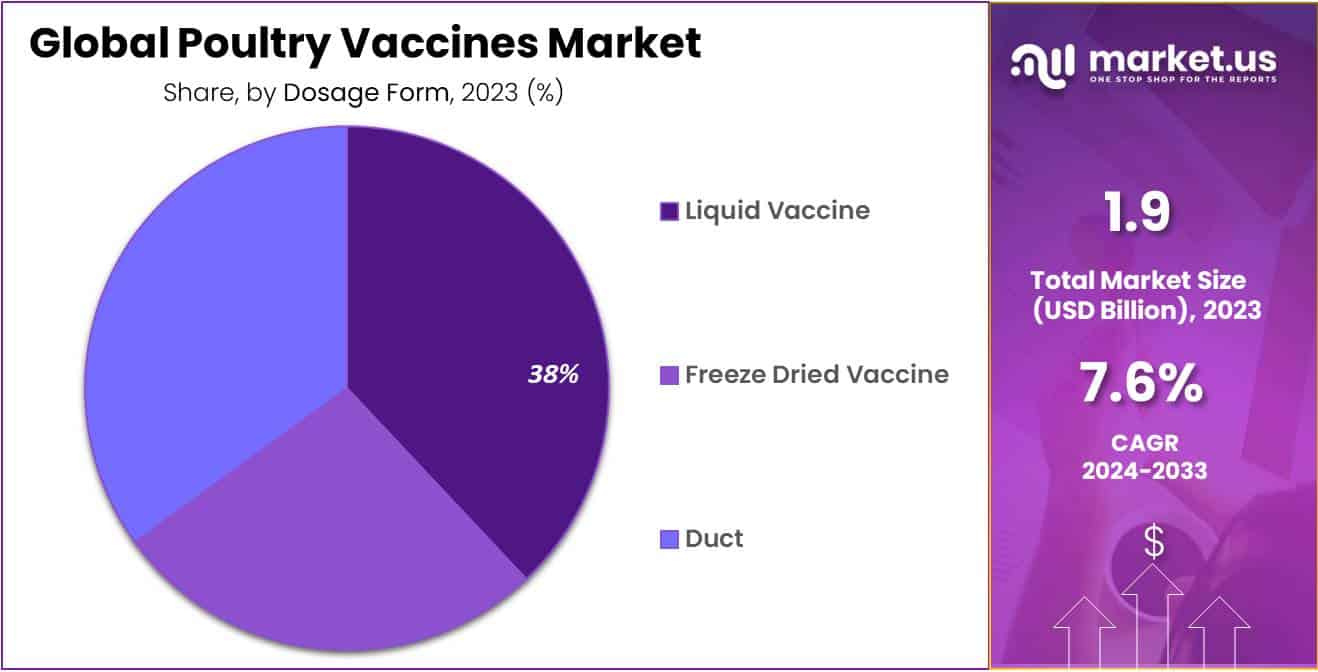
Liquid vaccines dominate the Poultry Vaccines Market with 38% market share. Widely recognized for their ease of administration and versatility, liquid vaccines provide poultry producers with an easy solution for protecting flock health while streamlining immunization processes for greater operational efficiencies and cost-efficiency.
While liquid vaccines dominate the market, freeze-dried vaccines offer an effective alternative. Commonly known as lyophilized vaccines, freeze-dried varieties provide enhanced stability and shelf life when compared with their liquid counterparts – an advantage which makes freeze-dried an ideal choice for storage or transportation in harsh environments.
Duct dosage forms provide another means of vaccine delivery in the poultry industry. With its targeted and efficient immunization approach, this novel approach ensures precise vaccine administration while simultaneously optimizing efficacy while minimizing waste.
Disease Type Analysis
Newcastle Disease dominates the Poultry Vaccines Market with 20.8% market share. It poses an immediate and serious threat to poultry populations worldwide and vaccination is crucial in its control and prevention; Newcastle Vaccine uses live attenuated formulations as well as inactivated formulations in its vaccines targeting this pathogen in order to provide robust immunity and minimize outbreak impacts.
Marek’s Disease stands as one of the primary targets in poultry immunization efforts, alongside Newcastle Disease. Characterized by tumor formation and immunosuppression, Marek’s requires comprehensive vaccination protocols in order to safeguard flock health and productivity.
Salmonella, one of the leading causes of foodborne illness, serves to highlight the significance of vaccination in protecting public health and food safety. Salmonella vaccines targeting poultry production reduce contamination risks throughout their supply chains while building consumer trust for poultry products.
Infectious Bronchitis and Bursal Disease further demonstrate the wide-ranging threats facing poultry industries today, and vaccination is an integral component of disease control that reduces economic losses while improving population welfare. Vaccinations designed specifically against such ailments play a crucial role in disease management strategies to maintain flock welfare while safeguarding economic viability.
Application analysis
Liquid vaccines tailored for breeder applications represent 36.2% of the Poultry Vaccines Market. This indicates the key role vaccination plays in protecting flock health and productivity – with liquid vaccines designed specifically to confer robust immunity laying the groundwork for optimal hatchability, chick quality and long-term flock performance.
Liquid vaccines play a crucial role in both broiler and layer production systems, solidifying their role as cornerstones of poultry health management. Broilers use liquid vaccines extensively against various pathogens that threaten growth and development while layer operations rely on them to safeguard hen health while optimizing egg production under strict food safety and quality standards.
Liquid vaccines remain an invaluable tool in meeting changing consumer expectations and meeting emerging disease threats in the poultry industry, providing producers with a critical edge against future risks. Given their versatility, efficacy, and wide applicability across breeder, broiler, and layer segments – liquid vaccines continue to drive advances in poultry health management to create sustainable production systems of the future.
End-User Analysis
Poultry firms hold an enviable 64% market share in the global Poultry Vaccines Market. Recognizing vaccination’s key role in maintaining productivity and profitability, these firms prioritize disease prevention to maintain flock health.
Poultry vaccination centers play an essential role within the industry ecosystem, acting as key facilitators of vaccination programs and providing widespread access to essential vaccines. They play a significant role in providing information dissemination, technical support, and administering vaccinations successfully in order to enable poultry firms to implement comprehensive disease management strategies.
Hospitals catering to poultry health requirements also represent an integral segment of this market, offering advanced veterinary care and diagnostic services geared specifically toward poultry populations, such as vaccination programs tailored specifically for their unique requirements.
Кеу Маrkеt Ѕеgmеntѕ
Product Type
- Attenuated Live Vaccines
- Inactivated Vaccines
- Subunit Vaccines
- DNA Vaccines
- Recombinant Vaccines
Dosage Form
- Liquid Vaccine
- Freeze Dried Vaccine
- Duct
Disease Type
- Marek’s Disease
- Newcastle Disease
- Salmonella
- Infectious Bronchitis
- Infectious Bursal Diseases
- Other Diseases
Application
- Breeder
- Broiler
- Layer
End-User
- Hospitals
- Poultry Vaccination Centres
- Poultry Firms
Driver
Increasing Demand for Poultry Products
Rising global population coupled with changing diet preferences is fuelling an increased consumer desire for poultry products. To meet this growing need, farms require effective disease-prevention strategies in their operations which in turn fuels demand for vaccination programs; vaccines play a vital role in protecting chicken health while meeting ever increasing consumer demands for meat and eggs produced sustainably from these farms.
Stringent Regulations on Antibiotic Use
Strict regulations implemented by regulatory authorities to curb misuse of antibiotics in livestock farming is spurring adoption of vaccines among poultry industry farmers. Antibiotic resistance concerns and their risk to human health have driven governments worldwide to implement strict regulations regarding antibiotic usage among animal husbandry; in response, poultry farmers increasingly opting for vaccination programs as a preventative measure against disease outbreaks, reduce dependency, and meet compliance standards imposed upon animal husbandry practices.
Trend
Advancements in Vaccine Technology
The poultry vaccine market has witnessed rapid advancements in vaccine technology, leading to novel and more effective vaccines being produced. Recombinant DNA technology, vector vaccines, and immune complex vaccines have transformed its landscape; providing increased efficacy, safety, duration of immunity as well as driving their adoption among poultry producers across the globe.
Focus on Disease Prevention and Biosecurity Measures
As poultry production systems shift towards increased disease prevention and biosecurity measures, more focus has been put on adopting vaccination programs as proactive approaches for disease management. Poultry farmers have increasingly implemented stringent biosecurity protocols and invested in vaccination programs as proactive means for disease outbreak mitigation; this trend can especially be found in regions with an elevated avian disease prevalence where preventative strategies must be in place in order to maintain flock health and productivity.
Restraint
High Development Costs and Production Requirements for Poultry Vaccines
The high development, research, production costs associated with poultry vaccines present an immense hurdle to their market growth. For instance, developing vaccines against emerging and reemerging poultry diseases requires significant investments in research, clinical trials and manufacturing costs that deter smaller players from entering the market; additionally complex manufacturing processes and stringent quality control requirements contribute further to high costs which limit affordability especially among small scale farmers located in developing regions.
Cold Chain Infrastructure Challenges
Maintaining an effective cold chain during storage and distribution is vitally important to vaccine efficacy; unfortunately, poor infrastructure in many developing country regions poses an enormous obstacle in getting vaccines into rural communities, where such supplies might otherwise reach them more readily. Temperature fluctuations during transportation and storage could compromise vaccine potency leading to reduced efficacy or wasteful vaccine wastage resulting in reduced efficacy as well as wastage costs; effectively managing such infrastructure issues is vital in providing timely access and availability in remote or underserved communities.
Opportunity
Rising Investments in Animal Health
Increased investments in animal healthcare infrastructure and research and development activities offer exciting prospects for growth of the poultry vaccines market. Governments, private organizations, and veterinary pharmaceutical companies are making large-scale investments into developing innovative vaccines while expanding access to healthcare services aimed at disease control measures, sustainable poultry production practices, food safety concerns as well as increasing disease outbreak prevention – driving adoption across various geographies for this form of protection.
Precision Livestock Farming Gaining Notice
As advanced technologies like artificial intelligence, Internet of Things sensors, and data analytics become integrated into poultry farming operations, more focus is being given to precision livestock farming practices. Precision vaccination as part of precision livestock farming offers opportunities for improving vaccine administration protocols, minimizing wastage and optimizing efficacy. Utilizing real-time data analytics and predictive modeling, poultry producers can utilize real-time vaccination schedules tailored specifically to disease risks and flock health parameters in order to optimize resource usage and boost overall farm productivity. This trend toward precision vaccination creates an immense opportunity for manufacturers of vaccine delivery systems as well as digital health solutions tailored specifically for poultry producers’ evolving needs.
Regional Analysis
Regional Analysis in the Global Poultry Vaccines Market can be broken down into North America, Europe, Asia Pacific and Rest of World regions; with North America being the leader with 38.7% market share within this niche industry. This dominance can be attributed to various factors, including rising consumption of poultry products and awareness about food safety issues; along with an upsurge in poultry meat production. Furthermore, its significance in Asia was further highlighted by an unprecedented surge in pork meat production during 2011.
United Nations Food and Agriculture Organization (UNFAO) reports that the United States stands as the highest producer of poultry meat worldwide, accounting for 18.0% of global output. Furthermore, adoption of poultry vaccinations within its borders has increased through strategic initiatives designed to foster better bird health. husbandry.
Key Regions and Countries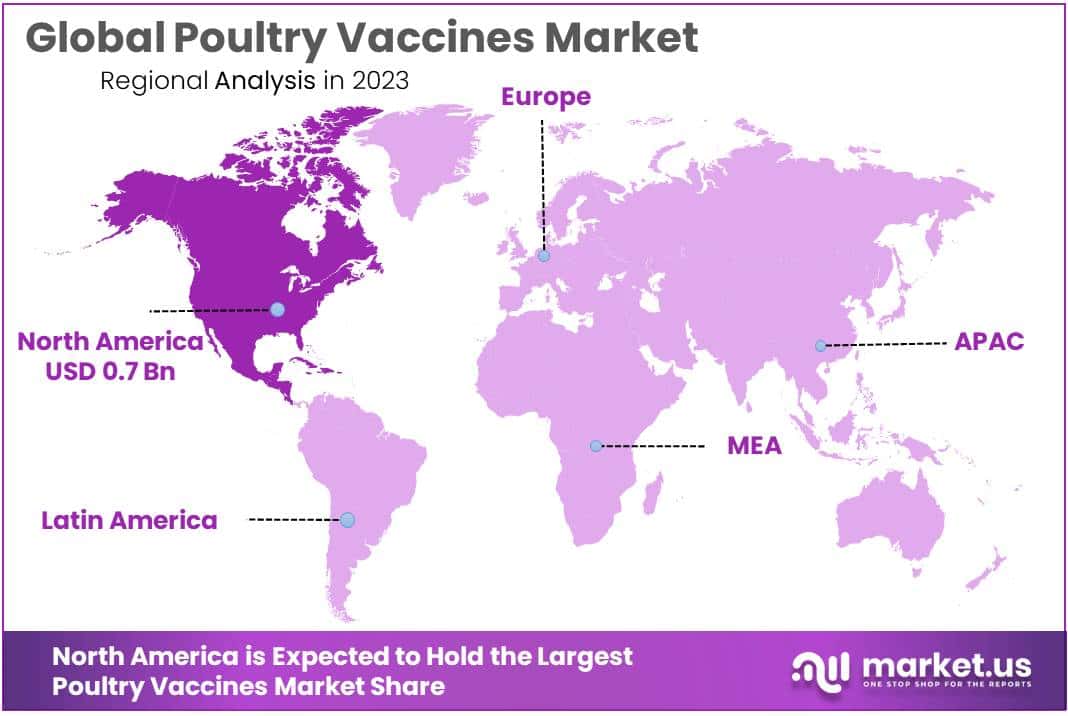
- North America
- US
- Canada
- Mexico
- Europe
- Germany
- UK
- France
- Italy
- Russia
- Spain
- Rest of Europe
- APAC
- China
- Japan
- South Korea
- India
- Rest of Asia-Pacific
- South America
- Brazil
- Argentina
- Rest of South America
- MEA
- GCC
- South Africa
- Israel
- Rest of MEA
Market Players Analysis
The competitive landscape of the poultry vaccines market provides comprehensive insights into each competitor. Details provided for each competitor include company profiles, financial performance analysis, revenue generation figures, market prospect evaluations and investment plans as well as new market strategies that were adopted. In addition, global reach capabilities were measured against manufacturing facilities production capacities strengths/weaknesses product launches product range and application dominance to give an accurate overview. All these points demonstrate each firm’s activities within this specific sector of poultry vaccines market.
Market Key Players
- Boehringer Ingelheim International GmbH
- Ceva
- Zoetis
- Elanco
- Merck & Co., Inc.
- Hester Biosciences Limited
- Vaxxinova International BV
- Venkys India
- Calier
- KM Biologics
- Phibro Animal Health Corporation
Recent Developments
- January 2024: Elanco Announced a collaboration with the Bill & Melinda Gates Foundation to develop and commercialize new poultry vaccines for Africa.
- February 2024: Boehringer Ingelheim International GmbH Launched Ingelvac® CEV HVT+IBD, a combination vaccine for Newcastle Disease and Infectious Bronchitis in poultry.
- August 2023: Hester Biosciences Limited Signed a collaboration agreement with the International Livestock Research Institute (ILRI) to develop new poultry vaccines for Africa.
- July 2023: Vaxxinova International BV Signed a distribution agreement with China Animal Health and Food Safety Administration (CAHSA) for its Marek’s disease vaccine, HVT-IBD vectored vaccine.
- December 2023: Venkys India Launched Vencovac™, a new range of poultry vaccines developed in collaboration with Hester Biosciences.









