


Market Overview
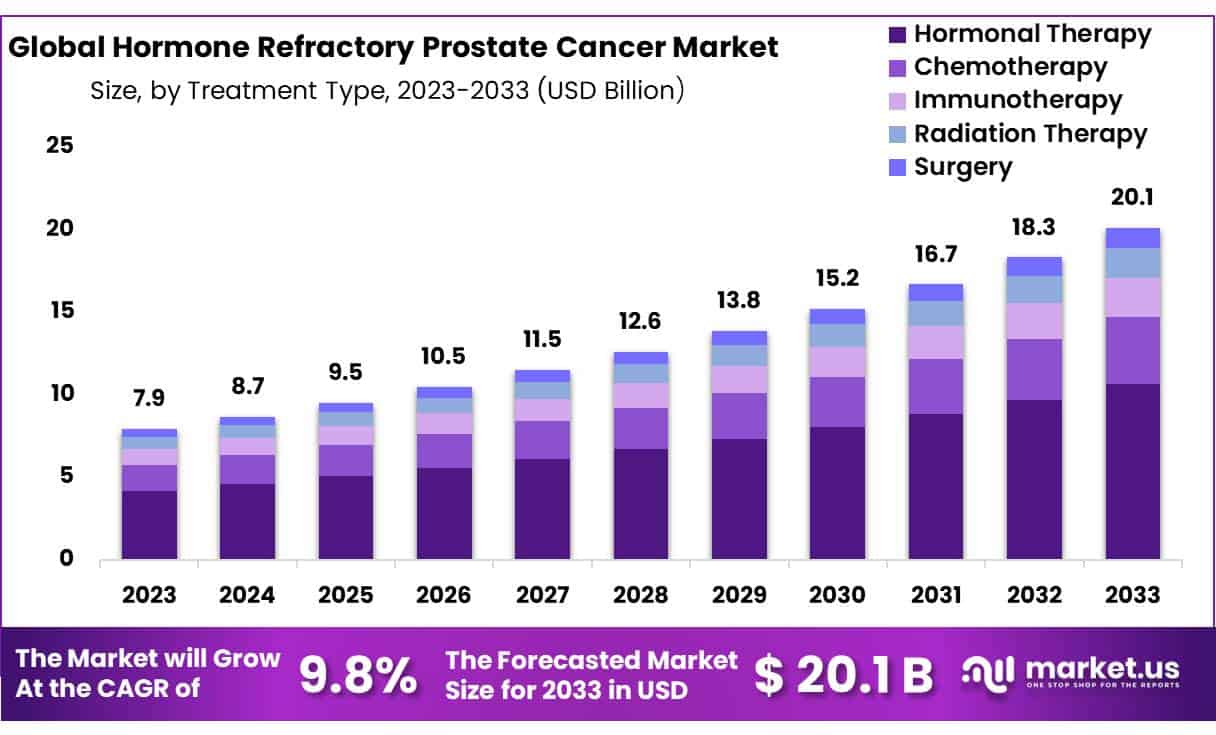
The Global Hormone Refractory Prostate Cancer Market size is expected to be worth around USD 20.1 Billion by 2033 from USD 7.9 Billion in 2023, growing at a CAGR of 9.8% during the forecast period from 2024 to 2033.
Castrate-Resistant Prostate Cancer (CRPC), also known as Hormone Refractory Prostate Cancer (HRPCA), represents a form of prostate cancer that reemerges following hormonal therapy. This variant is currently gaining significant attention within the prostate cancer market landscape. The escalating demand stems from the acute unmet medical necessity linked to constrained survival durations, the rising incidence of HRPCA, and the rapid evolution of treatment alternatives. Consequently, the global market for HRPCA is on the brink of experiencing remarkable expansion.
Chemotherapy was one of the primary approaches utilized to combat cancer in 2019, making up a substantial share of chemotherapy treatment plans deployed worldwide. Cancer’s impact is both domestic and global. Estimations indicate that 1,735,350 new cases of cancer were detected in the US last year, leading to 609,640 fatalities as a direct result.
Annually, cancer incidence stands at 439.2 cases for every 100,000 individuals while cancer deaths account for 163.5 cases per 100000 population. Cancer care expenditures in the US were estimated at USD 147.30 billion in 2017, representing its significant financial burden and underscoring its rising prevalence. A key driver behind market demand stemming from cancer treatments such as immunotherapy is due to improved treatments being available and used more commonly today.
Key Takeaways
- Market Size: Hormone Refractory Prostate Cancer Market size is expected to be worth around USD 20.1 Billion by 2033 from USD 7.9 Billion in 2023.
- Market Growth: The market growing at a CAGR of 9.8% during the forecast period from 2024 to 2033.
- Treatment Type Analysis: Hormonal Therapy are the cornerstone of treatment options available today, accounting for 53% market share.
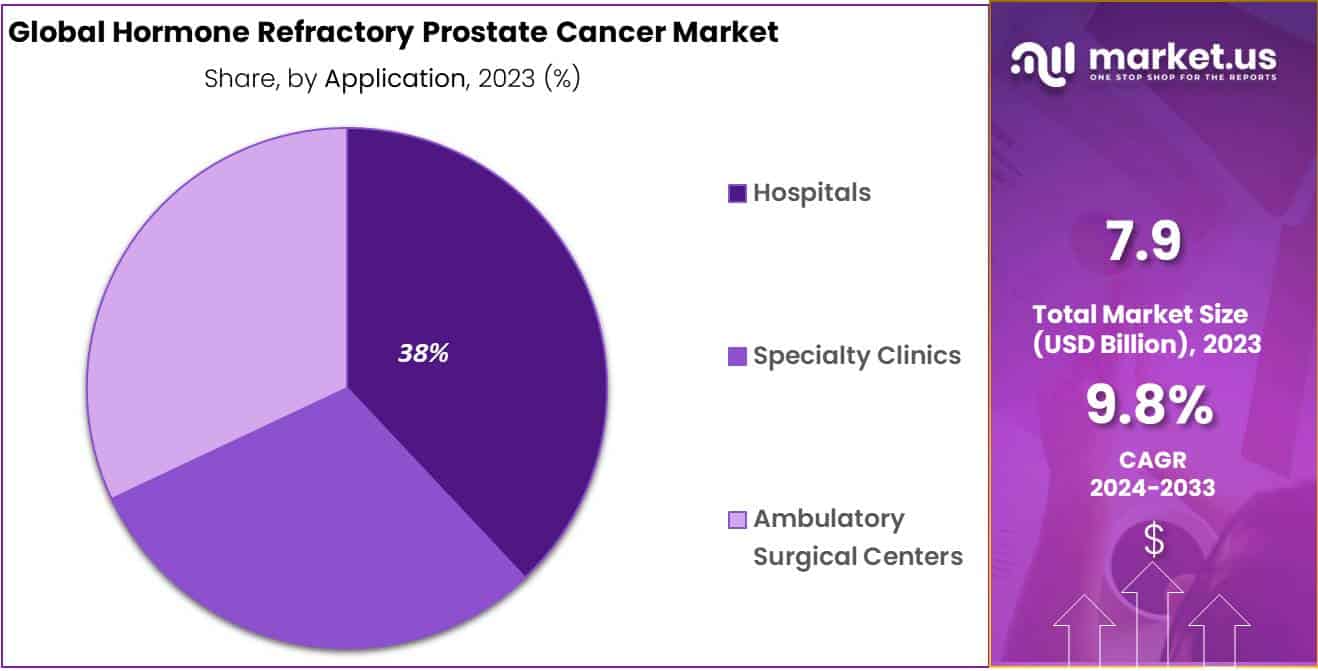
- Application Analysis: Hormone Refractory Prostate Cancer (HRPC) treatment centers stand out as the premier choice, commanding 38% market share in 2023
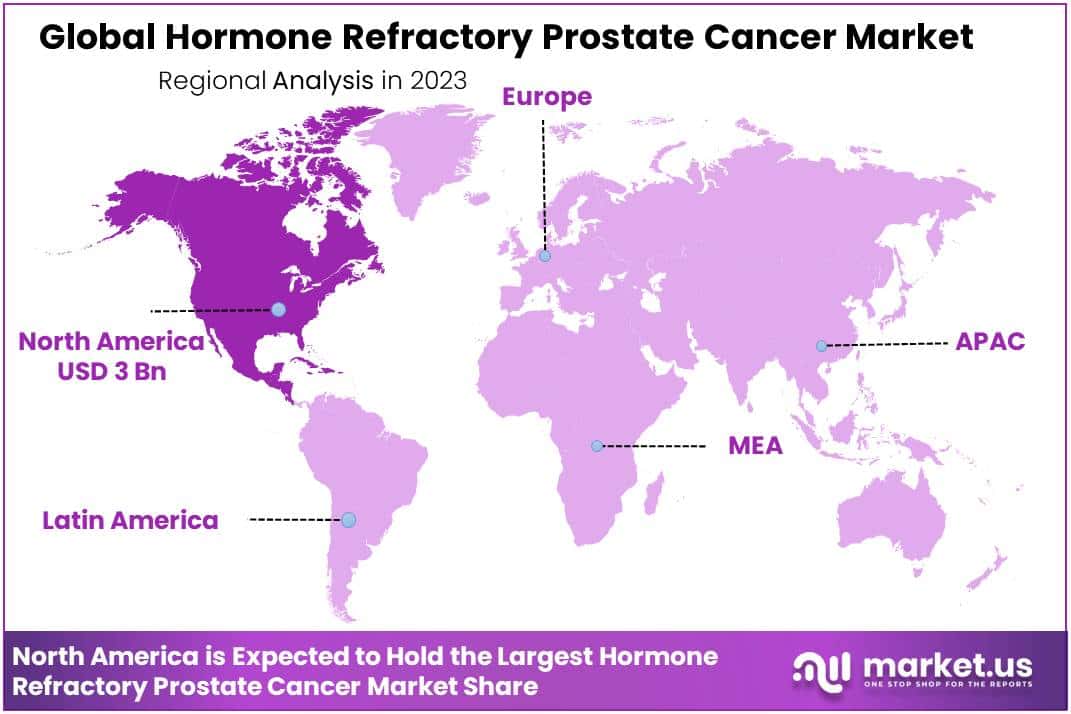
- Regional Analysis: North America held over 38.1% of the regional HRPCA market share due to its advanced treatment landscape in 2023.
Treatment Type Analysis
Hormone Refractory Prostate Cancer (HRPC) treatments dominated by Hormonal Therapy are the cornerstone of treatment options available today, accounting for 53% market share. This remarkable success can be attributed to its efficacy at managing HRPC by suppressing androgen levels and thus hindering tumor growth. Nonetheless, other treatment modalities like Chemotherapy, Immunotherapy, Radiation Therapy and Surgery remain key players within the market as well.
Chemotherapy, with its systemic approach, specializes in targeting rapidly dividing cancer cells to provide palliative care and extend survival rates in advanced stages. Immunotherapy, an emerging field in oncology, harnesses one’s own immune system to recognize and eliminate cancerous cells selectively – this approach shows promising results when used in HRPC cases that do not respond well to conventional treatments.
Radiation Therapy utilizes high-energy radiation beams to deliver localized treatment of prostate tumors with reduced side effects and no invasive procedures needed. Conversely, surgery such as radical prostatectomy or palliative procedures often plays a key role in localized or metastatic cases requiring debulking and/or symptom management.
Application Analysis
Hormone Refractory Prostate Cancer (HRPC) treatment centers stand out as the premier choice, commanding 38% market share in 2023. Hospitals play an essential part in providing holistic healthcare to HRPC patients requiring multidisciplinary approaches that include medical oncology, radiation oncology, urology and supportive services all under one roof.
Specialty clinics play an essential role in prostate cancer management and care management, offering focused expertise and tailored attention tailored to meet each person’s individual needs. Many specialize in oncology or urology to foster an atmosphere conducive to consultations, advanced treatment methods and clinical trials – these clinics may have only a smaller market share but still play an essential part.
Ambulatory Surgical Centers (ASCs), while only accounting for a relatively minor share of market revenue, play an invaluable role in providing outpatient surgical interventions to HRPC patients. ASCs feature efficient processes, shorter recovery periods, and cost-cutting alternatives for certain procedures – contributing significantly to an efficient system for treating HRPC.
Key Market Segments
Treatment Type
- Chemotherapy
- Hormonal Therapy
- Immunotherapy
- Radiation Therapy
- Surgery
Application
- Hospitals
- Specialty Clinics
- Ambulatory Surgical Centers
Drivers
Advancements in Therapeutic Approaches
One of the primary forces driving growth in the Hormone Refractory Prostate Cancer market is advances made in therapeutic strategies. Recent years have witnessed an immense transformation in HRPC treatment with the advent of innovative therapies that target specific pathways associated with cancer development. Recently approved new-generation hormonal agents such as Abiraterone Acetate and Enzalutamide have shown improved survival outcomes among HRPC patients. These agents, by inhibiting androgen receptor signaling pathways, present an alternative therapy option to patients whose traditional hormonal treatments no longer seem effective. Their impact has been substantial; one pivotal clinical trial with Abiraterone Acetate demonstrated an average overall survival increase of 4.4 months over placebo treatment.
Trend
Increasing Incidence of Prostate Cancer
Growing Prostate Cancer Prostate cancer has long been one of the leading forms of male cancer; in 2018 alone it affected an estimated 1.3 million men according to World Cancer Research Fund International figures. As its prevalence and an aging population increase further together, hormone-refractory cases will likely also rise dramatically driving an urgent demand for effective therapeutic options and research and development efforts focused on this field.
Restraint
High Treatment Costs
Unfortunately, HRPC market is confronted by several challenges, most significantly high treatment costs. Innovative therapies often impose an enormous financial strain on healthcare systems and patients alike – for instance, the cost of new hormonal agents such as Provera can exceed $100,000 per patient per year making access less accessible in low and middle-income countries than expected; as a result, this financial barrier inhibits market expansion significantly and underscores its growth potential; hence creating the necessity of cost-effective options with financial assistance programs to make treatment accessible and increase market growth potential and growth potential further.
Opportunities
Biomarker Development and Personalized Medicine
Biomarker research and personalized medicine offer significant opportunities in HRPC markets worldwide. Biomarkers provide invaluable insight into a disease’s biology, helping physicians and healthcare practitioners pinpoint patients most likely to benefit from specific therapies. Personalized medicine uses biomarkers to customize treatments based on each patient’s profile, increasing efficiency while mitigating side effects. Personalized medicine offers great promise in HRPC, with ongoing research to identify biomarkers for response to existing treatments and potential new therapeutic targets. Not only could personalized medicine improve patient outcomes; its cost-cutting potential lies in allocating resources toward treatments with the highest likelihood of success.
Regional Analysis
Market analysis spans various regions, such as North America, Europe, South America, Asia Pacific and Middle East/Africa. North America held over 38.1% of the regional HRPCA market share due to its advanced treatment landscape in 2023.
Asia-Pacific is projected to experience the highest compound annual growth rate over its forecast period, at 9.76% compound annual compound annual growth rate over this timeframe. India and China, two major economies worldwide, play a central role in driving its expansion. Rising disposable income has contributed to an increased demand for improved healthcare treatment options that reflect an increasing need for improved quality of life; rising educational attainment levels further promote awareness about cancer types as well as appropriate treatments, driving market expansion.
Key Regions
- North America
- The US
- Canada
- Mexico
- Western Europe
- Germany
- France
- The UK
- Spain
- Italy
- Portugal
- Ireland
- Austria
- Switzerland
- Benelux
- Nordic
- Rest of Western Europe
- Eastern Europe
- Russia
- Poland
- The Czech Republic
- Greece
- Rest of Eastern Europe
- APAC
- China
- Japan
- South Korea
- India
- Australia & New Zealand
- Indonesia
- Malaysia
- Philippines
- Singapore
- Thailand
- Vietnam
- Rest of APAC
- Latin America
- Brazil
- Colombia
- Chile
- Argentina
- Costa Rica
- Rest of Latin America
- Middle East & Africa
- Algeria
- Egypt
- Israel
- Kuwait
- Nigeria
- Saudi Arabia
- South Africa
- Turkey
- United Arab Emirates
- Rest of MEA
Market Player Analysis
The market analysis delineates the principal entities participating in the Hormone Refractory Prostate Cancer Market within sections dedicated to the competitive landscape and company profiles. This evaluation scrutinizes the offerings, financial disclosures, pivotal advancements, market strategies, positioning, geographic reach, and distinctive attributes of the foremost market players. Additionally, an examination of strengths, weaknesses, opportunities, and threats (SWOT analysis), critical success factors, strategic focuses, and competitive pressures for the leading three to five companies is presented.
The document also accommodates flexibility in customizing the roster of companies according to specific client needs. Within the competitive landscape segment, the report provides insights into the top five firms’ rankings, recent activities including partnerships, mergers, acquisitions, product introductions, the geographical and industry footprint based on market dynamics and the Ace matrix.
Market Key Players
- Astellas Pharma Inc
- AstraZeneca plc
- Johnson & Johnson
- Sanofi S.A.
- Novartis AG
- Pfizer Inc.
- Bayer AG
- Merck & Co.
- Eli Lilly and Company
- Takeda Pharmaceuticals
Recent Developments
- AstraZeneca plc: While not specifically targeting HRPCA, Imfinzi, an immunotherapy drug, has shown promise in clinical trials for treating metastatic castration-resistant prostate cancer (mCRPC), which often falls under the HRPCA umbrella. AstraZeneca is actively exploring the potential of Imfinzi in this patient population.
- Johnson & Johnson: J&J remains a major player with Zytiga, another established androgen receptor signaling inhibitor for HRPCA. The company is currently focusing on expanding access programs and conducting research to explore potential combination therapies involving Zytiga.
- Pfizer Inc.: Pfizer co-markets Xtandi with Astellas, making it a key player in the HRPCA market. They are actively involved in expanding access programs and exploring combination therapies involving Xtandi.
- Bayer AG: Bayer acquired Noria Therapeutics and PSMA Therapeutics in 2021, gaining access to promising investigational drugs targeting PSMA-positive prostate cancer, including HRPCA. The company is actively developing these drugs and expects to initiate clinical trials shortly.









