


Market Overview
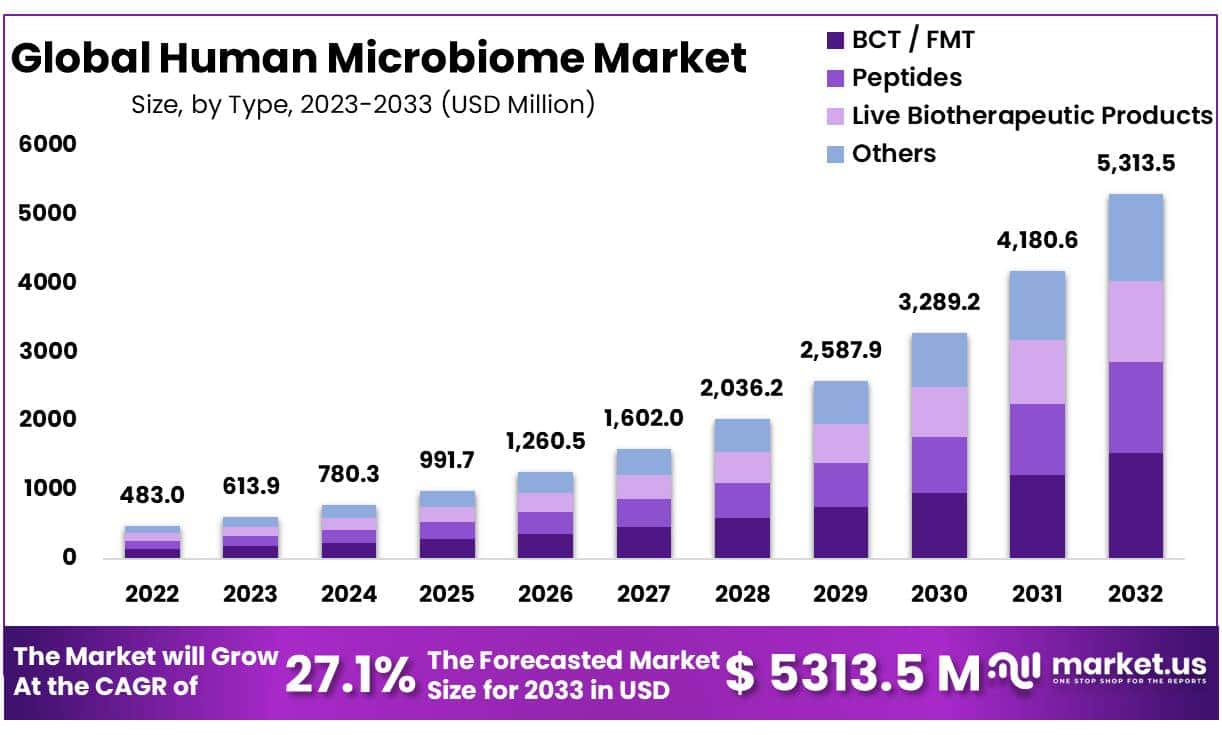
The Global Human Microbiome Market size is expected to be worth around USD 5,313.5 Million by 2033 from USD 483.0 Million in 2023, growing at a CAGR of 27.1% during the forecast period from 2024 to 2033.
Human microbiota includes trillions of beneficial microorganisms living within each person – most notably bacteria in their gut flora – which rely on each other for survival and support. Over time these microbes such as bacteria, fungi, and viruses may become pathogenic. Changes to their genetic activity and metabolic processes within their gut environment may cause abnormal immune reactions against substances and tissues typically found within the body. Globally, numerous microbiome projects have been initiated to investigate their roles and impact on human health.
The human microbiome market has experienced exponential growth due to factors like rising lifestyle-related diseases, increased emphasis on microbiome-based therapies and developments in metagenomics and next-generation sequencing technologies. Unfortunately, market growth remains restricted by stringent regulatory standards and limited understanding.
Growing financial support and governmental initiatives aimed at backing research are key drivers expected to boost market expansion. For example, according to the National Institute of Health, the Federal Government of the United States allocated USD 864 million towards microbiome research and development in 2021, with projections to increase this investment to USD 903 million in 2022. This significant governmental funding is a major catalyst for market growth throughout the forecast period. Nonetheless, the market’s advancement may be hindered by the scarcity of in-depth research and strict regulatory measures during the same timeframe.
Key Takeaways
- Market Size: Human Microbiome Market size is expected to be worth around USD 5,313.5 Million by 2033 from USD 483.0 Million in 2023.
- Market Growth: The market growing at a CAGR of 27.1% during the forecast period from 2024 to 2033.
- Type Analysis: Bacterial Consortia Transplantation (BCT), or Fecal Microbiota Transplantation (FMT), has grown into an important segment, accounting for 29% of the market share.
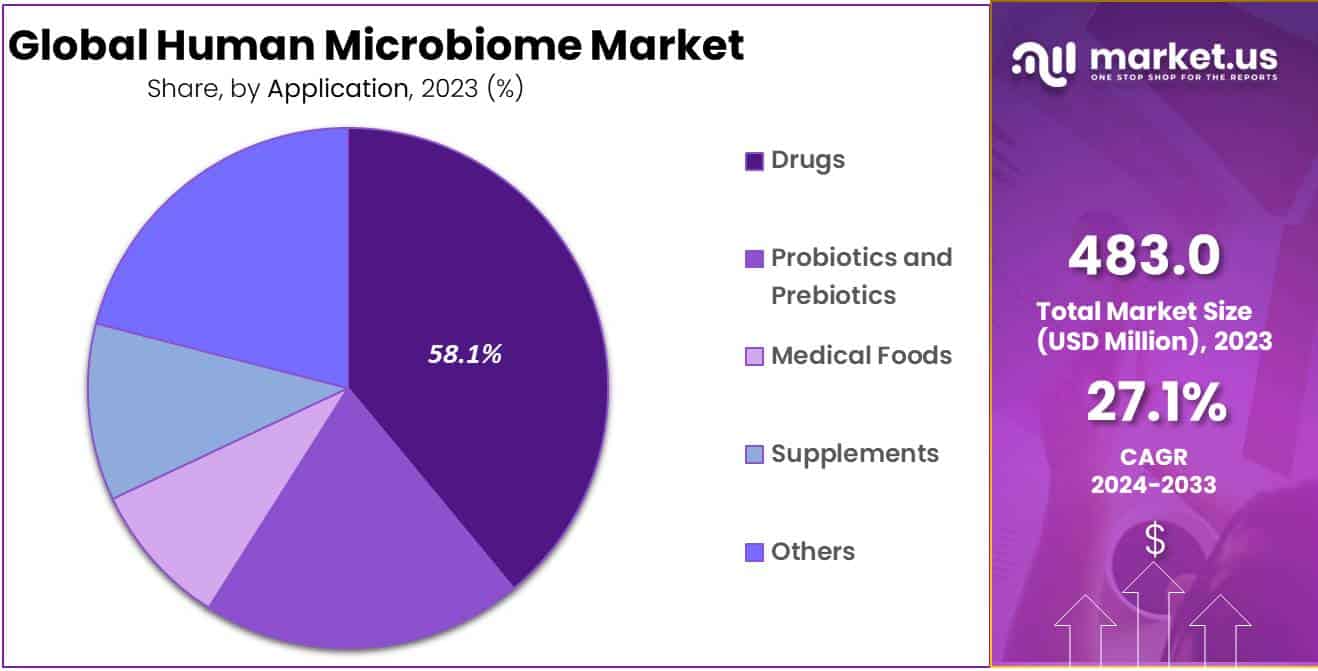
- Product Analysis: Pharmaceuticals dominate the Human Microbiome Market with a 39% market share.
- Application Analysis: The Human Microbiome Market has experienced exponential expansion, particularly within its therapeutics sector, which now accounts for 68% of the total market share.
- Disease Type Analysis: Infectious diseases account for 26% of the Human Microbiome Market in 2023.
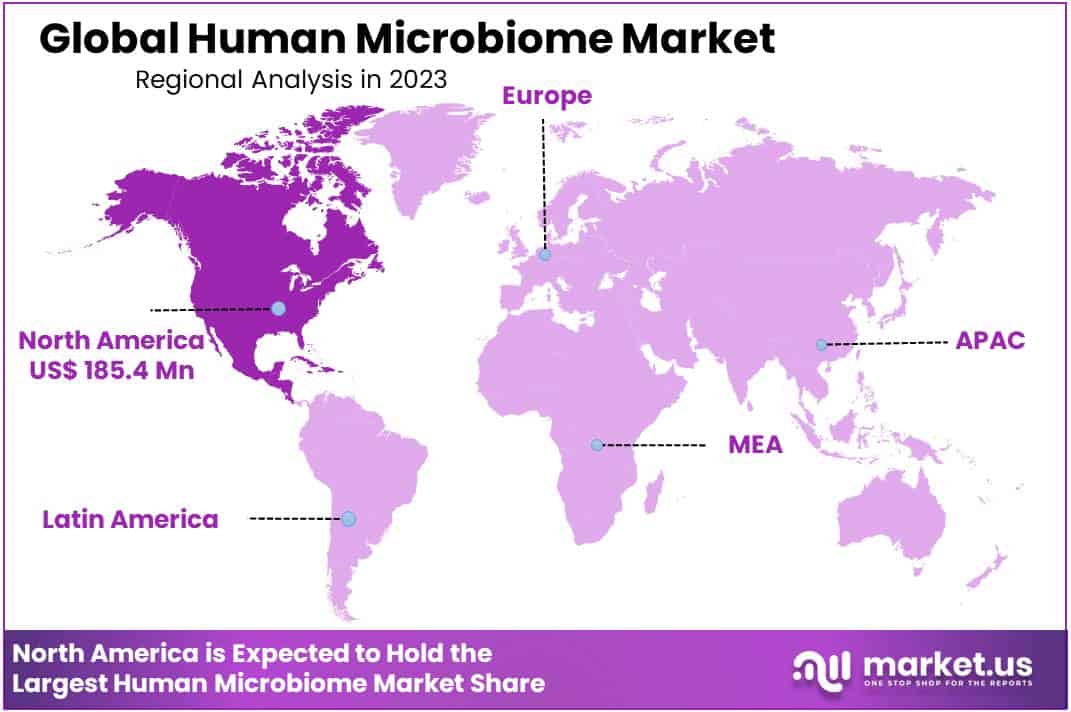
- Regional Analysis: North America currently leads the human microbiome market, accounting for 38.4% share.
Type Analysis
Human Microbiome Market growth has experienced phenomenal momentum, spurred on by innovative therapeutic approaches that aim to harnessing its full potential. One such therapeutic approach, known as Bacterial Consortia Transplantation (BCT), or Fecal Microbiota Transplantation (FMT), has grown into an important segment, accounting for 29% of the market share. BCT involves transplanting beneficial bacteria communities from healthy donors into patients’ gastrointestinal tracts as an effective therapy against various conditions; particularly Clostridioides difficile infection; with proven high success rates over time and growing potential applications in other diseases as research expands its applications further.
Additionally, the market is exploring the therapeutic potential of peptides and Live Biotherapeutic Products (LBPs). Peptides have long been studied for their antimicrobial and immune modulating capabilities; now more research is being conducted into how they may influence microbiomes to promote health. Live bacterial products (LBPs), designed to prevent, treat, or cure disease, represent a fast-emerging segment within the microbiome therapeutic space. LBPs seek to restore natural balance within microbiomes by targeting individual strains with live organisms aimed at treating various conditions; such efforts demonstrate innovative strategies being employed by microbiome researchers for therapeutic benefit – reflecting an ever increasing appreciation of its role in health and disease.
Product Analysis
Pharmaceuticals dominate the Human Microbiome Market with a 39% market share. This indicates the pivotal role they play in modulating our human microbiome to treat and prevent many different diseases, while probiotics, prebiotics, medical food supplements, and supplements also have significant influences on microbiome composition and function.
Probiotics and prebiotics have emerged as powerful tools to restore and sustain a healthy microbial balance in our bodies. Probiotics provide beneficial bacteria directly into the system while prebiotics provide the essential nutrients for their growth; together, this fosters an environment conducive to maintaining an abundant microbiome.
Medical food designed specifically to address specific nutritional requirements associated with specific conditions fits seamlessly into this market. By modulating microbiomes and helping manage conditions that traditional drugs cannot fully address, these medical foods offer another viable solution to their management. Supplements, which encompass a wide array of vitamins, minerals, and bioactive compounds such as probiotics, can supplement these interventions and support the microbiome indirectly by improving overall health conditions that foster balanced microbe ecosystems.
Application Analysis
The Human Microbiome Market has experienced exponential expansion, particularly within its therapeutics sector, which now accounts for 68% of the total market share. This staggering statistic underscores a surge in investment into harnessing microbiomes for therapeutic use – reflecting a growing recognition of their vital role in human health and disease, providing innovative treatment avenues across numerous conditions such as digestive issues, infections, and even mental health concerns.
Alongside therapeutic advances, diagnostics represent an essential aspect of microbiome research and market development. The development of diagnostic tools and technologies that assess the composition and function of microbiomes is fundamental for understanding disease mechanisms as well as finding new therapeutic targets. Diagnostic tests are integral components of personalized medicine approaches, enabling customized treatments based on each person’s microbiome profiles. Therapeutics and diagnostics are now working in harmony to offer more nuanced understandings of how microbiomes impact health and disease, ushering in an era in medical science where microbiome-based interventions can be tailored precisely to individual patient needs for maximum efficacy while mitigating adverse side effects.
Disease Type Analysis
Infectious diseases account for 26% of the Human Microbiome Market, showing its pivotal role in modulating immune system response to infectious agents and revolutionizing treatment paradigms. Given this knowledge that the balance of microbial communities plays a crucial role in pathogen resistance and immune modulation, research and development efforts to use such interactions against infectious diseases have proliferated rapidly.
Beyond infectious diseases, microbiome research insights are also helping treat autoimmune disorders, gastrointestinal disorders, and cancer patients – each benefitting from microbiome research insights. Autoimmune disorders – where an immune system misfires against its own body – are being assessed through microbiome dysbiosis for therapeutic intervention purposes, and gastrointestinal disorders directly related to gut microbiome composition and function are being targeted with innovative treatments designed to restore balance within this ecosystem. Meanwhile, cancer researchers are discovering more and more how modulation could complement traditional approaches when used alongside cancer therapies like chemotherapy or radiation.
Market Key Segments
Type
- Bacterial Consortia Transplantation (BCT)/Fecal Microbiota Transplantation (FMT)
- Peptides
- Live Biotherapeutic Products
- Other Types
Product
- Drugs
- Probiotics and Prebiotics
- Medical Foods
- Supplements
- Others
Application
- Therapeutics
- Diagnostics
Disease Type
- Infectious Diseases
- Autoimmune Disorder
- Gastrointestinal Disorders
- Cancer
- Other Diseases
Driving Factors
Rising Chronic Disease Prevalence Rising Incidence
The global increase in chronic diseases like diabetes, obesity and gastrointestinal disorders has had a direct effect on human microbiome market growth. With an estimated 422 million people worldwide living with diabetes according to the World Health Organization, demand for new and innovative treatment solutions is more pressing than ever. The human microbiome – composed of trillions of microbes living on and in our bodies – plays an essential role in both human health and disease. Studies have revealed how imbalances in our microbiomes can play a part in chronic conditions forming, making this an attractive target for therapeutic interventions.
Advancements in Microbiome Research
Over the past decade, microbiome research has made great strides thanks to advances in sequencing technologies and bioinformatics. These innovations have brought greater understanding to human microbiome function and impact, which has in turn driven increased investment from both public and private sectors towards microbiome-based therapies and diagnostics that may offer novel solutions for managing chronic conditions that cannot be adequately treated with current therapies.
Trending Factors
Personalized Medicine and Microbiome Therapeutics mes Shift to Personalized Medicine
The human microbiome market has led the charge in moving toward personalized medicine, where treatments and preventive measures are tailored specifically to individual genetic makeup, lifestyle habits and microbiome composition. This targeted approach has proven particularly successful with conditions like IBD/IBS where microbiome composition varies significantly among patients, which allows therapies to become more effective with reduced side effects thus improving patient outcomes and satisfaction.
Development of Microbiome-Based Therapeutics
With increasing awareness of the microbiome’s role in health and disease, an array of novel microbiome-based therapeutics has emerged; from probiotics and prebiotics to more sophisticated microbiota products. FMT (faecal microbiota transplantation) has shown promise in treating Clostridium difficile infections, and research is being done into its potential efficacy in other conditions as well. Companies are developing engineered bacteria designed to directly deliver therapeutic agents directly into the gut for treatment, offering another avenue of therapy. This trend illustrates how increasingly recognized microbiomes as sources of therapeutic targets and potential solutions are becoming.
Restraint
Regulatory and Scientific Challenges
Complex Regulatory Landscape: One of the primary challenges to the human microbiome market is its complex regulatory landscape. As microbiome-based products often blur between drugs, biologics, and food supplements, they present unique challenges for regulatory authorities ensuring their safety, efficacy, and quality – developing new regulatory frameworks can be slow and uncertain processes, potentially delaying their availability to patients and potentially hindering development and commercialization of therapies using microbiomes altogether.
Scientific and Technical Challenges
Although advancements in microbiome research are significant, numerous scientific and technical obstacles remain. Deciphering the complex relationships between the microbiome and human host, especially how such interactions influence health and disease outcomes is no small undertaking. Furthermore, conducting microbiome-based clinical trials with individual participants being difficult given its variability across time. Such challenges could slow research progress while inhibiting market expansion potential.
Opportunity
Expanding Applications in Healthcare
Broader Applications in Healthcare While much attention has been directed toward gastrointestinal disorders, microbiome research is finding applications beyond this domain. Microbiome applications are increasing across multiple medical specializations such as oncology, dermatology and mental health – with researchers exploring its effect on modulating immune system responses to cancer therapies as a possible means for improving treatment efficacy; similarly skin microbiomes are being researched in relation to conditions like acne and eczema that could provide novel topical solutions.
Diagnostic and Predictive Tools
Beyond therapeutic applications, the human microbiome holds great promise as a source of diagnostic and predictive tools. By analyzing an individual’s composition and function of their microbiome, it may be possible to predict susceptibility to specific diseases, monitor disease progression, assess response to treatment plans and monitor response to treatment, potentially leading to earlier interventions, tailored treatments plans, improved outcomes – representing an opportunity for the market impacting healthcare beyond direct therapeutic applications.
Regional Analysis
North America currently leads the human microbiome market, accounting for 38.4% share, attributable to its robust healthcare infrastructure, increasing investments from major players in advanced technologies, drug development processes becoming more frequent, and an uptick in research activities across Asia-Pacific region. Asia-Pacific however is expected to experience remarkable growth between 2024-2033 due to governmental initiatives to increase awareness, increase in medical tourism numbers and research initiatives, lifestyle-related and autoimmune disease cases increasing and rising demand for high-quality healthcare services.
The report’s country-specific analysis provides insight into market dynamics and regulatory changes influencing current and future market trends, employing analytical tools such as downstream, upstream value chain analyses, technical trends analysis, Porter’s five forces analysis and case studies to predict market scenarios in individual countries. Furthermore, this section analyzes global brand presence, competition from local, domestic brands, tariffs, trade routes on market forecasts in each nation.
Key Regions
- North America
- The US
- Canada
- Mexico
- Western Europe
- Germany
- France
- The UK
- Spain
- Italy
- Portugal
- Ireland
- Austria
- Switzerland
- Benelux
- Nordic
- Rest of Western Europe
- Eastern Europe
- Russia
- Poland
- The Czech Republic
- Greece
- Rest of Eastern Europe
- APAC
- China
- Japan
- South Korea
- India
- Australia & New Zealand
- Indonesia
- Malaysia
- Philippines
- Singapore
- Thailand
- Vietnam
- Rest of APAC
- Latin America
- Brazil
- Colombia
- Chile
- Argentina
- Costa Rica
- Rest of Latin America
- Middle East & Africa
- Algeria
- Egypt
- Israel
- Kuwait
- Nigeria
- Saudi Arabia
- South Africa
- Turkey
- United Arab Emirates
- Rest of MEA
Market Player Analysis
The competitive analysis of the human microbiome market offers insights into each competitor, covering various aspects. These aspects include an overview of the company, its financial performance, revenue achievements, market potential, investments in research and development, initiatives for entering new markets, worldwide presence, locations and capabilities of production sites and facilities, production volumes, strengths and weaknesses of the company, details of product launches, and the range and scope of products offered, as well as their dominance in specific applications. The information provided pertains exclusively to the companies’ activities within the human microbiome market.
- Seres Therapeutics
- Biomesense
- Microbiotica
- Infant Bacterial Therapeutics AB
- Vedanta Biosciences Inc.
- Second genome therapeutics
- 4D Pharma Ferring Inc
- Enterome
- BiomX
- MaaT Pharma
- Azitra
- Illumina Inc.
- Locus Biosciences Inc.
- Finch Therapeutics Group Inc.
- Rebiotix Inc
- Servatus Ltd
- Microbiome Research Pvt. Ltd
- AOBiome
- Axial Therapeutics Inc
- Biomica
Recent Developments
- Seres Therapeutics: In August 2023, Seres received FDA approval for SER-109, the first ever FDA-approved microbiome therapy, for the treatment of recurrent Clostridioides difficile (C. Diff) infection in adults. This marks a significant milestone for the human microbiome field.
- Biomesense: Biomesense is developing BMS986302, a live bacterial therapeutic candidate, for the treatment of Inflammatory Bowel Disease (IBD). The company is currently in Phase 2 clinical trials.
- Microbiotica: Microbiotica completed a Phase 2a clinical trial for MET-1, targeting Non-alcoholic Fatty Liver Disease (NAFLD), in October 2023. The company is planning to initiate a Phase 2b trial in 2024.
- 4D Pharma (Ferring Inc.): 4D Pharma, acquired by Ferring in 2022, is developing MRx-4DP0004, a live bacterial therapeutic candidate, for the treatment of Irritable Bowel Syndrome (IBS). The company is currently in Phase 2 clinical trials.
- BiomX: BiomX completed a Phase 1 clinical trial for BX002, a bacteriophage therapeutic candidate, for the treatment of Staphylococcus aureus infections, in August 2023.









