


Report Overview
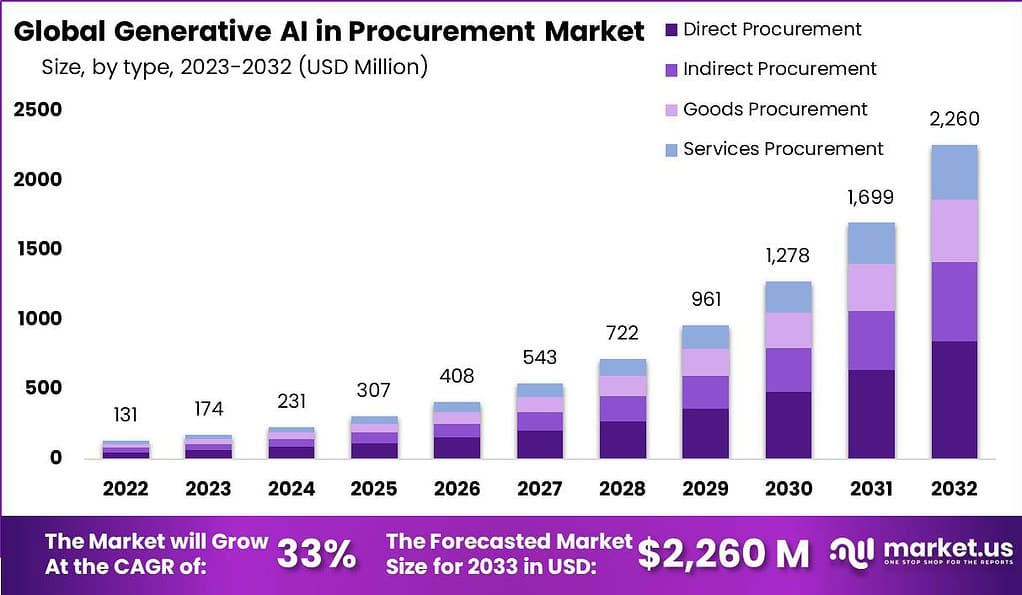
The Global Generative AI in Procurement Market size is expected to be worth around USD 2,260 Million By 2032, from USD 174 Million in 2023, growing at a CAGR of 33% during the forecast period from 2024 to 2033.
Generative AI is increasingly being integrated into procurement processes, transforming the landscape of this critical business function. By automating and enhancing decision-making, generative AI significantly streamlines sourcing, contract management, and supplier relationships. It enables procurement systems to generate predictive insights, optimize inventory levels, and customize purchasing strategies based on real-time data analysis. This integration not only increases efficiency but also helps in minimizing risks and reducing costs.
The market for generative AI in procurement is expanding rapidly, driven by the need for agility and precision in supply chain operations. This growth is further accelerated by digital transformations across various industries, pushing companies to adopt smarter, AI-driven solutions. Investment in generative AI technologies is increasing as businesses recognize the potential for significant returns through enhanced operational efficiencies and reduced procurement costs.
The demand for generative AI in procurement has grown rapidly as organizations recognize the potential of AI-driven tools to enhance efficiency, reduce costs, and drive strategic value. These solutions leverage advanced algorithms and machine learning techniques to analyze vast amounts of data, including historical procurement data, market trends, supplier performance metrics, and contract information. By processing and interpreting this data, generative AI models can generate valuable insights, recommendations, and predictions, empowering procurement professionals to make more informed decisions.
One of the key drivers of the generative AI in procurement market is the increasing need for accurate demand forecasting and inventory optimization. By leveraging AI-powered analytics, organizations can better understand customer demand patterns, anticipate future needs, and optimize their inventory levels accordingly. This not only reduces the risk of stockouts or excess inventory but also improves customer satisfaction and overall cost efficiency.
A survey conducted by Ardent Partners found that around 75% of companies face challenges in effectively using analytics in their procurement operations. This problem stems from various factors, including poor data quality, a shortage of analytical skills, and inadequate technology.
The Oxford College of Procurement and Supply highlights the potential of AI to reduce procurement process time by up to 60%. This means that tasks like data analysis, supplier communication, and contract management can be completed much faster, leading to improved operational efficiency and productivity.
A study by Capgemini emphasizes the strategic advantage of integrating ChatGPT into inventory planning. By reducing instances of stockouts by 3-5%, generative AI not only ensures product availability but also contributes to a more responsive and dependable supply chain.
Key Takeaways
- The Generative AI in Procurement market is experiencing significant growth, with projections estimating its value to reach USD 2,260 million by 2032, exhibiting a robust CAGR of 33% over the forecast period.
- The Generative AI Market size is expected to be worth around USD 255.8 Billion by 2033, from USD 13.5 Billion in 2023, growing at a CAGR of 34.2% during the forecast period from 2024 to 2033.
- Direct procurement, generative AI plays a pivotal role, capturing over 37.5% of the market share in 2022.
- Supplier identification is another critical application area for generative AI within procurement, accounting for more than 25% of the market share in 2022.
- In 2022, North America held a dominant market position in the Generative AI in Procurement market, capturing more than a 45.8% share.
Type Analysis
In 2022, the Direct Procurement segment held a dominant market position within the Generative AI in Procurement market, capturing more than a 37.5% share. This leadership can be attributed primarily to the critical role that direct procurement plays in the core operations of manufacturing and production industries. Direct procurement involves the acquisition of goods and materials that are directly incorporated into the production process of goods and services.
This segment’s significance is heightened by the increasing reliance on AI technologies to optimize supply chain dynamics, reduce procurement costs, and enhance operational efficiency. Generative AI has been instrumental in streamlining supplier selection, predictive inventory management, and dynamic pricing strategies, which are crucial for maintaining competitiveness in fast-paced markets.
Furthermore, the integration of Generative AI into direct procurement allows organizations to achieve greater transparency and risk management in their supply chains. By leveraging AI-driven analytics, companies can gain deeper insights into supplier performance, material quality, and delivery timelines, thereby enabling more informed decision-making.
This strategic application of AI not only supports compliance and sustainability initiatives but also contributes to a more resilient procurement framework. As industries continue to evolve towards digitization and automation, the demand for AI-enabled direct procurement solutions is expected to see robust growth, further cementing its leading position in the market.
Generative AI also enhances content generation within the direct procurement process, enabling the automation of contract creation, amendment, and management. This not only speeds up the procurement cycle but also reduces human errors and enhances compliance with regulatory standards and corporate policies.
Additionally, AI-driven systems can generate real-time reports and analytics, offering procurement teams actionable insights that drive strategic business decisions. These advancements highlight the critical role of Generative AI in transforming the landscape of direct procurement, promising significant efficiency gains and cost savings for businesses.
Application Analysis
In 2022, the Supplier Identification segment held a dominant market position within the Generative AI in Procurement market, capturing more than a 25% share. This segment’s prominence is driven by the increasing complexity and globalization of supply chains, which necessitate sophisticated tools for identifying and vetting potential suppliers.
Generative AI enhances this process by utilizing vast amounts of data to provide detailed insights into supplier capabilities, reliability, and compatibility with the buying organization’s requirements. This capability is particularly valuable in industries where procurement decisions directly impact production quality, regulatory compliance, and market competitiveness.
The adoption of Generative AI in supplier identification allows companies to automate and refine the process of sourcing new suppliers. By leveraging AI-driven analytics, organizations can evaluate suppliers across multiple dimensions, such as cost, capacity, sustainability practices, and past performance. This multidimensional assessment helps procurement teams make data-informed decisions that align with strategic objectives and operational needs.
Additionally, Generative AI can identify potential risks and issues in the supply chain before they become disruptive, providing a proactive approach to supplier management. Generative AI also contributes to dynamic supplier engagement by generating real-time communications and reports, facilitating quicker and more effective negotiations and partnerships.
This technology can predict supplier market trends and behaviors, enabling procurement teams to anticipate changes and adapt their strategies accordingly. The continual evolution and improvement of AI algorithms further enhance the accuracy and effectiveness of supplier recommendations, making the Supplier Identification segment a critical component of modern procurement strategies.

Key Market Segments
Based on Type
- Direct Procurement
- Indirect Procurement
- Goods Procurement
- Services Procurement
Based on Application
- Supplier Identification
- Product/Service Recommendation
- Negotiation Support
- Risk Assessment
- Contract Analysis
- Fraud Detection
- Predictive Modeling
- Other Applications
Top 5 Use Cases
- Supplier Relationship Management Generative AI can analyze historical data and current market trends to predict supplier behavior, helping procurement teams anticipate and react to potential changes in supplier performance. For example, AI can forecast when a supplier might increase prices, allowing for proactive renegotiation of contracts or exploration of alternative suppliers.
- Contract Analysis and Generation AI can streamline the contract management process by automatically generating, reviewing, and updating contracts based on predefined criteria and legal requirements. This reduces the time and effort needed for contract negotiations and ensures compliance with regulations. Generative AI can also extract key information from existing contracts, such as payment terms and delivery schedules, for easier management and monitoring.
- Demand Forecasting By analyzing historical procurement data along with external factors like market trends and economic indicators, generative AI can provide accurate demand forecasts. This helps procurement teams optimize inventory levels, reduce excess stock, and improve overall supply chain efficiency. Retail chains, for instance, can use AI to predict product demand during specific seasons or events.
- Spend Analysis and Optimization Generative AI tools can analyze vast amounts of spend data to identify patterns and opportunities for cost savings. These tools can provide insights into spending behavior, highlight areas of potential waste, and suggest more cost-effective procurement strategies. This enables organizations to make data-driven decisions to optimize their procurement spend.
- Compliance and Risk Management Generative AI helps in monitoring procurement processes for compliance and identifying potential fraudulent activities. It can analyze past incidents of non-compliance to recognize similar patterns and take corrective actions. Additionally, AI can assess supplier risk by evaluating factors such as financial stability, geopolitical risks, and market conditions, providing a comprehensive risk management framework.
Benefits of Using Generative AI in Procurement
- Automation of Routine Tasks Generative AI can automate repetitive and time-consuming tasks such as document creation, purchase order generation, and contract management. This automation helps reduce manual errors and frees up procurement professionals to focus on more strategic activities, enhancing overall efficiency and productivity.
- Improved Decision-Making By synthesizing large volumes of data from various sources, generative AI provides procurement teams with comprehensive insights and actionable recommendations. This capability supports better decision-making by identifying trends, forecasting demand, and optimizing supplier selection.
- Enhanced Risk Management Generative AI aids in proactive risk management by continuously monitoring and analyzing risk factors such as supplier performance, market conditions, and geopolitical events. It can predict potential disruptions and suggest mitigation strategies, helping organizations manage risks more effectively.
- Cost Savings Through improved efficiency and strategic insights, generative AI helps reduce procurement costs. AI-driven spend analysis and supplier negotiations can identify cost-saving opportunities and enhance procurement processes, leading to significant financial benefits.
- Increased Innovation Generative AI fosters innovation by enabling the development of new products, services, and capabilities. Its ability to generate creative content and simulate complex scenarios allows organizations to explore new procurement strategies and improve existing processes, driving continuous improvement and competitive advantage.
Driver
Enhancing Operational Efficiency and Strategic Decision-Making
Generative AI significantly boosts operational efficiency in procurement by automating routine tasks and offering strategic decision-making insights. For instance, AI tools can streamline processes like contract reviews and purchase order generation, reducing the need for manual intervention and allowing procurement professionals to focus on more strategic tasks. These capabilities lead to substantial time savings and improved productivity, directly impacting the bottom line of businesses by reducing operational costs and enhancing the quality of procurement decisions.
Restraint
Complexity in Integration with Existing Systems
One major challenge in adopting generative AI within procurement is the complexity of integrating these advanced systems with existing infrastructures. Organizations often face significant hurdles in modifying their current systems to accommodate new AI functionalities, which can lead to substantial costs and disruptions in existing processes. This complexity necessitates additional resources for system compatibility checks and may require extensive staff training or even restructuring of the current technological frameworks to achieve seamless integration.
Opportunity
Proactive Risk Management and Compliance
Generative AI presents a compelling opportunity in the realm of risk management and compliance within procurement. By leveraging AI’s ability to analyze vast amounts of data, companies can proactively manage risks by predicting potential issues like supplier instability or compliance violations before they impact the business. Furthermore, AI can ensure adherence to both local and international regulations, thus maintaining high standards of ethical procurement practices and reducing the risk of penalties associated with non-compliance.
Challenge
Data Quality and Availability
A significant challenge in implementing generative AI in procurement is ensuring the availability and quality of data. AI systems require high-quality, accurate, and consistently formatted data to function effectively. Procurement departments often struggle with data that is outdated, incomplete, or siloed across different systems. Overcoming this challenge involves substantial investments in data management systems and governance frameworks to maintain the integrity and accessibility of data required for AI to deliver its full potential.
Growth Factors
- Automation of Routine Tasks: Generative AI significantly reduces the need for manual intervention in routine procurement tasks such as document creation, leading to increased efficiency and cost savings.
- Enhanced Decision-Making: By synthesizing information from diverse data sources, generative AI supports better decision-making, providing procurement teams with comprehensive insights and strategic recommendations.
- Improved Supplier Relationships: AI technologies enable more effective management of supplier relationships by providing detailed analytics on supplier performance, enhancing negotiation capabilities, and predicting supplier behaviors.
- Risk Management and Compliance: Generative AI aids in proactive risk management and compliance, identifying potential risks before they become issues and ensuring adherence to regulations.
- Innovation and New Capabilities: As generative AI continues to evolve, it introduces new capabilities such as predictive analytics and advanced data interpretation, driving innovation within procurement operations.
Emerging Trends
- Widespread Adoption Across Industries: Various industries are rapidly integrating generative AI into their procurement processes, recognizing its potential to transform operations and strategic planning.
- Integration with Existing Systems: Despite challenges, there is a significant trend towards integrating generative AI with existing procurement systems to enhance their functionality and streamline operations.
- Focus on Ethical AI Use: As adoption increases, there is a growing emphasis on using AI ethically, ensuring that AI systems are transparent, unbiased, and compliant with legal standards.
- Development of Specialized AI Tools: Specific tools tailored to procurement needs are being developed, including AI for contract management, supplier evaluation, and risk assessment.
- Enhanced Personalization and User Experience: Generative AI is being leveraged to personalize procurement processes and improve the user experience, making systems more intuitive and user-friendly.
Regional Analysis
In 2022, North America held a dominant market position in the Generative AI in Procurement market, capturing more than a 45.8% share. This substantial market share can be primarily attributed to the region’s advanced technological infrastructure and the early adoption of AI technologies by enterprises across various sectors, including manufacturing, retail, and services.
The presence of leading AI technology developers and significant investments in AI research and development further strengthen North America’s leadership in this domain. Enterprises in this region are keen to integrate AI into their procurement processes to enhance efficiency, reduce costs, and mitigate risks associated with supplier relationships and supply chain management.
Additionally, the stringent regulatory requirements and compliance standards in North American industries drive the need for advanced procurement solutions that can ensure adherence to policies while optimizing procurement spending. Generative AI aids in this aspect by providing enhanced data analysis capabilities, predictive insights, and automated compliance checks, making it an invaluable tool for businesses aiming to maintain competitive edges.
The push towards digital transformation, bolstered by supportive government policies promoting AI and data analytics, also plays a crucial role in the widespread adoption of generative AI in procurement across North American enterprises. The region’s commitment to innovation and technology adoption is likely to propel further development and integration of Generative AI capabilities in procurement.
With an ongoing focus on sustainability and ethical sourcing, North American companies are increasingly leveraging AI to make procurement decisions that not only benefit their business operations but also align with broader environmental and social governance (ESG) goals. This alignment is expected to drive continued growth in the adoption of Generative AI solutions in procurement, ensuring that North America maintains its lead in the global market.

Key Regions and Countries
- North America
- US
- Canada
- Europe
- Germany
- France
- The UK
- Spain
- Italy
- Russia
- Netherlands
- Rest of Europe
- Asia Pacific
- China
- Japan
- South Korea
- India
- Australia
- Singapore
- Thailand
- Vietnam
- Rest of APAC
- Latin America
- Brazil
- Mexico
- Rest of Latin America
- Middle East & Africa
- South Africa
- Saudi Arabia
- UAE
- Rest of MEA
Key Players Analysis
In the rapidly evolving Generative AI in Procurement market, several key players are shaping the landscape by providing advanced AI solutions that enhance the efficiency and effectiveness of procurement processes. IBM Corporation, a pioneer in the field, leverages its extensive expertise in AI and machine learning to offer solutions that automate and optimize procurement tasks, from supplier selection to contract management.
SAP SE is another major player, known for integrating AI into its enterprise resource planning (ERP) systems, thus allowing businesses to streamline their procurement processes and gain real-time insights into their operations. Oracle Corporation offers a robust suite of cloud-based applications that employ AI to improve decision-making and risk management in procurement.
GEP Worldwide stands out for its tailored procurement software that combines powerful analytics and machine learning to help businesses manage their spending and supplier relationships more effectively. Coupa Software Inc. provides a comprehensive spend management platform that uses AI to help companies achieve greater visibility and control over their expenditures.
Top Key Players in the Market
- IBM Corporation
- SAP SE
- Oracle Corporation
- GEP Worldwide
- Coupa Software Inc.
- Microsoft Corporation
- Other Key Players
Recent Developments
- GEP Worldwide launched a suite of solutions incorporating OpenAI’s ChatGPT technology via Microsoft Azure in May 2023. This innovation is aimed at enhancing GEP SOFTWARE’s capabilities, particularly in automating and optimizing procurement processes.
- In September 2023, SAP announced the launch of Joule, a generative AI assistant embedded across its cloud enterprise portfolio. Joule provides proactive and contextualized insights to help businesses streamline operations. This new AI assistant is part of SAP’s broader strategy to integrate advanced AI capabilities into its suite of applications, including SAP SuccessFactors and SAP S/4HANA Cloud









