


Report Overview
Global Diabetes Wearables Market size is expected to be worth around USD 31.4 Billion by 2033 from USD 10.2 Billion in 2023, growing at a CAGR of 11.9% during the forecast period from 2024 to 2033.
Diabetes wearables are innovative devices designed to assist individuals in managing diabetes by continuously monitoring their glucose levels and providing real-time data. These devices, often worn on the body, are integral in the proactive management of diabetes, offering significant advantages over traditional blood glucose testing methods. They enable users to track their glucose trends throughout the day without the need for repeated fingerstick tests.
Traditionally, individuals with diabetes check their glucose levels by pricking their fingers to get a drop of blood with lancing devices many times a day which can be analyzed with a glucose meter.
Wearable diabetes devices are now available in the market to help diabetics in this process. Continuous Glucose Monitors (CGM) and insulin pumps are examples of wearable diabetic devices that help measure glucose levels in fluid beneath the skin. Insulin pumps and CGMs can make managing blood glucose levels considerably easier and more efficient for people.
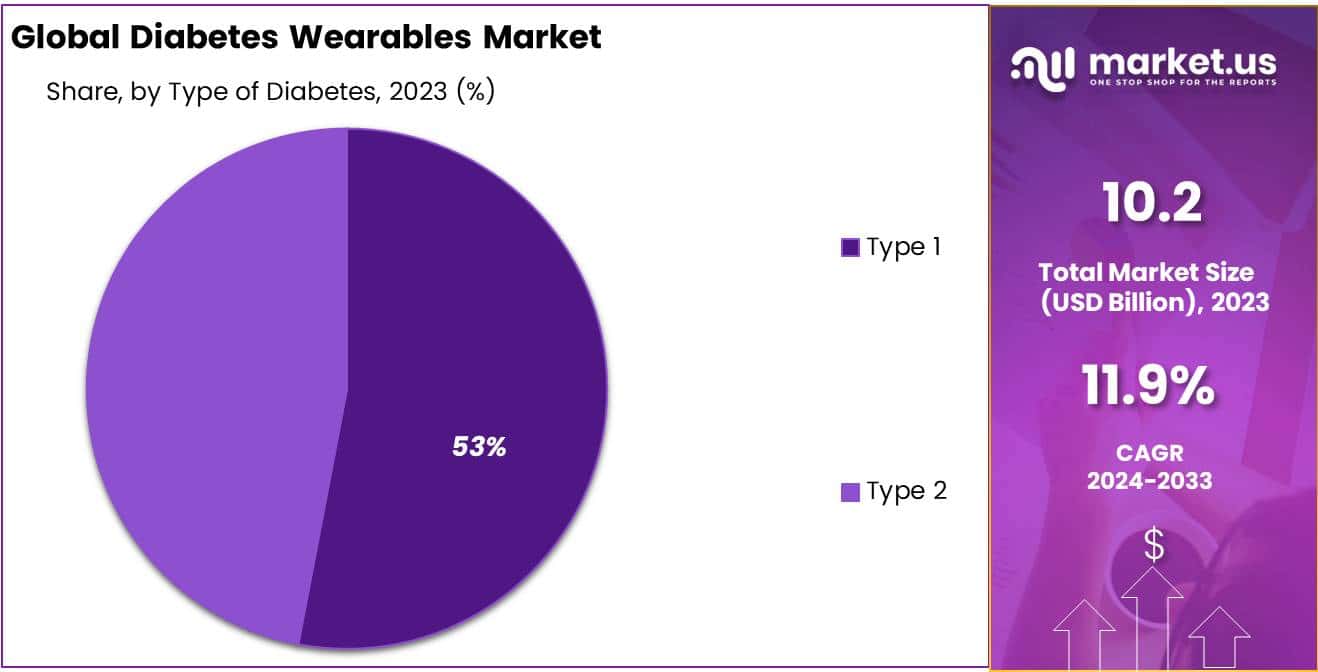
Key Market Segments
Type
- Continuous Glucose Monitoring (CGM) Devices
- Insulin Delivery Devices with Connectivity
- Smart Glucose Meters
- Smart Insulin Pumps
Distribution Channels
- Pharmacies
- Retail Stores
- Online Stores
Type of Diabetes
- Type 1
- Type 2
Application
- Blood Glucose Monitoring
- Insulin Dosage Management
- Others
Driver
The primary driver propelling the growth of the Diabetes Wearables Market is the rising prevalence of diabetes globally. With an increasing number of individuals diagnosed with diabetes, there is a growing demand for continuous monitoring solutions to manage the condition effectively.
Diabetes wearables, such as continuous glucose monitors (CGMs) and insulin pumps, offer real-time data monitoring and management, empowering patients to make informed decisions about their treatment and lifestyle choices. This emphasis on proactive diabetes management drives the adoption of wearables among patients and healthcare providers alike.
Trend
An emerging trend in the Diabetes Wearables Market is the integration of advanced technologies, such as artificial intelligence (AI) and machine learning, into wearable devices. These technologies enable predictive analytics and personalized insights, enhancing the accuracy and effectiveness of diabetes management.
Additionally, the trend towards miniaturization and improved connectivity features in wearables allows for seamless integration into daily life, increasing patient adherence and engagement with their diabetes management regimen.
Restraint
A significant restraint in the Diabetes Wearables Market is the high cost associated with wearable devices and related accessories. Despite their potential benefits, the affordability of these devices remains a concern for many patients, especially in regions with limited healthcare resources or inadequate insurance coverage. Moreover, reimbursement challenges and regulatory barriers further impede market growth by restricting patient access to wearable diabetes technologies, particularly in emerging markets.
Opportunity
Despite the restraints, there are significant opportunities for growth in the Diabetes Wearables Market, particularly driven by technological advancements and shifting healthcare paradigms. As wearable technologies become more affordable and accessible, there is an opportunity to reach underserved populations and improve diabetes management outcomes on a global scale.
Furthermore, collaborations between technology companies, healthcare providers, and regulatory bodies can facilitate the development of innovative solutions and streamline market access pathways, unlocking new opportunities for market expansion and improving the quality of care for individuals living with diabetes.
Regional Analysis
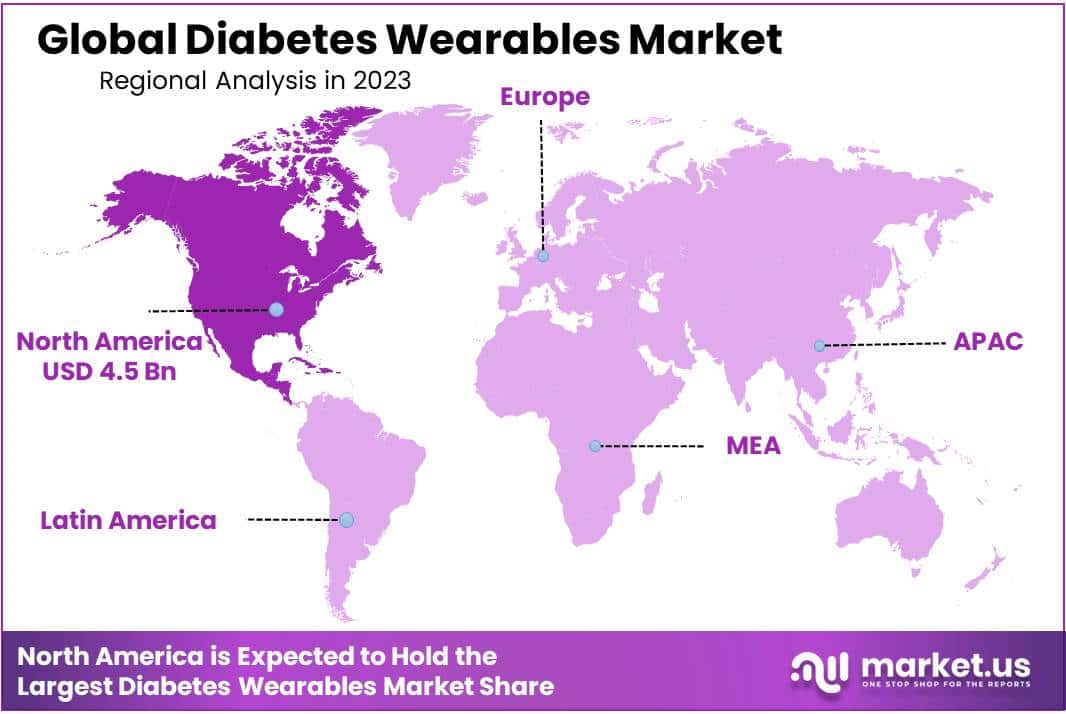
In 2023, the North American region dominated the Diabetes Wearables Market with a 44% market share, driven by an increasing focus on preventive healthcare. Wearable medical devices are crucial in enabling individuals to actively monitor their health. These devices provide personalized health information, promote healthier lifestyle choices, and aid in the early detection of potential health issues.
With growing awareness of personal well-being, the demand for wearable medical devices as preventive tools is rising. This trend reflects a broader shift towards proactive health management, where individuals use advanced technology to maintain optimal health and prevent complications.
Key Regions
- North America
- The US
- Canada
- Mexico
- Western Europe
- Germany
- France
- The UK
- Spain
- Italy
- Portugal
- Ireland
- Austria
- Switzerland
- Benelux
- Nordic
- Rest of Western Europe
- Eastern Europe
- Russia
- Poland
- The Czech Republic
- Greece
- Rest of Eastern Europe
- APAC
- China
- Japan
- South Korea
- India
- Australia & New Zealand
- Indonesia
- Malaysia
- Philippines
- Singapore
- Thailand
- Vietnam
- Rest of APAC
- Latin America
- Brazil
- Colombia
- Chile
- Argentina
- Costa Rica
- Rest of Latin America
- Middle East & Africa
- Algeria
- Egypt
- Israel
- Kuwait
- Nigeria
- Saudi Arabia
- South Africa
- Turkey
- United Arab Emirates
- Rest of MEA
Market Player Analysis
The leading player in the global Diabetes Wearables Market stands out due to its robust portfolio of diabetes care devices and an extensive global distribution network. To further strengthen their market position, key players are focusing on introducing non-invasive and reusable insulin delivery devices. These innovations aim to enhance patient convenience and compliance, driving growth and maintaining their competitive edge in the global market.
Market Key Players
- Dexcom, Inc.
- Medtronic plc
- Abbott Laboratories
- Roche Diabetes Care
- Insulet Corporation
- Tandem Diabetes Care, Inc.
- Senseonics Holdings, Inc.
- Eli Lilly and Company
- Ascensia Diabetes Care Holdings AG
- Ypsomed AG
Recent Developments
- Medtronic plc: Partnered with Bigfoot Biomedical in April 2024 to develop an automated insulin delivery system leveraging Medtronic’s pump technology. This could disrupt the market with a more comprehensive closed-loop solution.
- Abbott Laboratories: Completed the acquisition of Senseonics Holdings in February 2023, gaining the Eversense implantable CGM technology. This strengthens Abbott’s position in the CGM market, offering a wider range of sensor options for patients.
- Roche Diabetes Care: Launched new connected insulin pens with Bluetooth connectivity in May 2024. This allows for better data tracking and integration with diabetes management platforms, improving user experience.
- Insulet Corporation: Announced the upcoming launch of their next-generation Omnipod 5 insulin pump in April 2024. This pump boasts potential for closed-loop insulin delivery, offering a more automated approach to diabetes management.
- Senseonics Holdings, Inc. (Acquired by Abbott Laboratories): Acquired by Abbott Laboratories in February 2023. This acquisition expands Abbott’s CGM portfolio with the long-lasting Eversense implantable sensor technology.
- Eli Lilly and Company: Launched a new rapid-acting insulin with faster absorption rates in May 2024. While not directly involved in wearables, this innovation complements diabetes management by providing faster-acting insulin for improved blood sugar control.









