


Report Overview
The Global Sausage or Hotdog Casings Market size is expected to be worth around USD 8.8 Billion by 2033, from USD 6.4 Billion in 2023, growing at a CAGR of 3.2% during the forecast period from 2024 to 2033.
This market includes the manufacturing and distribution of casings used in sausage and hotdog production. Casings can be natural or synthetic, each offering different textural and culinary properties. The market is driven by the global meat processing industry’s needs and the rising popularity of convenience and processed foods.

The sausage and hotdog casings market is positioned for steady growth, driven by increasing global meat consumption and production. Projections indicate that global meat consumption will rise to between 460 million and 570 million tonnes per year by 2050. This significant increase reflects a growing demand for meat products worldwide.
Currently, over 340 million tonnes of meat are produced annually, marking a substantial increase from approximately 90 million tonnes in 1961. North America leads in meat consumption, with an average of around 100 kilos per person per year. This high consumption rate underscores the strong demand for meat products in the region.
In particular, the production of beef and veal is noteworthy, with around 64 million tonnes produced globally in 2020. This high production volume highlights the importance of efficient and reliable casings to meet the industry’s needs.
The rising global demand for sausages and hotdogs, driven by changing dietary preferences and the popularity of convenient, protein-rich foods, further fuels the market. Casings are crucial for the quality and appeal of these products, ensuring proper shape, texture, and preservation.
However, the market faces challenges such as fluctuations in raw material prices and the need for sustainable production practices. Manufacturers are focusing on developing innovative, eco-friendly casing solutions to meet consumer demand for sustainable products and comply with stringent regulatory standards.
In conclusion, the sausage and hotdog casings market is set for growth, supported by increasing global meat consumption and production. Companies investing in sustainable and innovative casing solutions will be well-positioned to capitalize on the expanding demand and navigate market challenges effectively.
Key Takeaways
- Market Value: The Sausage or Hotdog Casings Market was valued at USD 6.4 billion in 2023, and is expected to reach USD 8.8 billion by 2033, with a CAGR of 3.2%.
- By Product Type Analysis: Natural Casings led with 53.9%, favored for their quality and traditional appeal in sausage production.
- By Application Analysis: Edible casings dominated with 57.9%, underlining their widespread preference in food processing.
- By End User Analysis: Households accounted for 41%, indicating significant consumption in home cooking.
- By Distribution Channel Analysis: Offline sales channels were predominant, making up 71.4% of the market, highlighting the importance of physical retail in this sector.
- Dominant Region: Asia Pacific held a major share with 49.5%, driven by increasing consumption of processed meats and expanding retail infrastructure.
- Analyst Viewpoint: The market shows steady growth, supported by persistent demand for traditional and gourmet sausages.
- Growth Opportunities: Expansion into alternative and synthetic casings could cater to evolving consumer preferences and regulatory changes concerning animal products.
Driving Factors
Global Meat Consumption Trends Drive Market Growth
The rising global consumption of meat, poultry, especially processed products like sausages and hotdogs, is a significant driver for the sausage or hotdog casings market. According to the OECD-FAO Agricultural Outlook 2021-2030, global meat consumption is projected to increase by 14% by 2030. Emerging economies such as China and India are key contributors to this growth.
For instance, China, the world’s largest pork consumer, is expected to see its sausage market reach $9.7 billion by 2025. This surge in demand necessitates a corresponding increase in casing production, propelling the market forward. Additionally, the increasing preference for convenient and ready-to-eat meat products in urban areas further accelerates market growth. The intertwining of these factors ensures a steady rise in the demand for sausage and hotdog casings, solidifying their importance in the global market.
Technological Advancements in Casing Production Drive Market Growth
Innovations in casing manufacturing are significantly enhancing product quality and production efficiency, driving the growth of the sausage or hotdog casings market. Companies like Viscofan have introduced advanced products such as EndomaX, a cellulose casing with improved peelability and uniformity. This innovation allows producers to increase production speeds and reduce waste, optimizing operational efficiency.
Similarly, Viskase’s NOJAX® AL cellulose casings improve smoke and color transfer, catering to consumer preferences for traditional-looking products. These technological advancements not only meet the growing demand for high-quality casings but also reduce production costs, making them more accessible to manufacturers. The integration of these advanced technologies in casing production is a pivotal factor in market expansion, ensuring high standards and efficiency in the industry.
Rise of Plant-based and Healthier Sausages Drives Market Growth
The growing trend towards plant-based eating and healthier food choices is paradoxically boosting the sausage or hotdog casings market. Plant-based sausage brands like Beyond Meat and Field Roast utilize alginate or cellulose casings to replicate the texture and appearance of traditional sausages. This innovation satisfies the demand for vegetarian and vegan alternatives, expanding the market base.
Additionally, producers of healthier meat sausages, such as low-fat and organic options, are increasingly using high-quality casings to differentiate their products. For example, Applegate Naturals’ organic chicken sausages employ premium casings to enhance their appeal. This dual trend towards plant-based and healthier meat products drives the demand for diverse and high-quality casings, fostering market growth. The convergence of health consciousness and innovation in casing materials significantly contributes to the market’s expansion, accommodating a wider range of consumer preferences.
Restraining Factors
Health Concerns and Changing Consumer Preferences Restrain Market Growth
Growing health concerns and changing consumer preferences are significant restraints on the sausage or hotdog casings market. The WHO’s classification of processed meats as Group 1 carcinogens in 2015 has led to increased awareness about the health risks associated with high consumption of these products.
According to a Mintel study, 33% of U.S. consumers are trying to reduce their intake of processed meats, with this trend being more pronounced among millennials and Gen Z. These key consumer groups are increasingly opting for healthier food choices, which negatively impacts the demand for traditional sausage and hotdog casings. As more consumers shift towards plant-based and health-conscious diets, the market for casings made from animal products faces a substantial decline. This trend poses a significant challenge for market growth, necessitating adaptation and innovation in casing materials to align with evolving consumer preferences.
Regulatory Challenges and Animal Welfare Concerns Restrain Market Growth
Stringent regulatory frameworks and growing animal welfare concerns significantly hinder the growth of the sausage or hotdog casings market. Regulations on animal by-products used in natural casings, such as sheep and pig intestines, create substantial challenges. For example, the EU’s regulations on Transmissible Spongiform Encephalopathies (TSEs) have restricted the use of certain animal by-products, complicating compliance for producers.
Additionally, increasing animal welfare concerns lead some consumers to avoid products with natural casings. Companies like German sausage maker Rügenwalder Mühle are responding by shifting towards plant-based sausages with cellulose casings to cater to this demographic. These regulatory and ethical challenges constrain the availability and appeal of traditional casings, thereby limiting market growth. As consumer preferences and regulatory landscapes continue to evolve, producers must adapt to these constraints to sustain market relevance.
Product Type Analysis
Natural casings dominate with 53.9% due to consumer preference for traditional products.
The Sausage or Hotdog Casings Market is divided into natural and artificial casings. Natural casings dominate this segment, accounting for 53.9% of the market share. Among natural casings, sheep casings are the most prominent due to their superior quality and suitability for premium sausages. Sheep casings offer a fine texture and consistent diameter, making them ideal for high-quality sausage production. Their popularity is driven by consumer preference for traditional and artisanal products, which are often perceived as superior in taste and quality.
Pig casings are another significant sub-segment within natural casings. They are widely used due to their availability and cost-effectiveness. Pig casings provide good elasticity and strength, making them suitable for various types of sausages. Cow and goat casings have smaller market shares but are used in specific regional cuisines and specialty products. Swine and other animal casings also contribute to the market, though to a lesser extent, catering to niche markets and specific consumer preferences.
Artificial casings include collagen, cellulose, film-forming polymers, and plastics. Collagen casings are the most popular among artificial casings due to their versatility and ease of use. They are favored by manufacturers for their uniformity and consistency, which facilitate high-speed production processes. Cellulose casings are commonly used for skinless sausages, providing excellent peelability and product appearance. Film-forming polymers and plastics are used for specific applications requiring high durability and long shelf life.
Application Analysis
Edible casings dominate with 57.9% due to their superior flavor and texture enhancement.
The application segment of the Sausage or Hotdog Casings Market is divided into edible and inedible casings. Edible casings dominate this segment, accounting for 57.9% of the market share. Edible casings, particularly natural ones, are preferred by consumers and manufacturers for their ability to enhance the flavor and texture of sausages. They are used in a wide range of products, from premium artisanal sausages to mass-produced hotdogs, due to their compatibility with various cooking methods and flavors.
The demand for edible casings is driven by the growing popularity of gourmet and specialty sausages. Consumers are increasingly seeking high-quality products with authentic tastes and textures, which edible natural casings provide. This trend is particularly strong in developed markets where consumers are willing to pay a premium for superior products. Additionally, the rise in global meat consumption, particularly in emerging economies, is boosting the demand for edible casings.
Inedible casings, while having a smaller market share, play a crucial role in certain applications. These casings are typically used for specific sausage types that require a sturdy and durable casing, such as large diameter sausages and certain specialty products. Inedible casings are also important in the industrial production of sausages, where they provide consistent quality and ease of handling.
End User Analysis
Households dominate with 41% due to the trend towards homemade sausage production.
The end-user segment of the Sausage or Hotdog Casings Market includes households, fast-food outlets, and others. Households are the dominant sub-segment, accounting for 41% of the market share. The preference for homemade and high-quality sausages is a significant driver in this segment. Consumers are increasingly inclined to prepare their own sausages at home, seeking control over ingredients and quality. This trend is supported by the availability of home sausage-making kits and ingredients, making it easier for consumers to produce sausages at home.
Fast-food outlets are another important segment, driving the demand for sausage and hotdog casings. The popularity of fast-food chains and their extensive use of sausages in various menu items contribute to this demand. Fast-food outlets require consistent quality and large quantities of casings to meet consumer demand, making them a significant market for both natural and artificial casings.
Other end users, including restaurants and catering services, also contribute to the market. These establishments often require high-quality casings for gourmet and specialty sausages, catering to discerning customers who value taste and quality.

Distribution Channel Analysis
Offline channels dominate with 71.4% due to the convenience and immediacy of in-person shopping.
The distribution channel segment of the Sausage or Hotdog Casings Market is divided into offline and online channels. Offline channels dominate this segment, accounting for 71.4% of the market share. Traditional retail outlets, including supermarkets, hypermarkets, and specialty stores, are the primary distribution channels for sausage casings. These outlets offer consumers the convenience of purchasing products directly and provide immediate access to a wide range of casing products.
The dominance of offline channels is driven by the preference for in-person shopping and the ability to inspect products before purchase. Additionally, offline channels often have established relationships with suppliers and manufacturers, ensuring a steady supply of products. The presence of offline stores in various regions, including urban and rural areas, further supports their dominance in the market.
Online channels, while currently holding a smaller market share, are growing rapidly. The convenience of online shopping, coupled with the increasing penetration of internet and e-commerce platforms, is driving this growth. Consumers are increasingly turning to online platforms for purchasing sausage casings due to the wide variety of products available, competitive pricing, and home delivery options. The growth of online channels is expected to continue, driven by advancements in e-commerce technology and changing consumer shopping habits.
Key Market Segments
By Product Type
- Natural Casings
- Sheep
- Pig
- Cow
- Goat
- Swine
- Others
- Artificial Casings
- Collagen
- Cellulose
- Film-forming polymers
- Plastics
- Others
By Application
- Edible
- Inedible
By End User
- Households
- Fast-food outlets
- Others
By Distribution Channel
- Offline
- Online
Growth Opportunities
Customized and Printed Casings Offer Growth Opportunity
Customized and printed casings provide a significant growth opportunity in the sausage or hotdog casings market. These casings allow brands to differentiate their products and engage consumers through branding, nutritional information, or QR codes for traceability. Companies like Viscofan and Kalle are at the forefront of this trend.
For example, Smithfield Foods uses printed casings for its Nathan’s Famous hotdogs, enhancing brand recognition and consumer engagement. This customization meets the increasing demand for product differentiation in a competitive market, driving sales and brand loyalty. The ability to add unique branding elements to casings also helps in complying with labeling regulations and providing essential product information, making them a valuable tool for marketers.
Edible and Flavor-infused Casings Offer Growth Opportunity
Edible and flavor-infused casings represent a substantial growth opportunity in the market. These casings add value by enhancing the flavor and nutritional profile of sausages. Devro’s Curvex® casings, which can be infused with flavors, colors, or probiotics, are a prime example of this innovation.
Similarly, alginate casings infused with spices or marinades, as seen in Johnsonville’s “Flame Grilled” sausages, cater to convenience-seeking consumers. These value-added products attract consumers looking for unique and flavorful experiences. The trend towards healthier and more flavorful options drives the demand for such innovative casings, creating new market opportunities and increasing consumer satisfaction.
Trending Factors
Clean Label and Transparency Are Trending Factors
The clean label trend is significantly impacting the sausage or hotdog casings market. Consumers are increasingly demanding transparency about ingredients and production processes, driving the adoption of natural casings or plant-based alternatives labeled as “clean” or “natural.”
Vermont Smoke & Cure, for instance, uses natural pork casings in their clean label sausages, emphasizing the minimally processed nature of their products. This trend towards clean labeling aligns with consumer preferences for wholesome and transparent food options. Brands adopting this trend can gain consumer trust and loyalty, making it a crucial factor for market expansion.
Sustainable and Eco-friendly Casings Are Trending Factors
Sustainability is a growing trend influencing the casings market, with consumers and regulators pushing for eco-friendly packaging solutions. This is driving innovation in biodegradable and compostable casings. ViskoTeepak’s Wienie-Pak® Eco, a regenerated cellulose casing that is compostable and free from plasticizers, is gaining traction among environmentally conscious brands and consumers.
The push for sustainability aligns with global efforts to reduce environmental impact, appealing to a broad base of eco-conscious consumers. This trend encourages manufacturers to develop and adopt sustainable practices, positioning them favorably in a market increasingly driven by environmental considerations.
Regional Analysis
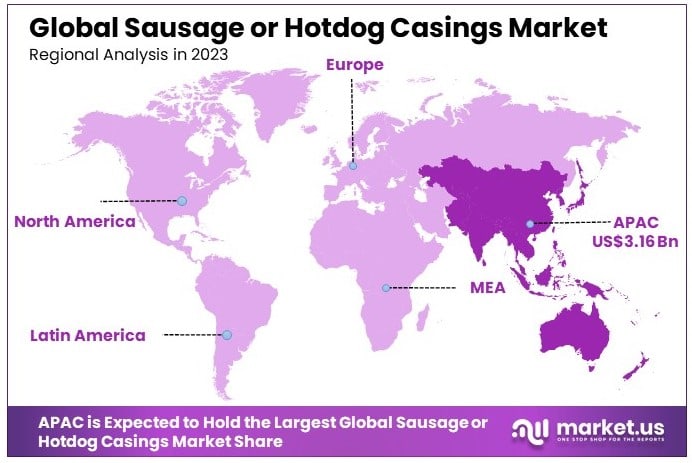
Asia Pacific Dominates with 49.5% Market Share in the Sausage or Hotdog Casings Market
Asia Pacific holds a dominant 49.5% market share of the global sausage or hotdog casings market, with a value of USD 3.16 billion. This leading position is driven by the region’s large-scale meat processing industry and a growing appetite for processed meats among its expanding middle-class population. Additionally, the rise in quick service restaurants offering sausages and hotdogs further fuels demand for casings.
The market dynamics in Asia Pacific are influenced by its diverse culinary culture that incorporates a variety of sausage products in daily diets. High population growth rates and urbanization trends also contribute to increased consumption of convenient, easy-to-cook meat products. Moreover, local manufacturers are expanding their operations to meet both domestic and international demands, boosting the region’s market presence.
The future of Asia Pacific in the sausage casings market looks promising, with expectations of sustained growth. The region’s ongoing urbanization, coupled with rising income levels, is likely to keep demand for processed meats high. Continued investments in food processing technologies and expansion of retail infrastructure are also expected to bolster the market’s growth.
Regional Market Share Analysis
North America: North America accounts for 23% of the market, valued at approximately USD 1.47 billion. The region’s demand is propelled by a strong trend towards high-quality, premium sausages and an ongoing preference for protein-rich diets, which support the use of durable and diverse casings.
Europe: Holding 20% of the global market share, Europe’s market value stands at around USD 1.28 billion. Europe’s stringent food safety regulations drive the need for high-standard casings. The region’s long-standing sausage-making traditions and the popularity of organic and natural casings also play a crucial role in sustaining its market share.
Middle East & Africa: This region captures 5% of the market, with a value of about USD 0.32 billion. Despite a smaller share, there is potential for growth driven by increasing meat consumption and the gradual shift towards more processed food as urbanization progresses.
Latin America: Latin America holds a 3% share, valued at roughly USD 0.19 billion. Growth here is influenced by changing dietary patterns and the increasing influence of Western eating habits, which include a higher consumption of sausages and similar products.
Key Regions and Countries
- North America
- The US
- Canada
- Mexico
- Western Europe
- Germany
- France
- The UK
- Spain
- Italy
- Portugal
- Ireland
- Austria
- Switzerland
- Benelux
- Nordic
- Rest of Western Europe
- Eastern Europe
- Russia
- Poland
- The Czech Republic
- Greece
- Rest of Eastern Europe
- APAC
- China
- Japan
- South Korea
- India
- Australia & New Zealand
- Indonesia
- Malaysia
- Philippines
- Singapore
- Thailand
- Vietnam
- Rest of APAC
- Latin America
- Brazil
- Colombia
- Chile
- Argentina
- Costa Rica
- Rest of Latin America
- Middle East & Africa
- Algeria
- Egypt
- Israel
- Kuwait
- Nigeria
- Saudi Arabia
- South Africa
- Turkey
- United Arab Emirates
- Rest of MEA
Key Players Analysis
In the Sausage or Hotdog Casings market, several companies shape the industry’s dynamics through their strategic innovations and market approaches. Viscofan and Viskase are at the forefront, known for their global presence and broad range of casing solutions. They offer both natural and synthetic casings, catering to a wide variety of sausage manufacturers’ needs and setting industry standards for quality and reliability.
Devro and Kalle also play significant roles, with a strong focus on technological advancements in edible collagen casings. Their products are essential for manufacturers seeking high-efficiency casing solutions that enhance product appearance and taste, contributing to their strong positions in the market.
Shenguan and Atlantis-Pak are notable for their regional market influence, particularly in Asia and Eastern Europe, respectively. Shenguan specializes in natural casings and has a dominant position in the Chinese market, while Atlantis-Pak leads in the production of synthetic casings, known for their innovation in multilayer casings that extend shelf life and improve sausage quality.
Beijing Qiushi Agriculture Development Co., LTD leverages its integration with local agricultural sectors to ensure a consistent supply of high-quality natural casings, enhancing its strategic positioning in the competitive Chinese market.
International Casings Group and DeWied International serve niche markets, with a particular focus on personalized customer service and supplying tailored casing solutions. Their approach allows flexibility and responsiveness to specific customer needs, making them pivotal in specialized segments of the market.
Collectively, these companies drive the sausage and hotdog casings market through their dedication to innovation, quality, and customer-centric approaches. Their diverse product offerings and strategic market positioning enable them to influence both global and regional market trends significantly.
Market Key Players
- Viscofan
- Viskase
- Devro
- Kalle
- Shenguan
- Atlantis-Pak
- Beijing Qiushi Agriculture Development Co., LTD
- International Casings Group
- DeWied International
Recent Developments
- September 2023: The Hofmann Sausage Company has unveiled its latest offering, the Natural Casing Bacon Cheddar Franks. These franks are crafted with real Wisconsin cheddar cheese and bacon, are gluten-free, fully cooked, and contain no added MSG. Available in 14-ounce packs with six franks per pack, they have initially launched in Central New York with plans for broader distribution.
- November 2023: Sahlen Packing Co. has expanded its product line at select Food Lion locations by introducing two new items. The offerings include 16-ounce packages of Pork & Beef Smokehouse Hot Dogs and 13.7-ounce packs of All Beef Smokehouse Hot Dogs. These products are part of Sahlen’s Tender Casing line and are now available across the Southeast and Mid-Atlantic regions.
- November 2022: Devro, a renowned Scottish sausage-skin maker, has agreed to a £540 million takeover by Saria, a German company. This deal values Devro at a 65% premium over its closing share price on the announcement day. The merger aims to enhance the product offerings of both companies and accelerate sustainable long-term growth.









