


Report Overview
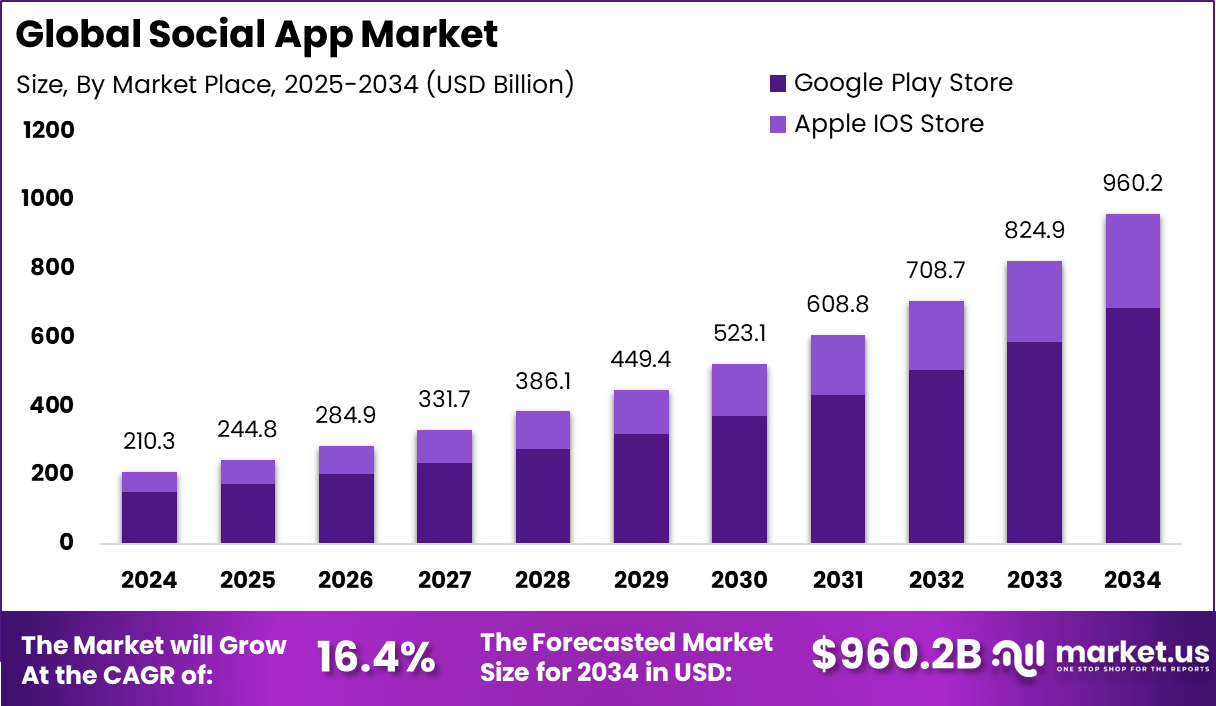
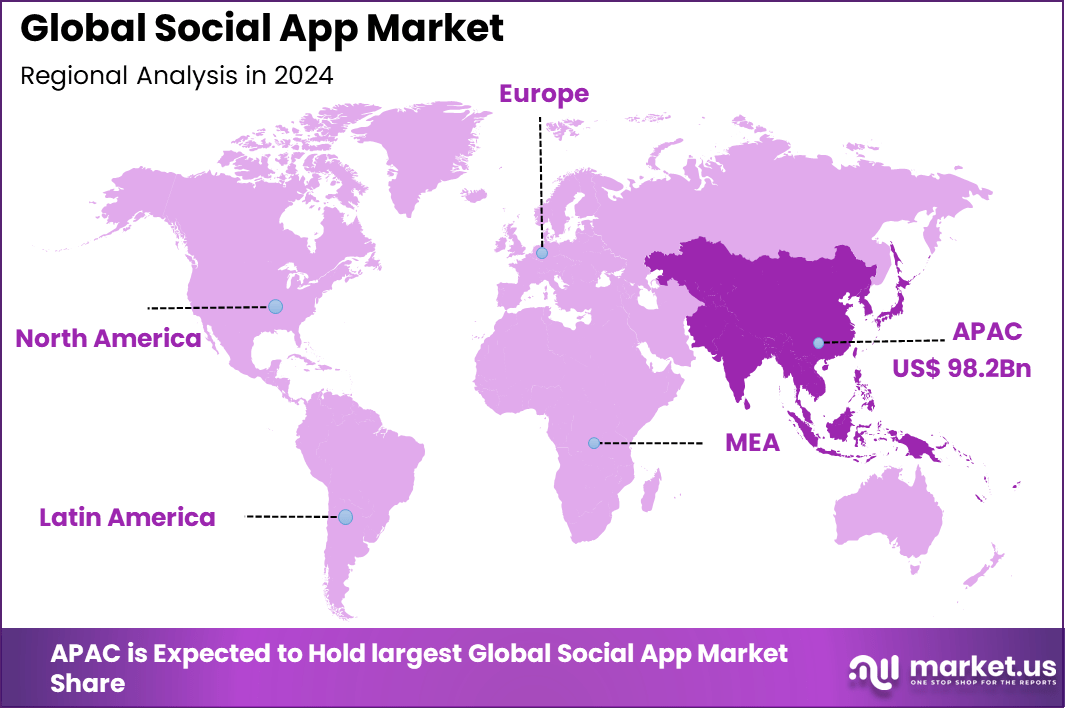
The Global Social App Market size is expected to be worth around USD 960.2 Billion By 2034, from USD 210.3 billion in 2024, growing at a CAGR of 16.4% during the forecast period from 2025 to 2034. In 2024, APAC held a dominan market position, capturing more than a 46.7% share, holding USD 98.2 Billion revenue.
The Social App Market covers digital platforms that allow users to connect, communicate, share content, and build communities. These apps include social networking, messaging, short-form video, photo sharing, and community forums. They are used for personal communication, entertainment, professional networking, and increasingly for shopping and brand engagement.
Top driving factors for the growth of social apps include the ubiquitous availability of smartphones and mobile internet, the increasing demand for real-time communication, and the popularity of video and live-streaming content. The rise of personalized content powered by artificial intelligence (AI) and machine learning (ML) plays a critical role in attracting and retaining users.
For instance, 74% of social app users value personalized content, which enhances user engagement by delivering relevant posts tailored to individual preferences. Furthermore, the adoption of 5G technology enables faster data speeds and lower latency, significantly improving the user experience by supporting rich multimedia and interactive features.
According to Business of Apps, Meta Platforms dominates global social media revenue, generating $164.5 billion in 2024. Within this, Facebook contributed $93 billion and Instagram $66 billion, positioning them as Meta’s strongest platforms. By comparison, YouTube is the only platform in a similar range, with $36.1 billion in revenue.
Based on data from Priori Data, global social media usage has expanded to around 5.20 billion users in 2024, representing nearly 64% of the world’s population. Facebook remains the largest platform, with more than 3.15 billion monthly active users, followed by YouTube with over 2.5 billion. Instagram has surpassed 2 billion users, reflecting its rapid growth and increasing influence in the global digital ecosystem.
Key Insight Summary
- By marketplace, the Google Play Store contributed the majority share at 71.42%, showing the dominance of Android users in app downloads and installations.
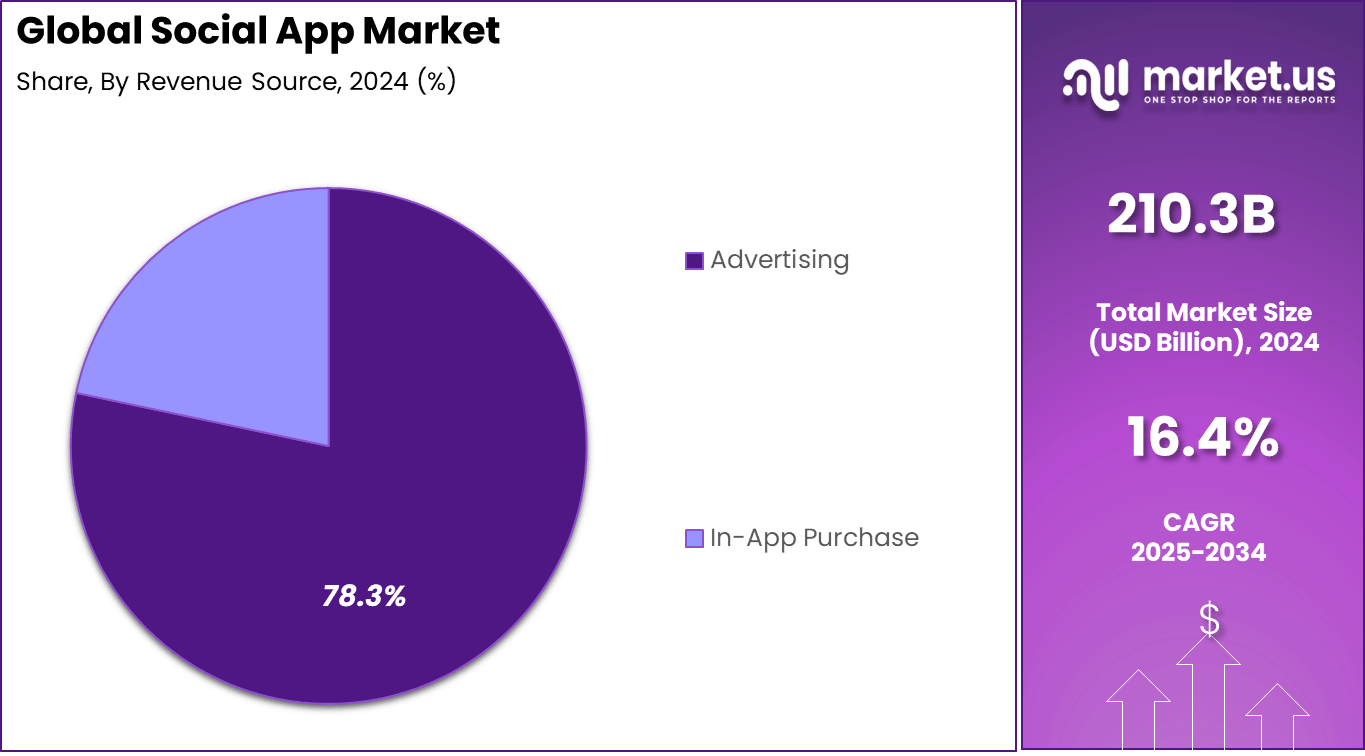
- By revenue source, advertising accounted for 78.3%, highlighting its role as the primary monetization strategy for social apps.
- Regionally, the Asia Pacific led with 46.7% share, supported by rapid adoption of social platforms and expanding mobile penetration.
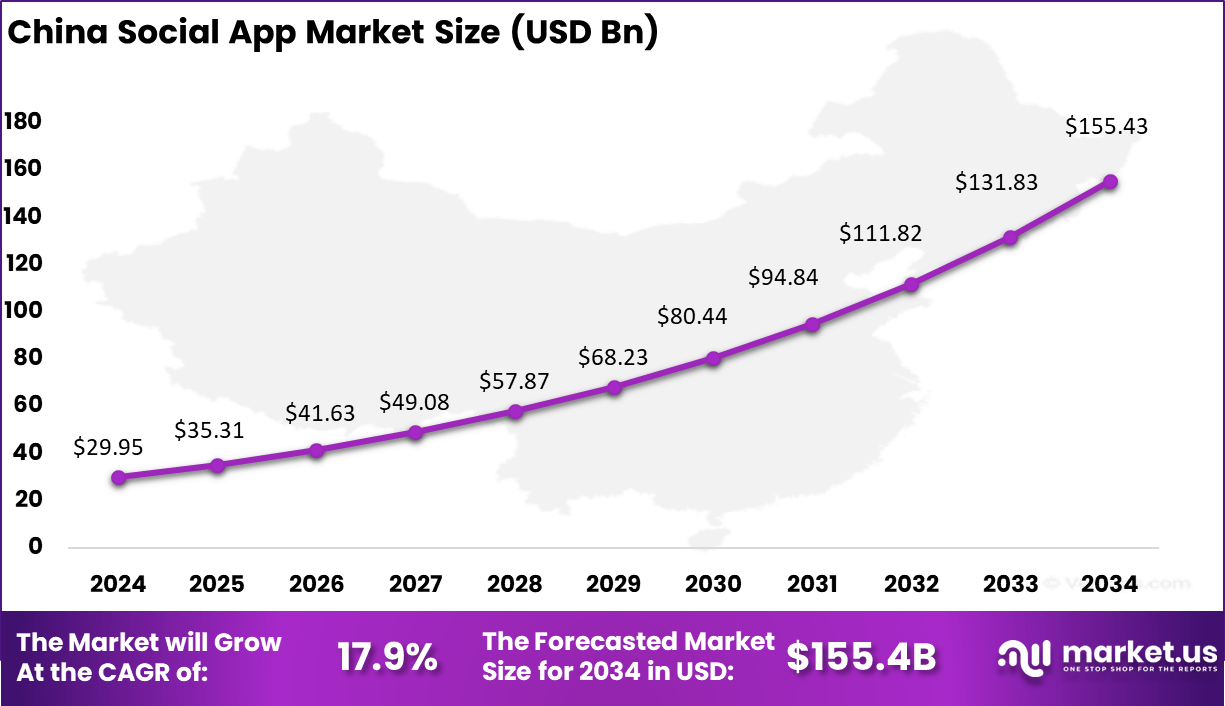
- Within the region, China stood out with revenues of about USD 29.65 billion and a robust CAGR of 17.9%, underscoring its strong influence on global market growth.
Analysts’ Viewpoint
For instance, in-app purchases have surged by 27.5% recently, reflecting users’ willingness to pay for premium experiences. The market continues to expand into emerging regions like India, where smartphone and internet adoption rates are still growing rapidly, contrasting with saturation in developed countries. This geographic shift drives new demand dynamics as social apps cater to diverse cultural and language preferences.
Technological adoption is a key contributor to social app evolution. Technologies such as AI, augmented reality (AR), and blockchain are increasingly integrated to enhance engagement and privacy. AI enables hyper-personalization and automates content curation, while AR offers immersive experiences for social interactions and marketing. Blockchain supports decentralized social platforms, giving users ownership of their data and content.
Key reasons for adopting these technologies stem from user expectations for better privacy, personalized experiences, and monetization options. Users demand control over their data and tailored content that keeps them engaged longer. For businesses, these technologies unlock new revenue models – from targeted advertising and influencer marketing to subscription services and virtual goods sales.
China Market Revenue
China stood out with a market size of USD 29.65 billion, reflecting widespread adoption of local and international social platforms. The country’s growth is advancing at a 17.9% CAGR, supported by rising engagement in short-video formats, integrated social commerce, and innovative in-app features that appeal to a tech-savvy user base.
In 2024, Asia Pacific commanded 46.7% of the social app market, driven by its massive internet user base and high smartphone penetration. The region’s younger demographics are highly active online, using social platforms for communication, ecommerce, and entertainment. This has created fertile ground for app developers to expand their presence.
By Marketplace
In 2024, the Google Play Store accounted for 71.42% of the social app market. Its large global reach and accessibility through Android devices make it the dominant distribution channel for social applications. Most developers prefer Google Play due to its massive user base and ease of access to emerging markets where Android dominates smartphone usage.
The presence of multiple monetization models such as in-app purchases, subscriptions, and targeted advertisements further enhances its role in shaping the growth of social apps. The Play Store not only serves as a marketplace but also as a growth enabler, helping social platforms gain visibility and scale rapidly across different regions.
By Revenue Source
In 2024, Advertising generated 78.3% of the revenue in the social app market. Social apps have become powerful platforms for digital marketing, as they provide detailed insights into consumer behavior and allow for highly targeted campaigns. This advertising-driven model supports free access for users while giving platforms a steady income stream.
The increasing reliance on video ads, influencer-driven promotions, and integrated shopping experiences has strengthened advertising’s role as the primary revenue model. This focus on engagement not only maximizes user activity but also ensures that advertisers continue to invest heavily in social apps as part of their digital strategies.
Emerging Trends
Emerging trends in social apps center on AI-driven personalization and new content formats. AI algorithms now tailor social feeds to each user’s interests based on past behaviors, boosting engagement. Short-form videos dominate content consumption, with most platforms prioritizing fast, entertaining clips under one minute to improve organic reach.
In India, local language content, short videos, and interactive polls on social apps are thriving due to growing mobile usership. Alongside AI features, augmented reality (AR) tools are expanding, allowing users and brands to create immersive, interactive experiences with custom AR lenses and filters.
Growth Factors
Growth factors for social apps include rising demand for highly personalized and immersive user experiences powered by AI. The integration of AI-driven content creation saves time and increases creativity, enabling platforms to meet the extreme need for constant content production.
In 2024, in-app purchases on social platforms rose by 27.5%, signaling monetization shifts toward subscriptions, exclusive content, and virtual goods rather than traditional ads. Expanding user bases in emerging markets, especially India, continue to fuel engagement growth even as more developed regions face saturation and slower usage increases
Key Market Segments
By Market Place
- Google Play Store
- Apple IOS Store
By Revenue Source
- Advertising
- In-App Purchase
Regional Analysis and Coverage
- North America
- US
- Canada
- Europe
- Germany
- France
- The UK
- Spain
- Italy
- Russia
- Netherlands
- Rest of Europe
- Asia Pacific
- China
- Japan
- South Korea
- India
- Australia
- Singapore
- Thailand
- Vietnam
- Rest of Latin America
- Latin America
- Brazil
- Mexico
- Rest of Latin America
- Middle East & Africa
- South Africa
- Saudi Arabia
- UAE
- Rest of MEA
Driver Analysis
Increasing Smartphone Penetration and Mobile Internet Access
One of the primary drivers fueling growth in the social app market is the rapid increase in smartphone penetration paired with expanding mobile internet access worldwide. Smartphones offer users convenient, anytime-anywhere access to social apps, making them the preferred device for social interaction. This ease of connectivity encourages continuous and frequent usage, driving market expansion.
For instance, in North America, over 83% of Instagram usage and 87% of Snapchat usage occur on smartphones, emphasizing their critical role in social app engagement. Moreover, mobile internet infrastructure improvements, especially in emerging economies like India and China, significantly contribute to user base growth.
With more affordable smartphones and faster internet services, new demographics are able to access social apps, expanding the global market footprint. This trend is supported by the rising demand for social entertainment and real-time communication features such as video chats and live streaming, which rely heavily on mobile connectivity.
Restraint Analysis
Growing Concerns Over Data Privacy
Data privacy concerns present a significant restraint for the social app market. Users are increasingly wary of how their personal information is collected, stored, and shared by social apps. This heightened awareness leads to cautious app usage or outright avoidance, directly impacting user retention and acquisition.
Additionally, incidents of data breaches and misuse undermine user trust, which is critical in social app ecosystems that thrive on personal content sharing. The fear of information leaks or unauthorized usage discourages some users from fully engaging on these platforms. This restraint challenges developers to balance innovation with stringent security protocols.
Opportunity Analysis
Expansion in Emerging Markets and Localization
Emerging markets stand out as a major opportunity for social apps. Regions such as Southeast Asia, South America, and parts of Africa have rising internet penetration rates and youthful populations eager to adopt new technologies. Social app companies that can localize their content and adapt features to meet cultural preferences and languages find greater acceptance and user loyalty.
For instance, India’s booming demand for encrypted and self-destructive messaging apps illustrates how tailoring offerings to local needs can drive growth. Similarly, customization of payment options and interactive formats creates monetization avenues in markets with evolving digital ecosystems. Expanding into such regions diversifies revenue sources and reduces dependency on saturated western markets.
Challenge Analysis
Intense Competition and User Retention Difficulties
A key challenge for social apps is the intense competition in the market. Numerous platforms compete for user attention, each offering overlapping functions like messaging, live streaming, or content sharing. This saturation makes it difficult to differentiate and retain users.
Many apps experience churn as users frequently switch between platforms looking for better experiences or novel features. Additionally, monetization is complicated by user resistance to advertisements and paid features, pushing companies to innovate continually.
The pace of technological change also requires constant updates and feature enhancements, leading to higher development costs. For instance, adapting to new social media algorithms or integrating augmented reality demands agile development teams and resources. Balancing innovation with user expectations and financial sustainability remains a persistent challenge.
Competitive Analysis
In the social app market, Meta Platforms with Facebook, Instagram, and WhatsApp lead the industry through their vast user base and integrated ecosystem. Their dominance is driven by strong advertising capabilities, cross-platform connectivity, and continuous innovation in features such as reels, stories, and messaging services.
Other major contributors such as YouTube (Google), Twitter (X), LinkedIn, and Snap Inc. add significant strength to the market. YouTube dominates video-driven engagement, Twitter is a hub for real-time updates and discussions, LinkedIn is the leading professional networking platform, and Snapchat attracts younger audiences with ephemeral content and AR features.
Additional players including Telegram, Pinterest, and Classmates Online contribute to niche segments. Telegram focuses on secure messaging and large community channels, Pinterest emphasizes visual discovery and lifestyle inspiration, while Classmates Online connects users through school and alumni networks.
Top Key Players in the Market
- Meta Platform Inc.
- YouTube LLC
- Instagram LLC
- Twitter Inc.
- LinkedIn Corporation
- Snap Inc.
- WhatsApp Messenger
- Telegram Messenger LLC
- Pinterest Inc.
- Classmates Online Inc.
- Others
Recent Developments
- February 2025, Meta Platforms Inc. introduced a new limit on live video storage on Facebook, capping video availability to 30 days. This change aims to optimize server resources and encourage more active management of live content by users. Additionally, Meta advanced the personalization of political content feeds on Facebook in 2024, tailoring user experience based on engagement signals to increase relevance and engagement
- Snap Inc. faced a stock decline of about 34% in 2024 but maintained strong growth momentum. By Q3 2024, Snapchat had grown its daily active users by 9% year over year to 443 million and increased total content watch time by 25%.
- Snap’s AI pivot, including features like My AI chatbot and AI-enabled Memories, plus subscription growth with Snapchat+ reaching 12 million subscribers, positioned the company for potential recovery and strong advertising revenue growth in 2025.









