


Report Overview
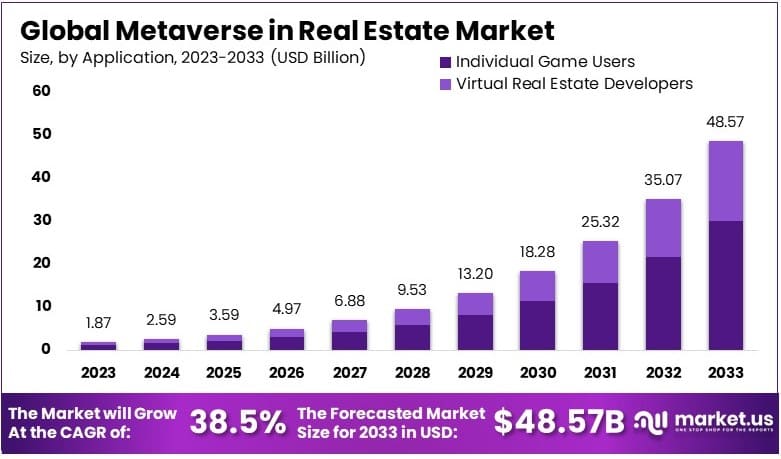
The Global Metaverse in Real Estate Market size is expected to be worth around USD 48.57 Billion by 2033, from USD 1.87 Billion in 2023, growing at a CAGR of 38.5% during the forecast period from 2024 to 2033.
The Metaverse in Real Estate market refers to the use of virtual, immersive environments for buying, selling, and managing properties. In this market, real estate transactions are conducted in digital spaces where users can explore virtual properties, attend virtual tours, and even purchase land or buildings within the metaverse.
Real estate companies are leveraging the metaverse to offer clients a more interactive and engaging experience. Potential buyers can explore properties from anywhere in the world, viewing 3D models and layouts as if they were physically present. This reduces the need for physical visits and speeds up the decision-making process.
The market is also expanding to include digital real estate, where virtual land and buildings are bought and sold as assets. As the metaverse grows, the value of these virtual properties is expected to increase, attracting more investors.
The Metaverse is increasingly becoming a focal point for real estate investments, reshaping how property value and development are perceived within digital environments. This emergent sector, characterized by its innovative use of blockchain and NFTs, is attracting a diverse pool of stakeholders from traditional real estate developers to tech-centric firms eager to pioneer virtual spaces.
Significant platforms such as Decentraland and Sandbox are at the forefront of this burgeoning market. For instance, Decentraland has witnessed a dramatic surge in virtual land value, with parcel prices rising from $20 in 2017 to approximately $15,000 by early 2022. Such an increase is indicative of the robust demand and speculative interest surrounding virtual properties.
Similarly, Sandbox reported over 65,000 real estate transactions in 2021, totaling around $350 million. These transactions are primarily fueled by speculative investments and various development projects that aim to capitalize on the growing popularity of virtual spaces.
The mechanics of purchasing virtual real estate are fundamentally tied to the use of cryptocurrencies, with blockchain-based NFTs securing ownership akin to digital deeds. This technological framework ensures transparent and secure transactions, fostering confidence among investors.
Moreover, the market has seen considerable activity from entities beyond the traditional real estate sectors, including digital architects and forward-thinking corporations, all drawn by the potential of expansive virtual environments.
One notable transaction in this space involved a virtual property adjacent to a celebrity’s plot, which sold for $450,000. Such high-profile sales underscore the significant economic potential and allure of prestigious virtual locations.
Additionally, platforms like Cryptovoxels are experiencing heightened engagement, with over 10,000 unique users participating monthly as of mid-2023. This increasing user base correlates strongly with the rising interest in acquiring and developing virtual real estate, suggesting a promising trajectory for market growth.
In conclusion, the Metaverse’s real estate market is demonstrating a dynamic expansion with substantial investments and development. The unique integration of advanced technologies and traditional real estate principles is creating new opportunities for investment and innovation, potentially setting the stage for the future of digital asset management and development in virtual environments.
Key Takeaways
- The Metaverse in Real Estate Market was valued at USD 1.87 billion in 2023 and is expected to reach USD 48.57 billion by 2033, with a CAGR of 38.5%.
- In 2023, Buy Metaverse Real Estate dominated the type segment with 40% due to increasing interest in virtual property investments.
- In 2023, Individual Game Users led the application segment with 61.7%, driven by the growing popularity of virtual worlds among gamers.
- In 2023, North America was the leading region with 30.6% market share, reflecting the region’s strong adoption of metaverse technologies.
Type Analysis
Buy Metaverse Real Estate dominates with 40% due to its potential for high returns and growing interest from investors.
The segment of Buying Metaverse Real Estate has emerged as the most significant within the Metaverse in the Real Estate market, capturing a 40% share. This dominant position is driven by the increasing interest from both individual investors and corporate entities who see high potential for returns in this virtual property market. The allure is largely due to the speculative nature of these digital assets, which are expected to appreciate in value as the Metaverse becomes more integrated into everyday activities and business operations.
Purchasing virtual real estate allows investors to secure a foothold in emerging digital worlds, where they can later develop properties for various uses, such as advertising, virtual tours, virtual offices, or entertainment venues. This speculative investment is similar to buying real-world prime property in anticipation of future development and increased demand.
While buying is the dominant activity, Selling and Renting Metaverse Real Estate are also important segments. Selling provides liquidity in the market, allowing investors to realize gains and reinvest in new opportunities. Renting, on the other hand, offers ongoing income potential from virtual properties and is crucial for those looking to monetize their investments without selling. Each of these activities supports the overall market by providing different strategies for investment and revenue generation in the virtual real estate space.
The growth of the Buying segment not only underscores the market’s potential but also stimulates the development and enhancement of platforms and technologies that support virtual real estate transactions, further accelerating the evolution of the Metaverse real estate market.

Application Analysis
Individual Game Users lead with 61.7% due to the high engagement and investment in virtual environments.
Individual Game Users constitute the largest application segment in the Metaverse real estate market, holding a 61.7% share. This dominance is fueled by the vibrant gaming communities that invest time and resources into virtual worlds, where real estate plays a pivotal role in gameplay and social interaction. Gamers often purchase virtual properties to enhance their gaming experience, establish social status within the game, or leverage the spaces for commercial activities such as virtual cafes or event hosting.
The significant investment from this group reflects the evolving nature of gaming from mere entertainment to a more immersive and interactive social experience. These environments offer unique opportunities for personal expression and community building, which in turn drive the demand for virtual real estate.
Virtual Real Estate Developers, while currently a smaller segment, play a critical role in shaping the landscape of the Metaverse by creating new spaces and opportunities for interaction. These developers are akin to real-world property developers, planning and building complex digital environments that can attract more users and increase the value of virtual properties.
The interplay between Individual Game Users and Virtual Real Estate Developers is crucial for the continued growth and dynamism of the Metaverse real estate market. As developers innovate and expand virtual worlds, the attraction for gamers and other users will likely increase, further driving investment and activity in this burgeoning market. This relationship underscores the collaborative and symbiotic nature of the Metaverse, where user engagement directly influences development and vice versa.
Key Market Segments
By Type
- Buy Metaverse Real Estate
- Sell Metaverse Real Estate
- Rent Metaverse Real Estate
By Application
- Individual Game Users
- Virtual Real Estate Developers
Driver
Growing Digitalization and Demand for Virtual Experiences Drive Market Growth
The growth of the Metaverse in the Real Estate Market is significantly driven by increasing digitalization and the rising demand for immersive virtual experiences. As the real estate industry continues to embrace digital transformation, the metaverse offers a new platform for showcasing properties through virtual tours, making the buying and renting process more accessible and engaging.
Moreover, the growing popularity of virtual reality (VR) and augmented reality (AR) technologies is enhancing the realism and interactivity of these virtual property tours. These technologies allow potential buyers to experience properties in a highly immersive way, leading to more informed decision-making and greater customer satisfaction.
Additionally, the increasing trend of remote work and virtual collaboration is expanding the market for virtual spaces within the metaverse. Companies are investing in digital real estate to create virtual offices and meeting spaces, catering to the needs of a distributed workforce. This demand for virtual commercial spaces is further driving market growth.
Furthermore, the rise of blockchain technology is facilitating secure and transparent transactions in the virtual real estate market. Blockchain ensures the authenticity of property ownership and simplifies the transfer process, making investments in metaverse real estate more attractive.
Restraint
Regulatory Uncertainty and High Costs Restraints Market Growth
Regulatory uncertainty, high costs, technological barriers, and user adoption issues collectively restrain the growth of the Metaverse in the Real Estate market. Regulatory uncertainty is a significant concern, as the legal frameworks governing virtual real estate transactions are still evolving. This lack of clear regulations can cause hesitation among investors and developers, slowing down market growth.
High costs associated with developing and maintaining virtual real estate platforms also pose a barrier. Creating and sustaining a metaverse environment requires significant investment in technology, infrastructure, and ongoing updates, which can be prohibitive, especially for smaller real estate firms.
Technological barriers further complicate the adoption of the metaverse in real estate. The required advanced technologies, such as VR headsets and high-speed internet, are not yet widely accessible, limiting the potential user base and slowing down market expansion.
User adoption issues are another key restraint. Many potential users are unfamiliar with or skeptical of the metaverse, and convincing them to engage in virtual real estate transactions can be challenging. This reluctance to adopt new technology can delay the market’s growth and hinder the full realization of its potential.
Opportunity
Expanding Investment Opportunities and Enhanced User Engagement Provides Opportunities
The expanding investment opportunities in the metaverse present significant opportunities for players in the Metaverse in Real Estate Market. As virtual real estate becomes a more recognized asset class, investors are increasingly exploring this digital space for potential returns. This trend opens up avenues for companies to develop and offer platforms that facilitate the buying, selling, and trading of virtual properties, providing lucrative opportunities for growth.
Moreover, the opportunity to enhance user engagement through immersive experiences is another area ripe for exploration. Companies that can create interactive, engaging environments within the metaverse will attract a broader audience, including both consumers and businesses. This focus on user experience can lead to higher customer retention and more significant investments in virtual real estate.
Additionally, the integration of virtual real estate with e-commerce and advertising creates further opportunities. Brands are looking to establish a presence in the metaverse, creating digital storefronts and advertising spaces within virtual environments. Companies that can offer customizable and scalable solutions for these needs will be well-positioned to capitalize on this demand.
Furthermore, the increasing use of NFTs (non-fungible tokens) in the metaverse provides opportunities for unique property offerings and ownership models. Companies that leverage Metaverse NFTs to create and sell exclusive virtual properties can tap into a growing market of digital collectors and investors.
Challenge
Technological Challenges and Consumer Skepticism Challenges Market Growth
Technological challenges, consumer skepticism, integration issues, and limited accessibility collectively challenge the growth of the Metaverse in the Real Estate market. The technological challenges associated with creating immersive, interactive virtual environments are significant.
Consumer skepticism presents another major challenge. Many potential users are wary of the metaverse, viewing it as a novelty rather than a serious platform for real estate transactions. This skepticism can slow down adoption rates and limit market expansion.
Integration issues also play a role in restraining market growth. Real estate firms must integrate metaverse platforms with existing sales, marketing, and transaction processes, which can be complex and resource-intensive. The lack of seamless integration can hinder the efficiency and effectiveness of metaverse-based real estate activities.
Limited accessibility to the necessary technologies, such as VR headsets and fast internet connections, further restricts market growth. Without widespread access to these technologies, the potential user base for metaverse real estate remains small.
Growth Factors
- Growing Interest in Virtual Real Estate: The increasing popularity of virtual worlds and digital assets is driving demand for AI tools that can manage, buy, and sell properties in the Metaverse, creating new revenue streams for real estate professionals.
- Enhanced Virtual Property Visualization: Artificial Intelligence enables highly realistic and immersive visualizations of properties in the Metaverse, allowing potential buyers to explore and assess virtual real estate as if they were visiting in person.
- Personalized Property Recommendations: AI algorithms analyze user preferences and behaviors to suggest personalized virtual properties, improving the relevance of listings and increasing the likelihood of successful transactions.
- Automation of Property Management: AI-driven automation tools are streamlining the management of virtual properties, from maintenance and leasing to customer interactions, making it easier for owners to manage their digital assets efficiently.
- Global Access and Inclusivity: The Metaverse enables global participation in the real estate market, and AI tools facilitate seamless transactions and interactions across different languages and regions, expanding market reach.
- Integration with Blockchain Technology: AI combined with blockchain technology ensures secure and transparent transactions in the Metaverse real estate market, reducing fraud and building trust among buyers and sellers.
Emerging Trends
- Virtual Property Development: The rise of virtual real estate development, where AI is used to design, build, and optimize digital properties, is creating new opportunities for architects and developers in the Metaverse.
- Immersive Virtual Tours and Experiences: AI-powered virtual reality (VR) tools are enabling more immersive property tours and experiences, allowing potential buyers to fully explore and interact with virtual real estate from anywhere in the world.
- Metaverse Real Estate Investment: As the Metaverse grows, AI is helping investors identify profitable virtual properties and trends, providing data-driven insights to guide investment strategies in this emerging market.
- Virtual Real Estate Marketplaces: The creation of AI-enhanced marketplaces for buying and selling virtual properties is simplifying transactions and making the Metaverse real estate market more accessible to a broader audience.
- AI in Virtual Property Leasing and Renting: AI-driven platforms are facilitating the leasing and renting of virtual properties, automating tenant screening, lease agreements, and payment processing, making it easier to manage virtual spaces.
- Augmented Reality (AR) for Hybrid Real Estate: The integration of AR in the Metaverse is enabling hybrid real estate models, where AI can overlay digital information on physical properties, enhancing the buying and selling experience in both virtual and real-world markets.
Regional Analysis
North America Dominates with 30.6% Market Share in the Metaverse in Real Estate
North America’s significant market share of 30.6%, amounting to USD 0.57 billion, in the metaverse real estate sector is underpinned by its advanced technological infrastructure and a high degree of digital literacy. The presence of major technology and real estate players, who are early adopters of metaverse platforms, plays a crucial role.
The region benefits from a tech-savvy population and a culture that embraces virtual and augmented reality technologies, which are essential in the metaverse. The integration of these technologies into real estate transactions and property showcasing is rapidly evolving, reinforcing North America’s leading position.
North America is expected to maintain a dominant role in the metaverse real estate market. Ongoing innovations in virtual reality and increased investments in the metaverse are likely to further drive market growth and enhance its global influence.

Regional Mentions for Other Areas:
- Europe: Europe is advancing in the metaverse real estate market, driven by strong privacy regulations and a focus on integrating cutting-edge technology in property marketing and sales. The region’s technological prowess supports a steady growth trajectory.
- Asia Pacific: This region is experiencing a surge in metaverse adoption due to its rapid digital transformation and large, tech-savvy youth population. Asia Pacific’s burgeoning real estate market combined with high internet penetration rates promises significant growth in metaverse applications.
- Middle East & Africa: Although in the nascent stage, the Middle East and Africa are making strides in incorporating metaverse technologies in real estate. The region’s focus on smart city initiatives and digital economies is setting the groundwork for future adoption.
- Latin America: With growing digital infrastructure and increasing interest in innovative real estate solutions, Latin America is poised for growth in the metaverse real estate sector. The region’s enthusiasm for new technology applications suggests a promising outlook for market expansion.
Key Regions and Countries Covered in the Report
- North America
- US
- Canada
- Mexico
- Europe
- Germany
- UK
- France
- Italy
- Russia
- Spain
- Rest of Europe
- Asia Pacific
- China
- Japan
- South Korea
- India
- Rest of Asia-Pacific
- South America
- Brazil
- Argentina
- Rest of South America
- Middle East & Africa
- GCC
- South Africa
- Israel
- Rest of MEA
Key Players Analysis
The Metaverse in Real Estate market is driven by a few key players who are pioneering virtual real estate and shaping the future of digital property ownership. Decentraland Foundation, The Sandbox, and Uplandme Inc. stand out as the top companies leading this innovative space.
Decentraland Foundation is a major player in the metaverse real estate market. It offers a decentralized virtual world where users can buy, sell, and develop digital land. Decentraland’s strong community and robust platform allow users to create and monetize their own experiences. Their early entry into the market and continuous development make them a significant force in virtual real estate.
The Sandbox is another leading company that has carved out a strong position in the metaverse. It allows users to build, own, and trade virtual properties using blockchain technology. The Sandbox’s focus on user-generated content and partnerships with major brands have helped it attract a large user base. Its strategic positioning as a platform for creators and investors gives it substantial influence in the market.
Uplandme Inc. is known for its unique approach to virtual real estate, which mirrors real-world locations. Upland combines gaming with property investment, allowing users to buy, sell, and trade virtual properties linked to real-world addresses. Their integration of real-world elements into the metaverse provides a distinct value proposition, making them a key player in the market.
These companies are leading the Metaverse in Real Estate market with their innovative platforms and strategic visions. Their influence is transforming how people perceive and invest in digital real estate, paving the way for new opportunities in the virtual world.
Top Key Players in the Market
- Axie Infinity
- Cryptovoxels
- Decentraland Foundation
- Linden Lab
- ShibaLand LLC
- Somnium Space LTD.
- SuperWorld Inc.
- TandB Media Global Thailand Co. LTD.
- The Sandbox
- The Voxel Agents
- Tokens.com
- Uplandme Inc.
- Other Key Players
Recent Developments
- 2023: Tokens.com acquired a $2.43 million plot of virtual land in Decentraland. This purchase, aimed at establishing a virtual shopping district, reflects growing investor interest in virtual real estate.
- 2023: A plot of land in the Axie Infinity metaverse sold for $2.3 million, one of the highest-valued transactions in virtual real estate to date. Axie Infinity’s play-to-earn model continues to drive demand for virtual land, attracting investors looking to capitalize on its growing user base.
- 2023: Republic Realm, a digital real estate firm, purchased a $4.3 million plot of land in The Sandbox, marking one of the largest metaverse property transactions. This virtual land will be used to develop a mixed-use space featuring virtual shops, galleries, and experiences.
- 2023: Uplandme Inc. continued to expand its virtual property portfolio, offering digital real estate tied to real-world cities. The platform allows users to buy, sell, and trade digital properties, integrating blockchain technology to ensure ownership.









