Report Overview
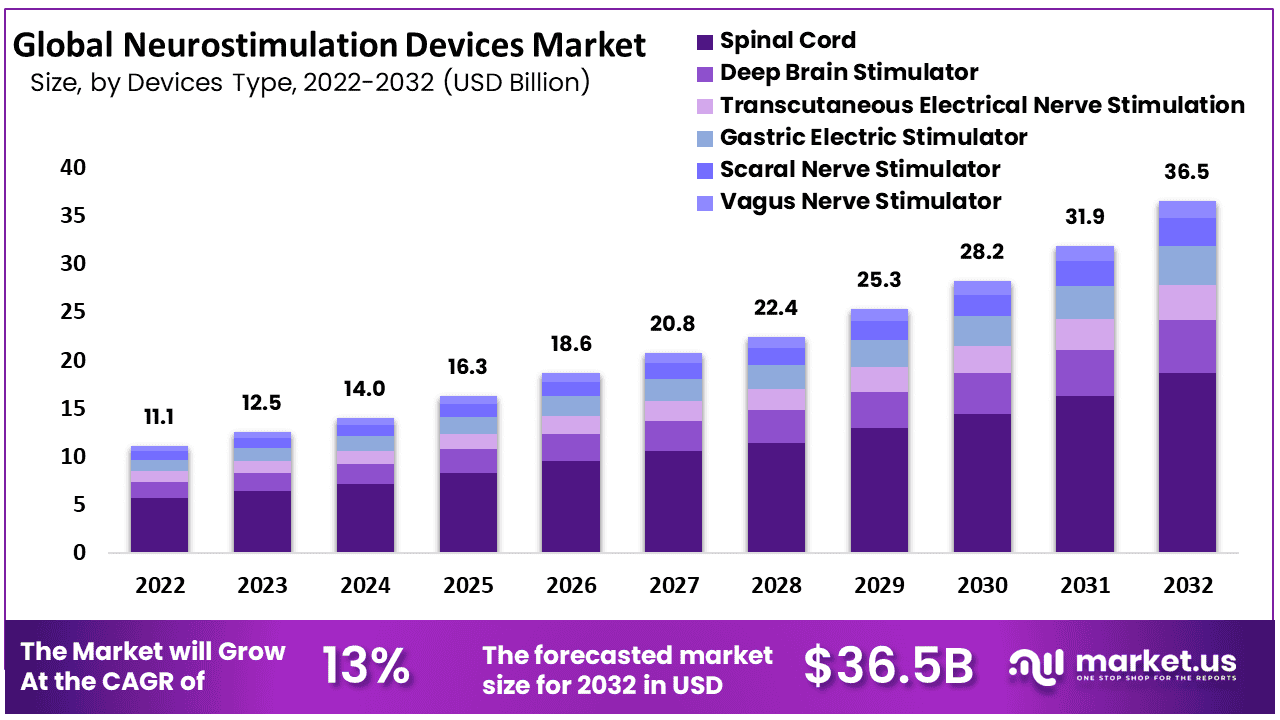
Global Neurostimulation Devices Market size is expected to be worth around USD 36.5 Billion by 2032 from USD 11.1 Billion in 2022, growing at a CAGR of 13% during the forecast period from 2023 to 2032.
Neurostimulation devices are implants, programmable medical devices that provide electrical stimulation to a particular portion of the patients, such as the spinal cord, brain, or peripheral nervous system, to help treat several disorders, including chronic pain, movement disorders, Parkinson’s disease, and epilepsy.
Neurostimulation devices are generally used to diagnose and treat disorders of the nervous system. A neurostimulation device is a key element that is used in neural prosthetics for artificial limbs, artificial vision, and hearing aids. The electrical impulse causes feelings in the injured neurons and benefits in the treatment of chronic pain of pain messages from the neurons to the brain.
The rising boost of neurological illness and chronic pain and neurological illness and the growing geriatric populations are thus boosting the market’s growth. However, the a growing awareness of neurological illness and an increase in investments in development and research for creative and revolutionary neurostimulation equipment for the treatment of neurological illness.
Key Takeaways
- Market Size: The global neurostimulation devices market reached USD 11.1 billion in 2022 and is projected to grow at a CAGR of 13% between 2023 and 2032.
- Device Types:
- Spinal cord stimulators accounted for 51% of the market share in 2022 and are used for chronic neuropathic pain management.
- Deep brain stimulators are used for neurological disorders, especially Parkinson’s disease.
- Sacral nerve stimulators are employed in treating conditions like fecal and urinary incontinence.
- Applications:
- Pain management is the dominant segment due to the prevalence of chronic pain disorders.
- Epilepsy treatment is on the rise due to its efficacy and limited treatment options.
- End-User Segmentation:
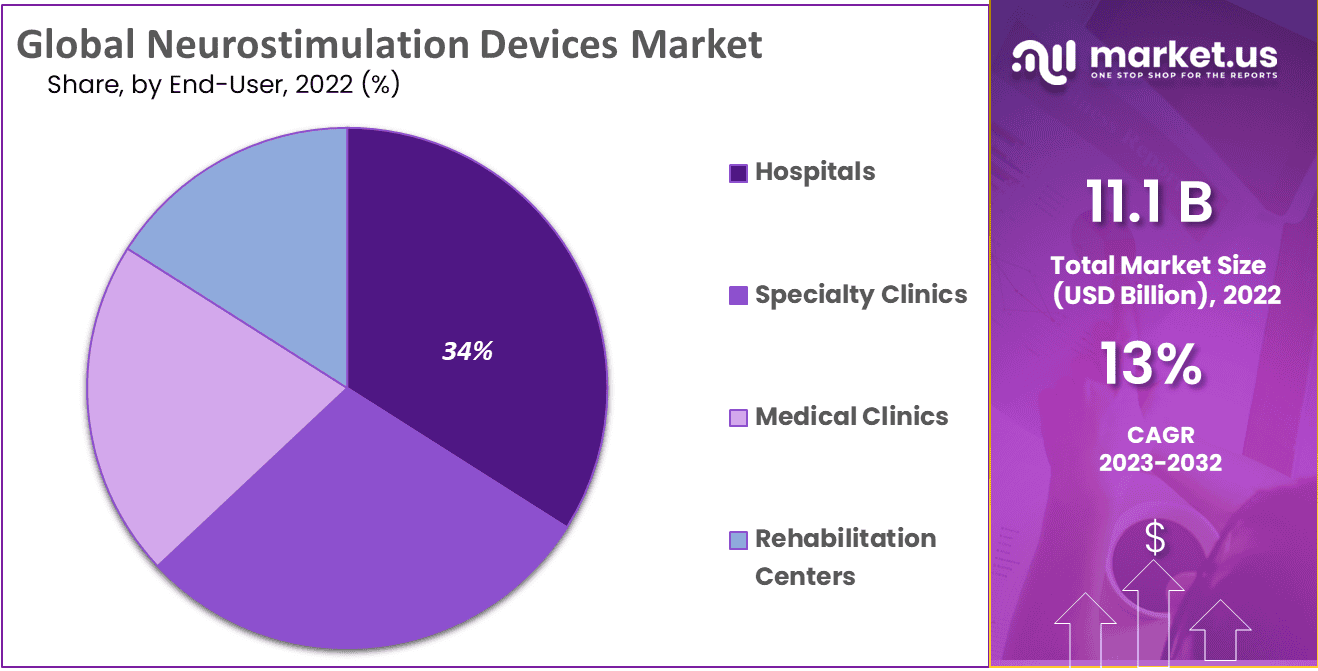
- Hospitals led the market with a 34% revenue share in 2022 due to well-established healthcare infrastructure.
- Specialty clinics are growing as they gain approval for neurostimulation device implantation.
- Market Drivers:
- The rising geriatric population, especially in Parkinson’s disease cases.
- Advancements in technologies like spinal cord stimulation and deep brain stimulation.
- Increasing prevalence of chronic diseases like migraine and epilepsy.
- Market Restraints:
- Risks associated with neurostimulation devices, including surgical procedures and potential adverse effects.
- Strict device authorizations and high costs are limiting market growth.
- Opportunities:
- Initiatives by corporations to address Parkinson’s disease.
- Fast technical advancements to meet unmet medical needs.
- Regional Analysis:
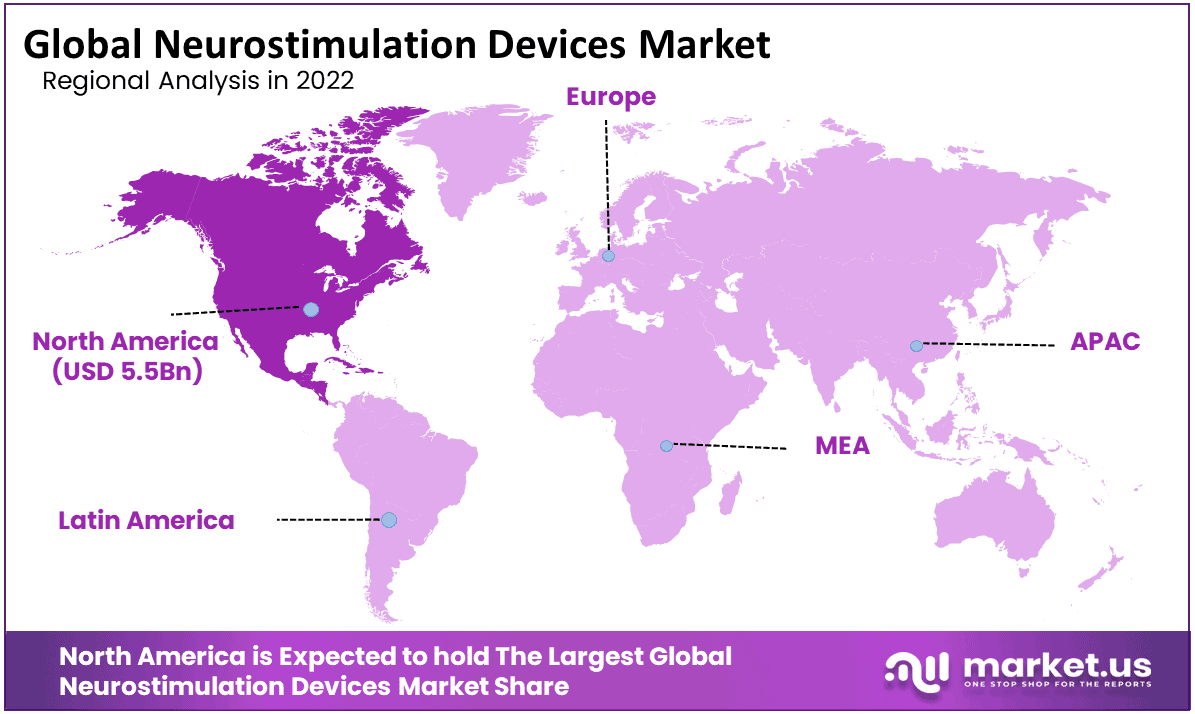
- North America held the largest market share (50%) with the U.S. leading.
- Europe followed with a 28% revenue share.
- The Asia-Pacific region is anticipated to be the highest-growing market.
- Key Players: Leading companies include Medtronic plc, Boston Scientific Corporation, Abbott Laboratories, NDI Medical, Inc., NeuroPace, Inc., Nevro Corp, Synapse Biomedical, and others, focusing on R&D for innovative neurostimulation systems.
Devices Type Analysis
Spinal Cord Stimulator Segment to Witness Significant Growth
Based on device type, the global neurostimulation devices market is classified into transcutaneous electrical nerve stimulation, gastric electric stimulator, sacral nerve stimulator, spinal cord stimulator, deep brain stimulator, and vagus nerve stimulator. The spinal cord stimulator segment accounted for the largest market share of 51% in 2022 due to the extensive scope of product demand and high market permeation of commercially available products in this segment.
Technological innovations in this segment are anticipated to boost the section further. Spinal cord stimulators are useful in non-malignant chronic neuropathic pain management as they mask pain by generating small nerve impulses in excess of creating any functioning changes to the target portion.
Deep Brain stimulators are used in the treatment of various neurological disorders, particularly Parkinson’s disease. This device is based on recent technology and thus is presently undergoing an experimental phase.
The use of these devices for diseases such as cluster headache, Alzheimer’s Tourette Syndrome, refectory epilepsy, and movement disorders by multiple sclerosis is anticipating FDA authorization. Sacral nerve stimulators are used in the medication of chronic diseases, including fecal incontinence and urinary incontinence, and are anticipated to witness the highest CAGR.
Application Analysis
The Pain Management Segment Dominates the Market Growth
Based on application, the neurostimulation devices market is divided into epilepsy, essential tremor, pain management, depression, dystonia, urinary and fecal incontinence, and Parkinson’s disease gastroparesis. The pain management segment registers the highest market share. This prevalence of chronic disorders and increasing product use for pain management on the reason of its high therapeutic significance are the vital factors that boost the growth of this segment.
Epilepsy is a seizure-affecting neurological disorder that affects millions of people worldwide. The high produce efficacy shown in treating epilepsy together with the accessibility of limited treatment options for the disease, is anticipated to boost the segment growth through the forecast period.
End-User Analysis
Hospital Segment Leads the Market Growth
Based on end-user, the market is divided into hospitals, specialty clinics, medical clinics, and rehabilitation centers. The hospital segment dominated the market revenue share of 34% in 2022. due to favorable medical facilities well, established healthcare infrastructure for neurostimulation devices in developed nations, and the high cost of the implantable devices contributed to the projected share of the segments. An increase in the number of hospitals in developed countries and a rise in implantable surgeries of neurostimulation is likely to boost the sector’s growth throughout the forecast period.
However, the approval of modern devices by specialty clinics for neurostimulation device implantation is driving the specialty clinics category to advance. Across the world, However, various regional and national establishments are stimulating patient treatment at home or in outpatient clinics.
Key Market Segments
By Devices Type
- Transcutaneous Electrical Nerve Stimulation
- Gastric Electric Stimulator
- Sacral Nerve Stimulator
- Spinal Cord Stimulator
- Deep Brain Stimulator
- Vagus Nerve Stimulator
By Application
- Epilepsy
- Essential Tremor
- Pain Management
- Depression
- Dystonia
- Urinary and Fecal Incontinence
- Parkinson’s Disease Gastroparesis
By End-User
- Hospitals
- Specialty Clinics
- Medical Clinics
- Rehabilitation Centers
Drivers
The rising Geriatric Population Is Increasing Technological Advancements to Boost Market Value
The global geriatric population is rising at an exceptional rate. The geriatric population in terms of Parkinson’s disease is also rising at a steadfast pace. Extensive R&D activities for developing new products and innovative technologies will additionally drive market growth.
Recent developments such as spinal cord stimulation, deep brain stimulation, vagus nerve stimulation, and sacral nerve stimulation will increase the chance of enhancing market growth.
Increasing Prevalence of Chronic Diseases to Augment Value
Neurostimulation helps in offering therapeutic solutions that have limited solutions, such as migraine and epilepsy. Individuals suffering from depression are prone to cardiovascular diseases, which are anticipated to play into the market value. External aid for an extensive range of development and research activities has also increased.
Restraints
Risks Related to Neurostimulation Devices and Strict Device Authorizations to Hamper Market Growth
The Implementation of neurostimulation devices includes an extensive scope of surgical processes, which cause many associated risks such as hoarseness of voice and allergies. While these adverse effects are frequently temporary, electrical signals commonly generated by these devices can prolong to limit the growth of the market.
The market’s expansion is poised to be restricted by adverse effects such as allergic responses and pricking of the skin owing to the implantation of neurostimulation devices into the body. Apart from these, the higher cost of neurostimulation devices is also reducing market growth.
Opportunity
Increase in initiatives by renewed corporations for handling Parkinson’s disease and the Fast Technical Advancements.
The need for better production efficiency and outcomes has risen, thereby stimulating the formation of cutting-edge products and technology to meet the unmet demands of surgeons and patients. Companies have produced exclusive devices and skills, such as neurostimulation devices, to improve the overall situation of patients affected by neurological illness and provide improved and advanced medicines to meet medical needs.
Regional Analysis
North America Region Accounted Significant Share of the Global Neurostimulation Devices Market
North America accounted for a significant global neurostimulation devices market share of revenue of 50%. And is expected to maintain its dominance during the forecast period. Moreover, strategic government regulations and an increase in the average amount of days required in the FDA authorization procedures may hinder the region’s growth.
Development of innovative neurostimulator authorizations by health authorities for new methods in neurostimulators and acquisitions and mergers to obtain novel technologies and products are important market trends in North America. Europe was followed by the US in terms of revenue share of 28% during the forecast period. Rapid economic development in eastern European countries is anticipated to accelerate the growth.
The Asia-Pacific region provides profitable growth to the key players in the neurostimulator market, as it is projected to be the highest-growing market.
Key Regions
- North America
- The US
- Canada
- Mexico
- Western Europe
- Germany
- France
- The UK
- Spain
- Italy
- Portugal
- Ireland
- Austria
- Switzerland
- Benelux
- Nordic
- Rest of Western Europe
- Eastern Europe
- Russia
- Poland
- The Czech Republic
- Greece
- Rest of Eastern Europe
- APAC
- China
- Japan
- South Korea
- India
- Australia & New Zealand
- Indonesia
- Malaysia
- Philippines
- Singapore
- Thailand
- Vietnam
- Rest of APAC
- Latin America
- Brazil
- Colombia
- Chile
- Argentina
- Costa Rica
- Rest of Latin America
- Middle East & Africa
- Algeria
- Egypt
- Israel
- Kuwait
- Nigeria
- Saudi Arabia
- South Africa
- Turkey
- United Arab Emirates
- Rest of MEA
Key Players Analysis
Manufacturers are further focusing more on R&D activities to develop novel technologies and products. Some of the prominent key market players include Medtronic plc, Boston Scientific Corporation, Abbott Laboratories, NDI Medical, Inc., NeuroPace, Inc., Nevro Corp, Synapse Biomedical, and others. These companies are focusing on tapping the latest technologies to design innovative neurostimulation systems and strengthen the market.
The following are some of the major players in the global neurostimulation devices market industry
Market Key Players
- Medtronic plc
- Boston Scientific Corporation
- Nevro Corporation
- Jude Medical, Inc.
- Abbott
- NeuroPace Inc.
- NDI Medical, LLC
- Cochlear Limited
- EndoStim Inc.
- Electromedics Meditek Private Limited
- Medical Centre Inc.
- Electro Care Private Limited
- Synapse Biomedical Inc.
- LivaNova, PLC
- ElectroCore Inc.
- Cyberonics, Inc.
- Other Key Players
Recent Development
- April 2024: Medtronic’s Inceptiv™ closed-loop spinal cord stimulator also received FDA approval. This device is distinctive for its closed-loop system that senses and adjusts the stimulation automatically, 50 times per second, to sync with the patient’s daily activities. This approval marks the introduction of the only closed-loop SCS system capable of providing full-body 3T MRI access, representing a significant advancement in the treatment of chronic pain. The device was previously approved in Europe and Japan and is expected to be launched in the US shortly after its FDA approval.
- In January 2024: Boston Scientific Corporation announced its acquisition of Axonics, Inc. for $3.7 billion. This deal aims to expand Boston Scientific’s urology portfolio, including neurostimulation devices for treating urinary and bowel dysfunction. Axonics generated a 34% revenue growth in 2023, expecting $366 million in revenue for the year. The acquisition is set to close in the first half of 2024.
- In August 2023: Nevro announced a strategic collaboration with Boston Scientific Corporation valued at $75 million. This partnership aims to enhance and expand the global reach of advanced pain management solutions, combining Nevro’s pioneering SCS technology with Boston Scientific’s expertise in neuromodulation.