


Report Overview
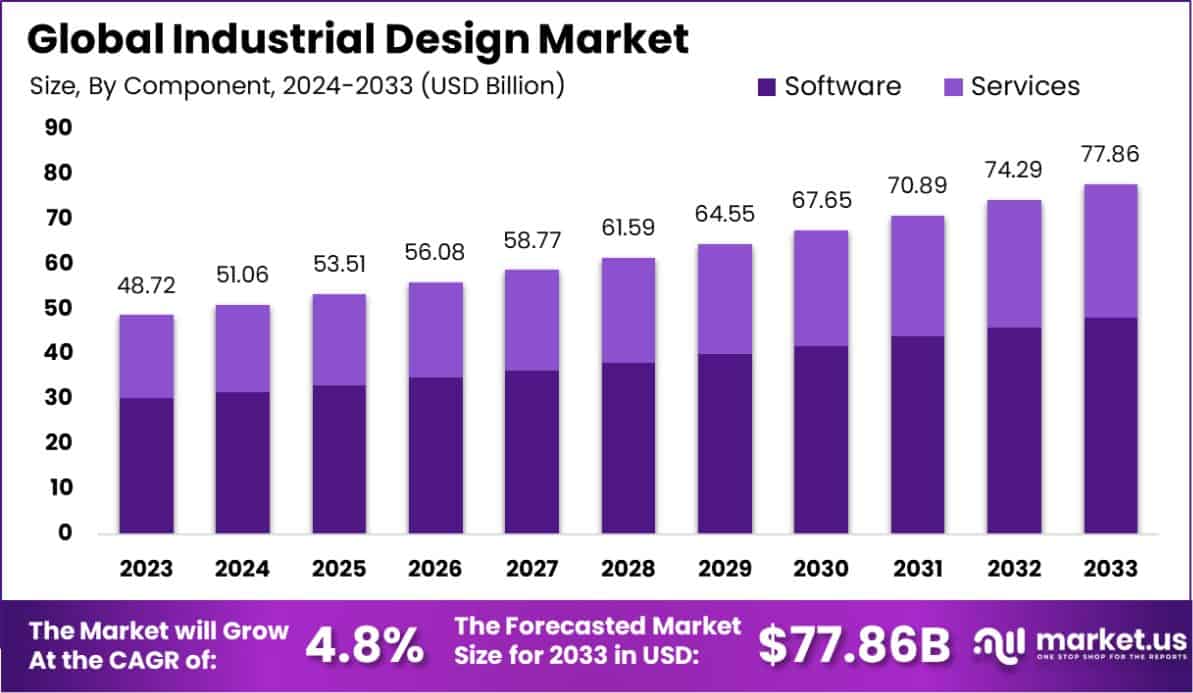
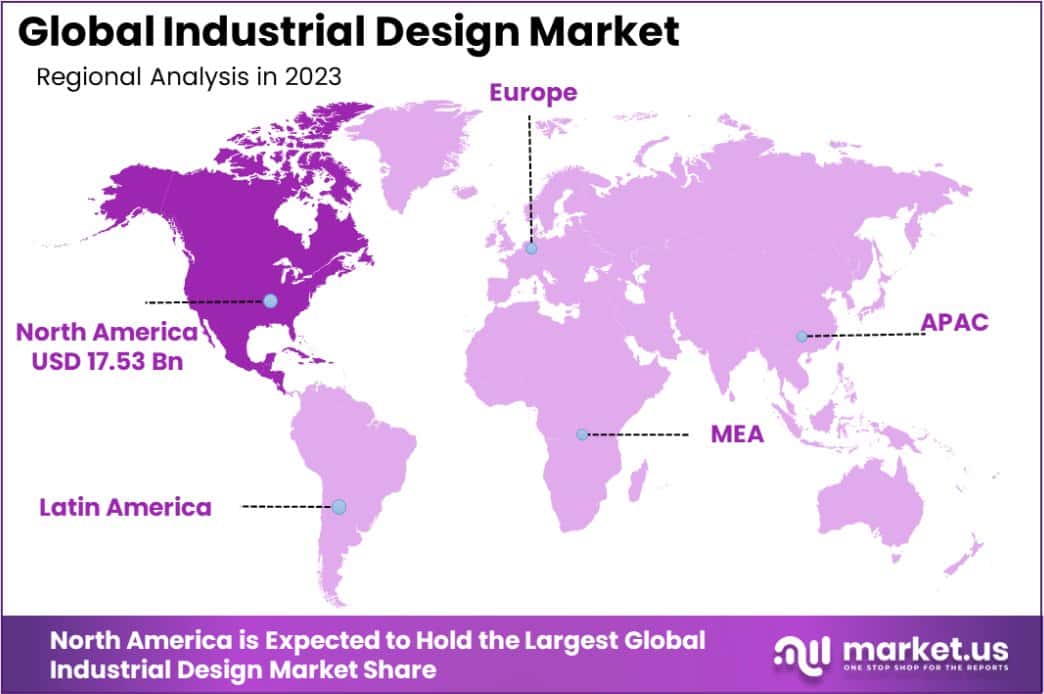
The Global Industrial Design Market size is expected to be worth around USD 77.86 Billion by 2033, from USD 48.72 Billion in 2023, growing at a CAGR of 4.8% during the forecast period from 2024 to 2033. North America dominated a 36% market share in 2023 and held USD 17.53 Billion in revenue from the Industrial Design Market.
Industrial design is a field that focuses on the creation and development of products, systems, and environments that are aesthetically pleasing, functional, and user-friendly. It involves the integration of design principles, engineering concepts, and user-centered approaches to create innovative and practical solutions. The industrial design market encompasses the industry’s activities related to the design, development, and production of various products and systems.
The industrial design market is diverse and covers a wide range of sectors, including consumer electronics, furniture, automotive, medical devices, and packaging, among others. Industrial designers work closely with manufacturers, engineers, marketers, and other professionals to bring new products to market. They play a crucial role in shaping the aesthetics, functionality, and overall user experience of products.
The industrial design market is constantly evolving, driven by technological advancements, changing consumer preferences, and sustainability considerations. Designers are increasingly incorporating digital tools, such as computer-aided design (CAD) software and virtual reality (VR) simulations, to visualize and test their designs before production. Additionally, there is a growing emphasis on sustainable design practices, including the use of eco-friendly materials and the integration of circular economy principles.
In 2023, automotive manufacturers like Ford, GM, and Toyota greatly increased their use of virtual reality (VR) and augmented reality (AR) in industrial design, resulting in a remarkable 25% decrease in prototyping costs.
The adoption of cloud-based collaborative design platforms also experienced significant growth, with a 30% increase in 2023. These platforms enabled real-time collaboration among industrial designers, engineers, and stakeholders, regardless of their physical locations.
In the appliance manufacturing sector, leading companies such as Samsung and LG achieved impressive efficiency gains by incorporating AI-powered design optimization tools. These tools contributed to a 20% reduction in design iteration cycles, streamlining the process of creating and refining product designs.
Key Takeaways
- The global industrial design market is estimated to grow from USD 48.72 billion in 2023 to approximately USD 77.86 billion by 2033, exhibiting a robust CAGR of 4.8% during the forecast period.
- In 2023, Software held a dominant market position in the By Component segment of the Industrial Design Market, with a 62% share.
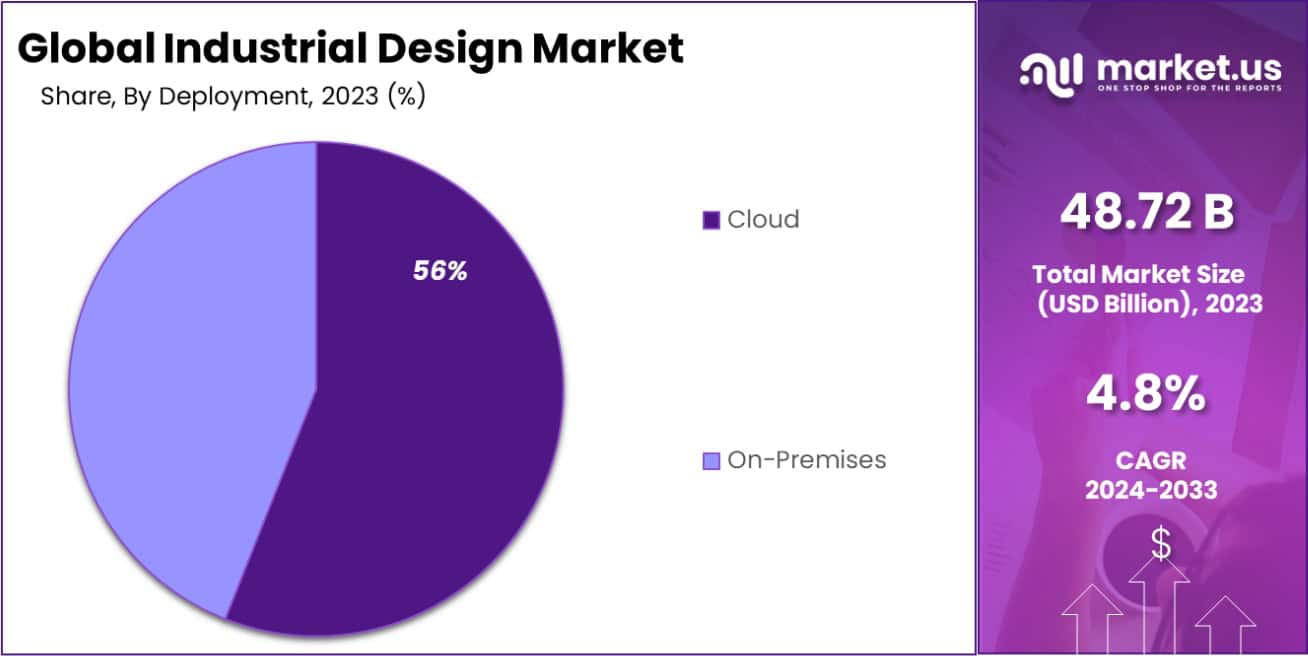
- In 2023, Cloud held a dominant market position in the By Deployment segment of the Industrial Design Market, with a 56% share.
- In 2023, Automotive held a dominant market position in the By Application segment of Industrial Design Market, with a 31% share.
- North America dominated a 36% market share in 2023 and held USD 17.53 Billion in revenue of the Industrial Design Market.
By Component Analysis
In 2023, Software held a dominant market position in the By Component segment of the Industrial Design Market, capturing a 62% share. This substantial market share underscores the critical role that software solutions play in modern industrial design, offering robust tools for modeling, simulation, and design optimization that are integral to streamlining the product development process.
Services, while also vital, accounted for a smaller portion of the market. These services include consulting, implementation, and maintenance, which support the deployment and operational efficiency of software solutions in industrial design.
The prominence of software in this market can be attributed to the increasing demand for advanced design software that integrates seamlessly with 3D printing technologies and CAD systems. This integration enables designers to create precise and complex product specifications that meet exacting manufacturing standards.
Additionally, the push towards automation and the adoption of Industry 4.0 technologies have made software solutions even more indispensable as companies seek to enhance their competitive edge through improved design capabilities and shorter product lifecycle times. As industries continue to innovate, the reliance on sophisticated software solutions is expected to drive further growth in this segment.
By Deployment Analysis
In 2023, Cloud held a dominant market position in the By Deployment segment of the Industrial Design Market, with a 56% share. This significant portion highlights the growing preference for cloud-based solutions in industrial design, driven by their scalability, flexibility, and cost-effectiveness.
Cloud deployment allows designers and companies to access powerful computing resources and collaborative tools without the heavy initial investment and maintenance costs associated with on-premises infrastructure.
On the other hand, the on-premises segment, although smaller, continues to play a crucial role for organizations prioritizing data control, security, and customization. These setups are particularly favored in industries where regulatory compliance and data sovereignty are critical.
The cloud’s dominance is fueled by the digital transformation trends across industries, as more businesses shift towards remote working environments and distributed teams. Cloud platforms enhance the capability of industrial designers to work seamlessly from any location, ensuring continuity and efficiency in design processes.
The ongoing innovations in cloud technology, including enhanced security measures and industry-specific customizations, are likely to further propel the adoption of cloud solutions in the industrial design sector.
By Application Analysis
In 2023, Automotive held a dominant market position in the By Application segment of the Industrial Design Market, with a 31% share. This leadership underscores the critical role of innovative design in the automotive industry, which is continuously evolving with the integration of new technologies and consumer preferences for aesthetics, functionality, and sustainability.
The automotive sector’s demand for industrial design is primarily driven by the need for product differentiation and the development of newer, more efficient vehicle designs that incorporate advanced safety features and eco-friendly materials.
Meanwhile, other segments like Machinery & Equipment, Consumer Goods, Healthcare, and Others also contribute significantly to the market. Machinery & Equipment and Consumer Goods are pivotal in incorporating ergonomic and user-friendly designs, which enhance usability and customer satisfaction. Healthcare, another vital segment, relies on industrial design to create medical devices and tools that are not only functional but also adhere to stringent safety standards.
The variety in application sectors highlights the versatility and adaptability of industrial design, crucial for catering to specific industry needs and consumer demands. As technologies like AI and IoT become more pervasive, the scope of industrial design is expanding, further driving innovation across all these sectors.
Key Market Segments
By Component
- Software
- Services
By Deployment
- Cloud
- On-Premises
By Application
- Automotive
- Machinery & Equipment
- Consumer Goods
- Healthcare
- Others
Driver
Technological Advancements and Integration
The relentless pace of technological advancements, particularly in digital technologies such as IoT, AI, and 3D printing, serves as a significant driver for the industrial design market. These technologies have revolutionized the way products are designed, developed, and brought to market, enabling more complex, efficient, and personalized designs. For instance, IoT integration in product design enhances functionality and user interaction, offering consumers more value.
AI algorithms can predict user preferences and improve design processes, while 3D printing allows for rapid prototyping, reducing time-to-market and enabling more iterative design processes. This integration of cutting-edge technologies into industrial design not only fuels innovation but also meets the growing consumer demand for high-tech, connected, and sustainable products.
Restraint
High Cost of Design and Development
One of the primary restraints in the industrial design market is the high cost associated with the design and development process. Implementing sophisticated design technologies such as CAD software, 3D modeling, and advanced materials can be prohibitively expensive, particularly for small and medium-sized enterprises (SMEs).
Additionally, the need for specialized talent to operate these technologies and execute complex design processes further escalates costs. This financial barrier can limit the ability of smaller companies to invest in innovative design solutions, potentially stifling creativity and innovation in the market. Moreover, the high cost of design and development may also lengthen the ROI period for businesses, making it a significant consideration in the decision-making process.
Opportunity
Sustainable and Eco-Friendly Design
The growing consumer awareness and demand for sustainable and eco-friendly products present a substantial opportunity for the industrial design market. As environmental concerns become more prominent, companies are increasingly focusing on green design principles, aiming to reduce environmental impact through the use of recyclable materials, energy-efficient production processes, and sustainable lifecycle practices.
This shift towards sustainability opens up new avenues for innovation in design, encouraging the development of products that are not only environmentally friendly but also economically viable. The emphasis on sustainability also aligns with global regulatory trends, where stricter environmental standards are being implemented. Thus, the industrial design market stands to benefit significantly from the integration of sustainable design practices, offering a competitive edge to companies that prioritize eco-friendly solutions.
Challenge
Rapidly Changing Consumer Preferences
A major challenge facing the industrial design market is the rapidly changing consumer preferences that demand continuous innovation and flexibility in design. The digital age has led to consumers having more access to information and options, resulting in more dynamic and sometimes unpredictable market trends. Designers and companies must constantly anticipate and adapt to these shifts to stay relevant and competitive.
This necessitates a highly agile and responsive design process, capable of incorporating new consumer insights and trends. However, the speed at which preferences change can outpace the ability of firms to research, develop, and launch new designs, posing a significant challenge to maintaining market relevance and consumer engagement
Emerging Trends
- Integration of IoT and Smart Technologies: With the rise of the Internet of Things (IoT) and smart technologies, industrial design is increasingly incorporating connectivity and interactivity into products. This trend includes the integration of sensors, data analytics, and smart interfaces to create products that offer enhanced functionality and user experiences.
- Sustainable Design and Circular Economy: There is a growing emphasis on sustainable design practices in the industrial design market. Designers are incorporating eco-friendly materials, considering the entire lifecycle of products, and implementing circular economy principles to minimize waste and promote a more sustainable approach to design and manufacturing.
- User-Centered and Inclusive Design: User-centered design approaches are gaining traction in the industrial design market. Designers are focusing on understanding user needs, preferences, and behaviors to create products that are intuitive, accessible, and inclusive. This trend involves considering diverse user demographics and incorporating universal design principles.
- Digital Design Tools and Prototyping: Digital design tools, such as computer-aided design (CAD) software and 3D modeling, are becoming increasingly sophisticated and accessible. These tools allow designers to create realistic prototypes, test design iterations, and collaborate more effectively, resulting in shorter product development cycles and improved design outcomes.
- Cross-Disciplinary Collaboration: Industrial design is increasingly embracing cross-disciplinary collaboration. Designers are working closely with engineers, marketers, data scientists, and other professionals to leverage their expertise and insights. This collaborative approach fosters innovation, enables the integration of emerging technologies, and ensures that design solutions align with business goals and market demands.
Growth Factors
- Increasing Product Differentiation: In today’s competitive market, product differentiation is crucial for companies to stand out and capture consumer attention. Industrial design plays a key role in creating visually appealing and unique products that differentiate brands and attract customers.
- Rising Consumer Expectations: Consumers are becoming more discerning and demanding when it comes to product design. They expect products that not only function well but also offer an enjoyable and intuitive user experience. Industrial design helps companies meet these evolving consumer expectations and build strong brand loyalty.
- Technological Advancements: Advances in technology, such as additive manufacturing (3D printing), virtual reality (VR), and augmented reality (AR), are opening up new possibilities in industrial design. These technologies enable designers to explore innovative design concepts, create realistic prototypes, and visualize products in immersive ways.
- Growing Focus on Branding and User Experience: Branding and user experience have become critical factors in product success. Industrial design plays a significant role in shaping brand identity and providing a positive user experience. Companies are investing in industrial design to create cohesive brand experiences and build strong emotional connections with consumers.
- Expanding Market Opportunities: The industrial design market is expanding as companies across industries realize the value of good design. From consumer electronics to healthcare and automotive sectors, there is a growing demand for well-designed products. This presents opportunities for industrial designers to work in diverse sectors and contribute to the growth of the market.
Regional Analysis
In the Industrial Design Market, North America emerged as the dominating region in 2023, holding a substantial 36% market share valued at USD 17.53 billion. This dominance is attributed to the region’s robust manufacturing sector, high technological adoption rates, and significant investments in R&D activities. North America’s lead is supported by the presence of numerous leading industrial design firms and technology giants that continuously push the boundaries of innovation in product design and functionality.
Following North America, Europe and Asia Pacific are also significant contributors to the global market. Europe’s market is driven by its strong automotive and industrial machinery sectors, which are pivotal in incorporating cutting-edge design and technology. Meanwhile, Asia Pacific is witnessing rapid growth due to increasing manufacturing activities and the expansion of automotive and consumer electronics industries, particularly in China and India.
The Middle East & Africa and Latin America regions, though smaller in comparison, are experiencing growth influenced by increasing industrialization and a growing focus on enhancing manufacturing capabilities. These regions are gradually adopting advanced design technologies to improve product quality and production efficiency, contributing to the global spread and technological evolution of the industrial design market.
Key Regions and Countries Covered in this Report
- North America
- The US
- Canada
- Europe
- Germany
- France
- The UK
- Spain
- Italy
- Rest of Europe
- APAC
- China
- Japan
- South Korea
- India
- Australia
- Singapore
- Rest of Asia Pacific
- Latin America
- Brazil
- Mexico
- Rest of Latin America
- Middle East & Africa
- South Africa
- Saudi Arabia
- UAE
- Rest of MEA
Key Players Analysis
In 2023, the global Industrial Design Market saw significant contributions from leading players like Autodesk, Inc., Dassault Systèmes, and PTC Inc., each bringing unique strengths to the industry.
Autodesk, Inc. has long been a pillar in the industrial design market, renowned for its comprehensive suite of software solutions that cater to architects, engineers, and designers. The company’s flagship product, AutoCAD, along with newer cloud-based platforms like Fusion 360, continues to set industry standards for design precision and innovation.
Autodesk’s commitment to integrating AI and machine learning into its offerings has further solidified its market position by enhancing user experience and functionality, making complex design tasks more manageable and efficient.
Dassault Systèmes offers a wide array of software solutions that are pivotal in transforming the way products are designed, produced, and supported. Renowned for its 3DEXPERIENCE platform, Dassault Systèmes empowers businesses to design and test in a virtual environment, thereby reducing costs and time to market.
The company’s strong focus on sustainable innovation and its ability to offer tailored solutions across industries like aerospace, defense, and healthcare allows it to maintain a competitive edge.
PTC Inc. specializes in digital solutions that transform how products are created and serviced. Notably, its Creo and Windchill platforms have become essential tools in product lifecycle management (PLM) and 3D CAD modeling. PTC’s emphasis on the Internet of Things (IoT) and augmented reality (AR) provides industrial designers with advanced tools for smart connected product design, enabling more immersive and intuitive user experiences.
Top Market Leaders
- Autodesk, Inc.
- Dassault Systèmes
- PTC Inc.
- Siemens AG
- Hexagon AB
- Bentley Systems, Inc.
- Shapr3D
- Adobe Inc.
- Altium Limited
- Corel Corporation
- Other key players
Recent Developments
- In February 2024, Autodesk and Cadence partnered to transform PCB design and 3D modeling, enhancing collaboration and efficiency while integrating Cadence tools with Autodesk Fusion for innovative electromechanical workflows in the electronics industry.
- In June 2023, L&T Technology Services expanded its partnership with PTC to develop future-ready solutions for aerospace, defense, and transportation, leveraging Windchill PLM to enhance digital transformation from design to manufacturing.
- In March 2024, Canva acquired Serif Ltd., enhancing its graphic design capabilities with the Affinity suite, targeting professional designers. This move positions Canva to better compete with Adobe’s creative applications amid evolving market dynamics.









