


Report Overview
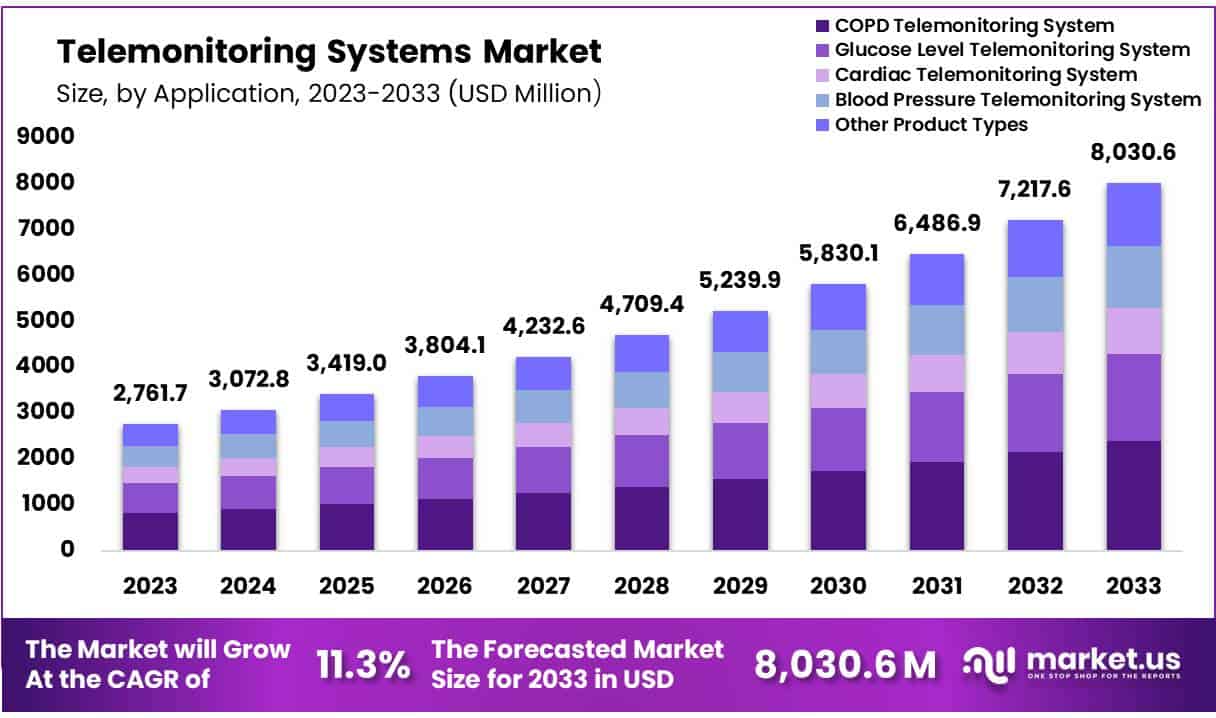
Global Telemonitoring Systems Market size is expected to be worth around USD 8,030.6 Million by 2033 from USD 2,761.7 Million in 2023, growing at a CAGR of 11.3% during the forecast period from 2024 to 2033.
Telemonitoring involves remotely transmitting patient data such as symptom scores, heart rate, oxygen saturation, and blood pressure, among other physiological measurements, for healthcare monitoring. This technology enables continuous access to important clinical markers for both patients and professionals. Particularly beneficial in areas with limited healthcare services, telemonitoring can enhance the quality of life for individuals with chronic conditions while reducing overall healthcare costs. Additionally, features like remote counseling and radiation services help reduce wait times, maximize resource use, and improve productivity.
Telemonitoring systems, which incorporate communication technology for remote medical diagnostics, allow physicians to monitor essential patient data and assess various health parameters anytime, enhancing patient care outside traditional settings. The integration of the Internet of Things (IoT) is a significant trend within the market, exemplified by IoT-enabled medical wearable sensors that transmit data to central monitoring systems.
The market’s growth is driven by an increasing consumer preference for effective home monitoring solutions and a reduction in hospital visits. Other significant drivers include the growing elderly population, the rise in chronic non-communicable diseases such as Alzheimer’s, cardiovascular diseases, diabetes, and cancer, and a preference for convenient health monitoring due to an expanding patient base. Technological advancements in healthcare devices, along with increasing investment in research and development, are also fostering market expansion and presenting new opportunities.
This market report on telemonitoring systems provides an analysis of recent developments, trade regulations, import-export details, production analysis, and market dynamics. It also discusses the impact of local and global market players, emerging opportunities, regulatory changes, strategic growth analysis, and technological innovations.
Key Takeaways
- Market Size:Telemonitoring Systems Market size is expected to be worth around USD 8,030.6 Million by 2033 from USD 2,761.7 Million in 2023.
- Market Growth: The market growing at a CAGR of 11.3% during the forecast period from 2024 to 2033.
- Component Analysis: In 2023, software components dominated the market, accounting for 54.1% of the overall market share.
- Mode of Delivery Analysis: In 2023, the Telemonitoring Systems market witnessed significant dominance by web-based platforms, which held a 58.1% market share.
- Application Analysis: The Telemonitoring Systems market saw significant segmentation by application, with COPD Telemonitoring Systems taking the lead, holding a 29.7% market share.
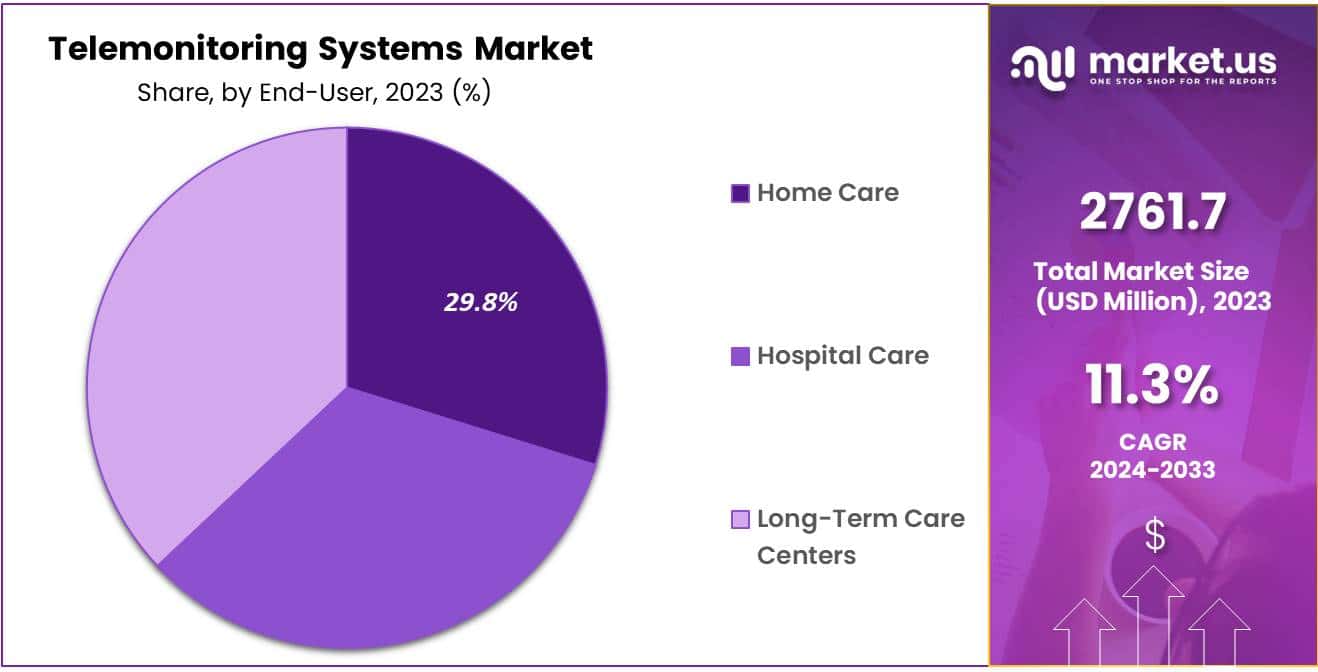
- End-Use Analysis: In 2023, the Telemonitoring Systems market saw Home Care settings emerge as the dominant end-user, accounting for 27.8% of the market share.
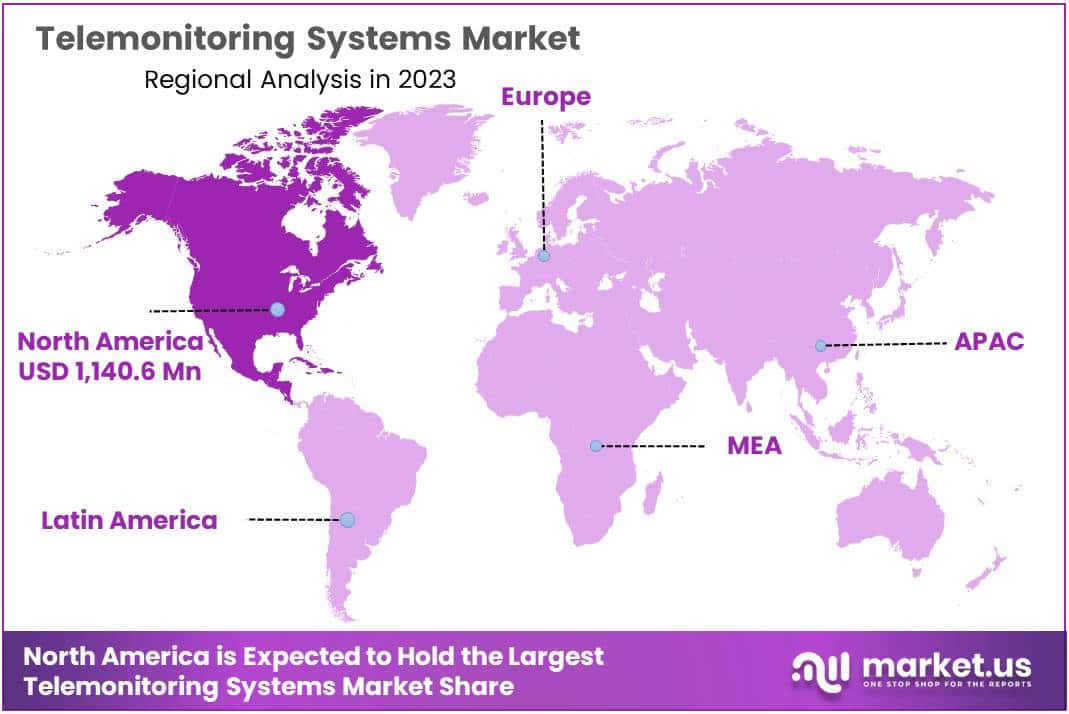
- Regional Analysis: In 2023, North America held a dominant position in the Telemonitoring Systems market, capturing 41.3% of the global market share.
By Component Analysis
The Telemonitoring Systems market has seen significant segmentation, particularly in the components used within the system. In 2023, software components dominated the market, accounting for 54.1% of the overall market share. This substantial share underscores the critical role that software plays in the functionality of telemonitoring systems, serving as the backbone for data collection, analysis, and communication between patients and healthcare providers. Software solutions in telemonitoring systems enable the seamless transmission and interpretation of health data, facilitating timely medical decisions and interventions.
On the other hand, hardware components, although essential, held a lesser share of the market. These components include the physical devices and sensors that gather physiological data from patients. The hardware works in tandem with the software to monitor various health metrics effectively. The integration of advanced sensors and wearable technology continues to evolve, enhancing the efficiency and reliability of telemonitoring systems. This synergy between hardware and software is vital for expanding telemonitoring capabilities and improving patient outcomes in remote healthcare scenarios.
Mode of Delivery Analysis
In 2023, the Telemonitoring Systems market witnessed significant dominance by web-based platforms, which held a 58.1% market share. This prevalence underscores the accessibility and efficiency of web-based systems in delivering telemonitoring services. Web-based telemonitoring platforms facilitate real-time communication and data exchange between patients and healthcare providers, making them integral for continuous patient monitoring and management. These platforms are highly favored for their ease of use, compatibility with various devices, and broad accessibility, requiring only an internet connection.
While web-based solutions lead the market, cloud-based systems are also gaining traction, providing scalable, flexible, and secure data management solutions. Cloud-based telemonitoring represents a shift towards more dynamic and robust data handling capabilities, allowing for expansive data storage and sophisticated analytical tools. As the healthcare industry continues to evolve towards more integrated and patient-centered care models, the synergy between web-based and cloud-based telemonitoring systems is expected to enhance remote patient monitoring effectiveness and drive future market growth.
By Application Analysis
In 2023, the Telemonitoring Systems market saw significant segmentation by application, with COPD Telemonitoring Systems taking the lead, holding a 29.7% market share. This dominance highlights the crucial role of remote monitoring technologies in managing chronic obstructive pulmonary disease, offering patients and healthcare providers real-time data for better disease management and potentially reducing hospital admissions and healthcare costs.
Other notable segments include Glucose Level Telemonitoring Systems, which are pivotal for diabetic patients, allowing for continuous monitoring and adjustment of blood sugar levels. Cardiac Telemonitoring Systems also play a vital role, especially for patients with heart conditions, providing continuous cardiac output and rhythm analysis to preempt critical situations. Additionally, Blood Pressure Telemonitoring Systems are essential for patients with hypertension, helping manage and record blood pressure readings regularly, thus enabling timely interventions.
The diversified application of telemonitoring systems across various health parameters not only facilitates specific and effective management of chronic conditions but also underscores the growing reliance on technology in personalized patient care.
End-User Analysis
In 2023, the Telemonitoring Systems market saw Home Care settings emerge as the dominant end-user, accounting for 27.8% of the market share. This significant portion highlights the increasing shift towards in-home healthcare solutions, driven by patient preference for comfort and cost-effectiveness. Home Care solutions enable continuous monitoring of patients in a familiar environment, reducing the need for frequent hospital visits and allowing for timely interventions, which is particularly beneficial for chronic disease management.
Meanwhile, Hospital Care and Long-Term Care Centers also integrate telemonitoring systems into their patient care protocols. In hospitals, these systems enhance patient monitoring by providing continuous data on vital signs, thus aiding in critical care and improving patient management efficiency. Long-Term Care Centers utilize telemonitoring to support elderly patients or those with long-term health conditions, focusing on maintaining stability and preventing complications.
Overall, the increasing market share of Home Care telemonitoring systems reflects a broader healthcare trend towards decentralized, patient-centered care, catering to a wide spectrum of needs across different healthcare settings.
Key Market Segments
By Component
- Hardware
- Software
Mode of Delivery
- Web-based
- Cloud- based
By Application
- COPD Telemonitoring System
- Glucose Level Telemonitoring System
- Cardiac Telemonitoring System
- Blood Pressure Telemonitoring System
End-User
- End-User
- Home Care
- Hospital Care
- Long-Term Care Centers
Driver
Increasing Chronic Disease Prevalence
The rising prevalence of chronic diseases such as diabetes, cardiovascular disorders, and respiratory conditions is a significant driver for the Telemonitoring Systems market. These diseases require continuous monitoring to effectively manage and mitigate severe health complications.
Telemonitoring systems provide a practical solution by enabling real-time tracking of patients’ health metrics from the comfort of their homes, reducing the frequency of hospital visits and allowing for early intervention. This convenience and efficiency in managing chronic conditions enhance patient outcomes and drive the demand for telemonitoring technologies across global healthcare systems.
Trend
Integration of AI and IoT Technologies
A major trend in the Telemonitoring Systems market is the integration of Artificial Intelligence (AI) and the Internet of Things (IoT). These technologies enhance the capabilities of telemonitoring systems through smarter data analytics and more connected devices.
AI algorithms can predict health events by analyzing data trends, while IoT devices provide seamless data collection and transmission. This integration facilitates more personalized and proactive care, improving patient engagement and compliance with treatment protocols. The advanced analytics also help healthcare providers in making informed decisions, thereby improving the quality of care delivered.
Restraint
Data Privacy and Security Concerns
Data privacy and security remain significant restraints in the adoption of Telemonitoring Systems. As these systems handle sensitive health information, there is a heightened risk of data breaches and cyber attacks, which could lead to privacy violations and loss of trust among users.
Regulatory challenges related to data protection and the need for robust cybersecurity measures to safeguard patient information complicate the broader implementation of telemonitoring solutions. Overcoming these hurdles is crucial for ensuring user confidence and fostering wider acceptance of telemonitoring technologies.
Opportunity
Expansion into Emerging Markets
Emerging markets present a significant opportunity for the expansion of the Telemonitoring Systems market. Many regions with growing economies are experiencing rapid urbanization, increased healthcare expenditure, and a rising awareness of chronic disease management.
However, these areas often lack adequate healthcare infrastructure, creating a demand for innovative healthcare solutions like telemonitoring. By tapping into these markets, companies can not only increase their customer base but also play a pivotal role in transforming healthcare delivery through technology, making healthcare more accessible and efficient for a larger population.
Regional Analysis
In 2023, North America held a dominant position in the Telemonitoring Systems market, capturing 41.3% of the global market share. This significant presence is attributed to advanced healthcare infrastructure, high adoption rates of digital health technologies, and a strong emphasis on chronic disease management and preventive care across the region.
The market’s growth is further supported by the presence of major technology and healthcare companies driving innovation, along with supportive government policies promoting telehealth. Moreover, the increasing prevalence of chronic conditions and an aging population in North America continue to drive the demand for telemonitoring solutions, underscoring the region’s pivotal role in the global market.
Key Regions and Countries
North America
- US
- Canada
Europe
- Germany
- France
- The UK
- Spain
- Italy
- Russia
- Netherland
- Rest of Europe
Asia Pacific
- China
- Japan
- South Korea
- India
- New Zealand
- Singapore
- Thailand
- Vietnam
- Rest of APAC
Latin America
- Brazil
- Mexico
- Rest of Latin America
Middle East & Africa
- South Africa
- Saudi Arabia
- UAE
- Rest of MEA
Key Players Analysis
The Telemonitoring Systems market is characterized by a competitive landscape where key players are heavily invested in advancing technology and expanding their reach. These market leaders typically focus on innovation, particularly in integrating AI and IoT capabilities to enhance system functionalities and user engagement. They also concentrate on strategic partnerships and acquisitions to broaden their market presence and improve service offerings.
Additionally, these companies often invest heavily in research and development to stay ahead of technological trends and regulatory changes. Their efforts are further aimed at improving the accessibility and reliability of telemonitoring systems to meet the growing demand for home-based medical care.
Market Key Players
- Abbott Laboratories
- GE Healthcare Systems (General Electric Company)
- Care Innovations LLC
- Koninklijke Philips NV
- Aerotel Medical Systems Ltd
- Boston Scientific Corporation
- 7.1.7 Resideo Technologies Inc.
- Sparrow Health System
- InfoBionic Inc.
- AMD Global Telemedicine Inc.
- SHL Telemedicine
- Omron Corporation
- Nihon Kohden Corporation
Recent Developments
- Abbott Laboratories: In July 2023, Abbott Laboratories announced the acquisition of a small technology firm specializing in advanced algorithms for heart rate monitoring, enhancing their existing telemonitoring solutions. This strategic move aims to bolster Abbott’s cardiovascular telemonitoring capabilities by integrating superior predictive technologies into their platforms.
- GE Healthcare Systems: GE Healthcare launched a new telemonitoring system in August 2023, designed to improve remote patient monitoring for chronic disease sufferers. This system features enhanced data analytics and compatibility with multiple medical devices, offering clinicians real-time insights into patient health.
- Care Innovations LLC: In September 2023, Care Innovations LLC merged with a leading software development company to enhance their telemonitoring services. This merger is expected to expand their service offerings by integrating innovative software solutions that support more complex patient monitoring and data analysis needs.
- Koninklijke Philips NV: Philips introduced a next-generation telemonitoring system in June 2023, which includes AI-driven diagnostic tools and improved user interfaces. This launch reflects Philips’ ongoing commitment to transforming patient care through innovative telehealth technologies.









