


Report Overview
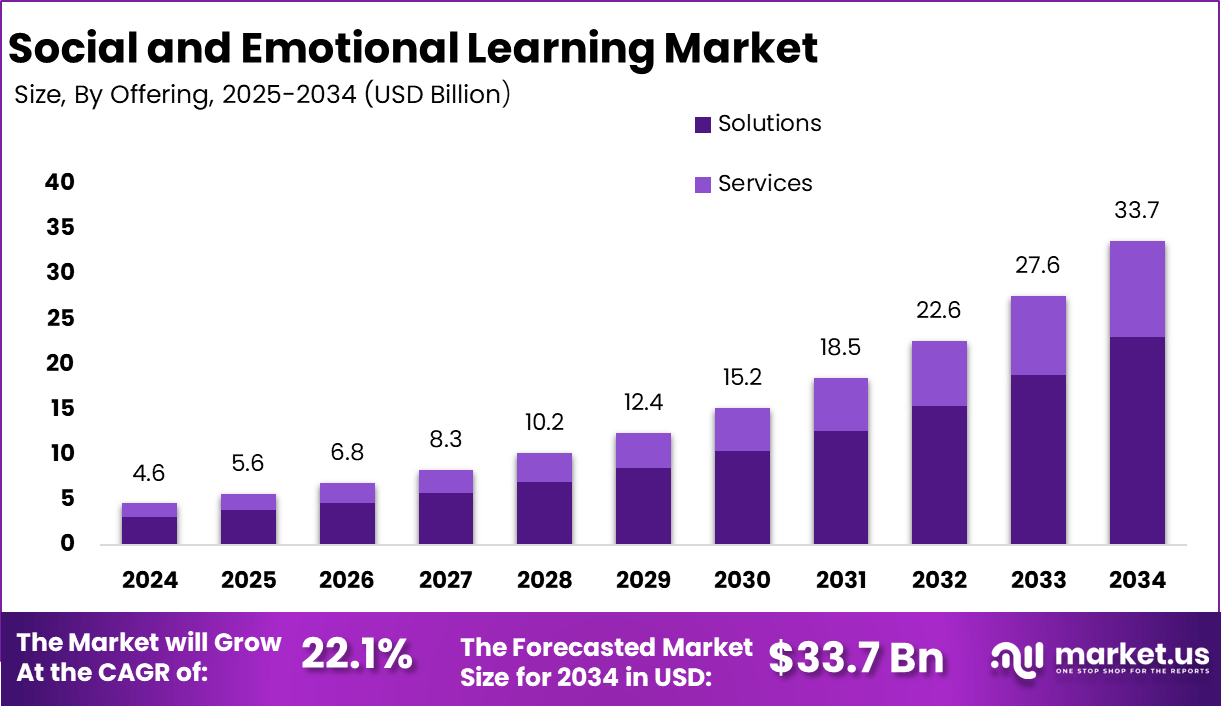
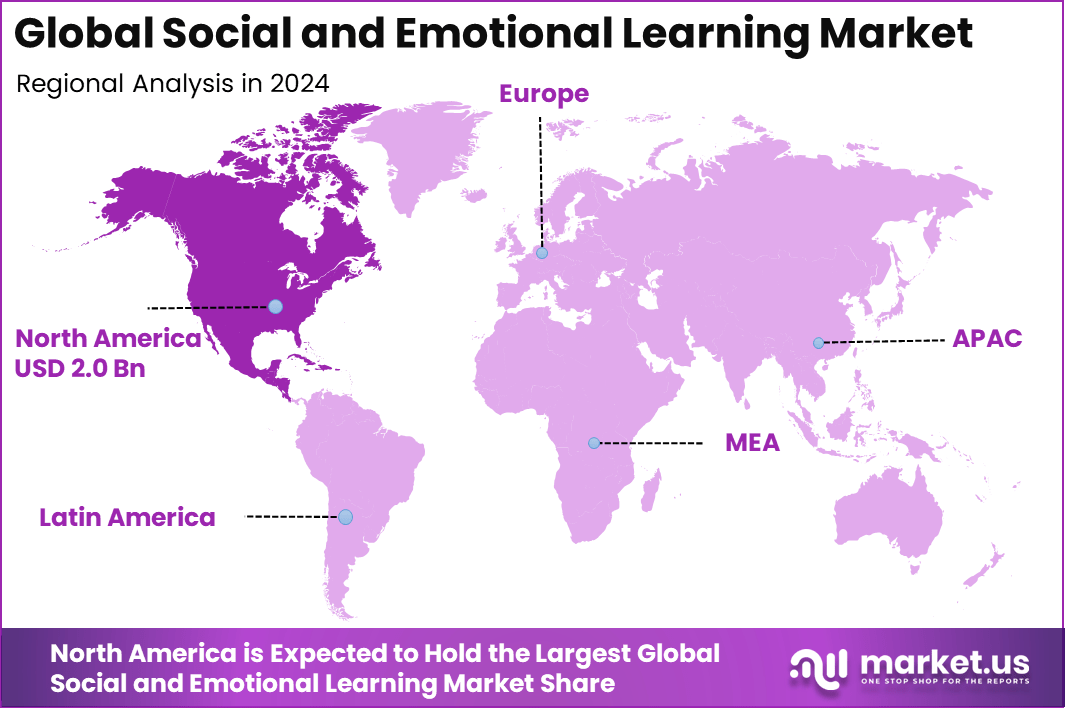
The Global Social and Emotional Learning Market size is expected to be worth around USD 33.7 Billion by 2034, from USD 4.6 Billion in 2024, growing at a CAGR of 22.1% during the forecast period from 2025 to 2034. In 2024, North America held a dominant market position, capturing more than a 42.8% share, holding USD 2 Billion revenue.
The Social and Emotional Learning (SEL) market is focused on educational programs and tools that help individuals, primarily students, develop essential social and emotional skills. These skills include managing emotions, building healthy relationships, making responsible decisions, and developing empathy. SEL is increasingly recognized as vital not only for academic success but for overall well-being and personal development.
Top driving factors for SEL market growth include growing awareness about mental health and emotional well-being, particularly in educational environments. The rising emphasis on holistic education that supports emotional and social development alongside academics fuels demand. For instance, over 60% of SEL delivery now leverages web-based platforms, providing flexibility and accessibility in learning.
The increasing necessity for emotional regulation skills among students facing diverse challenges, such as stress and social complexity, also drives program adoption. These programs have shown benefits like improved classroom behavior and reduced incidents of bullying, making them a priority in school curriculums.
Demand analysis reveals that elementary schools currently constitute the largest segment in the SEL market, accounting for nearly half of market share in some regions. Middle and high schools are the fastest-growing segments, driven by the need to address adolescent developmental challenges. Technologies such as web-based platforms, apps, AI, virtual reality, and interactive gaming are increasingly adopted to deliver SEL content effectively.
Key Takeaway
- Solutions segment leads with 68.3%, as schools prioritize packaged SEL platforms over standalone services.
- Self-management competency accounts for 24.5%, showing strong emphasis on student focus, resilience, and goal-setting skills.
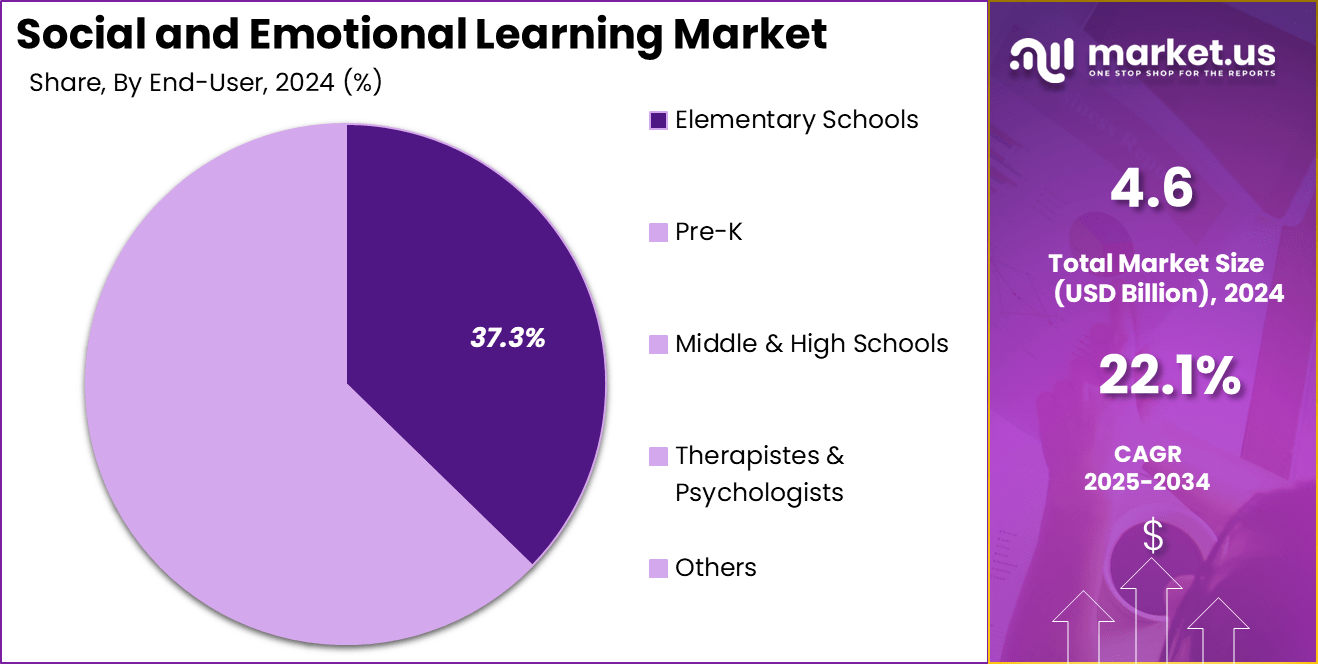
- Elementary schools represent 37.3%, highlighting early adoption of SEL programs in foundational education.
- Web-based type dominates with 61.8%, reflecting demand for digital and scalable SEL delivery methods.
- North America holds the largest regional share at 42.8%, driven by strong policy support and school-level investments.
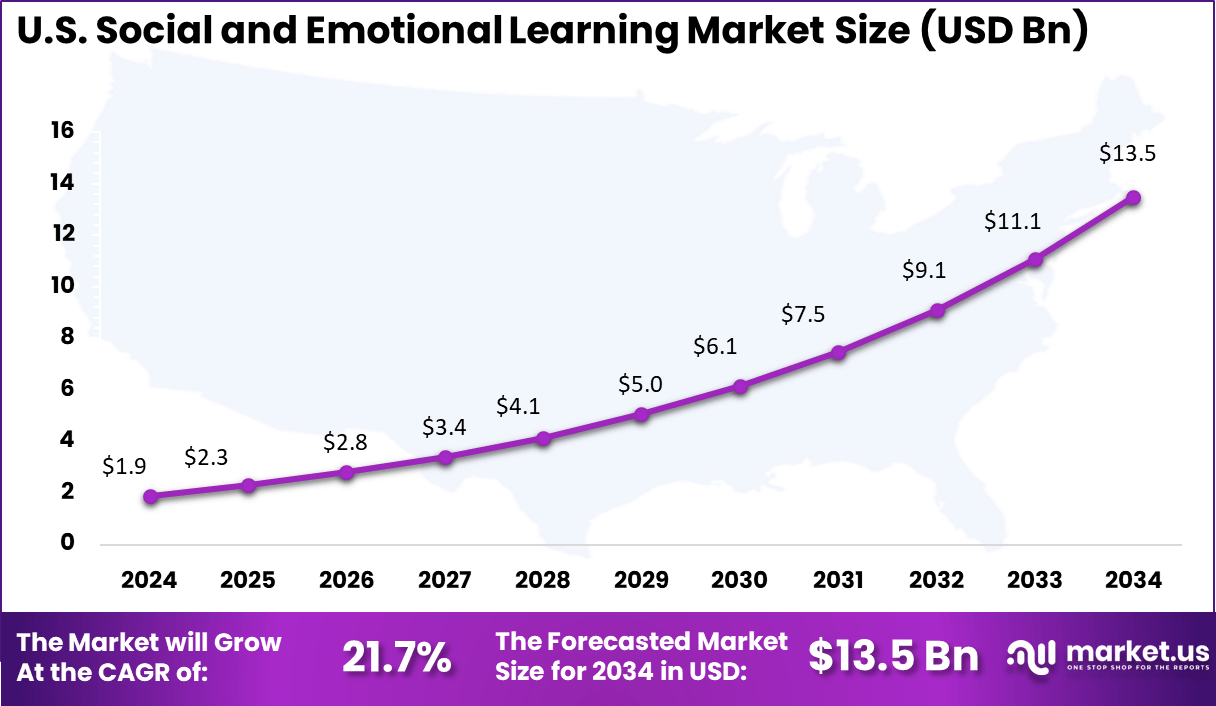
- The US market reached USD 1.89 billion and is expanding at a CAGR of 21.7%, showing rapid integration of SEL into K-12 education.
Analysts’ Viewpoint
SEL solutions increasingly use digital platforms and software to deliver content, interactive exercises, assessments, and progress tracking. Web-based SEL platforms are common because they allow schools and users to access content anytime, anywhere. Mobile or app formats are emerging, enabling engagement outside classrooms.
Analytics are used to measure student progress, identify gaps, and personalize SEL paths. Some platforms integrate with learning management systems (LMS) or student information systems to align SEL with academic data. AI and natural language processing are beginning to be explored to adapt SEL content or reflect on responses.
Organizations adopt SEL solutions to support healthier school climate, reduce student risk behaviors, and support mental wellness and emotional resilience. SEL helps students handle stress, manage conflict, and improve relationships, which is seen as contributing to academic success. Schools also adopt SEL to satisfy accountability, accreditation, or grant requirements.
Goverment Led Investments
The US government has underlined its commitment to SEL through significant investments. The House of Representatives recently approved federal funding of $260 million dedicated to holistic child development, with allocations toward research-backed SEL programs, teacher professional development, community school support, and school safety initiatives including increased counseling services.
Moreover, various federal grants totaling $87 million in 2024 are focused on supporting evidence-based SEL strategies and innovations in schools. These funds offer flexibility for programs tailored to unique community needs, emphasizing sustainable and culturally responsive SEL solutions.
Effectiveness of SEL Programs
- Academic Gains: A large-scale meta-analysis covering more than 400 studies confirmed that students enrolled in Social and Emotional Learning (SEL) programs achieved an 11 percentile point increase in academic performance compared to peers who did not participate.
- Long-Term Impact: The benefits extend beyond immediate outcomes. On average, students continued to demonstrate academic achievement levels 13 percentile points higher even after program completion, highlighting the sustained effect of SEL.
- Reduced Negative Behaviors: Schools adopting SEL reported significant improvements in student conduct. In one Ohio district, out-of-school suspensions dropped by 85% within the first year of implementation.
- Improved Mental Health: SEL initiatives have been linked to measurable improvements in student well-being. Participants reported lower levels of anxiety, stress, and depression, alongside stronger resilience and better emotional regulation. This has also been associated with reductions in suicidal ideation among students.
- Significant ROI: The economic case for SEL is also compelling. Research indicates a return of $11 for every $1 invested, driven by reduced spending on remedial education, dropout prevention, and behavioral interventions.
- Better School Climate: Beyond individual outcomes, SEL contributes to systemic improvements. Students reported stronger connections to school communities, healthier peer relationships, and better engagement with teachers, leading to a more inclusive and supportive learning environment.
Implementation of SEL in Schools
- Widespread Adoption: According to casel.org, The integration of Social and Emotional Learning (SEL) has expanded rapidly in U.S. schools. By the 2023–24 school year, 83% of principals reported that their schools had adopted an SEL curriculum. This represents a significant rise from 76% in 2021-22 and nearly double the 46% reported in 2017-18, showing how SEL has shifted from a niche initiative to a mainstream educational practice.
- Supportive Policies: Policy backing has played a critical role in driving adoption. Currently, 49 states and the District of Columbia have at least one supportive policy in place to promote SEL in schools. This demonstrates a strong nationwide movement to embed SEL into broader educational frameworks, reinforcing its importance alongside academic learning.
U.S. SEL Market Size
The U.S. Social and Emotional Learning (SEL) market is experiencing significant growth, driven by substantial federal investments and increasing adoption in schools. In Fiscal Year 2023, the U.S. Department of Justice allocated over $45 million to more than 900 school districts across 36 states for projects involving SEL and restorative practices.
Additionally, the American Rescue Plan Act (ARP) allocated at least $2.4 billion across all states to support high-quality afterschool and summer learning programs, many of which incorporate SEL components. These investments reflect a growing recognition of the importance of SEL in fostering student well-being and academic success.
In 2024, North America held a dominant market position in the Global Social and Emotional Learning Market, capturing around a 42.8% share. North America is experiencing significant growth in the Social and Emotional Learning (SEL) market, driven by substantial government investments and increasing adoption in educational institutions.
In 2024, the U.S. Department of Justice allocated over $45 million to more than 900 school districts across 36 states for projects involving SEL and restorative practices, reflecting a strong federal commitment to enhancing student well-being and academic success.
Additionally, the U.S. Senate introduced a bipartisan resolution designating March 4-8, 2024, as “National Social and Emotional Learning Week,” recognizing the critical role SEL plays in supporting the academic success and overall well-being of students, educators, and families. However, challenges such as resistance from certain educational stakeholders and concerns over the effectiveness of SEL programs persist.
A notable trend is the increasing use of digital platforms and tools to deliver SEL content, enhancing accessibility and engagement for students. These developments indicate a promising future for the SEL market in North America, with continued support from federal and state governments, as well as educational institutions.
By Offering
In 2024, Solutions accounted for 68.3% of the social and emotional learning (SEL) market. Schools and institutions are increasingly integrating comprehensive programs and digital platforms that provide structured SEL content, assessments, and tracking systems. These solutions help educators deliver consistent outcomes, ensuring that students build emotional intelligence and interpersonal skills effectively within classroom environments.
The rising demand for tailored SEL solutions comes from the shift toward supporting mental health and emotional well-being in education systems. Schools are adopting digital modules that can be used in both in-person and remote setups, giving flexibility to teachers and administrators. This preference for ready-to-use solutions has made them the most adopted form of SEL offering.
By Core Competency
In 2024, Self-management led among the SEL competencies with 24.5% share. It emphasizes self-discipline, goal setting, and emotional regulation, which are increasingly being recognized as critical life skills for young learners. Educators view self-management as the foundation upon which students can establish resilience and independence.
The strong uptake of self-management programs is also tied to the growing need to address issues like student stress, anxiety, and focus difficulties. Schools are embedding these competencies into daily activities to improve academic outcomes and equip students with tools to manage both individual and group challenges effectively.
By End-User
In 2024, Elementary schools contributed 37.3% of the market. This is because SEL skills are most impactful when introduced at an early age, allowing children to develop empathy, teamwork, and emotional awareness from the beginning of their education journey. Teachers in elementary settings are making SEL a part of everyday instruction, ensuring these skills are cultivated naturally.
The high adoption rate in elementary schools reflects the growing recognition of SEL as essential for holistic child development. Embedding SEL into younger age groups not only boosts classroom collaboration but also builds the foundation for improved academic performance throughout later stages of learning.
By Type
In 2024, Web-based platforms held 61.8% of the market. These digital tools allow schools and districts to roll out SEL lessons quickly across multiple classrooms and locations. Their ease of access and ability to integrate with existing learning systems make them particularly effective for large-scale implementation.
The popularity of web-based programs is also driven by increased adoption of remote and blended learning. As schools continue to rely on digital infrastructures, having SEL accessible online ensures continuity of emotional and behavioral learning regardless of the learning environment.
Key Market Segments
By Offering
- Solutions
- Platform
- Assessment Tools
- Services
- Consulting
- Deployment & Integration
- Training & Support
By Type
- Web-based
- Application
By Core Competency
- Self-Awareness
- Self-Management
- Social Awareness
- Relationship Skills
- Responsible Decision-Making
By End-User
- Pre-K
- Elementary Schools
- Middle & High Schools
- Therapistes & Psychologists
- Others
Driver
Digital Tools and AI Integration
One significant driver in the Social and Emotional Learning (SEL) market is the growing integration of digital tools and artificial intelligence. Schools and organizations are increasingly adopting AI-driven platforms and mobile applications that personalize SEL experiences. These technologies allow real-time feedback and interactive learning, making emotional and social skills development more engaging and accessible.
For instance, the use of virtual reality environments and gamified SEL content offers learners immersive experiences that help build empathy, emotional regulation, and decision-making skills. This technological integration is not only enhancing learning outcomes but also making SEL scalable to diverse student populations in schools and workplaces alike.
Restraint
Resistance and Awareness Gaps
A key restraint in the SEL market is the limited awareness and resistance among educational institutions and policymakers. Many schools prioritize academic performance and standardized testing, neglecting social and emotional development. Moreover, some educational stakeholders remain unsure about the tangible benefits of SEL programs, which leads to low funding and institutional support.
Challenges also include concerns about data privacy when using digital SEL solutions, as well as gaps in teacher training that hinder effective implementation. For example, some schools lack infrastructure or have insufficient professional development resources, reducing their readiness to adopt SEL programs fully.
Opportunity
Government Support and Funding
Rising government policies and financial backing present a strong growth opportunity for SEL. Many countries and states are incorporating SEL into education policies, and funding initiatives such as grants enable institutions to invest in SEL tools and programs. This institutional support encourages widespread adoption in schools and beyond.
For example, programs like the U.S. Elementary and Secondary School Emergency Relief (ESSER) funds provide critical resources for implementing SEL curricula and training teachers. Government initiatives not only support academic institutions but also promote SEL integration in workforce development, expanding the market’s reach across sectors.
Challenge
Measuring Impact and Outcomes
A notable challenge in the SEL market is the difficulty of measuring the direct impact and long-term outcomes of SEL programs. Schools and organizations often struggle to quantify improvements in social and emotional skills as clearly as academic achievements. Without accepted metrics, it is hard to justify investment and maintain stakeholder enthusiasm.
For instance, while research shows positive behavioral and academic effects, schools need better tools and analytics to track progress consistently. The complexity of measuring emotional and social growth remains a barrier to financing and expanding SEL programs effectively.
Latest Trends
Emerging trends in SEL highlight the rising use of digital platforms, virtual reality, and mindfulness techniques to foster emotional intelligence. For example, virtual assistants and chatbots provide coping strategies during stressful moments, supporting students’ mental well-being in real time.
Recent educational reports indicate that 83% of educators observe a positive impact on students’ academic and emotional outcomes when SEL is integrated. Additionally, digital SEL tools often include mood check-ins and gamified activities to engage students actively, promoting empathy and self-regulation throughout the school day.
Growth factors
Growth factors driving SEL adoption include technology integration, teacher training, and policy support. The expansion of digital tools and analytic platforms allows schools to track student behavior and personalize learning, making SEL more accessible.
Government initiatives and funding further stimulate this growth by encouraging consistent SEL implementation across schools. These combined elements support a more comprehensive approach to student well-being and social development in educational institutions.
Key Players Analysis
The Social and Emotional Learning Market is led by prominent providers such as Emotional ABCs Inc., EVERFI Inc., and Committee for Children (Second Steps). These organizations deliver evidence-based SEL programs that focus on emotional regulation, empathy, and decision-making skills. Their solutions are widely adopted in schools, offering structured curricula designed to improve student behavior, academic performance, and overall well-being.
Innovative edtech companies including The Social Express Inc., Everyday Speech, Peekapak Inc., and Purpose Prep. (Weld North LLC) are advancing digital SEL platforms through interactive content and gamified learning experiences. Nearpod Inc. and Aperture Education LLC integrate SEL tools into classroom technology, providing assessments and analytics that help educators track student progress and personalize interventions effectively.
Additional contributors such as Kickboard Inc., Taproot Learning, Rethink ED, Evolution Labs, and Panorama Education emphasize data-driven SEL programs with strong integration into school management systems. BASE Educational Services Pvt. Ltd supports regional markets with culturally adaptive SEL solutions. A broad range of other players continue to expand the ecosystem, ensuring that SEL becomes a core component of holistic education worldwide.
Top Key Players in the Market
- Emotional ABCs Inc.
- EVERFI Inc.
- Committee for Children (Second Steps)
- The Social Express Inc.
- Everyday Speech
- Peekapak Inc.
- Purpose Prep. (Weld North LLC)
- Nearpod Inc.
- Aperture Education LLC
- Kickboard Inc.
- Taproot Learning
- Rethink ED
- Evolution Labs
- Panorama Education
- BASE Educational Services Pvt. Ltd
- Others
Recent Developments
- On October, 2024, Committee for Children partnered with ERB to offer their Second Step SEL programs to private and independent schools, expanding their reach and providing comprehensive SEL solutions to a wider student base.
- On August, 2024, EVERFI Inc. announced the release of new and updated digital resources for K–12 schools, enhancing their platform to better support educators in delivering SEL content alongside other educational materials.









