


Report Overview
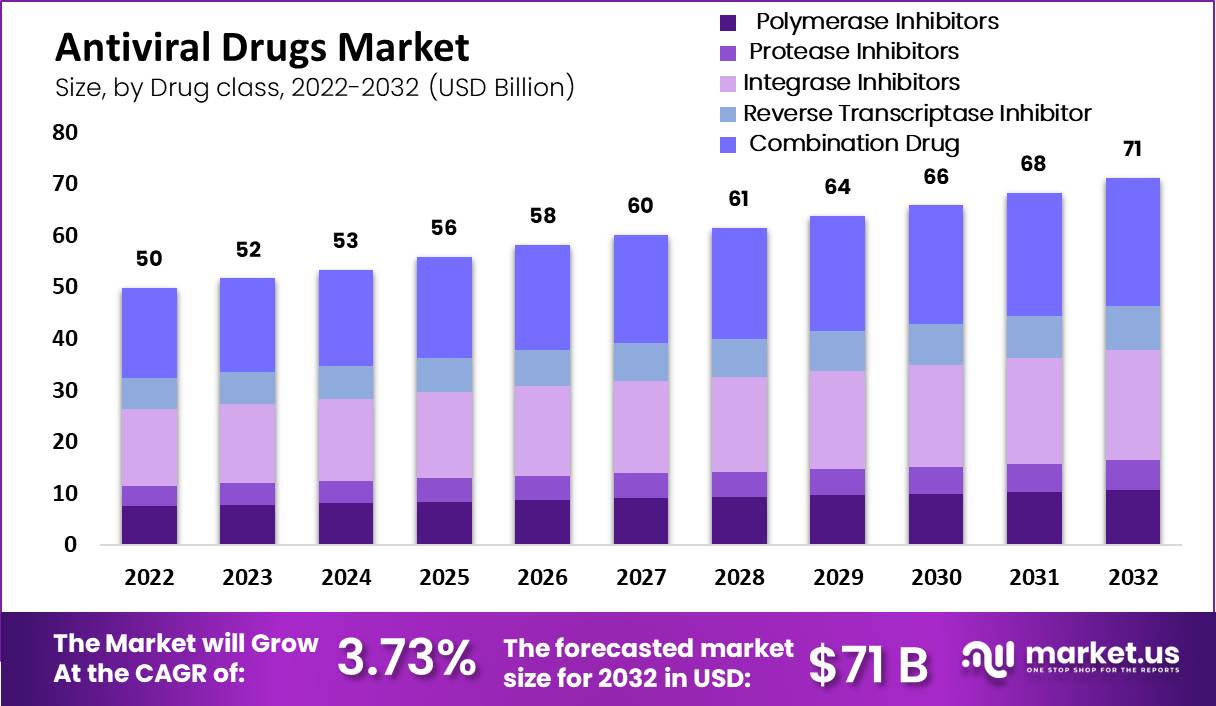
The Global Antiviral Drugs Market size is expected to be worth around US$ 71 Billion by 2033, from US$ 50 Billion in 2023, growing at a CAGR of 3.73% during the forecast period from 2024 to 2033.
The virus is a part of DNA and RNA bound in a structural protein. They infect human cells and cause viral infections. Viral infection is considered one of the most common causes of illness and has a significant impact on the healthcare system across the globe. Antiviral drugs are a class of medicines mainly used to treat viral infections. Antiviral drugs target various viruses, such as herpes, influenza, and hepatitis. Broad Spectrum antiviral drugs can be used to treat a range of viruses.
The antiviral agent has a distinct mechanism of action that includes the inhibition of viral DNA synthesis and thus prevents it from replication. Some antiviral drug acts as protease enzyme and prevent them from further cell division. The antiviral agent thus restores cells’ normal function and eliminates the viral infection. Various pharmaceutical industries are developing antiviral therapies nationwide to prevent the spread of infectious viral infections.
Key Takeaways
- The antiviral drugs market is projected to be valued at US$ 71.1 billion by 2032.
- The market value in 2022 was US$ 49.8 billion.
- The estimated market growth rate (CAGR) from 2023 to 2032 is 3.73%.
- By Drug Class in 2022, the combination segment generated the highest revenue share.
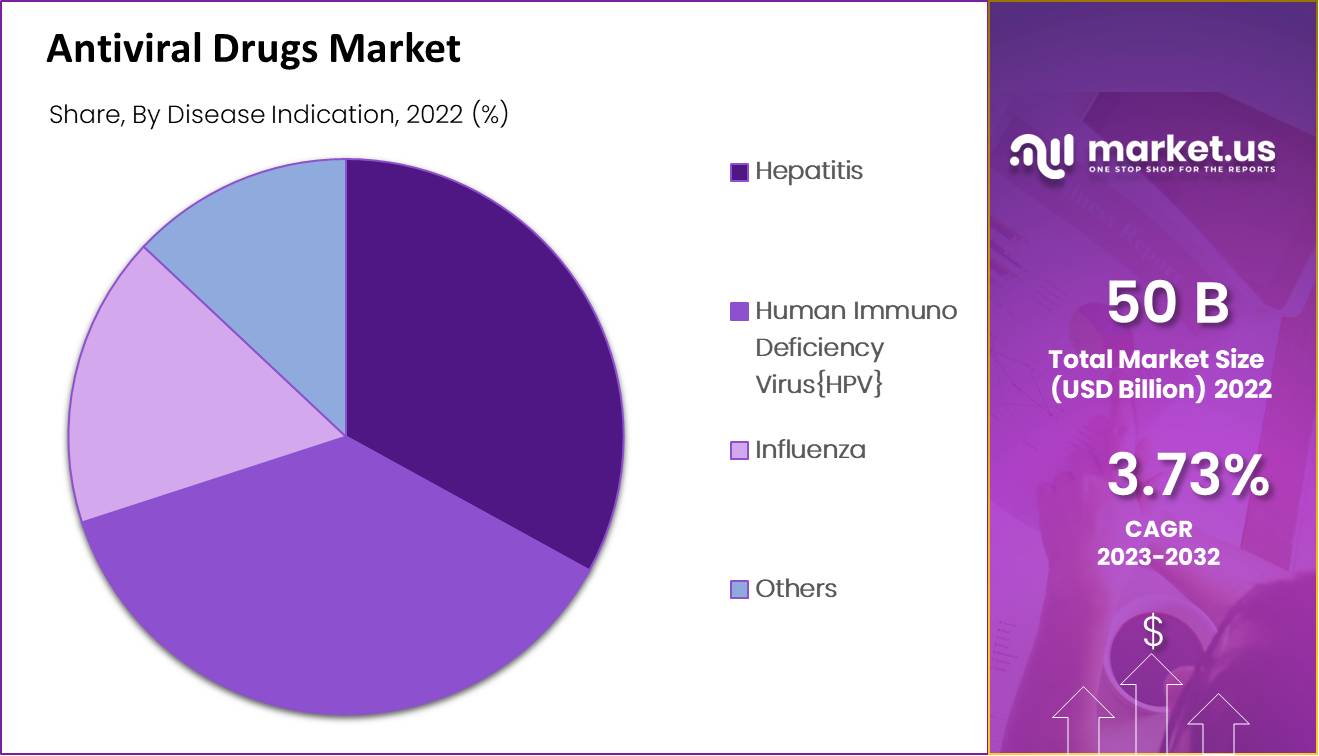
- For Disease Indication, the human immune deficiency virus segment is expected to register the highest market share.
- By Distribution Channel, the hospital pharmacy segment dominates and is expected to grow at a significant CAGR.
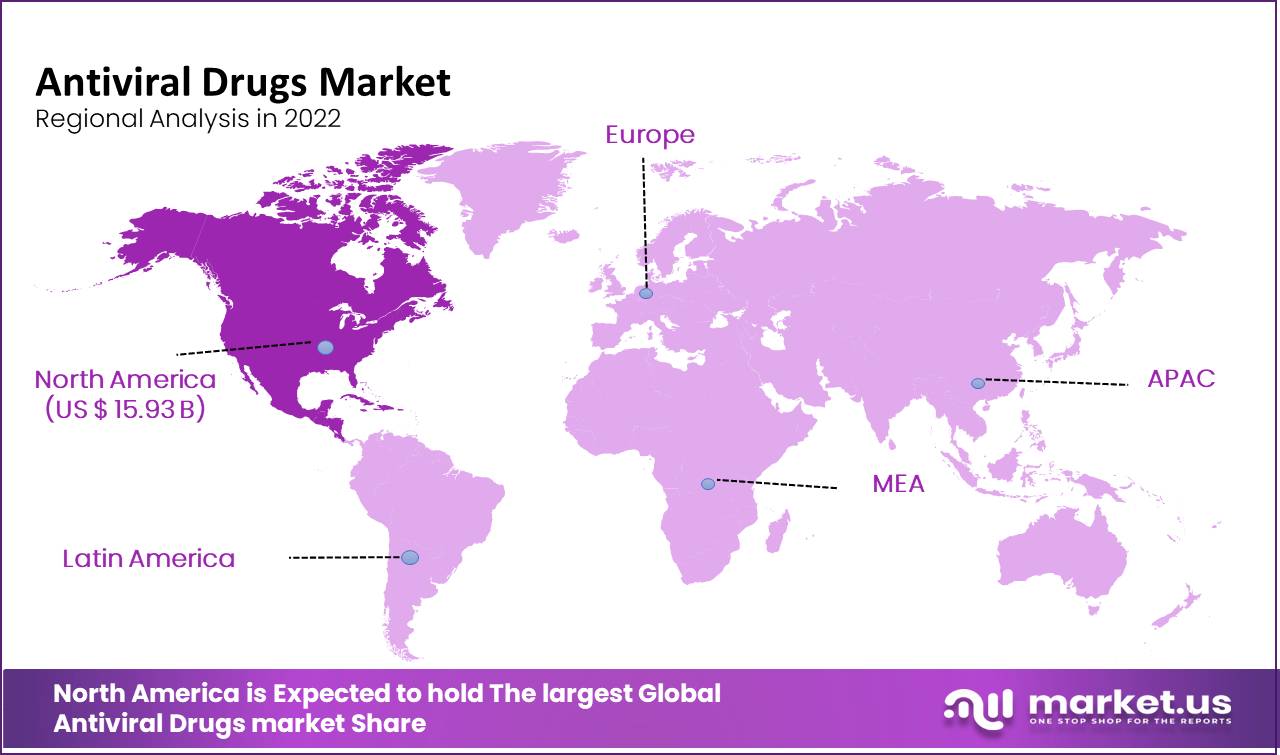
- North America had the largest market share of 32% in 2022.
- Europe held a revenue share of 20.7% in 2022.
- According to the WHO, millions of people globally live with HIV, and many have died because of it.
- The U.S. sees a significant prevalence of infections such as HIV.
Drug Class Analysis
Based on drug class, the global antiviral drugs market is segmented into polymerase inhibitors, protease inhibitors, reverse transcriptase inhibitors, and combination drugs. The combination drug segment accounted for the largest market share during the forecast period, attributable to the significant performance of combination brands such as Genvoya and Triumeq. Also, USFDA launched novel combination therapies of antiviral medicine for the flu and is expected to develop the segment’s growth during the forecast period.
The integrase segment is projected to expand in the upcoming years due to the remarkable performance of drugs. It is a well-tolerated class of antiviral drugs and has higher effectiveness than other antiviral drugs. These are the key factors for the significant investment in the R&D of the integrase inhibitors and the anticipated growth of these segments.
Disease Indication Analysis
Based on disease indication, the antiviral drugs market is divided into hepatitis, human immunodeficiency virus (HIV), and influenza. The HIV section registers the highest market share due to the rapid increase in the dominance of HIV infection. Also, developed treatments for HIV infection and profitable policies for antiviral drug therapy are expected to boost the growth of this segment.
The high dominance of HIV infection attached to a high treatment rate, the existence of exclusive drugs, and government initiatives to increase the treatment rate are anticipated to drive the market at a higher growth rate. For example, the U.S. government announced the Ending the HIV Epidemic plan to end the HIV epidemic in the country. The initiatives seek to decrease HIV infection and improve the diagnosis rate in the U.S. However, the presence of drugs for HIV infection will also fuel the market growth during the forecast period.
The Hepatitis segment held the second-largest revenue share in 2022. The region is expected to witness a CAGR of 3.73% over the forecast period. The rise in vaccination for Hepatitis A and B is affecting the growth adversely.
Distribution Channel Analysis
Based on distribution channels, the market is divided into hospital pharmacies, retail pharmacies, and online pharmacies. The Hospital Pharmacy segment dominates the market share growth. Government support for viral diseases through establishing government-aided hospital pharmacies and an improved network of key companies are the major factors attributable to the expansion of the pharmacy segment.
The online pharmacy section is anticipated to register a relatively significant CAGR during the forecast period. This is owing to the emerging supply of online pharmacies offering discounts and their rapid adoption by the masses. The retail pharmacy segment is expected to account for the increasing number of patients and the availability of OTC and generic medicine for minor viral infections.
Key Market Segments
By Drug Class
- Polymerase Inhibitors
- Protease Inhibitors
- Integrase Inhibitors
- Reverse Transcriptase Inhibitor
- Combination Drug
By Disease Indication
- Hepatitis
- Human Immuno Deficiency Virus(HPV)
- Influenza
- others
By Distribution Channel
- Hospital Pharmacy
- Retail Pharmacy
- Online Pharmacy
Drivers
Increasing demand for Antiviral Drugs
After an individual coughs or sneezes, fluid in air droplets can spread various infections. Through the nose or mouth, these fluids enter the body. Antiviral infection can be treated with several treatment options, including acyclovir and oseltamivir. In a similar vein, these medications aid in spreading the flu virus throughout the body, further advancing the market.
As a result, the market’s expansion is fueled mainly by an increasing number of people taking antiviral medications. However, the strong presence of generic pharmaceutical manufacturing companies in India and other countries increasing the geriatric population in the region are some of the key factors driving the market growth. Similarly, Product approval is another factor driving the growth of the market.
Increasing Prevalence of HIV and Influenza to Fuel Growth of Market
HIV is developing as the most common form of viral infection worldwide. Boosted observation for HIV by using demographic and biological data has developed the diagnosis rate of the disease. According to WHO, millions of people are living with HIV around the globe, and a maximum was died because of this disease. Hence the increasing problem of this infection is enhancing the demand for targeted and specific treatment propelling the antiviral agents market growth.
Restraints
Challenges and Limitations in the Antiviral Drugs Market
Limited Options for Broad-Spectrum, cost-effective, and accessible antiviral drugs is a significant factor restraining the market revenue growth. Developing safe, effective, and targeted antivirals from the ground up is time-consuming, which is anticipated to limit the market revenue growth. Direct-acting antivirals, broad-spectrum antiviral drugs that can be quickly deployed on a massive scale to prevent viral spread while effective vaccines are being developed, are essential in light of the possibility of future viral pandemics.
Currently, most approved antivirals on the market are host-directed antivirals, which are a significant obstacle to the enhancement and determination of drug-resistant mutations. This is expected to limit market revenue growth. During the forecast period, market revenue growth may be determined by the need for significant investments in R&D activities for the introduction of novel and efficient antiviral medications. The market revenue growth is also expected to be hampered by increased infection prevention measures and vaccine availability awareness.
Opportunity
Growing opportunity for several organization
The market is expected to expand due to the projected commercialization of several new medicines for viral infections and increasing approval. For instance, a supplementary New Drug Application for Roche’s Xofluza to treat influenza patients aged 12 and older was approved by the U.S. FDA.
In addition, the major market players have introduced several novel medicines to treat various viral infections over the past two to three years. For treating viral infections, Gilead Sciences, Inc. has developed, for instance, Biktarvy, Symtuza, and Veklury. As a result, this factor boosts market expansion.
Increasing strategic collaboration with a different organization
It is anticipated that in the coming years, a large number of novel drugs will be developed due to increasing collaborations for developing and manufacturing various antiviral medications. To reduce the burden of viral infection treatment, major market players are working together to research and develop new therapies.
For instance, to increase the supply of remdesivir, Gilead Sciences, Inc. has signed licensing agreements with leading pharmaceutical companies. These companies include Hetero Labs Ltd., Dr. Reddy’s Laboratories Ltd., Cipla Ltd., Mylan, and others.
Regional Analysis
North America region accounted significant share of the global antiviral drugs market
North America accounted for a significant antiviral drugs market share of revenue of 32%. This is attributable to the presence of key pharmaceuticals in the U.S., increasing the dominance of infections such as HIV in the country, and the green signal by the US FDA for the launch of effective therapies in North America. Europe is expected to witness remarkable growth in the upcoming countries due to favorable policies for antiviral drugs and key players involved in the antiviral medication of R&D.
Moreover, Asia-Pacific is expected to reflect a relatively highest CAGR during the forecast period. Government participation in managing viral infection and increasing penetration of companies are anticipated to boost the medicine market.
Also, efforts made by public players to improve awareness of critical viral diseases such as HIV in the Middle & East Africa are projected to augment revenue generation in the upcoming years. The market is projected to flourish in Europe due to new product launches and active government support.
Key Regions
- North America
- The US
- Canada
- Mexico
- Western Europe
- Germany
- France
- The UK
- Spain
- Italy
- Portugal
- Ireland
- Austria
- Switzerland
- Benelux
- Nordic
- Rest of Western Europe
- Eastern Europe
- Russia
- Poland
- The Czech Republic
- Greece
- Rest of Eastern Europe
- APAC
- China
- Japan
- South Korea
- India
- Australia & New Zealand
- Indonesia
- Malaysia
- Philippines
- Singapore
- Thailand
- Vietnam
- Rest of APAC
- Latin America
- Brazil
- Colombia
- Chile
- Argentina
- Costa Rica
- Rest of Latin America
- Middle East & Africa
- Algeria
- Egypt
- Israel
- Kuwait
- Nigeria
- Saudi Arabia
- South Africa
- Turkey
- United Arab Emirates
- Rest of MEA
Key Players Analysis
Many available pharmaceutical companies are involved in the manufacturing and distributing of antiviral drugs and making the global market highly competitive. Moreover, Gilead Sciences and GlaxoSmithKline Plc. Held a significant market share during the forecast period.
Various prominent major companies in the antiviral drug industry include Gilead Sciences, GlaxoSmithKline Plc., Abbive Inc., Merck & Co, Inc., Janssen Pharmaceutical, Novartis AG, Mylan NV, Bristol-Meyrs Squibb Company, and others. These industry players are adopting several growth strategies to attain a sustainable advantage.
Market Key Players
- Gilead Sciences Inc.
- AbbVie, Inc.
- GlaxoSmithKline
- Merck& C.O., Inc.
- Jannssen Pharmaceuticals, Inc.
- Bristol- Meyrs Squibb Company
- Mylan N. V.
- Novartis AG
- AstraZeneca
- Pfizer Inc.
- Cipla Inc.
- Johnson & Johnson Services, Inc.
- Aurobindo Pharma
- Merck MRK
- Reddy Laboratories Limited
- Hoffmann-La Roche Ltd.
- Altesa Biosciences Inc.
- Other Key Players
Recent Development
- In March 2024: Gilead Sciences completed the acquisition of CymaBay Therapeutics for approximately $4.3 billion. This acquisition was finalized after a tender offer process initiated in February 2024, where Gilead purchased all outstanding shares of CymaBay. The merger has integrated CymaBay as a wholly owned subsidiary of Gilead, enhancing its liver disease portfolio, particularly with CymaBay’s investigational product candidate, seladelpar.
- In January 2024: GSK announced plans to introduce at least 12 new drugs from 2025, focusing on infectious diseases, HIV, respiratory conditions, and oncology. This strategic move is supported by a robust pipeline and recent successful financial outcomes, including a 3% growth in sales to £30.33 billion for Fiscal Year 2023. GSK expects this pipeline to drive sales and profit growth in the coming years.
- In January 2023: AbbVie and Anima Biotech announced a collaboration focusing on the development of mRNA biology modulators, which could include antiviral targets. Anima Biotech will receive an upfront payment of $42M with the potential to earn up to $540M in additional milestone payments across the collaboration’s various stages. This agreement showcases AbbVie’s investment in cutting-edge mRNA technology to potentially enhance antiviral drug development.









