


Report Overview
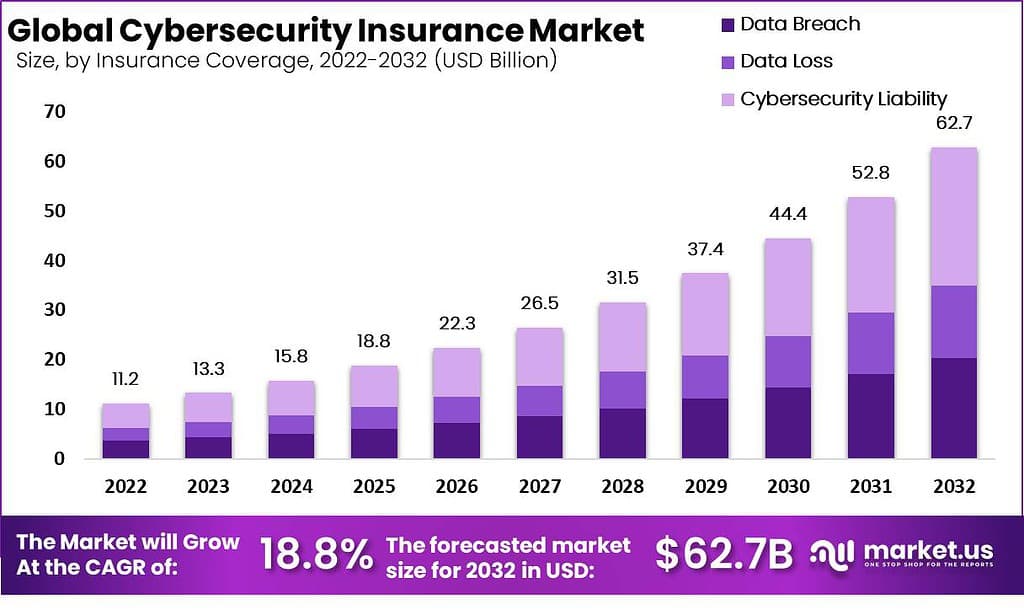
The Global Cybersecurity Insurance Market size is expected to be worth around USD 62.7 Billion By 2033, from USD 13.3 Billion in 2023, growing at a CAGR of 18.8% during the forecast period from 2024 to 2033.
Cybersecurity insurance, also known as cyber insurance or cyber liability insurance, is a specialized form of insurance designed to protect businesses and individuals against the financial losses resulting from cyber incidents and security breaches. This type of insurance covers a range of risks associated with digital assets, information technology infrastructure, and online activities.
The cybersecurity insurance market has experienced significant growth, driven by the increasing frequency and sophistication of cyber attacks, alongside the growing recognition of cyber risk as a prominent threat to business operations. This market encompasses a variety of products and services tailored to different industries and organizational sizes, ranging from small and medium-sized enterprises (SMEs) to large corporations.
The demand for cybersecurity insurance is further propelled by regulatory requirements and industry standards that mandate or encourage businesses to adopt comprehensive risk management strategies, including insurance coverage.
Analyst Viewpoint
The cybersecurity insurance market is poised for sustained growth, driven by the critical need for financial protection against the burgeoning threat of cyber incidents. However, the market’s potential is contingent upon overcoming challenges related to risk assessment, policy standardization, and the development of proactive cyber risk management strategies.
Insurers that leverage advanced analytics, collaborate with cybersecurity experts, and offer value-added services, such as risk assessment and incident response planning, are well-positioned to capitalize on the opportunities presented by the increasing demand for cybersecurity insurance. As digital threats continue to evolve, cybersecurity insurance will play an integral role in the broader strategy of managing and mitigating cyber risk.
The opportunities in the cybersecurity insurance market are vast, amidst the growing awareness and acceptance of these policies as critical to comprehensive risk management strategies. There is a particularly notable potential for growth in sectors that are in the early stages of digitalization and in geographic regions where the market for cybersecurity insurance is still developing. The industry faces the challenge of accurately assessing and underwriting cyber risks, given their dynamic nature and the lack of extensive historical data.
Key Takeaways
- The global cybersecurity insurance market to grow by USD 62.7 billion by 2032, Globally at 18.8% CAGR.
- Cybersecurity liability holds a predominant position, commanding a major revenue share of 44.6%.
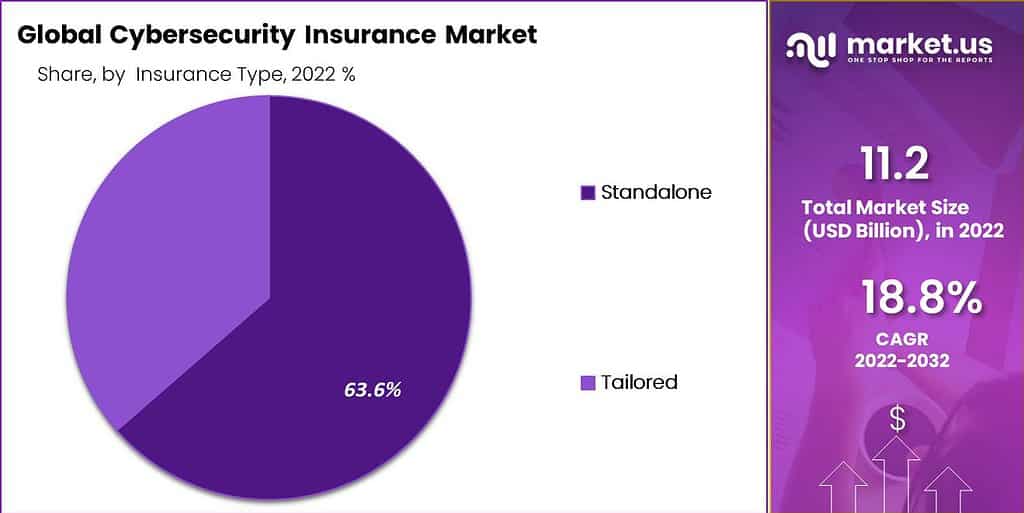
- Standalone insurance type notably dominates the market, capturing the largest revenue share of 63.6%.
- The Banking, Financial Services, and Insurance (BFSI) segment distinctly stand out, holding the major revenue share of 26.4%.
- North America leads the global cybersecurity insurance market, holding a major revenue share of 39.6%. The region’s proactive approach to cybersecurity risk management, robust insurance infrastructure, and stringent regulatory environment contribute to its dominance.
Offering Analysis
In the cybersecurity insurance market, various service segments play crucial roles in addressing the evolving landscape of digital threats and risks. Among these segments, the provision of risk assessment and consulting services emerges as a leading force.
Cybersecurity insurance providers excel in offering comprehensive risk assessment capabilities, aiding businesses in understanding their vulnerabilities and potential exposures to cyber threats. Through meticulous analysis and evaluation of their clients’ digital infrastructure and operational processes, these service providers offer invaluable insights into the specific areas requiring fortification and mitigation strategies.
Furthermore, consulting services in cybersecurity insurance have garnered significant traction due to their pivotal role in guiding organizations towards robust risk management frameworks and tailored insurance solutions. By leveraging their expertise and industry knowledge, consultants assist businesses in navigating the intricate landscape of cyber risks, ensuring alignment with regulatory requirements and best practices.
Moreover, these service segments exhibit a proactive approach, empowering clients with proactive measures to enhance their cyber resilience and incident response capabilities. By fostering a culture of cybersecurity awareness and preparedness, they contribute to mitigating potential losses and safeguarding business continuity in the face of cyber threats.
Insurance Coverage Analysis
In the landscape of cybersecurity insurance, the segment pertaining to cybersecurity liability holds a predominant position, commanding a major revenue share of 44.6%. This substantial proportion underscores the critical role that cybersecurity liability coverage plays within the broader cybersecurity insurance market. Cybersecurity liability insurance is designed to protect businesses against the financial repercussions stemming from a variety of cyber incidents, including data breaches, network security failures, and privacy violations. The coverage typically addresses costs related to legal fees, settlements, fines, and customer notification expenses, among others.
The dominance of cybersecurity liability in the market can be attributed to the escalating prevalence of cyber threats and the increasing regulatory emphasis on data protection and privacy. Businesses, recognizing the significant financial and reputational risks associated with cyber incidents, are increasingly investing in cybersecurity liability insurance as a fundamental component of their risk management strategies. This trend is further propelled by the growing awareness among organizations of all sizes about the potential impacts of cyber attacks, driving the demand for comprehensive insurance solutions that can mitigate these risks.
Insurance Type Analysis
In the realm of cybersecurity insurance, the standalone insurance type segment has notably dominated the market, capturing the largest revenue share of 63.6%. Standalone cybersecurity insurance policies are specifically designed to cover a broad spectrum of cyber risks and incidents, offering comprehensive protection that is not typically included in general liability policies. This dominance reflects the increasing preference of businesses for specialized coverage that addresses the unique challenges and financial risks posed by cyber threats.
The preference for standalone cybersecurity insurance policies can be attributed to several factors. Firstly, the specificity and depth of coverage offered by standalone policies are tailored to the intricate nature of cyber risks, including data breaches, cyber extortion, business interruption, and the costs associated with regulatory compliance, legal defense, and restitution to affected parties. This level of coverage is particularly crucial in an era where cyber incidents can have wide-ranging and severe financial implications for businesses.
Secondly, the evolving regulatory landscape and heightened awareness of cybersecurity risks have prompted organizations to seek dedicated insurance solutions that provide clarity and confidence in their risk management strategies. Standalone policies offer this assurance through explicit coverage terms and limits that are aligned with the organization’s exposure to cyber threats.
By Compliance Requirement
In the realm of compliance requirements, healthcare compliance stands out as a leading segment due to its critical role in ensuring adherence to regulatory standards and ethical practices within the healthcare industry. With an increasingly complex landscape of laws, regulations, and guidelines at both the national and international levels, healthcare organizations face immense pressure to uphold standards of patient care, data privacy, and operational integrity.
The growth of the market can be attributed to several factors. Firstly, the heightened focus on patient safety and quality of care has spurred regulatory bodies to enact stringent compliance measures, driving the demand for comprehensive compliance solutions and services. Additionally, the escalating volume of healthcare data, coupled with the proliferation of digital health technologies, has intensified the need for robust data protection and cybersecurity measures to safeguard sensitive information.
Moreover, the evolving nature of healthcare delivery models, such as telemedicine and value-based care, presents unique compliance challenges that necessitate ongoing vigilance and adaptation. As a result, healthcare organizations are increasingly investing in compliance management systems, training programs, and consultancy services to navigate this intricate regulatory landscape effectively.
Furthermore, the global trend towards greater transparency and accountability in healthcare governance further amplifies the significance of compliance initiatives. Stakeholders, including patients, payers, and investors, place a premium on organizations that demonstrate a commitment to ethical conduct and regulatory compliance, thereby driving the adoption of best practices and innovative compliance solutions.
End-Use Industry Analysis
In the context of cybersecurity insurance, the Banking, Financial Services, and Insurance (BFSI) segment distinctly stands out, holding the major revenue share of 26.4% and thus dominating the market. This significant market share underscores the critical importance of cybersecurity measures within the BFSI sector, a domain that is inherently sensitive to cyber threats due to the nature of the data it handles and the financial operations it performs.
The dominance of the BFSI segment in the cybersecurity insurance market can be attributed to several key factors. Firstly, the BFSI sector is a prime target for cybercriminals due to the valuable financial and personal data it possesses, making it imperative for institutions within this sector to secure comprehensive cybersecurity insurance coverage. This coverage not only helps mitigate the financial impact of potential cyber incidents but also supports the sector’s resilience against such threats.
Secondly, regulatory compliance plays a significant role in the BFSI sector’s substantial investment in cybersecurity insurance. Financial institutions are subject to strict regulatory requirements regarding data protection and cyber risk management, compelling them to adopt robust insurance policies as part of their compliance and risk management strategies.
Furthermore, the BFSI sector’s reliance on digital technologies and online transactions has increased its exposure to cyber risks, driving the need for specialized insurance solutions that address the unique challenges of securing digital financial operations. The adoption of cybersecurity insurance in this sector is also a reflection of its commitment to maintaining customer trust and safeguarding against reputational damage resulting from cyber incidents.
Key Market Segments
By Offering
- Solution
- Services
By Insurance Type
- Standalone
- Tailored
By Compliance Requirement
- Healthcare Compliance
- Financial Services Compliance
- GDPR Compliance
- Data Privacy Compliance
- Other Compliance
By Insurance Coverage
- Data Breach
- Data Loss
- Cybersecurity Liability
By End-User
- Healthcare
- Retail
- BFSI
- IT & Telecom
- Manufacturing
- Government agencies
- Other End-Users
Driver
Increasing frequency of cyber attacks
The cybersecurity insurance market is significantly driven by the increasing frequency of cyber attacks. As digital technologies become more embedded in business operations, cyber threats have become more common and sophisticated, targeting organizations of all sizes across various sectors. These incidents not only disrupt business operations but also result in substantial financial losses, legal liabilities, and reputational damage.
The growing awareness among businesses about the potential risks and impacts of cyber attacks has led to a heightened demand for cybersecurity insurance. This insurance provides a financial safety net, helping organizations mitigate losses from data breaches, ransomware attacks, and other cyber-related incidents. As the digital landscape continues to evolve, the need for cybersecurity insurance is expected to grow, reflecting the critical role it plays in comprehensive risk management strategies.
Restraint
Lack of historical data for accurate risk assessment
One of the main restraints in the cybersecurity insurance market is the lack of historical data for accurate risk assessment. Unlike traditional insurance sectors that rely on extensive historical data to predict future risks and set premiums, the cybersecurity domain faces challenges due to the relatively recent emergence and rapid evolution of cyber threats. This makes it difficult for insurers to accurately model risks, price policies, and estimate potential losses.
The dynamic nature of cyber threats, coupled with the bespoke nature of digital infrastructure across different organizations, adds complexity to risk assessments. As a result, insurers may adopt conservative stances, potentially leading to higher premiums or restrictive coverage terms. This restraint highlights the need for advanced analytics, threat intelligence integration, and industry collaboration to improve risk modeling and assessment in the cybersecurity insurance market.
Opportunity
Expansion in emerging markets
The expansion in emerging markets represents a significant opportunity for the cybersecurity insurance market. Emerging economies are experiencing rapid digitalization across business and government sectors, increasing their exposure to cyber risks. However, the awareness and adoption of cybersecurity insurance in these regions are still in the nascent stages. This gap presents a vast opportunity for insurers to enter and grow in these markets.
As digital infrastructure expands and the incidence of cyber threats rises in these regions, demand for insurance products that can mitigate the financial risks associated with cyber incidents is expected to increase. Moreover, emerging markets offer insurers the chance to innovate and tailor cybersecurity insurance products to meet the unique needs and regulatory environments of these regions, fostering market growth and expanding global reach.
Challenge
Rapidly evolving cyber threat landscape
The rapidly evolving cyber threat landscape poses a significant challenge to the cybersecurity insurance market. Cybercriminals continuously develop new methods and technologies to breach digital defenses, making it increasingly difficult for organizations and insurers to keep pace. This constant evolution not only complicates the assessment of risks but also challenges the development of effective insurance products and services.
As new types of threats emerge, insurers must continually update their policies and coverage options to reflect these changes, requiring ongoing investment in cybersecurity expertise and threat intelligence. This challenge underscores the importance of flexibility and adaptability in the cybersecurity insurance industry, as well as the need for close collaboration between insurers, cybersecurity firms, and policyholders to effectively manage and mitigate the risks posed by an ever-changing digital threat environment.
Geopolitical Impact Analysis
National Security Implications:
- Risk Mitigation: Cybersecurity insurance encourages organizations to invest in robust cybersecurity measures to lower their insurance premiums, indirectly contributing to national security by reducing the overall risk of cyberattacks.
- Critical Infrastructure Protection: Governments may encourage or mandate cybersecurity insurance for critical infrastructure providers, ensuring essential services remain operational in the face of cyber threats.
- Cyber Deterrence: The availability of cybersecurity insurance can influence nation-state actors’ decisions regarding cyber espionage or cyberattacks, potentially affecting the likelihood of such attacks.
Economic Stability:
- Market Growth: The expansion of the cybersecurity insurance market can impact international markets and economic stability, becoming a significant component of the global financial services industry.
- Risk Transfer: Cybersecurity insurance helps organizations and governments manage the financial fallout of cyberattacks, contributing to economic stability by providing a mechanism for transferring financial risk.
Regional Analysis
In the global cybersecurity insurance market, North America asserts its dominance by holding a major revenue share of 39.6%. This significant market share underscores the region’s proactive approach to cybersecurity risk management and its robust insurance infrastructure to mitigate potential financial losses from cyber incidents.
North America, particularly the United States, is known for its technological advancements and the presence of a robust digital infrastructure. The region is home to numerous tech companies, financial institutions, and other organizations that are prime targets for cyber threats. This heightened risk awareness and the need to protect critical infrastructure have driven the demand for cybersecurity insurance in the region.
Additionally, North America’s strong cybersecurity ecosystem, comprising cybersecurity firms, industry associations, and government agencies, fosters collaboration and innovation in cybersecurity insurance. This collaborative approach enables insurers to stay ahead of emerging cyber threats and develop innovative insurance solutions that meet the evolving needs of businesses in the region.
The regulatory environment in North America, particularly in the United States, imposes stringent requirements for data protection and privacy, compelling businesses to invest in cybersecurity measures and insurance coverage to comply with regulatory standards. This regulatory pressure further fuels the demand for cybersecurity insurance products and services in the region.

Key Regions and Countries Covered in this Report
- North America
- The US
- Canada
- Europe
- Germany
- France
- The UK
- Spain
- Italy
- Russia
- Netherland
- Rest of Europe
- APAC
- China
- Japan
- South Korea
- India
- Australia
- New Zealand
- Singapore
- Thailand
- Vietnam
- Rest of APAC
- Latin America
- Brazil
- Mexico
- Rest of Latin America
- Middle East & Africa
- South Africa
- Saudi Arabia
- UAE
- Rest of MEA
Key Player Analysis
In the rapidly evolving landscape of cybersecurity, the global cybersecurity insurance market has become a critical component for organizations looking to mitigate the financial risks associated with cyber threats and data breaches. Merger and acquisition (M&A) activities within this market segment are indicative of its growing importance and the need for insurers to expand their capabilities to address the ever-changing nature of cyber risks.
One of the key players, Chubb, has a strong presence in the cybersecurity insurance market. While there haven’t been any major acquisitions in recent years, they have been actively developing their cyber insurance portfolio to address emerging risks.
Top Market Leaders
- BitSight
- AIG
- The Travelers Companies
- Hiscox
- Security Scorecard
- Liberty Mutual
- Axa XL
- The Hartford
- Zurich Insurance Group
- Aon
- Allianz
- Axa
- Berkshire Hathaway
- HSB
- Munich Re
- RedSeal
- CyberArk
- Other Key Players
Recent Developments
1. BitSight:
- March 2023: Launched “BitSight Risk Ratings for Third-Party Vendor Management,” helping companies assess the cyber risk of their suppliers.
- August 2023: Partnered with “Chubb” to offer integrated cyber risk monitoring and insurance solutions for businesses.
- November 2023: Acquired “SecurityScorecard,” expanding its security ratings coverage and market presence.
2. AIG:
- February 2023: Launched “AIG CyberEdge,” a comprehensive suite of cyber risk management solutions, including insurance coverage and risk assessment tools.
- July 2023: Partnered with “Palo Alto Networks” to offer combined cyber insurance and security solutions for enterprises.
- October 2023: Launched “AIG Cyber Risk Engineering,” offering customized cybersecurity consulting services to its policyholders.
3. The Travelers Companies:
- April 2023: Launched “Travelers Cyber Resilience Toolkit,” providing resources and guidance to help businesses improve their cyber defenses.
- September 2023: Announced a partnership with “CyberCube” to access real-time cyber risk data and analytics for underwriting and claims management.
- December 2023: Launched “Travelers CyberActive Response,” a service providing incident response support and expert guidance in case of a cyberattack.









