


Report Overview
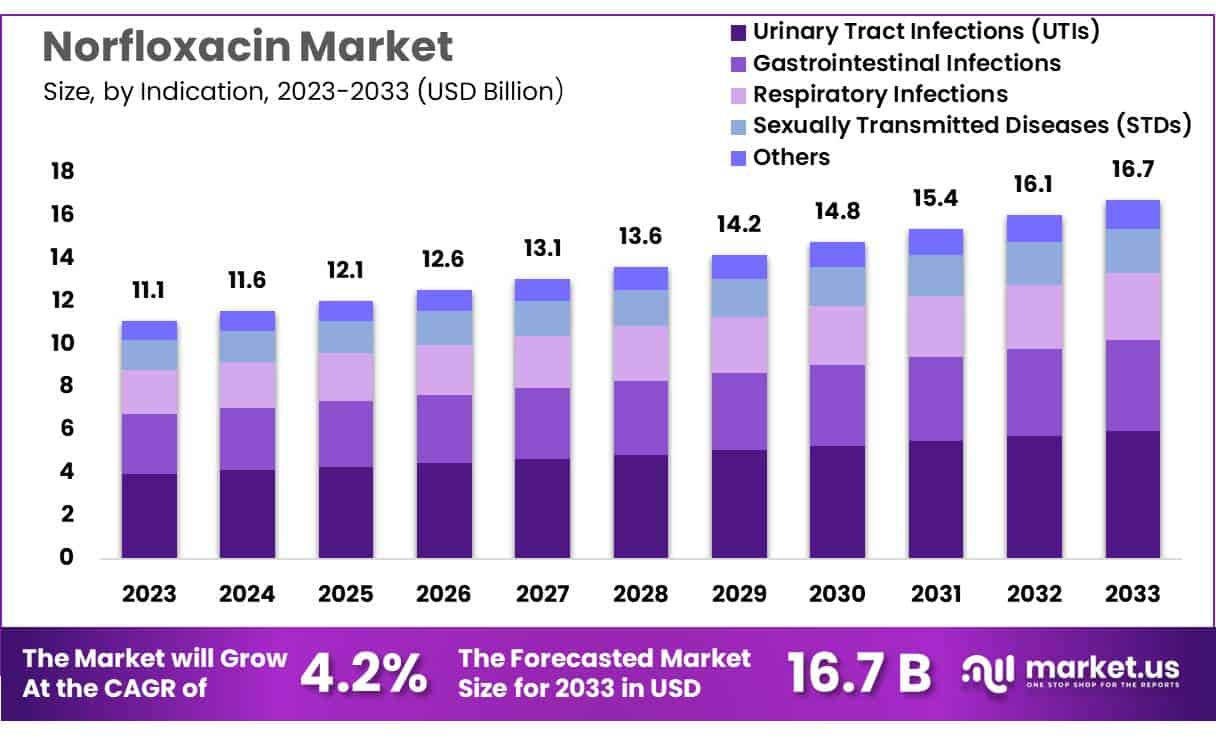
Global Norfloxacin Market size is expected to be worth around US$ 16.7 billion by 2033 from US$ 11.1 billion in 2023, growing at a CAGR of 4.2% during the forecast period 2024 to 2033.
Growing demand for effective antibacterial agents has significantly propelled the norfloxacin market, driven by its broad-spectrum efficacy against various bacterial infections. Norfloxacin, a fluoroquinolone antibiotic, is extensively utilized in treating urinary tract infections (UTIs), gastrointestinal infections, and certain sexually transmitted diseases.
In the United States, UTIs account for approximately 8.1 million visits to healthcare providers annually, underscoring the critical need for potent antibiotics like norfloxacin. The antibiotic’s application extends to gastrointestinal infections, which are responsible for significant morbidity worldwide.
Additionally, norfloxacin plays a role in managing sexually transmitted infections, with the World Health Organization reporting over 1 million new cases of curable STIs daily, highlighting the necessity for effective treatment options. Recent trends indicate a shift towards developing advanced formulations of norfloxacin to enhance bioavailability and reduce side effects, aiming to improve patient compliance and therapeutic outcomes.
Furthermore, the rise in antibiotic-resistant bacterial strains has intensified research efforts to optimize norfloxacin’s efficacy, ensuring its continued relevance in antimicrobial therapy. The pharmaceutical industry’s focus on expanding norfloxacin’s applications and improving its formulations presents substantial growth opportunities within the market. However, the emergence of antibiotic resistance and stringent regulatory frameworks necessitate ongoing innovation and adherence to safety standards to maintain market viability.
Key Takeaways
- In 2023, the market for norfloxacin generated a revenue of US$ 1 billion, with a CAGR of 4.2%, and is expected to reach US$ 16.7 billion by the year 2033.
- The indication segment is divided into urinary tract infections, gastrointestinal infections, respiratory infections, sexually transmitted diseases, and others, with urinary tract infections taking the lead in 2023 with a market share of 35.7%.
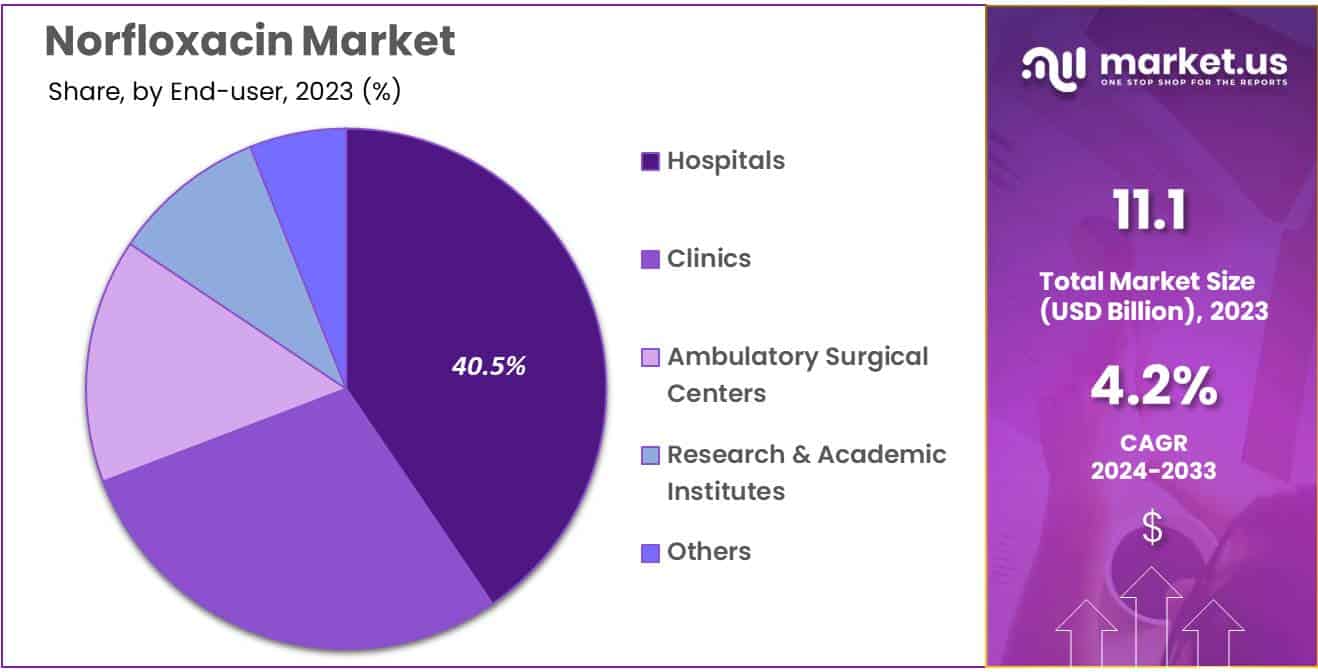
- Considering end-user, the market is divided into hospitals, clinics, ambulatory surgical centers, research & academic institutes, and others. Among these, hospitals held a significant share of 40.5%.
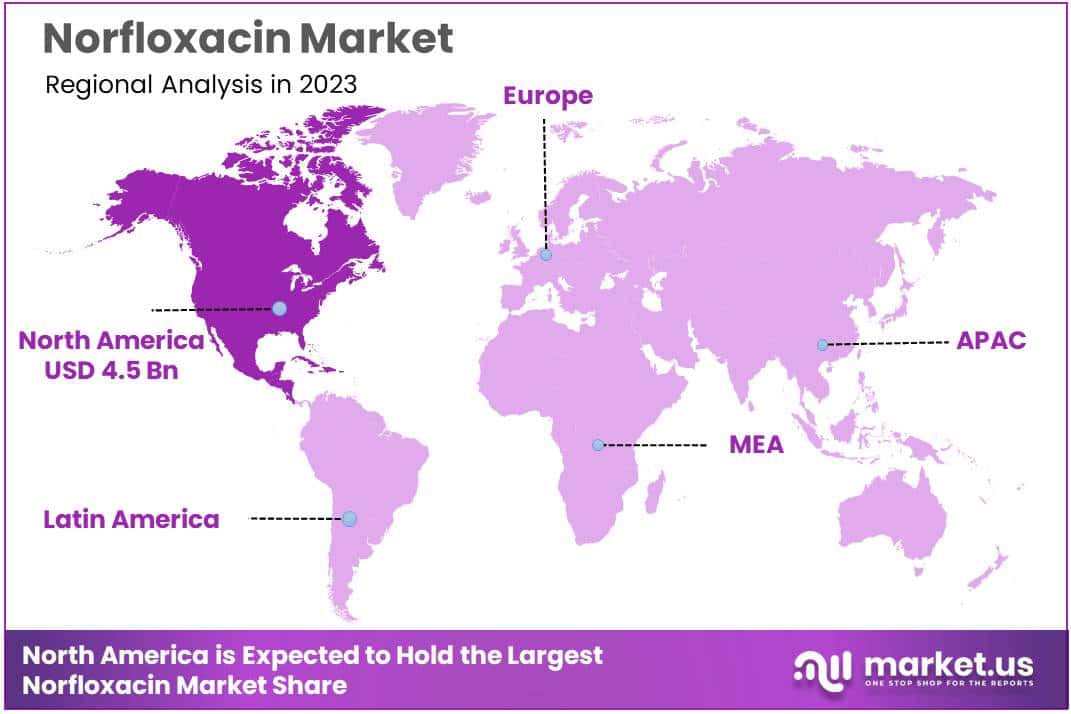
- North America led the market by securing a market share of 40.6% in 2023.
By Indication Analysis
The urinary tract infections segment led in 2023, claiming a market share of 35.7% owing to the high prevalence of UTIs worldwide, particularly among women and older adults, leading to an increasing demand for effective treatment options. Rising awareness about UTIs, coupled with advancements in diagnostic technologies, is expected to further bolster the adoption of norfloxacin as a preferred treatment.
Additionally, the rising resistance to alternative antibiotics is shifting the focus towards fluoroquinolones, such as norfloxacin, which offer a broad-spectrum solution against UTI pathogens. The widespread incidence of recurrent UTIs, especially among patients with comorbidities, also fuels the demand for this segment. With healthcare providers increasingly prescribing norfloxacin due to its efficacy and relatively low side-effect profile, the UTI segment in the norfloxacin market is projected to witness significant growth.
By End-user Analysis
The hospitals held a significant share of 40.5% due to the high number of UTI cases requiring inpatient care, where hospital-based treatment ensures the appropriate management of moderate to severe infections. Hospitals increasingly prioritize fluoroquinolone antibiotics, given their effectiveness in treating complex cases and reducing the likelihood of resistance.
The demand for norfloxacin in hospital settings is also anticipated to rise as healthcare facilities enhance their infection control measures to address the growing concern over antibiotic resistance. The availability of advanced diagnostic tools in hospitals further supports accurate diagnosis and treatment, increasing norfloxacin’s adoption rate.
Moreover, the expansion of healthcare infrastructure, especially in emerging markets, is expected to increase hospital-based treatments, further supporting the growth of the norfloxacin market in this end-user segment.
Key Market Segments
By Indication
- Urinary Tract Infections (UTIs)
- Gastrointestinal Infections
- Respiratory Infections
- Sexually Transmitted Diseases (STDs)
- Others
By End-user
- Hospitals
- Clinics
- Ambulatory Surgical Centers
- Research & Academic Institutes
- Others
Drivers
Rising Incidence of Urinary Tract Infections (UTIs)
The increasing prevalence of urinary tract infections (UTIs) has significantly driven the demand for norfloxacin, a fluoroquinolone antibiotic commonly prescribed for such infections. UTIs are among the most common bacterial infections globally, affecting millions of people each year. In several regions, including parts of Asia and Europe, a notable prevalence rate has been observed among women in particular, underscoring the demand for effective antimicrobial agents like norfloxacin.
The aging population, which has a higher susceptibility to UTIs, has contributed to increased prescription rates. Healthcare providers often prefer norfloxacin due to its established efficacy in treating uncomplicated UTIs, solidifying its role in addressing this widespread health concern.
Growing awareness of UTIs and the importance of timely treatment have further driven the utilization of norfloxacin in both clinical and outpatient settings. This demand is expected to be a consistent driver, given the steady increase in infections worldwide.
Restraints
Emergence of Antibiotic Resistance
The emergence of antibiotic-resistant bacterial strains poses a significant challenge to the efficacy of norfloxacin. In recent years, resistance to fluoroquinolones, including norfloxacin, has been increasingly documented in pathogens such as Escherichia coli, a primary cause of UTIs. This rising resistance diminishes the clinical effectiveness of norfloxacin, leading to treatment failures and necessitating the use of alternative antibiotics.
Resistance to antibiotics not only complicates treatment protocols but also increases the risk of severe health outcomes for patients, as fewer effective options become available. Health organizations worldwide have emphasized the critical need for prudent antibiotic use and the development of new antimicrobial agents to combat this growing threat.
The increasing prevalence of antibiotic resistance, therefore, represents a substantial restraint on the norfloxacin market as healthcare providers seek alternative therapies and adopt more cautious prescribing practices.
Opportunities
Expansion into Emerging Markets
Emerging markets present a significant opportunity for the growth of the norfloxacin market. Many regions in Asia, Africa, and Latin America have been experiencing an increase in bacterial infections, including UTIs, due to factors such as rapid urbanization and limited access to healthcare infrastructure. This increased incidence of infections, coupled with growing healthcare expenditure, is driving the demand for antibiotics like norfloxacin.
Furthermore, initiatives by international health organizations and partnerships with local governments are working to improve access to necessary medications in these regions, thus facilitating greater availability of antibiotics.
As healthcare infrastructure in these emerging markets continues to develop, pharmaceutical companies are well-positioned to introduce norfloxacin as part of a broader strategy to meet unmet medical needs. This expansion not only provides market growth potential but also addresses critical health issues in underserved regions, creating a mutually beneficial scenario for public health and industry.
Impact of Macroeconomic / Geopolitical Factors
Macroeconomic and geopolitical factors significantly influence the global demand and supply dynamics of the norfloxacin market. Economic stability in key markets drives healthcare spending, supporting the growth of pharmaceutical products, including antibiotics. In regions experiencing economic growth, rising disposable incomes and expanding healthcare infrastructure boost the accessibility and consumption of antibacterial drugs.
However, inflationary pressures and fluctuating currency exchange rates create uncertainties for manufacturers, affecting production costs and profit margins. Trade policies and geopolitical tensions further disrupt supply chains, leading to raw material shortages and higher logistics costs, which can hinder market expansion.
Additionally, regulatory changes in emerging and developed economies, particularly around antimicrobial resistance, impose stricter compliance requirements, impacting the market’s growth trajectory. On the positive side, government initiatives aimed at healthcare improvement and antimicrobial resistance management promote research and development investments.
Increasing demand for advanced antibiotics in emerging markets presents substantial opportunities for market growth, positioning the industry favorably in the long term.
Latest Trends
Shift Towards Combination Antibiotic Therapies
A notable trend in the antibiotic market is the shift towards combination therapies to enhance treatment efficacy and combat resistance. Combining antibiotics can provide synergistic effects, which may reduce the likelihood of resistance development and improve patient outcomes. Research has shown that combination therapy with norfloxacin and other antibiotics can lead to higher eradication rates of multidrug-resistant bacteria compared to monotherapy.
Pharmaceutical companies are increasingly investing in studies to develop such combination treatments, as they show promise in overcoming the challenges posed by resistant bacterial strains. Clinical trials have explored the efficacy of norfloxacin when used with beta-lactam antibiotics to treat complicated UTIs, with early results suggesting improved outcomes in patients with resistant infections.
This trend reflects a strategic approach to enhance therapeutic outcomes, influencing prescribing practices and market dynamics by prioritizing combination therapies that can address more complex cases effectively.
Regional Analysis
North America is leading the Norfloxacin Market
North America dominated the market with the highest revenue share of 40.6% owing to an increased incidence of bacterial infections and rising demand for effective antibacterial treatments. With the prevalence of urinary tract infections (UTIs) and gastrointestinal infections on the rise, healthcare providers have increasingly relied on norfloxacin as a reliable treatment option.
This region’s demand has also been bolstered by heightened investments in healthcare infrastructure and research aimed at improving antibiotic efficacy and addressing antibiotic resistance. A notable factor includes the impact of aging populations in the United States and Canada, where individuals aged 65 and above are expected to make up over 17% of the total population in 2023, according to the U.S. Census Bureau.
Additionally, data from the Centers for Disease Control and Prevention (CDC) indicates that approximately 11 million UTI cases are diagnosed annually in the United States, further stimulating demand for antibacterial treatments. The market’s expansion aligns with regulatory support for antibiotics that address specific, recurrent bacterial infections.
The Asia Pacific region is expected to experience the highest CAGR during the forecast period
Asia Pacific is expected to grow with the fastest CAGR owing to the region’s expanding population, urbanization, and increased healthcare access. Rapid economic growth in countries like China and India has driven improvements in healthcare infrastructure, enhancing access to treatments for infectious diseases.
The prevalence of bacterial infections, particularly in densely populated areas, is anticipated to maintain high demand for broad-spectrum antibiotics. The World Health Organization (WHO) reported that in 2022, Southeast Asia experienced higher rates of antimicrobial resistance (AMR), increasing the need for more effective antibiotics.
This growth trend is supported by government initiatives to combat AMR, with countries like China and India expected to implement stricter antibiotic prescription protocols. Asia Pacific is estimated to hold one of the fastest-growing antibiotic markets globally, reflecting strong investment in healthcare and a projected increase in healthcare spending per capita.
Key Regions and Countries
North America
- US
- Canada
Europe
- Germany
- France
- The UK
- Spain
- Italy
- Russia
- Netherland
- Rest of Europe
Asia Pacific
- China
- Japan
- South Korea
- India
- Australia
- New Zealand
- Singapore
- Thailand
- Vietnam
- Rest of APAC
Latin America
- Brazil
- Mexico
- Rest of Latin America
Middle East & Africa
- South Africa
- Saudi Arabia
- UAE
- Rest of MEA
Key Players Analysis
The major players in the norfloxacin market are actively engaged in the development and introduction of innovative products, as well as implementing strategic initiatives aimed at enhancing their competitive positioning. Leading companies in the norfloxacin market implement diverse strategies to enhance growth and market presence.
Many focus on expanding their product portfolios through innovation in drug formulations and delivery methods, meeting the evolving needs of healthcare providers and patients. Strategic partnerships and collaborations with research institutions or biotechnology firms enable these players to access advanced technologies and streamline drug development processes.
Additionally, companies emphasize geographic expansion, particularly targeting emerging markets with growing demand for antibiotics. Investment in marketing initiatives and regulatory approvals further supports brand recognition and competitive positioning across global regions.
Top Key Players
- Shandong Xinhua Pharmaceutical
- Merck KGaA
- Lilly and Co.
- Lancer Health Care Pvt. Ltd.
- Kyorin Pharmaceutical
- Janssen Pharmaceuticals
- GlaxoSmithKline plc
- Hoffmann La Roche AG
- Bristol Myers Squibb Company
- AbZ Pharma GmbH
Recent Developments
- In May 2024, Janssen Pharmaceuticals reported findings from its Phase 3 QUASAR Maintenance Study (Abstract #759), indicating that subcutaneous TREMFYA (guselkumab) at a dosage of 200 mg every four weeks resulted in clinical remission by Week 44 for 50.0 percent of patients with moderate to severe ulcerative colitis. This outcome significantly outperformed the placebo group, where only 18.9 percent achieved remission. Such advancements in clinical trials reflect the expanding potential of advanced therapeutic agents within the gastrointestinal segment, underscoring the broader market growth in related antibiotic treatments, including norfloxacin, as research efforts focus on inflammatory diseases.
- In April 2024, Merck KGaA announced a substantial investment exceeding $323 million (converted from €300 million) to establish a new Advanced Research Center at its headquarters in Darmstadt, Germany. Scheduled for completion by early 2027, the facility will support approximately 550 employees and drive research on innovative biotechnological applications, such as antibody production and mRNA solutions. This infrastructural expansion highlights a rising commitment to pharmaceutical R&D, potentially accelerating antibiotic research and production capabilities that align with the future growth trajectory of the norfloxacin market.









