


Report Overview
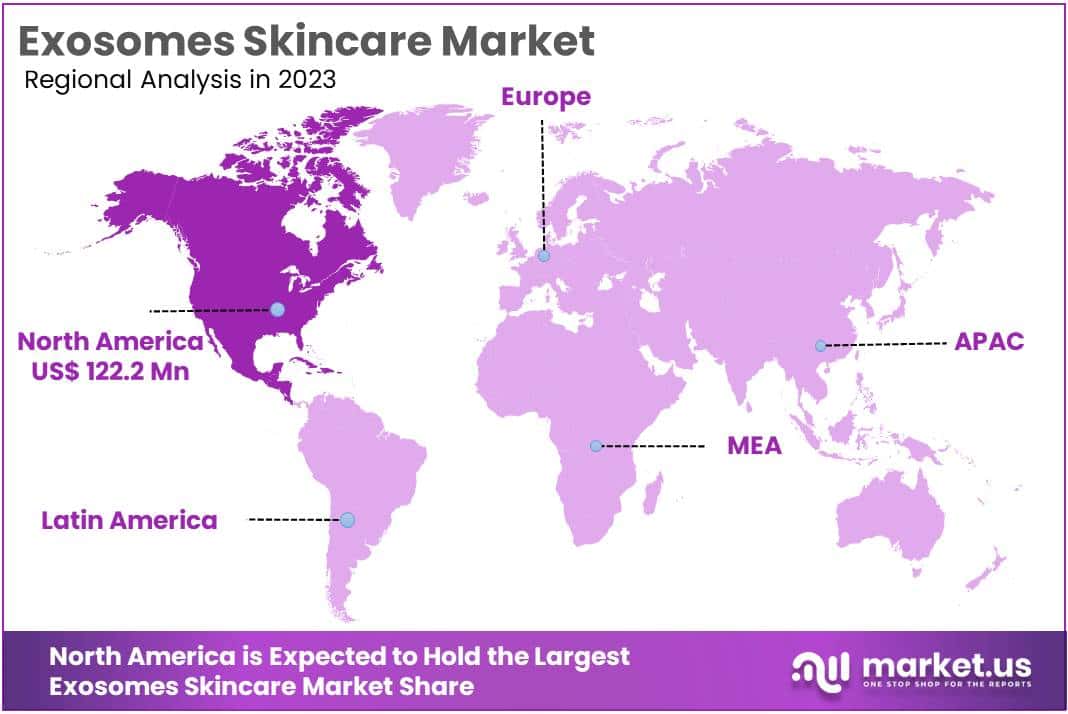
The Global Exosomes Skincare Market size is expected to be worth around US$ 633.2 Million by 2033, from US$ 260.2 Million in 2023, growing at a CAGR of 9.3% during the forecast period from 2024 to 2033. North America led the global exosomes skincare market, holding a revenue share of 47%.

The exosomes skincare market is propelled by growing consumer demand for advanced, science-driven skincare solutions, particularly in anti-aging and skin regeneration. Exosomes, which are cell-derived vesicles facilitating intercellular communication, have shown significant promise in promoting skin repair and rejuvenation. This unique functionality appeals to a consumer base increasingly interested in potent, clinically backed skincare options, especially within the anti-aging demographic.
The market’s growth is further supported by ongoing research and development, with advancements in biotechnology enabling more effective exosome extraction, stabilization, and formulation techniques. However, several challenges impede rapid expansion. Regulatory uncertainties, particularly in the U.S. and European markets, create barriers to entry, as exosome-based products face stringent safety and efficacy testing requirements.
Furthermore, strategic partnerships between biotech firms and skincare brands, combined with rising consumer interest in personalized and regenerative skincare, are expected to drive the market forward, highlighting both opportunities and barriers within this evolving sector.
- According to the U.S. Census Bureau, the population aged 65 and older is projected to nearly double from 52 million in 2018 to 95 million by 2060, representing a substantial consumer base for regenerative skincare products.
Key Takeaways
- The global exosomes skincare market was valued at US$ 260.2 million in 2023 and is anticipated to register substantial growth of US$ 633.2 million by 2033, with 9.3% CAGR.
- In 2023, the exosome serums segment took the lead in the global market, securing 33% of the total revenue share.
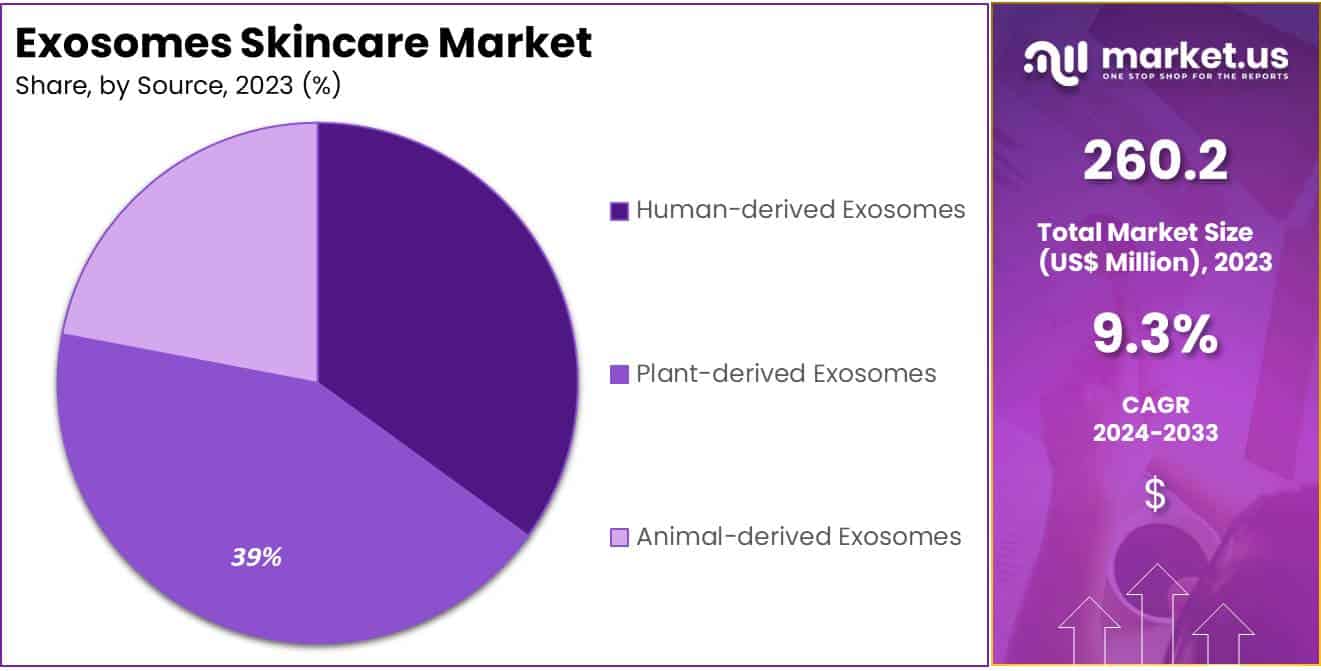
- Based On Source analysis, plant-derived exosomes captured a significant 39% share of the market, highlighting their crucial role in generating substantial revenue.
- Among application segments, anti-aging emerged as the dominant segment, capturing 39% of the total revenue.
- Based on the distribution, the offline distribution channel dominated the global exosomes skincare market, holding a substantial share of 63%.
- North America maintained its leading position in the global market with a share of over 47% of the total revenue.
Product Analysis
Based on product the market is fragmented into exosome serums, exosome creams, exosome masks, exosome lotion, and others. Amongst these, exosome serums dominated the global exosomes skincare market capturing a praiseworthy market share of 33% in 2023. Exosome serums have emerged as the dominant product category in the global exosome skincare market, driven by their high efficacy in delivering concentrated, active ingredients directly to the skin.
These serums are particularly effective in promoting skin regeneration, improving texture, and reducing signs of aging due to the unique properties of exosomes, which facilitate deep cellular communication and repair. Their lightweight formulation and ability to penetrate the skin barrier make them a preferred choice among consumers seeking targeted skincare solutions.
The growing popularity of exosome serums is also supported by advancements in biotechnology, which have enhanced their stability and potency. Additionally, the increasing demand for personalized skincare has propelled the development of specialized serums tailored to individual skin concerns. Major market players are focusing on R&D and strategic product launches to capitalize on this trend, further solidifying the position of exosome serums as the leading segment in the market.
Source Analysis
Based on the source, the market fractionates into human-derived exosomes, plant-derived exosomes, and animal-derived exosomes. An indispensable role is performed by the plant-derived exosomes segment apprehending a large market revenue share of 39% in the year 2023.
Plant-derived exosomes have gained prominence in the global exosome skincare market due to their biocompatibility, safety, and potent regenerative properties. Sourced from plants such as rice, ginseng, and aloe, these exosomes are rich in bioactive compounds, including antioxidants and growth factors, which promote skin rejuvenation and repair.
Their natural origin aligns with the growing consumer preference for sustainable and clean beauty products. Additionally, plant-derived exosomes exhibit strong anti-inflammatory and anti-aging effects, making them ideal for sensitive and aging skin. This segment’s dominance is driven by ongoing research and product innovation, catering to the rising demand for eco-friendly skincare solutions.
Application Analysis
Based on application, the market fractionates into anti-aging, skin rejuvenation and repair, brightening and pigmentation control, acne and inflammation management, wound healing and scar reduction, and others. Amongst these, anti-aging dominated the global exosomes skincare market capturing a significant market share of 39% in 2023.
Anti-aging exosomes have emerged as the dominant segment in the global exosome skincare market due to their ability to target key signs of aging, such as wrinkles, fine lines, and loss of skin elasticity. These exosomes deliver growth factors, proteins, and RNA to stimulate collagen production and enhance skin regeneration at the cellular level.
As consumers increasingly seek advanced, non-invasive solutions for youthful skin, anti-aging exosome products have gained traction. Market growth is further fueled by ongoing innovations and the rising demand for premium, science-backed skincare products, positioning anti-aging exosomes as a cornerstone of the skincare industry’s future.
Distribution Channel Analysis
Based on the distribution channel, the market fractionates into online and offline. Amongst these, offline dominated the global exosomes skincare market capturing a large market share of 63% in 2023. The offline segment has dominated the global exosome skincare market, driven by the strong presence of brick-and-mortar stores, including speciality skincare outlets, spas, and dermatology clinics.
These venues provide personalized consultations and demonstrations, enhancing consumer trust and promoting product adoption. The tactile experience and immediate product availability in physical stores appeal to consumers seeking premium exosome-based skincare solutions. Additionally, partnerships between manufacturers and high-end retail channels have further strengthened offline sales. Despite the growth of e-commerce, the offline segment remains pivotal, particularly in regions where consumers prefer in-person shopping for high-value, science-driven skincare products.
Key Segments Analysis
By Product
- Exosome Serums
- Exosome Creams
- Exosome Masks
- Exosome Lotion
- Others
By Source
- Human-derived Exosomes
- Plant-derived Exosomes
- Animal-derived Exosomes
By Application
- Anti-Aging
- Skin Rejuvenation and Repair
- Brightening and Pigmentation Control
- Acne and Inflammation Management
- Wound Healing and Scar Reduction
- Others
By Distribution Channel
- Online
- Offline
Drivers
Growing Demand for Anti-aging Products
The growing demand for anti-aging products is a primary driver of the exosomes skincare market, as consumers increasingly seek advanced solutions that offer visible, long-lasting rejuvenation. Exosome-based skincare products, known for their regenerative properties, directly address the needs of the anti-aging market by promoting cellular repair, reducing wrinkles, and enhancing skin texture.
These effects align with the preferences of a demographic focused on skin health and longevity, particularly as the global population ages. Additionally, increased consumer base, awareness and disposable income contribute to the rising adoption of premium, effective skincare products. As consumers prioritize high-efficacy treatments, exosome-based products are well-positioned to capture a significant share of the anti-ageing market, supporting robust growth in the exosome skincare sector.
- According to the World Health Organization, in 2019, there were approximately 703 million people aged 65 years or older worldwide. This number is projected to double to 1.5 million by 2050.
Restraints
Technological Complexity and Limitations
The growth of the exosome skincare market is restrained by technological complexities and limitations in product development, extraction, and formulation processes. Exosomes, being delicate cell-derived vesicles, require sophisticated techniques for isolation, purification, and stabilization to maintain their efficacy in skincare products.
Current methods for exosome extraction from sources like stem cells are intricate and costly, often leading to variability in product quality and bioavailability. This technological complexity not only raises production costs but also limits scalability, making it challenging for companies to provide exosome-based skincare at a price accessible to a broad consumer base.
Opportunities
New Product Development
New product development within the exosomes skincare market presents significant growth opportunities, as innovative formulations continue to attract consumer interest and meet the demand for advanced, science-backed skincare solutions. The regenerative properties of exosomes, which facilitate cellular repair and communication, make them ideal for targeting key skincare concerns such as anti-aging, scar healing, and skin rejuvenation.
These unique benefits have prompted companies to invest in R&D, exploring ways to enhance exosome stability, potency, and skin penetration, resulting in new and improved skincare products that deliver visible, long-lasting results.
- For instance, In April 2024, Pure Pro Aesthetics introduced the Exo LLT Pro Solution from ISOV Sorex, which uses exosomes to promote cell communication and renewal, resulting in improved skin texture and health.
Impact of macroeconomic factors / Geopolitical factors
The exosome skincare market is significantly influenced by macroeconomic and geopolitical factors, which shape both the demand and supply dynamics. Global economic conditions, including inflation rates, GDP growth, and consumer purchasing power, directly affect the market. During economic downturns, discretionary spending on premium skincare products, including those leveraging exosome technology, tends to decline. Conversely, periods of economic growth often lead to increased consumer spending on high-end, innovative skincare solutions.
Geopolitical factors, such as international trade policies, tariffs, and regulatory frameworks, also play a pivotal role. The exosome skincare market relies heavily on advanced biotechnology and global supply chains for raw materials and R&D. Trade tensions or restrictive export-import policies can disrupt supply chains, leading to increased production costs and potential market instability. Moreover, variations in regulatory approvals across regions impact the speed at which new products are commercialized.
Trends
The exosome skincare market is experiencing significant growth, driven by advancements in biotechnology and a rising consumer preference for regenerative skincare solutions. Exosomes, extracellular vesicles secreted by cells, are increasingly recognized for their potential to promote skin rejuvenation, healing, and anti-aging benefits.
This growth is attributed to the integration of exosomes into serums and creams, focusing on personalized skincare solutions, and the expanding application of exosomes in wound healing and post-treatment skin recovery. Additionally, the market is witnessing a surge in research and development activities aimed at enhancing the efficacy and delivery mechanisms of exosome-based products, further propelling market expansion.
The increasing prevalence of skin conditions related to cancer treatments, such as radiation dermatitis, is also fueling demand for advanced skincare therapies incorporating exosomes. Overall, the exosome skincare market is poised for robust growth, driven by technological advancements and evolving consumer preferences toward innovative skincare solutions.
Regional Analysis
North America, dominated the global exosomes skincare market with revenue share of 47% commanding the in the year 2023. North America has established a dominant position in the exosomes skincare market. Consumer awareness and willingness to invest in premium skincare products contribute to North America’s market dominance.
The high demand for advanced, science-backed skincare solutions, especially among an ageing population concerned with anti-aging and regenerative treatments, fuels the adoption of exosome-based products. The rising aging population in the United States significantly drives growth in the exosomes skincare market, as older consumers increasingly seek advanced anti-aging solutions.
Exosome-based skincare, known for its ability to promote cellular repair and rejuvenation, appeals to this demographic by offering targeted anti-aging benefits. This demand surge supports strong growth potential for exosome skincare products tailored to an aging population.
Key Regions and Countries
- North America
- US
- Canada
- Europe
- Germany
- France
- The UK
- Spain
- Italy
- Russia
- Netherland
- Rest of Europe
- Asia Pacific
- China
- Japan
- South Korea
- India
- New Zealand
- Singapore
- Thailand
- Vietnam
- Rest of APAC
- Latin America
- Brazil
- Mexico
- Rest of Latin America
- Middle East & Africa
- South Africa
- Saudi Arabia
- UAE
- Rest of MEA
Key Players Analysis
The exosomes skincare market is primarily dominated by a few established companies. The industry’s lucrative nature attracts new entrants; however, high entry barriers discourage many from joining. Major players are constantly striving to increase or retain their market shares, creating a dynamic competitive environment. Companies utilize strategies like alliances, acquisitions, and product launches to solidify their market positions, ensuring continuous innovation and adaptation to consumer demands.
Croma Pharma, a leader in aesthetic medicine, has ventured into the exosomes skincare market, focusing on products that utilize exosomes for enhanced skin rejuvenation. Meanwhile, Kimera Labs, operating under the Vive brand, innovates by developing exosome-based therapies derived from stem cells, targeting skin repair and rejuvenation. Xollent Biotech and ELEVAI Skincare are also making significant contributions by integrating exosomal science with biotechnological advancements and luxury skincare, respectively, catering to consumers seeking effective and scientifically-backed skincare solutions.
Top Key Players in the Exosomes Skincare Market
- Croma Pharma
- Kimera Labs (Vive)
- Xollent Biotech
- ELEVAI Skincare
- Advancexo
- Angela Caglia Skincare
- Snow Fox Skincare
- SickScience
- Rion Aesthetics
- Pure Pro Aesthetics
- ( plated )™ Skin Science
- ExoCoBio
- Dp Derm
- EXOCEL BIO.
Recent Developments
- June 2024: Cenegenics has partnered with Exoceuticals®, a leader in regenerative skincare. Their collaboration introduces Cenegenics clients to Exoceuticals®’ advanced skincare line, featuring the patented eXo3 exosome technology for transformative skin care.
- November 2024: PhytoCellTec™ Exosomes unveils a cutting-edge skincare solution derived from plant stem cell exosomes. This revolutionary product not only transfers exosomes to the skin but also boosts the skin’s internal exosome production.
- February 2023: Elevai Skincare Inc., a subsidiary of Elevai Labs Inc., launched a clinical study to evaluate the effectiveness of their topical exosome product combined with energy device treatment in enhancing facial skin appearance.









