


Report Overview
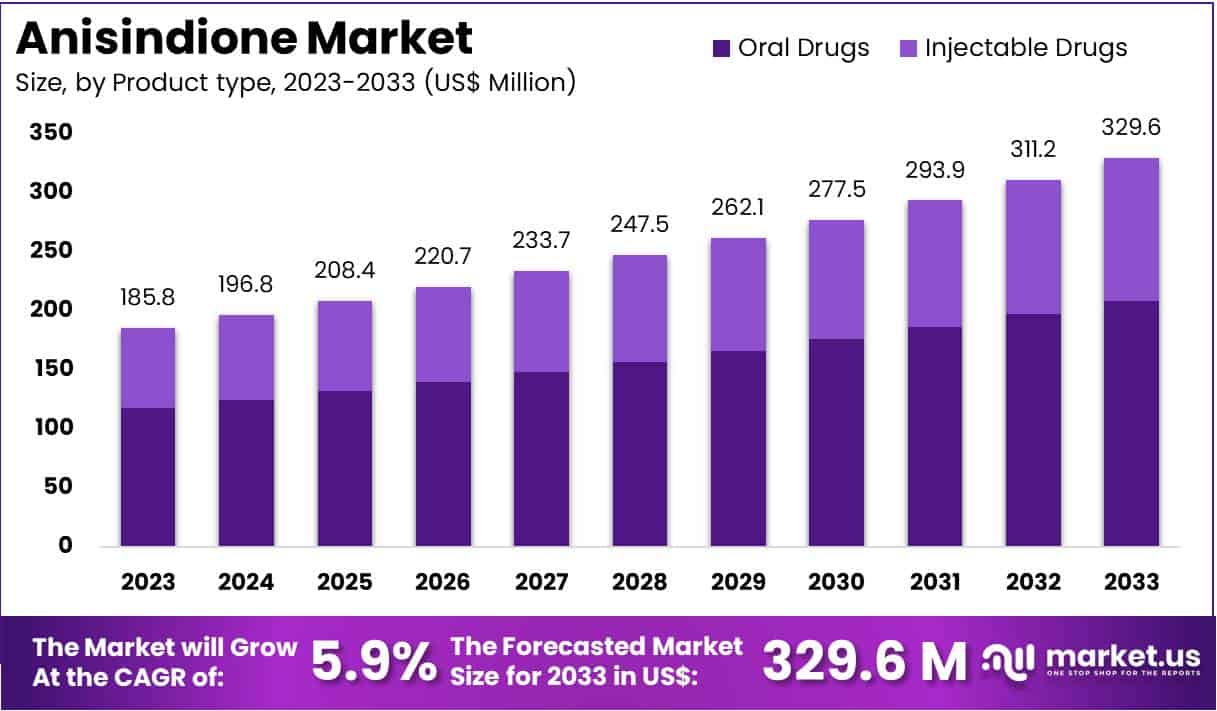
The Global Anisindione Market size is expected to be worth around US$ 329.6 Million by 2033, from US$ 185.8 Million in 2023, growing at a CAGR of 5.9% during the forecast period from 2024 to 2033.
Growing incidence of thromboembolic disorders drives the anisindione market, as healthcare providers seek effective anticoagulant therapies. Anisindione, a synthetic anticoagulant and indanedione derivative, is utilized in the prophylaxis and treatment of venous thrombosis, pulmonary embolism, and as an adjunct in managing coronary occlusion.
In 2022, the Centers for Disease Control and Prevention (CDC) reported that venous thromboembolism affects approximately 900,000 individuals annually in the United States, underscoring the need for anticoagulant medications.
Additionally, the American Heart Association noted that atrial fibrillation, a condition increasing the risk of embolization, affected an estimated 5 million Americans in 2023, highlighting the demand for effective anticoagulation therapies. Recent trends indicate a shift toward developing novel anticoagulants with improved safety profiles and reduced monitoring requirements, presenting opportunities for anisindione formulations that offer enhanced patient compliance.
Furthermore, the integration of anisindione in combination therapies aims to optimize anticoagulant efficacy while minimizing adverse effects, aligning with the industry’s focus on personalized medicine. The market also benefits from ongoing research into the pharmacokinetics of anisindione, facilitating the development of tailored dosing regimens that improve therapeutic outcomes. As the prevalence of thromboembolic conditions rises, the anisindione market is poised for growth, driven by the need for effective and safe anticoagulant options.
Key Takeaways
- In 2023, the market for Anisindione generated a revenue of US$ 185.8 million, with a CAGR of 5.9%, and is expected to reach US$ 329.6 million by the year 2033.
- The product type segment is divided into oral drugs and injectable drugs, with oral drugs taking the lead in 2023 with a market share of 63.4%.
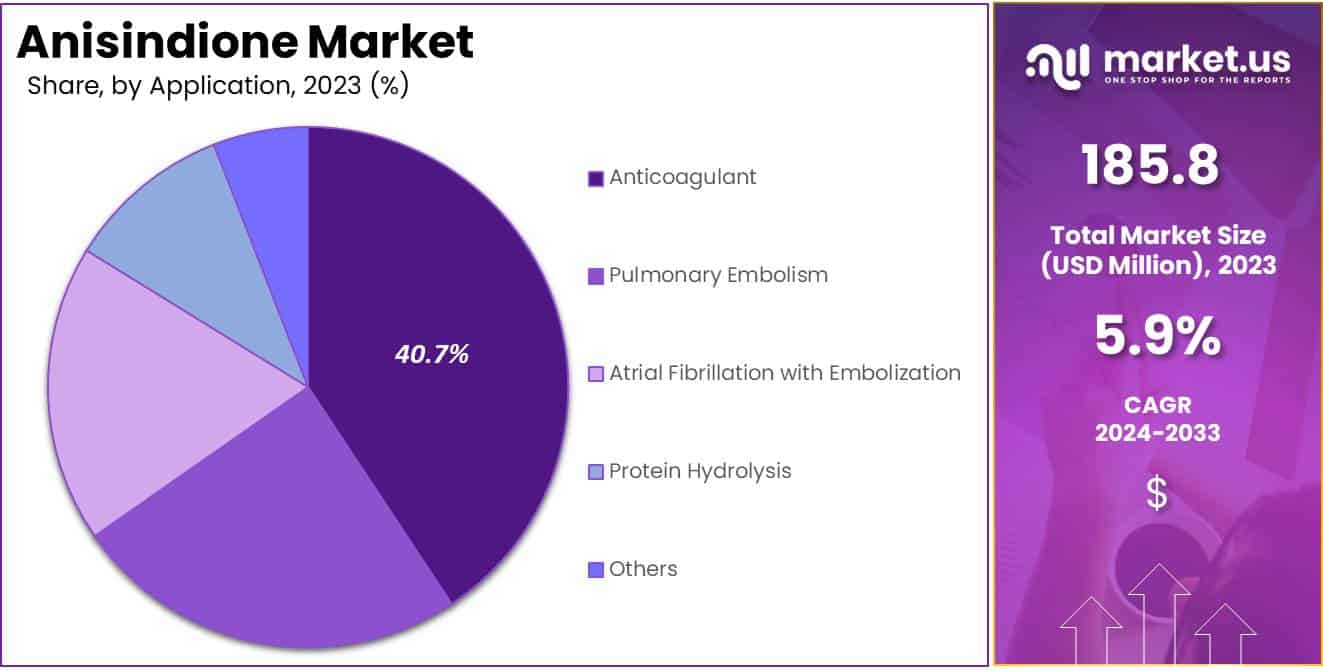
- Considering application, the market is divided into protein hydrolysis, atrial fibrillation with embolization, anticoagulant, pulmonary embolism, and others. Among these, anticoagulant held a significant share of 40.7%.
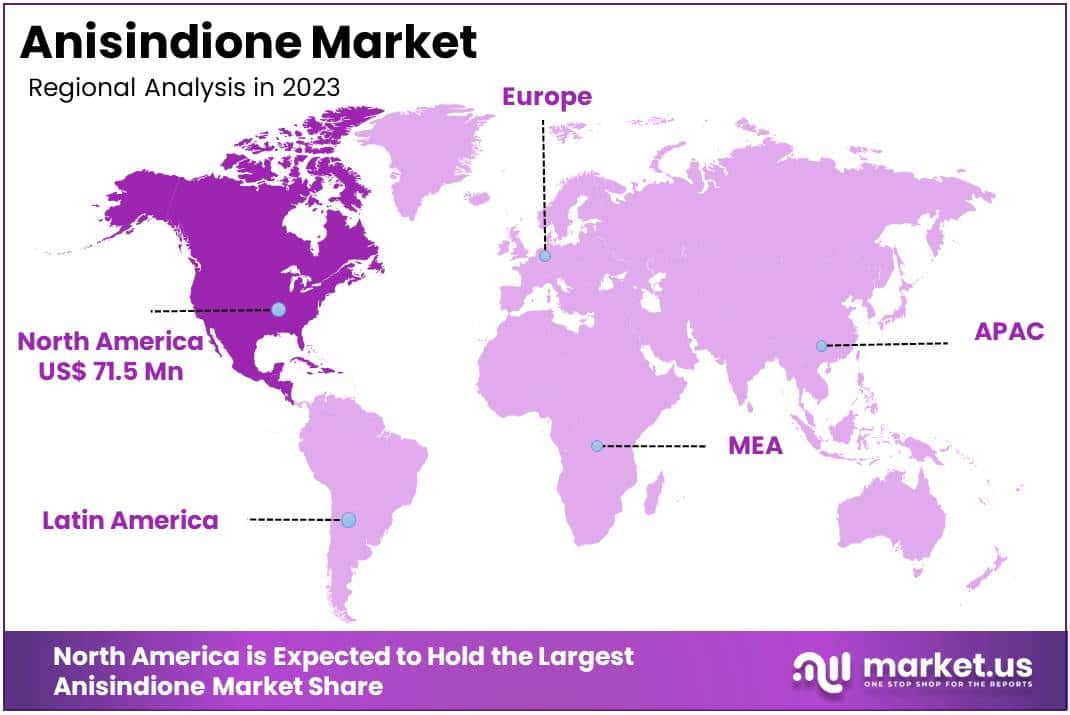
- North America led the market by securing a market share of 38.5% in 2023.
Product Type Analysis
The oral drugs segment led in 2023, claiming a market share of 63.4% owing to the convenience and ease of administration associated with oral medications, which enhance patient compliance. Patients and healthcare providers increasingly prefer oral drugs due to their non-invasive nature and suitability for long-term anticoagulant therapy. The widespread availability of oral formulations in retail and hospital pharmacies further supports this trend.
Additionally, advancements in drug formulation have improved the bioavailability and efficacy of oral anisindione, making it a reliable option for preventing and treating thromboembolic disorders. The growing prevalence of conditions like atrial fibrillation and deep vein thrombosis increases demand for effective oral anticoagulant therapies. As more patients seek outpatient treatments, the oral drugs segment is projected to expand steadily in the anisindione market.
Application Analysis
The anticoagulant held a significant share of 40.7% due to the rising incidence of thromboembolic disorders, including deep vein thrombosis and pulmonary embolism, which require effective anticoagulant therapy. Healthcare providers frequently prescribe anisindione as a vitamin K antagonist to prevent clot formation and reduce the risk of stroke in high-risk patients.
Increasing awareness of the importance of anticoagulation in managing cardiovascular conditions supports demand in this segment. Furthermore, ongoing clinical research highlighting anisindione’s efficacy and safety profile enhances its adoption in anticoagulant therapy. As the global burden of cardiovascular diseases continues to rise, the anticoagulant segment is anticipated to play a pivotal role in the growth of the anisindione market.
Key Market Segments
By Product Type
- Oral Drugs
- Injectable Drugs
By Application
- Protein Hydrolysis
- Atrial fibrillation with Embolization
- Anticoagulant
- Pulmonary Embolism
- Others
Drivers
Rising Incidence of Thromboembolic Disorders
The increasing prevalence of thromboembolic disorders, such as deep vein thrombosis (DVT) and pulmonary embolism (PE), has significantly driven the demand for anticoagulant therapies, including anisindione. According to the Centers for Disease Control and Prevention (CDC), in 2022, an estimated 900,000 people in the United States were affected by DVT and PE annually, leading to approximately 100,000 deaths each year.
This high incidence underscores the critical need for effective anticoagulant medications to prevent and treat these life-threatening conditions. As awareness of thromboembolic risks grows among healthcare providers and patients, the utilization of anticoagulants like anisindione is expected to increase. Additionally, aging populations and sedentary lifestyles contribute to the rising cases of thromboembolic events, further bolstering the market for anticoagulant therapies.
Consequently, the anisindione market is anticipated to experience growth in response to the escalating demand for effective anticoagulation management.
Restraints
Availability of Alternative Anticoagulants
The presence of newer anticoagulants with improved safety profiles and more convenient dosing regimens has restrained the growth of the anisindione market. Direct oral anticoagulants (DOACs), such as rivaroxaban and apixaban, have gained popularity due to their predictable pharmacokinetics and reduced need for monitoring compared to traditional vitamin K antagonists like anisindione.
A study published in the Journal of the American College of Cardiology in 2023 reported that DOACs accounted for over 70% of anticoagulant prescriptions in the United States, reflecting a significant shift in clinical practice. This indicates a preference for anticoagulants that offer ease of use and lower risk of adverse effects, thereby limiting the market share of older agents like anisindione.
Healthcare providers are increasingly opting for these alternatives, which impacts the demand for anisindione. Moreover, patient adherence tends to improve with simpler dosing schedules, further diminishing the reliance on traditional anticoagulants. As a result, the anisindione market faces challenges in maintaining its position amidst the growing preference for newer anticoagulant therapies.
Opportunities
Expansion into Emerging Markets
The anisindione market holds significant growth potential through expansion into emerging markets where access to newer anticoagulants may be limited due to cost or regulatory constraints. In many low- and middle-income countries, the burden of thromboembolic diseases remains high, yet the availability of advanced anticoagulant therapies is restricted. A 2022 report by the World Health Organization highlighted that non-communicable diseases, including cardiovascular conditions leading to thromboembolic events, accounted for 77% of all deaths in low- and middle-income countries.
This statistic underscores the urgent need for accessible and affordable anticoagulant options in these regions. Anisindione, being a well-established anticoagulant, could serve as a cost-effective alternative, meeting the therapeutic needs of patients in these markets. Pharmaceutical companies have the opportunity to collaborate with local healthcare systems to improve distribution and education regarding anticoagulation therapy. By addressing the unmet medical needs in these areas, the anisindione market can achieve substantial growth while contributing to better health outcomes globally.
Impact of Macroeconomic / Geopolitical Factors
Macroeconomic and geopolitical factors play a crucial role in shaping the anisindione market. Economic growth in developed regions supports healthcare infrastructure, driving demand for anticoagulant therapies like anisindione.
Conversely, economic instability and inflation in emerging markets limit healthcare spending, restricting access to specialized medications. Geopolitical tensions and trade disruptions impact the supply chain, leading to increased production costs and delays in the availability of raw materials necessary for anisindione manufacturing.
Additionally, stringent regulatory frameworks in different regions require significant investment in compliance, posing challenges for market entry. However, rising incidences of thromboembolic disorders and growing awareness of anticoagulation therapies bolster demand. Increasing healthcare initiatives and the expansion of healthcare services in emerging markets present opportunities for sustained growth and innovation in this sector.
Trends
Increased Focus on Personalized Anticoagulation Therapy
Recent trends in anticoagulation therapy emphasize personalized medicine approaches, tailoring treatment plans to individual patient characteristics to optimize efficacy and safety. Advancements in pharmacogenomics have enabled healthcare providers to assess genetic factors that influence patient responses to anticoagulants like anisindione. A 2023 study in the New England Journal of Medicine demonstrated that genotype-guided dosing of vitamin K antagonists resulted in a 30% reduction in adverse events compared to standard dosing protocols.
This personalized approach allows for more precise management of anticoagulation therapy, minimizing risks such as bleeding or thrombotic complications. The integration of genetic testing into clinical practice has become more feasible and cost-effective, facilitating its adoption in routine care. As a result, the anisindione market is witnessing a shift towards individualized treatment strategies, enhancing patient outcomes and potentially expanding its utilization in specific patient populations. This trend aligns with the broader movement in healthcare towards precision medicine, aiming to deliver tailored therapies based on individual patient profiles.
Regional Analysis
North America is leading the Anisindione Market
North America dominated the market with the highest revenue share of 38.5% owing to its application as an anticoagulant in managing thromboembolic disorders. The Centers for Disease Control and Prevention (CDC) reported that venous thromboembolism affects up to 900,000 individuals annually in the United States, underscoring the need for effective anticoagulant therapies.
However, the market’s expansion faced challenges due to the availability of newer anticoagulants with improved safety profiles and fewer dietary restrictions. Despite these challenges, anisindione maintained a niche presence, particularly among patients requiring alternative anticoagulation options due to specific medical conditions or contraindications to other medications. The healthcare sector’s emphasis on personalized medicine and tailored therapeutic approaches contributed to the sustained, albeit limited, demand for anisindione in the region.
The Asia Pacific region is expected to experience the highest CAGR during the forecast period
In the Asia Pacific region, the anisindione market is anticipated to experience limited growth during the forecast period. The increasing prevalence of cardiovascular diseases and thromboembolic disorders in countries such as China and India has heightened the demand for anticoagulant therapies. However, the market faces significant competition from newer anticoagulants that offer improved efficacy and safety profiles.
Additionally, the lack of widespread awareness among healthcare providers and patients regarding anisindione’s therapeutic applications may limit its adoption. Regulatory challenges and the need for extensive clinical data to support its use further constrain market expansion. Nonetheless, niche applications and specific patient populations requiring alternative anticoagulation options may provide limited opportunities for anisindione’s utilization in the region.
Key Regions and Countries
- North America
- US
- Canada
- Europe
- Germany
- France
- The UK
- Spain
- Italy
- Russia
- Netherland
- Rest of Europe
- Asia Pacific
- China
- Japan
- South Korea
- India
- Australia
- New Zealand
- Singapore
- Thailand
- Vietnam
- Rest of APAC
- Latin America
- Brazil
- Mexico
- Rest of Latin America
- Middle East & Africa
- South Africa
- Saudi Arabia
- UAE
- Rest of MEA
Key Players Analysis
The major players in the Anisindione market are actively engaged in the development and introduction of innovative products, as well as implementing strategic initiatives aimed at enhancing their competitive positioning. Key players in the anisindione market focus on enhancing product formulations to improve therapeutic efficacy and patient safety.
Many invest in research and development to explore new applications in anticoagulant therapy and expand their product pipelines. Strategic collaborations with healthcare providers and distributors help streamline supply chains and increase market penetration. Companies also prioritize market expansion in regions with rising incidences of cardiovascular disorders. Educational initiatives aimed at healthcare professionals support awareness and adoption of these treatments in clinical settings.
Top Key Players in the Anisindione Market
- Toronto Research Chemicals Inc.
- Schering Plough Corp
- Santacruz Biotechnology
- Bayer Schering Pharma
- Aimpow
Recent Developments
- In October 2023: Aimpow, a key player in the anticoagulant market, announced the expansion of its production facilities to increase the manufacturing capacity of anisindione. This strategic move aims to meet the growing demand for anticoagulant therapies, thereby strengthening Aimpow’s position in the anisindione market.
- In September 2023: Toronto Research Chemicals, a leading supplier of research chemicals, introduced a high-purity anisindione product to its catalog. This addition provides researchers with enhanced quality materials for anticoagulant studies, supporting advancements in the anisindione market.









