


Report Overview
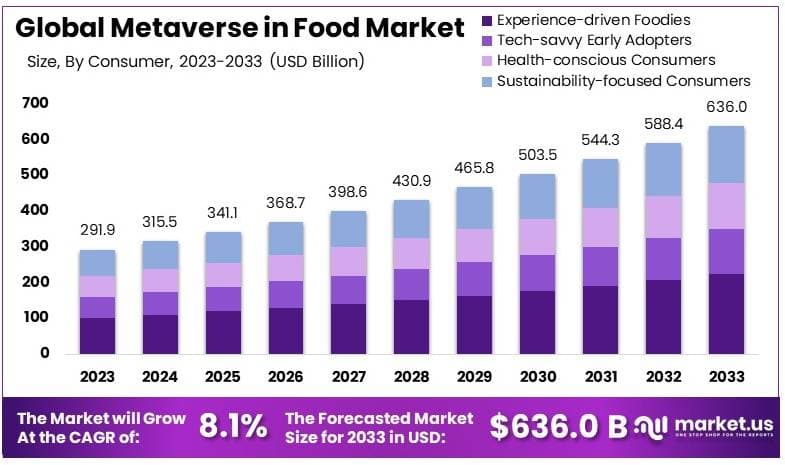
The Global Metaverse in Food Market size is expected to be worth around USD 636.0 Billion by 2033, from USD 291.9 Billion in 2023, growing at a CAGR of 8.1% during the forecast period from 2024 to 2033.
The Metaverse in Food refers to the integration of virtual and augmented reality technologies into the food and beverage industry. This concept is reshaping how consumers interact with food, from virtual dining experiences and immersive culinary classes to digital food festivals and branded virtual spaces. The Metaverse is allowing brands to create new ways to engage with consumers, offering virtual tastings, interactive cooking sessions, and even digital restaurants where users can order food in real life through virtual platforms.
The Metaverse in Food Market is expected to experience significant growth as more companies explore its potential. Market drivers include increasing consumer interest in immersive experiences, advancements in AR and VR technologies, and the growing influence of social media in shaping food trends. This market is likely to see the rise of new partnerships between tech companies and food brands, the development of specialized platforms for virtual dining, and the expansion of digital food influencers. As the Metaverse evolves, its impact on the food industry could lead to a new era of customer engagement and food consumption.
The Metaverse is rapidly emerging as a new frontier for the food industry, particularly within fast-food and beverage sectors, demonstrating innovative approaches to brand engagement and customer interaction. Major players such as McDonald’s, Wendy’s, and Chipotle are pioneering this digital landscape by launching virtual locations on platforms like Roblox and Meta’s Horizon Worlds, signaling a significant shift in marketing strategies tailored to the evolving consumer behaviors.
In 2022, Chipotle ventured into the Metaverse with a virtual restaurant on Roblox, offering a unique ‘play-to-earn’ experience where users could earn ‘Burrito Bucks’ redeemable in their physical stores. This integration of gaming and real-world rewards exemplifies how brands can create immersive experiences that bridge virtual activities with tangible benefits.
Wendy’s, on the other hand, introduced the “Wendyverse,” a dedicated virtual space designed to deepen brand engagement through interactive, themed environments.
Consumer interest in the Metaverse is underscored by a survey from PYMNTS and Paytronix, revealing that 18% of consumers have participated in Metaverse environments. The engagement is notably higher among younger demographics, with 33.6% of millennials and 27% of Gen Z reported to be active in these virtual spaces.
Furthermore, the ‘grab-and-go’ fast-food demographic shows a higher familiarity rate of 29.2% with the Metaverse, compared to 13% among traditional dine-in consumers. This demographic insight highlights the potential for brands to tap into a tech-savvy, younger audience eager for digital and interactive experiences.
Additionally, Coca-Cola’s venture into the Metaverse exemplifies how beverage giants are exploring this space. Celebrating its first year in the Metaverse, Coca-Cola released another one of its over 4,000 digital collectibles.
According to a PwC survey, 36% of CEOs expressed interest in utilizing the Metaverse to create virtual content that engages customers directly, indicating a growing corporate interest in exploring these digital realms for marketing purposes.
The Metaverse presents an innovative platform for the food and beverage industry to expand their brand presence and interact with consumers in novel ways. By leveraging virtual environments, companies are not only enhancing customer engagement but are also setting the stage for the next evolution of digital marketing and brand interaction.
Key Takeaways
- The Metaverse in Food Market was valued at USD 291.9 billion in 2023 and is expected to reach USD 636.0 billion by 2033, with a CAGR of 8.1%.
- In 2023, Experience-driven Foodies dominated the consumer segment with 25% due to their preference for immersive food experiences.
- In 2023, Luxury and Gourmet Foods led the food type segment with 31%, driven by demand for premium virtual dining experiences.
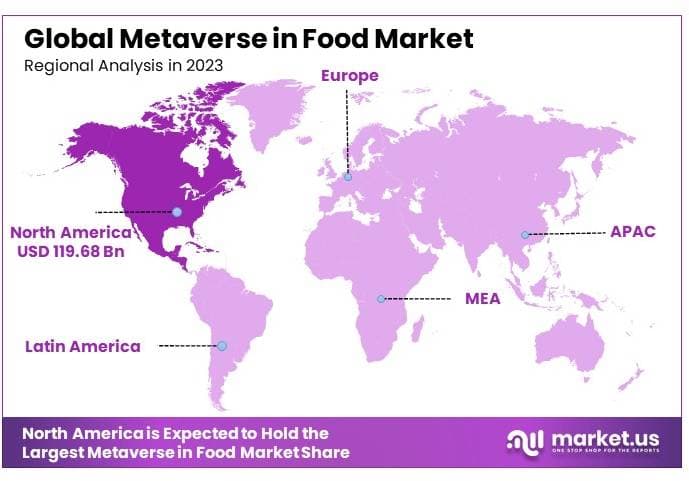
- In 2023, North America held the dominant region position with 41% market share, indicating strong consumer interest in metaverse dining.
Consumer Analysis
Experience-driven Foodies dominate with 25% due to their pursuit of unique and immersive dining experiences.
In the Metaverse food market, Experience-driven Foodies represent the largest consumer segment, accounting for 25% of the market. This dominance is rooted in their desire for unique and immersive culinary experiences, which the Metaverse uniquely provides. These consumers are typically adventurous, seeking out new flavors and food presentations that push the boundaries of traditional dining.
The Metaverse allows these food enthusiasts to engage in virtual dining experiences that are not constrained by physical limitations, offering them a platform to explore exotic cuisines and interactive food events from around the world. This not only satisfies their appetite for novelty but also connects them with like-minded communities who share their passion for culinary exploration.
While Experience-driven Foodies lead the market, other consumer segments such as Tech-savvy Early Adopters, Health-conscious Consumers, and Sustainability-focused Consumers also contribute to the market dynamics.
Tech-savvy Early Adopters are crucial for the initial growth and adoption of Metaverse food experiences, often being the first to try new technologies. Health-conscious Consumers look for offerings that cater to specific dietary needs, while Sustainability-focused Consumers are interested in how virtual food experiences can translate to real-world sustainability practices.
The diversity of these consumer segments supports a rich ecosystem within the Metaverse, encouraging food innovators and businesses to develop a wide range of experiences that cater to varied interests and values, thereby enriching the overall market offering and driving further engagement.
Food Type Analysis
Luxury and Gourmet Foods lead with 31% due to their appeal as exclusive and high-quality virtual experiences.
Luxury and Gourmet Foods hold the largest share in the Metaverse food type segment, at 31%. This leading position is due to the high appeal of experiencing exclusive and high-quality dining virtually, which mirrors the prestige of luxury dining in the real world. In the Metaverse, these luxury experiences are accessible to a broader audience, offering a taste of gourmet foods and sophisticated dining settings that might be out of reach physically due to cost or location.
Virtual tours provide an ideal space for showcasing luxury food items, from intricate pastries to expertly prepared seafood, all designed with exquisite detail to emulate the sensory pleasures of eating. This not only attracts consumers looking for top-tier culinary experiences but also offers a new venue for luxury food brands to expand their reach and engage with consumers in novel ways.
Other food types such as Personalized Dietary Needs, Exotic and Culturally Diverse Cuisines, and Experimental and Virtual-only Creations also play significant roles within the market. Personalized Dietary Needs cater to individual health requirements and preferences, leveraging the Metaverse’s ability to customize food experiences to a high degree.
Exotic and Culturally Diverse Cuisines offer virtual travelers culinary adventures that celebrate global cultures and ingredients, while Experimental and Virtual-only Creations explore the boundaries of what food can be when unconstrained by physical reality.
The combination of these food types creates a dynamic and innovative marketplace within the Metaverse, where traditional and futuristic culinary concepts coexist and thrive. This diversity not only enhances the appeal of the Metaverse as a culinary destination but also drives continuous growth and evolution in the way food is perceived and enjoyed in virtual settings.

Key Market Segments
By Consumer
- Tech-savvy Early Adopters
- Experience-driven Foodies
- Health-conscious Consumers
- Sustainability-focused Consumers
By Food Type
- Luxury and Gourmet Foods
- Personalized Dietary Needs
- Exotic and Culturally Diverse Cuisines
- Experimental and Virtual-only Creations
Driver
Increasing Digital Engagement and Demand for Experiential Dining Drives Market Growth
The growth of the Metaverse in the Food Market is significantly driven by increasing digital engagement and the rising demand for experiential dining experiences. As consumers become more immersed in digital content creation, the metaverse offers a new avenue for food brands to engage with their audiences in innovative ways.
Moreover, the growing influence of social media and digital content creation is further fueling this trend. Food brands are leveraging the metaverse to create shareable content and unique dining experiences that resonate with tech-savvy, digitally active consumers. This approach not only enhances brand visibility but also drives consumer engagement in novel ways.
Additionally, the rise of digital twin technology, which creates virtual replicas of physical products, is enhancing the realism of food experiences in the metaverse. This technology allows consumers to interact with and even taste food in a virtual space, bridging the gap between digital and physical dining.
Furthermore, the increasing focus on sustainability and transparency in food sourcing is aligning well with metaverse applications. Virtual platforms can educate consumers on sustainable practices and offer virtual farm-to-table experiences, thus meeting the demand for responsible consumption.
Restraint
Technological Barriers and Consumer Hesitation Restraints Market Growth
Technological barriers, consumer hesitation, high implementation costs, and regulatory concerns collectively restrain the growth of the Metaverse in the Food market. Technological barriers are significant, as creating immersive food experiences in the metaverse requires advanced hardware and software. This includes virtual reality (VR) devices, which are not yet widely adopted by consumers, limiting the market’s reach.
Consumer hesitation also plays a major role in restraining market growth. Many potential users are unfamiliar with or skeptical of the concept of experiencing food in a virtual environment. This hesitation can lead to slow adoption rates and a reluctance to engage with metaverse-based food platforms.
High implementation costs further challenge the growth of this market. Developing the necessary infrastructure for virtual food experiences involves substantial investment, which may be prohibitive for smaller businesses. These costs include not only technology but also ongoing maintenance and updates.
Lastly, regulatory concerns pose another restraint. The food industry is heavily regulated, and the application of these regulations in a virtual environment is still unclear. This uncertainty can deter businesses from fully investing in the metaverse, slowing down innovation and market expansion.
Opportunity
Expanding Brand Reach and Interactive Marketing Provides Opportunities
The expanding opportunities for brand reach in the metaverse present significant potential for players in the Metaverse in Food Market. As more consumers spend time in virtual spaces, food brands have a unique opportunity to connect with their target audience through immersive and interactive marketing strategies. This trend enables companies to create branded virtual environments, host virtual events, and offer digital products, enhancing their reach and engagement with consumers.
Moreover, the opportunity to personalize consumer experiences within the metaverse is another area ripe for exploration. By leveraging data-driven insights, brands can tailor virtual dining experiences to individual preferences, increasing customer loyalty and satisfaction. This personalization extends to virtual product launches, where brands can introduce new food items in engaging and memorable ways.
Additionally, the growing use of Metaverse NFTs (non-fungible tokens) provides a new revenue stream for food brands. Companies can create and sell exclusive digital items, such as virtual food experiences or collectible food-related art, appealing to both tech-savvy consumers and collectors.
Furthermore, the integration of e-commerce within the metaverse allows brands to seamlessly link virtual experiences with physical product sales. This approach not only enhances the consumer journey but also drives real-world sales by offering a direct connection between virtual engagement and purchasing.
Challenge
Integration Complexity and Market Readiness Challenges Market Growth
Integration complexity, market readiness, user experience challenges, and limited consumer access collectively challenge the growth of the Metaverse in the Food market. Integrating metaverse technology with existing food industry processes is complex and requires significant resources. This complexity can slow down the adoption of metaverse platforms by food companies, particularly those with limited technological expertise.
Market readiness is another key challenge. The concept of interacting with food in a virtual space is still new, and the market may not yet be fully prepared to embrace this innovation. The novelty of the metaverse can lead to uncertainty, making it difficult for businesses to predict consumer demand and adjust their strategies accordingly.
User experience challenges also play a significant role. Creating a satisfying and realistic virtual food experience is difficult, as it must replicate the sensory aspects of food, which are inherently physical. This challenge can lead to less engaging experiences, which may discourage repeat use.
Limited consumer access to necessary technologies, such as VR headsets and high-speed internet, further restricts market growth. Without widespread access to these technologies, the potential user base remains small, slowing the overall adoption of metaverse food experiences.
Growth Factors
- Growing Popularity of Virtual Dining Experiences: The increasing interest in virtual dining and food-related experiences in the Metaverse is driving demand for AI tools that create immersive and interactive culinary experiences, enhancing user engagement.
- Enhanced Personalization of Food Recommendations: AI algorithms analyze individual preferences and dietary habits to provide personalized food recommendations in the Metaverse, making virtual dining more tailored to users’ tastes and health goals.
- Expansion of Virtual Food Marketing: AI is enabling more sophisticated and targeted marketing strategies in the Metaverse, allowing food brands to engage with consumers through personalized virtual experiences, promotions, and product placements.
- Development of Virtual Food Communities: The rise of virtual food communities and social platforms within the Metaverse is fostering a sense of connection among food enthusiasts, with AI facilitating content creation, discussions, and events.
- Increased Demand for Virtual Cooking Classes and Tutorials: AI-driven virtual cooking classes and tutorials are gaining popularity as users seek to learn new culinary skills in an interactive, digital environment, expanding the reach of culinary education.
- Integration of AI with Virtual Restaurants and Delivery Services: AI is helping to manage and optimize virtual restaurants and delivery services in the Metaverse, streamlining operations, order processing, and customer interactions, making virtual dining experiences more seamless.
Emerging Trends
- Virtual Food Festivals and Events: AI-powered virtual food festivals and events are providing new platforms for food brands to showcase their products, allowing consumers to explore, taste, and engage with food in innovative ways within the Metaverse.
- AI-Enhanced Virtual Reality (VR) Dining: The combination of AI and VR is enabling highly immersive dining experiences in the Metaverse, where users can virtually dine in exotic locations or themed environments, enhancing the sensory experience.
- Augmented Reality (AR) for Virtual Menus: AI-driven AR applications are being used to create interactive virtual menus in the Metaverse, allowing users to visualize dishes, explore ingredients, and customize orders in real-time before making a selection.
- Virtual Food and Beverage Pairing: AI is facilitating virtual food and beverage pairing experiences, where users can receive expert recommendations on pairing wines, beers, or other beverages with their virtual meals, enhancing their dining experience.
- AI-Driven Sustainable Food Practices: In the Metaverse, AI is promoting sustainable food practices by encouraging virtual consumption of environmentally friendly foods and educating users on the benefits of plant-based diets and reduced food waste.
- Expansion of Virtual Culinary Tourism: AI is enabling virtual culinary tourism experiences in the Metaverse, where users can explore global cuisines, learn about different cultures, and participate in virtual food tours, broadening their culinary horizons.
Regional Analysis
North America Dominates with 41% Market Share in the Metaverse in Food Market
North America’s dominance in the metaverse food market, holding a 41% share and generating USD 119.68 billion, is driven by its innovative approach to combining technology with food services. This includes virtual dining experiences and digital food ordering systems. The region’s robust digital economy and strong consumer engagement with new technologies are key contributors.
The market dynamics in North America are influenced by the rapid adoption of virtual and augmented reality technologies among food service providers and consumers. This trend is supported by the high penetration of internet and mobile devices, making the region a leading market for metaverse innovations in the food industry.
North America is poised to continue its leadership in the metaverse food market due to ongoing technological advancements and strong venture capital support for food tech startups. This will likely lead to more immersive and interactive food experiences, further driving growth in this sector.
Regional Mentions for Other Areas:
- Europe: Europe’s metaverse food market is growing, driven by an emphasis on immersive culinary experiences and strong consumer interest in technology-driven dining. The region’s advanced tech infrastructure and focus on innovative food service solutions support a positive growth outlook.
- Asia Pacific: Known for its rapid technology adoption, Asia Pacific is rapidly expanding in the metaverse food sector. The region’s large, tech-savvy population and booming food service industry are key factors that will drive its market share upwards.
- Middle East & Africa: The Middle East and Africa are gradually exploring metaverse applications in food services, with particular interest in enhancing customer engagement and operational efficiency. The region’s growing digital infrastructure makes it a potential growth area.
- Latin America: Latin America is showing increasing interest in integrating metaverse technologies in the food industry. With improvements in digital connectivity and a burgeoning tech community, the region is expected to make significant strides in this innovative market sector.
Key Regions and Countries Covered in the Report
- North America
- US
- Canada
- Mexico
- Europe
- Germany
- UK
- France
- Italy
- Russia
- Spain
- Rest of Europe
- Asia Pacific
- China
- Japan
- South Korea
- India
- Rest of Asia-Pacific
- South America
- Brazil
- Argentina
- Rest of South America
- Middle East & Africa
- GCC
- South Africa
- Israel
- Rest of MEA
Key Players Analysis
The Metaverse in Food market is emerging as a unique space where technology and food experiences intersect. Meta, Epic Games, and NVIDIA are the top companies leading this market with their innovative approaches and technological advancements.
Meta (formerly Facebook) is a key player in the metaverse space, using its vast social media platform to integrate virtual and augmented reality experiences. Meta’s focus on creating immersive environments allows users to explore virtual food experiences, from virtual restaurants to interactive cooking classes. Their extensive reach and technological infrastructure position Meta as a leader in bringing the food industry into the metaverse.
Epic Games, known for its Unreal Engine, is driving the development of highly realistic virtual environments. In the Metaverse in Food market, Epic Games provides the technology that enables detailed and engaging virtual food experiences. Restaurants and food brands use Epic’s tools to create virtual spaces where users can explore and interact with food in new ways, making Epic a significant influencer in this space.
NVIDIA is crucial to the metaverse with its powerful graphics processing units (GPUs) and AI technologies. In the food market, NVIDIA’s technology is essential for rendering high-quality visuals and simulations, making virtual food experiences more realistic and engaging. Their hardware and AI capabilities are integral to the development of immersive food-related environments, solidifying their role as a key player.
These companies are shaping the Metaverse in Food market by combining advanced technology with innovative food experiences. Their strategic positioning and market influence are transforming how consumers engage with food in the digital world, opening new possibilities for virtual dining and culinary exploration.
Top Key Players in the Market
- Meta
- Google LLC
- Microsoft
- Unity Technologies
- NVIDIA
- Epic Games
- Roblox Corporation
- Spatialand
- Somnium Space
- Decentraland
- Samsung
- HTC Corporation
- Alibaba Group
- Sony Corporation
- Apple Inc.
- Other Key Players
Recent Developments
- February 2023: McDonald’s submitted 10 trademark applications to the U.S. Patent and Trademark Office for virtual restaurants. These virtual outlets would allow users in the metaverse to order real food that could be delivered to their homes, merging digital experiences with real-world service.
- April 2023: Chipotle expanded its digital presence by launching a Burrito Builder on Roblox. Players earn “Burrito Bucks” by building virtual burritos, which can be redeemed for real food at Chipotle restaurants. This initiative targets the gaming community, blending virtual engagement with real-world rewards.
- May 2023: Coca-Cola debuted Coca-Cola Zero Sugar Byte, the first flavor developed specifically for the metaverse. The beverage was featured in Fortnite on an interactive island, allowing players to engage in virtual experiences while promoting the product in the real world.









