


Report Overview
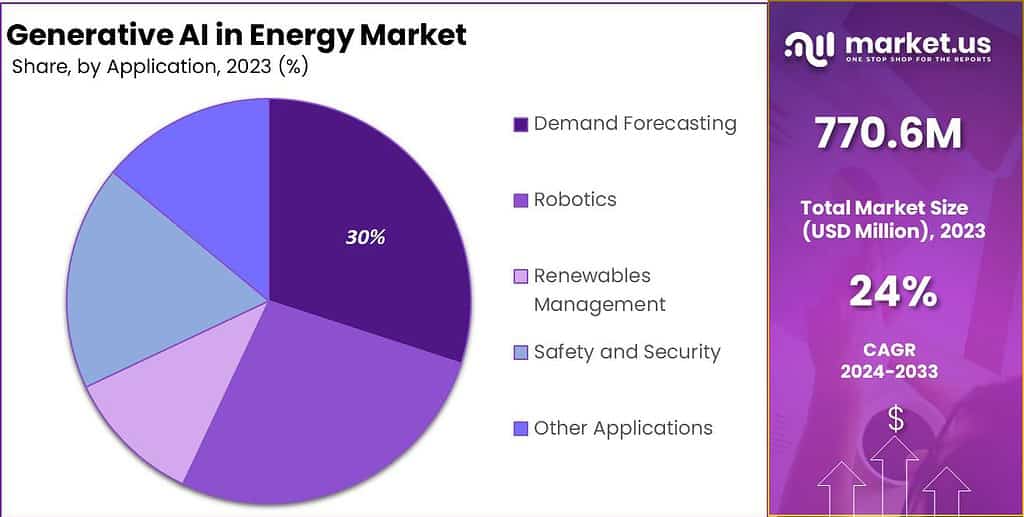
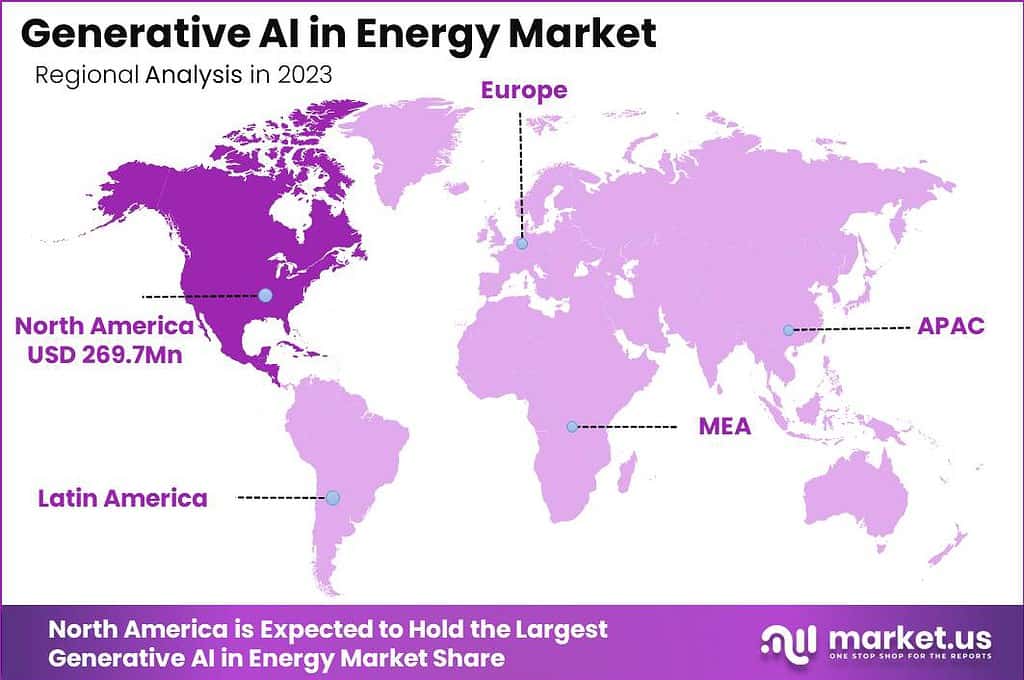
The Generative AI in Energy Market size is expected to be worth around USD 6,622.9 Million By 2033, from USD 770.6 Million in 2023, growing at a CAGR of 24% during the forecast period from 2024 to 2033. In 2023, North America held a dominant market position, capturing more than a 35% share, holding USD 269.7 Million revenue.
The market for generative AI in energy encompasses various applications designed to improve the generation, distribution, and consumption of energy. This includes utilities, renewable energy companies, and energy-intensive industries which are increasingly adopting AI-driven tools for predictive maintenance, demand forecasting, and energy system optimization.
The proliferation of smart grid technologies and the integration of IoT devices in energy networks further expand the potential for AI applications, making the energy sector both smarter and more sustainable. The growth of the generative AI in energy market can be attributed to several key drivers. Increasing demand for energy efficiency and cost reduction pressures energy providers to adopt AI solutions that enhance productivity and minimize waste.
Furthermore, the transition towards renewable energy sources necessitates advanced technologies to manage intermittency and optimize grid operations. Regulatory changes and government initiatives promoting digitalization in the energy sector also play a crucial role in accelerating the adoption of generative AI technologies.

Market demand for generative AI in the energy sector is on the rise, driven by the need for enhanced data analytics and improved operational efficiencies. As energy systems become more complex and interconnected, the capability of AI to provide real-time insights and predictive analytics becomes increasingly valuable.
Energy companies are seeking AI solutions that can help them respond more dynamically to changing market conditions and regulatory requirements, thereby sustaining their competitive edge. The integration of generative AI presents significant market opportunities within the energy sector. One of the most promising areas is the development of smart grids that utilize AI to balance supply and demand effectively.
Additionally, AI-driven solutions for predictive maintenance can reduce downtime and extend the lifespan of energy infrastructure. As global energy consumption rises, the ability to optimize energy storage and integrate various renewable sources seamlessly also constitutes a substantial market opportunity.
Technological advancements in generative AI are revolutionizing the energy sector. Enhanced computational power and improved algorithms allow for more accurate simulations and forecasts of energy patterns. Innovations such as neural networks and generative adversarial networks (GANs) are being tailored to tackle specific challenges in energy management, including load forecasting and anomaly detection.
A recent survey reveals that 45% of energy suppliers plan to use generative AI technologies, such as chatbots, to enhance customer experience in 2024. This shift is expected to drive major operational efficiencies, including reducing calls to contact centers by over 60%. By streamlining support and providing faster solutions, companies aim to improve customer satisfaction while cutting costs – a win-win for both businesses and their customers.
According to ExxonMobil, global energy consumption is expected to increase by 15% from 2021, reaching around 660 quadrillion Btu by 2050. This rise is driven by a growing global population and increasing incomes, which boost energy demands across residential, commercial, and transportation sectors. Emerging economies, in particular, are experiencing significant growth, contributing substantially to this increased energy consumption as they expand and modernize infrastructure.
Similarly, the US Energy Information Administration forecasts that industrial energy consumption will reach 315 quadrillion Btu by 2050. This growth is primarily fueled by the expanding industrial activities in manufacturing and production processes, especially in rapidly industrializing regions. The anticipated surge underscores the need for sustainable energy solutions and efficient technologies to meet the escalating demand while mitigating environmental impacts.
Key Takeaways
- The Generative AI in Energy Market is projected to grow significantly, with its market size expected to reach USD 6,622.9 million by 2033, up from USD 770.6 million in 2023. This reflects an impressive CAGR of 24% during the forecast period (2024–2033).
- In 2023, North America emerged as the leading region, accounting for over 35% of the market share, with revenue of approximately USD 269.7 million.
- The Services segment led the market in 2023, capturing a larger share than other components such as Solutions.
- The Demand Forecasting segment accounted for more than 30% of the market share in 2023, making it the most significant application area.
- Within the energy sector, the Energy Generation segment held a prominent share of over 27% in 2023.
Component Type Analysis
In 2023, the Services segment held a dominant market position within the Generative AI in Energy market, capturing a more substantial share compared to other components like Solutions. This prominence can be attributed to several critical factors that underline the increasing reliance on specialized AI services by energy companies aiming to enhance operational efficiency and integrate advanced technologies seamlessly into their existing systems.
Firstly, the Services segment benefits significantly from the growing need for comprehensive AI deployment strategies that include consultation, implementation, and ongoing support. Energy companies, especially those transitioning towards renewable sources and smart grid technologies, require expert guidance to navigate the complexities of AI integration. These services not only facilitate the effective adoption of generative AI technologies but also ensure that these integrations are optimized for the unique operational environments of each company.
Moreover, the demand for Services is driven by the necessity for continuous improvement and adaptation in operational processes within the energy sector. AI service providers offer updates, maintenance, and training that help energy companies stay ahead in a rapidly evolving market. This aspect of the service offering is crucial for maintaining system reliability and optimizing performance, which are pivotal in energy management and distribution.
Finally, the Services segment is expanding due to the increased focus on predictive maintenance and demand forecasting. Generative AI models, when delivered as a service, allow companies to predict and plan for future energy production and consumption trends more accurately. These services help minimize downtime, optimize energy production, and efficiently manage resource allocation, leading to cost savings and enhanced system resilience.
Overall, the robust growth of the Services segment in the Generative AI in Energy market reflects its critical role in facilitating more intelligent, efficient, and sustainable energy solutions. As the energy sector continues to embrace digital transformation, the demand for specialized AI services is expected to grow, reinforcing this segment’s market dominance.
Application Analysis
In 2023, the Demand Forecasting segment held a dominant market position within the Generative AI in Energy market, capturing more than a 30% share. This significant market share is underpinned by the critical role that demand forecasting plays in the operational strategies of energy companies, especially amidst the increasing complexity of energy systems and the shift towards renewable energy sources.
Demand forecasting is essential for energy providers as it enables precise prediction of energy consumption, which in turn helps in optimizing energy production and distribution. By using generative AI, companies can analyze vast amounts of data, including historical consumption patterns, weather conditions, and economic indicators, to forecast future demand with high accuracy.
This capability is crucial for maintaining grid stability and ensuring efficient energy use, which is particularly important in regions with high penetration of renewable energy sources that may have variable outputs. Furthermore, the growing emphasis on enhancing energy efficiency and reducing wastage has propelled the adoption of advanced forecasting tools.
Generative AI enhances these tools by providing deeper insights and more accurate forecasts that can adapt to changing conditions in real-time. This helps utilities minimize costs and improve their operational planning, making the energy systems more responsive to consumer needs and market dynamics.
The strategic value of demand forecasting facilitated by generative AI is also evident in its ability to support regulatory compliance and market participation for energy companies. As markets move towards real-time energy trading and demand response technologies, having accurate demand forecasts becomes increasingly critical. This foresight allows companies to better manage their energy portfolios, reduce risks associated with energy trading, and optimize their market strategies.
Overall, the Demand Forecasting segment’s dominance in the Generative AI in Energy market is a reflection of the essential nature of accurate forecasting in the energy sector. As the industry continues to evolve towards more decentralized and digitalized systems, the role of sophisticated generative AI tools in demand forecasting is expected to become even more pronounced, driving further growth in this segment.
End-Use Vertical Analysis
In 2023, the Energy Generation segment held a dominant market position within the Generative AI in Energy market, capturing more than a 27% share. This significant portion of the market is largely attributed to the critical need for optimizing power generation processes amidst increasing global energy demands and the shift towards sustainable energy practices.
The prominence of the Energy Generation segment is driven by the sector’s requirement to improve efficiency and reduce operational costs. Generative AI plays a pivotal role in achieving these goals by enabling more precise control and monitoring of energy production facilities. Through predictive maintenance and operational optimizations, AI technologies help prevent downtime and extend the lifespan of valuable equipment, which is essential for maintaining the profitability and sustainability of energy production operations.
Additionally, as the integration of renewable energy sources like wind and solar continues to grow, the need for advanced AI-driven tools to manage the variability and unpredictability associated with these sources becomes more critical. Generative AI aids in forecasting energy outputs and balancing supply with demand, which is crucial for preventing energy wastage and ensuring stable energy supply.
Moreover, the push towards reducing carbon emissions has made it imperative for energy generation companies to adopt advanced technologies that can provide deep insights into the operational dynamics of power plants. Generative AI facilitates the analysis of complex data sets to enhance decision-making processes, leading to more environmentally friendly and cost-effective energy production strategies.
Overall, the Energy Generation segment’s leadership in the Generative AI in Energy market is a testament to the transformative impact of AI technologies in making energy production more efficient, reliable, and aligned with modern environmental standards. As the energy sector continues to evolve, the role of generative AI in energy generation is expected to expand further, reinforcing its importance in the global push towards sustainable energy solutions.
GenAI for Energy Innovation
Generative AI (GenAI) is rapidly transforming how the energy industry operates, offering innovative solutions to enhance efficiency and decision-making. Here’s a closer look at the multifaceted applications of GenAI across various aspects of the energy sector:
- Reservoir Modeling: GenAI excels in analyzing complex geological data to develop detailed models of underground reservoirs. This capability is crucial for companies involved in drilling and production, as it enables them to devise more effective extraction strategies, potentially reducing costs and increasing yield.
- Energy Demand and Supply Forecasting: By generating synthetic data, GenAI aids in simulating various scenarios of energy demand and supply. This application is particularly beneficial for utility providers and energy market analysts, as it supports strategic planning regarding energy generation, distribution, and pricing. Such insights help ensure that energy provision meets consumer demand while maintaining system stability.
- Renewable Energy Optimization: In the realm of renewables, GenAI plays a pivotal role in data analysis related to solar, wind, and hydroelectric power sources. By processing vast amounts of operational data, GenAI helps in optimizing generation schedules and enhancing capacity planning. This not only boosts the efficiency of renewable energy sources but also contributes to sustainable energy practices.
- Weather Forecasting for Energy Generation: Accurate weather forecasting is vital for optimizing the output of renewable energy installations. GenAI provides hyper-local weather predictions, which are essential for maximizing the efficiency of wind and solar farms. By predicting weather changes accurately, energy producers can adjust their operations in real-time, thus improving overall productivity and reducing wastage.
- Enhanced Customer Service: GenAI is also revolutionizing customer service within the energy sector. By automating responses to customer inquiries via email, GenAI can significantly improve the quality of customer support. This technology not only speeds up response times but also ensures consistency in the information provided, enhancing customer satisfaction and loyalty.
Key Market Segments
Based on Component Type
- Services
- Solution
Based on Application
- Demand Forecasting
- Robotics
- Renewables Management
- Safety and Security
- Other Applications
Based on End-Use Vertical
- Energy Generation
- Energy Transmission
- Energy Distribution
- Utilities
- Other End-Use Verticals
Driver
Increased Efficiency and Cost Reduction
One significant driver for the adoption of generative AI in the energy sector is its potential to significantly enhance operational efficiencies and reduce costs. Energy companies are leveraging AI to optimize everything from power generation to grid management and predictive maintenance.
Generative AI specifically enables the simulation and modeling of energy systems under various scenarios, aiding in more precise decision-making that can lead to substantial cost savings. For instance, by predicting when and where maintenance is needed or identifying potential system failures before they occur, companies can avoid costly downtimes and extend the lifespan of critical infrastructure.
Restraint
High Implementation Costs
Despite its benefits, a primary restraint in the widespread adoption of generative AI within the energy sector is the high cost associated with implementing such advanced technologies. Initial setup costs, ongoing maintenance, and the need for continual upgrades can be significant.
Moreover, the integration of generative AI requires substantial investment in data infrastructure and training to ensure that systems can operate efficiently and effectively. These expenses can be prohibitive, particularly for smaller operators or in markets where capital is constrained, potentially slowing down the adoption rate.
Opportunity
Advancing Renewable Energy Integration
Generative AI presents substantial opportunities in advancing the integration of renewable energy sources, such as solar and wind, which are critical to achieving sustainability goals. By accurately forecasting energy outputs and managing the variability associated with these sources, AI can optimize the balance between energy production, demand, and storage solutions.
This capability not only improves grid stability but also enhances the feasibility of renewable energy projects by maximizing efficiency and return on investment. As the world increasingly moves towards greener energy solutions, generative AI stands out as a pivotal technology in facilitating this transition.
Challenge
Complexity in Implementation
A major challenge in deploying generative AI across the energy sector is the complexity involved in its implementation. The successful integration of AI systems into existing energy infrastructures requires careful planning, significant customization, and deep technical expertise.
The energy sector’s complex regulatory environment and the critical nature of its operations often necessitate tailored AI solutions that can meet specific industry standards and comply with stringent safety regulations. Moreover, the need for substantial data management capabilities and the integration of various data sources into a coherent system that can effectively utilize AI are non-trivial hurdles that companies must overcome.
Growth Factors
The generative AI market in the energy sector is witnessing significant growth due to various influential factors. Primarily, the increasing demand for energy efficiency and the global shift towards renewable energy sources are substantial growth drivers. Generative AI facilitates advanced energy management, predictive maintenance, and optimized asset utilization, all crucial for enhancing operational efficiencies and reducing costs.
Additionally, the need for advanced solutions to handle complex data and improve decision-making processes in energy generation and distribution continues to propel the adoption of generative AI technologies. Moreover, the push towards decarbonization and the integration of intermittent renewable energy sources like solar and wind into the grid necessitate robust predictive and adaptive capabilities that generative AI can provide.
This technology aids in balancing supply and demand, predicting system failures, and optimizing energy flows, which are critical for maintaining grid stability and ensuring efficient energy use. The commitment to achieving environmental sustainability goals further amplifies the need for innovative solutions offered by generative AI, making it a cornerstone technology in the modern energy landscape.
Emerging Trends
Emerging trends in generative AI in the energy sector include the development of more sophisticated models that can predict and simulate complex energy systems with greater accuracy and efficiency. The adoption of digital twins, which are virtual replicas of physical systems, allows for real-time monitoring and scenario testing without the risks associated with physical experiments.
These advancements are particularly beneficial in areas like grid management, renewable energy forecasting, and the optimization of distribution networks. Another significant trend is the integration of generative AI with IoT devices to enhance data collection and analytics, improving the responsiveness of energy systems to changes in demand and supply conditions.
Additionally, as generative AI continues to mature, its application is expanding beyond traditional boundaries to include customer engagement and regulatory compliance, providing energy companies with a competitive edge in a rapidly evolving market.
Business Benefits
Generative AI offers a plethora of business benefits for the energy sector. Key among these is the ability to enhance operational efficiency by automating complex and labor-intensive processes. This not only reduces operational costs but also allows human resources to be redirected towards more strategic tasks.
Generative AI’s capability to analyze large datasets rapidly and with high accuracy also leads to improved decision-making, reducing the risks associated with energy production, distribution, and trading. Furthermore, generative AI supports the development of new business models, such as predictive maintenance services and energy-as-a-service (EaaS) platforms, which provide new revenue streams and opportunities for growth.
The technology also enhances the resilience of energy systems against cyber threats and physical disruptions, ensuring continuous operation and reliability of supply, which is critical for both consumers and providers in the energy market.
Regional Analysis
In 2023, North America held a dominant market position in the generative AI in the energy sector, capturing more than a 35% share with revenues amounting to USD 269.7 million. This leading stance can be attributed to several pivotal factors.
Primarily, the region boasts a robust technological infrastructure, which facilitates the rapid adoption and integration of advanced AI technologies within the energy sector. Moreover, significant investments in AI research and development by both public and private entities have propelled North America ahead of other regions.
The presence of major technology firms and startups specializing in AI in the United States and Canada contributes extensively to the region’s supremacy. These companies are at the forefront of developing cutting-edge generative AI applications that optimize energy consumption, enhance grid management, and drive renewable energy innovations. This has not only increased operational efficiencies but has also attracted further investments into the sector, creating a cycle of growth and innovation.
Furthermore, supportive government policies play a crucial role in fostering this growth. Initiatives such as tax incentives for AI development and stringent regulations on energy efficiency compel energy companies to adopt AI solutions. These policies are designed to meet the growing demands for sustainable and efficient energy solutions, thereby bolstering the market growth.
In addition to these factors, North America’s market leadership is sustained by a strong academic and research foundation. Leading universities and research institutions in the region continuously collaborate with the energy sector to pilot and scale AI technologies. This symbiosis between academia and industry not only accelerates technological advancements but also ensures a steady pipeline of skilled professionals adept in the latest AI applications within the energy domain.
Key Regions and Countries
- North America
- US
- Canada
- Europe
- Germany
- France
- The UK
- Spain
- Italy
- Rest of Europe
- Asia Pacific
- China
- Japan
- South Korea
- India
- Australia
- Singapore
- Rest of Asia Pacific
- Latin America
- Brazil
- Middle East & Africa
- South Africa
- Saudi Arabia
- UAE
- Rest of MEA
Key Players Analysis
In the dynamic landscape of generative AI within the energy sector, the strategic maneuvers of key players like Siemens AG, ATOS SE, and SmartCloud Inc. are pivotal. These companies have made significant strides through acquisitions, new product launches, and strategic partnerships, shaping their market dominance and innovative capabilities.
Siemens AG has been particularly active in expanding its digital and technological footprint through strategic acquisitions such as the purchase of Brightly Software, a move that significantly enhances Siemens’ capabilities in digital buildings and smart infrastructure. This acquisition aligns with Siemens’ broader strategy to incorporate more comprehensive digital solutions across its operations, optimizing energy management systems that are crucial for the energy sector.
ATOS SE has strengthened its collaboration with Siemens through a major contract that is set to revolutionize Siemens’ IT infrastructure. This partnership is designed to enhance digital transformation strategies, focusing on integrated and cybersecurity solutions. The collaboration underscores a shared vision for leveraging digital innovation to drive efficiency and modernization in operations critical to the energy sector.
SmartCloud Inc., though specific recent activities were not detailed in the available data, typically focuses on leveraging cloud-based AI solutions to improve energy management and operational efficiency. Their solutions are aimed at enhancing data analytics and decision-making processes within the energy sector.
Top Key Players in the Market
- SmartCloud Inc.
- Siemens AG
- ATOS SE
- Alpiq AG
- AppOrchid Inc
- General Electric
- Schneider Electric
- Zen Robotics Ltd
- Other Key Players
Recent Developments
- In June 2023, Atos introduced AI-driven energy management solutions designed to optimize energy consumption and reduce carbon emissions for industrial clients.
- In August 2023, GE acquired an AI startup specializing in predictive maintenance to bolster its digital capabilities in the energy sector.
- In September 2023, Schneider Electric launched an AI-enhanced version of its EcoStruxure platform, aiming to improve energy efficiency and sustainability for its clients.
- In October 2023, Zen Robotics introduced an AI-powered waste sorting system to enhance the efficiency of waste-to-energy processes.









