


Report Overview
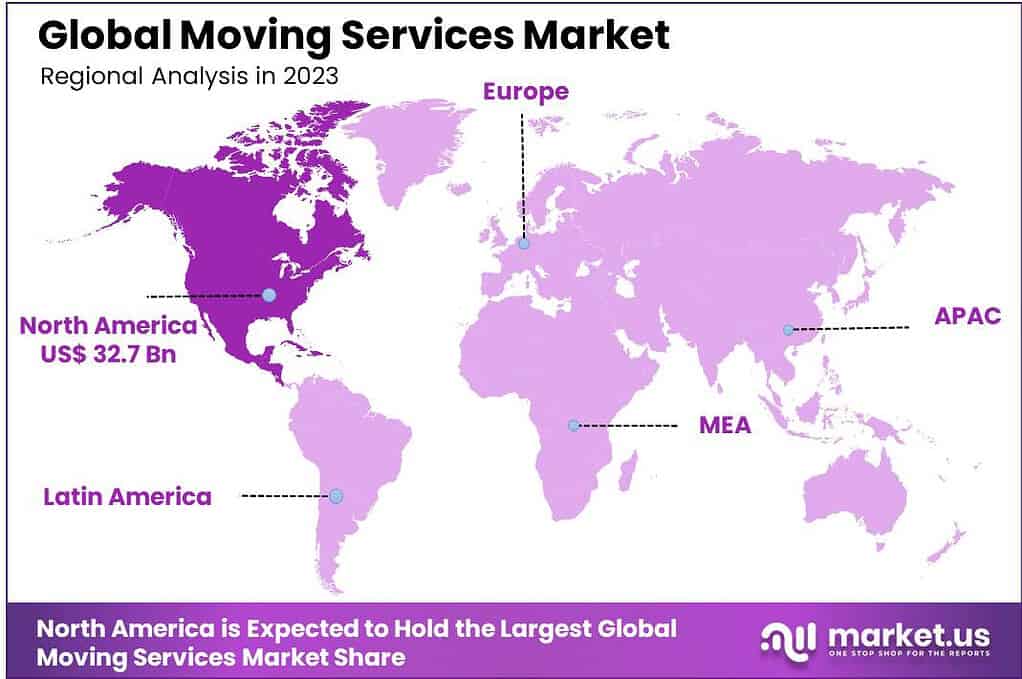
The Global Moving Services Market size is expected to be worth around USD 147.7 Billion By 2033, from USD 81.73 Billion in 2023, growing at a CAGR of 6.10% during the forecast period from 2024 to 2033. In 2023, North America dominated the Moving Services Market, capturing over 40% of the total market share and generating USD 32.7 billion in revenue.
Moving services encompass a range of activities designed to assist individuals and businesses in relocating from one location to another. These services include packing, loading, transporting, unloading, and arranging the items to be shifted. Companies in this sector cater to both residential and commercial clients and often offer additional services such as storage and packing supplies.
The moving services market has experienced significant growth due to several factors. Shifting lifestyles and an increasing number of people relocating for work or personal reasons have strongly propelled the demand for professional moving services. Technological advancements have also played a crucial role, with innovations such as real-time tracking systems, virtual consultations, and automated logistics solutions enhancing customer experience and operational efficiency.
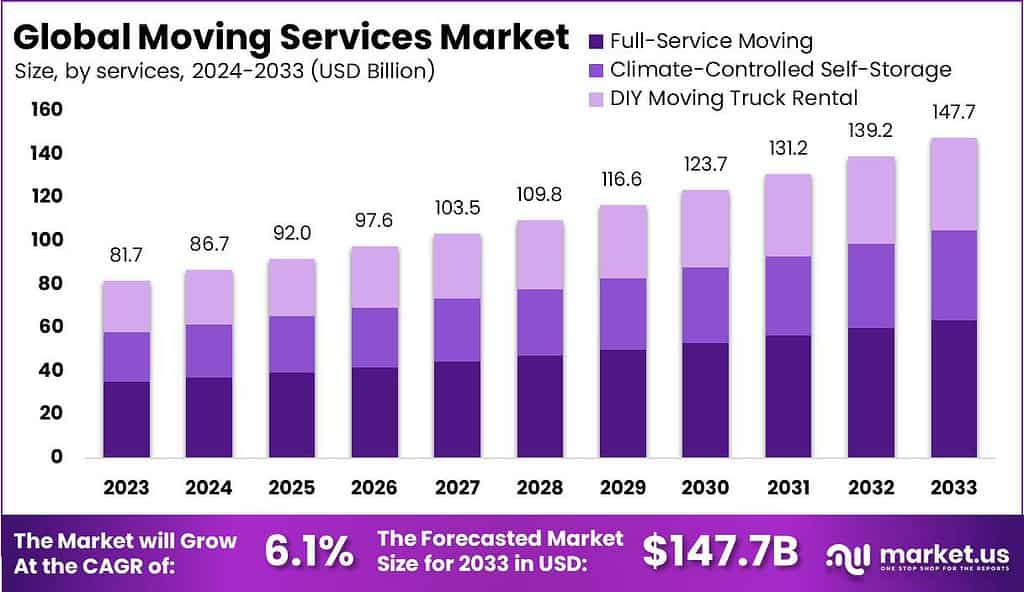
Several key factors are currently driving growth in the moving services market such as there is an increase in global mobility. More people and businesses are relocating, spurred by globalization and the rise of remote working arrangements. Economic recovery in many regions is also enabling more individuals and families to move, whether upgrading their living situations or relocating for job opportunities.
Additionally, the expansion of the real estate sector, particularly in urban areas, supports a higher demand for moving services as people buy and sell homes more frequently. Another significant growth driver is the enhancement of service offerings, including integrated packing and moving solutions that provide greater convenience, often powered by technology that improves service efficiency and customer experience.
Moving services have gained popularity due to their essential role in facilitating smooth transitions from one home to another. The popularity of these services is particularly noticeable among millennials and young professionals, who tend to move more frequently than older generations. Moreover, the convenience offered by moving companies, including packing, unpacking, and arranging logistics, adds to their appeal.
According to a report by Nexus Auto Transport dated April, 2023, approximately 44% of annual movers in the US are individuals or families, while 38% represent corporate business relocations. This trend, driven by the search for convenience and cost-effectiveness, is expected to significantly boost the moving market. The growing mobility of both families and businesses highlights a dynamic shift in how people and companies view relocation as a strategy for managing living and operational costs more effectively
According to Horizon Moving, The moving services industry is quite diverse, supporting roughly 7,000 moving companies. These range from small family-run businesses to major nationwide operations, contributing significantly to the economic landscape with a market size valued at $21.694 billion in 2023. The industry not only helps countless people transition into new phases of their lives but also bolsters the economy with average revenues of $500 to $2,000 per transaction.
Key Takeaways
- The Global Moving Services Market is projected to reach a value of USD 147.7 Billion by 2033, up from USD 81.73 Billion in 2023, growing at a CAGR of 6.10% during the forecast period from 2024 to 2033.
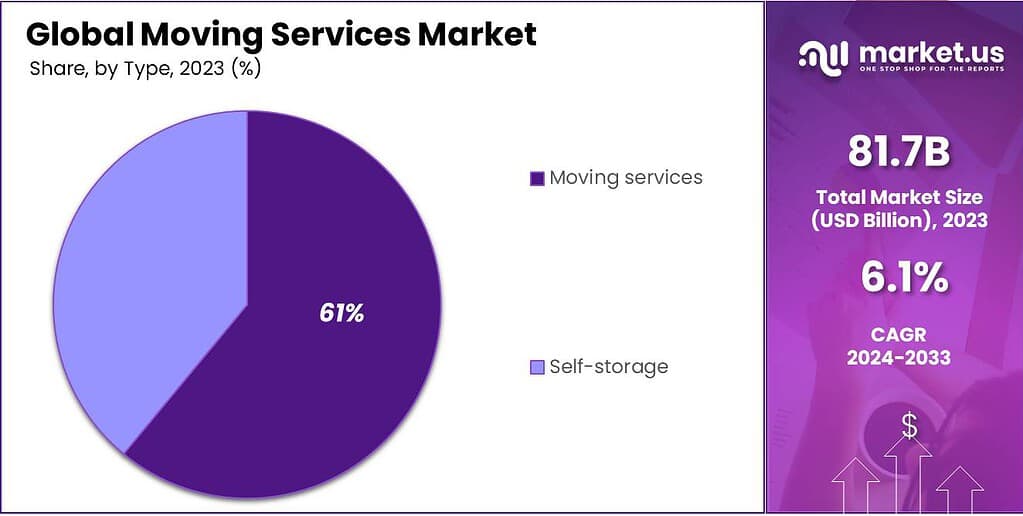
- In 2023, the Moving Services segment held a dominant market position, capturing more than 61% of the total market share.
- The Full-Service Moving segment was particularly strong in 2023, securing over 43% of the market share. This leading position is driven by the comprehensive nature of the services provided, which offer significant convenience and efficiency for customers during relocations.
- In 2023, North America led the global market, accounting for more than 40% of the share, generating a revenue of USD 32.7 billion.
Moving Services Statistics
- 7,000 Moving Companies: Across the U.S., there are approximately 7,000 moving companies actively operating. These businesses utilize around 50,000 moving trucks and provide jobs to roughly 122,600 employees. This highlights a robust industry catering to the mobility needs of many Americans.
- 20.3 Million Tons of Freight: In 2023, a significant volume of goods, totaling 20.3 million tons and valued at $20.3 billion, was transported domestically. This underscores the vital role of the transport sector in supporting the U.S. economy.
- Short-Distance Moves: A substantial 73.7% of transported goods were moved less than 250 miles from their origin. This suggests that most goods transportation occurs over relatively short distances, possibly reflecting efficient supply chain practices.
- Cross-Country Moves for Housing: An eye-opening statistic shows that one in two Americans are now open to the idea of moving across the country if it means saving on housing costs. This reflects the growing importance of affordability in housing decisions.
- Demographics of Movers: The typical profile of someone moving in the U.S. includes young couples aged 18 to 34, often with one or two children. This demographic likely represents a life stage involving career moves or expansions of family size.
- Seeking Affordable Housing: Despite a decline of 1.2 percentage points from the previous year, the quest for more affordable housing remains a key driver for relocations. In 2023, only 15.5% of homes for sale were affordable for the average American family, marking a record low in housing affordability.
- Individual and Family Moves: Nearly half of all relocations, or 44%, involve individuals and families. This indicates that personal and familial needs are significant factors influencing relocation decisions.
- Truck Transportation Dominance: Trucks continue to be the backbone of U.S. goods transportation, handling over 13.1 billion tons of freight in 2023. This demonstrates the critical importance of trucking in the logistics and supply chain sectors.
- Popular Moving House Size: When it comes to moving homes, one-bedroom homes are the most commonly moved size, accounting for 28.1% of all moves.
Type Analysis
In 2023, the Moving Servicessegment held a dominant market position in the Moving Services Market, capturing more than a 61% share. This leadership is primarily due to the increasing demand for full-service moving solutions among both individual and corporate clients.
Full-service moving companies offer a comprehensive range of services that address every aspect of moving, from packing and loading to transportation and unloading, providing significant convenience for customers who prefer a hands-off approach to relocating.
The robust growth in the real estate sector has also played a crucial role in bolstering the Moving Services segment. With more people buying and selling homes, especially in burgeoning urban and suburban areas, the demand for reliable and efficient moving services has surged.
Furthermore, the globalization of business operations and the increasing trend of remote work have expanded the geographical horizons of individuals and companies alike. As businesses continue to establish and expand their presence in new markets, the need for moving services to facilitate employee relocations and office moves has grown. This need supports the sustained dominance of the Moving Services segment.
Service Analysis
In 2023, the Full-Service Moving segment held a dominant market position, capturing more than a 43% share. This leading stance can be attributed to the comprehensive nature of the services offered, which cater extensively to customers seeking convenience and efficiency during relocations.
The popularity of full-service moving stems largely from its appeal to a wide demographic, including busy professionals, families with children, and elderly individuals who may find the physical tasks of moving particularly challenging.
Technological integration has further solidified the dominance of this segment. Many full-service moving companies now offer virtual consultations and real-time tracking of goods, enhancing transparency and customer trust. The use of technology not only improves service delivery but also streamlines the logistics, making complex moves seem effortless.
Economic factors also play a crucial role in this segment’s success. Despite the higher costs associated with full-service moves, the demand remains robust, driven by the rising disposable incomes and the perceived value of convenience and time-saving.
Key Market Segments
By Type
- Self-storage
- Moving services
By Service
- Climate-Controlled Self-Storage
- DIY Moving Truck Rental
- Full-Service Moving
Driver
Urbanization and Changing Lifestyles
The rapid pace of urbanization is a significant driver for the moving services industry. As more individuals and families migrate to urban centers in pursuit of employment opportunities and improved living standards, the demand for relocation services escalates.
This urban influx often necessitates moves from rural or suburban areas to cities, creating a steady stream of clientele for moving companies. Additionally, evolving lifestyle choices, such as the preference for smaller, more manageable living spaces, contribute to increased mobility.
Younger generations, in particular, are less inclined to settle in one location long-term, opting instead for flexibility and experiences over permanent homeownership. This shift results in more frequent relocations, further bolstering the need for professional moving services.
Restraint
Economic Fluctuations
Economic instability poses a notable restraint on the moving services sector. During periods of economic downturn, individuals and businesses often delay or cancel relocation plans due to financial constraints. High unemployment rates and reduced disposable incomes lead to a decline in housing market activities, directly impacting the volume of moves.
Moreover, businesses facing economic challenges may postpone expansion or relocation efforts, resulting in decreased demand for commercial moving services. The cyclical nature of the economy means that moving companies must navigate periods of reduced demand, necessitating strategic planning and financial resilience to maintain operations during lean times.
Opportunity
Technological Integration
The integration of technology presents a significant opportunity for innovation within the moving services industry. Implementing digital platforms for booking and tracking can enhance customer experience by providing transparency and convenience. Mobile applications that allow clients to schedule services, receive real-time updates and consultations can streamline operations and attract a tech-savvy clientele.
Additionally, utilizing data analytics enables companies to optimize routes, reduce fuel consumption, and improve efficiency. Embracing technological advancements not only differentiates service providers in a competitive market but also meets the evolving expectations of modern consumers.
Challenge
Regulatory Compliance
Navigating the complex landscape of regulations is a significant challenge for moving service providers. Companies must adhere to a myriad of local, state, and federal laws governing transportation, labor, and environmental standards. Compliance with these regulations often requires substantial administrative effort and financial investment.
Obtaining necessary licenses, ensuring vehicles meet emission standards, and adhering to labor laws regarding employee wages and safety are all critical components of operation. Non-compliance can result in legal penalties and operational disruptions. Therefore, staying informed and adaptable to regulatory changes is essential for sustaining business operations and maintaining customer trust.
Emerging Trends
The moving services industry is undergoing significant transformations, driven by technological advancements and evolving customer expectations. A notable trend is that companies are increasingly adopting reusable packing materials and fuel-efficient vehicles to reduce their environmental footprint, aligning with the growing consumer demand for sustainability.
Digitalization is another key development reshaping the sector. Online platforms and mobile applications now enable customers to schedule, track, and pay for services with ease. This shift not only enhances convenience but also increases transparency, allowing clients to compare prices and read reviews before making informed decisions.
The rise of specialized moving services is also noteworthy. Whether it’s relocating delicate artwork, heavy machinery, or entire data centers, businesses and individuals are seeking services tailored to their specific needs. This has led to the emergence of niche providers offering solutions like pet relocation and senior moving services, adding value and differentiating companies in a competitive market.
Business Benefits
- Steady Demand: People frequently relocate due to job changes, family needs, or personal preferences, ensuring a consistent demand for moving services. This ongoing need provides a reliable customer base, reducing concerns about market fluctuations.
- Low Entry Barriers: Establishing a moving company doesn’t require extensive formal education or specialized training. With basic equipment and a small team, you can begin operations, making it accessible for aspiring entrepreneurs.
- Community Engagement: Operating a moving business fosters strong community ties. By assisting families and businesses during significant transitions, you build trust and establish a positive reputation, leading to repeat customers and referrals.
- Diverse Revenue Opportunities: Beyond standard moving services, offering packing, storage, and specialized item transportation can diversify income. These additional services cater to various customer needs, enhancing client satisfaction and business profitability.
- Personal Fulfillment: Helping clients navigate the often stressful process of moving can be deeply rewarding. Providing reliable and efficient services eases their burden, leading to positive feedback and personal satisfaction.
Regional Analysis
In 2023, North America held a dominant market position in the Moving Services Market, capturing more than a 40% share and generating revenue of USD 32.7 billion. This region’s leadership in the market can be attributed to several major factors.
The high mobility rate within the United States and Canada, driven by a dynamic real estate market and a strong corporate culture of workforce mobility, contributes significantly to the demand for moving services. People frequently relocate for job opportunities, lifestyle changes, or educational purposes, which sustains a steady demand for moving services.
Another contributing factor is the presence of a large number of reputable moving service providers in North America, equipped with advanced technology and extensive service networks. These companies offer a range of services, including long-distance and international relocations, which are bolstered by strong logistics and transportation infrastructures.
Moreover, North America’s regulatory environment supports the moving industry with clear guidelines and protections for consumers and businesses. This regulatory framework ensures service quality and reliability, which builds consumer trust and encourages frequent use of professional moving services.
Additionally, technological advancements like online booking systems, GPS tracking, and customer service apps enhance the overall efficiency and transparency of services, making them more appealing to tech-savvy consumers. Looking forward, the North American market is expected to maintain its dominance due to ongoing urbanization, a rebounding housing market, and rising consumer spending on moving services.
Key Regions and Countries
- North America
- US
- Canada
- Europe
- Germany
- France
- The UK
- Spain
- Italy
- Rest of Europe
- Asia Pacific
- China
- Japan
- South Korea
- India
- Australia
- Singapore
- Rest of Asia Pacific
- Latin America
- Brazil
- Mexico
- Rest of Latin America
- Middle East & Africa
- South Africa
- Saudi Arabia
- UAE
- Rest of MEA
Key Player Analysis
The moving services industry has several key players that make the process of relocating easier for individuals and businesses.
Wheaton World Wide Moving stands out as a prominent player in the Moving Services Market. Established as a trusted name in relocation services, Wheaton has built a reputation for reliability and comprehensive service offerings. Their strength lies in a nationwide network that facilitates both domestic and international moves.
Armstrong Relocation and Companies is another key player that has made substantial inroads in the market. Armstrong is known for its tailored relocation solutions that cater to both individual and corporate clients. Their services are marked by a high degree of professionalism and efficiency, supported by advanced technology for logistics management.
UniGroup Inc. rounds out the top three with its vast array of moving and relocation services. As the parent company of several well-known moving organizations, UniGroup has a global footprint that enables it to handle a diverse range of customer needs. UniGroup’s emphasis on innovation in service delivery and customer care continues to bolster its position as a leader in the market.
Top Key Players in the Market
- Wheaton World Wide Moving
- Armstrong Relocation and Companies
- UniGroup Inc.
- AGS Worldwide Movers
- Arpin Van Lines
- U-Pack
- Beltmann Relocation Group
- Sirva Inc.
- Atlas World Group Inc.
- ArcBest Corp.
- Coleman World Group
- Other Key Players
Recent Developments
- In October 2024, U-Pack, a service of ArcBest Corporation, collaborated with Affirm to offer customers flexible payment options for long-distance moves. This partnership allows qualified customers to book a move and pay through manageable monthly installments, enhancing affordability and convenience.
- In October 2024, Allianz Packers and Movers announced its decision to expand its services to Tier 2 and Tier 3 cities across India. This strategic move aims to bring reliable and professional moving solutions to smaller cities, broadening the company’s reach.
- In November 2024, Allied Van Lines, Inc., one of the largest moving companies globally, is excited to announce that NOR-CAL Moving Services, based in Hayward, California, has been honored as its 2024 Agent of the Year.









