


Report Overview
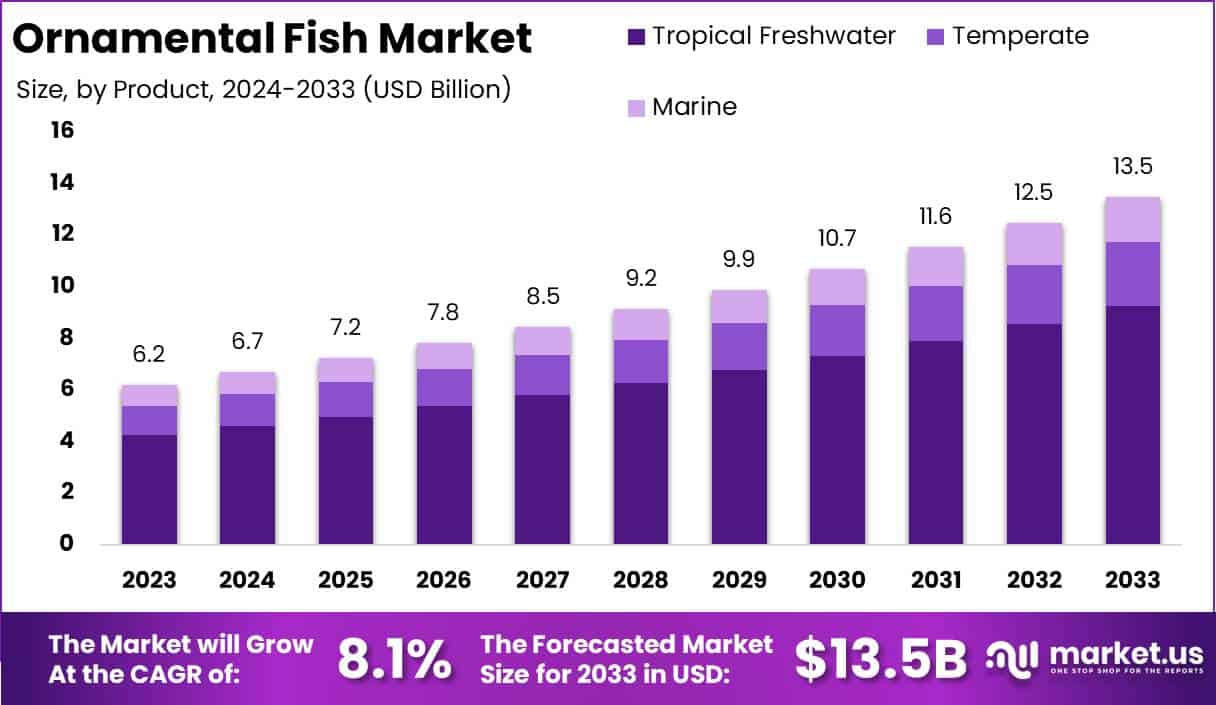
The Global Ornamental Fish Market size is expected to be worth around USD 13.5 Billion by 2033, from USD 6.2 Billion in 2023, growing at a CAGR of8.1% during the forecast period from 2024 to 2033.
Ornamental fish refer to species that are primarily kept for decorative purposes in aquariums, water gardens, and ponds. These fish are selected for their aesthetic appeal, vibrant colors, unique shapes, and patterns. They are often non-commercial species and are typically bred in controlled environments such as fish farms or private breeding facilities.
The ornamental fish category encompasses a wide variety of species, including freshwater and saltwater fish, as well as invertebrates like shrimp and snails. These fish serve both as ornamental additions to domestic and commercial aquatic spaces, as well as part of a broader industry focused on aquatic pet care and accessories.
The ornamental fish market refers to the global industry focused on the breeding, trade, and sale of fish and other aquatic creatures that are kept primarily for decorative purposes. This market includes various value chain segments, such as breeding, wholesale distribution, retail sales, and supporting services like aquarium design and maintenance.
It operates in both B2B and B2C environments, where businesses such as pet stores, specialized aquatic retailers, and online platforms cater to consumer demand. The market also involves global supply chains, with key players sourcing fish from breeding farms across the world, particularly in regions with a long history of aquaculture, like Southeast Asia, Latin America, and parts of Africa.
Several key factors are driving growth in the ornamental fish market. The growing trend of urbanization and rising disposable incomes in emerging economies have led to increased interest in home-based leisure activities such as aquarium keeping. Additionally, the rising awareness of the therapeutic benefits of keeping ornamental fish ranging from stress reduction to improved well-being—has further fueled demand.
Technological advancements in aquarium equipment, such as LED lighting, filtration systems, and water quality monitoring, have also made it easier for consumers to maintain fish in both small and large-scale setups. The market is also being bolstered by the increasing popularity of decorative aquariums in public spaces such as hotels, office buildings, and malls, driving both retail and B2B sales.
The demand for ornamental fish is influenced by several factors including consumer preferences, cultural trends, and the growing interest in pet ownership. In particular, freshwater species dominate the market due to their relative ease of care compared to saltwater varieties.
However, there is also a steady demand for exotic saltwater fish, which are often considered status symbols due to their higher costs and unique appeal. The COVID-19 pandemic further accelerated demand as more consumers sought indoor hobbies and ways to improve their home environments, boosting sales of ornamental fish and aquarium supplies.
Online platforms and e-commerce have expanded consumer access to these products, enabling more personalized and direct purchasing experiences.
The ornamental fish market presents significant opportunities for growth, particularly in emerging markets where rising incomes and increasing interest in leisure activities are expected to drive demand. Asia-Pacific, with its established aquaculture industry and growing middle class, remains a key region for both supply and consumption.
Furthermore, innovation in breeding techniques, particularly for rare or genetically modified fish, opens up new product categories that can capture niche markets. The growing trend of sustainable aquaculture also presents an opportunity for companies to differentiate themselves through eco-friendly practices, tapping into the increasing consumer preference for environmentally responsible products.
According to CMFRI Repository, the global ornamental fish trade is valued at approximately USD 18-20 billion, exhibiting robust growth driven by increasing consumer demand. However, despite global expansion, India remains a marginal player in this market. The country holds significant potential due to its rich biodiversity, favorable climate, and cost-effective labor, which are conducive to ornamental fish production.
India has around 5,000 production units, with 80% focusing on freshwater species. Additionally, India’s domestic market includes about one million hobbyists, contributing to a trade valued at ₹500 crores. Despite these strengths, India has yet to capture a larger share of the global market.
Key Takeaways
- The global ornamental fish market is poised for robust growth, expanding from USD 6.2 billion in 2023 to USD 13.5 billion by 2033, driven by a compound annual growth rate (CAGR) of 8.1%.
- Tropical Freshwater Fish dominate the market, accounting for 68.5% of the total market share in 2023.
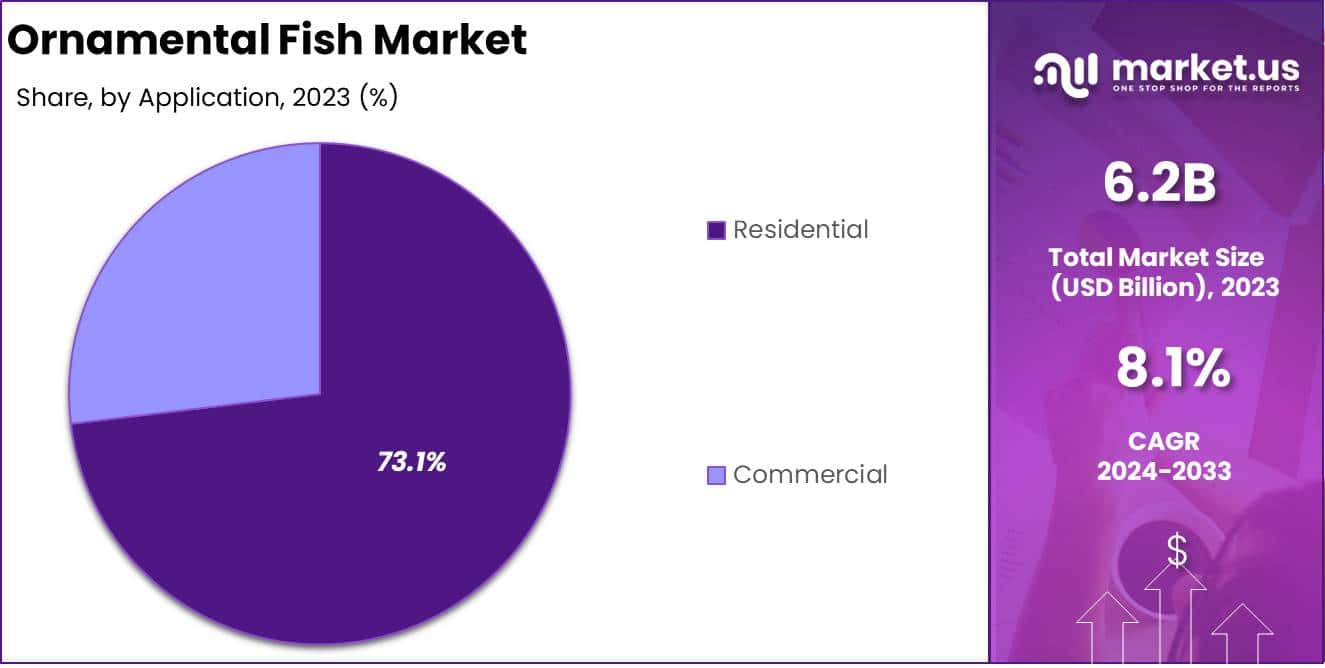
- The Residential Segment leads the market with a 73.1% share, driven by the growing popularity of home aquariums.
- Dedicated Stores control 51.3% of the distribution market, offering personalized services and a wide range of products.
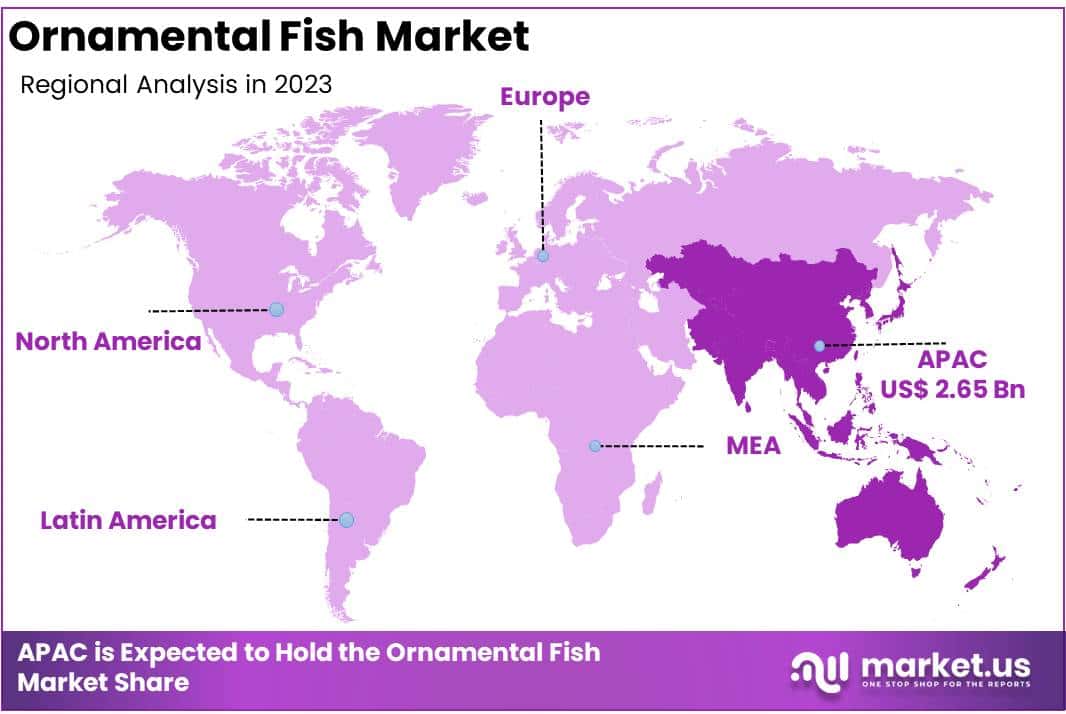
- Asia Pacific is the largest regional market, holding a 42.9% share in 2023, making it the epicenter of both production and consumption.
By Product Analysis
Tropical Freshwater Ornamental Fish Market Dominates with a 68.5% Market Share
In 2023, the Tropical Freshwater segment held a dominant position in the global ornamental fish market, accounting for more than 68.5% of the total market share. This segment’s strength can be attributed to the popularity and ease of care associated with tropical freshwater fish, which are often the preferred choice for aquarium enthusiasts worldwide.
The tropical freshwater fish category includes a wide variety of species such as guppies, tetras, and cichlids, which are renowned for their vibrant colors and adaptability to home aquariums. The growing demand for low-maintenance, visually appealing fish has significantly driven the expansion of this segment.
Additionally, tropical freshwater fish are widely available at accessible price points, further fueling their dominance in the market.
Temperate fish are generally found in cooler water environments compared to their tropical counterparts and are often chosen by aquarium owners who prefer a wider variety of hardy species that can thrive in lower temperatures.
Species such as goldfish and koi fall under this category, and their popularity has remained steady due to their historical significance and adaptability to a variety of water conditions. However, temperate fish typically require a more controlled environment than tropical species, limiting their appeal to more experienced aquarium owners.
Marine fish, including species like clownfish, tangs, and angelfish, are often sought after for their exotic appearance and vibrant colors. However, the marine segment faces higher operational costs due to the need for specialized care, including saltwater setups and precise water parameters.
Despite this, the marine fish segment has maintained a niche but dedicated following, particularly among advanced hobbyists and professionals. The segment’s growth potential is supported by the increasing interest in coral reef ecosystems and sustainable marine conservation practices, which continue to drive innovation and demand in the space.
By Application Analysis
Residential Ornamental Fish Market Dominates with a 73.1% Market Share
In 2023, the Residential segment held a dominant position in the ornamental fish market, capturing more than 73.1% of the overall market share. This segment’s dominance can be attributed to several key factors, including the increasing popularity of home aquariums as a form of interior decoration and the growing trend of aquarium hobbyism.
Residential consumers are increasingly seeking ornamental fish for their aesthetic appeal and the therapeutic benefits they offer, such as stress reduction and a calming effect in living spaces.
The market in this segment is largely driven by the availability of a wide range of ornamental fish species, which cater to varying consumer preferences, along with advancements in aquarium technologies that make home aquariums easier to maintain.
The Commercial segment, while smaller than the residential segment, has shown significant growth potential, driven by the increasing demand for ornamental fish in public and private commercial spaces. This segment includes businesses such as hotels, restaurants, corporate offices, and malls, which use large aquariums to create a visually appealing ambiance.
In 2023, the commercial segment continued to gain traction, with growing awareness of the aesthetic and psychological benefits that ornamental fish bring to commercial environments.
However, it still remains a niche market compared to residential applications, capturing a smaller portion of the total market share but presenting lucrative opportunities for suppliers and businesses catering to B2B needs.
By Distribution Channel Analysis
Dedicated Stores Ornamental Fish Market Dominates with a 51.3% Market Share
In 2023, the ornamental fish market is shaped by various distribution channels, each influencing how consumers access and purchase their products. Among these, dedicated stores are the most popular, standing out due to their specialized services and expert advice. These stores offer a wide selection of ornamental fish and related products, making them a go-to destination for consumers looking for quality and personalized care.
Shoppers prefer dedicated stores because they can see the fish firsthand, get expert guidance, and choose from a range of high-quality products. The opportunity to explore aquarium setups and accessories in person further attracts foot traffic, solidifying these stores as a key player in the market.
Multi-specialty stores, which offer a broader range of pet-related products alongside ornamental fish, also have a strong presence. While not as focused on fish as dedicated stores, they appeal to customers who want the convenience of purchasing pet food, accessories, and healthcare items in one location. These stores benefit from their ability to offer a variety of pet supplies in one place, making shopping easier for customers.
Online shopping for ornamental fish has also been growing in popularity. E-commerce platforms allow consumers to browse and compare a wide variety of fish species and have them delivered to their homes. Although online shopping lacks the hands-on experience of physical stores and raises concerns about the safe delivery of live fish, the trend towards digital shopping suggests a strong future for this channel.
Other smaller distribution channels, such as wholesalers and direct-to-consumer sales, also contribute to the market. Though these channels are less common, they serve niche customers looking for specialized fish species or competitive pricing, attracting hobbyists and enthusiasts who are willing to seek out more unique purchasing options.
Key Market Segments
By Product
- Tropical Freshwater
- Temperate
- Marine
By Application
- Residential
- Commercial
By Distribution Channel
- Dedicated Stores
- Multi-Specialty Stores
- Online
- Others
Driver
Increasing Popularity of Home Aquariums
The global ornamental fish market is experiencing significant growth due to the increasing popularity of home aquariums. As urbanization continues to rise, people are seeking ways to bring nature into their living spaces, with ornamental fish serving as a low-maintenance yet visually appealing addition.
Homeowners, particularly in high-density cities, are adopting aquariums as a way to create tranquil, aesthetically pleasing environments that promote well-being and relaxation. With growing awareness about the therapeutic benefits of maintaining an aquarium such as stress relief and enhanced mood demand for ornamental fish has surged.
In 2024, this trend is likely to accelerate as people continue to prioritize mental health and wellness. Research indicates that aquarium keeping can have positive effects on mental health by lowering stress and anxiety levels.
As a result, ornamental fish are increasingly seen as not just pets, but integral components of home decor. The availability of smaller, more compact aquariums, which cater to apartment dwellers, further supports this trend.
Additionally, advancements in aquarium technology, including smart tanks and automatic filtration systems, make it easier for hobbyists to maintain fish, leading to higher adoption rates. This growing interest in home aquariums is expected to remain a key driver for the ornamental fish market in the coming years.
Restraint
Environmental and Regulatory Challenges
Despite the growth potential of the ornamental fish market, several environmental and regulatory challenges threaten its expansion. One of the most significant concerns is the potential impact of the ornamental fish trade on biodiversity. The collection of wild fish from fragile ecosystems, particularly in developing regions, has raised alarms about overfishing and habitat destruction.
Governments and conservation organizations are increasingly scrutinizing the practices involved in sourcing ornamental fish, which could result in stricter regulations on exports, breeding practices, and the introduction of non-native species into local ecosystems.
In response to these concerns, regulatory bodies are imposing more stringent guidelines for the import and export of ornamental fish, particularly in countries with rich biodiversity, such as Southeast Asia and South America.
These regulations, aimed at conserving marine life, can result in higher operational costs for suppliers and breeders. Moreover, the enforcement of bans on certain species or restrictions on fishing quotas could disrupt the supply chain, causing volatility in prices and availability.
For businesses in the ornamental fish industry, navigating these regulatory hurdles becomes increasingly complex, which may hinder their ability to scale operations or introduce new species into markets. As governments continue to prioritize environmental sustainability, these factors are expected to limit the full market potential in certain regions.
Opportunity
Rising Demand for Sustainable and Eco-Friendly Practices
The growing emphasis on sustainability is creating significant opportunities for the ornamental fish market. As consumers become more conscious of environmental issues, they are increasingly seeking sustainable options in all areas of their lives, including the pets they choose to keep.
This shift is driving demand for ornamental fish bred in controlled, eco-friendly environments, as well as those sourced from sustainable fisheries.
Furthermore, the growing popularity of plant-based aquariums and the use of renewable resources for tank accessories align with the broader sustainability trend. For businesses in the ornamental fish industry, there is a clear opportunity to differentiate themselves by offering ethically sourced and sustainably bred fish.
Aquarium hobbyists and pet owners are increasingly looking for products that minimize environmental impact, such as energy-efficient filtration systems and biodegradable tank materials. This demand for sustainability extends beyond the fish themselves, creating opportunities for companies to innovate in areas like packaging, shipping, and even the development of eco-friendly aquarium equipment.
For example, eco-conscious breeders who prioritize sustainable breeding practices and environmentally friendly fish farming methods can attract a growing segment of eco-aware consumers. As this trend gains traction, businesses that align with sustainability values stand to benefit from brand loyalty and premium pricing.
The growing consumer interest in eco-friendly options will be a key driver of innovation in the ornamental fish industry, offering significant opportunities for growth.
Trends
Rise of Digital Platforms and E-Commerce in Ornamental Fish Retail
The rapid rise of digital platforms and e-commerce is reshaping the ornamental fish retail market in 2024. As consumers increasingly prefer the convenience of online shopping, many ornamental fish sellers are transitioning to digital channels to meet the evolving demands of their customers.
E-commerce platforms provide a wide range of options for consumers, from various fish species to aquarium accessories and equipment, often at competitive prices. In addition, the convenience of online purchasing allows customers to easily compare prices, check reviews, and have products delivered to their doorstep, reducing the barriers to entry for first-time aquarium owners.
The shift towards e-commerce has also facilitated the growth of specialized online retailers that cater specifically to aquarium enthusiasts. These platforms offer detailed product descriptions, expert advice, and even virtual consultations, helping consumers make informed decisions about the fish species and tank setups that are best suited to their needs.
Social media platforms, such as Instagram and YouTube, are also playing a significant role in driving trends in ornamental fish keeping by enabling hobbyists to share their setups, providing inspiration, and creating communities.
With the continued evolution of digital tools like augmented reality (AR) for virtual tank design, the ornamental fish market is poised for further digital transformation. This trend is expected to lead to greater market penetration, particularly among younger, tech-savvy consumers, and drive sustained growth in the industry.
Regional Analysis
Asia Pacific Dominates the Ornamental Fish Market with the Largest Share of 42.9% in 2023
The global ornamental fish market is experiencing significant regional dynamics, with Asia Pacific emerging as the dominant player, holding a substantial market share of 42.9% in 2023. Valued at USD 2.65 billion, the Asia Pacific region is the epicenter of both production and consumption of ornamental fish.
This market dominance is driven by a combination of factors, including the presence of large-scale fish breeding and farming operations, a growing middle-class population with increasing disposable income, and a cultural affinity for fishkeeping in several countries within the region, particularly in China, Japan, and Thailand.
As the primary exporter of ornamental fish globally, Asia Pacific continues to lead with robust market growth and a well-established supply chain.
North America holds the second-largest share in the ornamental fish market, accounting for approximately 18.2% of the global market in 2023. The region’s market is valued at USD 1.25 billion, supported by a strong consumer base in the U.S. and Canada.
Fishkeeping remains a popular hobby among North American households, particularly with freshwater species, and the region is known for its high demand for premium and exotic fish varieties.
Furthermore, the presence of well-established pet stores, both online and physical, facilitates market growth, as the U.S. continues to be one of the largest importers of ornamental fish globally.
Europe follows closely with a market share of 16.3% in 2023. Valued at USD 1.1 billion, Europe has a diverse consumer base, with countries like Germany, the UK, and France leading in ornamental fish demand. The market is growing steadily, driven by the increasing trend of home aquariums and the rising popularity of aquascaping.
However, Europe faces some regulatory challenges related to environmental concerns, with several countries tightening regulations on the import and breeding of certain species. Despite this, the European market remains resilient, thanks to continuous innovation in aquarium products and fish care.
The Middle East and Africa region has shown a modest share of 11.4% in the ornamental fish market in 2023, valued at approximately USD 0.8 billion. The market in this region is still in its growth phase, with demand mainly coming from affluent nations such as the UAE, Saudi Arabia, and Qatar.
While the ornamental fish market in this region is expanding due to rising disposable incomes and the increasing adoption of aquariums as decorative elements in luxury homes, the market is relatively small compared to the other regions. The Middle East has also seen a rise in demand for exotic and high-value fish species, although the sector is still in its nascent stage.
Latin America contributes the smallest share to the global ornamental fish market, with a market share of 7.2%, valued at USD 0.5 billion in 2023. While the market is steadily growing, it faces challenges such as limited consumer awareness and a lower level of market maturity compared to other regions.
Brazil, Mexico, and Argentina are the key contributors to market demand, where ornamental fish are primarily used for home decoration and as pets. As disposable incomes rise in these countries, there is potential for further market growth, especially for freshwater species. However, the region’s market remains small relative to the other major markets.
Key Regions and Countries
- North America
- The US
- Canada
- Europe
- Germany
- France
- The UK
- Spain
- Italy
- Russia & CIS
- Rest of Europe
- APAC
- China
- Japan
- South Korea
- India
- ASEAN
- Rest of APAC
- Latin America
- Brazil
- Mexico
- Rest of Latin America
- Middle East & Africa
- GCC
- South Africa
- United Arab Emirates
Key Players Analysis
In 2024, the global ornamental fish market continues to be shaped by a diverse range of key players, each contributing unique strengths across various segments of the industry. AlgaeBarn LLC stands out for its specialized focus on sustainable aquaculture, offering a range of live foods and aquatic products, contributing to the growing consumer interest in eco-friendly practices.
Similarly, Aqua-Nautic Specialist Pte Ltd. brings expertise in importing and exporting premium ornamental fish species, maintaining strong regional ties and a reputation for high-quality fish sourced globally.
AquariumFish.net and AquaScapeOnline have capitalized on the growing trend of online retail, offering a wide variety of ornamental fish alongside aquarium products, enhancing convenience and expanding their customer reach. Associated Koi Clubs of America (AKCA) plays a pivotal role in the Koi fish sector, fostering a strong community of enthusiasts and influencing trends in the market, particularly in North America.
Exotic Aquariums and Florida Tropical Fish Direct are key players in the North American market, focusing on both local sales and international distribution, with a broad selection of freshwater and saltwater species. Meanwhile, Global Fish Importers Inc. and Imperial Tropicals dominate the wholesale supply chain, serving as important intermediaries between breeders and retailers.
Companies like Qian Hu Corporation Limited and Segrest Farms maintain a robust presence in Southeast Asia, a crucial hub for ornamental fish production, focusing on both local and international markets.
The development of niche markets, along with advancements in sustainable aquaculture and e-commerce, ensures that these companies remain integral to the continued expansion and evolution of the global ornamental fish market.
Top Key Players in the Market
- AlgaeBarn LLC
- Aqua-Nautic Specialist Pte Ltd.
- AquariumFish.net
- AquaScapeOnline
- Associated Koi Clubs of America (AKCA)
- bioAquatiX
- Blue Ridge Fish Hatchery
- Discus Hans USA
- Exotic Aquariums
- Florida Tropical Fish Direct
- Global Fish Importers Inc.
- Imperial Tropicals
- Live Fish Direct
- LiveAquaria
- Oasis Fish Farm
- Ocean Treasures Aquarium
- Pisces Fish Farm
- Qian Hu Corporation Limited
- Quality Marine
- Sanyo Aquarium (Pte) Ltd.
- Segrest Farms
- Sunbeam Aquarium Pte Ltd.
- Tangled Up in Cichlids
- Tropical Fish International Pte Ltd.
Recent Developments
- In 2024, Akva Group, a leader in the aquaculture solutions industry, acquired 100 percent of Observe Technologies, a UK-based company specializing in AI-driven feeding solutions for aquaculture. Previously, Akva owned a 33.7 percent stake in the company. With this acquisition, Akva aims to strengthen its digital solutions offering and expand its position in the growing market for intelligent aquaculture technologies.
- In 2024, Captain Fresh, a prominent seafood company, continued its expansion strategy with the acquisition of Koral, a manufacturer of smoked salmon products. Koral, which operates 26 production lines and processes 120 tonnes of fish daily, will help Captain Fresh penetrate the $33.5 billion global salmon market. This acquisition aligns with Captain Fresh’s goal of becoming a leading tech-enabled, multi-species global seafood conglomerate.
- In 2023, Aquarech, a Kenyan fish farming startup, secured $1.7 million in funding to support small-scale fish farmers in Kenya. The capital will be used to enhance its services and improve the livelihoods of local fish producers, expanding sustainable aquaculture in the region.
- In 2023, Mitsui & Co., Ltd. made a strategic move to invest in Industrial Pesquera Santa Priscila (IPSP), the world’s largest shrimp farming company, based in Ecuador. Mitsui acquired a stake worth approximately $360 million, marking its entry into the global shrimp farming sector. This acquisition is expected to enhance Mitsui’s position in the global seafood market

- 蓝茶市场(2026—2031)
0评论2026-09-15

- 泡沫材料市场(2026—2031)
0评论2026-09-15

- 重铬酸钠市场(2026—2031)
0评论2026-09-15

- 家族性淀粉样多发性神经病(FAP)市场(2026—2031)
0评论2026-09-15

- 次氯酸钙市场(2026—2031)
0评论2026-09-15

- 海上储能市场(2026—2031)
0评论2026-09-12

- 混凝土市场(2026—2031)
0评论2026-09-12

- 矫形器械市场(2026—2031)
0评论2026-09-12

- 木质素基树脂市场(2026—2031)
0评论2026-09-12

- 聚碳酸酯二元醇市场(2026—2031)
0评论2026-09-12