


Report Overview
The Global Consumer Electronics Market size is expected to be worth around USD 2109.3 Billion by 2033, from USD 1092.5 Billion in 2023, growing at a CAGR of 6.8% during the forecast period from 2024 to 2033.
The consumer electronics market consists of electronic devices designed for personal use, such as smartphones, laptops, tablets, smartwatches, gaming consoles, home appliances, and audio-visual equipment. This market covers the design, manufacturing, marketing, and sale of these products. With rapid technological advancements and the growing demand for connected devices, the market has seen steady growth.
Key trends include the rise of smart devices, the Internet of Things (IoT), and the push for sustainable, energy-efficient products. As consumer needs evolve, the market continues to adapt and expand.
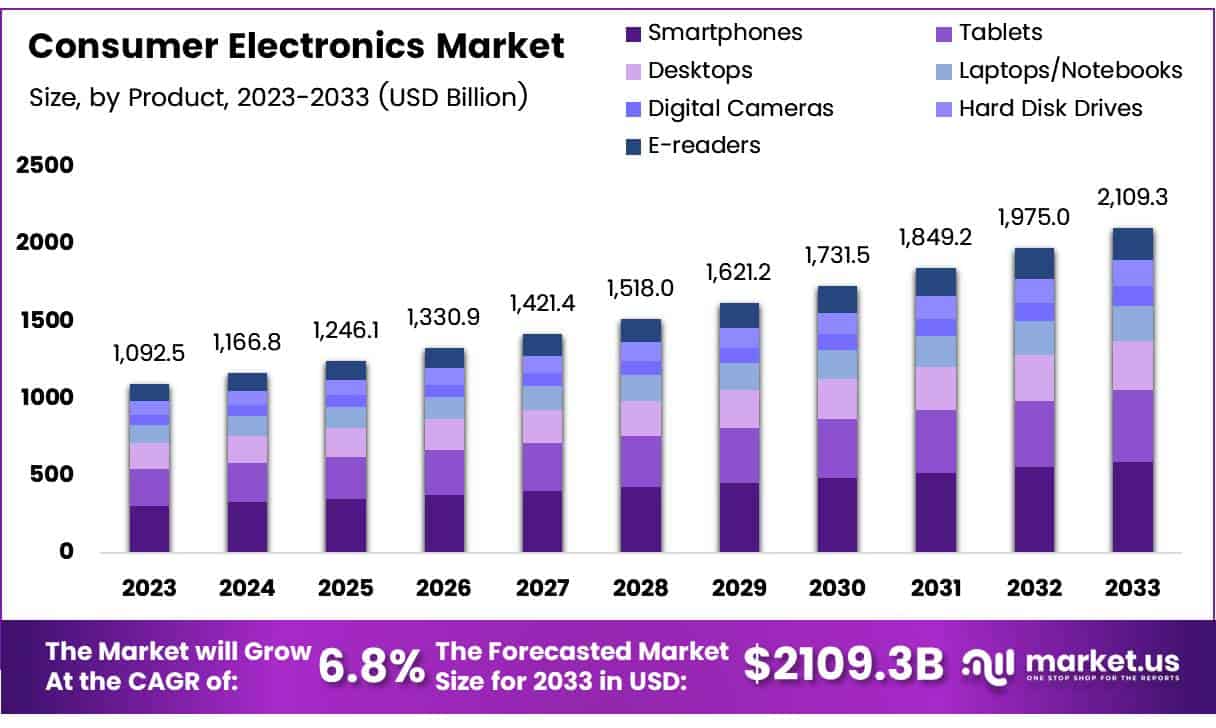
The market has been consistently growing, driven by factors like technological innovation, higher disposable incomes, and the global adoption of smart devices.
For example, in the September quarter, consumer electronics sales grew by 6% in value. Smartphones, laptops, and wearables are leading this growth, while emerging technologies like Virtual Reality (VR), Augmented Reality (AR), and IoT devices present significant opportunities for both established companies and startups.
Smartphones are a key driver of market growth. By 2024, nearly 4.88 billion people, or about 60% of the global population, are expected to own smartphones. This large user base, particularly in emerging markets, offers significant expansion opportunities for smartphone manufacturers. Consumers increasingly demand multi-functional devices that combine entertainment, communication, and productivity in one sleek product.
Governments worldwide recognize the strategic importance of the consumer electronics sector and often encourage investment through research and development (R&D) incentives. Countries like the U.S. and China are actively funding innovation in areas like artificial intelligence (AI), IoT, and 5G to maintain competitive advantages.
Additionally, regulatory standards around product safety, data privacy, and environmental impact are becoming stricter, requiring companies to adapt. For example, the European Union’s GDPR has pushed companies to address privacy concerns, while increasing pressure for sustainability is influencing product design, with a focus on energy efficiency, recycling, and reducing e-waste.
Looking ahead, the consumer electronics market is poised for continued growth. By 2025, digital revenue from these products is expected to surpass $88.3 billion, driven by a rise in connected devices and digital services. The shift toward online shopping, digital entertainment, and e-commerce is expected to boost market growth.
The U.S. remains a key player in the global consumer electronics trade, importing $53.7 billion worth of laptops and tablets in 2022. This highlights the demand for electronics and the growing reliance on advanced technologies in both personal and business settings.
Key Takeaways
- The global consumer electronics market is projected to reach USD 2109.3 billion by 2033, growing at a CAGR of 6.8% from 2024 to 2033.
- Smartphones dominated the consumer electronics market in 2023, capturing 58.6% of the market share due to their multifunctional capabilities.
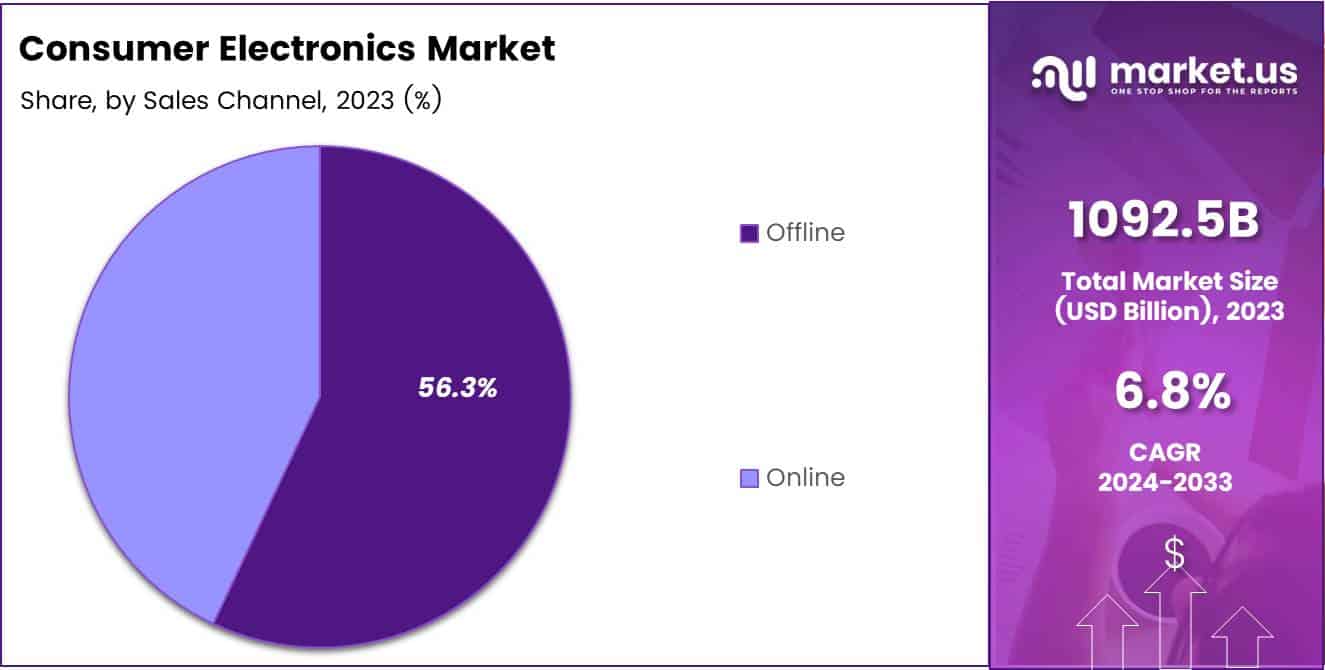
- The Offline sales channel led the market in 2023, holding 56.3% of the total market share, driven by consumer preference for in-store shopping.
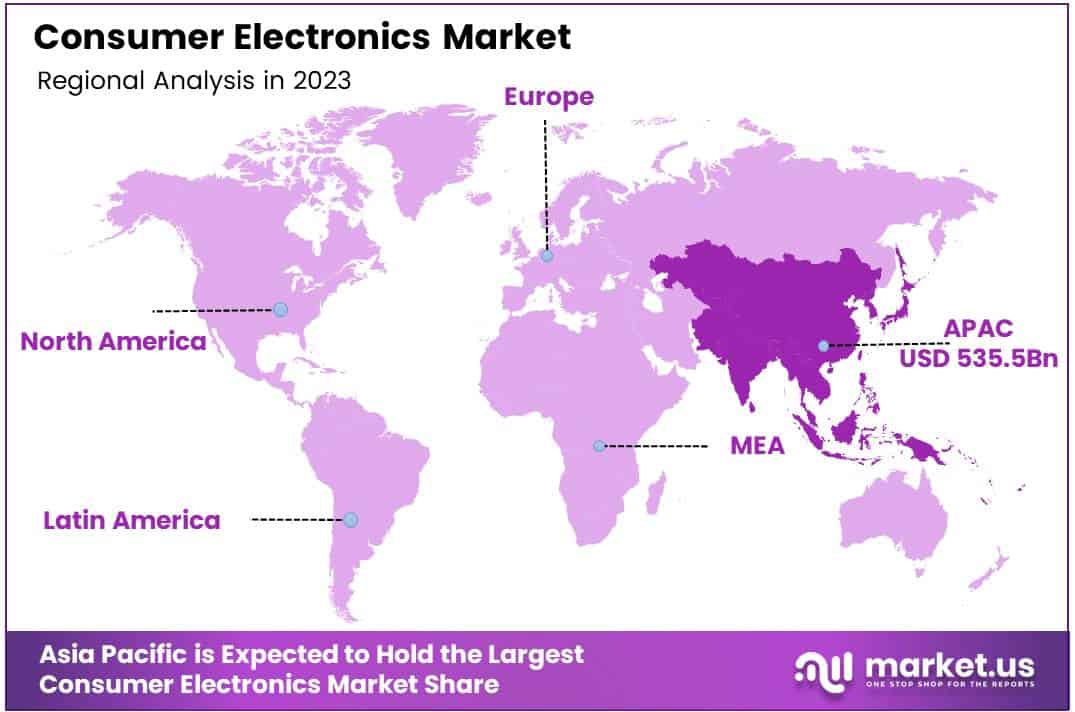
- Asia Pacific holds the largest share of the global consumer electronics market at 49.8%, valued at USD 535.5 billion, with growth fueled by China, Japan, and India.
Product Analysis
Smartphones Lead Consumer Electronics Market in 2023, Capturing 58.6% Share
In 2023, smartphones held a dominant market position in the By Product Analysis segment of the consumer electronics market, with a 58.6% share.
This remarkable performance can be attributed to their multifunctional capabilities, serving as not just communication devices but also as entertainment hubs, personal assistants, and essential productivity tools. Their widespread adoption across both emerging and developed markets has propelled the global smartphone market to continued growth.
Following smartphones, tablets maintained a strong presence, accounting for a significant share due to their versatility, portability, and evolving applications in both consumer and enterprise sectors. The demand for tablets surged, particularly in education, remote work, and content consumption.
Desktops and laptops/notebooks, while still essential in business and professional settings, saw slower growth compared to mobile devices, driven by the increasing trend towards portable and flexible computing solutions.
Digital cameras, hard disk drives, and e-readers, though important in their respective niches, experienced relatively stagnant demand, impacted by the rise of smartphone cameras and cloud storage solutions.
Sales Channel Analysis
Offline Sales Channel Dominates Consumer Electronics Market with 56.3% Share in 2023
In 2023, the Offline segment held a dominant market position in the By Sales Channel Analysis segment of the Consumer Electronics Market, accounting for 56.3% of the total market share. This trend reflects the continued consumer preference for in-store shopping experiences, where tactile engagement with products, immediate access, and personalized services remain critical drivers of sales.
Offline retail outlets, including electronics specialty stores, department stores, and branded showrooms, continue to offer significant advantages in terms of product demonstrations and immediate purchase, thus fostering customer confidence in high-value electronics.
On the other hand, the Online segment, while growing rapidly, commanded a share of 43.7% in 2023. The rise of e-commerce platforms and digital marketing strategies have enabled consumers to easily compare prices, read reviews, and purchase electronics from the convenience of their homes.
Despite this, the growing reliance on online channels is often balanced with the desire for physical verification of product quality and after-sales services, which remains a substantial factor driving offline sales.
As consumer preferences evolve, both channels are expected to coexist, with the Offline segment continuing to lead in total market share due to its established presence and consumer trust. However, online sales are projected to grow at a faster pace, narrowing the gap over the coming years.
Key Market Segments
By Product
- Smartphones
- Tablets
- Desktops
- Laptops/Notebooks
- Digital Cameras
- Hard Disk Drives
- E-readers
By Sales Channel
- Offline
- Online
Drivers
Technological Advancements Driving the Consumer Electronics Market
Technological advancements are a major driver of the consumer electronics market, with innovations in artificial intelligence (AI), the Internet of Things (IoT), and 5G connectivity fueling significant growth. AI enables devices to become smarter, offering more personalized and efficient user experiences, while IoT connects various devices, allowing for seamless communication and automation within homes and workplaces.
The roll-out of 5G networks is accelerating the demand for high-speed, data-intensive devices, particularly smartphones, wearables, and smart home technologies. As these technologies evolve, they not only enhance the functionality of consumer electronics but also pave the way for entirely new product categories, increasing the appeal and necessity of these devices.
Moreover, as these technologies become more affordable and widely available, they are making advanced electronics accessible to a broader consumer base, driving adoption in both developed and emerging markets. The continuous innovation cycle also fosters competition among key players, leading to rapid product upgrades and greater market variety.
This dynamic environment is expected to sustain long-term growth in the consumer electronics sector, with future developments likely to introduce even more sophisticated devices that integrate seamlessly into daily life.
Restraints
Restraints in the Consumer Electronics Market
One of the key challenges facing the consumer electronics market is the short product life cycle, driven by rapid technological advancements. As manufacturers continuously release updated models and features, older products quickly become outdated, leading to shorter periods of consumer interest and reducing the incentive for long-term investment.
Another significant restraint is the environmental impact of electronic products. The growing concerns over e-waste, pollution from manufacturing processes, and challenges in recycling have put pressure on the industry. Governments and regulatory bodies are increasingly introducing stricter regulations on production practices, disposal methods, and recycling processes.
Additionally, consumers are becoming more eco-conscious, influencing their purchasing decisions toward brands that emphasize environmental responsibility. As a result, these factors may slow market growth, as the industry must balance technological innovation with sustainability efforts and regulatory compliance. This ongoing tension between technological development and environmental responsibility remains a major constraint in the consumer electronics sector.
Growth Factors
Key Growth Opportunities in the Consumer Electronics Market
The consumer electronics market is witnessing several key opportunities that can drive significant growth in the coming years. One of the most prominent trends is the development of foldable and flexible devices, such as smartphones, tablets, and wearables.
As technology advances, foldable devices are expected to become more mainstream, with improvements in durability and affordability driving adoption. In addition, the integration of smart home systems presents another major growth area.
With consumers increasingly seeking to automate their living spaces, the demand for interconnected appliances, security systems, and home entertainment devices is growing. Companies that can create seamless ecosystems for smart homes will likely capture a significant market share.
Furthermore, the expansion of wearable technology is another promising opportunity, particularly in fitness tracking, smartwatches, and health monitoring devices.
As health and wellness continue to be a top priority for consumers, wearables offer the potential to monitor vital signs, improve fitness routines, and even prevent health issues. With continuous innovations in sensors and battery life, the wearables market is expected to grow rapidly, attracting health-conscious consumers.
Emerging Trends
Key Trends Shaping the Consumer Electronics Market
The consumer electronics market is experiencing significant transformations, driven by a few key trends. First, the widespread adoption of 5G technology is a major factor in reshaping the industry. As 5G networks become more accessible, there is a noticeable shift toward high-speed devices like smartphones, wearables, and home entertainment systems, all designed to leverage faster data speeds.
Additionally, artificial intelligence (AI) and automation are rapidly being integrated into consumer electronics, improving functionality across various devices. AI algorithms are now powering smart features in products like voice-controlled speakers, fitness trackers, and robotic appliances, providing enhanced automation and personalization.
For instance, AI in wearables helps users track health metrics more accurately, while in smart homes, it can automate tasks based on user preferences. Augmented reality (AR) and virtual reality (VR) are also gaining momentum in sectors such as gaming, education, and retail.
These innovations are not only expanding the possibilities of entertainment but are also finding practical applications in professional training, virtual shopping experiences, and interactive learning tools. Together, these trends highlight the increasing demand for smarter, faster, and more interactive consumer electronics, offering exciting growth opportunities in the market.
Regional Analysis
Asia pacific dominant consumer electronics market with 49.8% market share
The global consumer electronics market demonstrates significant regional diversity, with distinct growth patterns across different areas. Asia Pacific leads the market, holding a dominant share of 49.8%, valued at USD535.5 billion. The region’s growth is primarily driven by key markets such as China, Japan, and India.
China, as a major manufacturing hub and consumer of electronics, plays a critical role in maintaining the region’s leadership. In addition, the rapid adoption of emerging technologies such as 5G, AI-integrated devices, and wearables, along with a growing middle-class population, supports continued expansion across the region.
Regional Mentions:
North America accounts for a substantial share of the market, with the United States being a key driver due to its high levels of disposable income, advanced infrastructure, and early adoption of cutting-edge consumer technologies. The demand for premium products, particularly in the mobile, computing, and smart home categories, continues to fuel market growth in this region.
Europe holds a significant portion of the market, with countries such as Germany, the United Kingdom, and France leading in consumer spending. The region is witnessing an increasing preference for sustainable and eco-friendly electronics, with growing interest in energy-efficient devices and green technologies.
In Latin America, the consumer electronics market is seeing gradual growth, driven by rising demand for mobile devices and affordable consumer electronics, particularly in countries like Brazil and Mexico. Despite challenges like economic fluctuations, there is an increasing adoption of technology products as disposable incomes rise.
Middle East & Africa represents a smaller segment of the global market, but it is experiencing steady growth due to urbanization, higher disposable incomes in certain regions, and an increasing interest in smart technologies, including smartphones and home automation systems.
Key Regions and Countries covered іn thе rероrt
- North America
- US
- Canada
- Europe
- Germany
- France
- The UK
- Spain
- Italy
- Rest of Europe
- Asia Pacific
- China
- Japan
- South Korea
- India
- Australia
- Rest of APAC
- Latin America
- Brazil
- Mexico
- Rest of Latin America
- Middle East & Africa
- South Africa
- Saudi Arabia
- UAE
- Rest of MEA
Key Players Analysis
In 2023, the global consumer electronics market continues to be shaped by the strategic moves of key industry players, each contributing to technological innovation, market expansion, and competitive differentiation. Companies like Apple Inc., Samsung, and Sony Corporation maintain their leadership positions due to strong brand equity, diversified product portfolios, and continuous investment in cutting-edge technologies.
Apple, with its robust ecosystem of smartphones, wearables, and home automation products, continues to capture a significant share of the premium segment. Samsung, known for its diverse electronics range from smartphones to home appliances, capitalizes on economies of scale, providing high-quality products across different price points.
Huawei Technologies Co., Ltd. and LG Electronics have made substantial strides in 2023, particularly in the 5G and OLED sectors. Huawei, despite geopolitical challenges, has leveraged its expertise in telecommunications to expand its consumer electronics footprint globally. LG’s innovations in smart home devices and AI-powered appliances have strengthened its competitive edge.
Companies like Panasonic and Toshiba Corporation continue to be pivotal in the B2B sector but also maintain a solid consumer presence, particularly in audio and home appliance categories. HP Development Company, L.P. and Dell Inc. dominate the computing space, benefiting from the growing remote work trend and rising demand for high-performance laptops and desktops.
Seagate Technology LLC and Western Digital Corporation are key players in storage solutions, capitalizing on data growth trends in both consumer and enterprise markets. HTC Corporation, Motorola Mobility LLC, and ZTE Corporation continue to compete aggressively in the smartphone segment, particularly in emerging markets. Meanwhile, Nikon Corporation and Canon Inc. dominate the imaging and optical segments, benefitting from growing consumer interest in photography and video content creation.
Top Key Players in the Market
- Apple Inc.
- Panasonic
- HP Development Company, L.P.
- HTC Corporatio
- Huawei Technologies Co., Ltd.
- Seagate Technology LLC
- Sony Corporation
- TOSHIBA CORPORATION
- ZTE Corporation
- ASUSTeK Computer Inc.
- SAMSUNG
- Lenovo
- LG Electronics
- Micromax
- Motorola Mobility LLC
- Nikon Corporation
- BLACKBERRYS
- Canon Inc.
- Dell Inc.
- Google LLC
Recent Developments
- In September 2024, Morphotonics, a leader in advanced photonics technologies, announced the first closing of its Series B funding round, securing over $10 million. The funds will be used to accelerate the development and commercialization of its cutting-edge optical solutions for industries such as telecommunications and healthcare.
- In June 2024, Indkal, a consumer electronics startup focused on delivering smart, user-friendly devices, successfully raised $36 million in its Series A funding round. The investment will support the company’s expansion plans, including the scaling of its product line and the enhancement of its technological infrastructure.
- In October 2024, Molg, an environmentally focused startup specializing in electronics waste management, raised $5.5 million in seed funding to advance its circular manufacturing model. The capital will be allocated toward developing sustainable solutions for the recycling and repurposing of electronic waste, with the goal of reducing environmental impact and promoting a circular economy in the electronics sector.
- In November 2024, TactoTek, a leader in injection molded structural electronics (IMSE) technology, secured $60 million in a funding round led by Virala Group. The funding will enable TactoTek to scale its innovative manufacturing processes and expand its global presence, supporting its mission to revolutionize the electronics industry through integrated, lightweight, and flexible electronic solutions.









