


Report Overview
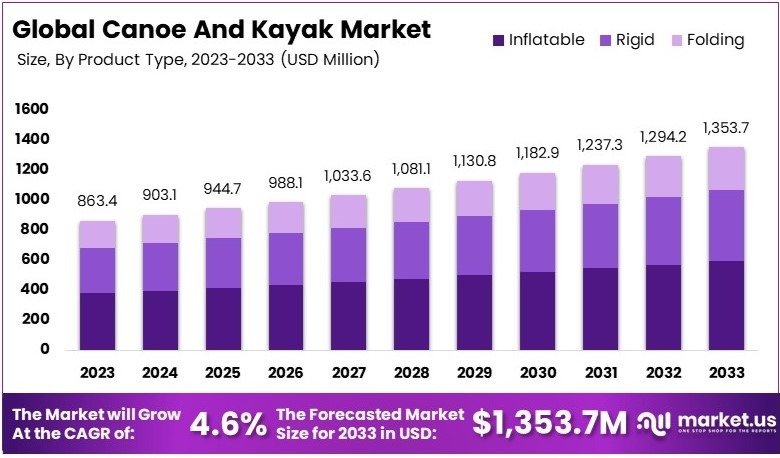
The Global Canoe And Kayak Market size is expected to be worth around USD 1,353.7 Million by 2033, from USD 863.4 Million in 2023, growing at a CAGR of 4.6% during the forecast period from 2024 to 2033.
Canoes and kayaks are watercraft designed for paddling, typically used for recreation, sports, or transport. Canoes are open-top boats, often designed for multiple passengers, while kayaks are enclosed and typically designed for solo use. Both are used in various water environments, including rivers, lakes, and coastal waters.
The Canoe and Kayak Market refers to the market that includes the manufacturing, distribution, and sale of canoes and kayaks. It covers a variety of models, such as recreational, touring, whitewater, and fishing kayaks, as well as canoes made from different materials. The market serves both individual consumers and rental or tourism businesses.
The Canoe and Kayak market is experiencing consistent growth as outdoor activities gain popularity. According to the Outdoor Industry Association, the outdoor recreation sector grew 2.3% in 2022, reaching 168.1 million participants. This sustained growth signals a rising demand for water sports equipment, including canoes and kayaks, providing opportunities for manufacturers.
Demand for canoes and kayaks is fueled by the broader interest in outdoor activities. With 55% of the U.S. population aged six and older participating in outdoor recreation, the market for watercraft continues to expand. This increase in participation offers manufacturers an opportunity to innovate and capture a larger market share.
Despite growth, the canoe and kayak market faces moderate saturation. Several established brands dominate the market, creating a competitive environment. However, there is still room for companies to differentiate themselves through product innovation, particularly in design and materials, to appeal to the growing customer base.
On a broader scale, the canoe and kayak market contributes to the outdoor recreation industry’s growth, supporting sports tourism, and local economies. As more people engage in water sports, it stimulates demand for related services like rentals and guided tours. Locally, the market supports small businesses and outdoor tourism in regions with water bodies.
Government initiatives and policies supporting outdoor recreation have helped the canoe and kayak market. These regulations often include investments in infrastructure and public access to waterways, which can drive up participation. Such investments create favorable conditions for the market, contributing to sustainable growth and increased consumer interest.
Key Takeaways
- The Canoe and Kayak Market was valued at USD 863.4 Million in 2023 and is expected to reach USD 1,353.7 Million by 2033, with a CAGR of 4.6%.
- In 2023, the Inflatable product type segment led the market with 41.7%, attributed to its portability and ease of storage.
- In 2023, Kayak Material dominated the material segment, reflecting its demand for diverse water activities.
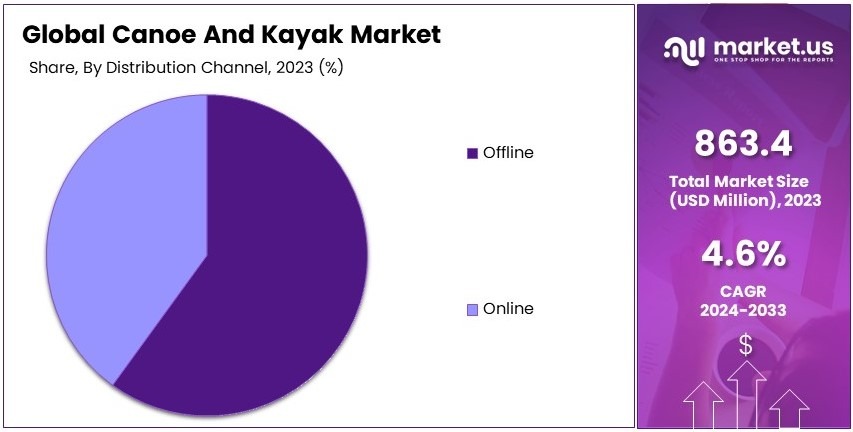
- In 2023, the Offline distribution channel dominated, benefiting from in-store assistance and consumer preference for physical product inspection.
- In 2023, Recreational applications led the end-use segment, driven by growing outdoor activity trends.
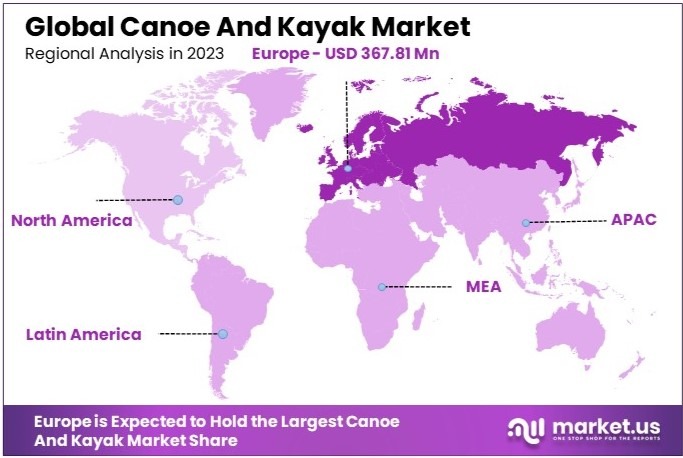
- In 2023, Europe accounted for 37.8% of the market share (USD 367.81 Million), supported by extensive water-based tourism activities.
Product Type Analysis
Inflatable kayaks dominate with 41.7% market share due to their convenience, portability, and technological advancements.
The Canoe and Kayak Market is segmented into three main product types: Rigid, Folding, and Inflatable. Among these, the Inflatable category is the dominant sub-segment, representing 41.7% of the market share. The growth of the inflatable canoe and kayak segment can be attributed to their ease of transport, cost-effectiveness, and versatility.
Inflatable boats offer the convenience of being lightweight, compact, and easy to store, making them particularly attractive for recreational users and those with limited storage space. Additionally, advancements in materials and technology have improved the durability and performance of inflatable kayaks, enabling them to compete with rigid kayaks in terms of handling, stability, and durability.
Rigid canoes and kayaks, while less portable than their inflatable counterparts, remain popular due to their superior stability, speed, and performance. These products are typically made from hard-shell materials such as plastic, fiberglass, or Kevlar, offering higher performance in various water conditions. Rigid kayaks are preferred by more experienced paddlers who prioritize speed and control.
The Folding kayak segment represents a smaller portion of the market but has experienced growth due to its unique combination of portability and performance. Folding kayaks are designed to offer a balance between the storage and transport benefits of inflatable kayaks and the performance advantages of rigid kayaks.
Type Analysis
Plastic canoes dominate due to their affordability, durability, and suitability for recreational use.
The By Type segment divides into Canoes and Kayaks, each with distinct sub-segments based on materials. Among canoes, Plastic models lead the market, primarily due to their affordability, durability, and ease of maintenance. Plastic canoes are widely used in recreational activities and are the go-to choice for beginners and families.
Kevlar Composites and Fiberglass Composites follow as the next most popular materials for canoes, with Kevlar offering the advantage of being lightweight yet strong, which is preferred by competitive paddlers and those seeking performance-focused models. Fiberglass Composites, while heavier than Kevlar, offer a good balance between cost and durability, making them ideal for touring canoes.
In the Kayak segment, Rotomolded Polyethylene is the dominant material, widely used in the manufacturing of recreational kayaks due to its robustness and relatively low cost. This material is highly durable, resistant to impacts, and easy to mold into different shapes, which makes it ideal for mass production of kayaks.
Thermoform kayaks are also gaining popularity, particularly among those who value performance combined with affordability. Thermoform kayaks offer a higher level of rigidity compared to rotomolded polyethylene but at a lower cost than composite kayaks.
Fiberglass Composites and Kevlar Composites are prevalent in the high-performance kayak market, particularly for competitive and touring kayakers who prioritize lightweight recreational boats with optimal performance. These materials offer excellent strength-to-weight ratios, which makes them ideal for long-distance and fast-paced activities.
End-Use Analysis
Recreational kayaks dominate due to growing outdoor recreational trends and increasing interest in casual paddling activities.
The By End-Use segment of the Canoe and Kayak Market consists of four primary categories: Recreational, Touring, Whitewater, and Fishing. The Recreational segment is the dominant category, driven by the widespread popularity of kayaking and canoeing for casual outdoor activities.
As more people seek accessible and enjoyable outdoor experiences, recreational kayaks and canoes have seen a steady increase in demand. This segment is supported by various factors, including easy access to water bodies, growing interest in outdoor recreation, and the increasing number of entry-level kayaks and canoes available in the market.
Touring kayaks and canoes are used for long-distance paddling and are often preferred by experienced paddlers. These products are designed for stability, speed, and durability, which are essential for navigating longer trips across various water conditions.
Whitewater kayaks represent a niche market within the broader kayak category, driven by the demand for specialized gear designed to handle fast-moving and turbulent water. Whitewater kayaks are typically smaller, more maneuverable, and designed to withstand the impacts of rocks and waves.
Fishing kayaks have seen significant growth due to the increasing interest in kayak fishing. These kayaks are designed with features that cater specifically to anglers, such as built-in rod holders, tackle storage, and enhanced stability to support fishing gear. The rise of outdoor recreational activities, coupled with the growing popularity of fishing as a hobby, has propelled the fishing kayak sub-segment forward.
Distribution Channel Analysis
Offline retail dominates due to consumers’ preference for inspecting products and seeking expert advice before making a purchase.
The By Distribution Channel segment of the Canoe and Kayak Market is divided into Online and Offline channels. The Offline distribution channel holds a dominant position, particularly in retail stores, specialty shops, and large sporting goods retailers. This is due to the fact that many consumers prefer to see and physically inspect canoes and kayaks before making a purchase.
In-store shopping allows customers to assess the quality, size, and comfort of products, especially for high-involvement items like kayaks and canoes. Additionally, in-store sales often come with expert advice and guidance, which is important for consumers making more technical purchasing decisions.
On the other hand, Online sales are steadily increasing due to the growing preference for convenience and competitive pricing. Online platforms offer the advantage of a wider variety of products and the ability to compare different models easily. Furthermore, online retailers can offer better deals and discounts, attracting budget-conscious buyers.
Key Market Segments
By Product Type
- Rigid
- Folding
- Inflatable
By Type
Canoes
- Plastic
- Kevlar Composites
- Fiberglass Composites
- Wood
- Aluminum
- Others
Kayaks
- Rotomolded Polyethylene
- Thermoform
- Wood
- Fiberglass Composites
- Kevlar Composites
- Others
By End-Use
- Recreational
- Touring
- Whitewater
- Fishing
By Distribution Channel
- Online
- Offline
Drivers
Growing Outdoor Recreation Participation Drives Market Growth
The growing interest in outdoor recreation activities is one of the key factors driving the Canoe and Kayak Market. As more people seek recreational activities that provide both physical exercise and the opportunity to connect with nature, canoeing and kayaking have become popular choices.
The increasing trend toward outdoor health and wellness is particularly evident in regions with access to rivers, lakes, and coastal areas. In addition, the rising popularity of eco-tourism and water-based adventure sports has led to more people participating in activities such as kayaking and canoeing. This surge in demand for recreational water sports is contributing significantly to market growth.
Moreover, the development of new and improved kayak and canoe designs has made these activities more accessible to a broader audience. Lightweight materials, ergonomic designs, and enhanced stability are making kayaking and canoeing easier for beginners and appealing to a wider range of age groups.
Restraints
High Initial Investment and Lack of Storage Space Restrain Market Growth
The high initial cost of purchasing canoes and kayaks, particularly for premium models, is one of the major restraining factors in the market. High-quality materials, such as fiberglass, carbon fiber, and kevlar composites, contribute to the steep prices of many canoe and kayak products. This pricing can deter new participants who are unsure about committing to the sport.
Additionally, the cost of related accessories, such as paddles, life vests, and specialized gear, can further discourage consumers, particularly in price-sensitive markets.
Furthermore, the lack of storage space for larger boats and equipment can be a barrier for many potential buyers, particularly in urban areas where housing and storage are limited. Canoes and kayaks require considerable space for storage, which may not be available in smaller apartments or homes.
Opportunity
Technological Innovations in Materials Provides Opportunities
Technological advancements in materials present significant opportunities for growth in the Canoe and Kayak Market. The development of lightweight, durable, and environmentally friendly materials is allowing manufacturers to create products that are not only easier to transport and handle but also offer enhanced performance.
For example, the use of advanced composite materials such as carbon fiber and fiberglass composites has made kayaks and canoes both lighter and more durable, which appeals to a broader range of consumers.
Additionally, innovations such as inflatable kayaks and foldable canoes are offering more convenient and portable options for those who have limited storage space. The ability to easily deflate and pack away a kayak or canoe is particularly attractive to urban dwellers or individuals with limited storage space.
Challenges
Economic Uncertainty and Price Sensitivity Challenges Market Growth
Several factors present challenges to the growth of the Canoe and Kayak Market. Economic uncertainty, particularly in the wake of global financial downturns or economic recessions, can significantly impact consumer spending.
During periods of financial instability, consumers tend to reduce discretionary spending, which includes non-essential recreational activities like canoeing and kayaking. This can lead to a slowdown in demand for canoes and kayaks, particularly in more expensive market segments.
Additionally, price sensitivity remains a challenge. As mentioned earlier, the high upfront cost of canoes and kayaks can deter potential buyers, particularly in emerging markets where consumers may not yet perceive canoeing and kayaking as mainstream recreational activities.
While the market for these products continues to grow, it is important for manufacturers to strike a balance between offering high-quality, durable products and keeping prices accessible for a wider range of consumers.
Growth Factors
Increasing Participation in Water Sports is Growth Factor
The continued growth in participation in water-based sports is one of the primary factors contributing to the expansion of the Canoe and Kayak Market. As more individuals become interested in outdoor adventure sports, kayaking and canoeing are benefiting from this trend.
Increased exposure through social media, influencers, and water sport festivals has made these activities more accessible and attractive to a younger demographic.
The rise in adventure tourism also contributes to growth in this sector, with destinations offering guided canoe and kayak tours. These experiences introduce more people to the sport, leading to higher demand for canoes and kayaks as individuals seek to continue their experiences at home.
Additionally, the popularity of these sports is being supported by government initiatives promoting outdoor recreation and funding for public water sports facilities, which helps expand the customer base and encourages new participants. As more people engage in water sports, the demand for quality canoes and kayaks will continue to rise, benefiting the overall market.
Emerging Trends
Sustainable Products Are Latest Trending Factor
Sustainability is one of the latest trends influencing the Canoe and Kayak Market. Consumers are becoming increasingly aware of the environmental impact of their purchasing decisions, and this is particularly true for outdoor and water sports products.
As a result, there is a growing demand for eco-friendly materials and manufacturing processes in the production of canoes and kayaks. Manufacturers are responding to this demand by using sustainable materials, such as recycled plastics, biodegradable coatings, and environmentally friendly adhesives.
In addition to material sustainability, there is a trend toward more energy-efficient designs, such as kayaks that require less effort to paddle, thus reducing energy consumption during longer excursions. Companies that focus on environmentally responsible production methods and products are likely to attract a dedicated customer base that prioritizes sustainability, further propelling market growth.
Regional Analysis
Europe Dominates with 37.8% Market Share
Europe leads the global Canoe and Kayak Market with a 37.8% share. This dominance is driven by a combination of factors, including a long-standing tradition of water sports, a wide range of waterways ideal for canoeing and kayaking, and a strong outdoor recreation culture.
The region benefits from both recreational and competitive demand, with a strong presence of outdoor enthusiasts seeking adventure sports. Furthermore, the increasing popularity of eco-tourism and sustainable outdoor activities has contributed to the growth of the market, as more consumers prioritize environmentally friendly products and experiences.
Europe is expected to maintain a strong position in the canoe and kayak market, driven by increasing consumer interest in outdoor recreational activities. Additionally, the region’s emphasis on sustainability and the development of eco-friendly materials for watercraft are expected to support long-term market growth. The region’s well-established tourism industry also presents growth opportunities for water sports, including canoeing and kayaking, attracting both domestic and international visitors.
Regional Mentions:
- North America: North America holds a substantial share of the canoe and kayak market, driven by the U.S. and Canada’s strong water sports culture. The region’s vast natural water bodies and growing interest in eco-tourism support market growth.
- Asia Pacific: Asia Pacific is witnessing rapid growth in the canoe and kayak market, fueled by increasing disposable incomes and expanding interest in outdoor recreational activities in countries like Japan, China, and Australia.
- Middle East & Africa: The Middle East and Africa have a smaller share of the market, but the increasing development of tourism infrastructure and water-based recreational activities is contributing to gradual market expansion.
- Latin America: Latin America is gradually growing in the canoe and kayak market, with countries like Brazil and Argentina seeing rising participation in water sports. Local tourism and water recreation are expected to drive future market growth.
Key Regions and Countries covered in the report
- North America
- US
- Canada
- Europe
- Germany
- France
- The UK
- Spain
- Italy
- Rest of Europe
- Asia Pacific
- China
- Japan
- South Korea
- India
- Australia
- Rest of APAC
- Latin America
- Brazil
- Mexico
- Rest of Latin America
- Middle East & Africa
- South Africa
- Saudi Arabia
- UAE
- Rest of MEA
Key Players Analysis
In the Canoe and Kayak Market, several key players dominate the landscape, contributing significantly to market trends and innovations. The top four companies—Pelican International, Old Town Canoes & Kayaks, Perception Kayaks, and Wilderness Systems—are at the forefront of this market, shaping the industry with their diverse product offerings and strong market presence.
Pelican International is a leader in the market, known for producing a wide range of recreational kayaks, canoes, and accessories. The company focuses on delivering durable and affordable products, which has helped it maintain a strong position, particularly in North America. Pelican’s commitment to high-quality materials and sustainable manufacturing practices has strengthened its brand reputation.
Old Town Canoes & Kayaks has built a strong legacy in the market with its classic and innovative kayak designs. Known for their stability and comfort, Old Town’s products are highly regarded by both recreational and experienced paddlers. The company’s continued investment in advanced materials, such as lightweight polyethylene and carbon fiber, ensures its competitive edge.
Perception Kayaks, a subsidiary of Confluence Outdoor, offers a range of kayaks designed for various skill levels, from beginners to experts. The company is known for its user-friendly designs, combining affordability with performance. Perception Kayaks has a strong presence in the retail sector and is recognized for its commitment to innovation and quality craftsmanship.
Wilderness Systems is another significant player in the market, offering a range of high-performance kayaks tailored to both recreational paddlers and serious outdoor enthusiasts. The company is known for incorporating cutting-edge technology into its products, including lightweight, durable materials and ergonomic designs that enhance the paddling experience.
Together, these companies have helped drive the growth of the Canoe and Kayak Market through innovation, product quality, and a deep understanding of consumer needs. Their continued focus on design and performance will likely keep them at the forefront of the market in the coming years.
Top Key Players in the Market
- Pelican International
- Old Town Canoes & Kayaks
- Perception Kayaks
- Wilderness Systems
- Aquabound
- Sun Dolphin
- Confluence Outdoor
- BIC Sport
- Advanced Elements
- Hurricane Kayaks
- Sevylor
- Riot Kayaks
- Vanguard Canoes
- Gumotex
- Zodiac Milpro
Recent Developments
- City of Jackson: In June 2024, the City of Jackson announced the installation of its first public canoe and kayak launch along the Grand River at Ella Sharp Park. Funded by a Michigan Department of Natural Resources grant, this accessible launch is located in the park’s southeast section and aims to enhance water connectivity and outdoor recreation opportunities for residents.
- City of Altoona: In April 2024, Altoona introduced a new adaptive boat launch at Spring Creek Park’s south lake. The facility includes a ramp, dock, and an accessible canoe and kayak launch. Partially funded by a $20,000 Prairie Meadows grant, this launch is designed to accommodate boaters of all abilities, promoting inclusive outdoor recreation.
- Town of Montgomery: In May 2024, Montgomery’s Benedict Farm Park unveiled a handicapped-accessible dock and kayak launch. Led by the Town of Montgomery Recreation Department, the project includes ADA-compliant railings, safety curbing, ramps, and a transfer bench to ensure seamless transfer for individuals with disabilities into and out of kayaks and canoes.









