


Report Overview
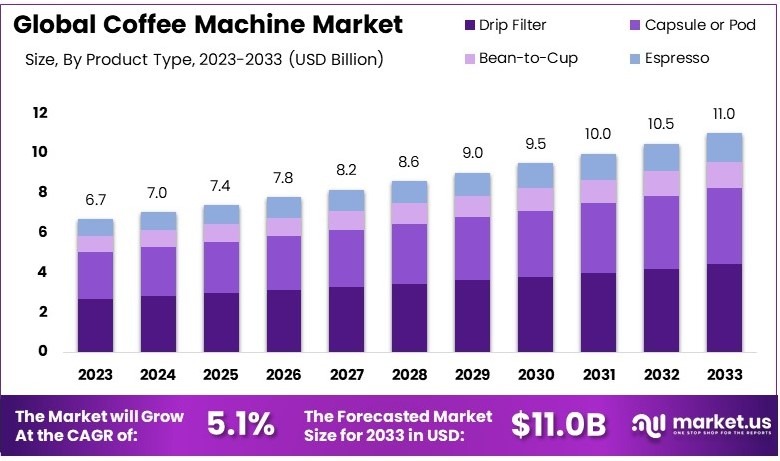
The Global Coffee Machine Market size is expected to be worth around USD 11.0 Billion by 2033, from USD 6.7 Billion in 2023, growing at a CAGR of 5.1% during the forecast period from 2024 to 2033.
A coffee machine is a device used to brew coffee by automated or manual methods. It simplifies the process of coffee preparation by controlling temperature, water flow, and brewing time. Coffee machines are available in various types, including espresso machines, drip coffee makers, and single-serve systems.
The coffee machine market refers to the global industry focused on the production, distribution, and sale of coffee-making appliances. This market includes diverse machine types catering to households, commercial establishments, and office spaces. It encompasses manufacturers, suppliers, and retailers targeting coffee enthusiasts and businesses.
The coffee machine market is driven by rising coffee consumption, reaching 67% of American adults daily, according to NCA’s 2024 report. Specialty coffee preferences fuel demand for advanced machines. Moreover, 10% growth in espresso-based drinks highlights opportunities. Competition remains high, with companies innovating to meet diverse consumer tastes and preferences.
In the UK, Millennials spend £728 annually on takeaway coffee, outpacing Gen Z (£676) and Boomers (£260). Over a lifetime, coffee drinkers spend over £29,000 on takeaway coffee. Consequently, this trend underscores opportunities for coffee machines tailored for home brewing, offering convenience and cost savings for avid coffee enthusiasts.
Locally, coffee machine adoption supports small businesses like cafes. Globally, rising coffee consumption, up 7.5% in specialty coffee year-over-year in the U.S., drives machine sales. Similarly, government investments in technology and innovation stimulate market growth, particularly in regions with burgeoning coffee culture.
Key Takeaways
- The Coffee Machine Market was valued at USD 6.7 billion in 2023 and is expected to reach USD 11.0 billion by 2033, with a CAGR of 5.1%.
- In 2023, Drip Filter dominated product type due to its simplicity and widespread use in residential settings.
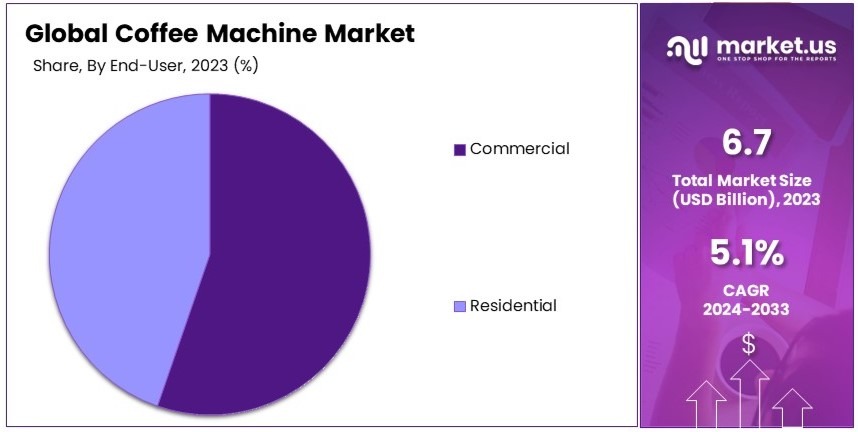
- In 2023, Residential Use led applications as demand for at-home coffee brewing increased post-pandemic.
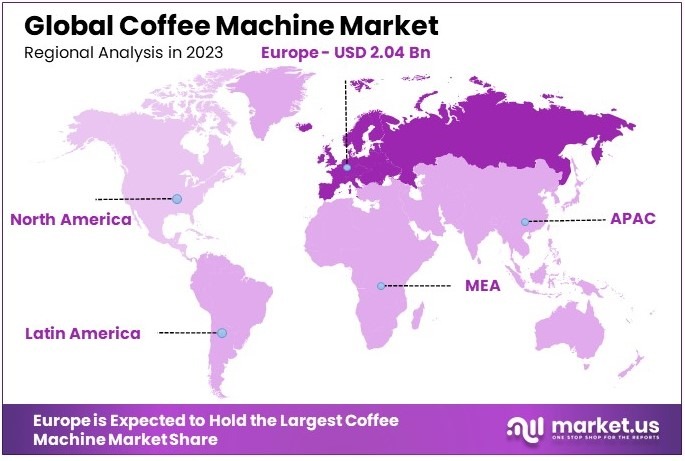
- In 2023, Europe held the largest share, 30.4%, driven by high coffee consumption rates and premium product demand.
Business Environment Analysis
The coffee machine market exhibits moderate saturation, with growing demand in emerging regions. Established players dominate, but innovative products are capturing attention. According to the International Coffee Organization (ICO), global coffee consumption rose 2.25% in 2023, suggesting untapped opportunities.
The market is marked by intense competition and rapid technological advancements. Automated machines lead growth, supported by increasing coffee exports. ICO reports South American exports increased by 30.7% in 2023, ensuring a steady supply of raw coffee for manufacturers.
Urban professionals aged 25–45 form the primary consumer base due to rising home and office coffee consumption. Growing interest in specialty coffee among millennials and Gen Z drives demand for premium and customizable coffee machines.
Smart coffee makers with app control and sustainable brewing systems stand out. As consumers value convenience and environmental impact, brands offering unique functionalities capture market share. Premium machines align with evolving consumer expectations.
The value chain spans from coffee growers to machine manufacturers and retailers. Brazil, accounting for 39% of global coffee supply, ensures raw material stability, strengthening supply chains globally.
Rising demand for eco-friendly and high-tech machines highlights investment opportunities. Expanding coffee consumption in Asia-Pacific, driven by urbanization and income growth, underscores the potential for market penetration.
South America’s export growth, with 66.13 million bags exported in 2023, strengthens the supply chain for coffee machine manufacturing. Brazil led this surge with a +34.3% increase, benefiting global production.
Product Type Analysis
Capsule or Pod sub-segment dominates with a significant market share due to its convenience.
The Coffee Machine Market is diverse, with key segments based on product types: Drip Filter, Capsule or Pod, Bean-to-Cup, and Espresso. Among these, the Capsule or Pod sub-segment is the dominant player, capturing the largest share of the market. This dominance is driven by changing consumer behavior, convenience, and the rapid growth of at-home coffee consumption.
Capsule or Pod coffee machines are popular due to their easy-to-use, mess-free functionality, which appeals to time-pressed consumers. The global trend toward convenience-driven solutions, coupled with innovations in pod variety and availability, strengthens the position of the capsule/pod segment.
On the other hand, the Drip Filter sub-segment remains popular, particularly in North America and Europe. These machines are favored by consumers who prefer the traditional coffee brewing method.
The Bean-to-Cup sub-segment is another important part of the market. These machines provide freshly ground coffee, which appeals to consumers who prioritize the taste and aroma of freshly brewed coffee. They tend to be more expensive and complex, which can limit their appeal to niche consumer segments.
Finally, the Espresso sub-segment, while small in comparison to the others, has its dedicated following. Espresso machines are often favored by serious coffee drinkers, professionals, and businesses that focus on providing high-end coffee. They tend to be more specialized, with varying levels of automation, and are often used in commercial settings such as cafes and restaurants.
Operation Type Analysis
Automated sub-segment dominates with a large share due to consumer preference for convenience, consistent performance, and ease of use.
The operation type segment of the Coffee Machine Market consists of three primary categories: Manual, Semi-Automated, and Automated. Among these, the Automated operation type has emerged as the dominant segment, driven by the rising consumer demand for convenience and efficiency.
Automated coffee machines are highly valued for their consistent performance, ease of use, and quick operation, making them popular in both residential and commercial settings. These machines are designed to eliminate the complexities of manual brewing while ensuring a high-quality coffee experience.
The Semi-Automated sub-segment, while experiencing growth, still holds a smaller market share in comparison. Semi-automated machines require some manual intervention during the brewing process, offering a balance between automation and hands-on control.
Manual coffee machines are the least common in the market today, as they require the most effort from the user and do not provide the same level of convenience as automated models. However, they maintain a niche presence, particularly among coffee aficionados who enjoy the art of brewing.
End-User Analysis
Commercial sub-segment dominates with a large market share due to the increasing demand for high-quality, consistent coffee.
The Coffee Machine Market is also segmented based on end-users, primarily into Commercial and Residential categories. The Commercial sub-segment dominates the market, accounting for a significant portion of the overall market share. This dominance can be attributed to the growing demand for high-quality coffee in various commercial establishments, including cafes, restaurants, offices, and hotels.
As the coffee culture continues to thrive globally, businesses are increasingly investing in high-end coffee machines to provide customers with premium coffee experiences. The need for reliable, consistent performance in high-traffic environments further drives the demand for commercial coffee machines.
The rise of the “third wave” coffee movement, which emphasizes specialty coffee and artisanal brewing techniques, has further fueled demand in this segment, as businesses strive to offer unique and high-quality products.
The Residential sub-segment, while smaller in comparison, is experiencing steady growth as more consumers seek to replicate café-quality coffee in the comfort of their homes. The rise of at-home coffee brewing, accelerated by the COVID-19 pandemic, has led to increased sales of coffee machines for personal use.
Key Market Segments
By Product Type
- Drip Filter
- Capsule or Pod
- Bean-to-Cup
- Espresso
By Operation Type
- Manual
- Semi-Automated
- Automated
By End-User
- Commercial
- Residential
Drivers
Rising Coffee Consumption Drives Market Growth
The increasing global demand for coffee is one of the key factors driving the Coffee Machine Market. As coffee consumption continues to grow, especially in emerging economies, the need for convenient and efficient coffee-making solutions rises. The busy lifestyles of consumers, particularly in urban areas, also contribute to this growth, as people seek high-quality, easy-to-use coffee machines.
Additionally, the increasing preference for specialty coffee, such as espresso and cold brews, has encouraged manufacturers to introduce more advanced coffee machines that cater to these specific tastes.
This expansion of consumer preferences further supports market growth, prompting innovations in product offerings, such as machines with customizable brewing options and integrated technology.
Restraints
High Costs and Maintenance Restraints Market Growth
The Coffee Machine Market faces several challenges due to the high costs associated with premium machines and their maintenance. While advanced coffee machines offer convenience and quality, their higher price points can deter cost-sensitive consumers from purchasing them.
Furthermore, ongoing maintenance and the need for specific parts, such as filters and water filters, can increase the long-term cost of ownership. For businesses, this is compounded by the potential downtime of machines due to technical issues, leading to increased operational costs.
In addition, the lack of standardization in features and designs across different brands and models creates confusion among consumers, further limiting their purchasing decision. These factors collectively restrain the market’s growth, particularly in price-sensitive segments.
Opportunity
Sustainability Focus Provides Opportunities
Sustainability is a growing trend in the Coffee Machine Market, opening up various opportunities for market players. As consumers become more environmentally conscious, there is a rising demand for energy-efficient coffee machines that minimize electricity consumption.
Additionally, manufacturers are increasingly designing machines with recyclable components and eco-friendly materials, aligning with global sustainability efforts. The shift toward biodegradable coffee pods and reusable filters also presents opportunities for innovation and market differentiation.
Moreover, the integration of sustainable practices into the manufacturing process offers companies a competitive edge. Companies that can capitalize on these trends by developing products that align with eco-conscious values are poised to capture the attention of a broader customer base, thereby driving market expansion.
Challenges
Technological Advancements Challenge Market Growth
While technological advancements have spurred innovation in the Coffee Machine Market, they also present challenges. Rapidly evolving technology creates a gap between advanced models and more traditional machines, leaving some consumers feeling overwhelmed by the range of options. This can complicate purchasing decisions, particularly for first-time buyers.
Further, the integration of sophisticated technologies into coffee machines, such as smart features and touch interfaces, often results in higher costs. These advanced features may not always justify the price for certain consumers, limiting their appeal.
Additionally, the fast pace of technological innovation may lead to shorter product lifecycles, which can be a deterrent for customers concerned about investing in machines that may soon become outdated. As a result, companies face the challenge of balancing innovation with affordability and consumer readiness.
Emerging Trends
Smart Coffee Machines Are Latest Trending Factor
One of the most significant trends shaping the Coffee Machine Market is the integration of smart technology. Smart coffee machines, which can be controlled via mobile apps or voice commands, are gaining popularity among consumers who prioritize convenience and connectivity.
These machines allow users to customize brew settings, track their coffee consumption, and even schedule brewing times. The demand for such smart features is especially strong among younger, tech-savvy consumers, who value personalized experiences and the ability to integrate their coffee-making routines into the broader ecosystem of smart appliances.
This trend towards connected coffee machines reflects a broader shift towards IoT (Internet of Things) technology in household appliances, offering a significant growth opportunity for manufacturers that can deliver cutting-edge, user-friendly devices.
Regional Analysis
Europe Dominates with 30.4% Market Share
Europe leads the Coffee Machine Market with a 30.4% market share with valuation of USD 2.04 Bn, driven by strong consumer demand for premium coffee, a well-established café culture, and a growing preference for home brewing. The market benefits from high disposable incomes and widespread adoption of advanced coffee machines offering convenience and customization.
The region is characterized by a significant presence of global coffee machine manufacturers and a strong distribution network. Additionally, increasing environmental consciousness drives innovation in sustainable coffee machine technologies, such as energy-efficient models and recyclable materials.
Europe’s dominance in the Coffee Machine Market is expected to continue, supported by rising trends in specialty coffee consumption and technological advancements. The integration of smart features in coffee machines may further enhance the market’s growth in the region.
Regional Mentions:
- North America: North America is a key player in the Coffee Machine Market, driven by a high demand for single-serve and automated coffee machines. A growing coffee culture and increasing work-from-home trends boost the region’s market share.
- Asia Pacific: Asia Pacific is witnessing significant growth due to increasing urbanization and a rising middle class. Countries like China and India show strong potential, fueled by growing café chains and evolving consumer preferences.
- Middle East & Africa: The Coffee Machine Market in the Middle East & Africa is emerging, driven by a growing coffee culture and tourism. The adoption of high-end coffee machines in luxury hotels is a notable trend.
- Latin America: Latin America leverages its position as a leading coffee producer to support local market growth. Rising urbanization and café culture trends in countries like Brazil and Colombia are fueling the demand for coffee machines.
Key Regions and Countries covered in the report
- North America
- US
- Canada
- Europe
- Germany
- France
- The UK
- Spain
- Italy
- Rest of Europe
- Asia Pacific
- China
- Japan
- South Korea
- India
- Australia
- Rest of APAC
- Latin America
- Brazil
- Mexico
- Rest of Latin America
- Middle East & Africa
- South Africa
- Saudi Arabia
- UAE
- Rest of MEA
Key Players Analysis
The Coffee Machine Market is highly competitive, dominated by leading companies that drive innovation and market expansion. Nestlé S.A. (Nespresso) stands out with its strong brand presence and extensive product portfolio. Nespresso excels in offering premium single-serve coffee machines and capsules, catering to both home and office users.
Keurig Dr Pepper Inc. is another major player, renowned for its versatile brewing systems and wide variety of coffee pods. Keurig’s focus on convenience and customization appeals to a broad consumer base, making it a preferred choice in North America. The company’s strategic partnerships and continuous product enhancements have solidified its position in the market.
De’Longhi S.p.A. brings a blend of Italian design and advanced technology to the Coffee Machine Market. Known for its espresso machines and grinders, De’Longhi targets coffee enthusiasts who seek both style and functionality. The company’s commitment to innovation, such as integrating smart features and enhancing user experience, has driven its growth and competitive edge.
Breville Group Ltd. is celebrated for its high-performance coffee machines that cater to both amateur and professional baristas. Breville emphasizes precision and durability, offering a range of products from manual espresso makers to fully automated systems. Their focus on quality and customer satisfaction has earned them a loyal customer base and significant market influence.
These top four companies leverage their strengths in brand reputation, product innovation, and customer-centric approaches to maintain their leadership in the Coffee Machine Market. Their ability to adapt to changing consumer preferences and technological advancements ensures sustained growth and competitiveness.
Top Key Players in the Market
- Nestlé S.A. (Nespresso)
- Jura Elektroapparate AG
- Keurig Dr Pepper Inc.
- De’Longhi S.p.A.
- Breville Group Ltd.
- Philips N.V.
- Hamilton Beach Brands Holding Co.
- Melitta Group
- Gaggia (Saeco)
- Cuisinart
- Tassimo (Bosch)
- Smeg S.p.A.
- Rancilio Group
- La Marzocco
- Rocket Espresso
Recent Developments
- Breville: In August 2024, Breville introduced the Oracle™ Jet, the latest addition to its Oracle™ espresso machine line. Featuring ThermoJet® heating for quick readiness and Auto MilQ™ for hands-free microfoam, it aims to deliver café-quality espresso at home efficiently.
- Bosch: In May 2024, Bosch launched fully automatic espresso machines in the 300 and 800 Series. With features like the Aroma Max System, Aroma Select, and a 5-inch Active Select Display in the 800 Series, the machines offer barista-quality coffee with over 35 beverage options via Home Connect®.
- Lavazza Professional UK: In May 2024, Lavazza Professional UK unveiled ‘Lavazza on the Move,’ a premium self-serve coffee solution. Targeted at high-traffic areas, the initiative partners with convenience stores and petrol stations, aligning with Lavazza’s strategy to grow in the UK’s self-serve coffee segment.









