


Report Overview
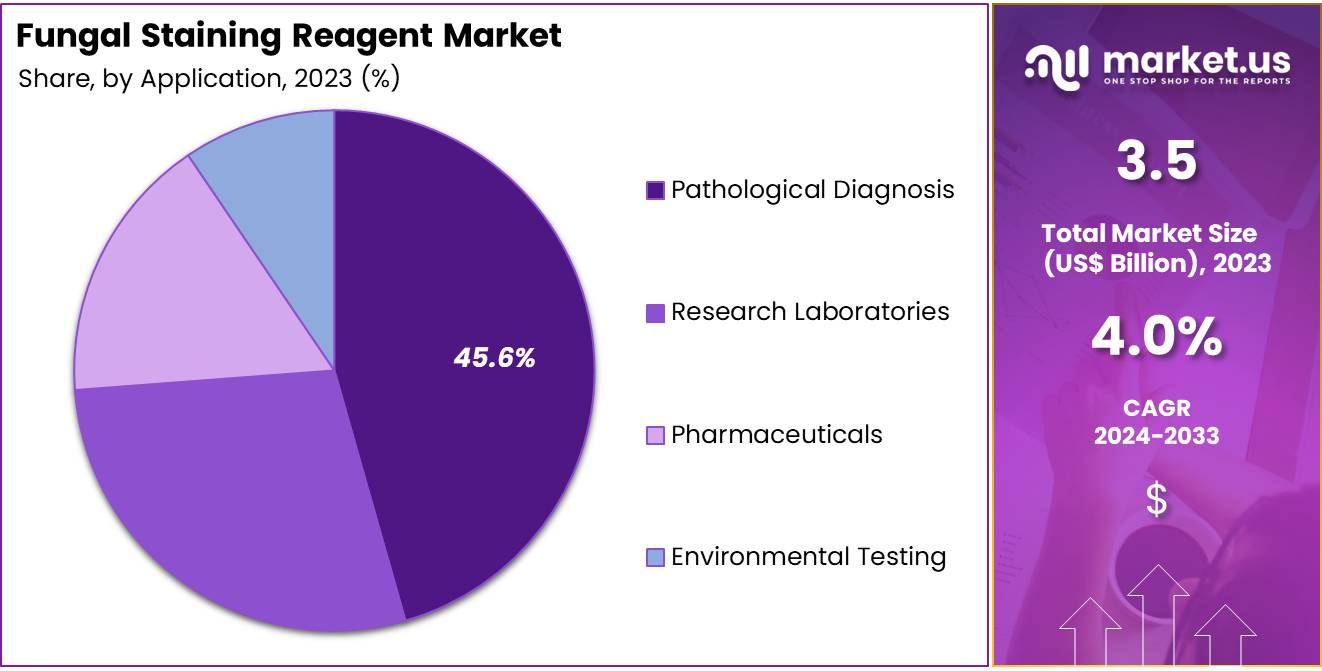
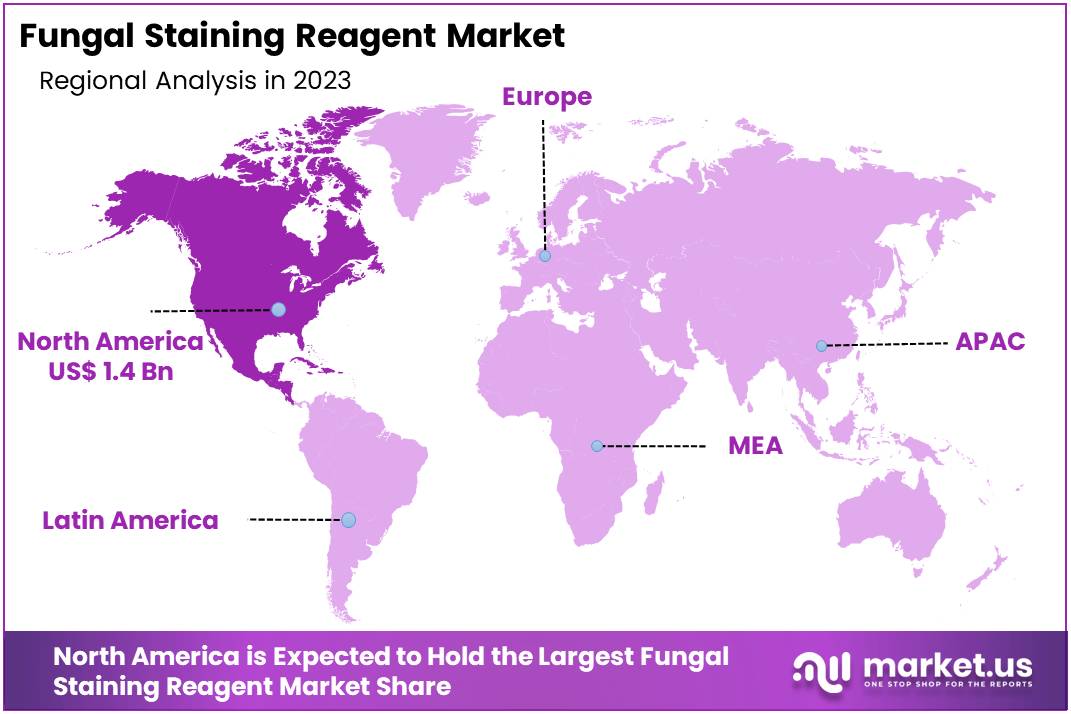
The Global Fungal Staining Reagent Market size is expected to be worth around US$ 5.2 Billion by 2033, from US$ 3.5 Billion in 2023, growing at a CAGR of 4.0% during the forecast period from 2024 to 2033. North America held a dominant market position, capturing more than a 39.4% share and holds US$ 1.4 Billion market value for the year.

Increasing demand for advanced diagnostic tools and growing awareness of fungal infections are driving the expansion of the fungal staining reagent market. These reagents, crucial in microbiology and clinical diagnostics, help identify and differentiate fungal species in laboratory settings, facilitating the detection of various fungal infections, including those affecting the skin, respiratory system, and internal organs.
Rising cases of fungal infections, especially in immunocompromised patients, are contributing to the need for more accurate and efficient diagnostic solutions. Fungal staining reagents also find applications in research and drug development, where they are used to study the morphology and behavior of fungal pathogens.
In January 2021, Sun Tech Medical Inc. partnered with Valence Inc., a biometric sensor company, to develop innovative diagnostic solutions, highlighting the growing trend of cross-industry collaboration in healthcare. This partnership aims to enhance diagnostic accuracy and expand the potential applications of technology, a trend that could extend to fungal staining reagents.
Moreover, increasing focus on rapid diagnostics and point-of-care testing is creating new opportunities for the market, as healthcare providers seek tools that offer quick and reliable results. Recent trends also indicate a shift towards more user-friendly and automated staining systems, which reduce labor time and human error. As the need for more precise and efficient fungal diagnostics rises, the fungal staining reagent market is poised for continued growth and innovation, driven by advancements in both diagnostic technologies and research methodologies.
Key Takeaways
- In 2023, the market for fungal staining reagent generated a revenue of US$ 3.5 billion, with a CAGR of 4.0%, and is expected to reach US$ 5.2 billion by the year 2033.
- The product type segment is divided into gram stains, lactophenol cotton blue, giemsa stains, and period acid-schiff stains, with gram stains taking the lead in 2023 with a market share of 38.4%.
- Considering application, the market is divided into research laboratories, pathological diagnosis, pharmaceuticals, and environmental testing. Among these, pathological diagnosis held a significant share of 45.6%.
- Furthermore, concerning the end-user segment, the market is segregated into hospitals, academic institutions, clinical laboratories, and pharmaceutical companies. The hospitals sector stands out as the dominant player, holding the largest revenue share of 41.8% in the fungal staining reagent market.
- North America led the market by securing a market share of 39.4% in 2023.
Product Type Analysis
The gram stains segment led in 2023, claiming a market share of 38.4% owing to its widespread use in identifying and differentiating fungal species in clinical and research settings. Gram staining remains one of the most commonly used techniques for initial fungal identification due to its simplicity, cost-effectiveness, and rapid results.
The rising prevalence of fungal infections, along with the need for accurate and quick diagnostic tools, is likely to drive demand for gram stains. As healthcare providers increasingly rely on efficient diagnostic methods to identify pathogens in clinical samples, the gram stains segment is projected to grow. Furthermore, the ongoing improvements in staining techniques that enhance the clarity and precision of gram stains are expected to further boost its market share, particularly in laboratories and healthcare institutions.
Application Analysis
The pathological diagnosis held a significant share of 45.6% due to the increasing reliance on staining reagents for accurate diagnosis of fungal infections. As fungal diseases continue to be a significant concern in both developed and developing countries, diagnostic laboratories are expected to increasingly incorporate fungal staining techniques into routine diagnostic procedures.
Pathological diagnosis in fungal infections helps ensure accurate identification of pathogens, leading to more effective treatments. The growth in the number of cases of opportunistic fungal infections, particularly among immunocompromised patients, is likely to drive demand for advanced diagnostic techniques in pathology. Moreover, as the healthcare industry continues to focus on improving diagnostic accuracy, the need for high-quality staining reagents, such as those used in pathological diagnosis, is expected to continue expanding in the market.
End-user Analysis
The hospitals segment had a tremendous growth rate, with a revenue share of 41.8% owing to the critical role that hospitals play in diagnosing and treating fungal infections. Hospitals are expected to remain key end-users of fungal staining reagents, as they provide diagnostic and therapeutic services for a broad range of fungal diseases, especially among immunocompromised patients.
The increasing prevalence of fungal infections, coupled with the rise in hospital admissions for infections like candidiasis and aspergillosis, is likely to contribute to the growth of the segment. Hospitals, which routinely use fungal staining reagents in diagnostic laboratories to detect fungal pathogens in clinical samples, are projected to drive the demand for these reagents. Additionally, the increasing adoption of rapid diagnostic technologies in hospital settings is expected to further support the growth of this segment in the market.
Key Market Segments
By Product Type
- Gram Stains
- Lactophenol Cotton Blue
- Giemsa Stains
- Period Acid-Schiff Stains
By Application
- Research Laboratories
- Pathological Diagnosis
- Pharmaceuticals
- Environmental Testing
By End-user
- Hospitals
- Academic Institutions
- Clinical Laboratories
- Pharmaceutical Companies
Drivers
Growing Prevalence of Fungal Diseases Driving the Market
The growing prevalence of fungal diseases is driving the demand for fungal staining reagents. According to the Centers for Disease Control and Prevention (CDC), fungal diseases pose a significant public health threat in the United States. Each year, fungal diseases contribute to over 75,000 hospitalizations and nearly 9 million outpatient visits.
Furthermore, in 2021, the CDC recorded approximately 7,199 deaths from fungal infections, highlighting the increasing burden of these diseases. As the number of fungal infections rises, the need for accurate diagnostic tools becomes more critical. Fungal staining reagents are essential in identifying and diagnosing fungal infections, making them integral to clinical laboratories and research settings.
The growing incidence of fungal diseases, particularly among immunocompromised patients, is expected to increase the demand for these diagnostic reagents. Healthcare providers and laboratories will continue to rely on fungal staining technologies to effectively detect and treat infections, thereby expanding the market for these reagents.
Restraints
High Cost of Specialized Reagents Restraining the Market
The high cost of specialized reagents is likely to restrain the growth of the fungal staining reagent market. Many advanced reagents used for fungal staining are expensive due to the specialized chemicals and manufacturing processes required for their production. The financial burden associated with acquiring these reagents is expected to impede their widespread adoption, especially in lower-resource settings.
Hospitals, laboratories, and clinics with budget constraints may find it difficult to regularly purchase these costly reagents, limiting their ability to offer comprehensive fungal diagnostics. Additionally, the need for continuous supply and the expiration of reagents could increase operational costs, further restricting market growth. The high prices could drive healthcare providers to seek less expensive alternatives, which may be less effective or specific in detecting fungal infections. This restraint is likely to hinder the adoption of the latest fungal staining technologies, especially in developing regions where healthcare funding is limited.
Opportunities
Increase in R&D Activities Creating Opportunities in the Market
The fungal staining reagent market is poised for expansion, primarily driven by increasing research and development activities in pharmaceutical companies and research institutions. The focus is intensifying on understanding fungal infections and enhancing diagnostic tools. Notably, in December 2022, Merck embarked on a research collaboration with Mersana Therapeutics aimed at discovering new antibody-drug conjugates, mainly for advancing cancer therapies. This partnership underscores a growing trend where such initiatives indirectly support the development of innovative diagnostic products, including fungal staining reagents utilized in cancer diagnostics.
The market is witnessing a surge in demand for more specific, targeted fungal staining reagents, fueled by R&D in fields like infectious diseases, oncology, and immunology. As research efforts continue to escalate, the development of these reagents is expected to keep pace. The innovations emerging from collaborative research are set to improve the precision, accuracy, and speed of fungal detection techniques. This progress is crucial for enhancing patient outcomes and streamlines processes in clinical and research laboratories.
The future of the fungal staining reagents market looks promising with the growing emphasis on precision medicine and technological advancements in diagnostic technology. The enhancements in R&D are not only elevating patient care standards but are also boosting the demand for high-quality reagents. As diagnostic capabilities improve, the market for fungal staining reagents is expected to experience robust growth, ensuring an ongoing demand in both clinical and research settings.
Impact of Macroeconomic / Geopolitical Factors
Macroeconomic and geopolitical factors significantly influence the fungal staining reagent market by impacting both demand and supply dynamics. Economic downturns can lead to reduced funding for research and development, slowing innovation and limiting the procurement of diagnostic tools such as fungal staining reagents. Conversely, during periods of economic growth, increased healthcare investments and research funding help accelerate the adoption of advanced diagnostic solutions.
Geopolitical factors, including regulatory changes, trade tariffs, and political instability, can disrupt the global supply chain, leading to price volatility and production delays. However, the rising global incidence of fungal infections, particularly in immunocompromised populations, is driving demand for effective diagnostic tools. The growing focus on laboratory automation and advancements in diagnostic technologies further support the market’s expansion. As healthcare systems globally continue to prioritize infection control, the market for fungal staining reagents is expected to grow steadily, with innovations in product development enhancing diagnostic capabilities.
Trends
Rising Acquisitions and Mergers Driving the Fungal Staining Reagent Market
Rising acquisitions and mergers have become a significant trend driving the fungal staining reagent market. Companies are increasingly consolidating their resources to enhance their product portfolios, expand their market reach, and strengthen their position in the diagnostic sector. High levels of strategic acquisition enable firms to integrate new technologies and broaden their offerings in fungal diagnostics.
For instance, in January 2022, Thermo Fisher Scientific Inc. acquired PeproTech, Inc., a leader in recombinant proteins and antibodies. This acquisition enhances Thermo Fisher’s ability to offer comprehensive diagnostic solutions, including fungal staining reagents, positioning the company as a major player in the laboratory diagnostics market. As acquisitions and mergers continue to increase, the fungal staining reagent market is projected to experience accelerated innovation, expanded product availability, and greater market penetration.
Regional Analysis
North America is leading the Fungal Staining Reagent Market
North America dominated the market with the highest revenue share of 39.4% owing to increasing healthcare investments and the growing demand for advanced diagnostic tools. The rising prevalence of fungal infections, particularly in immunocompromised patients, has heightened the need for accurate and efficient diagnostic methods, which rely on staining reagents.
Additionally, the growth of the healthcare sector has been significant, as evidenced by a 2.7% increase in healthcare spending in the United States in 2021, reaching US$4.3 trillion, or US$12,914 per person, as reported by the Centers for Medicare & Medicaid Services. This increase in healthcare expenditure underscores the broader financial commitment to healthcare, including the use of diagnostic tools like fungal staining reagents.
The advancement of research in microbiology and pathology has also fueled the demand for these reagents, which are essential for diagnosing various fungal infections. Furthermore, the rising awareness of fungal infections, coupled with the expansion of diagnostic laboratories and hospitals in North America, has driven the market’s growth. The development of more precise and specific reagents has further supported this demand, ensuring the continued expansion of the market in the region.
The Asia Pacific region is expected to experience the highest CAGR during the forecast period
Asia Pacific is expected to grow with the fastest CAGR owing to the rising incidence of fungal infections and the increasing adoption of advanced diagnostic technologies. The growing healthcare infrastructure in countries like China and India, along with a rising awareness of infectious diseases, is likely to contribute to market growth.
In June 2023, International Flavors & Fragrances (IFF) launched a new line of oral excipients in China, including METHOCEL, which aligns with the region’s growing demand for high-quality excipients used in formulating diagnostic tools, such as fungal staining reagents. This expansion into China highlights the increasing focus on meeting the demand for diagnostic products in the Asia Pacific market.
Additionally, the increasing number of healthcare facilities and laboratories in the region, along with the rising financial investment in healthcare, is expected to support the growth of the fungal staining reagent market. As the demand for accurate and early diagnosis of fungal infections continues to rise, the market for fungal staining reagents is projected to expand significantly in the Asia Pacific region, particularly with the enhancement of local production and distribution networks.
Key Regions and Countries
- North America
- US
- Canada
- Europe
- Germany
- France
- The UK
- Spain
- Italy
- Russia
- Netherland
- Rest of Europe
- Asia Pacific
- China
- Japan
- South Korea
- India
- Australia
- New Zealand
- Singapore
- Thailand
- Vietnam
- Rest of APAC
- Latin America
- Brazil
- Mexico
- Rest of Latin America
- Middle East & Africa
- South Africa
- Saudi Arabia
- UAE
- Rest of MEA
Key Players Analysis
The fungal staining reagent market is experiencing significant growth driven by key players focusing on product innovation and expanding research capabilities. Companies develop advanced reagents designed for enhanced sensitivity, specificity, and ease of use, targeting clinical diagnostics and research applications. The strategic introduction of innovative products and the implementation of educational and training programs for laboratory professionals are pivotal, fostering product adoption and increasing market penetration.
Strategic collaborations with diagnostic laboratories, universities, and research institutions play a crucial role in enhancing market reach and developing new applications for fungal detection. These partnerships support ongoing advancements in fungal diagnostics, contributing to the overall growth of the market. Additionally, geographic expansion into emerging markets, where the incidence of fungal infections is increasing, is a targeted strategy to drive further market expansion.
Thermo Fisher Scientific, a global leader in laboratory equipment and reagents, stands out among market players. Thermo Fisher offers a broad array of reagents for fungal detection, supporting both clinical diagnostics and scientific research. The company emphasizes continuous product innovation, strategic acquisitions, and global partnerships to enhance its market presence. Moreover, Thermo Fisher’s substantial investment in research and development aims to advance reagent technology, meeting the evolving demands of laboratories worldwide.
Top Key Players in the Fungal Staining Reagent Market
- Zoetis Inc.
- Vmed Technology
- VivaChek Laboratories Inc.
- SunTech Medical Inc.
- Merck KGaA
- HiMedia Laboratories Pvt
- Darmstadt
- BD
- Alercell
Industrial Advantages and Opportunities For Market Players
Fungal staining reagents offer significant business benefits for key market players, primarily by enhancing diagnostic accuracy. These reagents allow for precise identification and differentiation of fungal species in clinical samples. Such precision is crucial for improving patient outcomes and establishing a strong reputation in the medical diagnostics market. The ability to accurately diagnose can lead to increased trust and dependability among healthcare providers.
Expanding a product portfolio with fungal staining reagents can significantly enhance a company’s market presence. This diversification attracts a broader customer base and meets the growing demand driven by the global increase in fungal infections, especially among immunocompromised patients. Offering a variety of reliable diagnostic tools positions companies as leaders in the healthcare sector.
Companies that innovate in the development of fungal staining reagents gain a competitive advantage by delivering faster and more reliable results. This innovation is not just about leading the market; it’s about setting standards and advancing global healthcare practices. Additionally, adhering to international regulatory standards opens up expansive new markets, further increasing sales opportunities.
Strategic partnerships and continuous improvement in fungal staining technologies can lead to long-term contracts and sustained revenue streams. Engaging in research and development also opens doors to obtaining patents and creating proprietary technologies, which can secure a market leadership position. These strategic moves not only bolster profitability but also enhance the company’s influence and standing within the industry.
Recent Developments
- In April 2023: Alercell introduced the LENA Molecular Dx Leukemia Platform, a set of 12 diagnostic tests designed for early detection of leukemia and monitoring minimal residual disease. The platform’s use of next-generation DNA sequencing technology has the potential to influence other areas, including the development of fungal staining reagents for molecular diagnostics.
- In February 2022: BD acquired Cytognos, a company specializing in flow cytometry solutions for blood cancer diagnostics and immune monitoring. This acquisition strengthens BD’s diagnostic portfolio and may contribute to innovations in related areas such as fungal staining reagents, expanding the company’s offerings in both hematology and infectious disease diagnostics.









