


Report Overview
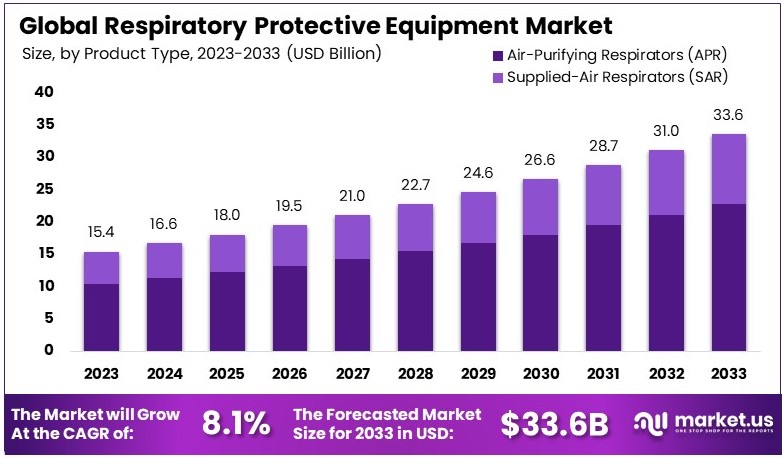
The Global Respiratory Protective Equipment Market size is expected to be worth around USD 33.6 Billion by 2033, from USD 15.4 Billion in 2023, growing at a CAGR of 8.1% during the forecast period from 2024 to 2033.
Respiratory protective equipment (RPE) consists of devices designed to protect workers from inhaling harmful substances in the air. This includes masks, respirators, and breathing apparatuses made from materials that filter out dust, chemicals, and other hazardous particles. RPE is crucial for maintaining air quality and worker health in various industries.
The respiratory protective equipment market involves the manufacturing and distribution of devices that safeguard workers from airborne hazards. It includes products like masks and respirators tailored to different industrial needs.
Respiratory Protective Equipment (RPE) demand is rising due to workplace health risks and air pollution. In 2021, air pollution caused 8.1 million deaths, accounting for 12% of global fatalities. RPE ensures worker safety, especially in sectors like manufacturing and construction, where respiratory illnesses exceeded 24,000 cases in 2022, per OSHA.
Globally, industrial expansion and workplace hazards are driving RPE adoption. Locally, the U.S. recorded 5,190 fatal work injuries in 2022, emphasizing safety needs. With 2.6 million workplace illnesses, regulatory frameworks like OSHA mandates are fostering RPE adoption, ensuring compliance and improved worker protection.
Governments play a key role in personal protective equipment adoption. OSHA sets strict standards to reduce respiratory risks, while investments in workplace safety improve outcomes. Rising 3.2 preventable deaths per 100,000 workers in 2022 highlight the urgency. Stronger regulations and funding will drive sustained market growth and adoption.
Key Takeaways
- The Respiratory Protective Equipment Market was valued at USD 15.4 Billion in 2023 and is expected to reach USD 33.6 Billion by 2033, with a CAGR of 8.1%.
- In 2023, Air-Purifying Respirators (APR) dominate the product type segment with 67.8% due to their effectiveness and versatility.
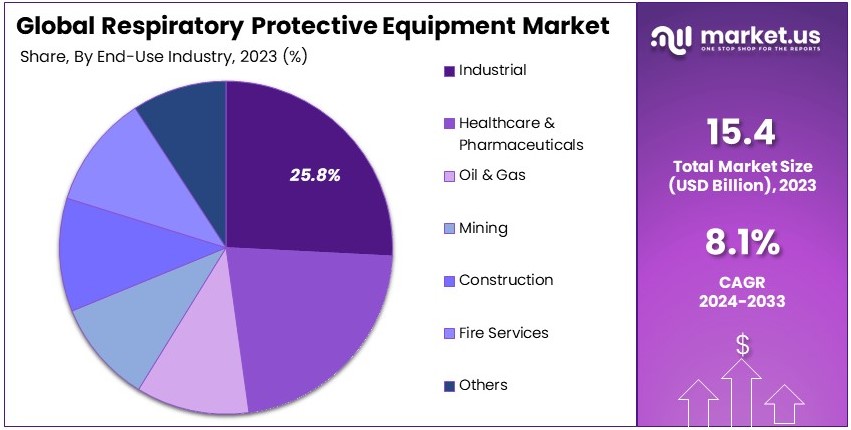
- In 2023, Industrial sector leads the end-use industry segment with 25.8% driven by exposure to workplace airborne hazards.
- In 2023, Reusable Respirators dominate the usage type segment due to their cost-effectiveness and sustainability benefits.
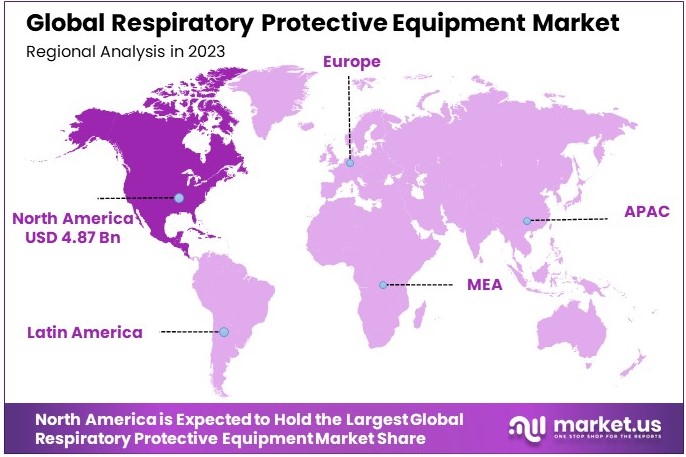
- In 2023, North America dominates with 31.6% market share and USD 4.87 Billion, attributed to stringent safety regulations and technological advancements.
Business Environment Analysis
The respiratory protective equipment market shows signs of saturation in developed economies due to robust adoption fueled by strict safety regulations. However, emerging markets provide untapped opportunities as industrialization expands and awareness of occupational hazards grows. According to the WTO, trade in PPE remained over $200 billion in 2022, indicating sustained global demand.
The market caters to diverse demographics, with healthcare, construction, and manufacturing workers as key users. In particular, 41% of manufacturing employees are aged 40 and above, representing a vulnerable segment. Furthermore, women account for 30% of the manufacturing workforce, emphasizing the need for tailored solutions that address fit and comfort.
To meet these needs, manufacturers focus on product innovation. For instance, Honeywell’s new respirators, launched in 2022, address unique challenges like smaller facial features and long-term usability. Consequently, such innovations not only enhance user satisfaction but also increase adoption rates, especially in critical sectors like healthcare and industrial manufacturing.
Meanwhile, value chain improvements are strengthening supply networks. AirBoss Defense Group, for example, secured an $84 million contract to replenish the U.S. Strategic National Stockpile, ensuring timely availability of essential products.
Investment opportunities are expanding as organizations seek to advance safety standards. The International Safety Equipment Association (ISEA) has advocated for an additional $4 million in funding for respirator certification programs, aiming to improve product quality and effectiveness. Consequently, such initiatives offer significant potential for innovation-driven investors.
Global trade dynamics also play a crucial role in shaping the market. China led PPE exports with 17.2% of global share in 2022, followed by Germany and the U.S. Conversely, nations are increasingly encouraging local production to enhance self-reliance, which is gradually altering the balance of trade in this sector.
Finally, the rise of adjacent markets, such as hygiene products, supports the respiratory protective equipment market. For instance, UNICEF reported that over 2 billion people lack access to basic hygiene facilities, driving demand for protective solutions across healthcare and sanitation.
Adjacent Markets Analysis
The Respiratory Protective Equipment Market operates alongside several complementary markets, all contributing to a safer working environment across industries. These adjacent markets are witnessing significant growth, driven by increasing safety regulations and awareness. Key insights include:
- Rising from USD 2.6 billion in 2023, the Global Disposable Protective Clothing Market is forecasted to reach USD 4.7 billion by 2033. Demand is driven by its growing use in healthcare and emergency response applications.
- The Global Industrial Safety Footwear Market is projected to rise from USD 11.7 billion in 2023 to USD 21.6 billion by 2033. Expanding workplace safety regulations fuel the adoption of protective footwear.
- The Global Fall Protection Market will expand from USD 3.1 billion in 2023 to USD 6.1 billion by 2033. Increased emphasis on fall-related injury prevention supports this market’s growth.
- The Global Hearing Protection Devices Market, valued at USD 2.2 billion in 2023, is set to grow to USD 5.6 billion by 2033. Advances in noise-canceling technology are key drivers for this market.
- Expected to rise from USD 1.4 billion in 2023 to USD 2.2 billion by 2033, the Global Ground Protection Mats Market benefits from increasing construction and infrastructure activities.
- From USD 4.1 billion in 2023, the Global Safety Eyewear Market is anticipated to reach USD 6.3 billion by 2033. Growing awareness of industrial eye safety regulations propels market expansion.
These markets collectively reflect the increasing emphasis on worker safety, stringent regulatory compliance, and advancements in protective technologies. As industries worldwide continue to prioritize safety, the interconnected growth of these markets underscores the global commitment to fostering safer workplaces across diverse sectors.
Product Type Analysis
Air-Purifying Respirators (APR) dominate the Respiratory Protective Equipment Market with a 67.8% share.
APRs are essential for protecting workers from airborne contaminants by filtering out harmful particles, gases, and vapors. These respirators are widely used in industries such as healthcare, manufacturing, and construction, where exposure to hazardous substances is common. The high adoption rate of APRs is driven by their ability to provide reliable protection while allowing for ease of use and comfort.
Manufacturers are continuously improving APR designs to enhance their filtration efficiency, comfort, and durability, making them more appealing to end-users. Additionally, regulatory requirements mandating the use of respiratory protection in certain industries further boost the demand for APRs.
The versatility of APRs, which include disposable respirators, half-mask respirators, full-face respirators, and powered air-purifying respirators (PAPR), allows them to cater to a wide range of applications and environments, solidifying their dominant position in the market.
Supplied-Air Respirators (SAR) are another significant product type in the respiratory protective equipment market. SARs provide clean air from a separate source, making them ideal for environments with high concentrations of contaminants.
Self-contained breathing apparatus (SCBA) are crucial in firefighting and emergency response, where workers need reliable and portable air supplies. Airline respirators, which are connected to a continuous air supply, are used in industrial settings to protect workers from airborne hazards over extended periods.
Escape respirators are designed for emergency situations, allowing workers to safely exit hazardous environments. Although SARs hold a smaller market share compared to APRs, their specialized applications in high-risk industries make them an important component of comprehensive respiratory protection strategies.
End-Use Industry Analysis
The industrial sector leads the Respiratory Protective Equipment Market with a 25.8% share.
In industrial settings, workers are frequently exposed to airborne contaminants such as dust, chemicals, and fumes, making respiratory protection crucial for maintaining health and safety. The continuous growth of the industrial sector, driven by advancements in manufacturing technologies and increased production capacities, propels the demand for high-quality respiratory protective equipment.
Industrial workers require reliable and durable respirators that can withstand harsh working conditions while providing effective protection. Manufacturers are focusing on developing respirators that offer enhanced filtration efficiency, comfort, and ease of use to meet the stringent safety standards of the industrial sector.
The healthcare and pharmaceuticals sector is another major contributor to the respiratory protective equipment market. The COVID-19 pandemic significantly increased the demand for respiratory protection in healthcare settings to prevent the spread of infections.
Healthcare workers rely heavily on disposable respirators and APRs to ensure their safety while treating patients. The ongoing focus on infection control and the need for effective personal protective equipment (PPE) sustain the demand for respiratory protective solutions in this sector.
Other industries, including electronics and automotive, also utilize respiratory protective equipment to address specific workplace hazards, contributing to the overall growth and diversification of the market.
Usage Type Analysis
Reusable respirators hold a significant share in the Respiratory Protective Equipment Market due to their cost-effectiveness and sustainability benefits.
Reusable respirators, including APRs and SARs, are designed for multiple uses, making them a more economical and environmentally friendly option compared to disposable respirators. These respirators are equipped with replaceable filters and cartridges, allowing users to maintain high levels of protection over extended periods.
The growing emphasis on sustainability and the reduction of waste in various industries drive the adoption of reusable respirators. Additionally, reusable respirators offer better fit and comfort, which enhances user compliance and overall effectiveness in providing respiratory protection.
Disposable respirators, on the other hand, are favored for their convenience and ease of use, particularly in settings where frequent replacement is necessary to maintain hygiene and safety standards. These respirators are lightweight and typically require no maintenance, making them ideal for short-term use in healthcare, construction, and other industries with high turnover rates of PPE.
Although disposable respirators hold a smaller market share compared to reusable options, their role in providing immediate and reliable protection in dynamic work environments is crucial. The ongoing advancements in disposable respirator technology, such as improved filtration materials and ergonomic designs, contribute to their sustained demand and support the overall growth of the respiratory protective equipment market.
Key Market Segments
By Product Type
- Air-Purifying Respirators (APR)
- Disposable Respirators
- Half Mask Respirators
- Full Face Respirators
- Powered Air-Purifying Respirators (PAPR)
- Supplied-Air Respirators (SAR)
- Self-Contained Breathing Apparatus (SCBA)
- Airline Respirators
- Escape Respirators
By End-Use Industry
- Industrial
- Healthcare and Pharmaceuticals
- Oil and Gas
- Mining
- Construction
- Fire Services
- Chemical Processing
- Food Processing
- Others
By Usage Type
- Reusable Respirators
- Disposable Respirators
Driving Factors
Air Quality Concerns and Health Awareness Drive Market Growth
The Respiratory Protective Equipment Market is significantly influenced by increasing air pollution levels and rising prevalence of respiratory diseases. As air quality deteriorates globally, especially in urban areas, the demand for effective respiratory protection rises to safeguard individuals from harmful pollutants.
Additionally, the growing awareness about the impact of respiratory diseases, such as asthma and chronic obstructive pulmonary disease (COPD), drives the need for advanced respiratory protective equipment.
Furthermore, the expansion of industrialization and construction activities introduces more workers to environments with airborne hazards, necessitating reliable protective gear. Advancements in respiratory protection technologies, including improved filtration systems and lightweight materials, enhance the effectiveness and comfort of these devices, making them more appealing to users.
Restraining Factors
High Costs and Limited Awareness Restraints Market Growth
The Respiratory Protective Equipment Market faces significant restraints due to the high cost of advanced respiratory equipment and limited awareness in developing regions. High-performance respirators, which offer superior protection, often come with a hefty price tag, making them less accessible to small businesses and individuals with limited budgets.
Additionally, there is a lack of awareness about the importance and benefits of using respiratory protection in many developing regions. Without proper knowledge and education, businesses and workers may neglect necessary safety measures, further limiting market growth.
The shortage of skilled personnel who can correctly install and maintain respiratory protective equipment also poses a challenge, as improper use can compromise safety and effectiveness. Moreover, the complexity of regulatory compliance adds another layer of difficulty for manufacturers and consumers alike, requiring significant resources to meet evolving safety standards.
Growth Opportunities
Smart Technologies and Emerging Markets Provide Opportunities
The Respiratory Protective Equipment Market has substantial growth opportunities driven by the integration of smart technologies and the expansion into emerging markets. The development of smart respiratory devices equipped with IoT capabilities allows for real-time monitoring of air quality and user health metrics, enhancing the functionality and appeal of these products.
Additionally, the expansion into emerging markets presents a significant opportunity for growth, as developing economies continue to industrialize and invest in healthcare infrastructure. These regions offer untapped potential for respiratory protective equipment manufacturers to establish a strong presence and cater to the growing demand for safety solutions.
The development of reusable and eco-friendly respiratory protective equipment also opens new avenues for market expansion, aligning with the global trend towards sustainability and reducing environmental impact. Furthermore, partnerships with healthcare providers and other key stakeholders facilitate the distribution and adoption of advanced respiratory protective solutions, enhancing market penetration and driving overall growth.
Emerging Trends
Sustainability and Smart Integration Are the Latest Trending Factors
Sustainability and smart integration are the latest trending factors in the Respiratory Protective Equipment Market, significantly influencing its growth trajectory. The adoption of sustainable materials, such as biodegradable polymers and recycled fabrics, aligns with the increasing emphasis on environmental responsibility, attracting eco-conscious consumers and businesses.
Manufacturers are innovating to develop eco-friendly respiratory protective solutions that reduce environmental impact while maintaining high safety standards. Additionally, the integration of smart technologies, including IoT-enabled devices, allows for enhanced functionality and monitoring capabilities, providing real-time data on air quality and user health metrics.
Customizable and personalized respiratory protection solutions are also trending, as companies seek to offer tailored protective gear that meets specific operational needs and user preferences. Enhanced comfort and ergonomic designs are becoming increasingly popular, as workers demand respiratory protective equipment that not only offers protection but also improves usability and reduces fatigue.
Regional Analysis
North America Dominates with Major Market Share
North America leads the Respiratory Protective Equipment Market with a 31.6% market share, equivalent to USD 4.87 billion. This dominance is driven by stringent safety regulations, high awareness of respiratory hazards, and strong demand from the healthcare, construction, and manufacturing industries.
The region benefits from regulations such as OSHA and NIOSH standards, which enforce the use of respiratory protective equipment in high-risk environments. The healthcare sector plays a major role, especially during pandemics, driving significant demand for disposable and reusable respiratory protection. North America’s advanced industrial base and technological capabilities also support the production of high-quality equipment tailored to diverse industries.
Regional Mentions:
- Europe: Europe maintains steady growth driven by strict safety laws and expanding industries like chemicals and pharmaceuticals. Focus on sustainability enhances demand for eco-friendly respirators.
- Asia Pacific: Asia Pacific shows rapid growth due to industrialization and urbanization. Countries like China and India are key players, increasing investments in healthcare and construction.
- Middle East & Africa: The region’s market is growing steadily, supported by demand from oil and gas industries and infrastructure development.
- Latin America: Latin America’s market is expanding with rising safety awareness in agriculture and mining sectors. Government initiatives for workplace safety support market growth.
Key Regions and Countries covered in the report
- North America
- US
- Canada
- Europe
- Germany
- France
- The UK
- Spain
- Italy
- Rest of Europe
- Asia Pacific
- China
- Japan
- South Korea
- India
- Australia
- Rest of APAC
- Latin America
- Brazil
- Mexico
- Rest of Latin America
- Middle East & Africa
- South Africa
- Saudi Arabia
- UAE
- Rest of MEA
Competitive Landscape
The Respiratory Protective Equipment Market is led by top players like 3M Company, Honeywell International Inc., MSA Safety Incorporated, and Drägerwerk AG & Co. KGaA, who shape the industry with innovative solutions and comprehensive product ranges.
3M Company dominates with its extensive portfolio of respiratory protection, including disposable masks, powered air-purifying respirators (PAPRs), and advanced filtration technologies. Its global network and focus on innovation make it a trusted brand in healthcare and industrial sectors.
Honeywell International Inc. excels in offering robust respiratory solutions for high-risk environments. The company’s advanced respirators and focus on user comfort cater to industries like construction, manufacturing, and oil and gas, maintaining its market leadership.
MSA Safety Incorporated specializes in industrial respiratory protection, offering products that prioritize durability and reliability. Its range of self-contained breathing apparatus (SCBA) and reusable respirators are essential for mining and emergency response applications.
These companies collectively drive the Respiratory Protective Equipment Market through their focus on safety, quality, and advanced technologies, catering to the dynamic needs of diverse industries worldwide.
Major Companies in the Market
- 3M Company
- Honeywell International Inc.
- MSA Safety Incorporated
- Drägerwerk AG & Co. KGaA
- Kimberly-Clark Corporation
- Bullard
- Moldex-Metric, Inc.
- Alpha Pro Tech, Ltd.
- Sundström Safety AB
- Avon Protection
- Delta Plus Group
- Scott Safety
- Ansell Limited
- Gerson Company
- ILC Dover
Recent Developments
- Honeywell’s Divestiture of PPE Business: In November 2024, Honeywell International announced the sale of its personal protective equipment business to Protective Industrial Products for $1.33 billion in cash. This move allows Honeywell to concentrate on its core areas, such as automation and energy transition.
- ResMed’s Financial Growth and Product Innovation: In October 2024, ResMed reported an 11% revenue increase, reaching $1.22 billion, and a 34% rise in operating profit to $387.3 million. The launch of the AirTouch N30i, its first fully fabric sleep apnea mask, demonstrates ResMed’s focus on enhancing patient comfort and lifestyle integration.
- Avon Protection’s Revenue Increase and Guidance Upgrade: In May 2024, Avon Protection reported a 24% revenue increase, totaling $127.1 million for the first half of the fiscal year. The company raised its fiscal 2024 guidance, forecasting 10% revenue growth and an adjusted operating profit margin of 10%, driven by strong demand for respiratory protection products.









