Home ➤ Information and Communications Technology ➤ Out-of-Band LTE Management Market
Out-of-Band LTE Management Market By Component (Hardware, Software, Services), By Application (Network Monitoring, Remote Management, Security Management, Disaster Recovery, Others), By Deployment Mode (On-Premises, Cloud-Based), By Enterprise Size (Small and Medium Enterprises, Large Enterprises), By End-User (Telecommunications, IT and Data Centers, BFSI, Healthcare, Government, Others), By Regional Analysis, Global Trends and Opportunity, Future Outlook By 2026-2035
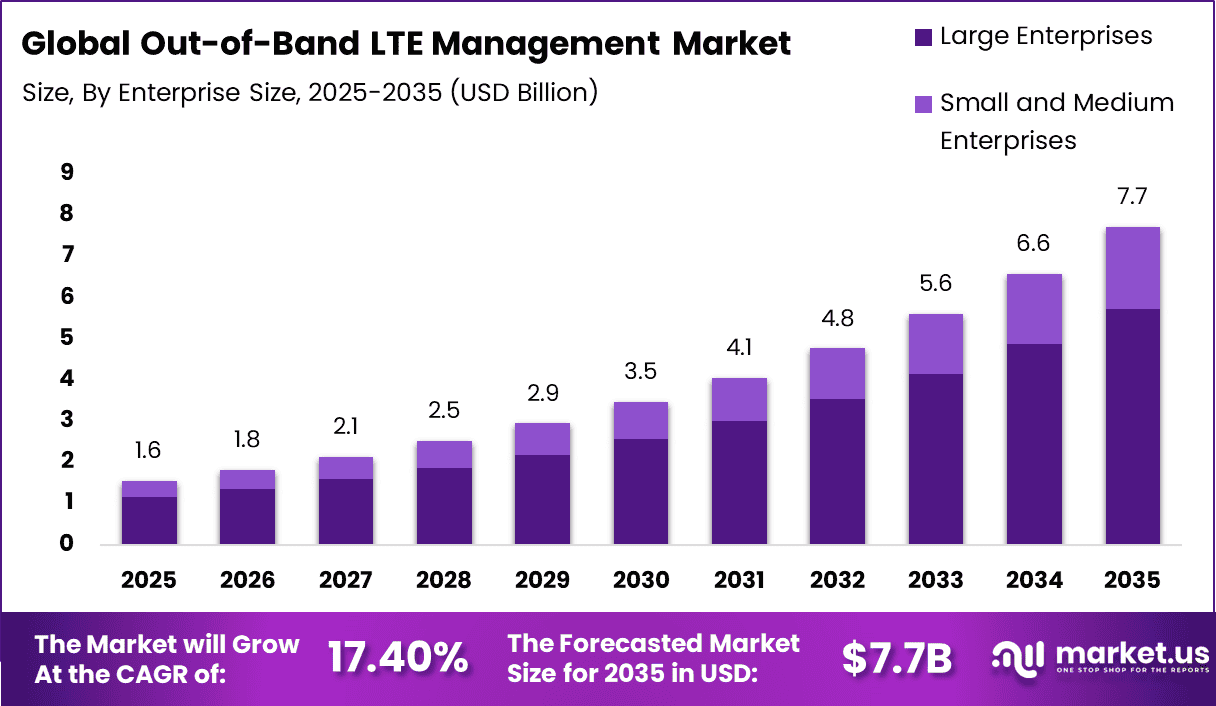
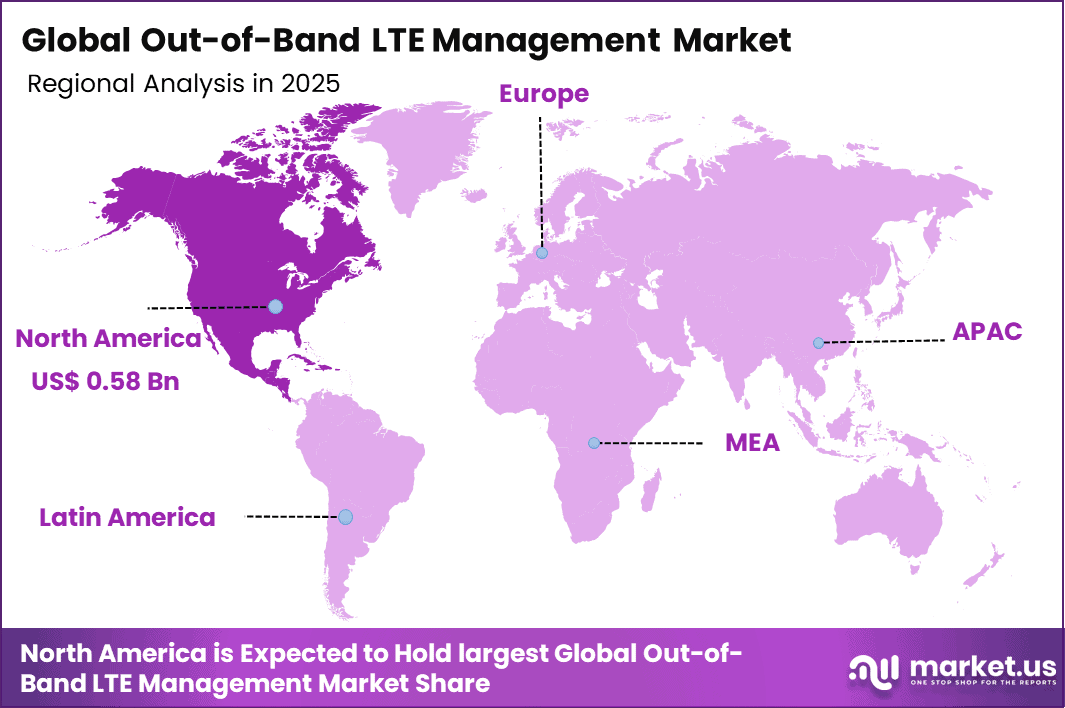
The Global Out-of-Band LTE Management Market generated USD 1.6 billion in 2025 and is predicted to register growth from USD 1.8 billion in 2026 to about USD 7.7 billion by 2035, recording a CAGR of 17.40% throughout the forecast span. In 2025, North America held a dominant market position, capturing more than a 37.5% share, holding USD 0.58 Billion revenue.
Top Market Takeaways
Hardware commands 52.6% market share, delivering dedicated LTE modems, remote console servers, and failover appliances for independent network access during primary outages.
Network monitoring applications capture 38.8%, enabling real-time diagnostics, performance baselining, and anomaly detection through secure secondary LTE channels.
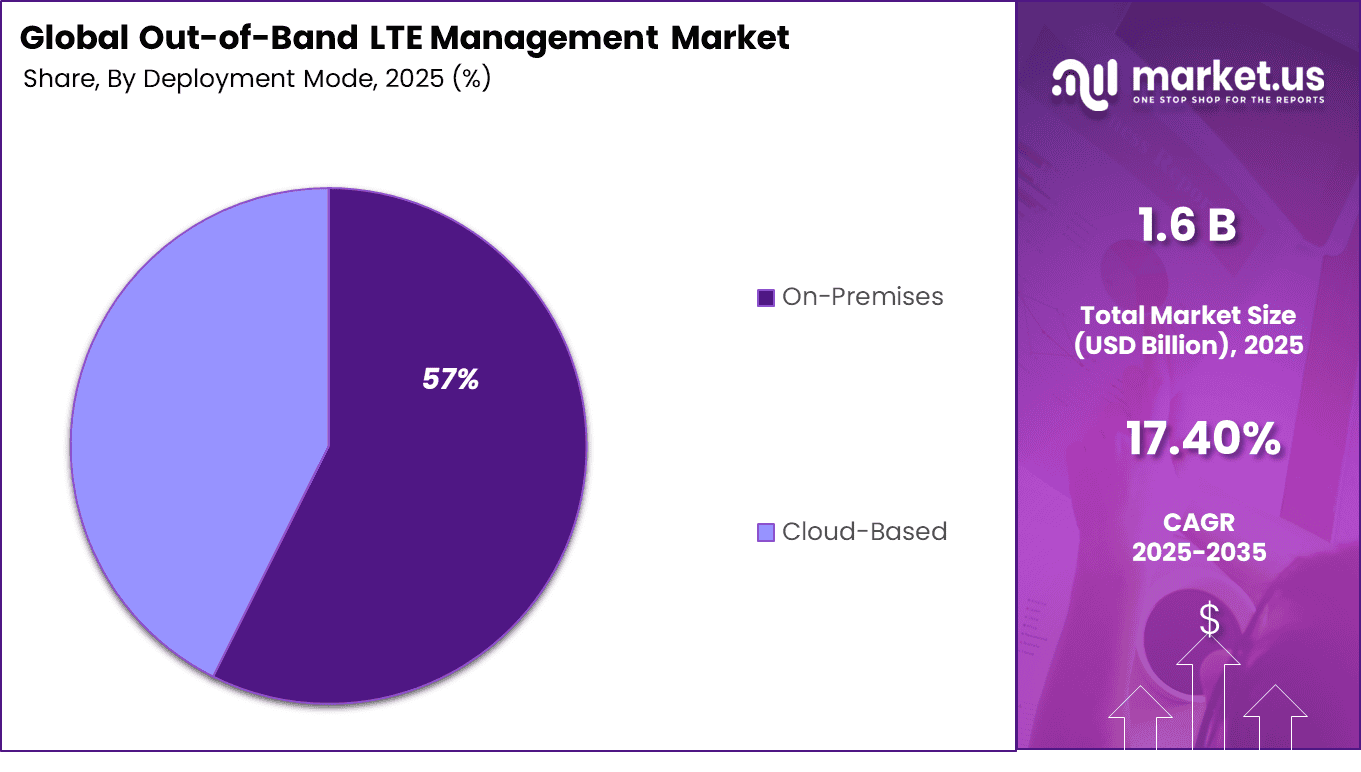
On-premises deployment dominates at 57.4%, ensuring air-gapped management, custom protocol support, and integration with existing NMS/OSS platforms.
Large enterprises hold 74.2%, leveraging comprehensive OOB solutions for mission-critical infrastructure, disaster recovery, and regulatory compliance workflows.
Telecommunications end-users represent 38.6%, utilizing OOB LTE for cell tower backhaul monitoring, base station configuration, and remote site maintenance.
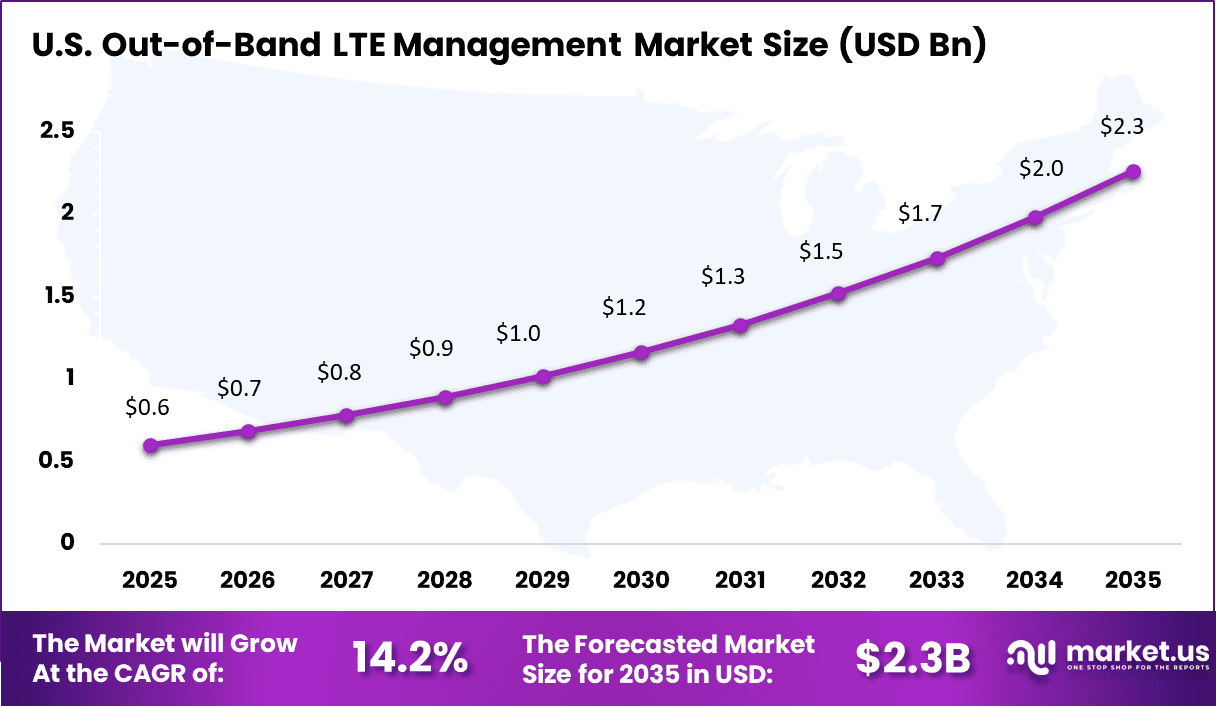
North America drives 37.5% global value, with U.S. market at USD 0.60 billion and 14.2% CAGR, fueled by CBRS private networks and critical infrastructure protection mandates.
Out-of-Band LTE Management market refers to solutions that use LTE connectivity as a separate management path for monitoring, accessing, and controlling network equipment when the main wired or primary network link is unavailable or disrupted.
These systems are widely used in branch offices, remote industrial sites, utility locations, transport infrastructure, and distributed enterprise networks where continuous remote access is important. The market is gaining importance as organizations want stronger network resilience and need a dependable backup management channel for troubleshooting and operational continuity.
One of the main factors driving this market is the growing need for uninterrupted remote network access during outages, misconfigurations, or service failures. When the primary network goes down, LTE based out of band management allows IT and operations teams to reach routers, switches, firewalls, and other equipment without sending staff onsite. Another important driver is the rise in distributed infrastructure, as businesses now manage more remote locations and need faster ways to maintain visibility and control across widely spread assets.
Demand for out-of-band LTE management solutions is increasing among telecom operators, enterprise IT teams, utilities, industrial operators, financial institutions, and transport networks that cannot afford long periods of network inaccessibility.
These buyers want practical systems that support remote recovery, reduce field service visits, and improve response time during technical incidents. Demand is also rising because many organizations now treat network resilience and backup management access as a necessary part of their overall infrastructure strategy.
Drivers Impact Analysis
Key Driver
Impact on CAGR Forecast (~%)
Geographic Relevance
Impact Timeline
Strategic Effect
Increasing need for secure remote network management and monitoring
+3.3%
North America, Europe, Asia Pacific
Short to Mid Term (2025–2031)
Ensures continuous network visibility
Rising adoption of distributed IT infrastructure and edge networks
+3.0%
Global
Mid Term (2026–2032)
Expands demand for out of band connectivity
Growing frequency of network outages and cyber incidents
+2.8%
US, Europe, Asia Pacific
Mid Term (2026–2032)
Drives need for resilient backup access
Expansion of telecom and enterprise network infrastructure
+2.6%
Global
Mid to Long Term (2026–2035)
Supports scalable network management
Increasing reliance on LTE and cellular backup connectivity
+2.4%
Global
Mid to Long Term (2026–2035)
Enhances network reliability
Restraints Impact Analysis
Key Restraint
Impact on CAGR Forecast (~%)
Geographic Relevance
Impact Timeline
Strategic Effect
High cost of deployment and maintenance
-2.2%
Global
Mid Term (2026–2032)
Limits adoption among SMEs
Complexity in integrating with existing network systems
-2.0%
North America, Europe
Mid Term (2026–2032)
Slows deployment
Dependence on cellular network availability
-1.8%
Emerging regions
Short to Mid Term (2025–2030)
Affects reliability
Security concerns related to remote access systems
-1.6%
Global
Mid to Long Term (2026–2035)
Creates risk barriers
Lack of skilled professionals for deployment and management
-1.5%
Global
Mid Term (2026–2032)
Delays implementation
By Component Analysis
Hardware accounted for 52.6% of the Out of Band LTE Management Market. This segment leads because dedicated devices such as gateways, routers, and management modules are essential for enabling remote access and control of network infrastructure through LTE connectivity. These components ensure continuous management even during primary network failures.
The segment is also supported by the need for reliable backup communication channels. Organizations invest in robust hardware to maintain visibility and control over critical systems, which strengthens its adoption across network management environments.
By Application Analysis
Network monitoring represented 38.8% of the market. This segment dominates because out of band LTE management is widely used to track network performance, detect issues, and ensure system availability. It allows administrators to monitor infrastructure remotely and respond quickly to disruptions.
The segment is driven by increasing reliance on uninterrupted connectivity. Organizations use these solutions to maintain operational continuity and reduce downtime, which supports strong demand for monitoring focused applications.
By Deployment Mode Analysis
On premises deployment held 57% of the market. This segment leads because enterprises prefer to manage network control systems within their own infrastructure to ensure data security and operational control. It allows direct oversight of management processes and system configurations.
The segment is also supported by the need for stable and secure environments. On premises deployment ensures consistent performance and reduces reliance on external systems, which is important for managing critical network operations.
By Enterprise Size Analysis
Large enterprises accounted for 74.2% of the market. This segment dominates because large organizations operate extensive and complex networks that require continuous monitoring and remote management capabilities. Out of band LTE solutions help them maintain control across distributed infrastructure.
The segment is driven by higher investment capacity and strong focus on network resilience. Large enterprises adopt these systems to improve reliability, ensure rapid response to failures, and maintain efficient network operations.
By End User Analysis
Telecommunications represented 38.6% of the market. This segment leads because telecom operators manage large scale network infrastructure and require reliable management solutions to maintain service continuity. Out of band LTE systems help ensure access to network devices even during outages.
The segment is supported by increasing demand for high network availability and performance. Telecommunications companies invest in these solutions to enhance network resilience, improve monitoring, and maintain consistent service delivery.
Investor Type Impact Analysis
Investor Type
Growth Sensitivity
Risk Exposure
Geographic Focus
Investment Outlook
Venture Capital Firms
High
Medium
US, Europe
Growth in network resilience solutions
Private Equity Firms
High
Medium
North America, Europe
Expansion in managed network services
Strategic Technology Investors
Very High
Medium
US, China, Japan
Strengthens telecom ecosystem
Corporate Venture Arms
High
Medium
Global
Supports enterprise connectivity solutions
Government and Infrastructure Funds
Medium
Low
Asia Pacific, Europe
Supports critical infrastructure resilience
Technology Enablement Analysis
Technology Enabler
Impact on CAGR Forecast (~%)
Geographic Relevance
Impact Timeline
Implementation Significance
LTE and 5G based out of band connectivity solutions
+3.4%
Global
Short to Mid Term (2025–2031)
Enables reliable backup access
Cloud based network management platforms
+3.1%
Global
Short to Mid Term (2025–2030)
Supports centralized control
Integration with SD WAN and network orchestration tools
+2.8%
Global
Mid Term (2026–2032)
Enhances network flexibility
AI driven network monitoring and anomaly detection
+2.5%
Global
Mid to Long Term (2026–2035)
Improves issue detection
Secure remote access and encryption technologies
+2.3%
Global
Mid to Long Term (2026–2035)
Strengthens security posture
Key Challenges
Stable cellular connectivity remains a major challenge because out of band LTE management systems depend on reliable network coverage to maintain remote access during primary link failure.
Integration with existing IT and network infrastructure can be difficult because many organizations use older systems, different vendors, and separate management platforms.
Data security is a serious concern because remote management traffic may carry sensitive system information that needs strong protection against unauthorized access.
Managing large numbers of remote sites can be complex because companies need proper device configuration, SIM control, monitoring, and support across many locations.
Cost can also limit adoption because businesses often need to invest in LTE hardware, service plans, software management tools, and ongoing maintenance.
Emerging Trends
A noticeable trend in the Out-of-Band LTE Management market is the increasing adoption of always available remote management channels that function independently from primary network infrastructure. Organizations are deploying LTE based backup connectivity to maintain access to critical systems during unexpected outages or disruptions.
These solutions are being integrated with centralized dashboards that allow real time monitoring and control across distributed environments. This trend highlights a shift toward building resilient network frameworks where uninterrupted access and quick recovery are essential.
Growth Factors
The rising importance of network reliability and business continuity is supporting the growth of out-of-band LTE management solutions. Enterprises operate across multiple sites and depend on continuous system availability to manage operations effectively.
In situations where primary networks fail, these solutions provide a secure path for administrators to access and restore systems quickly. At the same time, increasing reliance on remote infrastructure management encourages organizations to adopt technologies that ensure consistent visibility and control, even under adverse network conditions.
Key Market Segments
By Component
Hardware
Software
Services
By Application
Network Monitoring
Remote Management
Security Management
Disaster Recovery
Others
By Deployment Mode
On-Premises
Cloud-Based
By Enterprise Size
Small and Medium Enterprises
Large Enterprises
By End-User
Telecommunications
IT and Data Centers
BFSI
Healthcare
Government
Others
Regional Analysis
North America accounted for 37.5% of the Out of Band LTE Management Market, reflecting strong adoption of secure remote connectivity solutions across enterprise and industrial networks. Organizations across the region increasingly deploy out of band LTE management systems to maintain control over critical infrastructure even during primary network failures.
These solutions enable remote monitoring, troubleshooting, and system recovery, which is important for sectors such as utilities, transportation, and data centers. The growing need for reliable network uptime and secure remote access continues to drive demand across North America.
The U.S. generated about USD 0.60 Billion within the regional market and is projected to expand at a CAGR of 14.2%. Enterprises across the country continue to invest in backup connectivity solutions that ensure continuous network management and reduce downtime risks.
Out of band LTE systems allow IT teams to access devices and infrastructure independently of the main network, improving operational resilience. As organizations focus on maintaining uninterrupted services and strengthening network reliability, demand for out of band LTE management solutions continues to grow steadily across the US market.
Key Regions and Countries
North America
US
Canada
Europe
Germany
France
The UK
Spain
Italy
Russia
Netherlands
Rest of Europe
Asia Pacific
China
Japan
South Korea
India
Australia
Singapore
Thailand
Vietnam
Rest of APAC
Latin America
Brazil
Mexico
Rest of Latin America
Middle East & Africa
South Africa
Saudi Arabia
UAE
Rest of MEA
Competitive Analysis
The competitive landscape of the Out-of-Band LTE Management market includes networking, remote access, and secure connectivity providers that help businesses maintain control of critical systems during primary network failure.
Cisco Systems, Inc., Hewlett Packard Enterprise, Lantronix, Inc., Digi International Inc., Cradlepoint, Juniper Networks, Aruba Networks, ZTE Corporation, and Advantech Co., Ltd. hold strong positions because they offer remote management platforms, LTE connectivity, and resilient network infrastructure for distributed enterprise and industrial environments.
Other players such as Sierra Wireless, Opengear, Uplogix, Inc., Perle Systems, Avocent, SonicWall Inc., Riverbed Technology, Fortinet, Inc., Palo Alto Networks, Inc., SAMSUNG Electronics Co., Ltd., and TP-Link Technologies Co., Ltd. add competition through secure remote access, failover support, device monitoring, and edge connectivity solutions. The market is shaped by network reliability, cybersecurity strength, ease of deployment, and the ability to manage remote sites with minimal downtime.
Top Key Players in the Market
Cisco Systems, Inc.
Hewlett Packard Enterprise (HPE)
Lantronix, Inc.
Sierra Wireless (Semtech Corporation)
Digi International Inc.
Cradlepoint (Ericsson)
Opengear (Digi International)
Uplogix, Inc.
Perle Systems
Avocent (Vertiv Group Corp.)
ZTE Corporation
Juniper Networks, Inc.
Aruba Networks (HPE)
SonicWall Inc.
Riverbed Technology
Fortinet, Inc.
Palo Alto Networks, Inc.
SAMSUNG Electronics Co., Ltd.
Advantech Co., Ltd.
TP-Link Technologies Co., Ltd.
Others
Future Outlook
The future outlook for the Out-of-Band LTE Management Market looks positive as businesses rely more on remote sites, distributed networks, and always available IT operations. Out-of-band management uses a separate management channel from the main network, and LTE based systems help teams keep remote access even when the primary connection fails.
As companies focus more on uptime, faster troubleshooting, and secure remote control of network and server equipment, demand for LTE enabled out-of-band management solutions is expected to grow steadily in the coming years.
Recent Developments
March, 2026 – Cisco IOS XE adds LTE OOB to Catalyst edges for zero-downtime reboots. Integrates ThousandEyes for path visibility and targets DCs with DNA Center automation. Boosts SD-WAN failover with eSIM swaps.
February, 2026 – HPE Aruba boosts CX switches with 5G OOB modules. Adds Instant On remote power control and fits campuses with GreenLake billing. Secures edge with zero-trust tunnels.