


Report Overview
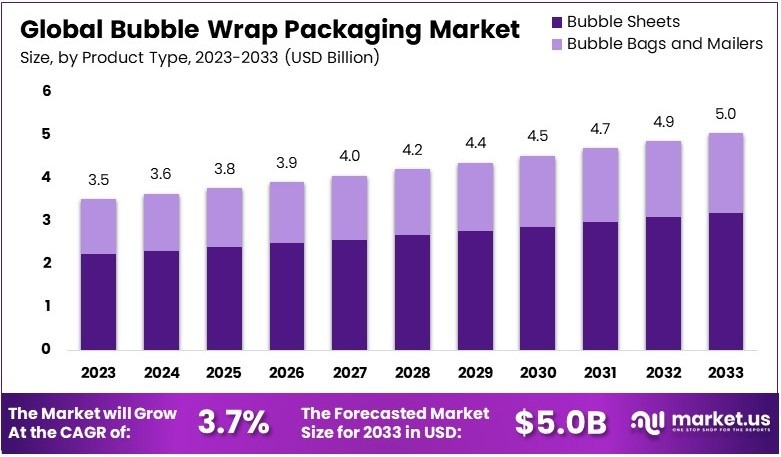
The Global Bubble Wrap Packaging Market size is expected to be worth around USD 5.0 Billion by 2033, from USD 3.5 Billion in 2023, growing at a CAGR of 3.7% during the forecast period from 2024 to 2033.
Bubble wrap packaging consists of flexible plastic sheets with air-filled bubbles that provide cushioning and protection for products during shipping and handling. It is widely used to prevent damage to fragile items, electronics, and other sensitive goods. Bubble wrap is available in various sizes and bubble configurations to suit different packaging needs.
The Bubble Wrap Packaging Market covers the production, distribution, and use of bubble wrap materials for protective packaging. It includes different types of bubble products, materials used, and applications across industries such as e-commerce, retail, automotive, and electronics.
Bubble wrap packaging remains a crucial solution in protective packaging, particularly valued for its ability to safeguard products during shipping. The demand for bubble wrap is significantly influenced by the booming global retail e-commerce market, which reached approximately $5.9 trillion in 2023. This market is projected to grow to over $8 trillion by 2027, further driving the need for reliable packaging solutions.
Furthermore, the bubble wrap packaging market is also shaped by regulatory impacts. For instance, the European Union’s Packaging and Packaging Waste Regulation (PPWR) aims for a 5% reduction in packaging waste by 2030, escalating to 10% by 2035, and 15% by 2040, with a focus on minimizing plastic waste. Similarly, in the United States, Extended Producer Responsibility (EPR) laws, such as those in Minnesota, are mandating producers to assume a larger role in managing packaging waste by 2031.
Moreover, return shipments, particularly during peak holiday seasons, accounted for $32 billion, with 20%-30% of returns due to damage. This statistic highlights the critical role of bubble wrap in preventing product damage, especially for fragile items like glass.
The need for protective packaging is underscored by best practices recommending at least 3 inches of protective material around such items, ensuring their safety and reducing the risk of returns due to damage. This market dynamic emphasizes both the ongoing demand for bubble wrap and the evolving requirements for sustainable packaging solutions.
Bubble Wrap Packaging Market Core Findings
- Bubble Wrap Packaging Market was valued at USD 3.5 Billion in 2023, anticipated to grow to USD 5.0 Billion by 2033, with a CAGR of 3.7%.
- In 2023, Bubble Sheets dominate the product type segment with 63.4%, essential for their protective features in shipping and handling.
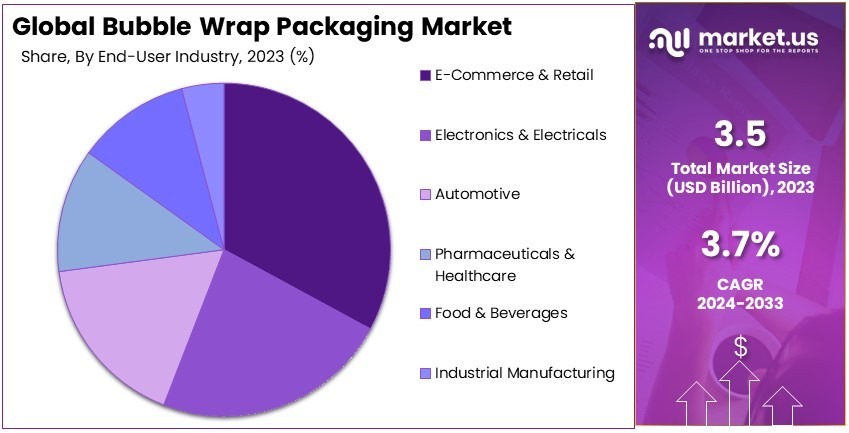
- In 2023, the E-Commerce and Retail sector leads the end-user industries, driven by the surge in online shopping and the need for protective packaging.
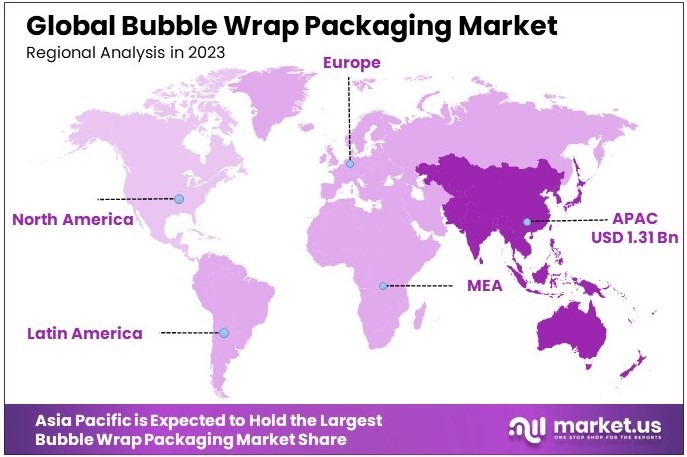
- In 2023, Asia Pacific leads the market with a 37.5% share, due to the booming e-commerce sector and increasing manufacturing activities.
Bubble Wrap Packaging Business Environment Analysis
The bubble wrap packaging market is approaching a mature phase, yet the push for sustainable packaging solutions continues to rejuvenate its relevance. According to Trivium Packaging, a significant 82% of consumers are willing to pay more for eco-friendly packaging, with interest spiking to 90% among younger consumers aged 18–24. This shift indicates a growing market niche focused on sustainability.
Targeting these eco-conscious consumers, bubble wrap manufacturers are innovating with product differentiation strategies that emphasize environmental responsibility. For example, in September 2024, Sealed Air Corporation introduced its BUBBLE WRAP® Ready-To-Roll Embossed Paper and other sustainable products, which include more than 90% and 50% recycled plastic, respectively, certified by How2Recycle (H2R).
The value chain in bubble wrap packaging is evolving to incorporate more sustainable practices. These include the use of recycled materials and improvements in manufacturing processes to reduce environmental footprints. This shift not only aligns with consumer expectations but also enhances the overall efficiency of packaging solutions.
Investment opportunities in the bubble wrap packaging market are robust, particularly in areas involving innovative, sustainable materials and technologies. Companies are strategically investing in these areas to capture the growing demographic of environmentally conscious consumers and to comply with global regulatory demands for sustainability.
Export and import dynamics are also pivotal, with significant international trade contributing to market complexity. According to export data from Zauba, bubble wrap exports from India targeted 27 countries, with the United Kingdom accounting for 42.90% of these exports. This international perspective underscores the global reach and the strategic importance of export markets for bubble wrap manufacturers.
Product Type Analysis
Bubble Sheets dominate the Bubble Wrap Packaging Market with a market share of 63.4%
In the Product Type segment of the Bubble Wrap Packaging Market, Bubble Sheets stand out with a substantial market share of 63.4%. This dominance is primarily due to their versatility and effectiveness in providing protection for a wide array of items during shipping.
Bubble Sheets are favored for their ability to cushion products, preventing damage caused by shocks and vibrations, which is a critical requirement in the logistics and shipping industries.
Bubble Bags and Mailers also play a significant role in the market, especially in the e-commerce sector. These products offer convenient, ready-to-use packaging solutions that are ideal for small, fragile items. Their role in promoting efficient and secure packaging practices continues to support their growth within the bubble wrap market.
Material Type Analysis
Low-Density Polyethylene (LDPE) leads the material types in Bubble Wrap Packaging due to its flexibility and shock absorption capabilities.
Among the materials used for Bubble Wrap Packaging, Low-Density Polyethylene (LDPE) takes a leading position. LDPE is preferred for its excellent flexibility and shock absorption properties, which are essential for protecting goods during transport. Its dominance in the market can be attributed to these properties, coupled with its relatively low cost and ease of production.
Polyethylene (PE) remains essential for the production of various bubble wrap types due to its durability and resistance to moisture. High-Density Polyethylene (HDPE) offers stronger, more rigid packaging options, suitable for heavier items. Biodegradable Plastics are gaining traction as a sustainable alternative, addressing environmental concerns linked to plastic waste, although their market penetration is still growing.
End-User Industry Analysis
E-Commerce and Retail is the leading industry using Bubble Wrap Packaging.
The End-User Industry segment is prominently led by E-Commerce and Retail, reflecting the booming online shopping trend and the consequent demand for effective packaging solutions that ensure product safety during transit.
The increase in consumer preference for online shopping has necessitated robust packaging solutions that can withstand the rigors of long-distance transportation without compromising product integrity.
Electronics and Electricals also heavily depend on bubble wrap packaging to protect sensitive components from mechanical damage and electrostatic discharge. Automotive industries use bubble wrap to secure parts during shipping, preventing scratches and dents.
Pharmaceuticals and Healthcare industries rely on bubble wrap for the secure transport of medical devices and drugs, ensuring that these critical items reach consumers and healthcare providers safely.
Food and Beverages, as well as Industrial Manufacturing sectors, utilize bubble wrap to prevent contamination and damage to goods, from perishable products to industrial equipment, further underscoring the versatility and importance of bubble wrap packaging across diverse industries.
Key Market Segments
By Product Type
- Bubble Sheets
- Bubble Bags and Mailers
By Material Type
- Polyethylene (PE)
- Low-Density Polyethylene (LDPE)
- High-Density Polyethylene (HDPE)
- Biodegradable Plastic
By End-User Industry
- E-Commerce and Retail
- Electronics and Electricals
- Automotive
- Pharmaceuticals and Healthcare
- Food and Beverages
- Industrial Manufacturing
Growth Drivers
E-commerce Growth Drives Market Growth
The surge in e-commerce has significantly propelled the bubble wrap packaging market. As online shopping continues to expand globally, the need for reliable and protective packaging solutions has intensified. Bubble wrap offers an effective means to safeguard products during transit, reducing damage and enhancing customer satisfaction.
Additionally, the increasing demand for sustainable packaging aligns with consumer preferences for eco-friendly materials, driving manufacturers to innovate and adopt greener bubble wrap alternatives. Technological advancements in packaging, such as automated bubble wrapping machines, have further streamlined production processes, making bubble wrap more accessible and cost-effective for businesses.
Moreover, the rise in global trade and logistics has expanded the market reach, as companies seek robust packaging solutions to handle international shipments efficiently. These driving factors collectively contribute to the robust growth of the bubble wrap packaging market, positioning it as a vital component in the modern supply chain ecosystem.
Growth Barriers
Environmental Concerns Restraints Market Growth
Environmental concerns and stringent regulatory restrictions pose significant challenges to the bubble wrap packaging market. Increasing awareness about plastic pollution has led to tighter regulations on single-use plastics, including bubble wrap, limiting its usage in various regions. The availability of alternative packaging materials, such as biodegradable and compostable options, offers consumers and businesses eco-friendly choices, reducing reliance on traditional bubble wrap.
Additionally, the high cost of raw materials, particularly plastics derived from petroleum, has escalated production expenses, making bubble wrap less competitive compared to sustainable alternatives. Fluctuating oil prices further exacerbate these cost challenges, as raw material costs become unpredictable and can hinder market stability.
These restraining factors collectively hinder the growth potential of the bubble wrap packaging market, compelling manufacturers to explore innovative and environmentally friendly solutions to remain viable in a rapidly evolving market landscape.
Upcoming Developments and Trends
Eco-friendly Packaging Trends Are Latest Trending Factor
Eco-friendly packaging trends are the latest trending factor driving the bubble wrap packaging market. Consumers and businesses are increasingly prioritizing sustainability, prompting a shift towards environmentally responsible packaging solutions. This trend has spurred the development of biodegradable and recyclable bubble wrap alternatives, reducing the environmental impact associated with traditional plastic-based bubble wrap.
Automation in packaging processes further complements this trend by enhancing efficiency and reducing waste, making eco-friendly packaging more viable and cost-effective. Customization and personalization in packaging design cater to the unique branding needs of businesses, allowing them to differentiate their products while adhering to sustainable practices.
Additionally, advancements in digital printing technologies enable high-quality, customizable bubble wrap designs that align with eco-friendly initiatives. These trending factors collectively foster a market environment where sustainability and innovation drive the adoption and growth of bubble wrap packaging solutions, ensuring the market remains relevant and competitive in an environmentally conscious world.
Expansion Potential
The bubble wrap packaging market is poised for growth, driven by several key factors that cater to a broad spectrum of industries including e-commerce, logistics, and manufacturing. Here’s a detailed overview of the growth opportunities within this market:
- E-commerce Expansion: The continued expansion of e-commerce globally is a major driver for the bubble wrap packaging market. The need for protective packaging solutions to safeguard goods during transit has never been greater.
- Product Innovation: There is significant opportunity in the innovation of bubble wrap products. Manufacturers are developing bubble wrap with enhanced protective qualities, such as multiple layers or integrated air retention technology, to ensure that bubbles do not burst under pressure.
- Protective Packaging in Sensitive Industries: Industries such as electronics, pharmaceuticals, and cosmetics, where product integrity during shipping is crucial, offer substantial growth opportunities for bubble wrap packaging. The ability of bubble wrap to protect against shocks, vibrations, and static, especially in the context of increasing global trade, positions it as an essential material in these sectors.
- Global Logistics and Supply Chain Modernization: As global logistics networks become more complex and integrated, the need for reliable and efficient packaging solutions like bubble wrap increases. Modernization of supply chains, incorporating automation and sophisticated handling techniques, can be enhanced by the use of advanced protective packaging solutions to minimize damage during transport.
Companies active in this market can harness these opportunities to expand their reach and enhance their offerings in the packaging industry.
Regional Analysis of Bubble Wrap Packaging Market
Asia Pacific Dominates with 37.5% Market Share
Asia Pacific leads the Bubble Wrap Packaging Market with a 37.5% share, equating to USD 1.31 billion. The region’s dominance is driven by its extensive manufacturing and export activities, which demand robust protective packaging solutions.
The market’s dynamics are influenced by the rapid industrialization in countries like China and India, along with a significant rise in online shopping, which necessitates effective packaging solutions for safe product delivery. Moreover, Asia Pacific’s strategic focus on sustainable packaging options contributes to its strong market position.
Looking forward, Asia Pacific’s hold on the Bubble Wrap Packaging Market is expected to strengthen. Continued growth in e-commerce and an increasing emphasis on protective packaging are likely to drive further market expansion. The region’s ongoing innovation in recyclable and eco-friendly materials will also support market growth.
Regional Mentions:
- North America: North America is a major market for Bubble Wrap Packaging, driven by a strong e-commerce sector and high standards for product safety during transit. The region’s focus on sustainability and high consumer spending power are key to its market stability.
- Europe: Europe maintains a significant share in the Bubble Wrap Packaging Market, underpinned by advanced logistics and a high volume of international trade. The region’s stringent regulations on packaging waste also push for innovations in packaging solutions.
- Middle East & Africa: The Middle East and Africa are emerging in the Bubble Wrap Packaging Market, with growth driven by expanding retail sectors and increased urbanization. Investments in logistics and transportation infrastructure are gradually enhancing the market’s scope in these regions.
- Latin America: Latin America shows potential in the Bubble Wrap Packaging Market due to its growing manufacturing sector and increasing access to international markets. The region’s focus on improving product safety and packaging standards supports its market growth.
Key Regions and Countries Covered in the Report
- North America
- US
- Canada
- Europe
- Germany
- France
- The UK
- Spain
- Italy
- Rest of Europe
- Asia Pacific
- China
- Japan
- South Korea
- India
- Australia
- Rest of APAC
- Latin America
- Brazil
- Mexico
- Rest of Latin America
- Middle East & Africa
- South Africa
- Saudi Arabia
- UAE
- Rest of MEA
Competitive Landscape of Bubble Wrap Packaging Market
The Bubble Wrap Packaging Market is shaped by key contributions from four leading companies: Sealed Air Corporation, Pregis Corporation, Storopack Hans Reichenecker GmbH, and Smurfit Kappa Group. These firms are recognized for their innovation, sustainability efforts, and comprehensive range of products.
Sealed Air Corporation is a prominent leader, well-known for inventing Bubble Wrap. The company continues to dominate the market with its focus on protective packaging solutions that reduce shipping costs and enhance product safety. Sealed Air’s commitment to sustainability is evident in its development of recycled and recyclable bubble wrap products, making it a preferred choice for environmentally conscious businesses.
Pregis Corporation excels in providing a wide array of protective packaging products, including air cushioning materials like bubble wrap. Pregis is dedicated to innovation, constantly introducing products that offer superior protection and efficiency, thereby helping businesses reduce waste and improve their packaging processes.
Storopack Hans Reichenecker GmbH specializes in protective packaging solutions, with a strong emphasis on air cushions and bubble wrap. Storopack’s products are designed for flexibility and protection, ensuring that items are securely wrapped and less prone to damage during transit. The company’s focus on tailor-made solutions allows it to serve a diverse clientele effectively.
Smurfit Kappa Group integrates sustainability with protective packaging by offering bubble wrap solutions that are both effective and environmentally friendly. With a strong focus on innovation and resource management, Smurfit Kappa helps companies optimize their packaging strategies while minimizing environmental impact.
These top companies drive the Bubble Wrap Packaging Market through their ongoing commitment to innovation, customer-centric solutions, and sustainability. Their efforts are pivotal in meeting the evolving needs of various industries, including e-commerce and retail, where effective and efficient packaging solutions are critically important.
Major Companies in the Market
- Sealed Air Corporation
- Pregis Corporation
- Storopack Hans Reichenecker GmbH
- Smurfit Kappa Group
- Veritiv Corporation
- Tarheel Paper & Supply Company
- Jiffy Packaging Co. Ltd.
- Inflatable Packaging, Inc.
- Polyair Inter Pack Inc.
- Automated Packaging Systems, Inc.
- Free-Flow Packaging International, Inc. (FP International)
- Green Packaging Group
Recent News in Bubble Wrap Packaging Market
- Sealed Air Corporation: In July 2022, Sealed Air Corporation launched the Bubble Wrap brand paper bubble mailer, a recyclable, fiber-based padded mailer. This innovation aligns with their commitment to sustainable packaging solutions.
- Papair: In July 2023, Papair started producing PapairWrap, a 100% paper bubble wrap, in Rethem an der Aller, Germany. This product meets the increasing demand for eco-friendly packaging alternatives.
- Amcor PLC: On November 2024, Amcor PLC agreed to acquire Berry Global Group Inc. for about $8.4 billion in stock, aiming to boost its U.S. presence and enhance sustainable packaging solutions through combined R&D efforts.
- Mondi: In October 2024, Mondi agreed to acquire the packaging assets of Schumacher Packaging in Germany, Benelux, and the UK for €634 million, expanding its footprint in Western Europe.









