


Report Overview
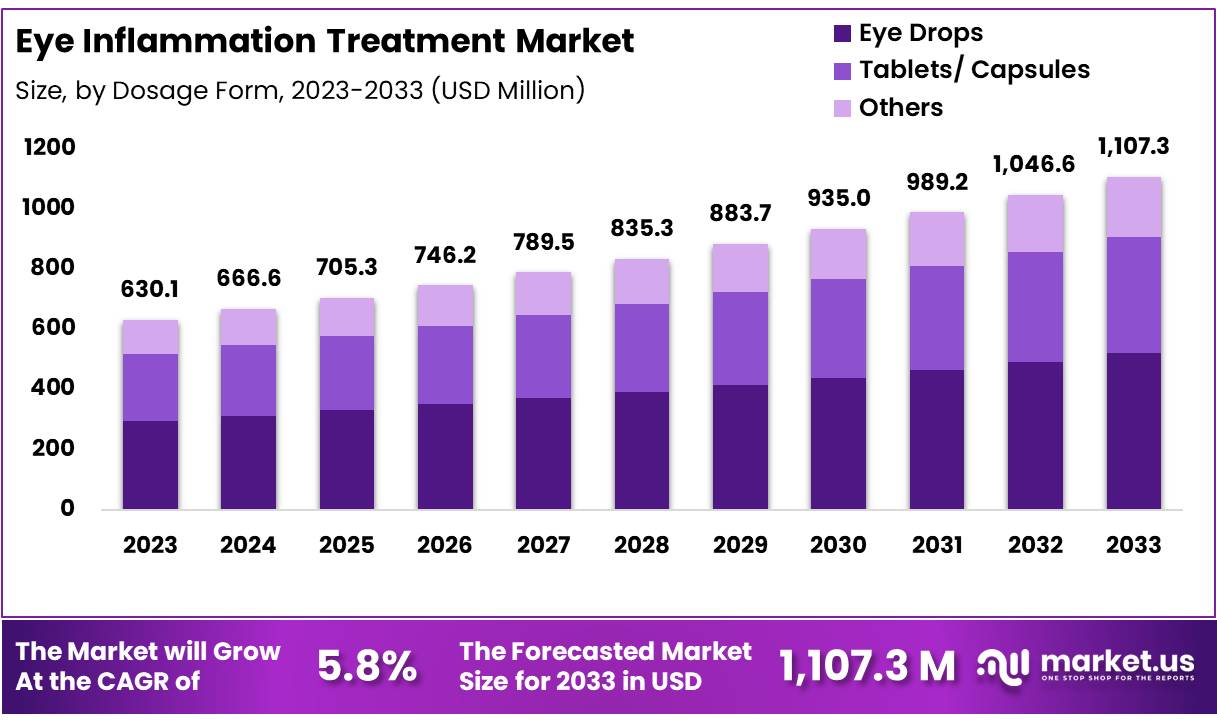
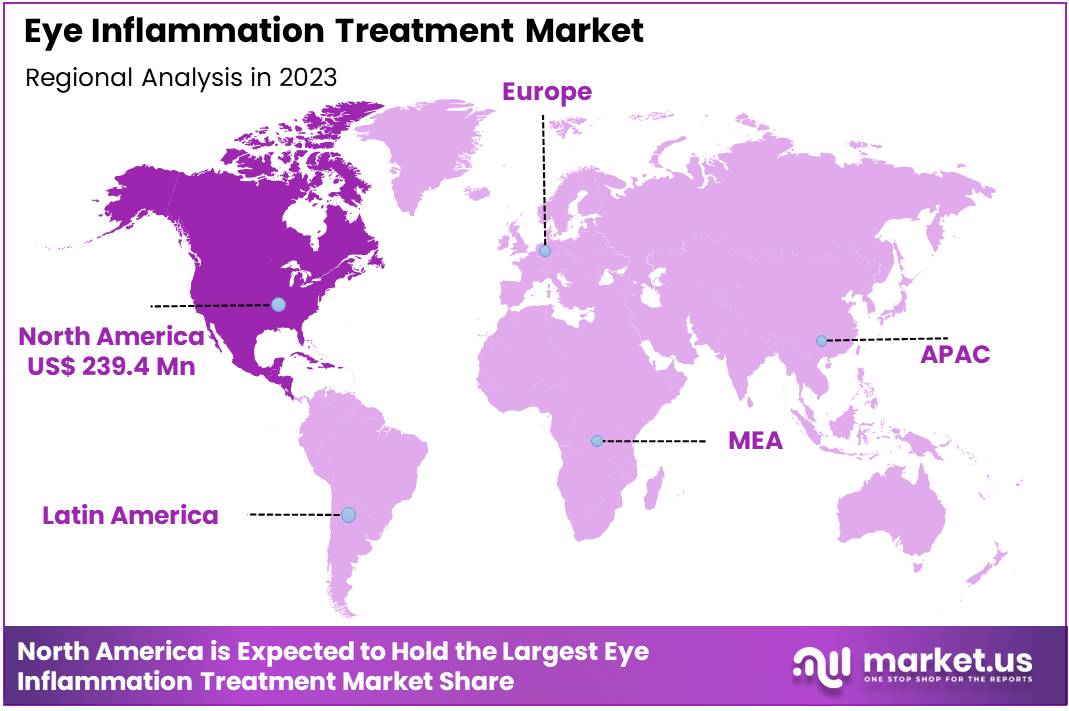
Global Eye Inflammation Treatment Market size is expected to be worth around US$ 1,107.3 Million by 2033 from US$ 630.1 Million in 2023, growing at a CAGR of 5.8% during the forecast period from 2024 to 2033. In 2023, North America led the market, achieving over 38% share with a revenue of US$ 239.4 Million.
The eye inflammation treatment market is driven by several key dynamics, including the increasing prevalence of ocular diseases such as uveitis, dry eye syndrome, and post-operative inflammation, which necessitate effective treatment options. Advancements in biologics, corticosteroid alternatives, and targeted therapies are shaping the market, offering more personalized and effective treatments.
The rise in surgical procedures, such as cataract surgery, is also contributing to the demand for post-operative inflammation therapies. Additionally, the growing ageing population, who are more prone to eye conditions, further fuels market growth.
On the other hand, high treatment costs, long treatment durations, and the potential for side effects from existing therapies remain significant challenges. The regulatory approval of novel drugs, like biologics and immunomodulatory agents, is expected to boost market expansion.
- According to the NEI, around 250,000 people in the U.S. are affected by uveitis, a common cause of eye inflammation.
- The CDC reports that approximately 16 million people in the U.S. have been diagnosed with dry eye disease, a condition that often causes inflammation of the eye’s surface.
Key Takeaways
- The global eye inflammation treatment market was valued at USD 630.1 million in 2023 and is anticipated to register substantial growth of USD 1,107.3 million by 2033, with a 5.8% CAGR.
- In 2023, the corticosteroids segment took the lead in the global market, securing 33% of the total revenue share.
- Among dosage form segments, eye drops emerged as the dominant segment, capturing 47% of the total revenue.
- North America maintained its leading position in the global market with a share of over 38% of the total revenue.
By Drug Class Analysis
Based on drug class the market is fragmented into targeted corticosteroids, antibiotics, antifungals, cycloplegic agents, and others. Amongst these, corticosteroids dominated the global eye inflammation treatment market capturing a significant market share of 33% in 2023.
Corticosteroids have dominated the global eye inflammation treatment market due to their effectiveness in reducing inflammation and controlling symptoms across various ocular conditions, including uveitis, dry eye disease, and post-surgical inflammation.
These medications are widely prescribed due to their ability to provide rapid relief, making them a first-line treatment choice for both acute and chronic eye inflammation. The global market for corticosteroids in eye care has grown significantly, driven by their availability in various formulations such as topical eye drops, oral medications, and injections.
By Dosage Form Analysis
The market is fragmented by dosage form into eye drops, tablets/capsules and others. Eye drops dominated the global eye inflammation treatment market capturing a significant market share of 47% in 2023. Eye drops have dominated the global eye inflammation treatment market due to their convenience, ease of use, and targeted delivery of medication directly to the site of inflammation.
As a non-invasive and effective treatment option, eye drops are commonly prescribed for managing conditions like dry eye disease, uveitis, allergic conjunctivitis, and post-operative inflammation. They are favoured for their fast action in relieving symptoms such as redness, swelling, and irritation.
Additionally, the wide availability of various formulations, including corticosteroid-based, non-steroidal anti-inflammatory drugs (NSAIDs), and immunomodulatory agents, has contributed to their market dominance. The increasing prevalence of eye conditions, coupled with growing patient awareness and the convenience of home use, further boosts the demand for eye drop treatments.
While newer alternatives such as biologics and oral therapies are gaining attention, eye drops remain the most widely used and cost-effective option for managing eye inflammation, especially in regions with limited healthcare access.
By Distribution Channel Analysis
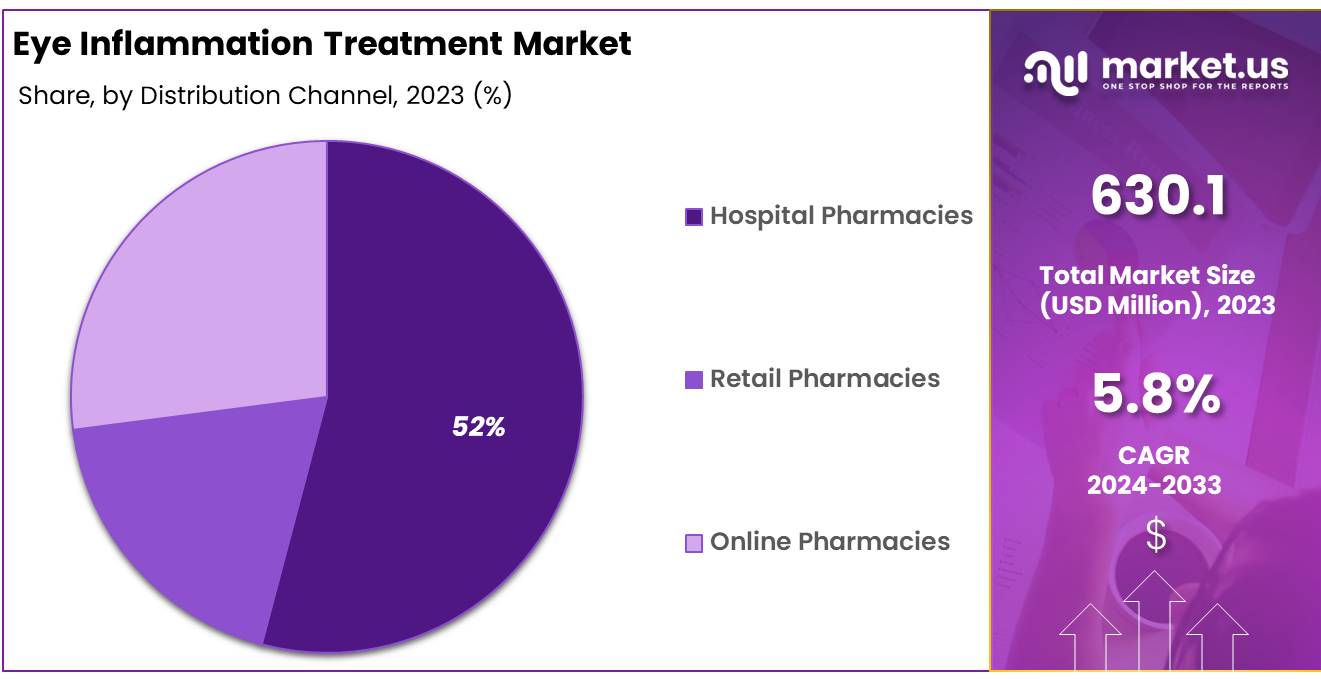
The market is fragmented by distribution channels into hospital pharmacies, retail pharmacies, and online pharmacies. Hospitals dominated the global eye inflammation treatment market capturing a significant market share of 52% in 2023.
Hospitals have dominated the global eye inflammation treatment market due to their ability to provide specialized care and access to advanced therapies for complex or severe cases of eye inflammation. In hospital settings, patients can receive a comprehensive range of treatments, including prescription medications, surgical interventions, and personalized management plans tailored to specific conditions like uveitis, post-surgical inflammation, and allergic conjunctivitis.
Hospitals are also equipped with specialized ophthalmology departments and advanced diagnostic tools, enabling accurate diagnosis and effective monitoring of disease progression.
Key Segments Analysis
By Drug Class
- Corticosteroids
- Antibiotics
- Antifungals
- Cycloplegic Agents
- Others
By Dosage Form
- Eye Drops
- Tablets/ Capsules
- Others
By Distribution Channel
- Hospital Pharmacies
- Retail Pharmacies
- Online Pharmacies
Market Dynamics
Increasing Incidence Chronic Myeloid Leukemia Leukemia
The increasing prevalence of eye diseases is a major factor driving the growth of the eye inflammation treatment market. With the global aging population, there is a rise in age-related eye conditions, such as uveitis, dry eye syndrome, and macular degeneration, which often lead to inflammation.
Additionally, lifestyle factors like increased screen time and environmental pollution have contributed to a surge in conditions such as allergic conjunctivitis and digital eye strain, both of which can cause inflammation. The growing incidence of ocular surgeries, including cataract and refractive surgeries, also leads to post-operative inflammation, further boosting demand for effective treatments.
As awareness of eye health improves and more individuals seek treatment, the market for eye inflammation therapies continues to expand. This trend is further supported by advances in diagnostic tools and treatments, making it easier for healthcare providers to identify and manage eye inflammation, thus driving overall market growth
- For example, in August 17, 2024, Medscape eMedicine published data indicating that the annual incidence of bacterial conjunctivitis in the U.S. is 135 cases per 10,000 people.
Market Restraints
High Cost of Treatment
Side effects associated with eye inflammation drugs are restraining the growth of the eye inflammation treatment market, despite the increasing prevalence of eye diseases. While corticosteroids and other anti-inflammatory drugs are widely used for their efficacy, they can cause adverse effects such as elevated intraocular pressure, cataract formation, and delayed wound healing, particularly with long-term use. These side effects raise concerns among healthcare providers and patients, limiting the widespread adoption of certain therapies.
For instance, According to data published in July 2022 by the Mayo Foundation for Medical Education and Research, an academic medical center, eye anti-inflammatory drugs may sometimes cause side effects such as blurred vision or other vision changes, fever or chills, pain, bleeding in the eye, and more, with these symptoms potentially worsening during treatment.
The safety concerns associated with current treatments, coupled with the high costs of new therapies, present significant challenges to the overall growth of the eye inflammation treatment market.
Market Opportunities
Increasing Product Development
The increasing demand for novel, safer therapies, such as biologics and corticosteroid-sparing treatments. Traditional treatments like corticosteroids, while effective, come with side effects that limit their long-term use. As a result, there is a growing shift toward biologic drugs and immunomodulators that offer targeted action with fewer side effects.
For instance, the approval of innovative therapies like LFA-1 antagonists (e.g., Lifitegrast) for dry eye disease and interleukin inhibitors for uveitis is expanding treatment options. These therapies, which focus on modulating the immune system to reduce inflammation, are gaining traction due to their precision and safety profile.
Furthermore, the increasing focus on personalized medicine, where treatments are tailored to an individual’s genetic and disease profile, opens new avenues for addressing eye inflammation with greater efficacy. This trend is expected to drive growth in the market, especially in developed regions with advanced healthcare systems.
- For instance, in October 2024,Lupin Ltd introduced the first generic version of Pred Forte Ophthalmic Suspension USP, 1%, in the U.S., a medication used to treat steroid-responsive eye inflammation. This launch represents a major achievement for Lupin, as it gains 180-day competitive generic therapy (CGT) exclusivity for the product.
Impact of macroeconomic factors / Geopolitical factors
Macroeconomic and geopolitical factors significantly impact the Eye Inflammation Treatment Market by influencing both the accessibility and affordability of therapies. Economic downturns or recessions can lead to reduced healthcare budgets, limiting the availability of advanced treatments, particularly in lower-income regions. High treatment costs, including biologics and new-generation anti-inflammatory drugs, can further restrict access, especially for patients without comprehensive insurance coverage.
In contrast, periods of economic growth often drive investment in healthcare infrastructure, making advanced treatments more accessible. Geopolitical factors, such as trade tensions, regulatory changes, or political instability, can disrupt the global supply chain, delaying the availability of critical medications or raw materials.
Furthermore, differing healthcare policies across regions may lead to delays in drug approvals or restricted access to the latest therapies. As a result, these macroeconomic and geopolitical dynamics can affect the pace of market growth, the development of new treatments, and overall patient access to eye inflammation therapies.
Latest Trends
The eye inflammation treatment market is witnessing several key trends driven by advancements in both drug development and patient care. One of the most notable trends is the growing use of biologics and monoclonal antibodies, which target specific inflammatory pathways, offering more effective and precise treatments with fewer side effects. Drugs like Restasis and Xiidra for dry eye disease, as well as emerging therapies like corticosteroid implants, are gaining traction.
Additionally, the market is seeing an increase in combination therapies, where treatments targeting different mechanisms of inflammation are used together to improve efficacy. There is also a rising focus on personalized medicine, where treatments are tailored based on individual patient profiles and genetic markers.
Furthermore, the integration of digital health technologies, such as mobile apps and wearable devices, is helping in monitoring and managing eye inflammation in real-time, enhancing treatment adherence and patient outcomes. These trends are reshaping the landscape of eye inflammation treatment.
Regional Analysis
North America held a large share of 38% of the global eye inflammation treatment market. The region benefits from advanced healthcare infrastructure, high treatment accessibility, and significant investment in research and development. The United States, in particular, is a major player, with a well-established healthcare system that supports the widespread availability of the latest treatments, such as biologics, corticosteroid implants, and immunotherapies.
The region also benefits from a large number of pharmaceutical companies and research institutions focusing on the development of innovative therapies for eye diseases, including dry eye and uveitis. Additionally, the strong regulatory framework, such as the FDA’s expedited approval process, facilitates faster market entry for new treatments.
The high prevalence of eye inflammation conditions in the aging population, along with an increasing awareness of eye health, further contributes to the market’s growth. The presence of robust insurance systems also ensures that advanced treatments are accessible to a large number of patients, solidifying North America’s dominant position in the market.
Key Regions and Countries
North America
- US
- Canada
Europe
- Germany
- France
- The UK
- Spain
- Italy
- Russia
- Netherland
- Rest of Europe
Asia Pacific
- China
- Japan
- South Korea
- India
- New Zealand
- Singapore
- Thailand
- Vietnam
- Rest of APAC
Latin America
- Brazil
- Mexico
- Rest of Latin America
Middle East & Africa
- South Africa
- Saudi Arabia
- UAE
- Rest of MEA
Key Players Analysis
The eye inflammation treatment market is characterized by a significant presence of key pharmaceutical companies and increasing demand for effective therapies due to rising cases of ocular diseases. Leading players dominate the market with their established product portfolios and innovative drug pipelines.
The market is growing due to factors such as the increasing prevalence of conditions like uveitis, dry eye syndrome, and allergic conjunctivitis, along with advancements in biologics and immunomodulatory treatments.
However, challenges like high treatment costs and the need for long-term therapy persist. Recent developments, such as the approval of new biologic agents and corticosteroid alternatives, have further bolstered market growth.
Top Key Players
- GSK plc.
- Merck & Co.
- Alimera Sciences, Inc.
- AbbVie Inc.
- Teva Pharmaceutical Industries Ltd.
- Akron Pharma Inc.
- Intas Pharmaceuticals Ltd.
- Mylan N.V.
- Amgen Inc.
- Pfizer Inc.
- Macleods Pharmaceuticals Ltd.
Recent Developments
- In September 2024, Eyenovia, a pharmaceutical company, announced the U.S. launch of clobetasol propionate ophthalmic suspension 0.05%, designed to manage postoperative eye inflammation and pain following ocular surgeries, marking a significant advancement in eye care.
- In March 2024, Formosa Pharmaceuticals, Inc., a Taiwan-based company, and AimMax Therapeutics, a U.S. biopharmaceutical firm, revealed that the U.S. Food and Drug Administration (FDA) had approved clobetasol propionate ophthalmic suspension 0.05% (APP13007) for the treatment of post-operative inflammation and pain after ocular surgery.
- In June 2023, Novartis AG, a global pharmaceutical leader, agreed to divest its “front of eye” ophthalmology assets to Bausch + Lomb, a prominent eye health company. This deal includes Xiidra, the FDA-approved treatment for dry eye disease, and the investigational drug SAF312 (libvatrep), under development as a first-in-class therapy for chronic ocular surface pain (COSP).









