


Report Overview
The Global Automated Breach and Attack Simulation Market size is expected to be worth around USD10,517.7Million By 2033, from USD 523.1 Million in 2023, growing at a CAGR of 35.00% during the forecast period from 2024 to 2033. In 2023, North America captured more than 37.5% of the Automated Breach and Attack Simulation (ABAS) market, generating revenues of USD 196.2 million, securing a dominant market position.
Automated Breach and Attack Simulation, commonly known as BAS, is a sophisticated cybersecurity strategy that helps organizations bolster their defenses against cyber threats. BAS automates the process of simulating real-world cyberattacks to assess the robustness of security controls and procedures. This method serves to continuously test and validate an organization’s security posture across various attack vectors including network security, endpoint detection, email security, and more.
The simulations aim to uncover vulnerabilities that could be exploited by attackers, thereby allowing organizations to preemptively address these weaknesses. BAS not only complements traditional security testing like penetration testing and red teaming but offers a more persistent and automated approach to vulnerability assessment.
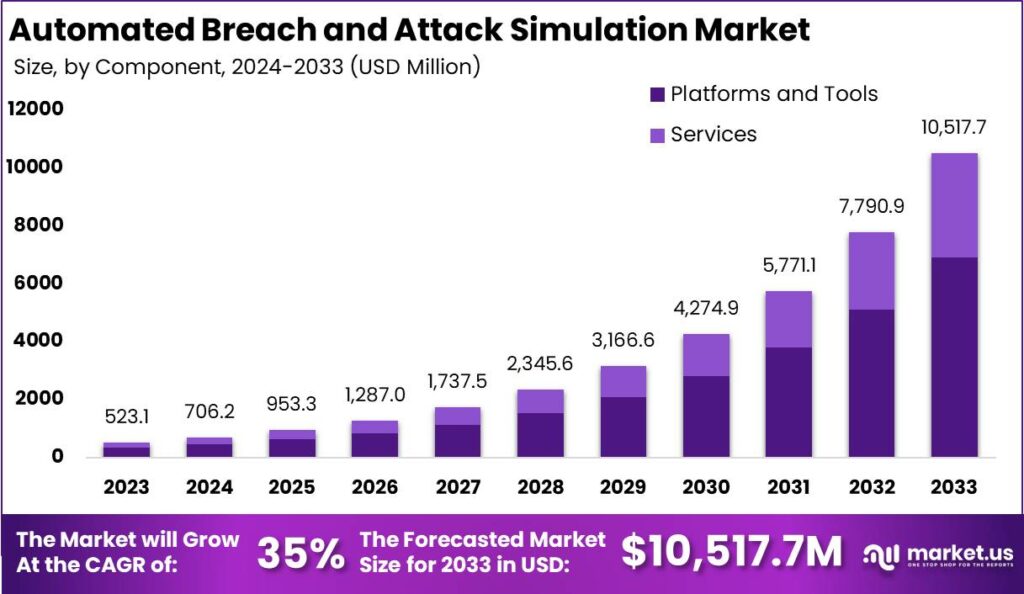
The ABAS market has grown significantly as more organizations recognize the importance of proactive security measures. This growth is driven by the increasing complexity and frequency of cyber attacks, which require more robust and dynamic defense mechanisms. As businesses of all sizes become more digital, the demand for ABAS solutions rises, highlighting the need for automated, continuous, and scalable security testing tools.
Key drivers in the ABAS market include the escalating number of cyber threats, the stringent regulatory requirements, and the need for efficient risk management strategies. Organizations are under constant pressure to ensure data privacy and security, pushing them towards adopting ABAS to bolster their security posture without the need for extensive additional resources.
Market opportunities for ABAS are expanding, particularly as organizations move more of their operations online and as remote work becomes more prevalent. This shift has led to an increased attack surface and a higher likelihood of security vulnerabilities, making ABAS tools more essential. Additionally, industries such as finance, healthcare, and government, which handle sensitive information, are significant contributors to the rising demand for sophisticated cybersecurity solutions like ABAS.
Technological advancements in the field of cybersecurity play a crucial role in the evolution of ABAS. Developments in artificial intelligence, machine learning, and predictive analytics are enhancing the capabilities of ABAS tools, making them more effective and intelligent in simulating attacks and predicting potential breaches. These advancements not only improve the accuracy of simulations but also enable customized threat intelligence, which is tailored to the specific security landscape of an organization.
Key Takeaways
- The Global Automated Breach and Attack Simulation Market size is projected to reach USD 10,517.7 million by 2033, up from USD 523.1 million in 2023, with a CAGR of 35.00% during the forecast period from 2024 to 2033.
- In 2023, the Platforms and Tools segment dominated the market, holding more than 65.8% share.
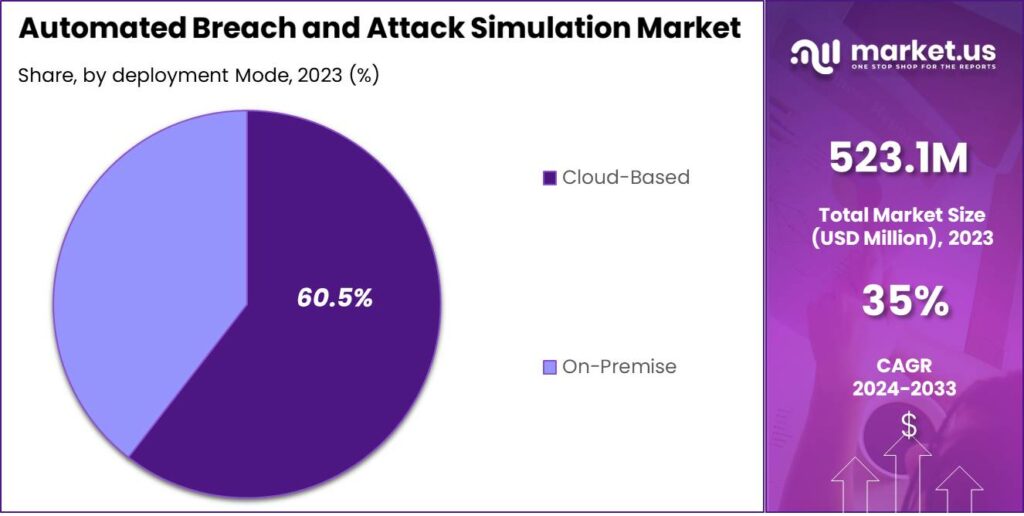
- The Cloud-Based segment led the market in 2023, accounting for more than 60.5% share of the Automated Breach and Attack Simulation (ABAS) market.
- The Threat Management segment captured more than 37.1% share of the market in 2023.
- In 2023, the Enterprises and Data Centers segment held a dominant market position, with a share of more than 64.3%.
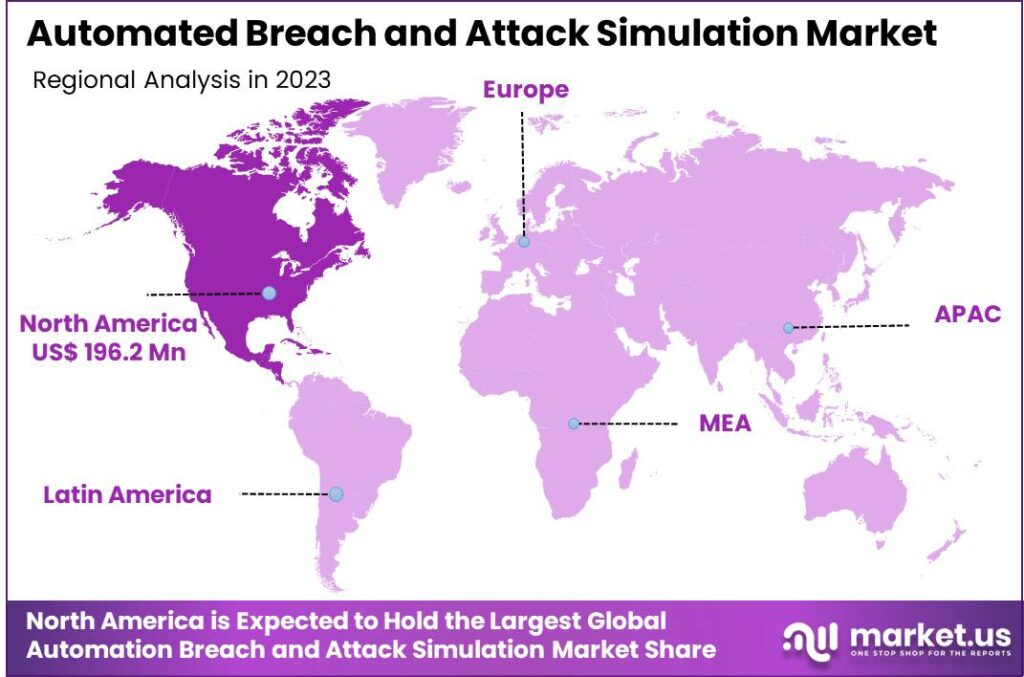
- North America dominated the Automated Breach and Attack Simulation (ABAS) market in 2023, holding a more than 37.5% share, with revenues amounting to USD 196.2 million.
Component Analysis
In 2023, the Platforms and Tools segment held a dominant market position, capturing more than a 65.8% share. This segment’s dominance can be attributed to the increasing adoption of advanced technologies such as artificial intelligence and machine learning, which are integral to these platforms and tools.
Organizations are increasingly relying on these solutions to proactively identify and mitigate potential security threats, thereby enhancing their overall cybersecurity posture. The robust capabilities of these platforms and tools in simulating real-world attack scenarios enable businesses to test their defenses effectively and address vulnerabilities before they can be exploited by malicious actors.
The Platforms and Tools segment’s leadership is further bolstered by the continuous innovation and development in this space. Vendors are consistently enhancing their offerings with new features and functionalities that cater to the evolving needs of businesses.
This includes the integration of threat intelligence, real-time monitoring, and automated response mechanisms, which are critical in today’s dynamic threat landscape. The scalability and flexibility of these solutions also make them attractive to a wide range of industries, from small and medium-sized enterprises to large corporations.
Deployment Mode Analysis
In 2023, the Cloud-Based segment held a dominant market position, capturing more than a 60.5% share in the Automated Breach and Attack Simulation (ABAS) market. This significant market share can be attributed to several key factors.
Cloud-based solutions offer unparalleled scalability and flexibility, allowing organizations to quickly adapt to changing security needs without the constraints of physical infrastructure. This agility is particularly appealing to businesses that operate in dynamic environments or have fluctuating security requirements.
Additionally, cloud-based ABAS solutions often come with lower upfront costs compared to on-premise alternatives, making them more accessible to small and medium-sized enterprises (SMEs) that may have limited budgets for cybersecurity investments.
The ease of deployment and management associated with cloud-based ABAS solutions further cements their leading position in the market. These solutions typically require minimal setup and can be managed remotely, reducing the need for extensive in-house IT resources. This is especially beneficial for organizations that may not have the expertise or manpower to manage complex on-premise systems.
Application Analysis
In 2023, the Threat Management segment held a dominant market position, capturing more than a 37.1% share in the Automated Breach and Attack Simulation (ABAS) market. This significant market share can be attributed to the escalating sophistication and frequency of cyber threats that organizations face today.
The appeal of the Threat Management segment is bolstered by its ability to offer comprehensive insights into potential vulnerabilities and threat vectors. These solutions leverage advanced analytics and machine learning algorithms to predict and preemptively address security threats, thereby reducing the likelihood of successful breaches.
This proactive approach is particularly valuable for organizations that handle sensitive data or operate in highly regulated industries, where the consequences of a security breach can be severe. By providing actionable intelligence and automated response capabilities, threat management solutions enable businesses to stay one step ahead of cybercriminals and safeguard their critical assets.
End-User Analysis
In 2023, the Enterprises and Data Centers segment held a dominant market position, capturing more than a 64.3% share in the Automated Breach and Attack Simulation (ABAS) market. This significant market share can be attributed to the increasing reliance on robust cybersecurity measures within large organizations and data centers.
Enterprises are continuously seeking advanced solutions to protect their sensitive data and critical infrastructure from evolving cyber threats. The complexity and scale of operations in these environments necessitate comprehensive security strategies, making ABAS an indispensable tool for identifying vulnerabilities and enhancing defense mechanisms.
The demand for ABAS solutions in enterprises is further driven by the growing adoption of cloud computing and the proliferation of connected devices. As businesses transition to digital platforms, the attack surface expands, necessitating continuous monitoring and simulation of potential threats.
Enterprises are investing heavily in ABAS to proactively detect and mitigate risks, ensuring uninterrupted business operations and safeguarding valuable assets. The ability of ABAS to simulate real-world attack scenarios helps organizations understand their security posture and make informed decisions to strengthen their defenses.
Key Market Segments
By Component
- Platforms and Tools
- Services
By Deployment Mode
- Cloud-Based
- On-Premise
By Application
- Patch Management
- Threat Management
- Configuration Management
- Other Applications
By End-User
- Enterprises and Data Centers
- Managed Service Providers
Driver
Escalating Complexity and Frequency of Cyber Threats
In today’s digital landscape, organizations face an increasing number of sophisticated cyber threats. Automated Breach and Attack Simulation (ABAS) tools have become essential for organizations to proactively assess and strengthen their security postures.
ABAS solutions enable continuous, automated testing of security defenses by simulating real-world attack scenarios. This approach allows organizations to identify vulnerabilities and address them before malicious actors can exploit them. The growing complexity of cyber threats necessitates such proactive measures to safeguard sensitive data and maintain operational integrity.
Restraint
High Implementation and Maintenance Costs
While ABAS tools offer significant benefits, the high costs associated with their implementation and maintenance can be a barrier for many organizations, particularly small and medium-sized enterprises (SMEs). The initial investment in ABAS solutions often requires substantial financial resources, including the purchase of software licenses, integration with existing systems, and training for personnel.
Additionally, maintaining these systems demands ongoing expenses related to updates, support services, and potential scalability to accommodate organizational growth. For SMEs operating with limited budgets, allocating funds for such comprehensive security measures can be challenging.
Opportunity
Integration with Artificial Intelligence and Machine Learning
The integration of Artificial Intelligence (AI) and Machine Learning (ML) technologies into ABAS solutions presents a significant opportunity for enhancing cybersecurity measures. AI and ML can augment the capabilities of ABAS tools by enabling the simulation of more sophisticated and adaptive attack scenarios, reflecting the evolving tactics of cyber adversaries.
By leveraging AI and ML, ABAS systems can analyze vast amounts of data to identify patterns and anomalies indicative of potential security vulnerabilities. This analytical capability allows for more accurate risk assessments and the development of proactive defense strategies.
Furthermore, AI-driven ABAS solutions can automate the process of threat detection and response, reducing the reliance on human intervention and minimizing the time between the identification of a vulnerability and its remediation.
Challenge
Shortage of Skilled Cybersecurity Professionals
The effective deployment and management of ABAS solutions require a workforce with specialized cybersecurity expertise. However, there is a global shortage of skilled professionals in this field, posing a significant challenge to the adoption and optimization of ABAS tools.
Organizations may struggle to find qualified personnel capable of interpreting the complex data generated by ABAS systems and implementing appropriate security measures based on the insights provided. This skills gap can lead to underutilization of the technology and a diminished return on investment. Additionally, the rapid evolution of cyber threats necessitates continuous learning and adaptation by cybersecurity professionals.
Emerging Trends
Automated Breach and Attack Simulation (BAS) tools are becoming essential in cybersecurity. They let organizations test their defenses by mimicking real cyberattacks. A key trend is the use of artificial intelligence (AI) and machine learning (ML) in these tools. This integration helps create more complex and realistic attack scenarios, improving the accuracy of security tests.
Another trend is the shift to cloud-based BAS solutions. As more businesses move to the cloud, there’s a growing need for BAS tools that can assess cloud environments. Cloud-native BAS platforms offer flexibility and scalability, making it easier for organizations to test their security across different infrastructures.
The rise of continuous testing is also notable. Unlike traditional security assessments that occur periodically, modern BAS tools enable ongoing evaluations. This continuous approach ensures that security measures remain effective against evolving threats.
Business Benefits
Incorporating BAS into a business’s cybersecurity strategy offers several benefits. It provides continuous, automated testing of security controls, ensuring they function as intended without the need for manual intervention.
Thirdly, by simulating various attack scenarios, BAS platforms enable businesses to assess the effectiveness of their incident response plans. This preparation ensures that, in the event of a real attack, the organization can respond swiftly and effectively.
Moreover, BAS solutions can lead to cost savings. By identifying and addressing vulnerabilities early, organizations can avoid the financial repercussions associated with data breaches, such as regulatory fines and reputational damage.BAS tools help identify vulnerabilities in real-time, allowing organizations to address weaknesses before they can be exploited by attackers.
Regional Analysis
In 2023, North America held a dominant market position in the Automated Breach and Attack Simulation (ABAS) market, capturing more than a 37.5% share with revenues amounting to USD 196.2 million. This substantial market share can be attributed to several pivotal factors that distinguish the region as a leader in cybersecurity innovation and implementation.
Firstly, the concentration of high-tech firms and a robust cybersecurity infrastructure significantly contribute to North America’s leading position. The region is home to some of the world’s largest technology and cybersecurity companies, which not only drive innovation but also adopt these advanced security solutions at a higher rate compared to other regions.
Furthermore, the regulatory landscape in North America, particularly in the United States, mandates stringent compliance with cybersecurity protocols across various industries. Legislation such as the Cybersecurity Maturity Model Certification (CMMC) and the California Consumer Privacy Act (CCPA) compels organizations to fortify their cyber defenses, thus accelerating the adoption of ABAS solutions.
Additionally, the high frequency of cyber attacks in North America serves as a catalyst for the ABAS market. Organizations in this region are increasingly aware of the potential financial and reputational damage caused by breaches, thereby investing more in proactive cybersecurity technologies like ABAS.
Key Regions and Countries
- North America
- US
- Canada
- Europe
- Germany
- France
- The UK
- Spain
- Italy
- Rest of Europe
- Asia Pacific
- China
- Japan
- South Korea
- India
- Australia
- Singapore
- Rest of Asia Pacific
- Latin America
- Brazil
- Mexico
- Rest of Latin America
- Middle East & Africa
- South Africa
- Saudi Arabia
- UAE
- Rest of MEA
Key Player Analysis
In the field of Automated Breach and Attack Simulation (ABAS), key players have established themselves as prominent contributors to the evolving cybersecurity landscape.
Google LLC stands out in the ABAS market primarily due to its comprehensive security tools integrated within its cloud services. Leveraging its expansive data analytics and cloud computing capabilities, Google provides advanced simulation tools that help organizations identify vulnerabilities and strengthen their security postures effectively.
Keysight Technologies offers specialized expertise in electronic design and test solutions, which extends into its ABAS offerings. Their simulation tools are highly regarded for precision and adaptability, allowing for detailed testing environments that mirror complex real-world network systems.
Cymulate distinguishes itself with a user-friendly platform that simplifies the complexity of cybersecurity testing. This company’s ABAS solutions provide end-to-end security assessments that enable businesses to evaluate their defenses across various vectors, including email, web gateway, and endpoint security.
Top Key Players in the Market
- Google LLC
- Keysight Technologies
- Cymulate
- AttackIQ
- SafeBreach Inc.
- Fortinet, Inc.
- Picus Security
- Sophos Ltd.
- XM Cyber
- ReliaQuest, LLC
- Other Key Players
Top Opportunities Awaiting for Players
The Automated Breach and Attack Simulation (ABAS) market offers several burgeoning opportunities for players across various regions.
- Integration with Cloud Services and Advanced Technologies: As organizations increasingly adopt cloud-based infrastructures, there is a growing need for ABAS solutions that can effectively simulate attacks on these environments. The integration of artificial intelligence and machine learning enhances the realism and effectiveness of simulation scenarios, thereby providing more robust security assessments.
- Expansion into Regulatory Compliance Services: With strict regulatory frameworks like GDPR in Europe and HIPAA in the U.S., companies are compelled to ensure their cybersecurity measures comply with regional and international standards. ABAS tools that can automate compliance assessments are becoming crucial.
- Telecommunications Sector: The expansion of digital communication networks has exposed telecom companies to increased cyber threats. ABAS solutions tailored for the telecommunications industry, which manage large volumes of sensitive user data, are critical. These tools help simulate attacks and identify vulnerabilities within vast and complex network infrastructures.
- Managed Services for SMBs: Small and medium-sized businesses (SMBs) are recognizing the importance of cybersecurity but often lack the resources to implement comprehensive security measures. ABAS providers can capitalize on this by offering managed services that provide smaller companies with scalable, cost-effective security solutions without the need for extensive in-house expertise.
- Geographical Expansion in High-Growth Markets: Regions such as Asia-Pacific are experiencing rapid digital transformation and are ripe for ABAS solutions. The increasing investment in IT infrastructure across these markets presents a significant opportunity for ABAS providers to introduce their solutions to emerging economies and industries adapting to digital technologies.
Recent Developments
- In May 2023, XM Cyber, the leader in hybrid cloud security, today announced its strategic partnership with SAP.this partnership will help organizations utilizing SAP solutions, such as RISE with SAP and SAP eCommerce Cloud, to transition their data and processes to the cloud with less risk and without compromise.
- In mid 2024, the company Pentera introduced ‘Pentera Cloud,’ a solution designed to assess and enhance the security of cloud environments. This product aims to help organizations identify vulnerabilities in their cloud infrastructures.
- In March 2024, AttackIQ, a leader in breach and attack simulation (BAS) and founding partner of the MITRE Engenuity Center for Threat-Informed Defense, has unveiled AttackIQ Ready! 2.0. This managed service offers automated, on-demand adversary emulation, enabling organizations to quickly validate and strengthen their cyber defenses.









