


Report Overview
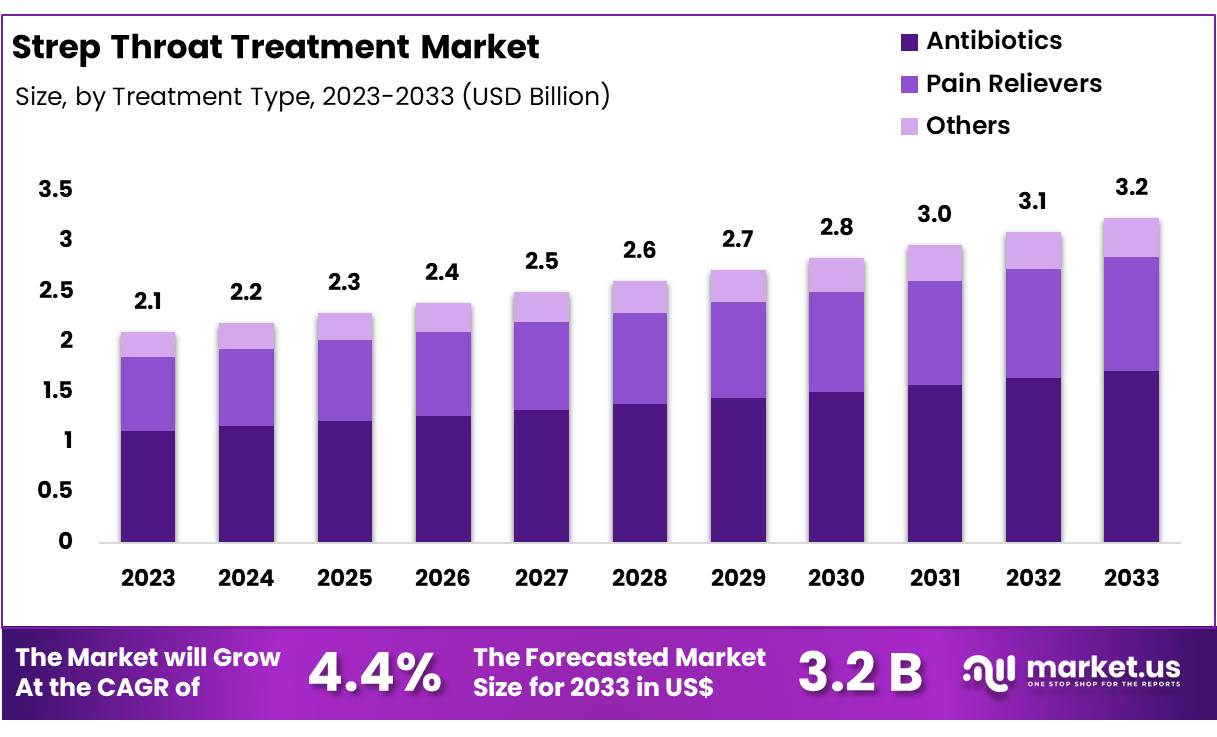
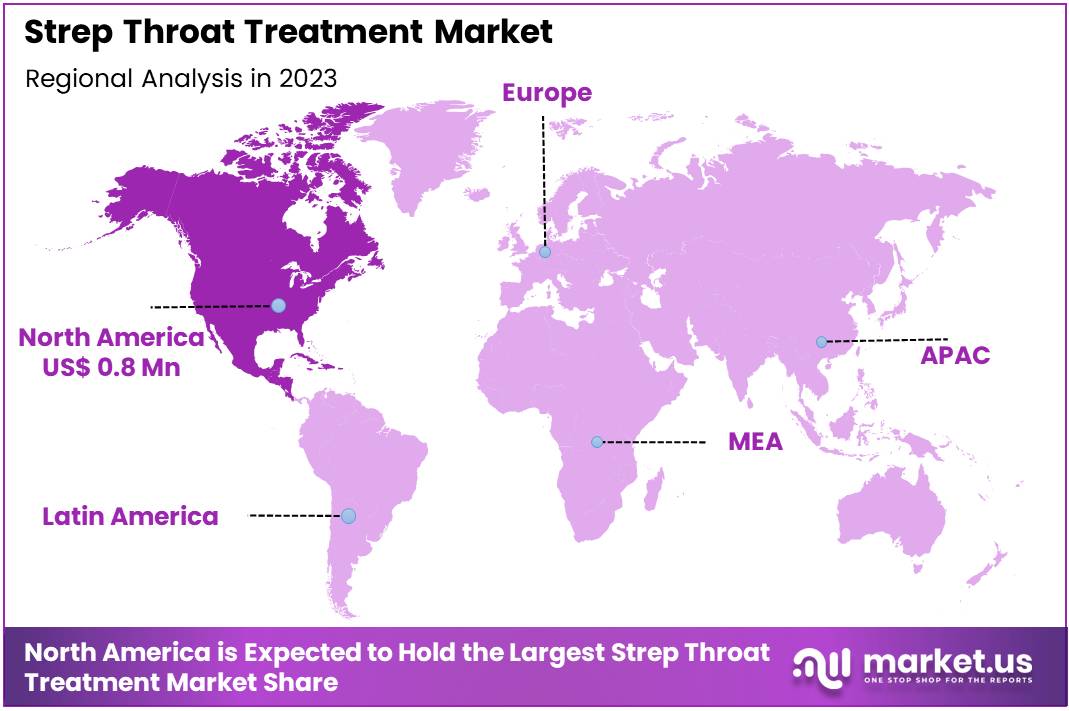
Global Strep Throat Treatment Market size is expected to be worth around US$ 3.2 Billion by 2033 from US$ 2.1 Billion in 2023, growing at a CAGR of 4.4% during the forecast period from 2024 to 2033. In 2023, North America led the market, achieving over 42% share with a revenue of US$ 0.8 Million.
The global strep throat treatment market is driven by several factors, including the rising incidence of strep throat infections, especially in children and young adults. The market growth can be attributed to increasing awareness of the condition and the availability of effective treatment options, such as antibiotics and supportive therapies.
Additionally, the growing healthcare infrastructure and advancements in diagnostic tools contribute to market expansion by ensuring timely and accurate diagnosis. However, the market faces challenges such as antibiotic resistance, which can limit the effectiveness of treatment, and the emergence of alternative treatment methods.
Moreover, the high cost of certain medications may hinder market growth in developing regions. Furthermore, the increasing adoption of over-the-counter treatments, coupled with ongoing research into novel drugs, presents potential for growth. The market also benefits from rising healthcare expenditure and government initiatives aimed at improving public health.
- Strep throat, caused by Group A Streptococcus (GAS) bacteria, is a prevalent bacterial infection, particularly among children aged 5 to 15 years. In the United States, it is estimated that strep throat results in approximately 5.2 million outpatient visits annually among individuals under 65 years old, leading to about 2.8 million antibiotic prescriptions each year.
Key Takeaways
- The global pediatric telehealth market was valued at USD 2.1 billion in 2023 and is anticipated to register substantial growth of USD 3.2 billion by 2033, with 4.4% CAGR.
- In 2023, the antibiotics segment took the lead in the global market, securing 53% of the total revenue share.
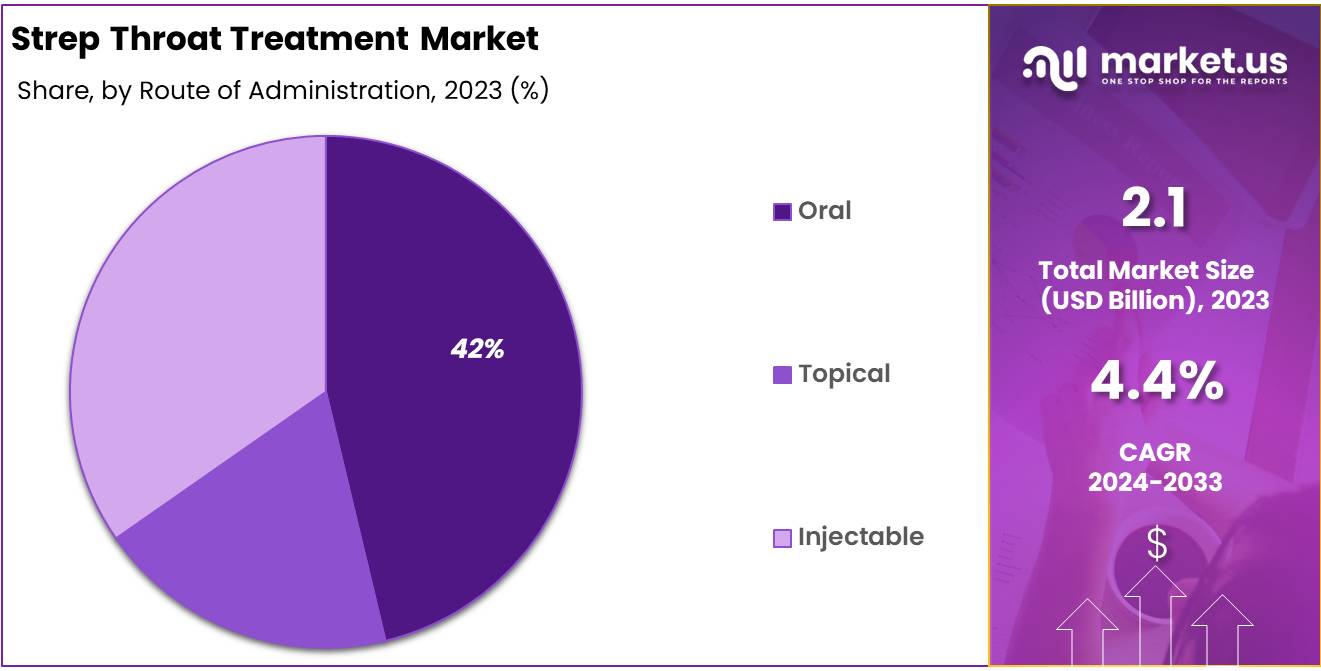
- The oral segment took the lead in the global market, securing 49% of the total revenue share.
- North America maintained its leading position in the global market with a share of over 42% of the total revenue.
By Treatment Type Analysis
Based on treatment type the market is fragmented into antibiotics, pain relievers, and others. Amongst these, antibiotics dominated the global strep throat treatment market capturing a significant market share of 53% in 2023 due to their effectiveness in targeting the underlying bacterial infection caused by Group A Streptococcus (GAS).
Penicillin and amoxicillin are the most commonly prescribed antibiotics, known for their efficacy, safety, and low cost. These antibiotics are considered the first-line treatment, as they help prevent complications such as rheumatic fever and post-streptococcal glomerulonephritis. The widespread availability of antibiotics and their proven track record in treating strep throat has contributed significantly to their market dominance.
By Route of Administration Analysis
The market is fragmented by route of administration into oral, topical, and injectable. Oral dominated the global strep throat treatment market capturing a significant market share of 49% in 2023 due to their ease of administration, widespread availability, and effectiveness in treating bacterial infections. Oral antibiotics, such as penicillin and amoxicillin, are the most commonly prescribed treatments for strep throat.
These medications are preferred because they are simple to use and can be taken at home, offering convenience for patients, particularly children, who may find it difficult to swallow tablets or undergo injections. Oral antibiotics are also associated with fewer complications and side effects compared to alternative methods like injections.
By Treatment Providers Analysis
The market is fragmented by treatment providers into hospital pharmacy, retail pharmacy, and online pharmacy. Hospital pharmacy dominated the global strep throat treatment market capturing a significant market share of 56% in 2023 due to their critical role in providing comprehensive treatment options, particularly for severe or complicated cases.
Hospitals are equipped with advanced diagnostic tools that enable quick and accurate identification of strep throat infections, leading to timely treatment. This is especially important in preventing complications such as rheumatic fever or post-streptococcal glomerulonephritis, which require immediate medical intervention.
Additionally, hospital pharmacies offer a wide range of prescription medications, including both oral and injectable antibiotics, that may not be readily available in retail settings. In cases where oral medications are ineffective or when patients face difficulties with medication adherence, hospital pharmacies can provide alternative treatment options like intravenous antibiotics.
Key Segments Analysis
By Treatment Type
- Antibiotics
- Pain Relievers
- Others
By Route of Administration
- Oral
- Topical
- Injectable
By Treatment Providers
- Hospital Pharmacy
- Retail Pharmacy
- Online Pharmacy
Increasing Aesthetic Plastic Surgery
The increasing prevalence of streptococcal infections, particularly among children and adolescents, is significantly driving the growth of the strep throat treatment market. Seasonal spikes and school health policies requiring antibiotic treatment before returning to school further fuel demand, highlighting the need for effective treatment solutions to manage this widespread condition.
The rising prevalence of streptococcal infections, especially among children and adolescents, is driving the increasing demand for effective treatment solutions. Public health data often highlights seasonal spikes, which intensify market activity during peak periods.
In many regions, school health policies mandate that children with strep throat receive antibiotic treatment before returning to school, further boosting demand for treatments. Global health initiatives aimed at managing and preventing the spread of infectious diseases are placing greater emphasis on conditions like strep throat, thereby influencing the treatment market.
- For example, in January 2022, data from the National Library of Medicine revealed that pharyngitis leads to over 40 million visits to healthcare providers annually. On average, children and adults experience 3-5 viral upper respiratory tract infections, including pharyngitis, each year. Around 50-80% of pharyngitis cases are caused by various viral pathogens.
Market Restraints
Side Effects Associated Medications
Side effects associated with strep throat medications, such as nausea, diarrhea, allergic reactions, or more severe issues like antibiotic-associated colitis, may discourage patients from completing their prescribed courses. The over-prescription of antibiotics for strep throat can lead to an increase in side effects, potentially contributing to antibiotic resistance, which undermines the effectiveness of these drugs and hinders market growth.
Growing concerns among patients about the overuse of antibiotics and their desire for treatments with fewer side effects may influence demand for existing medications. As a result, patients may turn to alternative treatments, such as herbal remedies or homeopathic options, which could shift market dynamics.
These side effects may also prompt stricter regulatory oversight and guidelines for antibiotic use in treating strep throat, affecting prescribing practices and market access. Consequently, pharmaceutical companies may need to invest in R&D for new medications with fewer side effects, which could be costly and impact market profitability.
Market Opportunities
New Product Launches & Approval
New product launches and approvals are driving growth opportunities in the Global Strep Throat Treatment Market by expanding the range of available treatment options and improving patient outcomes. Pharmaceutical companies are increasingly focusing on developing novel antibiotics and combination therapies to address the challenges posed by antibiotic resistance.
Recent approvals of advanced antibiotics with broader efficacy against Group A Streptococcus (GAS) are boosting the market, as these drugs offer more effective treatment for resistant strains. In addition to antibiotics, new symptomatic relief products such as pain relievers, throat sprays, and lozenges are being introduced to complement existing therapies. These products help manage symptoms while antibiotics target the infection.
- In July 2022, Taiho Pharmaceutical Co., Ltd., a pharmaceutical company, introduced the PITAS throat troche series in Singapore. These film-type troches adhere to the roof of the mouth and are designed to effectively treat throat pain and swelling.
Impact of macroeconomic factors / Geopolitical factors
Macroeconomic and geopolitical factors significantly impact the global strep throat treatment market by influencing healthcare spending, drug availability, and patient access to treatment. Economic conditions, such as GDP growth, inflation rates, and healthcare budgets, can affect public and private sector investments in healthcare infrastructure and pharmaceuticals.
In times of economic downturn, governments may reduce healthcare funding, leading to limited access to essential treatments like antibiotics, especially in low-income regions. Geopolitical factors, such as trade policies, supply chain disruptions, and international conflicts, can also impact the availability of key medications and medical supplies.
For example, trade restrictions or sanctions may limit the import of antibiotics, impacting market growth in certain regions. Moreover, geopolitical instability can disrupt healthcare systems, leading to delays in treatment and diagnostic services. These factors may increase the cost of treatment, hinder market expansion in some areas, and affect the overall efficiency of strep throat management globally.
Latest Trends
The global strep throat treatment market is witnessing several emerging trends. One key trend is the increasing focus on rapid diagnostic tests for early and accurate detection of Group A Streptococcus (GAS) infections. Innovations in molecular diagnostic technologies, such as PCR (polymerase chain reaction) testing, are enabling quicker results, reducing the reliance on traditional throat cultures and improving treatment outcomes.
Another notable trend is the growing concern over antibiotic resistance. This has led to a rise in research for alternative treatments and the development of new antibiotics targeting resistant strains of GAS. Additionally, the market is seeing an increased shift towards combination therapies, where antibiotics are used in conjunction with anti-inflammatory drugs to alleviate symptoms and speed up recovery.
Regional Analysis
North America held a significant 42% share of the Strep Throat Treatment market. Pharmaceutical companies in the region are heavily investing in R&D to create new and improved drugs. Additionally, high consumer awareness and affordability in North America contribute to the large consumption of strep throat medications. The availability of generic drugs further enhances the accessibility and cost-effectiveness of treatment in the region.
Stringent regulatory standards ensure the safety and efficacy of strep throat drugs sold in the market. Well-established distribution networks facilitate the seamless supply of medications across North America. Furthermore, the rising incidence of strep throat infections is driving increased demand for treatment. A robust healthcare system, with access to general physicians and pediatricians, ensures timely diagnoses and reliable treatment options.
Key Regions and Countries
North America
- US
- Canada
Europe
- Germany
- France
- The UK
- Spain
- Italy
- Russia
- Netherland
- Rest of Europe
Asia Pacific
- China
- Japan
- South Korea
- India
- New Zealand
- Singapore
- Thailand
- Vietnam
- Rest of APAC
Latin America
- Brazil
- Mexico
- Rest of Latin America
Middle East & Africa
- South Africa
- Saudi Arabia
- UAE
- Rest of MEA
Key Players Analysis
The Global Strep Throat Treatment Market is highly competitive, with several key players dominating the market share. Major pharmaceutical companies, including Pfizer, GlaxoSmithKline, and Sanofi, lead the market with their established portfolio of antibiotics, particularly penicillin, amoxicillin, and cephalosporins. These companies hold a significant share due to their extensive distribution networks, strong brand recognition, and commitment to research and development.
Generic drug manufacturers also play a crucial role in the market, offering affordable alternatives to branded antibiotics. This has made treatment more accessible, particularly in developing regions. Additionally, over-the-counter pain relief medications, such as ibuprofen and acetaminophen, contribute to the market share by providing symptomatic relief.
Pfizer is a global biopharmaceutical company, renowned for its innovative medicines and vaccines, including antibiotics for infectious diseases. It operates worldwide, focusing on healthcare solutions for diverse medical conditions. In addition, Sanofi is a French multinational pharmaceutical company, known for its focus on vaccines, oncology, diabetes, and rare diseases. It develops medicines that address global health challenges through innovation and accessibility.
Top Key Players
- Merck & co.
- Pfizer
- GSK
- Sanofi
- Abbott Laboratories
- Johnson & Johnson Services Inc
- Roche
- Novartis
- Bristol-Myers Squibb
- Eli Lilly and Company.
- Astra Zeneca
- Bayer
- Valeant pharmaceuticals
Recent Developments
- In September 2020, Taiho Pharmaceutical Co., Ltd. launched Pitas Throat Troche Orange and Pitas Throat Troche Lychee (designated as a quasi-drug) across Japan. These film-type troches, containing cetylpyridinium chloride hydrate as the active ingredient, are effective for sterilizing and disinfecting the mouth, as well as relieving throat pain and swelling caused by throat inflammation.
- In March 2021, GSK plc announced it had received funding from CARB-X, a global non-profit partnership focused on advancing early-stage antibacterial R&D, to develop new vaccines targeting pathogens like Group A Streptococcus (Strep A), the cause of strep throat. The funding was provided by the Biomedical Advanced Research and Development Authority (BARDA), part of the U.S. Department of Health and Human Services’ Administration for Strategic Preparedness and Response (ASPR).
- In October 2020, Cure Kids, New Zealand’s largest charitable funder, announced that it had secured US$3 million from the New Zealand government to support the development of a strep throat vaccine aimed at preventing rheumatic fever and rheumatic heart disease.









