


Report Overview
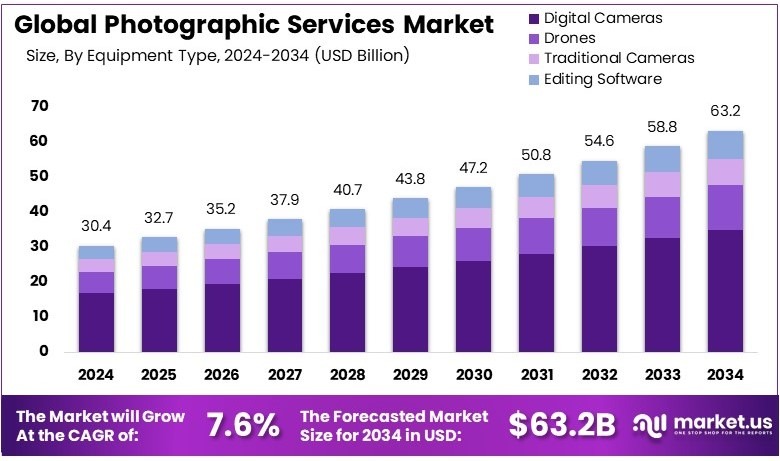
The Global Photographic Services Market size is expected to be worth around USD 63.2 Billion by 2034, from USD 30.4 Billion in 2024, growing at a CAGR of 7.6% during the forecast period from 2025 to 2034.
Photographic services refer to professional offerings related to photography, including capturing images, editing, and printing. These services cater to various needs such as events, portraits, commercial projects, and artistic endeavors. Providers use specialized equipment and expertise to deliver high-quality visual content.
The photographic services market encompasses businesses and professionals that offer photography-related services. This includes studios, freelance photographers, and companies providing specialized imaging solutions. The market serves diverse clients, including individuals, businesses, and organizations requiring professional photography for personal or commercial use.
The photographic services market is vibrant and diverse, hosting approximately 3.6 million photographers worldwide. According to Eksposure, 2022, in the U.S., there are about 47,380 professional photographers, highlighting the sector’s robust presence. This industry is notably entrepreneurial, as evidenced by the 68% of photographers who are self-employed, according to the Bureau of Labor Statistics, 2022.
Significant growth in the photographic services market is driven by the demand for specialized areas such as wedding photography. Approximately 8.7% of full-time self-employed photographers specialize in this niche. This specialization reflects the market’s adaptability to consumer preferences, illustrating both traditional and emerging opportunities within the sector.
The market is characterized by a high level of competitiveness, largely due to its entrepreneurial nature. The significant proportion of photographers who manage their own businesses creates a dynamic and competitive landscape. This competition not only fosters innovation but also ensures a broad array of services for consumers, enhancing both customer choice and service quality.
Photographic services have a significant impact both locally and globally. Locally, photographers contribute to economic activity by providing services for events, advertising, and portraiture. On a broader scale, the industry influences visual culture and communication, shaping how events and experiences are shared and remembered around the world.
Key Takeaways
- The Photographic Services Market was valued at USD 30.4 Billion in 2024 and is expected to reach USD 63.2 Billion by 2034, with a CAGR of 7.6%.
- In 2024, Event Photography dominates the service type segment with 32.5%, driven by its demand for personal and corporate events.
- In 2024, Shooting Service leads the type segment with 67.8%, reflecting its core role in photography services.
- In 2024, Digital Cameras dominate the equipment type segment with 55.3%, showcasing their widespread adoption.
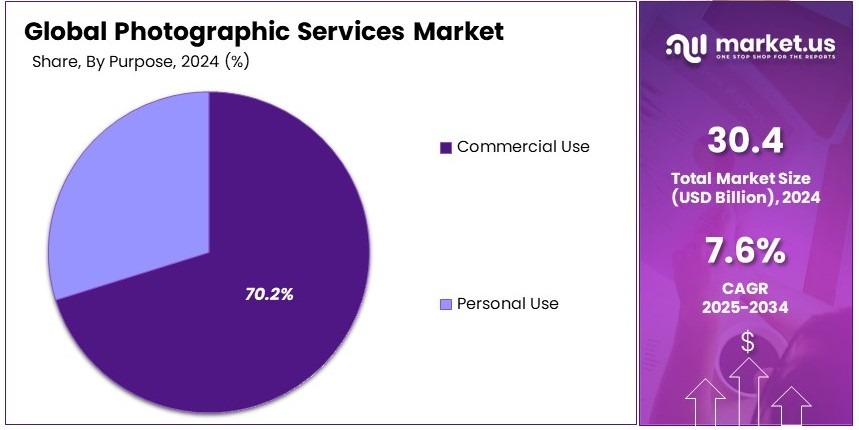
- In 2024, Commercial Use leads the purpose segment with 70.2%, underlining the growing need for professional photography in businesses.
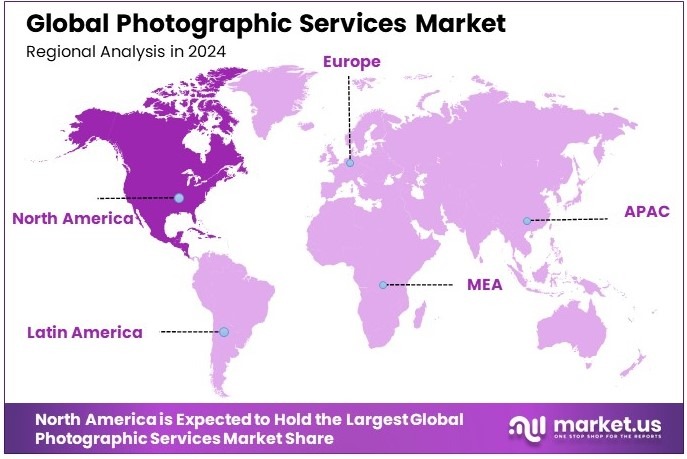
- In 2024, North America is the dominant region, driven by advanced technology adoption and a robust commercial market.
Business Environment Analysis
In the Photographic Services market, there’s a noticeable saturation in traditional segments like wedding and portrait photography, pushing professionals to explore niche markets such as aerial or underwater photography. This shift is fostering innovation and helping photographers distinguish their services in a crowded market.
The target demographic for photographic services is diversifying, driven by digital platforms that expand access to global audiences. Photographers are now catering to both commercial clients and individual consumers who seek unique, high-quality visual content for personal and professional use.
Differentiation in this market is increasingly achieved through specialization and the adoption of advanced technologies like drone and 3D photography. These technologies offer new perspectives and capabilities, setting apart providers who can harness them to deliver compelling visual stories.
A value chain analysis highlights the importance of efficient digital asset management and collaborative networks among photographers, studios, and digital service providers. Streamlining these elements enhances service delivery and customer satisfaction, crucial for retaining competitiveness.
The growing demand for authentic, visually engaging content opens up significant investment opportunities in the photographic services sector. Capital is flowing into advanced photography equipment, software for image processing, and platforms that facilitate the global distribution of digital photography.
Adjacent markets such as digital marketing and graphic design are increasingly intertwined with photographic services. This integration allows photographers to offer comprehensive visual solutions, broadening their market appeal and creating new revenue streams.
Service Type Analysis
Event Photography dominates with 32.5% due to its critical role in capturing key moments at major public, corporate, and private events.
The Photographic Services Market, segmented by service type, sees Event Photography as the leading sub-segment with a market share of 32.5%. This dominance is largely due to the consistent demand for professional photography at various events such as corporate gatherings, public shows, and large private celebrations where capturing key moments is essential. The need for high-quality, reliable photographic documentation in these settings drives the segment’s growth.
Portrait Photography serves to capture personal and family moments, contributing significantly to the market by meeting ongoing consumer demands for professional-grade portraits.
Commercial Photography is pivotal for businesses, focusing on product advertising and brand imagery, which is crucial in today’s visually driven marketing strategies.
Industrial Photography plays a key role in documenting processes, equipment, and facilities within various industries, aiding in training, marketing, and documentation.
Aerial Photography, utilizing drones, is increasingly popular for its unique perspective in real estate, tourism, and film industries.
Wedding Photography remains a staple, with its unyielding demand driven by the consistent value placed on high-quality wedding memorabilia.
Wildlife and Nature Photography caters to media, publishers, and conservation organizations, emphasizing the aesthetic and documentary importance of natural subjects.
The Others segment includes specialized niches like underwater or fashion photography, each contributing uniquely to the diversity and adaptability of the market.
Type Analysis
Shooting Service leads with 67.8% due to its foundational role in all photographic tasks.
In the Photographic Services Market segmented by Type, Shooting Service holds the predominant share of 67.8%. This leading position stems from the basic requirement of capturing images across all forms of photography, whether for personal, commercial, or artistic purposes. The technical skills, creativity, and equipment involved in shooting are indispensable to the industry.
After-sales Service, which includes photo editing and processing, although essential, supports the primary service offered by photographers by enhancing the quality and appeal of the final images.
Equipment Type Analysis
Digital Cameras dominate with 55.3% due to their advanced technology and ease of use in various photographic conditions.
In the market segmented by Equipment Type, Digital Cameras are the most used, with a market share of 55.3%. Their dominance is due to the versatility, ease of use, and technological advancements that allow both professionals and amateurs to achieve high-quality results in a variety of shooting conditions.
Drones are increasingly significant for providing aerial shots that were previously impossible or prohibitively expensive to capture.
Traditional Cameras continue to hold a niche market, appreciated by enthusiasts and professionals alike for the distinct aesthetic quality they bring to photographs.
Editing Software is essential across all segments for refining and preparing images for final use, supporting the creative and commercial outcomes of photographic services.
Purpose Analysis
Commercial Use leads with 70.2% due to the extensive demand across industries for professional photographic content.
Segmented by Purpose, Commercial Use dominates the Photographic Services Market with a share of 70.2%. This predominance is fueled by the extensive demand for high-quality photographic content in advertising, marketing, and media communications across various industries.
Businesses increasingly rely on compelling visual content to connect with their audiences, making professional photography services crucial for commercial success.
Personal Use, while significant, typically involves lower budgets and less frequent engagements compared to commercial applications but remains a steady market due to ongoing consumer interest in high-quality photography for personal events and memories.
Key Market Segments
By Service Type
- Portrait Photography
- Event Photography
- Commercial Photography
- Industrial Photography
- Aerial Photography
- Wedding Photography
- Wildlife and Nature Photography
- Others
By Type
- Shooting Service
- After-sales Service
By Equipment Type
- Digital Cameras
- Drones
- Traditional Cameras
- Editing Software
By Purpose
- Personal Use
- Commercial Use
Driving Factors
Digital and Social Media Demand Drives Market Growth
The Photographic Services Market is experiencing significant growth, driven by the increasing demand for digital marketing content. Businesses are investing heavily in high-quality images to enhance their online presence and engage with customers effectively.
Additionally, the growth of social media platforms plays a crucial role, as visually appealing content is essential for attracting and retaining followers on platforms like Instagram, Facebook, and TikTok. The expansion of e-commerce businesses further fuels this demand, as online retailers require professional photography to showcase their products and boost sales.
Moreover, the rise in event-based photography, including weddings, corporate events, and live music, contributes to market growth by providing specialized services that cater to diverse client needs.
Barriers to Growth
Market Challenges Hinder Photographic Services Expansion
The Photographic Services Market faces several restraining factors that challenge its growth trajectory. A notable issue is the decline in traditional print media, which has historically been a significant source of demand for professional photography. As more media consumption shifts online, the reliance on print publications diminishes, reducing opportunities for photographers in this segment.
Additionally, high competition from amateurs presents a barrier, as the accessibility of high-quality camera equipment and editing software allows hobbyists to offer similar services at lower prices. This increased competition can lead to price wars and reduced profit margins for professional photographers.
The cost of high-end equipment is another significant restraint, as advanced cameras, lenses, and lighting systems require substantial investment, which can be prohibitive for new entrants and small businesses. Furthermore, licensing issues in stock photography complicate the market, as navigating copyright laws and obtaining the necessary permissions can be time-consuming and costly.
Investment Opportunities
Technological Innovations Provide Opportunities in Photographic Services
The Photographic Services Market is presented with numerous growth opportunities through technological advancements and evolving consumer preferences. The expansion into 360-degree photography offers immersive experiences for clients, particularly in real estate, tourism, and virtual tours, enhancing engagement and interaction.
Additionally, the development of AR and VR content opens new avenues for photographers to create interactive and innovative visual experiences, catering to the growing demand for cutting-edge technology in various industries. The rise in demand for virtual tours, especially in the post-pandemic era, provides photographers with opportunities to collaborate with businesses seeking to offer remote viewing options to their customers.
Moreover, the growth of subscription-based photography services allows professionals to generate steady revenue streams by offering ongoing access to exclusive content, tutorials, and personalized services.
Future Market Trends
Mobile and Authenticity Trends Are Latest Trending Factors
Current trends are significantly shaping the Photographic Services Market, reflecting modern technological advancements and changing consumer preferences. The growth of mobile-first photography is a key trend, as smartphones continue to improve in camera quality, enabling users to capture high-resolution images on the go. This shift encourages photographers to optimize their services for mobile platforms, catering to clients who prioritize convenience and instant sharing.
Additionally, there is an increasing focus on minimalistic photography styles, where simplicity and clean aesthetics appeal to contemporary tastes, allowing photographers to create visually striking images with fewer elements. The popularity of cinematic photography techniques is another emerging trend, as clients seek images with a narrative quality and professional-grade aesthetics, often inspired by film and storytelling.
Moreover, the demand for authentic and candid imagery highlights a preference for genuine, unposed photos that capture real moments and emotions, resonating with audiences looking for sincerity and relatability in visual content.
Regional Analysis
North America Dominates the Photographic Services Market
North America commands a significant portion of the Photographic Services Market, benefiting from a combination of technological advancements, a broad base of professional photographers, and a large consumer market that values high-quality photographic content.
The region’s dominance is fueled by extensive access to cutting-edge photography technology and software, combined with high consumer spending on photographic services for events, advertising, and personal use.
North America’s robust economic environment supports both freelance photographers and large studios, facilitating growth across various photography sectors including commercial, portrait, and event photography. The region’s diverse landscape and urban settings also provide ample opportunities for creative endeavors.
The future looks promising for North America’s Photographic Services Market as trends such as digital marketing and social media continue to drive demand for high-quality images. The growing popularity of visual-centric platforms like Instagram and Pinterest will further bolster the region’s market presence.
Regional Mentions:
- Europe: Europe remains a strong player in the Photographic Services Market, with a focus on artistic and cultural photography. The region’s rich history and scenic beauty continue to attract both photographers and consumers, sustaining its market share.
- Asia Pacific: Asia Pacific is experiencing rapid growth in the Photographic Services Market, driven by rising disposable incomes and increasing demand for professional photography services, especially in emerging economies like China and India.
- Middle East & Africa: The Middle East & Africa region is gradually expanding its photographic services, leveraging its unique landscapes and cultural heritage. Increased tourism and business activities are contributing to market growth.
- Latin America: Latin America is witnessing a surge in demand for photographic services, thanks to a growing number of local photographers and studios that cater to weddings, corporate events, and advertising campaigns.
Key Regions and Countries Covered in the Report
- North America
- US
- Canada
- Europe
- Germany
- France
- The UK
- Spain
- Italy
- Rest of Europe
- Asia Pacific
- China
- Japan
- South Korea
- India
- Australia
- Rest of APAC
- Latin America
- Brazil
- Mexico
- Rest of Latin America
- Middle East & Africa
- South Africa
- Saudi Arabia
- UAE
- Rest of MEA
Competitive Landscape
In the Photographic Services Market, the top four companies—Canon Inc., Nikon Corporation, Sony Corporation, and Adobe Systems—play pivotal roles in shaping industry trends and providing comprehensive solutions that cater to both professional photographers and hobbyists.
Canon Inc. is renowned for its high-quality cameras and photographic equipment, which are essential for producing professional-grade images. Canon’s products are favored by professionals for their reliability, innovative technology, and wide range of accessories, which support diverse shooting conditions and styles.
Nikon Corporation also holds a significant place in the market with its advanced imaging technologies. Nikon’s cameras and lenses are known for their precision and high resolution, making them ideal for various types of photography from sports to fashion. Nikon’s commitment to quality and detail appeals to photography enthusiasts and professionals alike.
Sony Corporation stands out with its cutting-edge camera technology, particularly in mirrorless cameras, which are becoming increasingly popular among photographers for their compact size and versatility. Sony’s continuous innovation in sensor design and electronics has allowed it to capture a substantial share of the market.
Adobe Systems offers indispensable software services to the photography industry, including Photoshop and Lightroom, which are critical tools for photo editing and management. Adobe’s software solutions serve as a backbone for photo processing, enabling photographers to enhance and deliver quality images efficiently.
Together, these companies not only lead in market share but also drive technological advancements and innovation in the Photographic Services Market. Their products and services cater to a wide range of needs, setting industry standards for quality and performance. Their influence is profound, not only in enhancing photographic practices but also in shaping the future direction of the market.
Major Companies in the Market
- Canon Inc.
- Nikon Corporation
- Sony Corporation
- Adobe Systems
- Shutterfly
- SmugMug
- Getty Images
- Shutterstock
- Fujifilm
- DJI
- GoPro
- Phase One
- Olympus Corporation
Latest Advancements
- Blinkit (Zomato): In August 2024, launched a 10-minute passport photo delivery service in Delhi and Gurugram, offering processed, background-adjusted photos in 8, 16, or 32 prints, with plans for expansion.
- Getty Images and Canon U.S.A., Inc.: On August 1, 2024, announced an editorial photography internship program in News, Sport, and Entertainment sectors, providing U.S.-based interns hands-on experience with professional equipment.
- FUJIFILM India: In February 2024, introduced the INSTAX Pal, a compact digital camera available in five colors, emphasizing portability without an in-built printing function, marking 25 years of the INSTAX series.









