


Report Overview
The Global Special Interest Tourism Market size is expected to be worth around USD 18.6 Billion by 2034, from USD 4.9 Billion in 2024, growing at a CAGR of 14.3% during the forecast period from 2024 to 2034.
Special interest tourism involves travel centered around specific hobbies, passions, or interests. Examples include culinary tourism, sports tourism, and wildlife tourism. Travelers pursue activities and experiences that align with their personal interests, enhancing their overall travel experience through focused engagements.
The special interest tourism market includes services and products tailored to niche travel preferences. This encompasses specialized tours, themed accommodations, and equipment providers catering to specific interests like gastronomy, sports events, or nature exploration. The market targets travelers seeking personalized and interest-driven travel experiences.

Special interest tourism is gaining momentum, focusing on unique experiences like wildlife safaris and cultural tours. For example, Kenya experienced over 870,000 tourist arrivals in 2022, largely attracted by its renowned wildlife reserves. Additionally, UNESCO highlights that cultural tourism represents 40% of global tourism, reflecting a robust interest in heritage sites.
The market for special interest tourism is expanding due to increased global awareness of cultural and natural heritage. India, for instance, has committed Rs 3,295 crore to develop 40 new tourism projects across 23 states, enhancing infrastructure for diverse tourism forms, including special interest segments. This investment indicates significant growth potential and governmental support for the sector.
This tourism sector is competitive, driven by destinations’ unique offerings like historical tours and natural attractions. The global recognition of 1,223 UNESCO World Heritage Sites underscores the competitive advantage of regions that preserve and promote their cultural identity. This competitive landscape encourages continuous improvement in tourism services and infrastructure.
Special interest tourism significantly impacts both local and global scales. Sites like the Great Wall of China, attracting over 10 million visitors annually, and Mont-Saint-Michel in France, with 2.4 to 2.8 million visitors per year, exemplify the substantial economic and cultural contributions of this sector. These attractions not only support local economies but also promote global cultural exchange.
Key Takeaways
- The Special Interest Tourism Market was valued at USD 4.9 Billion in 2024 and is expected to reach USD 18.6 Billion by 2034, with a CAGR of 14.3%.
- In 2024, Cultural Tourism leads the type of interest segment with 28.4%, driven by travelers seeking immersive cultural experiences.
- In 2024, International Tourists dominate the tourist type segment with 65.3%, showcasing the growing interest in specialized global tours.
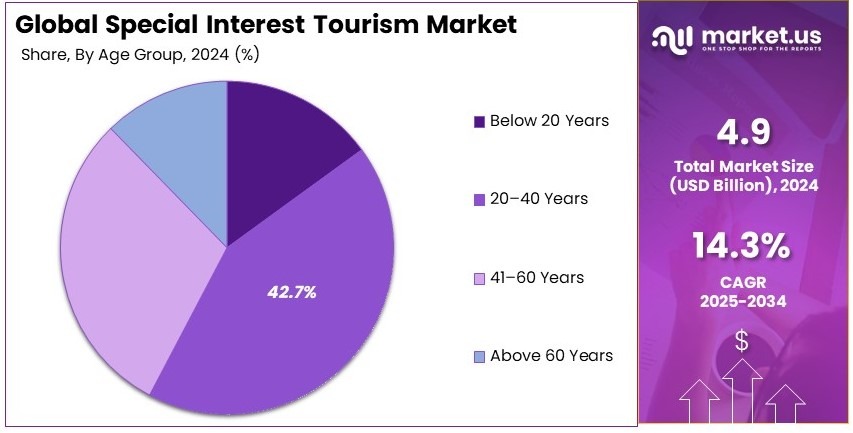
- In 2024, the 20–40 Years age group leads with 42.7%, highlighting younger travelers’ interest in niche tourism experiences.
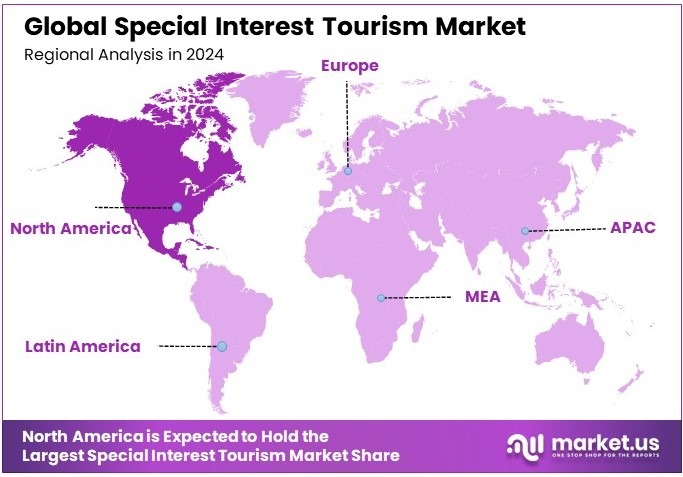
- In 2024, North America is the dominant region, benefiting from diverse tourism offerings and strong economic conditions.
Business Environment Analysis
In the Special Interest Tourism market, saturation varies by niche, with some areas like adventure tourism growing rapidly, while more established sectors like culinary tourism are becoming crowded. This encourages operators to continuously innovate and find new niche areas to maintain interest and appeal.
The target demographic for special interest tourism is diversifying, including not only traditional enthusiasts but also new segments of travelers seeking personalized experiences that align with specific hobbies or passions. This expansion is pushing providers to adapt and offer more tailored experiences that cater to individual interests.
Differentiation in this market is increasingly critical, as providers strive to stand out by offering unique experiences that are not widely available. From wildlife photography tours to deep-sea diving tourism, creating exclusive offerings is key to attracting attention in a competitive landscape.
A value chain analysis for special interest tourism underscores the importance of specialized knowledge and local network connections. These elements are crucial for delivering authentic experiences that require deep expertise and access to specific locations or communities.
Significant investment opportunities exist in enhancing the infrastructure that supports special interest tourism, such as specialized training for guides, development of unique lodging options, and transportation that can handle remote or challenging environments.
Adjacent markets such as educational travel and experiential learning are closely linked with special interest tourism. Operators are increasingly blending elements of education, hands-on learning, and tourism to create comprehensive packages that offer value beyond traditional vacation experiences.
Type of Interest Analysis
Cultural Tourism dominates with 28.4% due to its deep immersion into the history, arts, and traditions of destinations.
The Special Interest Tourism Market is richly segmented, with Cultural Tourism emerging as the most prominent, holding a market share of 28.4%. This sub-segment’s dominance is driven by tourists’ increasing desire to deepen their understanding of different cultures. Cultural tourism offers insights into the history, arts, and traditions of a destination, making it not only educational but also enriching for visitors seeking authentic experiences.
Adventure Tourism appeals to those looking for physical activities and thrills, contributing significantly to the market by catering to an active tourist demographic seeking unique and challenging experiences.
Wellness and Spa Tourism attracts individuals focused on health and relaxation, offering services that promote physical and mental well-being, essential in today’s fast-paced world.
Wildlife Tourism and Safari Tourism provides close encounters with wildlife in their natural habitats, appealing to nature enthusiasts and conservationists alike.
Food and Culinary Tourism is growing as more travelers seek to experience local cuisines and cooking techniques, which are integral to cultural exploration.
Sports Tourism caters to fans traveling to watch and participate in sporting events, a consistently popular draw for groups and solo travelers.
Religious Tourism involves pilgrimage and spiritual activities related to various faiths, providing profound personal experiences for believers and cultural tourists.
Educational Tourism is aimed at students and professionals looking to gain academic or practical knowledge, often through guided tours, workshops, and hands-on learning.
Tourist Type Analysis
International Tourists lead with 65.3% due to their pursuit of specialized experiences across borders.
In the Special Interest Tourism Market, segmented by tourist type, International Tourists dominate with a 65.3% share. This dominance reflects the global nature of special interest tourism, where travelers seek specific experiences that are often located beyond their home countries.
International tourists are willing to invest significant resources in experiences that cater to their specific interests, whether cultural, adventure, or wellness-related.
Domestic Tourists, although smaller in market share, are crucial in supporting local tourism economies and tend to engage more frequently with accessible special interest activities.
Age Group Analysis
The 20–40 Years age group leads with 42.7% due to their active pursuit of diverse and dynamic travel experiences.
In the Special Interest Tourism Market segmented by age, the 20–40 Years group is the largest, holding a 42.7% share. This age group is characterized by its quest for dynamic and diverse travel experiences that align with personal or professional interests. Members of this demographic are often at a stage in their life where travel is both affordable and a priority for leisure or educational purposes.
Below 20 Years typically engage in travel influenced by family decisions or educational trips, which are important for developing early cultural and educational interests.
The 41–60 Years demographic focuses on high-quality, often leisure-driven travel that aligns with their lifestyle choices and interests in more relaxed or culturally rich experiences.
Above 60 Years tourists are increasingly active, seeking comfortable and accessible travel options that cater to specific interests like cultural tours, religious visits, or wellness retreats, reflecting their preferences for meaningful and less strenuous activities.
Key Market Segments
By Type of Interest
- Adventure Tourism
- Cultural Tourism
- Wellness and Spa Tourism
- Wildlife and Safari Tourism
- Food and Culinary Tourism
- Sports Tourism
- Religious Tourism
- Educational Tourism
By Tourist Type
- Domestic Tourists
- International Tourists
By Age Group
- Below 20 Years
- 20–40 Years
- 41–60 Years
- Above 60 Years
Driving Factors
Personalized and Niche Interests Drive Market Growth
The Special Interest Tourism Market is experiencing significant growth fueled by several key factors. Firstly, the rising demand for personalized travel experiences reflects travelers’ desire for customized itineraries that cater to their specific interests and preferences. For example, tourists may seek tailor-made tours that focus on their hobbies, such as bird watching or photography, enhancing their overall travel satisfaction.
Also, the growth in niche travel segments highlights a shift towards specialized tourism categories, such as adventure tourism, wellness retreats, and educational tours. This diversification allows providers to target specific audiences more effectively, offering unique experiences that differentiate them from mainstream tourism options. For instance, culinary tourism has expanded rapidly, with food enthusiasts traveling to destinations renowned for their gastronomic delights, such as Italy’s Tuscany region for wine and cuisine.
Additionally, increased awareness of cultural heritage plays a crucial role in driving market growth. Travelers are increasingly interested in exploring and preserving cultural sites, participating in local traditions, and engaging with indigenous communities. Destinations like Kyoto, Japan, attract visitors eager to experience traditional tea ceremonies and historic temples, fostering a deeper connection with the locale.
Barriers to Growth
Cost and Awareness Challenges Restrain Market Growth
A primary challenge is the high costs of customized travel packages, which can deter budget-conscious travelers from engaging in specialized tours. Personalized itineraries often require additional resources and tailored services, leading to higher prices that may limit accessibility for a broader audience.
Additionally, the limited availability of skilled guides poses a barrier to market growth. Specialized tours require knowledgeable and experienced guides who can provide in-depth insights and ensure a high-quality experience for travelers. Destinations like the Galápagos Islands rely heavily on expert guides to enhance the visitor experience, and any shortage can impact tourism negatively.
Moreover, the lack of awareness about niche tourism options restricts market growth. Many potential travelers remain unaware of the diverse special interest tours available, leading to underutilized opportunities and stagnant demand. Effective marketing and awareness campaigns are essential to educate travelers about the benefits and unique offerings of special interest tourism.
Environmental impact concerns also serve as a significant restraint. Increased tourism in sensitive and specialized areas can lead to environmental degradation, threatening the very attractions that draw tourists. Sustainable practices are crucial to mitigate these impacts, but implementing them can be challenging and resource-intensive.
Investment Opportunities
Technological and Community Initiatives Provide Opportunities
The expansion of eco-friendly travel options allows tourism providers to cater to the growing segment of environmentally conscious travelers. Sustainable accommodations, such as eco-lodges and green hotels, attract visitors who prioritize minimizing their ecological footprint. For example, eco-friendly resorts in Costa Rica offer renewable energy sources and organic dining options, appealing to eco-conscious tourists.
Additionally, the development of technology-integrated travel services presents significant opportunities. Innovations such as mobile apps for personalized itineraries, virtual reality tours, and online booking platforms enhance the traveler experience by providing convenience and customization. Apps like TripAdvisor and Airbnb Experiences enable users to discover and book specialized tours that match their interests, thereby increasing engagement and satisfaction.
The rise of solo and group-specific tours also opens new avenues for market growth. Solo travelers seek unique and safe experiences tailored to their individual needs, while group-specific tours cater to particular demographics, such as seniors or adventure enthusiasts. For instance, women-only travel groups offer a comfortable and empowering environment for female travelers, encouraging more participation.
Moreover, partnerships with local artisans and communities provide mutually beneficial opportunities. Collaborating with local craftsmen, artists, and cultural practitioners helps preserve cultural heritage while offering tourists authentic and immersive experiences. Community-led tours and workshops not only enhance the visitor experience but also support local economies and promote sustainable tourism practices.
Future Market Trends
Digital and Minimalist Trends Are Latest Trending Factors
The growth of photography and content creation tours is a prominent trend, as more travelers seek to capture and share their unique experiences on social media platforms. These specialized tours often include professional photography workshops and guided sessions to help tourists improve their skills while exploring picturesque destinations. For example, photography tours in Iceland attract enthusiasts eager to photograph stunning landscapes and the Northern Lights.
The popularity of heritage and genealogy tourism is another emerging trend, where individuals travel to explore their ancestral roots and cultural heritage. This form of tourism allows travelers to connect with their family history and visit significant cultural landmarks, fostering a sense of identity and belonging. Destinations like Ireland and Italy, with rich historical records and heritage sites, are particularly attractive to genealogy tourists.
Additionally, there is a growing focus on gender-specific travel groups, catering to the unique needs and preferences of different genders. Women-only travel groups, for instance, offer a safe and supportive environment for female travelers to explore new destinations and engage in empowering activities. These groups often organize events such as wellness retreats, adventure excursions, and cultural immersions tailored specifically for women.
Lastly, the growth of slow and minimalist travel practices highlights a shift towards more intentional and meaningful travel experiences. Travelers are increasingly seeking to disconnect from the fast-paced digital world and embrace simplicity, mindfulness, and deeper connections with their surroundings. Slow travel encourages longer stays, deeper cultural engagement, and sustainable practices, allowing tourists to fully immerse themselves in their chosen destinations.
Regional Analysis
North America Dominates the Special Interest Tourism Market
North America stands out in the Special Interest Tourism Market, holding a significant position due to its diverse offerings that cater to niche tourist preferences.
The high market share is driven by the region’s vast array of specialized tourism opportunities, including adventure sports, cultural festivals, and eco-tourism. This diversity attracts tourists with specific interests from around the globe.
North America’s varied geographical landscapes, from mountains to deserts to coastal areas, provide unique settings for a range of special interest activities. Additionally, its advanced infrastructure and services tailored to niche tourism segments enhance the overall visitor experience.
The region’s dominance in the Special Interest Tourism Market is expected to grow as it continues to innovate and expand its offerings. With an increasing focus on sustainable and responsible tourism, North America is poised to attract even more travelers seeking unique and personalized experiences.
Regional Mentions:
- Europe: Europe excels in cultural and heritage tourism, drawing visitors with its historic sites, art, and festivals. The region’s focus on preserving and promoting its history is a significant draw for tourists interested in cultural experiences.
- Asia Pacific: Asia Pacific is seeing growth in eco-tourism and wellness tourism, thanks to its rich natural environments and traditional wellness practices. The region’s commitment to sustainable tourism practices is increasingly attracting environmentally conscious travelers.
- Middle East & Africa: The Middle East & Africa are enhancing their offerings in adventure and cultural tourism. The unique landscapes and rich historical contexts of these regions provide compelling destinations for travelers seeking adventure and historical insights.
- Latin America: Latin America is gaining popularity for its adventure and eco-tourism, supported by its vast rainforests, mountains, and rivers. The region is focusing on sustainable practices to boost its appeal to global eco-tourists.
Key Regions and Countries Covered in the Report
- North America
- US
- Canada
- Europe
- Germany
- France
- The UK
- Spain
- Italy
- Rest of Europe
- Asia Pacific
- China
- Japan
- South Korea
- India
- Australia
- Rest of APAC
- Latin America
- Brazil
- Mexico
- Rest of Latin America
- Middle East & Africa
- South Africa
- Saudi Arabia
- UAE
- Rest of MEA
Competitive Landscape
In the dynamic Special Interest Tourism Market, the top four companies—EatWith, Sports Tours International, Road Scholar, and Bumrungrad International Hospital—each play a crucial role by catering to niche markets and providing highly specialized services that appeal to distinct traveler interests.
EatWith stands out by offering unique culinary experiences that connect tourists with local chefs for private meals and cooking classes around the world. This platform allows travelers to immerse themselves in local food cultures, creating memorable dining experiences that go beyond typical restaurant visits.
Sports Tours International is a leader in sports-related travel, providing packages for fans and athletes alike to participate in or spectate at major sports events globally, including marathons, cycling tours, and football matches. Their services cater to the growing demand for active and fan-based travel experiences.
Road Scholar specializes in educational travel programs aimed primarily at older adults interested in lifelong learning. Their tours are led by experts and include in-depth lectures and special access to historical, cultural, and natural sites, appealing to intellectually curious travelers.
Bumrungrad International Hospital in Thailand has become a key player in medical tourism, offering high-quality healthcare services to international patients. Their state-of-the-art facilities and English-speaking staff make them a popular choice for those seeking medical treatments abroad at competitive prices.
These companies significantly influence the Special Interest Tourism Market by providing tailored experiences that meet the specific interests and needs of diverse traveler groups. Their success underscores the importance of specialization in tourism, where personalization and unique experiences are highly valued.
Major Companies in the Market
- EatWith
- Sports Tours International
- Road Scholar
- Bumrungrad International Hospital
- Disney Parks & Resorts
- Viator
- National Parks Service
- Universal Studios
- PADI (Professional Association of Diving Instructors)
- Vinomofo
- Himalayan Mountaineering Institute
- Art Tours Abroad
- Live Nation
Latest Advancements
- Indonesia Sport and Special Interest Tourism Association (ISSITA): In August 2024, launched in Bali to diversify tourism offerings, focusing on sustainable and specialized initiatives. Recognized by the Ministry of Tourism, the launch event was held at Canna Bali, Nusa Dua.
- Adventure Tour Operators Association of India (ATOAI): In August 2024, introduced a roadmap and toolkit for sustainable adventure tourism in Arunachal Pradesh, promoting responsible tourism while preserving natural and cultural heritage.
- Himachal Pradesh Government: In August 2024, approved water sports activities at Pong Dam to boost adventure tourism, with plans to develop infrastructure and implement safety measures to attract tourists and support the local economy.









