


Report Overview
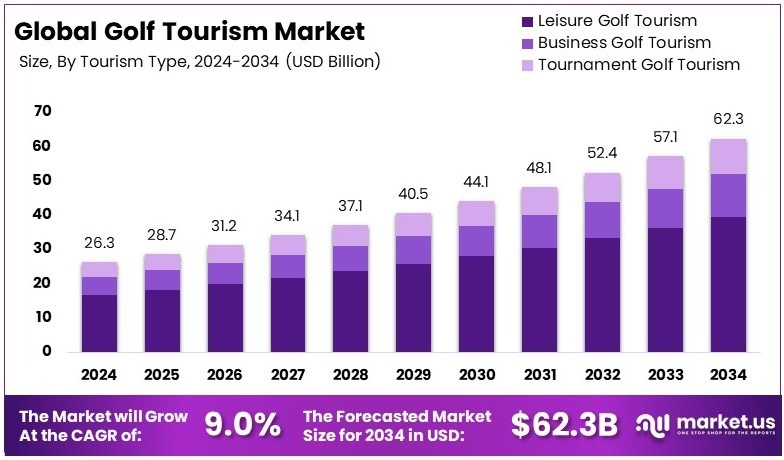
The Global Golf Tourism Market size is expected to be worth around USD 62.3 Billion by 2034, from USD 26.3 Billion in 2024, growing at a CAGR of 9.0% during the forecast period from 2025 to 2034.
Golf tourism refers to traveling to play golf at renowned courses and resorts. It attracts golf enthusiasts seeking quality courses, scenic locations, and specialized facilities. Travelers often combine golfing with leisure activities, making it a popular niche within the broader tourism industry.
The golf tourism market includes companies and services that facilitate golf-related travel. This encompasses golf resorts, travel agencies, transportation services, and equipment suppliers. The market targets golfers looking for premium experiences and destinations with top-tier golfing amenities.
Golf tourism caters to a diverse group, including enthusiasts and luxury travelers. Notable courses like St Andrews Links in Scotland see over 230,000 rounds annually. This type of tourism draws international attention and spending, boosting local economies significantly.
Major events like the Masters Tournament enhance golf tourism’s appeal. Annually, Augusta National sees about 40,000 visitors per day during the tournament. Such events provide a substantial lift to the local hospitality and travel industries.
Golf tourism growth is driven by both private and public investment. The development of the Mission Hills Haikou Resort, costing over $1 billion, exemplifies significant private financial input. Meanwhile, initiatives like Scotland’s “Golf Tourism Development Strategy” aim to boost the sector’s value by 20% by 2024.
Locally, golf tourism generates jobs and sustains businesses. Globally, it promotes cultural exchange and sustainable tourism. Government strategies, such as those in Scotland, support market expansion through improved marketing and infrastructure, aiming to enhance the overall visitor experience.
In 2022, 25.6 million Americans engaged in golf, about 8% of the U.S. population. Globally, participation is rising, with 39.6 million golfers reported in R&A-affiliated markets, marking a 15% increase from 34.5 million. This reflects growing global interest and market vitality.
Key Takeaways
- The Golf Tourism Market was valued at USD 26.3 Billion in 2024, projected to reach USD 62.3 Billion by 2034, with a CAGR of 9.0%.
- In 2024, Leisure Golf Tourism dominates the tourism type segment with 63.4%, driven by the popularity of recreational golfing.
- In 2024, Domestic Tourists lead the tourist type segment with 63.4%, indicating a preference for local golf courses.
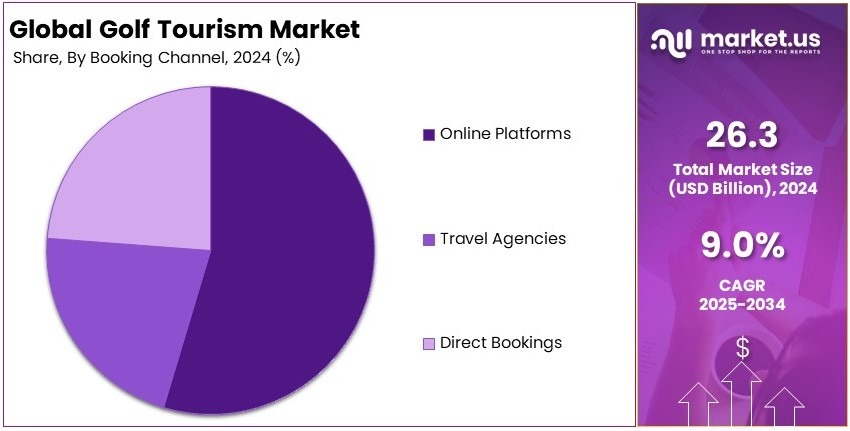
- In 2024, Online Platforms dominate the booking channel segment, reflecting the growing reliance on digital booking systems.
- In 2024, Recreational Travel leads the travel purpose segment due to the leisure focus of most golf tourism activities.
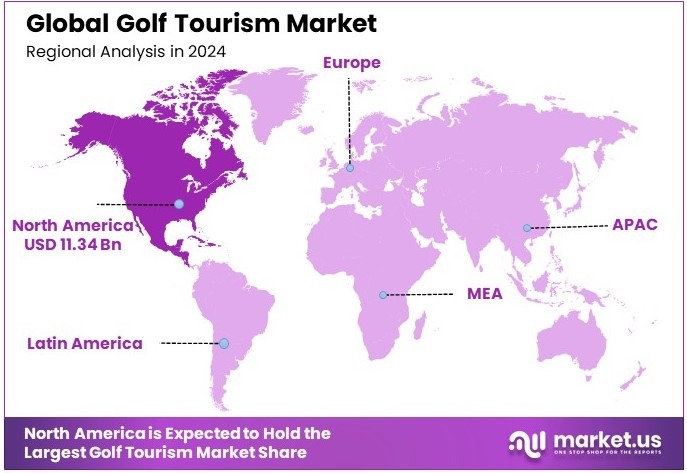
- In 2024, North America holds 43.1% of the market share, valued at USD 11.34 Billion, supported by premium golf courses and facilities.
Business Environment Analysis
The golf tourism market, though mature, continues to attract a dedicated demographic primarily consisting of older, affluent individuals who value both the sport and the travel experience. These consumers often seek premium experiences, indicating a market that, while competitive, still holds substantial consumer interest.
Furthermore, golf tourism benefits from strong product differentiation. Resorts and tour operators offer unique packages that include luxury travel and accommodations along with exclusive course access, appealing to high-end consumers looking for distinct, tailored experiences.
Additionally, the industry’s value chain is extensive, incorporating sports equipment manufacturers, hospitality services, and specialized travel agents. Each component of the value chain adds significant value, enhancing the overall consumer experience and supporting robust economic activity.
Adjacent markets like spa and wellness tourism also intertwine with golf tourism. Visitors often seek holistic experiences that combine leisure with wellness, creating opportunities for businesses to expand their offerings and capitalize on the overlap between these markets.
Regional Analysis
North America Dominates with 43.1% Market Share in Golf Tourism
North America leads the Golf Tourism Market with a 43.1% share, totaling USD 11.34 billion. This prominent market share is driven by an extensive array of world-renowned golf courses and major golfing events that attract enthusiasts from all over the world.
The region boasts a robust infrastructure for golf tourism, with courses like Pebble Beach and Augusta National that are icons of the sport. Furthermore, a strong domestic interest in golf, supported by a high disposable income among the populace, helps maintain a steady influx of golf tourists.
Looking forward, North America’s influence in the global Golf Tourism Market is poised to continue growing. Innovations in golf tourism offerings, like all-inclusive golf resorts and celebrity-designed courses, alongside marketing strategies aimed at younger demographics, are likely to further boost interest and participation in golf tourism in the region.
Regional Mentions:
- Europe: Europe maintains a solid presence in the Golf Tourism Market with famous courses in Scotland and Spain. The tradition and history of golf in Europe attract purists and enthusiasts, bolstering steady growth in this region.
- Asia Pacific: The Asia Pacific region is witnessing rapid growth in golf tourism, fueled by emerging golf markets like China and Thailand. The development of new golf courses and resorts, combined with rising local interest in golf, supports this expansion.
- Middle East & Africa: The Middle East, particularly Dubai, has become a notable player in golf tourism, offering luxurious golf experiences that draw global travelers. Africa is also emerging, with South Africa leading the way in golf tourism on the continent.
- Latin America: Latin America is gradually gaining recognition in the Golf Tourism Market, with countries like Argentina and Mexico developing golf tourism as a key component of their travel offerings. The scenic beauty and challenging courses attract a growing number of tourists.
Tourism Type Analysis
Leisure Golf Tourism dominates with 63.4% due to its widespread appeal and accessibility.
Leisure Golf Tourism has become the most significant segment within the Golf Tourism Market, claiming a substantial 63.4% share. This dominance stems from the segment’s broad appeal to individuals looking for relaxation and casual play, making it accessible to players of all skill levels. It attracts a diverse demographic who view golf more as a recreational activity than a competitive sport, driving its popularity.
Business Golf Tourism serves as a vital platform for networking and corporate dealings, blending sport with business interactions. Although smaller in market share, this segment enhances the golf tourism industry by integrating leisure with professional growth opportunities, appealing to business professionals seeking to forge and strengthen relationships in a relaxed setting.
Tournament Golf Tourism, while niche, plays a crucial role in the sector by attracting dedicated golf enthusiasts and spectators alike. This segment brings in significant revenue through sponsorships, media rights, and merchandise sales, highlighting competitive golf as not only a sport but a spectator event that garners international attention.
Tourist Type Analysis
Domestic Tourists dominate with 63.4% due to the convenience and familiarity of local courses.
Domestic Tourists hold the largest share in the Tourist Type category within Golf Tourism, accounting for 63.4%. This dominance is primarily due to the convenience, reduced travel costs, and familiarity with local golf courses, which attract a majority of golf tourists.
Many players prefer venues within their country to avoid the complexities of international travel, making domestic tourism the most popular choice.
International Tourists, though smaller in number, significantly impact golf tourism by bringing diverse cultures and increased spending to host countries. This segment contributes to the global exchange and expansion of the golf community, showcasing prestigious golf courses around the world and enhancing cultural interactions.
Booking Channel Analysis
Online Platforms dominate due to their ease of use and wide reach.
Online Platforms have become the most favored booking channel in the Golf Tourism Market due to their convenience, efficiency, and broad accessibility. They allow tourists to easily compare prices, read reviews, and book golf tours and accommodations, making them an indispensable tool for planning golf vacations.
Travel Agencies, though traditional, still play a significant role by offering personalized service and expert advice, especially for complex travel arrangements or exclusive destinations. Direct Bookings are preferred by some tourists who seek to avoid intermediary fees and establish a direct rapport with the service providers, offering a more personalized approach to travel planning.
Travel Purpose Analysis
Recreational Travel dominates as it caters to the majority seeking relaxation and enjoyment.
Recreational Travel is the leading purpose for golf tourism, characterized by individuals looking to enjoy golf as a leisure activity without the pressures of competition. This segment’s popularity underlines the sport’s role in relaxation and personal enjoyment, appealing to a broad audience of casual players.
Professional and Competitive Travel caters to a smaller, more focused group of golf tourists who participate in or follow professional golf tournaments. This travel purpose is crucial for those looking to improve their skills against more competitive players or who are interested in the professional aspects of the sport, including careers and sponsorships.
Key Market Segments
By Tourism Type
- Leisure Golf Tourism
- Business Golf Tourism
- Tournament Golf Tourism
By Tourist Type
- Domestic Tourists
- International Tourists
By Booking Channel
- Online Platforms
- Travel Agencies
- Direct Bookings
By Travel Purpose
- Recreational Travel
- Professional and Competitive Travel
By Regions and Countries
- North America
- US
- Canada
- Europe
- Germany
- France
- The UK
- Spain
- Italy
- Rest of Europe
- Asia Pacific
- China
- Japan
- South Korea
- India
- Australia
- Rest of APAC
- Latin America
- Brazil
- Mexico
- Rest of Latin America
- Middle East & Africa
- South Africa
- Saudi Arabia
- UAE
- Rest of MEA
Driving Factors
Recreational Growth Fuels Golf Tourism Expansion
The Golf Tourism Market is thriving due to several key drivers that contribute to its steady growth. One major factor is the increasing popularity of golf as a recreational activity. More people are taking up golf for leisure and fitness, leading to a higher demand for golfing destinations worldwide.
Additionally, the growth in high-income traveler segments plays a significant role. Wealthy individuals are seeking premium golfing experiences, which boosts the market as they are willing to spend more on exclusive courses and luxury amenities.
The expansion of luxury golf resorts further supports this trend. These resorts offer top-notch facilities, attracting golf enthusiasts who desire comfort and high-quality services during their travels.
Moreover, the promotion of golf tourism by national tourism boards has been instrumental. Governments and tourism organizations are actively marketing their regions as prime golf destinations, highlighting scenic courses and unique golfing experiences. For example, countries like Scotland and the United States have effectively promoted their historic and world-renowned golf courses to attract international visitors.
Restraining Factors
Cost and Environmental Challenges Restrain Market Growth
Despite its growth, the Golf Tourism Market faces several challenges that can limit its expansion. One significant restraining factor is the high costs associated with golf equipment and travel packages. Golf can be an expensive sport, and the costs of clubs, attire, and travel expenses can deter potential tourists, especially those on a budget.
Additionally, seasonal restrictions in some destinations pose a challenge. Golfing opportunities may be limited to certain times of the year due to weather conditions, leading to uneven tourist inflows and reduced year-round revenue for golf resorts.
Environmental concerns related to golf course maintenance also act as a barrier. The upkeep of golf courses often requires substantial water usage and chemical treatments, which can lead to negative environmental impacts and attract criticism from eco-conscious travelers.
Furthermore, there is a limited appeal among younger demographics. Golf is sometimes perceived as an older sport, making it less attractive to younger travelers who may prefer more dynamic and trend-driven activities. For example, destinations heavily reliant on golf tourism may struggle to attract millennials and Gen Z tourists who seek diverse and adventurous experiences.
Growth Opportunities
Wellness and Customization Offer Growth Opportunities
The Golf Tourism Market presents several promising opportunities that can drive future growth and attract a wider range of tourists. One notable opportunity is the development of golf and spa retreats. Combining golfing with wellness services like massages, yoga, and spa treatments can attract tourists seeking relaxation and holistic health experiences alongside their sport.
Another growth area is the rise of customized golf travel experiences. Personalized packages that cater to individual preferences, such as tailored itineraries, private coaching, and exclusive access to top courses, can enhance the appeal of golf tourism.
Additionally, integrating golf with adventure and nature tourism opens new avenues for attracting tourists who enjoy outdoor activities. Offering packages that include hiking, wildlife tours, or water sports alongside golfing can appeal to those looking for a more varied and enriching travel experience.
Moreover, promoting golf as a multi-generational activity can broaden the market by encouraging families to travel together for golfing vacations. This approach can attract not only avid golfers but also their families who wish to spend quality time together. For example, resorts that offer activities for children and non-golfing family members alongside excellent golf facilities can become attractive destinations for family vacations.
Emerging Trends
Sustainability and Digital Influence Are Latest Trending Factors
The Golf Tourism Market is currently shaped by several trending factors that reflect changing preferences and technological advancements. One prominent trend is the increasing interest in eco-sustainable golf experiences. Golf courses that adopt environmentally friendly practices, such as using renewable energy, reducing water usage, and preserving natural habitats, are becoming more attractive to eco-conscious tourists.
Another trend is the popularity of golf and wellness hybrid travel packages. Combining golf with wellness activities like meditation, fitness programs, and healthy dining options appeals to tourists seeking a balanced and health-oriented vacation.
Additionally, there is a growth in short-stay golf tourism. Busy professionals and casual golfers are opting for shorter, more frequent golf trips, making it essential for destinations to offer flexible and accessible golfing options.
Lastly, the expansion of golf tourism influencers and social media campaigns plays a crucial role in shaping the market. Influencers who share their golfing experiences on platforms like Instagram and YouTube help promote destinations to a global audience, attracting younger and tech-savvy travelers. For example, viral golf challenges or beautifully captured golf courses on social media can significantly boost a destination’s visibility and appeal.
Competitive Landscape
In the Golf Tourism Market, PerryGolf, Haversham & Baker, Golfbreaks, and Carr Golf are distinguished as leading players. These companies have significantly shaped the market through their comprehensive service offerings, catering to golf enthusiasts globally.
PerryGolf stands out for its luxury golf tours, offering clients exclusive access to some of the world’s top golf courses along with premium accommodation. Their packages often include unique travel experiences, such as cruises that combine golfing with cruising, appealing to high-end clients looking for an all-encompassing luxury vacation.
Haversham & Baker excel in providing tailored golfing experiences. They focus on creating personalized itineraries that match the specific preferences and skill levels of their clients, enhancing customer satisfaction through highly customized service. Their attention to detail and customer-focused approach have earned them a loyal client base.
Golfbreaks is renowned for offering a wide variety of golfing packages that cater to all budgets and preferences. From weekend breaks to extended holidays, Golfbreaks serves a diverse demographic, making golf holidays accessible and enjoyable for everyone from beginners to seasoned golfers.
Carr Golf, with a strong heritage and deep expertise in golf tourism, specializes in delivering unforgettable golf experiences in Ireland and Scotland. They are known for their exceptional customer service and the ability to create tours that combine world-famous golf courses with local culture, making each golf trip a rich and immersive experience.
These key players drive the Golf Tourism Market by continuously innovating their offerings and by maintaining strong relationships with world-class golf courses. Their commitment to quality and customer satisfaction helps elevate the standards of the industry and attract golfers who seek memorable golfing experiences. The continued growth and influence of these companies are likely to shape the future dynamics of the Golf Tourism Market positively.
Major Companies in the Market
- PerryGolf
- Haversham & Baker
- Golfbreaks
- Carr Golf
- Premier Golf
- Kalos Golf
- Golf International
- Links Golf St Andrews
- SGH Golf
- Pioneer Golf
- Golf Travel Centre
- Your Golf Travel
- Golfasian
- Golf Holidays Direct
- Golf Tours International
Recent Developments
- PGA TOUR, DP World Tour, and PIF: In June 2023, the PGA TOUR, DP World Tour, and Saudi Arabia’s Public Investment Fund (PIF) announced a landmark agreement to unify their commercial operations under a newly formed entity. This collaboration aims to promote and grow the game of golf globally, consolidating resources and ending previous litigation between the parties.
- Topgolf Callaway Brands: In September 2024, Topgolf Callaway Brands revealed plans to separate into two independent companies: Callaway, focusing on golf equipment and apparel, and Topgolf, specializing in entertainment venues. The split is expected to occur in the second half of 2025, allowing each entity to concentrate on its core business operations.
- Galgorm Collection: In November 2024, Galgorm Collection purchased two iconic properties in Northern Ireland—Galgorm Castle Estate and Roe Park Resort—for £28 million (€33.8 million). This acquisition is part of a larger £50 million (€60 million) investment plan to enhance luxury golf tourism destinations in the region.









