


Report Overview
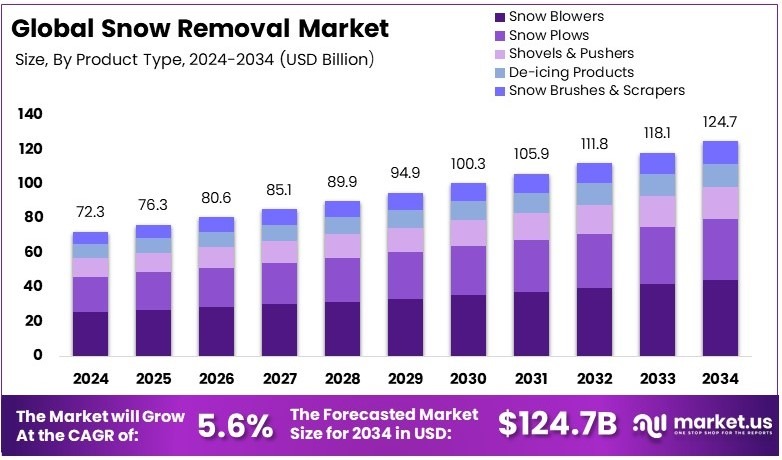
The Global Snow Removal Market size is expected to be worth around USD 124.7 Billion by 2034, from USD 72.3 Billion in 2024, growing at a CAGR of 5.6% during the forecast period from 2025 to 2034.
Snow removal refers to the processes and activities involved in clearing snow and ice from roads, sidewalks, driveways, and other surfaces. This includes the use of equipment like plows, snow blowers, and salt spreaders. Snow removal is essential for maintaining safety and accessibility during winter conditions.
The snow removal market encompasses companies and services that provide snow and ice clearing solutions. It includes equipment manufacturers, service providers, and suppliers of de-icing materials. The market serves residential, commercial, and municipal clients, ensuring safe and functional environments during snowy and icy weather.
Snow removal services play a critical role in maintaining safety during winter. Retention rates are high, with 93% of clients staying loyal year over year, according to SIMA Foundation. This demand is driven by regions with heavy snowfall, like Vermont and Maine, which receive 89.25 inches and 77.28 inches annually, respectively.
The snow removal market benefits from robust demand but faces increasing competition. Winter storms caused nearly $6 billion in insured losses in 2022, as reported by Aon, highlighting the critical need for efficient snow management. Municipalities also enforce regulations, such as Spokane County’s requirement to maintain a 50-foot distance from snow plows, ensuring operational safety.
Government actions impact the market’s growth significantly. In 2024, Congressman Kennedy introduced the SNOW Act to enhance federal support during severe snowstorms. This aligns with the rising need for preparedness as snowfall levels, such as Seoul’s 6.5 inches in November 2024, disrupt local economies and transportation systems.
Snow removal services show steady growth with opportunities driven by severe weather events and safety regulations. These factors, coupled with consistent demand in high-snowfall regions, create a resilient yet competitive market. Strategic government interventions further bolster its prospects on both local and national scales.
Key Takeaways
- The Snow Removal Market was valued at USD 72.3 Billion in 2024 and is expected to reach USD 124.7 Billion by 2034, with a CAGR of 5.6%.
- In 2024, Snow Blowers led the product type with 35.7%, driven by their efficiency and convenience for large areas.
- In 2024, Commercial Snow Removal Services dominated the service type with 40.9%, reflecting increased demand from businesses.
- In 2024, Government and Municipal Bodies accounted for 53.1% of the end-user segment, underlining their significant role in public infrastructure maintenance.
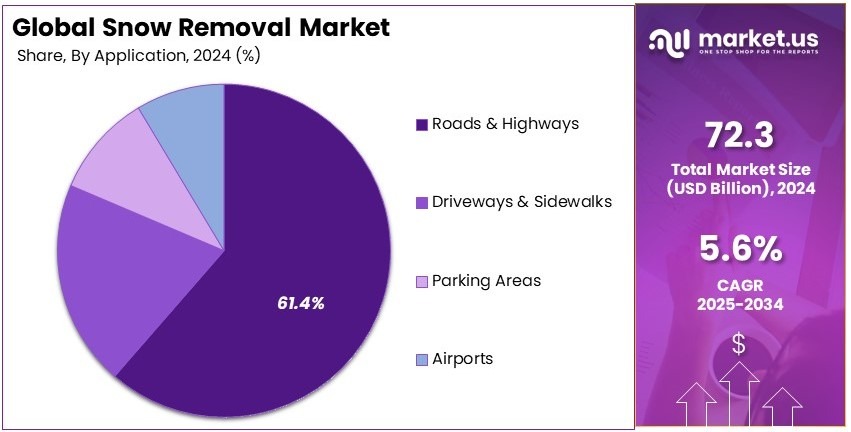
- In 2024, Roads and Highways led the application segment with 61.4%, highlighting their critical importance during snow seasons.
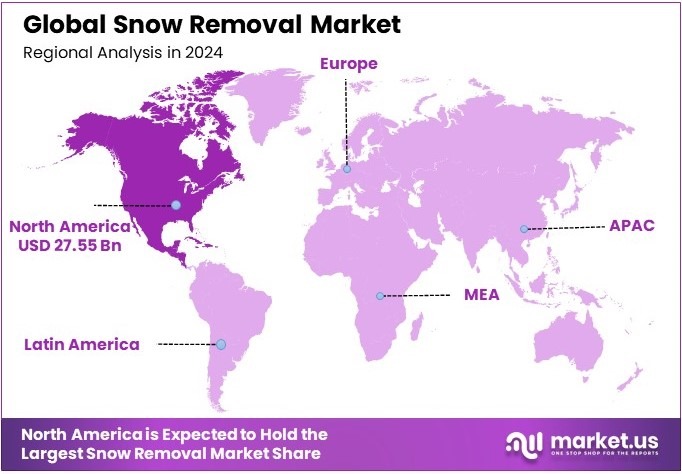
- In 2024, North America held 38.1% of the market, valued at USD 27.55 Billion, showcasing its strong demand for snow management solutions.
Business Environment Analysis
The snow removal market is moderately saturated in regions with predictable heavy snowfall, such as Vermont and Maine. However, suburban and less-served areas present opportunities for expansion, particularly for operators offering advanced, efficient snow management solutions tailored to local needs.
The target demographic includes municipalities, commercial property managers, and residential customers. Businesses and governments account for a significant portion of demand due to safety and accessibility concerns, while individual homeowners seek reliable, cost-effective services during peak winter months.
Product differentiation is key to gaining a competitive edge. Companies investing in advanced technologies, such as GPS-enabled plows and eco-friendly deicing solutions, attract environmentally conscious clients. Moreover, offering on-demand and subscription-based services creates flexibility for diverse customer needs.
Investment opportunities are strong in automation and sustainable technologies. For example, government initiatives promoting green practices, such as the proposed SNOW Act, could incentivize operators to adopt energy-efficient equipment and practices, reducing environmental impact.
Adjacent markets, such as landscaping and construction, offer complementary growth avenues. Many snow removal companies already overlap in these sectors, providing year-round services that enhance revenue stability and customer retention during off-peak seasons.
Product Type Analysis
Snow Blowers dominate with 35.7% due to their efficiency and ease of use in heavy snowfall areas.
The Snow Removal Market is divided into several product types, with Snow Blowers taking the lead, holding a 35.7% market share. This dominance is primarily due to their efficiency in clearing large volumes of snow quickly and with less effort compared to manual methods. Snow blowers are particularly favored in regions experiencing frequent and heavy snowfall, where they significantly reduce the labor and time required to clear areas.
Snow Plows are essential for clearing snow from roads and large surfaces and are mainly used by municipal bodies and on commercial properties. Their ability to push large amounts of snow makes them indispensable for maintaining traffic flow and safety during winter seasons.
Shovels and Pushers are basic yet crucial tools for residential and light commercial use, valued for their simplicity and affordability. They are widely used by individuals to clear driveways and sidewalks.
De-icing Products, including salts and chemicals, play a critical role in preventing ice build-up and ensuring pedestrian and vehicular safety by maintaining traction on treated surfaces.
Snow Brushes and Scrapers are handy for removing snow and ice from vehicles, an essential daily task for many people in winter climates to ensure safe driving conditions.
Service Type Analysis
Commercial Snow Removal Services dominate with 40.9% due to the high demand from businesses to maintain accessibility and safety.
Within the Service Type segment, Commercial Snow Removal Services lead with a 40.9% share. This dominance stems from the critical need for businesses, including retail centers, office buildings, and hospitality venues, to maintain clear and safe access during snow events.
Ensuring accessibility and safety is paramount to continue operations and avoid disruptions or potential liabilities from accidents on snowy or icy premises.
Residential Snow Removal Services are also significant, providing necessary clearance for homes, enhancing safety and convenience for residents during the winter months.
Municipal Snow Removal Services are crucial for public safety and mobility, focusing on clearing snow from public roads, bridges, and public pathways to facilitate safe transportation and community activities.
End-user Analysis
Government and Municipal Bodies dominate with 53.1% due to their responsibility for public safety and infrastructure maintenance.
The End-user segment is prominently led by Government and Municipal Bodies, accounting for 53.1% of the market. This group’s leadership is driven by the responsibility to maintain public safety and infrastructure, necessitating comprehensive and efficient snow removal solutions to keep roads, public spaces, and transit systems operational during and after snowfall.
Residential Users require reliable snow removal to ensure personal access and safety, contributing significantly to the market through the widespread use of private snow removal services and products.
Commercial Establishments rely on snow removal services to maintain their operations and customer access, especially critical for businesses dependent on physical customer presence such as retail stores and restaurants.
Industrial Users, including factories and warehouses, need effective snow removal to keep logistics and operations smooth, preventing delays or hazards associated with snow accumulation.
Application Analysis
Roads and Highways dominate with 61.4% due to the vital need to maintain clear and safe transportation routes.
In the Application segment, Roads and Highways are paramount, constituting a 61.4% market share. This dominance is critical as roads and highways must remain clear to ensure safe and continuous traffic flow, which is essential for economic stability and emergency services during winter months. The high priority and scale of snow removal required for this application drive significant investment in heavy-duty snow removal equipment and services.
Driveways and Sidewalks are crucial for residential and commercial access, requiring regular snow removal to ensure safety and accessibility for pedestrians and vehicles.
Parking Areas must be kept clear to maintain space availability and safety for vehicles and pedestrians, a common requirement for commercial and public facilities.
Airports also require rigorous snow removal operations to ensure runways, taxiways, and terminal access are safe for aircraft and passenger movement, highlighting the importance of specialized services and equipment for these critical areas.
Key Market Segments
By Product Type
- Snow Blowers
- Snow Plows
- Shovels and Pushers
- De-icing Products
- Snow Brushes and Scrapers
By Service Type
- Residential Snow Removal Services
- Commercial Snow Removal Services
- Municipal Snow Removal Services
By End-user
- Residential Users
- Commercial Establishments (e.g., offices, shopping malls)
- Government and Municipal Bodies
- Industrial Users
By Application
- Driveways and Sidewalks
- Parking Areas
- Roads and Highways
- Airports
Driving Factors
Extreme Weather Events Propel Market Growth
The increasing frequency of severe snowstorms and extreme weather events has heightened the need for efficient snow removal services. For example, cities like Chicago and Moscow experience heavy snowfall annually, necessitating robust snow clearance operations to maintain city functionality.
Additionally, the growth in urbanization leads to higher demand for snow clearance as more infrastructure and densely populated areas require regular maintenance. As urban areas expand, the complexity and volume of snow removal tasks also increase, creating more opportunities for service providers.
Moreover, the expansion of government and municipal budgets for snow removal services plays a crucial role. Governments recognize the importance of timely snow clearance in ensuring public safety and minimizing disruptions, leading to increased funding for these services. For instance, municipalities in Canada allocate significant portions of their budgets to snow management to keep roads and public spaces accessible.
Lastly, rising awareness about public safety in snow-prone areas encourages investments in advanced snow removal technologies and services. Communities are more informed about the dangers of untreated snow and ice, prompting proactive measures to address these hazards.
Restraining Factors
High Equipment Costs and Seasonal Challenges Restrain Market Growth
One major restraint is the high initial costs of snow removal equipment and machinery. Advanced equipment like snowplows, blowers, and salt spreaders require significant investment, which can be a barrier for new entrants and smaller service providers. For example, purchasing a commercial-grade snowplow can cost upwards of $50,000, making it a substantial financial commitment.
Additionally, the market is highly seasonal, with demand fluctuating significantly based on weather conditions. During mild winters, the need for snow removal services decreases, leading to periods of low revenue for companies.
Rising fuel costs further impact operational expenses, as snow removal machinery relies heavily on fuel. For instance, spikes in diesel prices can increase the cost of running snowplows, making services more expensive for consumers.
Moreover, labor shortages during peak snowfall periods pose a significant challenge. The intense demand for skilled workers during heavy snowfall can lead to delays and reduced service quality.
Growth Opportunities
Technological Innovations Provide Opportunities
One significant opportunity is the expansion of robotic and autonomous snow removal solutions. These technologies can enhance efficiency and reduce labor costs by automating the snow-clearing process. For example, autonomous snowplows are being tested in cities like Boston, offering a glimpse into the future of automated snow management.
Additionally, the development of eco-friendly de-icing materials and technologies presents a sustainable growth avenue. Traditional de-icing chemicals can harm the environment, prompting the need for greener alternatives. Companies are investing in biodegradable salts and advanced heating systems that minimize environmental impact.
Furthermore, there is an increasing demand for subscription-based snow removal services. These models provide customers with regular and predictable snow clearance, ensuring consistent revenue for service providers. For instance, residential areas in regions like Minnesota are adopting subscription services to manage snow effectively throughout the winter season.
Another promising area is the growth of smart snow removal systems integrated with the Internet of Things (IoT). These systems use sensors and data analytics to optimize snow clearance operations, improving efficiency and responsiveness.
Emerging Trends
Autonomous Equipment and Sustainable Practices Are Latest Trending Factors
Latest trends is the rising adoption of autonomous and GPS-controlled snow equipment. These advanced machines can operate with minimal human intervention, increasing efficiency and reducing labor costs. For example, autonomous snowplows equipped with GPS technology are being deployed in smart cities like Singapore, enhancing their snow management capabilities.
Additionally, there is an increasing focus on environmentally sustainable snow removal practices. Companies are adopting methods that reduce their carbon footprint, such as using electric-powered snow removal equipment and eco-friendly de-icing agents. This shift not only benefits the environment but also appeals to environmentally conscious consumers and municipalities.
Furthermore, the popularity of all-in-one snow removal and ice management systems is growing. These integrated solutions combine snow plowing, ice control, and drainage management into a single system, providing comprehensive snow management for large areas.
Lastly, the growth of real-time monitoring and scheduling apps for snow clearance is transforming the industry. These apps allow municipalities and businesses to monitor snow conditions in real-time and schedule snow removal services more effectively. For instance, cities like Toronto are using real-time data to deploy snow removal resources where they are needed most, ensuring timely and efficient operations.
Regional Analysis
North America Dominates with 38.1% Market Share
North America leads the Snow Removal Market with a 38.1% share, totaling USD 27.55 billion. This significant market presence is driven by the region’s harsh winter conditions, which necessitate extensive snow removal services and products.
Key factors include frequent and heavy snowfall across many parts of the region, requiring robust infrastructure for snow management. The presence of numerous airports, highways, and urban centers demands continuous and effective snow removal to maintain safety and economic activity.
Market dynamics are influenced by the region’s commitment to public safety and mobility. Investments in snow removal technologies and a strong service industry ensure efficient response to snow events. The widespread use of advanced snow plows, environmentally friendly de-icing agents, and predictive weather response strategies exemplifies this commitment.
The future influence of North America in the global Snow Removal Market is expected to grow. Climate variability may increase the frequency and intensity of snow events, driving further innovation and market expansion in snow removal technologies and services, potentially increasing the region’s market share.
Regional Mentions:
- Europe: Europe has a substantial snow removal market, supported by its own severe winter conditions. The region focuses on sustainable snow management solutions that minimize environmental impact while maintaining safety and mobility.
- Asia Pacific: The Asia Pacific region, particularly countries with mountainous regions like Japan, invests in snow removal to support tourism and protect rural communities. Rapid responses to snowfall are crucial for maintaining access and safety.
- Middle East & Africa: While generally less affected by snow, certain high-altitude areas in the Middle East and Africa require targeted snow removal solutions to support accessibility and safety during the winter months.
- Latin America: In Latin America, snow removal is relevant in southern Andean regions where winter tourism and mountainous terrain necessitate effective snow management strategies to ensure year-round connectivity and safety.
Key Regions and Countries Covered in the Report
- North America
- US
- Canada
- Europe
- Germany
- France
- The UK
- Spain
- Italy
- Rest of Europe
- Asia Pacific
- China
- Japan
- South Korea
- India
- Australia
- Rest of APAC
- Latin America
- Brazil
- Mexico
- Rest of Latin America
- Middle East & Africa
- South Africa
- Saudi Arabia
- UAE
- Rest of MEA
Competitive Landscape
The snow removal market is led by a few dominant companies known for their reliable products and innovative solutions. Ariens Company, The Toro Company, Honda Power Equipment, and John Deere are the top players driving the industry.
Ariens Company is a leader in snow removal equipment, offering durable and efficient machines tailored for both residential and commercial users. Its focus on high-quality materials and long-lasting performance ensures strong customer loyalty. The Toro Company stands out with its wide range of snowblowers and plows designed for ease of use. Its commitment to user-friendly designs and innovative technology appeals to a broad consumer base.
Honda Power Equipment is recognized for its premium-quality products and advanced engineering. Its snow removal machines are known for their fuel efficiency and quiet operation, making them a preferred choice among eco-conscious customers. John Deere, with its extensive expertise in heavy machinery, caters to large-scale commercial snow removal needs. Its durable equipment and strong service network make it a trusted name in the market.
These companies focus on product differentiation through features such as fuel efficiency, ergonomic designs, and smart technology integration. Many offer electric and battery-powered models, aligning with the growing demand for sustainable options.
Collaborations with local governments and businesses enhance their reach in municipal and commercial sectors. Additionally, partnerships with retailers ensure widespread availability of their products, even in remote areas.
Investments in R&D and technology allow these players to maintain a competitive edge. By addressing customer needs for efficiency and sustainability, they continue to lead the snow removal market, ensuring strong brand presence and consistent growth.
Major Companies in the Market
- Ariens Company
- The Toro Company
- Honda Power Equipment
- John Deere
- Husqvarna Group
- MTD Products
- SnowEx
- Blizzard Snowplows
- Western Products
- Meyer Products LLC
- Boss Snowplow
- RPM Tech
- Hiniker Company
Recent Developments
- Contractor Selected for Airport Snow Removal: In December 2024, Archuleta County selected a contractor for snow removal services at Stevens Field Airport. The decision followed a competitive bidding process to ensure safe and efficient operations during winter months. The chosen contractor is responsible for maintaining clear runways and taxiways, which are crucial for the airport’s functionality.
- New Mexico DOT Launches 2025 Snow Removal Plan: In December 2024, the New Mexico Department of Transportation (DOT) announced its 2025 snow removal plan. The strategy includes deploying resources and personnel across the state to effectively manage winter weather conditions. The plan aims to ensure road safety and minimize disruptions during snowfall.
- The New Terminal One at JFK Launches RFP for Snow Removal Services: In December 2024, The New Terminal One at John F. Kennedy International Airport issued a Request for Proposals (RFP) for snow removal services. This initiative seeks qualified contractors to manage snow and ice removal, ensuring passenger safety and operational efficiency. The RFP process is part of the terminal’s preparations for the upcoming winter seasons.









