


Report Overview
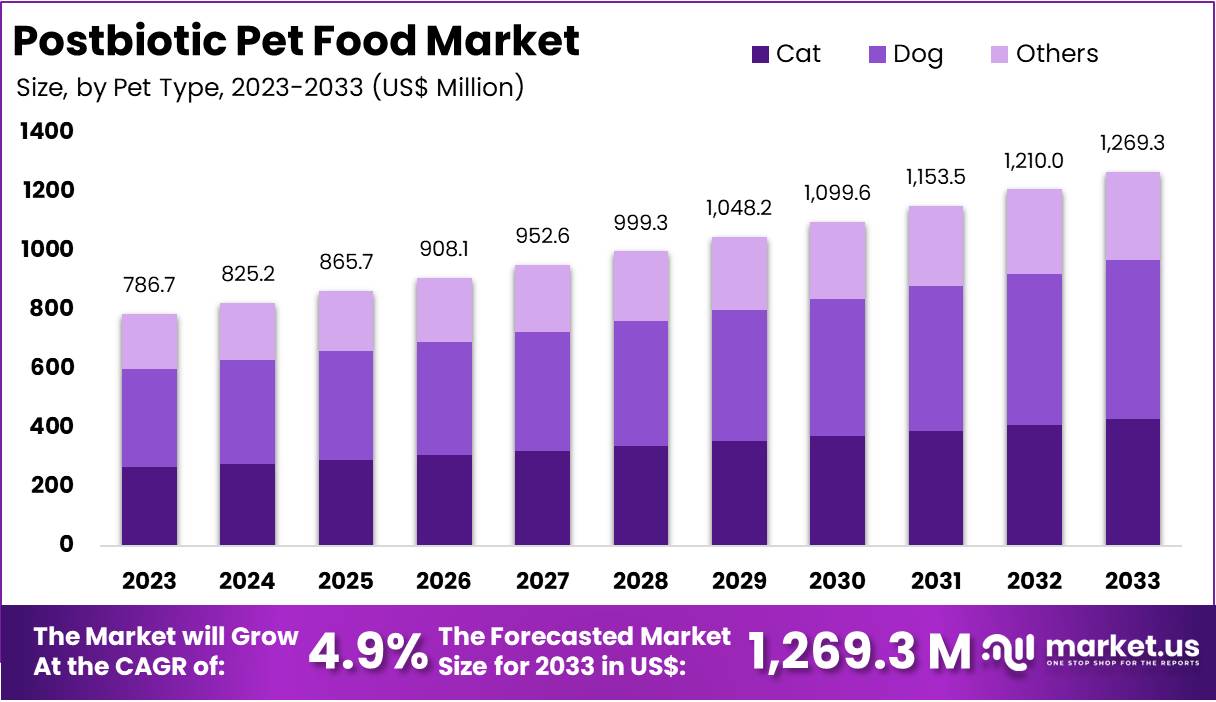
The Global Postbiotic Pet Food Market Size is expected to be worth around US$ 1269.3 Million by 2033, from US$ 786.7 Million in 2023, growing at a CAGR of 4.9% during the forecast period from 2024 to 2033.
Postbiotic pet food incorporates postbiotics, which are non-viable bacterial products or metabolic byproducts from probiotic bacteria, known to confer health benefits to the host. Unlike probiotics, which are live organisms, postbiotics are the waste products or components released by probiotics, such as organic acids, peptides, and polysaccharides. These substances are believed to enhance gut health, improve immune function, and provide other health benefits without the challenges of maintaining live bacteria during food processing and storage.
The postbiotic pet food market is gaining momentum as pet owners increasingly prioritize advanced nutrition for their pets. This growth is driven by rising awareness of gut health in animals and the trend of pet humanization, where pets are cared for like family members. According to a 2022 survey, 29% of pet supplement buyers associated probiotics with health benefits, and 9% linked prebiotics to similar advantages. These factors underscore the growing demand for functional ingredients like postbiotics in pet food.
Global trade in specialized pet food is also on the rise. While specific import-export data for postbiotic pet food is limited, the broader pet food industry shows significant international trade activity. Major exporters include countries like the United States, Germany, and France. This demand for premium and functional pet foods, including those enriched with postbiotics, is shaping trade patterns worldwide, meeting the needs of health-conscious pet owners.
Regulations play a crucial role in ensuring product safety and quality. In the United States, the FDA oversees pet food standards, while the AAFCO offers guidelines for ingredient definitions and labeling. Similarly, the European Union regulates pet food under the Animal Feed Regulation, ensuring compliance with marketing and safety standards. These frameworks indirectly support the growth of the postbiotic segment by fostering trust in high-quality and safe products.
Investments in research and development are further driving this market. Companies such as Nestlé Purina PetCare and Mars Petcare have focused on formulating advanced pet foods with functional ingredients. For example, in 2022, products labeled for “gut health” saw a 213% year-over-year increase in sales, while those claiming “probiotic” benefits grew by 78%. These trends reflect the rising consumer interest in scientifically backed formulations that promote pet wellness.
Despite advancements, challenges like pet obesity remain prevalent. In 2022, 61% of cats and 59% of dogs in the U.S. were overweight or obese, but only 28% of cat owners and 17% of dog owners recognized this issue. Educating pet owners on balanced nutrition, including the benefits of postbiotic pet food, presents a key opportunity for market players.
Key Takeaways
- The Postbiotic Pet Food Market is projected to grow from US$ 786.7 million in 2023 to US$ 1269.3 million by 2033, with a 4.9% CAGR.
- Dogs led the Pet Type Segment in 2023, holding over 42.5% of the Postbiotic Pet Food Market share.
- Supermarkets and hypermarkets were the leading distribution channels in 2023, securing over 32.1% of the market share.
- North America was the dominant region in the postbiotic pet food market in 2023, with a 39.2% share and US$ 308.4 million in market value.
Pet Type Analysis
In 2023, dogs held a dominant market position in the Pet Type Segment of the Postbiotic Pet Food Market, capturing more than a 42.5% share. This segment is further classified into puppies, adults, and seniors, each requiring specific nutritional formulations that postbiotics can provide. These beneficial byproducts of fermentation processes are incorporated into dog foods to enhance gut health and immunity, supporting overall wellness across different life stages.
Cats, including kittens and seniors, also represent a significant segment, emphasizing specialized dietary needs. Postbiotic pet foods for cats are designed to support digestive health and immune function, which is crucial for indoor and aging cats. The kitten and senior sub-segments cater to the unique developmental and aging processes, offering tailored nutrition that aids in prolonged vitality and health.
Other pet types, such as rabbits and hamsters, constitute a smaller yet important segment of the market. These pets benefit from postbiotics in their diets, which contribute to healthier gut flora, better digestion, and enhanced disease resistance. As pet owners increasingly recognize the health benefits provided by postbiotics, the demand for these specialized products continues to grow within this niche market segment.
Distribution Channel Analysis
In 2023, Supermarkets / Hypermarkets held a dominant market position in the Distribution Channel Segment of the Postbiotic Pet Food Market, capturing more than a 32.1% share. This segment benefits from the widespread presence of these retail giants. They offer consumers the convenience of accessing a variety of postbiotic pet foods under one roof. The availability of products for different pet types, such as puppies, adult dogs, kittens, and senior cats, alongside options for smaller pets like rabbits and hamsters, enhances consumer visits and purchasing behavior.
Furthermore, the visibility of these products in supermarkets/hypermarkets plays a crucial role in educating consumers about the benefits of postbiotic ingredients. This visibility, coupled with in-store promotions, drives the sales higher compared to other distribution channels. However, the rise of online retail platforms is shifting consumer preferences. They offer competitive pricing and home delivery services, attracting a tech-savvy customer base that prioritizes convenience and value.
Despite these changes, the established trust and immediate product availability in supermarkets/hypermarkets continue to support their strong market share. However, to maintain their leading position, these outlets may need to adapt by enhancing their online presence and customer engagement strategies. This adaptation could include loyalty programs, online-exclusive products, or in-store pickup options for online orders. Such strategies could effectively bridge the gap between traditional and digital shopping experiences, catering to a broader audience in the evolving pet food market.

Key Market Segments
By Pet Type
- Dogs
- Puppy
- Adult
- Senior
- Cats
- Kitten
- Senior
- Other Pet Types
- Rabits
- Hamsters
- Others
By Distribution Channel
- Supermarkets / Hypermarkets
- Mass Merchandisers
- Pet Food Stores
- Veterinary Clinics
- Online Retailing
Drivers
Awareness of Gut Health in Pet Wellness
Increased awareness among pet owners regarding the importance of gut health is significantly propelling the demand for postbiotic pet food. Pet owners are becoming more informed about the direct correlation between gut health and wellness in pets. This understanding is driving them towards products that support beneficial gut bacteria, essential for proper digestion and robust immune function.
Postbiotic pet foods, which promote a healthy gut microbiome, are increasingly sought after for their health benefits. These products enhance the presence of beneficial bacteria, which play a crucial role in digestion and immune defense, making them a popular choice among health-conscious pet owners.
The rising demand for postbiotic pet food is supported by a broader consumer shift towards specialized pet nutrition that addresses specific health concerns. As more pet owners recognize the impact of gut health on their pets’ overall condition and behavior, the market for postbiotic pet food continues to expand, reflecting a growing trend towards targeted dietary solutions for pets.
Restraints
Financial Barriers in Postbiotic Pet Food Development
The development of postbiotic pet food formulations presents a significant financial challenge due to the high costs associated with research and development. Creating formulations that are both effective and safe for animal consumption necessitates rigorous and extensive testing. This requirement for thorough validation not only extends the development timeline but also substantially increases production expenses.
The necessity for meticulous testing is rooted in ensuring the safety and efficacy of postbiotics, which involves a variety of biological and chemical analyses. These tests are critical to meet regulatory standards and to gain consumer trust, yet they contribute to a higher expenditure profile for manufacturers. This economic burden can deter new entrants to the market and limit the innovation of existing players.
Consequently, the substantial investment required for research and development acts as a major restraint in the postbiotic pet food market. Companies must allocate significant resources to develop these products, which can restrict their ability to invest in other areas or to scale operations efficiently. This barrier can slow market growth and innovation, affecting the overall availability and diversity of postbiotic pet food options.
Opportunities
Expanding Market For Natural And Organic Pet Foods
The expanding market for natural and organic pet foods highlights a significant opportunity for introducing postbiotic products in the pet food industry. As pet owners increasingly prioritize the health and longevity of their pets, postbiotic pet foods are emerging as a premium choice. These products can capitalize on the trend towards healthier pet food options by offering distinct health benefits that appeal to health-conscious consumers.
Postbiotics, recognized for supporting digestive health and boosting immunity, align well with the current demand for pet foods that contribute to overall wellness. By integrating postbiotics into pet foods, manufacturers can differentiate their products in a competitive market. This strategy not only meets consumer expectations but also enhances brand value by associating with wellness and natural ingredients.
The introduction of postbiotic pet foods can be positioned as a direct response to evolving consumer preferences towards more natural and health-supportive diets for pets. This approach presents a lucrative opportunity for brands to innovate and expand their product lines. Focusing on the health benefits of postbiotics, backed by scientific research, can further strengthen consumer trust and market growth.
Trends
Customization for Health-Specific Nutrition
The Postbiotic Pet Food Market is experiencing a notable trend towards personalization and customization in pet diets. This shift is driven by pet owners’ growing desire to provide diets tailored to their pets’ specific health issues, such as allergies or digestive problems. As awareness of the unique dietary needs of pets increases, there is a rising demand for postbiotic pet foods that can cater specifically to these concerns, emphasizing tailored nutritional solutions.
This trend highlights a significant shift in consumer preferences, where pet owners are not just seeking general nutrition but are also focusing on preventative healthcare through diet. Postbiotic pet foods, known for their role in enhancing gut health, are becoming particularly popular as they are perceived to offer additional health benefits that support overall well-being and address specific health challenges in pets.
As the market adapts to these evolving demands, manufacturers are increasingly investing in research and development to create diverse formulations that meet the specific needs of individual pets. This approach not only helps in distinguishing their products in a competitive market but also aligns with the consumer shift towards more personalized pet care solutions, setting a trajectory for continued growth in the postbiotic pet food sector.
Regional Analysis
In 2023, North America held a dominant market position in the postbiotic pet food market, capturing more than a 39.2% share and a market value of US$ 308.4 million for the year. This region benefits significantly from a rising number of pet owners who view their pets as family members. Consequently, there is increased attention to pet nutrition, which boosts the demand for specialized postbiotic pet foods.
The region’s well-developed pet care infrastructure also contributes to its market leadership. High-quality veterinary services and a focus on pet health encourage pet owners to opt for products that support wellness, such as those containing postbiotics. Additionally, there is a broad awareness among consumers regarding the benefits of postbiotics, including improved digestion and immune support, which drives further market growth.
Supportive regulations in the U.S. and Canada facilitate the incorporation of functional ingredients like postbiotics in pet foods, ensuring they meet high nutritional standards. Moreover, leading companies in North America are continuously innovating and expanding their product lines to include postbiotics. This response to consumer demands for health-supporting pet food helps maintain the region’s strong position in the global market.

Key Regions and Countries
- North America
- US
- Canada
- Europe
- Germany
- France
- The UK
- Spain
- Italy
- Russia
- Netherland
- Rest of Europe
- Asia Pacific
- China
- Japan
- South Korea
- India
- New Zealand
- Singapore
- Thailand
- Vietnam
- Rest of APAC
- Latin America
- Brazil
- Mexico
- Rest of Latin America
- Middle East & Africa
- South Africa
- Saudi Arabia
- UAE
- Rest of MEA
Key Players Analysis
The key players are integral to the advancement of the Postbiotic Pet Food Market, each bringing unique innovations and strategic approaches to cater to a growing consumer base seeking optimal health for their pets. Their efforts in research and development, customer engagement, and market expansion play critical roles in shaping the industry’s landscape.
Royal Canin stands out in the Postbiotic Pet Food Market with its science-based nutritional solutions tailored to different pet needs. The company focuses on specific breeds and health conditions, enhancing pet care through nutrition. Similarly, Nestlé Purina offers a diverse range of products enriched with postbiotics, aiming to improve gut health and overall well-being. Their continuous innovation meets the dynamic demands of pet owners.
Mars is a key market player with a wide range of brands that include nutritional components like postbiotics. Their focus on research-driven development supports pet immune systems and digestive health. Chr. Hansen, specializing in natural solutions, plays a crucial role in the pet food industry by enhancing product quality with their probiotic and postbiotic expertise.
Koninklijke DSM N.V. is known for its premium ingredients that support pet health, such as vitamins, minerals, and postbiotics. They prioritize sustainability and innovation in pet nutrition. DowDuPont contributes with advanced bioactive compounds, improving the efficacy and nutritional value of pet foods. These companies are vital for advancing pet health and owner satisfaction through innovative nutritional solutions.
The market also includes a variety of other influential companies that contribute to the diversity and dynamism of the industry. These entities innovate continuously, offering specialized products that address niche market needs and comply with the highest standards of quality and efficacy in pet nutrition.
Market Key Players
- Royal Canin
- Nestle Purina PetCare Company
- Mars Inc. Chr. Hansen (Denmark)
- Kinglike DSM N.V.
- Dow DuPont
- Evonik Industries
- Land O’Lakes
- Lallemand
- Bluestar Adisseo Co.
- Lesaffre
- Alltech
- Novozymes
- Calpis Co. Ltd.
- Schouw & Co.
Recent Developments
- In January 2025: Royal Canin acquired the direct-to-consumer fresh pet food company, Nom Nom, in a deal reportedly valued at $1 billion. This strategic acquisition is aimed at enhancing Royal Canin’s offerings in the postbiotic pet food category, allowing Nom Nom to continue operating as an independent brand within Royal Canin’s structure.
- In February 2024: Charitable Investments Exceeding $30 Million In February 2024, Nestlé Purina invested over $30 million in various programs aimed at supporting pets, people, and the planet. This initiative includes providing funding, collaboration, and donations of Purina pet food and cat litter. The company’s efforts in 2023 also involved over 10,000 associates who volunteered nearly 5,000 hours supporting non-profits, significantly impacting community welfare and mental health initiatives.
- In April 2023: Mars Inc. acquired Heska Corporation, a provider of advanced veterinary diagnostic and specialty products. This acquisition, valued at $120.00 per share, represents a 38% premium over Heska’s 60-day volume weighted average price and a 23% premium over its closing stock price as of March 31, 2023. This move is set to expand Mars Petcare’s diagnostics offerings, integrating Heska’s technologies into its Science & Diagnostics division.









