


Report Overview
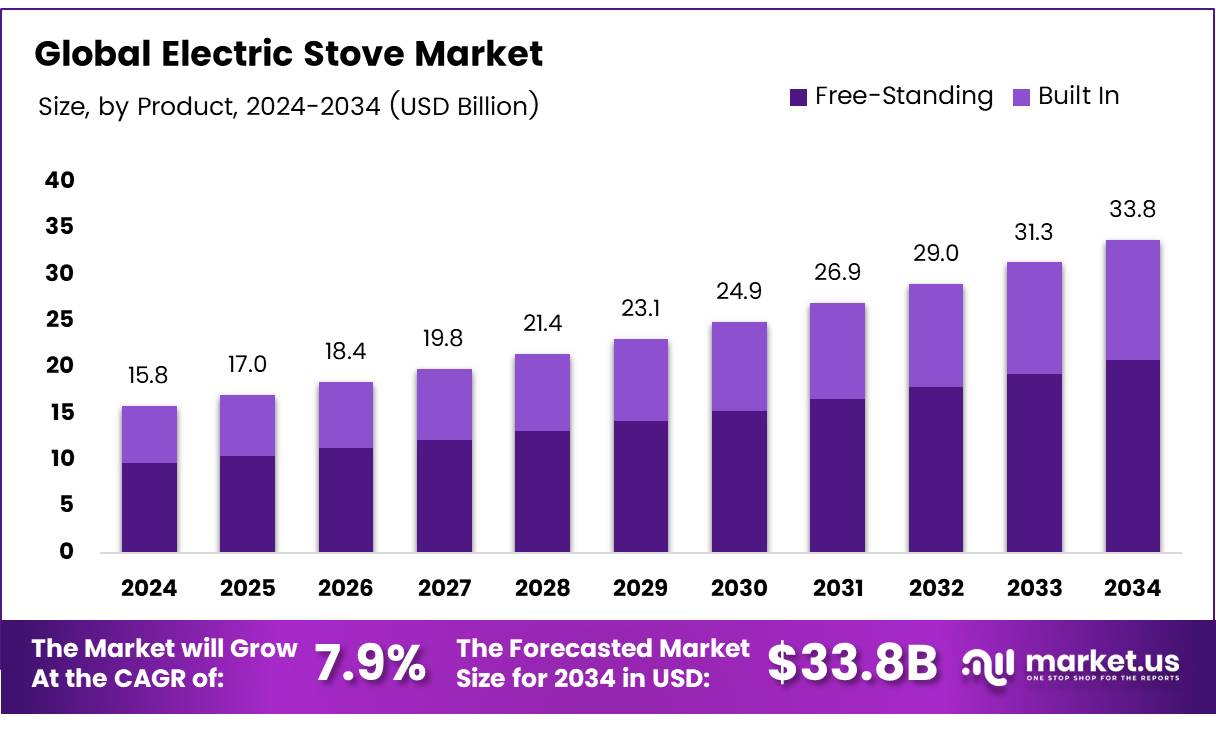
The Global Electric Stove Market size is expected to be worth around USD 33.8 Billion by 2034, from USD 15.8 Billion in 2024, growing at a CAGR of 7.9% during the forecast period from 2025 to 2034.
An electric stove is a cooking appliance that uses electrical energy to heat food. Unlike traditional gas stoves, electric stoves rely on electrical resistance to generate heat. This can come in the form of exposed heating elements or smooth cooking surfaces, often referred to as ceramic cooktops.
The Electric Stove Market encompasses the manufacturing, distribution, and sale of electric cooking appliances. This market has evolved significantly with advancements in technology and changing consumer preferences.
Factors such as energy efficiency, aesthetic appeal, and safety features play crucial roles in consumer choice. The market caters to a diverse demographic, from residential users seeking convenience and safety to commercial kitchens emphasizing precision and speed.
As an expert in market research with a decade of experience, it is clear that electric stoves are increasingly becoming a staple in kitchens around the world. According to Study, 68% of U.S. households own an electric stove, compared to 38% with gas stoves. In many states, ownership exceeds 70%, underscoring the significant adoption rate.
The Electric Stove Market is poised for substantial growth, driven by increasing global electrification and environmental concerns. According to the Office of Energy Efficiency, in 2003, 82% of electric ranges consumed 600 kWh/yr or more, indicating a significant opportunity for energy-efficient models. With the global population’s access to clean cooking solutions increasing from 56% in 2010 to 74% in 2022, as per Trackingsdg7.
Governments worldwide are investing in infrastructure that supports electricity as a primary energy source, coupled with regulations that favor energy-efficient appliances. This regulatory environment, along with technological innovations, presents a fertile ground for market expansion.
The Electric Stove Market’s growth trajectory is supported by compelling data. For instance, the Management Energy Consumption Survey highlights that around 45% of households in Europe and the United States now use electricity as their primary cooking fuel.
This shift is part of a broader trend towards electrification and away from traditional cooking fuels, influenced by factors like improved appliance efficiency and the environmental impact of fossil fuels.
Such data not only informs potential market sizes but also underscores the importance of innovation in this sector. Companies that invest in energy-efficient technologies and align themselves with governmental incentives are likely to lead the market, capitalizing on the increasing consumer demand for sustainable and high-performance appliances.
Key Takeaways
- Global Electric Stove Market projected to reach USD 33.8 Billion by 2034, growing at a CAGR of 7.9% from 2025 to 2034.
- In 2023, Free-Standing category dominates the Product Analysis segment, featuring Electric Ranges and standalone Electric Cookers.
- Metal Stoves lead the Material Analysis segment in 2023, favored for their durability and efficient heat conductivity.
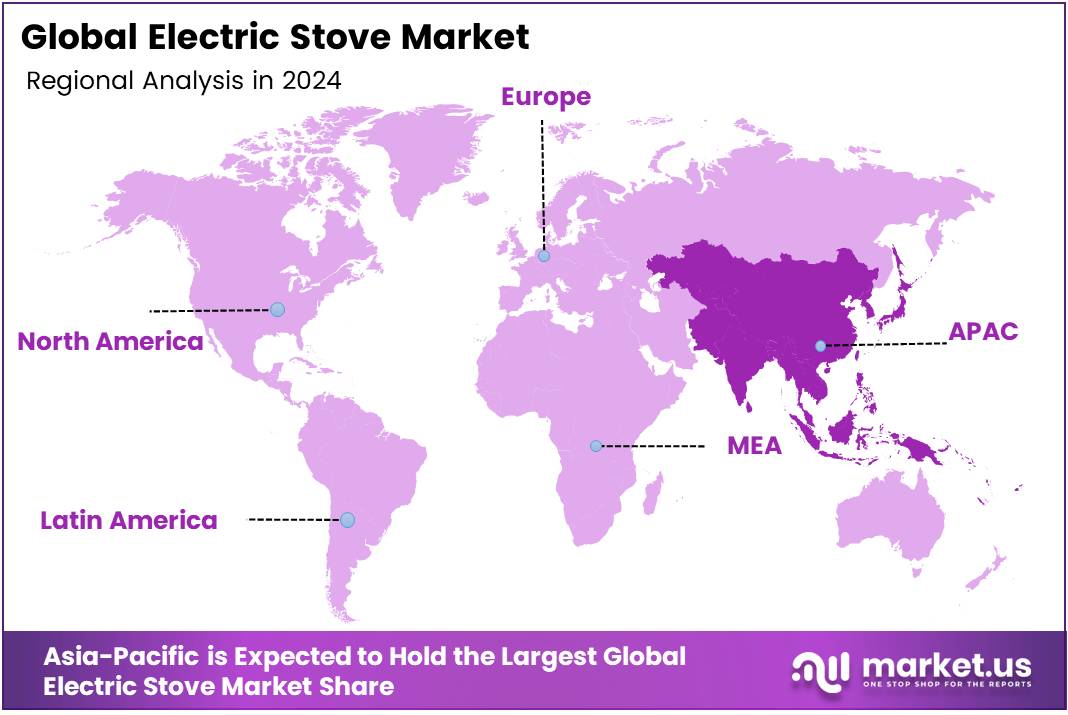
- Asia-Pacific holds the largest market share in the electric stove market, driven by rapid urbanization, rising incomes, and supportive governmental policies.
Product Analysis
Free-Standing leads the Electric Stove Market in 2023 driven by its versatility and easy installation
In 2023, Free-Standing secured a dominant market position in the By Product Analysis segment of the Electric Stove Market. This category includes two primary products: the Electric Range, which features both an oven and a cooktop, and the standalone Electric rice Cooker.
The appeal of Free-Standing units is largely attributed to their versatility and ease of installation, which resonates well with consumers seeking straightforward, efficient kitchen solutions. These units are particularly favored in residential settings due to their mobility and adaptability to various kitchen layouts without the need for customization.
Conversely, the Built-In segment, which comprises Electric Cooktops and Electric Ovens, caters to a different market niche. This segment appeals to consumers looking for a seamless kitchen aesthetic and permanent solutions that integrate smoothly with cabinetry and countertops.
Although the Built-In segment shows steady growth, it trails behind the Free-Standing segment due to the latter’s higher flexibility and lower installation requirements, making it a more accessible option for a broader audience.
Overall, the Free-Standing segment’s dominance in 2023 highlights a consumer preference for convenience and functionality in kitchen appliances, driving notable market trends within the Electric Stove Market.
Material Analysis
Metal Stoves Dominate the Electric Stove Market in 2023 Due to Their Durability and Efficient Heat Conductivity
In 2023, Metal Stove held a dominant market position in the By Material Analysis segment of the Electric Stove Market. This prominence is attributed to the material’s robustness and efficient heat conductivity, which significantly enhances cooking performance. Metal stoves have been favored for their durability and ease of cleaning, factors that contribute to their widespread acceptance among consumers.
Shifting focus to Stone Stove, this segment has carved out a niche due to its aesthetic appeal and natural heat retention properties. Although it occupies a smaller market share, the demand for stone stoves is driven by high-end consumers looking for a blend of traditional cooking styles with a modern twist.
The Ceramic Stove segment also reflects substantial growth potential, especially with advancements in heat distribution technologies. Ceramic stoves are increasingly popular in households for their sleek design and environmental friendliness, as they often require less energy to maintain heat.
Other Materials, including glass and composite materials, represent a smaller but important part of the market. These materials are typically targeted towards specific consumer segments that prioritize unique design elements and energy efficiency.
Overall, while metal stoves continue to lead, other materials are steadily making their mark with distinct qualities that appeal to diverse consumer preferences.
Application Analysis
Residential Dominance in the Electric Stove Market
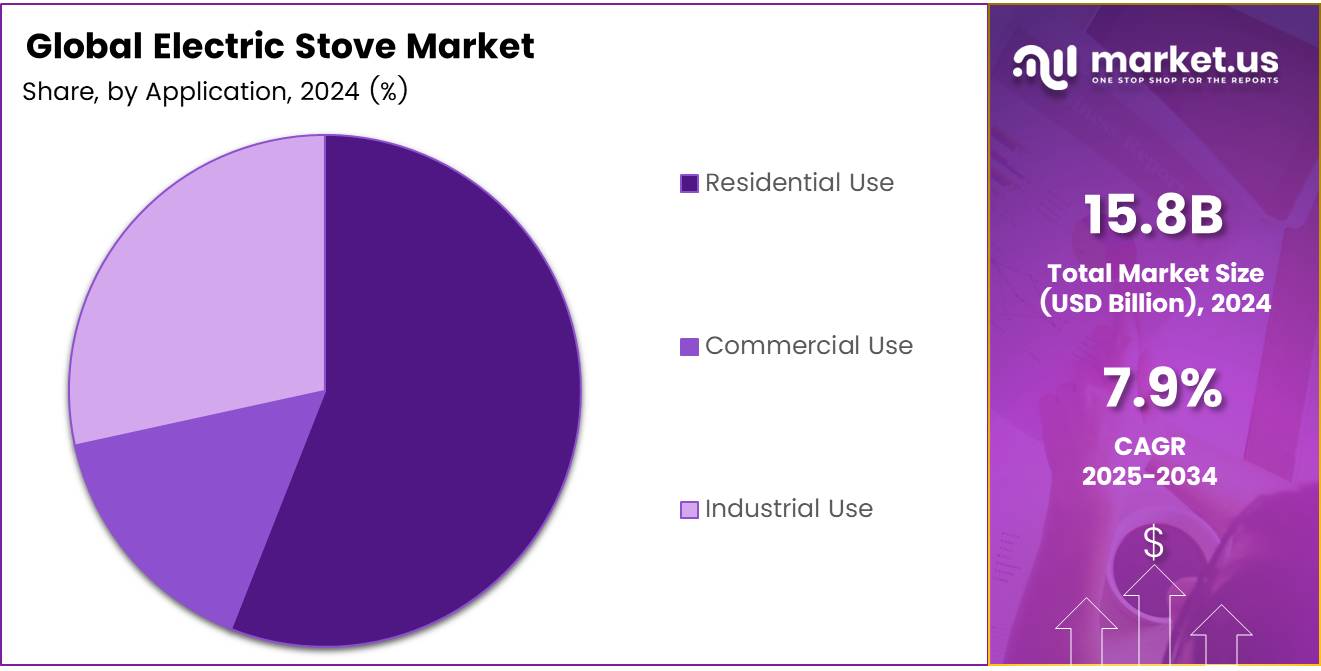
In 2023, Residential Use held a dominant market position in the By Application Analysis segment of the Electric Stove Market, reflecting its pivotal role in driving demand and shaping market trends.
This segment’s supremacy is underpinned by the increasing adoption of electric stoves in households, driven by a combination of factors including energy efficiency, ease of use, and the shifting consumer preference towards electric appliances for their cleaner and safer operation compared to their gas counterparts.
Commercial Use, while significant, trailed behind in market share. This sector is characterized by diverse needs ranging from restaurants and hotels to small businesses, all seeking reliability and cost-effectiveness in high-volume cooking environments. Advances in technology and the integration of smart features in electric stoves are likely to boost its attractiveness to commercial entities.
Industrial Use, though a smaller segment, is gradually expanding. This growth is fueled by the industrial sector’s ongoing shift towards more sustainable and energy-efficient technologies. Electric stoves are gaining traction in this segment due to their ability to meet high standards of operational efficiency and environmental compliance.
Together, these segments illustrate a dynamic and evolving Electric Stove Market, with residential use leading the charge towards broader adoption and market maturity.
Key Market Segments
By Product
- Free-Standing
- Electric Range (With Oven And Cooktop)
- Electric Cooker
- Built In
- Electric Cooktops
- Electric Ovens
By Material
- Metal Stove
- Stone Stove
- Ceramic Stove
- Other Materials
By Application
- Residential Use
- Commercial Use
- Industrial Use
Drivers
Rising Demand for Energy-Efficient Appliances
The electric stove market is experiencing robust growth, primarily driven by consumers’ increasing preference for energy-efficient appliances. This shift towards energy conservation is not only helping individuals reduce their utility bills but also aligns with broader environmental sustainability goals.
Urbanization trends contribute significantly to this market dynamic as smaller living spaces in urban areas necessitate compact and efficient cooking solutions, making electric stoves an ideal choice.
Furthermore, government initiatives across various regions encourage the adoption of green energy technologies by offering incentives and rebates for energy-efficient appliances, thereby reinforcing market growth.
Additionally, the market is propelled by continuous technological advancements in kitchen technologies. Innovations such as smart electric stoves equipped with touch controls, connectivity, and programmable settings cater to a tech-savvy consumer base, seeking convenience and advanced functionality in kitchen appliances.
Restraints
High Initial Cost Discourages Buyers
As an analyst observing the electric stove market, it’s apparent that one major restraint is their high initial cost. Electric stoves often come with a steeper price tag than traditional gas stoves, which can be a significant barrier for consumers who are mindful of their budgets. This initial cost issue is critical because it can prevent potential buyers, especially those in economically sensitive situations, from considering an electric stove as a viable option.
Additionally, in developing countries, there’s a noticeable lack of awareness among consumers regarding the advantages and availability of electric stoves. Many individuals in these regions are simply not familiar with the technology and its benefits, which slows down the adoption rate of these appliances.
This gap in consumer knowledge further hinders the market growth, as awareness is a key driver in the decision-making process for new technologies. Together, these factors high initial costs and limited awareness pose significant challenges to the widespread adoption of electric stoves in various markets around the globe.
Growth Factors
Embracing Innovation and Style in the Electric Stove Market Drives Growth and Appeals to Modern Homeowners
The electric stove market is poised for growth as emerging trends and innovations promise to attract contemporary consumers. Key to this expansion is the integration of cutting-edge technology in stove designs.
Product innovations, such as the introduction of smart connectivity, touch controls, and advanced safety features, are revolutionizing how we interact with smart kitchen appliances. These high-tech enhancements cater to tech-savvy users who prioritize convenience and safety in their cooking experiences.
Additionally, aligning electric stoves with smart home ecosystems can significantly widen the market base. This synergy allows for seamless control and integration with other smart appliances, enhancing user experience and efficiency in the kitchen.
Furthermore, there is a rising consumer interest in cooktop-only models, which blend well with minimalist and modern kitchen aesthetics while providing functional benefits like space savings. Such models are particularly appealing in urban settings where space is at a premium. Altogether, these factors present a lucrative opportunity for brands to innovate and expand in the evolving electric stove market.
Emerging Trends
Smart Stoves Lead Market Trends with Enhanced Control and Health Benefits
In today’s electric stove market, a blend of technological innovation and changing consumer preferences is reshaping trends. Smart stoves are leading the charge, offering features like remote controls, cooking presets, and sophisticated energy management systems to enhance the cooking experience. These smart appliances appeal to tech-savvy users looking for convenience and efficiency in their kitchen routines.
Alongside, the shift towards induction technology is notable for its promise of quicker heating times and improved energy efficiency, making it increasingly popular among new buyers. The market is also witnessing a surge in sleek, minimalistic designs that complement modern home décor, reflecting a broader trend towards streamlined kitchen appliances.
Moreover, the rise of health-conscious consumers is pushing the demand for electric stoves, as they eliminate the smoke and fumes associated with traditional cooking methods, supporting a healthier living environment. These factors combined are driving significant transformations in the electric stove market, catering to a generation that values technology, health, and style.
Regional Analysis
Asia-Pacific Leads Electric Stove Market Due to Rapid Urbanization and Increasing Income Levels
The electric stove market is led by Asia-Pacific, dominating with largest market share. This region’s growth is fueled by rapid urbanization, rising disposable incomes, and expanding middle-class populations, especially in China and India. Governmental policies encouraging the adoption of electric stoves over traditional cooking methods also play a critical role in this dominance.
Regional Mentions:
North America, the market expansion is driven by increasing consumer preference for energy-efficient appliances and a shift away from gas stoves due to environmental concerns. The U.S. and Canada are notable for their incentives promoting electric stove purchases and the rising popularity of smart, energy-efficient home appliances.
Europe mirrors North America’s trends with a strong emphasis on energy regulations and high demand for advanced, integrated kitchen technologies. Environmental concerns and energy efficiency directives help maintain a steady growth in the electric stove market within this region.
Latin America and the Middle East & Africa, though smaller in market share, are showing signs of growth. Economic improvements and urban development initiatives are propelling the market forward in Latin America, while in the Middle East & Africa, urbanization and retail sector expansion are key growth drivers. Both regions are poised for increased penetration by electric stove manufacturers encouraged by local governmental efforts to enhance modern appliance adoption for improved energy efficiency.
Key Regions and Countries
- North America
- US
- Canada
- Europe
- Germany
- France
- The UK
- Spain
- Italy
- Rest of Europe
- Asia Pacific
- China
- Japan
- South Korea
- India
- Australia
- Rest of APAC
- Latin America
- Brazil
- Mexico
- Rest of Latin America
- Middle East & Africa
- South Africa
- Saudi Arabia
- UAE
- Rest of MEA
Key Players Analysis
In 2023, the global Electric Stove Market continues to be highly competitive with several key players pushing the boundaries of innovation, efficiency, and customer satisfaction.
Koninklijke Philips N.V., a leader in household appliances, remains at the forefront due to its commitment to sustainability and advanced technology integration. Smeg S.p.A. distinguishes itself with its stylish, retro-design electric stoves that appeal to aesthetic-conscious consumers.
General Electric Company is another significant contender, leveraging its extensive distribution network and brand reputation to maintain a strong market position. Meanwhile, True Induction stands out for its specialized focus on induction technology, offering high efficiency and safety features that are increasingly popular among modern households.
Fisher & Paykel, Panasonic, and Haier continue to innovate in terms of user-friendly interfaces and smart connectivity, aligning with the IoT trend to enhance user experience. Miele & Cie. KG and Waring Products are recognized for their high-quality manufacturing standards and durability.
AB Electrolux and Robert Bosch GmbH capitalize on their robust engineering background to offer products that are both reliable and energy-efficient. Broseley Fires and ESSE Engineering Ltd. focus on combining traditional designs with contemporary electric stove technology, catering to niche markets that value both form and function.
LG Electronics Inc. and Whirlpool Corporation excel with their competitive pricing and widespread availability. Sunpentown International Inc., although smaller, competes effectively by offering portable and compact solutions that meet the needs of urban dwellers with limited space.
Overall, these companies drive the market through a blend of innovation, customer-centric designs, and strategic marketing initiatives. Their ability to adapt to regulatory environments and consumer preferences plays a crucial role in their sustained market presence.
Top Key Players in the Market
- Koninklijke Philips N.V.
- Smeg S.p.A.
- Galanz Group
- General Electric Company
- True Induction
- Fisher & Paykel Appliances Ltd.
- Panasonic Corporation
- Haier Group Corporation
- Miele & Cie. KG
- Waring Products
- AB Electrolux
- Robert Bosch GmbH
- Broseley Fires
- LG Electronics Inc.
- ESSE Engineering Ltd.
- Faber S.p.A.
- Whirlpool Corporation
- Sunpentown International Inc.
Recent Developments
- In October 2024, BURN received a substantial investment of US$ 15 million from the European Investment Bank, aimed at expanding the reach of electric cooking solutions across East Africa.
- In July 2024, Schneider Electric was awarded $3.75 million to enhance its outreach initiatives for electric stoves, focusing on expanding market penetration.
- In September 2023, PayGo significantly bolstered its portfolio by acquiring leading enterprises in the clean cooking technology sector, impacting both the African and Asian markets.
- In January 2024, KyungDong Navien announced its strategic acquisition of three home appliance business rights from SK magic, marking a significant expansion in its product offerings.









