


Report Overview
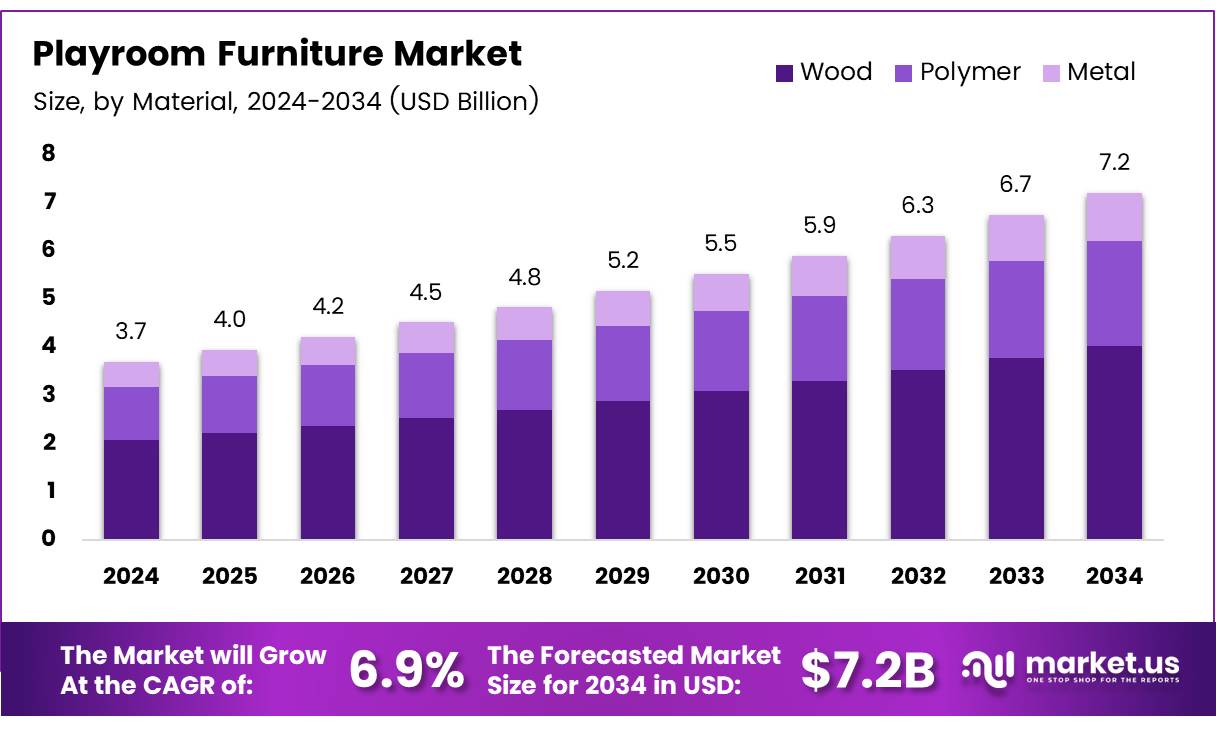
The Global Playroom Furniture Market size is expected to be worth around USD 7.2 billion by 2034, from USD 3.7 billion in 2024, growing at a CAGR of 6.9% during the forecast period from 2025 to 2034.
Playroom furniture encompasses specialized furnishings designed to furnish children’s playrooms. These pieces typically include child-sized tables and chairs, storage solutions for toys and games, and play mats that provide a safe environment for children to play.
The market for playroom furniture is driven by the recognition of the importance of providing children with spaces that stimulate creativity and learning, while also considering safety and functionality.
The playroom furniture market is a vibrant segment within the broader home furniture industry. It caters to the needs of modern families looking to create engaging and safe spaces for their children. This market has grown substantially due to the increasing focus on educational and developmental toys and furnishings that can enhance the learning experience at home.
The increasing screen time among children, as reported by ExplodingTopics with an average of 6 hours and 40 minutes per day in Q3 2023, underscores the need for physical play spaces to balance digital activities. This balance is crucial for cognitive and physical development, positioning playroom furniture as a vital component of smart homes.
Moreover, the spending trends reported by NFPA, where U.S. consumers spent an average of $1,598 on home decor in 2023, indicate a robust consumer investment in home environments, which includes areas designated for children’s play.
The playroom furniture market is set to expand, driven by generational buying power and lifestyle preferences. Millennials, who constitute approximately 37% of the household furniture and decor market as per News Market US, are now the primary demographic purchasing playroom furniture. They prefer products that are not only aesthetically pleasing but also functional and safe for children.
Additionally, the substantial gaming time of 11-13 hours weekly by Gen Z and Millennial gamers, as noted by SlickText, shows a lifestyle trend that values dedicated spaces for various activities, including play. This trend is likely to increase demand for well-designed playroom furniture.
The sector also benefits from government focus on child safety regulations, which ensures products meet stringent safety standards, thereby boosting consumer confidence. Opportunities for market expansion include innovations in materials and design, catering to eco-conscious consumers, and integrating technology with traditional play environments to create interactive furniture.
These developments can attract more investments and foster partnerships within industries such as home decor, technology, and educational products, creating a comprehensive growth ecosystem within the playroom furniture market.
Key Takeaways
- Global Playroom Furniture Market projected to grow from USD 3.7 Billion in 2024 to USD 7.2 Billion by 2034, with a CAGR of 6.9%.
- Wood dominates the material segment with a 56.8% share in 2023, highlighting its preferred status in playroom furniture.
- Residential end-use leads the market, driven by increased spending on home renovations and dedicated children’s play areas.
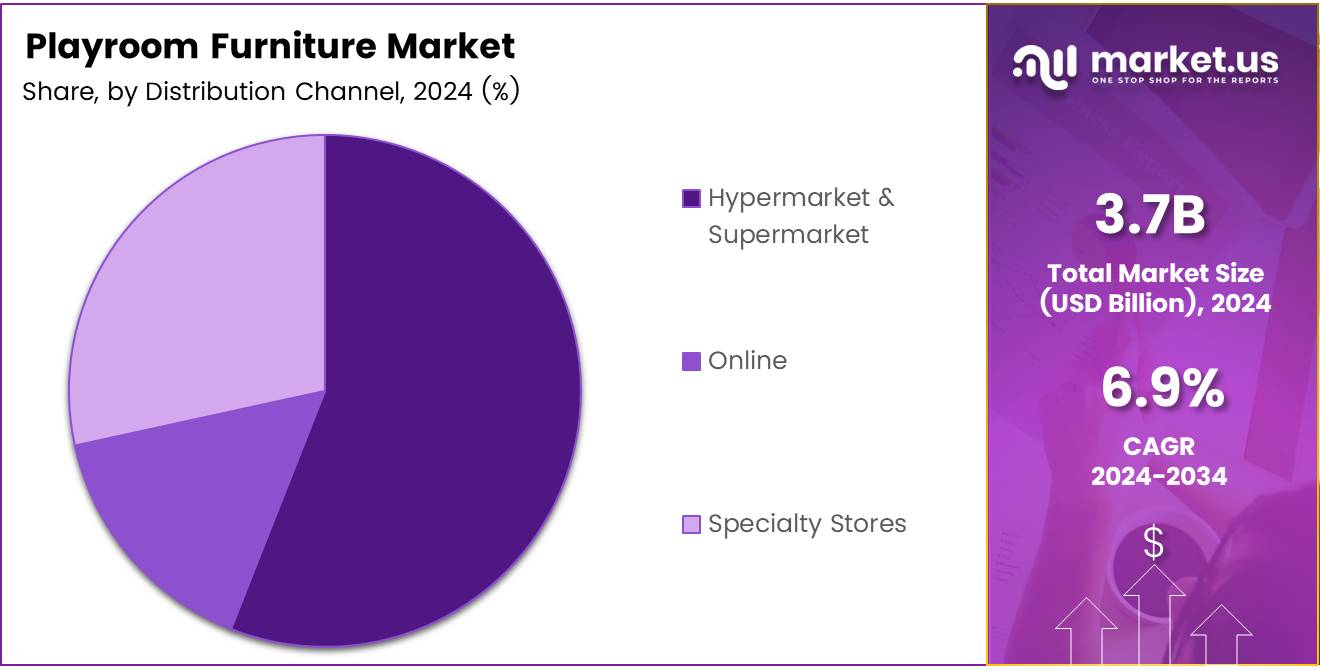
- Hypermarkets & Supermarkets are the leading distribution channel, offering convenience and a wide range of products.
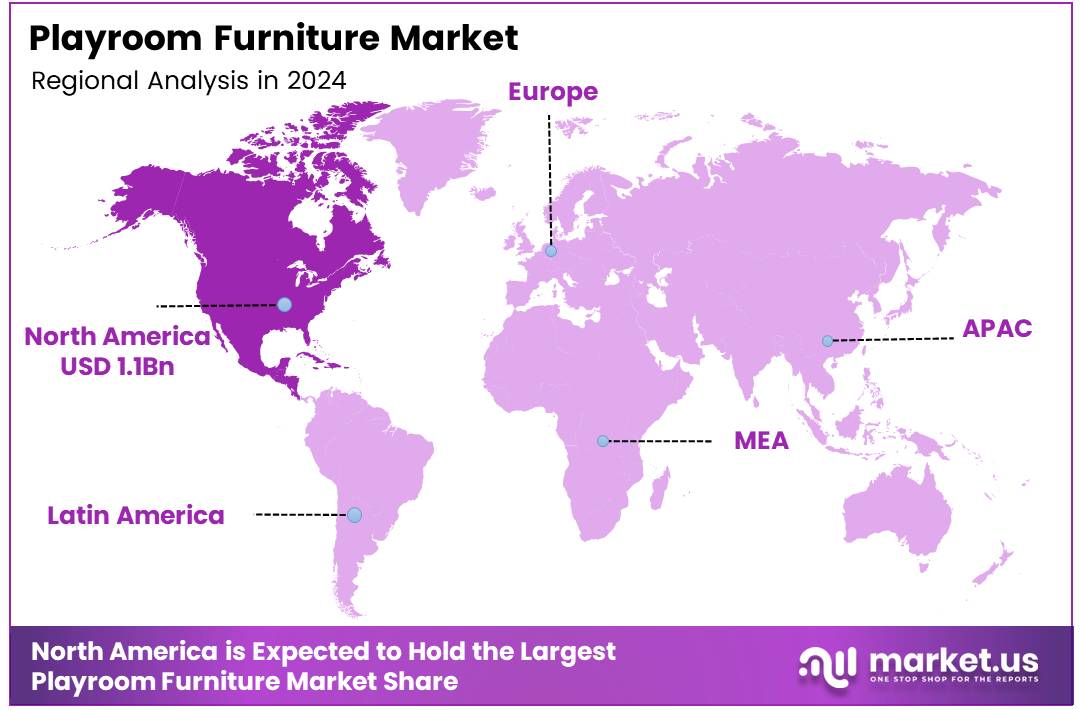
- North America is the largest market, accounting for 31.5% of the global share, fueled by high disposable income and demand for educational and ergonomic children’s furniture.
Material Analysis
Wood Dominates Playroom Furniture Material Segment with 56.8% Market Share
In 2023, Wood held a dominant market position in the By Material Analysis segment of the Playroom Furniture Market, commanding a 56.8% share. This substantial share underscores wood’s enduring appeal and reliability as a primary material for playroom furniture.
Wood’s popularity in this segment can be attributed to its durability, ease of customization, and the warm, natural aesthetic it brings to play spaces. Additionally, wood furniture is often sought after for its environmental sustainability, especially when sourced from certified sustainable forests, appealing to eco-conscious consumers.
On the other hand, polymers and metals also play significant roles in the market, though they hold smaller shares compared to wood. Polymer materials are valued for their versatility and low maintenance, making them a practical choice for busy households. They offer a variety of design options due to their ease of molding and coloring, which can be particularly attractive in creating vibrant and engaging environments for children.
Metal, while less common, is prized for its strength and longevity. Metal playroom furniture often features in modern designs and can include coated finishes that offer additional color choices and corrosion resistance. This makes metal a durable, albeit less traditional, option for playroom settings. Each material brings unique benefits to the playroom furniture market, catering to diverse consumer preferences and needs.
End-use Analysis
Residential Sector Leads in Playroom Furniture Market with Enhanced Market Share
In 2023, Residential held a dominant market position in the By End-use Analysis segment of the Playroom Furniture Market. This segment captured a substantial market share due to increasing consumer spending on home renovation and a growing emphasis on creating dedicated play areas for children.
The rise in remote working trends has also prompted families to invest in home infrastructure, including playrooms, contributing to a surge in demand for playroom furniture in residential spaces. These consumer behaviors reflect a broader trend of prioritizing comfortable and multifunctional home environments, making residential homes the largest contributor to the market’s growth.
On the other hand, the commercial segment, which includes facilities like daycare centers and play schools, also showed significant growth. This rise is driven by the increasing number of childcare services and the growing awareness among businesses about creating child-friendly spaces.
Commercial entities are investing in durable and safe playroom furniture to accommodate the dynamic and sometimes harsh usage by multiple children, which emphasizes safety and sustainability in furniture design. This sector’s expansion is supported by stringent safety regulations and a focus on eco-friendly materials, appealing to a new generation of parents and educators.
Distribution Channel
Hypermarket & Supermarket Leads Playroom Furniture Sales with Significant Market Share
In 2023, Hypermarket & Supermarket held a dominant market position in the By Distribution Channel Analysis segment of the Playroom Furniture Market, boasting a significant percentage of market share. This channel’s success can be attributed to its broad accessibility and the convenience it offers to consumers, allowing them to explore a variety of playroom furniture options in a physical setting.
Hypermarkets and supermarkets often provide competitive pricing and promotional deals, which are critical factors in attracting cost-conscious buyers looking for quality and affordability.
The Online distribution channel also showed remarkable growth due to the rise in digital consumerism. This platform offers the advantage of easy comparison of prices and designs, alongside customer reviews which aid in decision making. Additionally, the comfort of shopping from home and options for home delivery appeal to a busy demographic of parents seeking convenience.
Specialty Stores remain a vital part of the distribution network, primarily serving customers who prefer a dedicated shopping experience with expert advice. These stores often carry exclusive premium products not available in larger retail chains, catering to a niche market looking for unique and custom-designed playroom furniture.
Together, these channels form a dynamic distribution network that catifies to diverse consumer preferences and shopping behaviors within the Playroom Furniture Market.
Key Market Segments
By Material
- Wood
- Polymer
- Metal
By Product
- Chair/Sitting Units
- Desk/Table/Work Surface
- Storage/Organizer/ Cabinets & Display Units
- Others
By End-use
- Residential
- Commercial
By Distribution Channel
- Hypermarket & Supermarket
- Online
- Specialty Stores
Drivers
Playroom Furniture Sales Climb as Families Focus on Child Development and Space Optimization
Parents and educators recognize that play is crucial for a child’s social, emotional, and cognitive growth, which is driving the demand for furniture that supports these activities.
With more nuclear families aiming to maximize limited living spaces, there’s an increasing trend towards creating dedicated areas for children. This shift is encouraging the sale of specialized playroom furniture that caters to the needs of modern families. Moreover, innovation in furniture design focusing on safety, durability, and child appeal is attracting more consumers.
Additionally, the growth of e-commerce has simplified the process of finding and purchasing diverse and attractive playroom furniture, making it more accessible to a broader audience. This ease of shopping is significantly propelling market growth, as parents seek the best options that blend functionality with fun, directly from the comfort of their homes.
Restraints
Quality and Competition Restrict Playroom Furniture Market Growth
High-quality playroom furniture, designed with premium materials and enhanced safety features, often comes with a high price tag. This makes it challenging for all families to afford these safer, more durable options, potentially limiting the market to only those who can invest more in their home setups.
Additionally, the playroom furniture market faces issues of saturation as numerous companies and products flood the space. This abundance of choices can overwhelm parents, making it difficult for them to decide on a purchase and leading to decreased loyalty to any single brand.
Growth Factors
Partnering with educational institutions to furnish playful learning environments
Playroom furniture makers have a big chance to grow by working with schools and nurseries. They can provide furniture that not only fits into play areas but also helps kids learn and play safely.
There’s also room to innovate with health-focused designs that encourage physical activity, like furniture that includes climbing structures or balance beams.
To stay relevant and appealing, companies can design furniture based on popular cultural themes or seasonal trends, which can attract more customers, especially during peak shopping seasons.
Additionally, enhancing the online shopping experience with advanced tools like Augmented Reality (AR) and Virtual Reality (VR) could revolutionize how consumers select and visualize furniture in their homes, potentially increasing sales and customer satisfaction.
Emerging Trends
Interactive Furniture Engages Young Minds
As a market research analyst, it’s clear that the Playroom Furniture Market is adapting to modern family needs with some innovative trends. Leading the charge is interactive furniture, which includes pieces like puzzle stools and chalkboard desks designed to engage children’s minds and enhance their learning through play.
These pieces are not only functional but also fun, helping kids develop problem-solving skills while they play. Additionally, themed furniture continues to capture the imagination with designs based around popular motifs such as space, jungles, or fairy tales. There’s also a growing interest in smart furniture that integrates technology for interactive play, featuring elements like programmable lights and sounds controllable via apps.
Meanwhile, vintage and retro styles are making a comeback, appealing to parents’ nostalgia with designs that echo the past while still providing modern functionality. This blend of educational, thematic, and technologically integrated furniture is transforming playrooms into dynamic spaces that support both learning and fun.
Regional Analysis
North America Leads Playroom Furniture Market with 31.5% Share, Driven by High Consumer Spending on Child Development Products
The Playroom Furniture Market exhibits diverse dynamics across key regions including North America, Europe, Asia Pacific, the Middle East & Africa, and Latin America.
Dominating the market, North America holds a substantial share of 31.5%, valued at USD 1.1 billion. This dominance is primarily due to the high disposable income levels and the increasing consumer focus on educational and ergonomic furniture for children in countries like the USA and Canada.
Regional Mentions:
In Europe, the market thrives on the back of eco-friendly and innovative design trends, with countries such as Germany, France, and the UK leading in market uptake. The region benefits from stringent safety regulations and a strong preference for sustainable products, which drive the demand for high-quality playroom furniture.
The Asia Pacific region is experiencing rapid growth, fueled by increasing urbanization and expanding middle-class populations in China, India, and Southeast Asia. The rising awareness among parents about the importance of play in child development significantly contributes to the market expansion in this region.
Middle East & Africa and Latin America regions are witnessing gradual growth. In the Middle East & Africa, the market is driven by the increasing number of expatriates and the rising standards of living, which enhance the demand for premium playroom products.
Latin America’s market growth is bolstered by the improving economic conditions and the increasing number of international brands establishing their presence in the region.
Key Regions and Countries covered іn thе rероrt
- North America
- US
- Canada
- Europe
- Germany
- France
- The UK
- Spain
- Italy
- Rest of Europe
- Asia Pacific
- China
- Japan
- South Korea
- India
- Australia
- Rest of APAC
- Latin America
- Brazil
- Mexico
- Rest of Latin America
- Middle East & Africa
- South Africa
- Saudi Arabia
- UAE
- Rest of MEA
Key Players Analysis
In 2023, the global playroom furniture market saw significant contributions from several key players, each bringing unique strategies and innovations to cater to evolving consumer preferences.
Bajaj Electricals Ltd. maintained its competitive edge through a focus on ergonomic designs that appeal to safety-conscious parents. Their products, combining functionality with aesthetic appeal, have been well-received in both domestic and international markets.
Berkshire Furniture stood out for its commitment to sustainable materials, resonating with eco-friendly trends. Their use of recycled and non-toxic materials has strengthened their brand among environmentally aware consumers, enhancing their market position.
The TJX Companies, Inc., known for its cost-effective pricing strategies, effectively captured the budget-conscious segment. Their ability to offer stylish, affordable playroom solutions has made them a preferred choice for price-sensitive customers.
WILLIAMS-SONOMA, INC. and American Signature, Inc. both emphasized personalized playroom solutions. Their focus on customizable furniture has allowed them to cater to a niche market segment looking for unique and personalizable playroom setups.
Ashley Global Retail, LLC and Rooms To Go leveraged their extensive retail networks to increase market penetration. Their strategic placement of showrooms and emphasis on in-store experiences have effectively boosted sales.
KIDS FURNITURE WORLD captured the imagination of its clientele with innovative designs that are both playful and functional. Their thematic furniture sets, appealing to children’s fantasies, have carved a distinctive place in the market.
Herman Miller, Inc., HNI Corp., IKEA (Inter IKEA Systems B.V.), and Steelcase emphasized smart and modular playroom solutions. Their focus on adaptability and space-saving designs appealed to urban consumers dealing with limited living spaces. IKEA, in particular, continued to dominate with its global reach and strong brand recognition, offering a wide range of affordable and versatile furniture options.
Overall, these companies have each played a crucial role in shaping the dynamics of the playroom furniture market, continuously innovating to meet the changing needs of families worldwide.
Top Key Players in the Market
- Bajaj Electricals Ltd.
- Berkshire Furniture
- The TJX Companies, Inc.
- WILLIAMS-SONOMA, INC.
- American Signature, Inc.
- Ashley Global Retail, LLC
- KIDS FURNITURE WORLD
- Rooms To Go
- Herman Miller, Inc.
- HNI Corp.
- IKEA
- Steelcase
Recent Developments
- In December 2024, Wooden Street secured a substantial investment of Rs 354 crore in its Series C funding round led by Premji Invest, aiming to enhance its market presence and product offerings.
- In January 2025, Consortium Brand Partners successfully acquired the iconic home décor company Jonathan Adler®, marking a significant expansion in their luxury home goods portfolio.
- In October 2024, Havenly Brands acquired Burrow, setting the stage for unparalleled growth and innovation in the home retail sector by integrating Burrow’s unique furniture offerings.









